The short answer
Dachshunds are fairly hardy and long-lived (~12 to 16 years), but one issue dominates: intervertebral disc disease (IVDD), a back problem the long-backed breed is exceptionally prone to, ranging from back pain to paralysis, potentially devastating and expensive. Closely tied is obesity (excess weight directly strains the vulnerable back and raises IVDD risk, so keeping the dog lean is doubly critical). Also: dental disease (a small-breed issue), eye conditions (PRA), and patellar luxation, plus a serious double-dapple colour risk (deafness/eye defects). The overriding priority: protect the back, keep the dog lean, manage jumping and stairs, handle carefully, and know the IVDD signs. Pet insurance is particularly worth it, insure while young.
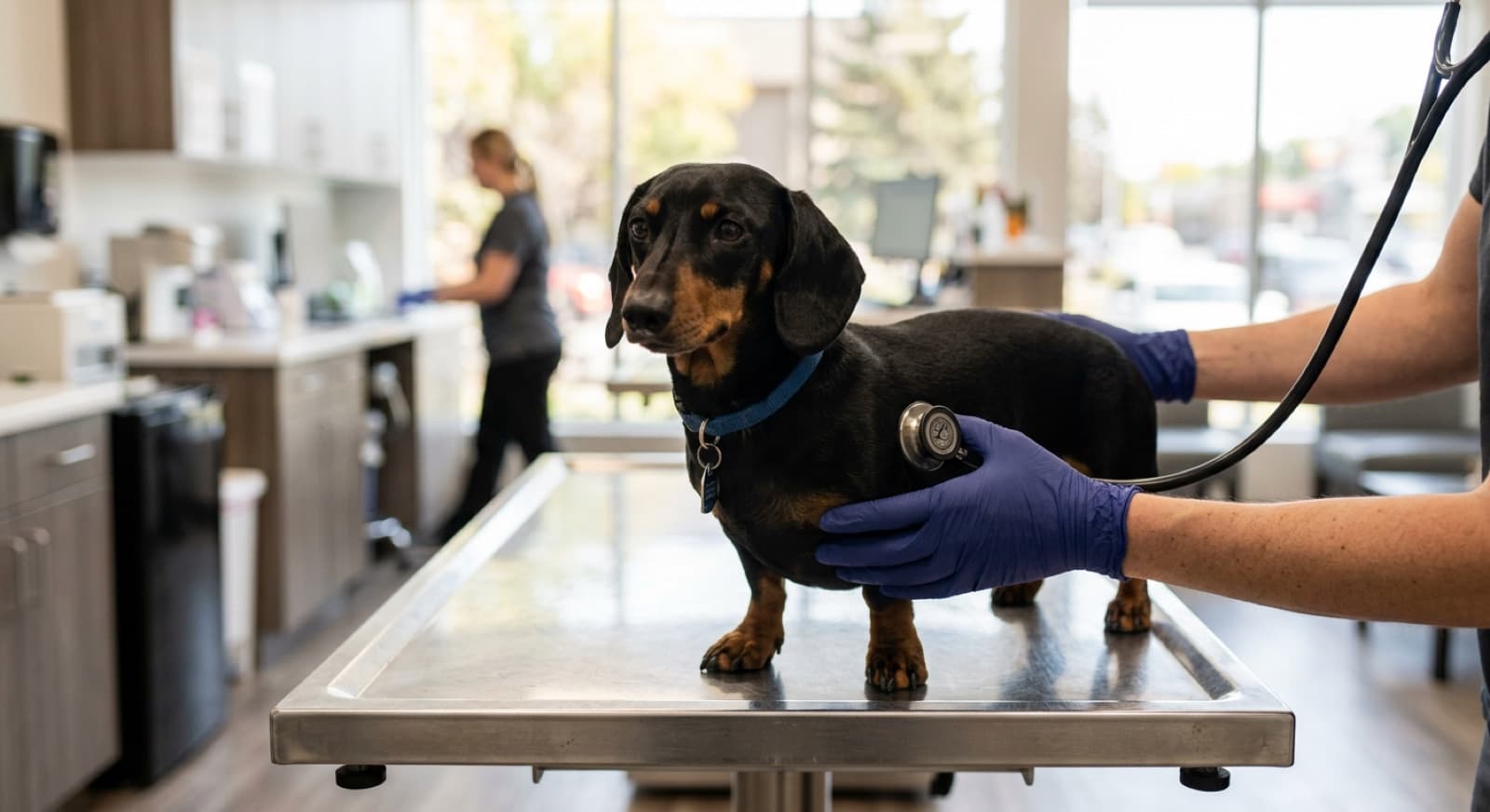
The Dachshund is a genuinely long-lived, hardy little dog, with one enormous asterisk: its back. Intervertebral disc disease dominates the breed's health picture so completely that nearly everything else, weight, handling, exercise, is best understood through the lens of protecting the spine. Here is the medical picture, condition by condition, with the back front and centre.
IVDD: the defining concern
Intervertebral disc disease (IVDD) is by far the most important issue, the breed is exceptionally prone to it because of its long-backed build. The discs cushioning the spine degenerate and can bulge or rupture, pressing on the spinal cord, causing pain, nerve damage, weakness, difficulty walking, and, in severe cases, paralysis. A significant proportion of Dachshunds experience some IVDD in their lifetimes, often in middle age. It ranges from mild (managed with rest and medication) to severe (which may need emergency surgery).
Know the signs: back or neck pain (hunched posture, reluctance to move or jump, crying out when moved, a tense abdomen), weakness or wobbliness (especially hind legs), dragging the back legs, and, in severe cases, an inability to walk, any sudden weakness or paralysis is a medical emergency requiring immediate veterinary attention, as prompt treatment can make a major difference. Because IVDD is so common and serious, prevention and back protection are central to owning the breed, see our back-care and IVDD-prevention guide.
Obesity: doubly dangerous
Obesity is particularly serious for a Dachshund: on top of the general harms, excess weight directly increases the strain on the vulnerable back and raises the risk of IVDD. So keeping a Dachshund lean isn't just general health, it's a central part of protecting the back, making weight management doubly critical. The long spine bears extra mechanical stress, and every extra pound adds to it.
Dachshunds are prone to weight gain and can be food-motivated, so it takes active management. It's within your control: keep the dog at a lean weight through disciplined feeding (measure food, appropriate portions, limit treats), provide appropriate exercise, and monitor body condition (easily feel the ribs, see a waist). Being firm about a Dachshund's diet and keeping it slim is one of the single most important things you can do to protect its back. The VCA guide to canine obesity is worth reading.
Dental, eye, and other conditions
Dental disease: as a small breed, Dachshunds are prone to it (crowded teeth), so regular tooth brushing and professional cleanings matter. Eyes: PRA (gradual vision loss) and others, monitor and assess concerns. Patellar luxation: slipping kneecaps, a small-breed issue. Double-dapple colour risk: dogs from breeding two dapple/merle Dachshunds are at significantly higher risk of serious congenital problems (deafness, blindness, eye defects), which is why responsible breeders avoid it.
Dachshunds can also occasionally be affected by certain heart conditions and epilepsy. Most individual Dachshunds won't develop most of these, and the breed is generally hardy and long-lived. The practical takeaways: IVDD and its prevention (through weight and back management) is the central priority, dental care is important as for other small breeds, and routine vet care with attention to the eyes and prompt assessment of concerning signs covers the rest.
Lifespan and the insurance case
Dachshunds are long-lived, typically ~12 to 16 years. Keeping one healthy centers overwhelmingly on protecting the back: keep the dog lean (the single most important thing), manage jumping and stairs and handle carefully, take dental care seriously, provide back-friendly exercise, stay on routine vet care, and know the IVDD signs. On insurance: particularly worth considering, more than for many breeds, because of the high IVDD risk, IVDD surgery can cost thousands and the condition may need ongoing management. Montreal specialist and surgical care isn't cheap, and an IVDD event is exactly the expensive, unexpected situation insurance is for.
Take out insurance while the dog is young and healthy, before any back issue is diagnosed and excluded, which matters a great deal for this breed. Compare providers, and specifically check whether IVDD and back conditions are well covered (the key issue for the breed). If you self-insure, keep a substantial vet fund specifically for the possibility of IVDD treatment. For an adopted adult or senior, some conditions (including back issues) may already be present, so understand what a policy covers. See our adoption guide for the cost picture.
Browse adoptable dogs in Montreal
A good rescue shares a dog's known health history, including any back issues. Refreshed regularly across Montreal-area organizations.
See Available Dogs →Frequently Asked Questions
What are the main health problems?
One dominates: IVDD (back disease), which the long-backed breed is exceptionally prone to. Closely tied is obesity (which strains the back). Also dental disease, eye conditions (PRA), and patellar luxation, plus a serious double-dapple colour risk. Generally hardy and long-lived, but IVDD dominates the picture.
What is IVDD and why are they so prone?
Intervertebral disc disease, the spinal discs degenerate and can rupture, pressing on the cord and causing pain, weakness, and even paralysis. The long-backed build makes Dachshunds exceptionally prone. Know the signs (back pain, hunched posture, hind-leg weakness, dragging legs), any sudden weakness or paralysis is a medical emergency.
Why is obesity so dangerous for them?
Because excess weight directly strains the vulnerable back and raises IVDD risk, on top of the general harms. Keeping a Dachshund lean isn't just general health, it's central to protecting the back, making weight management doubly critical. Measure food, limit treats, exercise appropriately, and monitor body condition.
What dental, eye, and other conditions affect them?
Dental disease (a small-breed issue, so brush and get cleanings), eye conditions (PRA), and patellar luxation, plus occasional heart conditions and epilepsy. Importantly, double-dapple dogs (from breeding two dapples) are at high risk of deafness, blindness, and eye defects, which responsible breeders avoid.
How long do they live?
A long-lived breed, typically 12 to 16 years. Keeping one healthy centers on protecting the back: keep the dog lean, manage jumping and stairs, handle carefully, take dental care seriously, provide back-friendly exercise, and know the IVDD signs. Many stay active into their senior years with a well-protected back.
Is pet insurance worth it?
Particularly worth considering, more than for many breeds, because of the high IVDD risk. IVDD surgery can cost thousands and the condition may need ongoing management. Take insurance out while the dog is young, before any back issue is excluded, and check that IVDD is well covered. For an adopted adult, understand what a policy covers.
Related Montreal guides
Dachshund Adoption in Montreal
Where to adopt in Montreal, the bold clever temperament, coats and sizes, the back-care reality, real costs, and who it suits.
Dachshund Back Care & IVDD Prevention
Protecting the spine: managing jumping and stairs, safe handling, weight, ramps, and the signs of IVDD, in Montreal.
Adoptable Dogs in Montreal
All currently available dogs across Montreal-area organizations, including Dachshunds and Dachshund mixes. Updates regularly.
Montreal Dog Adoption Resources
All our Montreal dog adoption guides in one place.
New dog? Start with these care guides
Everything a new adopter needs to set up a safe, happy home.