The short answer
A French Bulldog's flat face physically obstructs its airway (BOAS), and the same structure cripples its ability to cool itself by panting, so it's extremely vulnerable to heatstroke, a real, deadly risk, especially in Montreal's hot, humid summers. The central, life-saving responsibility: keep the dog cool (air conditioning in hot/humid weather), never exercise or leave it in the heat, and never in a warm car. Exercise is modest and gentle only (short cool-hour walks, no running/hiking, and never swim, they sink). Know the warning signs of breathing distress and heatstroke and treat them as emergencies. And corrective surgery (widening nostrils, shortening the soft palate) can genuinely help many Frenchies breathe better, worth discussing with your vet.
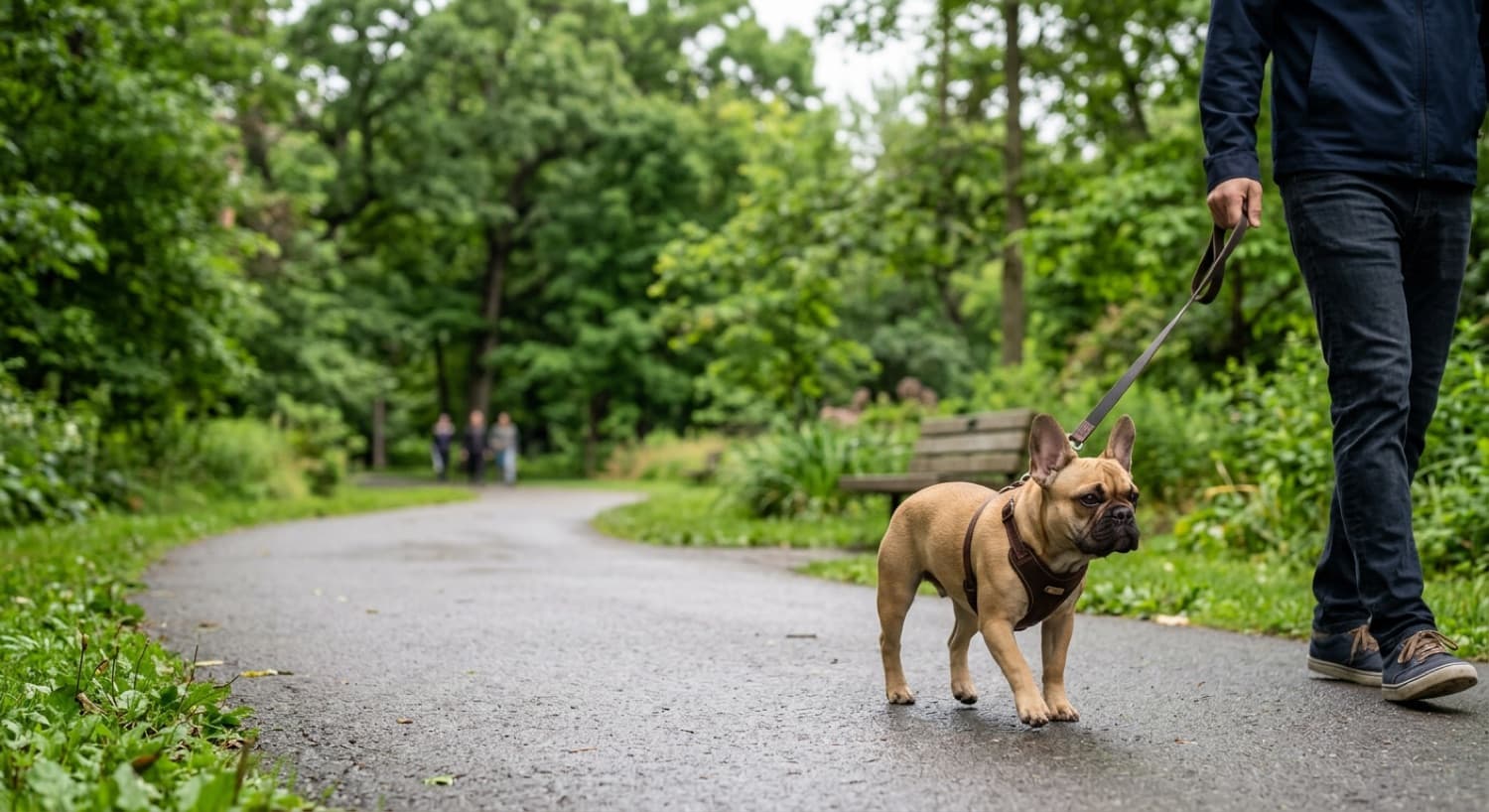
If you own or are considering a French Bulldog, this is the guide that matters most for keeping the dog alive and comfortable. The breed's breathing limitation and heat vulnerability aren't minor quirks, they're serious, and heatstroke is a leading preventable cause of death in the breed. The good news is that with deliberate management, especially around heat, you can keep a Frenchie safe. Here is exactly how.
Why they struggle to breathe
The flat-faced structure physically obstructs the airway (BOAS): the soft tissues, still roughly a normal dog's amount, are crammed into a much smaller space. Common obstructions: narrowed nostrils, an elongated soft palate, everted laryngeal saccules, and sometimes a narrowed windpipe. That's why so many Frenchies snore, snort, breathe noisily, and tire quickly. This is not laziness, it's a structural inability to breathe efficiently, present to some degree in most Frenchies (mild to severe), and it's progressive.
The consequences are serious: Frenchies can't exercise much or tolerate exertion, are highly vulnerable to overheating (they can't pant effectively), and in severe cases have real breathing distress. Understanding why a Frenchie breathes the way it does is the foundation for managing it safely, because the difficulty is structural and serious, protecting the dog from what overwhelms its limited airway (heat and overexertion) is the central responsibility. (See our health guide on BOAS.)
Why heatstroke is such a danger
Dogs cool themselves primarily by panting, and a Frenchie's obstructed airway means it cannot pant effectively, so it cannot cool itself well. It can overheat dangerously fast in conditions a normal dog handles easily, and suffer heatstroke, a medical emergency that can cause organ damage and death. This isn't theoretical, brachycephalic breeds die of heatstroke every summer, often in situations owners didn't realise were dangerous. Heat plus humidity (which makes panting even less effective) is worst, and Montreal's hot, humid summers are a genuine seasonal danger.
So protecting a Frenchie from heat is not optional caution but a central, life-saving responsibility: keep the dog cool (air conditioning in hot, humid weather), never exercise or leave it in the heat, never in a warm car or space, and watch closely for overheating. Heatstroke is one of the leading preventable causes of death in the breed.
Keeping a Frenchie safe in Montreal summers
Montreal's hot, humid summers require deliberate, consistent heat management. The core: keep the dog cool, avoid heat and exertion, watch closely. Practical measures:
- •Air conditioning in hot/humid weather, the single most important measure. A Frenchie should not be in the heat.
- •Walk only in the coolest parts of the day (early morning, late evening), keep walks short and gentle when warm, and skip them on very hot or humid days.
- •Never leave the dog in a parked car or any warm, unventilated space.
- •Constant fresh water and shade, plus cooling aids (cooling mats, damp towels, cool floors, cooling vests).
- •Avoid heat combined with excitement or stress, and keep the dog lean (excess weight worsens breathing and heat tolerance).
Recognise the early signs of overheating (below) and act immediately. The mindset: summer heat is a serious, potentially deadly hazard, so prioritise keeping the dog cool over letting it do normal warm-weather activities, which it can't do safely. Winter is less of a breathing concern (though a small, short-coated Frenchie feels the cold and benefits from a coat), so heat management is a spring-through-fall, and especially mid-summer, priority.
Safe exercise (and never swimming)
Frenchies have limited exercise capacity and must be exercised gently and in moderation, luckily they're low-energy, so this suits them. Appropriate: short, gentle walks in cool conditions, low-key play, and mental enrichment (puzzle toys, training) that tires without exertion. Avoid: strenuous or prolonged exercise, running or hiking, exercise in warm/humid weather, and any exertion that leaves the dog struggling to breathe. Watch the breathing, if a Frenchie is labouring, stop immediately and let it rest and cool.
Importantly, French Bulldogs should not swim, they're poor swimmers (their heavy front end makes them prone to sinking) and can drown, so never leave one unsupervised near water and use a life jacket if near water at all. Keeping the dog lean is part of exercise management. Overall, a Frenchie needs only modest, gentle exercise, always managed around its breathing limits and the temperature, prioritising safety over activity, which suits the breed's low-energy nature well, so long as you respect the limits.
Warning signs, and what to do
Breathing distress: laboured or noisy breathing beyond normal, frantic panting, gagging or retching, blue, purple, or pale gums/tongue (insufficient oxygen, a serious emergency), extreme exercise intolerance, or collapse. Heatstroke: frantic panting and drooling, bright red then pale or bluish gums, lethargy, weakness, stumbling or collapse, vomiting/diarrhea, a dazed appearance, and in severe cases seizures or unconsciousness.
For serious breathing distress (especially blue/pale gums or collapse) or heatstroke, treat it as a medical emergency and seek immediate veterinary care, know your nearest Montreal 24-hour emergency vet in advance. For suspected heatstroke, while getting to the vet, begin cooling gradually: move to a cool/shaded/air-conditioned area, offer small amounts of cool (not ice-cold) water if the dog can drink, and apply cool (not ice-cold) water to the body, especially belly, groin, and paws, with wet towels or gentle running water. Avoid ice-cold water/ice (it constricts blood vessels) and don't force water into a dog that can't swallow. Start cooling immediately while urgently getting help. Prevention is far better than treatment, so the emphasis is always on avoiding heat and overexertion in the first place.
Can surgery help?
Yes, corrective surgery can significantly help many Frenchies breathe better, and it's often recommended for meaningful BOAS. The common procedures address the two most common problems: widening narrowed nostrils (nares resection) and shortening an elongated soft palate (staphylectomy); sometimes everted laryngeal saccules are also removed. Often done together, these can substantially improve breathing, reduce the effort and noise, and improve exercise and heat tolerance and quality of life.
Surgery is often recommended relatively early (sometimes young, or at spay/neuter) because addressing the obstruction early can prevent some secondary worsening, though it can be done later, discuss timing with a vet experienced with brachycephalic breeds, or a surgeon. Understand that surgery improves but doesn't cure the fundamental structure, a Frenchie remains a flat-faced dog with some breathing limitation and heat vulnerability, so the careful management stays necessary, but for many dogs it makes a real, worthwhile difference. The cost is a consideration (another reason for pet insurance taken out while young). If your Frenchie has breathing difficulty, discussing corrective surgery with a knowledgeable vet is genuinely worthwhile. See our adoption guide.
Browse adoptable dogs in Montreal
If you're ready to manage the breathing and heat needs, an adopted Frenchie makes a devoted companion. Refreshed regularly across Montreal-area organizations.
See Available Dogs →Frequently Asked Questions
Why do they struggle to breathe?
The flat face physically obstructs the airway (BOAS), narrowed nostrils, an elongated soft palate, everted saccules, sometimes a narrowed windpipe. It's a structural inability to breathe efficiently, not laziness, present in most Frenchies and progressive. It limits exercise and makes them vulnerable to overheating.
Why are they so vulnerable to heatstroke?
Dogs cool themselves by panting, and a Frenchie's obstructed airway means it can't pant effectively, so it can't cool itself. It can overheat dangerously fast and suffer fatal heatstroke in conditions a normal dog handles easily. Heat plus humidity is worst, so Montreal summers are a genuine danger. Protecting from heat is life-saving.
How do I keep one safe in Montreal summers?
Air conditioning in hot/humid weather (the key measure), walk only in the coolest hours (skip very hot days), never leave the dog in a car or warm space, provide water, shade, and cooling aids, avoid heat plus excitement, and keep the dog lean. Prioritise keeping the dog cool over normal warm-weather activity.
How much exercise can they safely do?
Modest and gentle only, short cool-hour walks, low-key play, and mental enrichment. Avoid strenuous or prolonged exercise, running/hiking, and any exertion in warm weather; stop immediately if the dog labours. And never let a Frenchie swim, they sink and can drown. Their low energy suits these limits.
What are the warning signs, and what do I do?
Breathing distress: laboured/noisy breathing, frantic panting, blue/purple/pale gums (an emergency), collapse. Heatstroke: frantic panting, red then pale gums, weakness, collapse, vomiting. Both are emergencies, seek immediate vet care. For heatstroke, start cooling gradually (cool not ice-cold water) while rushing to the vet.
Can surgery help them breathe better?
Yes, widening the nostrils and shortening the soft palate (often done together) can significantly improve breathing, exercise, and heat tolerance, and is often recommended, sometimes early. It improves but doesn't cure the structure, so careful management continues. Discuss it with a vet experienced with brachycephalic breeds.
Related Montreal guides
French Bulldog Adoption in Montreal
Where to adopt in Montreal, the affectionate temperament, the health reality, scam warnings, real costs, and who it suits.
French Bulldog Health Issues
BOAS breathing, spinal and skin problems, eye and ear conditions, and the strong pet-insurance case.
Adoptable Dogs in Montreal
All currently available dogs across Montreal-area organizations, including French Bulldogs and Frenchie mixes. Updates regularly.
Montreal Dog Adoption Resources
All our Montreal dog adoption guides in one place.
New dog? Start with these care guides
Everything a new adopter needs to set up a safe, happy home.