The short answer
French Bulldogs have many significant health problems, more than most breeds, stemming from their exaggerated flat-faced, dwarf build. The central issue is brachycephalic obstructive airway syndrome (BOAS), breathing problems that make Frenchies dangerously intolerant of heat and exertion (fatal heatstroke is a real risk). Also: spinal/back problems (IVDD, hemivertebrae), skin (fold dermatitis, allergies), eyes (cherry eye, corneal ulcers), ear infections, and joint issues, plus most need caesareans to give birth. Lifespan is a relatively short ~10 to 12 years. The overriding daily responsibility: protect the dog from heat and overexertion, plus keep it lean and manage the folds, eyes, and back. Pet insurance is strongly advisable, more than for almost any breed, insure while young.
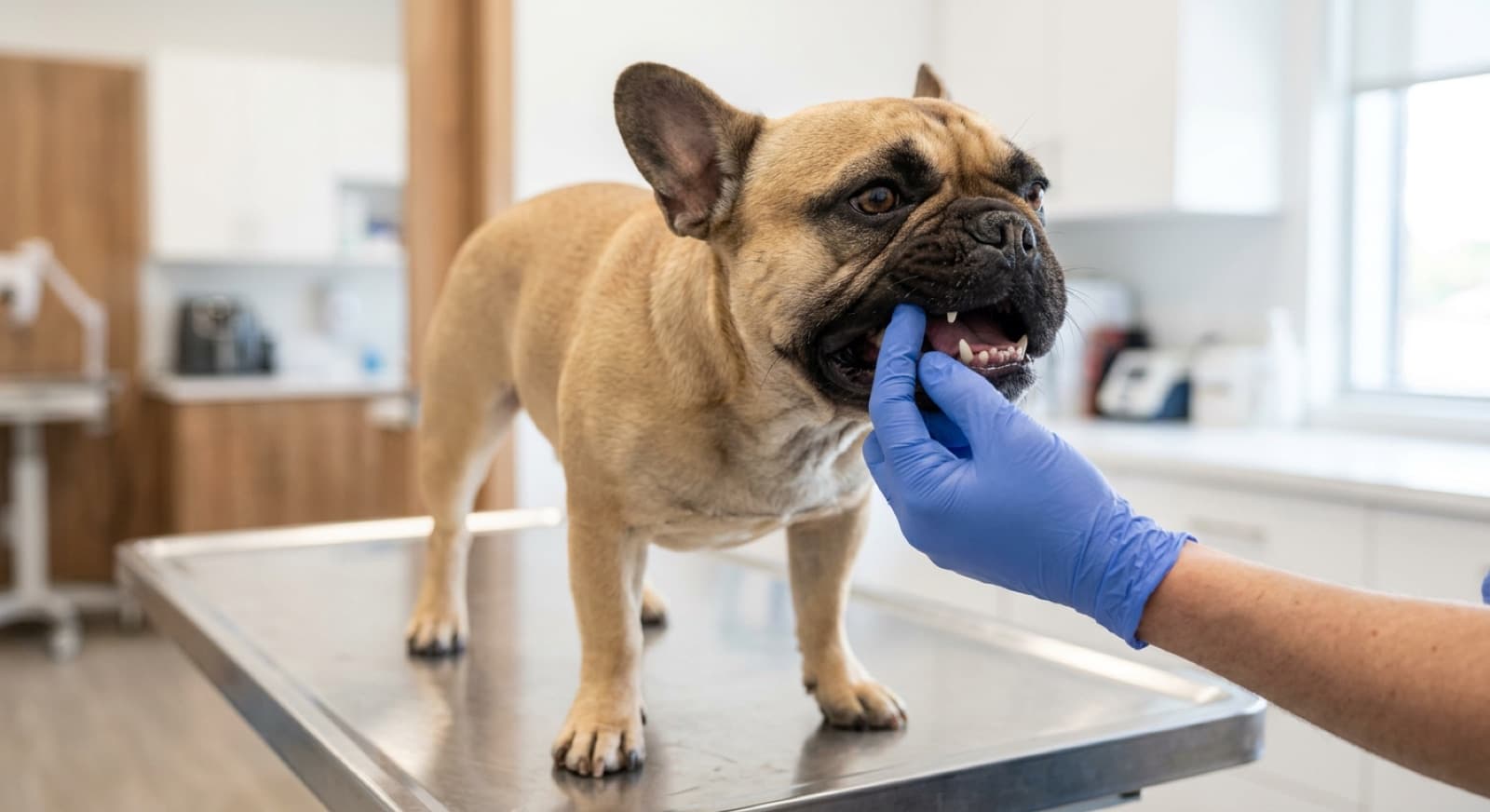
This guide doesn't sugar-coat: the French Bulldog is one of the least healthy popular breeds, and the problems are serious, often lifelong, and stem directly from the exaggerated features people find so appealing. That's not a reason to reject a Frenchie in need, but it is a reason to go in fully informed and committed. Here is the medical picture, honestly, condition by condition.
BOAS: the central issue
Brachycephalic obstructive airway syndrome (BOAS) is the central issue. The shortened skull and muzzle compress the airway's soft tissues (narrowed nostrils, elongated soft palate, everted laryngeal saccules, narrowed windpipe), making it physically hard to breathe. Many Frenchies snore and snort, tire easily, can't exercise much, and struggle when hot or stressed, and it's progressive. Critically, it makes them extremely vulnerable to fatal heatstroke (they can't pant effectively), a genuine, life-threatening danger, especially in Montreal summers.
Management involves careful daily management (protecting from heat, limiting exercise, keeping the dog lean, avoiding stress, harness not collar) and, for many Frenchies, corrective surgery (widening the nostrils, shortening the soft palate) that can significantly improve breathing and quality of life, often recommended, sometimes early. BOAS is the defining challenge of the breed, understand it, manage it diligently, and be prepared for surgery and the ever-present need to protect the dog from heat and overexertion. Our breathing and heat-safety guide covers day-to-day management.
Spinal and back problems
As a dwarf, screw-tailed breed with malformed vertebrae, Frenchies are prone to two main spinal issues. IVDD: premature disc degeneration that can bulge or rupture and press on the cord, causing pain, weakness, and even paralysis, know the signs (back pain, hunched posture, leg weakness or dragging), and treat sudden weakness or paralysis as a medical emergency. Hemivertebrae: malformed wedge-shaped vertebrae (linked to the screw tail); many cause no problems, but some cause spinal cord compression and neurological signs, sometimes in young dogs.
Management ranges from rest and medication to surgery, and it can be serious and expensive. Protect the back by keeping the dog lean, managing jumping (prevent jumping on/off furniture, use ramps or steps), and handling carefully, similar to the care other at-risk breeds need. The potential for serious, expensive spinal problems is another reason pet insurance is strongly advisable.
Skin, eyes, ears, and joints
Skin: the folds trap moisture and are prone to skin-fold dermatitis (clean and dry them regularly), and Frenchies have a high rate of allergies causing itchy skin, recurrent infections, and ear problems, often a chronic management issue. Eyes: the prominent, exposed eyes are vulnerable to cherry eye and corneal ulcers (ulcers are urgent), and dry eye. Ears: narrow canals plus allergies mean ear infections. Joints: hip dysplasia, patellar luxation, and elbow issues can occur.
Together with the breathing and spinal issues, these make the Frenchie a breed that often needs significant, ongoing care across multiple body systems. Practically: clean and dry the folds, manage allergies with veterinary guidance, protect and monitor the eyes (seek prompt care for any eye problem, corneal ulcers especially), keep up ear care, watch for joint problems, and maintain diligent routine vet care. This breadth of potential issues is exactly why insurance and a realistic vet budget matter so much.
Lifespan and the insurance case
French Bulldogs have a relatively short lifespan (~10 to 12 years), reflecting the health burden. Longevity depends heavily on management and on how severely the dog is affected. Keeping one as healthy as possible: protect from heat and overexertion above all (the most important daily responsibility, and life-saving), keep the dog lean, clean the folds and manage allergies, care for eyes and ears, protect the back, and maintain diligent vet care. On insurance: strongly advisable, more than for almost any breed, because BOAS surgery, spinal surgery, eye surgery, chronic allergy management, and the many other conditions can add up to very high lifetime costs. Montreal specialist and surgical care isn't cheap.
Insurance can genuinely determine whether you can afford the care a Frenchie may need. Take it out while the dog is young and healthy, before any of the breed's many conditions is excluded as pre-existing, especially important for a breed so likely to develop issues. Compare providers, check whether the breed's characteristic conditions are covered (some policies have brachycephalic exclusions or higher premiums), and read the fine print carefully. If you self-insure, keep a substantial vet fund, the breed's potential costs are among the highest of any. For an adopted Frenchie (which may already have issues), understand what a policy covers, and be prepared for the reality that a Frenchie is likely to need significant care. See our adoption guide.
Browse adoptable dogs in Montreal
Go in fully informed, a good rescue shares a dog's known health history. Refreshed regularly across Montreal-area organizations.
See Available Dogs →Frequently Asked Questions
What are the main health problems?
Many, more than most breeds, stemming from the flat-faced, dwarf build. Above all BOAS (breathing), plus spinal/back problems (IVDD, hemivertebrae), skin (fold dermatitis, allergies), eyes (cherry eye, corneal ulcers), ear infections, joint issues, and difficulty giving birth. A sobering picture to face honestly.
What is BOAS and why is it so serious?
Brachycephalic obstructive airway syndrome, the flat face compresses the airway, making breathing physically hard. Frenchies snore, tire easily, and struggle when hot or stressed, and it's progressive. Critically, it makes them extremely vulnerable to fatal heatstroke. Managed with careful daily management and often corrective surgery.
What spinal problems do they have?
As a dwarf, screw-tailed breed, they're prone to IVDD (disc disease, can cause pain and paralysis, an emergency if sudden) and hemivertebrae (malformed vertebrae that can compress the cord, sometimes in young dogs). Protect the back by keeping the dog lean, managing jumping, and handling carefully.
What skin, eye, ear, and joint issues affect them?
Skin: fold dermatitis (clean and dry the folds) and a high rate of allergies (often chronic). Eyes: cherry eye and corneal ulcers (urgent). Ears: infections (narrow canals plus allergies). Joints: hip dysplasia, patellar luxation, elbow issues. The breed often needs ongoing multi-system care.
How long do they live?
Relatively short for a small breed, ~10 to 12 years, reflecting the health burden. Longevity depends on management and severity. Protect from heat and overexertion above all, keep the dog lean, manage the folds, eyes, ears, and back, and maintain diligent vet care.
Is pet insurance worth it?
Strongly advisable, more than for almost any breed. BOAS surgery, spinal surgery, eye surgery, chronic allergy management, and other conditions add up to very high lifetime costs. Take insurance out while the dog is young, before conditions are excluded, and check that the breed's characteristic conditions are covered (some policies exclude them).
Related Montreal guides
French Bulldog Adoption in Montreal
Where to adopt in Montreal, the affectionate temperament, the health reality, scam warnings, real costs, and who it suits.
French Bulldog Breathing & Heat Safety
Managing BOAS day to day, protecting a Frenchie from Montreal's summer heat, exercise limits, and when surgery helps.
Adoptable Dogs in Montreal
All currently available dogs across Montreal-area organizations, including French Bulldogs and Frenchie mixes. Updates regularly.
Montreal Dog Adoption Resources
All our Montreal dog adoption guides in one place.
New dog? Start with these care guides
Everything a new adopter needs to set up a safe, happy home.