The short answer
German Shepherds are prone to several serious conditions: hip and elbow dysplasia (joint issues, the breed is well known for them), degenerative myelopathy (a progressive, incurable spinal cord disease of older dogs), bloat / GDV (a sudden, life-threatening emergency, know the warning signs), and exocrine pancreatic insufficiency (EPI) (a digestive disorder, very manageable once diagnosed), plus allergies, perianal fistulas, and others. Lifespan is ~9 to 13 years. The biggest levers you control: keep the dog lean, follow bloat-prevention feeding, and stay on routine vet care. Because the breed's conditions can be costly, the insurance case is strong, insure while young.
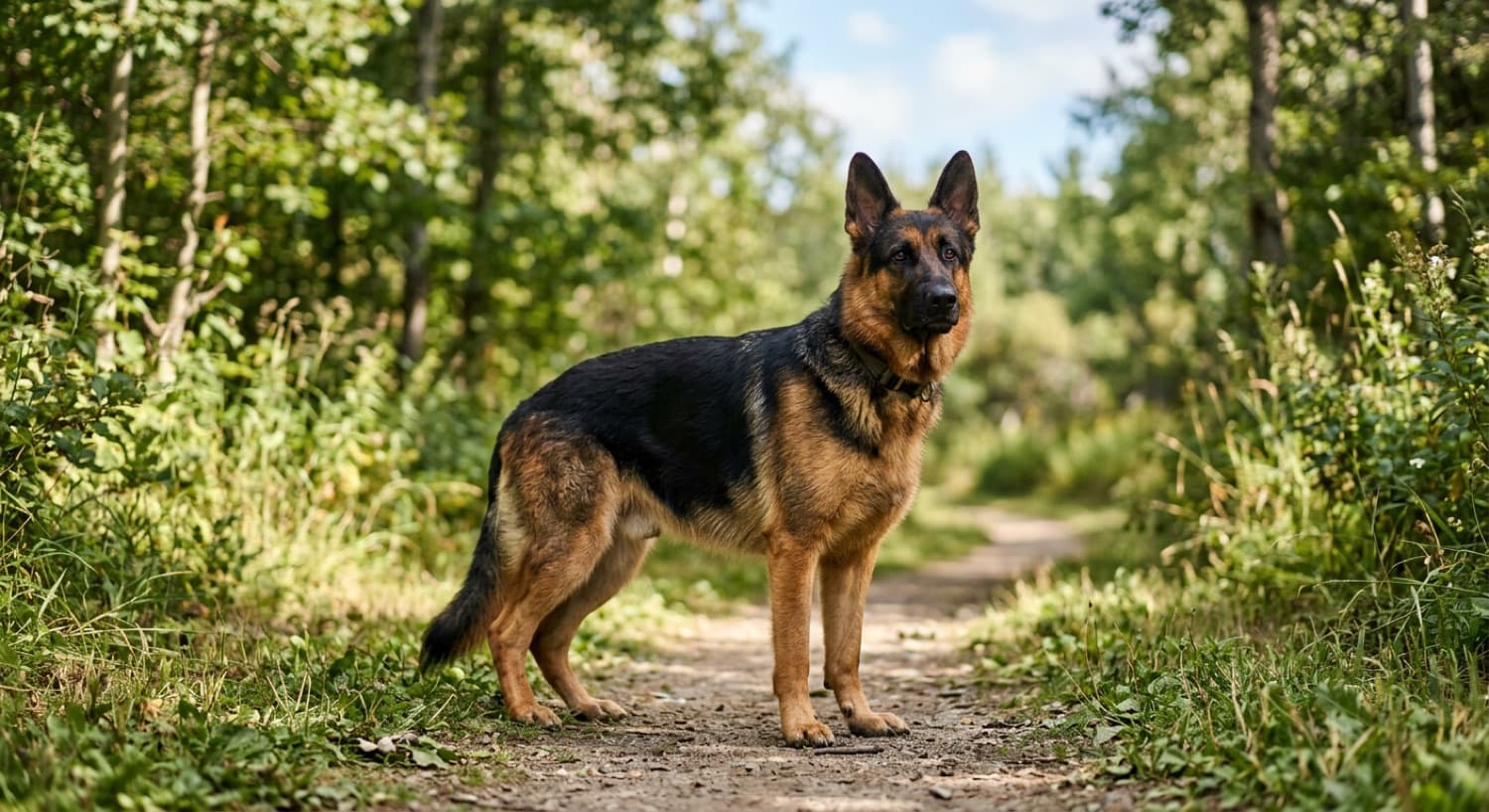
The German Shepherd is, frankly, a breed with real health considerations, several of them serious. That is not a reason to avoid the breed, many Shepherds live long, healthy lives, but it is a reason to go in informed. Knowing the conditions lets you catch problems early, and in the case of bloat, knowing the warning signs can save your dog's life. Here is the medical picture, condition by condition.
Hip and elbow dysplasia
Hip and elbow dysplasia are among the most common and best-known issues in the breed, joint malformations leading to arthritis, pain, and reduced mobility. Signs include stiffness, difficulty rising, reluctance to exercise or climb stairs, limping, and a swaying gait. Management ranges from weight control, supplements, appropriate exercise, physiotherapy, and medication to surgery (including total hip replacement) in severe cases.
Keeping a Shepherd lean is the single biggest lever, it significantly reduces joint load and slows arthritis, and this cannot be overstated for a large, dysplasia-prone breed. Appropriate exercise that builds supporting muscle without overstressing the joints helps, and avoid excessive high-impact exercise in growing puppies. Montreal owners can keep a Shepherd fit year-round with the city's parks and paths (swimming is an excellent low-impact option in warmer months). The OFA maintains breed hip-and-elbow screening data.
Degenerative myelopathy
Degenerative myelopathy (DM) is a progressive, incurable spinal cord disease the breed is particularly associated with, typically appearing after about 8 years of age. It causes gradual hind-end weakness and loss of coordination, dragging or scuffing the back paws, wobbliness, difficulty with stairs, worsening over months to a couple of years. Importantly, DM is generally not painful (unlike arthritis or disc disease), but it is progressive and ultimately debilitating. A DNA test identifies at-risk dogs.
There is no cure, but management maintains quality of life: physiotherapy and controlled exercise help maintain muscle for a time, and supportive care (harnesses, slings, carts, protecting the paws) helps as it progresses. For an aging Shepherd, know the early signs so DM can be distinguished from treatable causes of hind-end weakness (a vet can rule out arthritis and disc disease). A dog with DM can often have a good quality of life for a considerable time, and the fact that it is not painful is a meaningful comfort.
Bloat (GDV): know the signs
Bloat (gastric dilatation-volvulus, GDV) is a sudden, life-threatening emergency deep-chested breeds like the Shepherd are at risk of, the stomach fills with gas and twists, becoming fatal within hours without emergency surgery. Every owner must know the warning signs: a distended abdomen, unproductive retching (trying to vomit with nothing or only foam), restlessness and pacing, drooling, obvious distress, a hunched posture, and rapid breathing. If you see these, get to an emergency vet immediately, do not wait.
Prevention matters: feed smaller, more frequent meals, avoid vigorous exercise right before and after eating, slow down a fast eater (slow-feeder bowl), and avoid gulping large amounts of water at once. Some owners, with their vet, choose a preventive gastropexy (tacking the stomach in place), sometimes done at spay/neuter, worth discussing for a deep-chested Shepherd. Make sure everyone in your household knows the signs, and know where Montreal's nearest 24-hour emergency vet is before you need it. The VCA guide to bloat is essential reading for the breed.
EPI and other conditions
Exocrine pancreatic insufficiency (EPI) is a digestive disorder the breed is prone to, the pancreas doesn't make enough digestive enzymes, so the dog can't absorb nutrients. Hallmark signs: weight loss despite a good or ravenous appetite, plus large, pale, greasy, foul-smelling stool. It's diagnosed with a blood test and very manageable with enzyme supplementation at every meal (most dogs live normal lives once treated). If a Shepherd loses weight despite eating well, mention EPI to your vet.
The breed can also be prone to allergies and skin problems, perianal fistulas (a painful but treatable condition), pannus (a manageable eye condition), and arthritis. Most individual Shepherds will not develop most of these, but the range means routine vet care, weight management, good nutrition, and prompt attention to symptoms are all worthwhile, and collectively they make a strong case for insurance.
Lifespan and the insurance case
German Shepherds typically live around 9 to 13 years. Keep the dog lean (the single biggest lever for the dysplasia-prone joints), follow bloat-prevention feeding (and discuss gastropexy), provide appropriate exercise, stay on routine vet care, and watch for the warning signs of the serious conditions. Pet insurance is genuinely worth considering for this breed, more so than for many, because dysplasia surgery, bloat surgery, DM supportive care, and EPI treatment can all be expensive, and Montreal vet care (especially emergency and specialist) is not cheap.
Take out insurance while the dog is young and healthy, before any condition is diagnosed and excluded, which matters a great deal for a breed with so many hereditary predispositions. Compare providers, understand coverage (including hereditary and chronic conditions) and limits, and read the fine print. If you self-insure, keep a substantial vet fund in mind for this breed specifically. For an adopted adult or senior, some conditions may already be present, so understand what a policy covers. See our Shepherd adoption guide for the cost picture.
Browse adoptable dogs in Montreal
A good rescue shares a dog's known health history so you can adopt informed. Refreshed regularly across Montreal-area organizations.
See Available Dogs →Frequently Asked Questions
What are the main health problems?
Hip and elbow dysplasia, degenerative myelopathy (a progressive spinal disease of older dogs), bloat/GDV (an emergency, know the signs), and EPI (a digestive disorder), plus allergies, perianal fistulas, and pannus. A real list, but many Shepherds live long, healthy lives with good care. Lifespan ~9 to 13 years.
Do they have hip and joint problems?
Yes, hip and elbow dysplasia are among the most common and best-known issues. Keeping the dog lean is the single biggest lever, plus appropriate exercise avoiding high-impact stress in puppies. Montreal's parks and paths keep a Shepherd fit; swimming is a great low-impact option.
What is degenerative myelopathy?
A progressive, incurable spinal cord disease the breed is associated with, typically after age 8, causing gradual hind-end weakness. It's generally not painful. No cure, but physiotherapy and supportive care (slings, carts) maintain quality of life. A DNA test identifies at-risk dogs.
What is bloat and why is it dangerous?
GDV, the stomach fills with gas and twists, fatal within hours without emergency surgery. Deep-chested Shepherds are at risk. Signs: distended abdomen, unproductive retching, restlessness, drooling, distress. Get to an emergency vet immediately. Prevent with smaller meals, no vigorous exercise around eating, and discuss gastropexy with your vet.
What is EPI?
Exocrine pancreatic insufficiency, the pancreas doesn't make enough digestive enzymes, so the dog loses weight despite eating well, with greasy, foul stool. Diagnosed with a blood test and very manageable with enzyme supplementation. If a Shepherd loses weight despite a good appetite, mention EPI to your vet.
Is pet insurance worth it?
Genuinely worth considering for this breed, more than most. Dysplasia surgery, bloat surgery, DM supportive care, and EPI treatment can all be expensive, and Montreal vet care isn't cheap. Take insurance out while the dog is young, before hereditary conditions are excluded. For an adopted adult, understand what a policy covers.
Related Montreal guides
German Shepherd Adoption in Montreal
Where to adopt in Montreal, the loyal working temperament, exercise and training, real costs, and who it suits.
German Shepherd Temperament & Training
The working temperament and how to train and exercise this intelligent breed in Montreal, winter included.
Adoptable Dogs in Montreal
All currently available dogs across Montreal-area organizations, including Shepherds and Shepherd mixes. Updates regularly.
Montreal Dog Adoption Resources
All our Montreal dog adoption guides in one place.
New dog? Start with these care guides
Everything a new adopter needs to set up a safe, happy home.