The short answer
The Dane's temperament is the easy part, living with a giant is the real commitment. On space: a Dane can even do apartment/condo living (they're calm indoors) if given room to stretch out, enough exercise, and manageable logistics, though more space is easier. On cost: one of the pricier breeds, dominated by large food bills and expensive giant-breed vet care (weight-dosed meds, pricier everything), plus supplies, gastropexy, a winter coat, and insurance, budget honestly. Puppy growth needs careful management (controlled giant-breed diet, no over-exercise during the ~18 to 24 month growth), a stage you skip by adopting an adult. Everyday logistics: counter-surfing reach, real strength, drool, transport, big everything. And weigh the size, cost, and short (~7 to 10 year) lifespan honestly, if you can meet and accept them, a Dane is unforgettable.
Ask any Great Dane owner and they'll tell you the temperament is the easy part. The real commitment is everything that comes with sharing your home and life with a dog the size of a small pony: the space, the cost, the logistics, and the heartache of a short life. This guide is the honest, practical picture, the stuff that decides whether a Dane is truly right for you.
Space: how much, and can one live in an apartment?
A Dane needs room to exist comfortably, but, surprisingly, one can live in an apartment or condo, because Danes are calm and low-energy indoors (giant couch potatoes). What matters more than raw square footage: room to stretch out and move, enough daily exercise to compensate for limited indoor roaming, manageable logistics (elevators, corridors, fitting through spaces), and a living situation (landlord/building) that permits a giant dog.
A home with more room, and ideally some yard access, is certainly easier and generally preferable, but it isn't strictly required if you can meet the dog's needs. Bear in mind everything about a Dane is big: it takes up space on furniture (many will share the couch or bed, leaving little room for you), in the car (may not fit a small one), and generally in the home, so you need to be comfortable sharing your space with a very large animal. Assess honestly whether you can accommodate the size in daily life.
The real cost of a giant
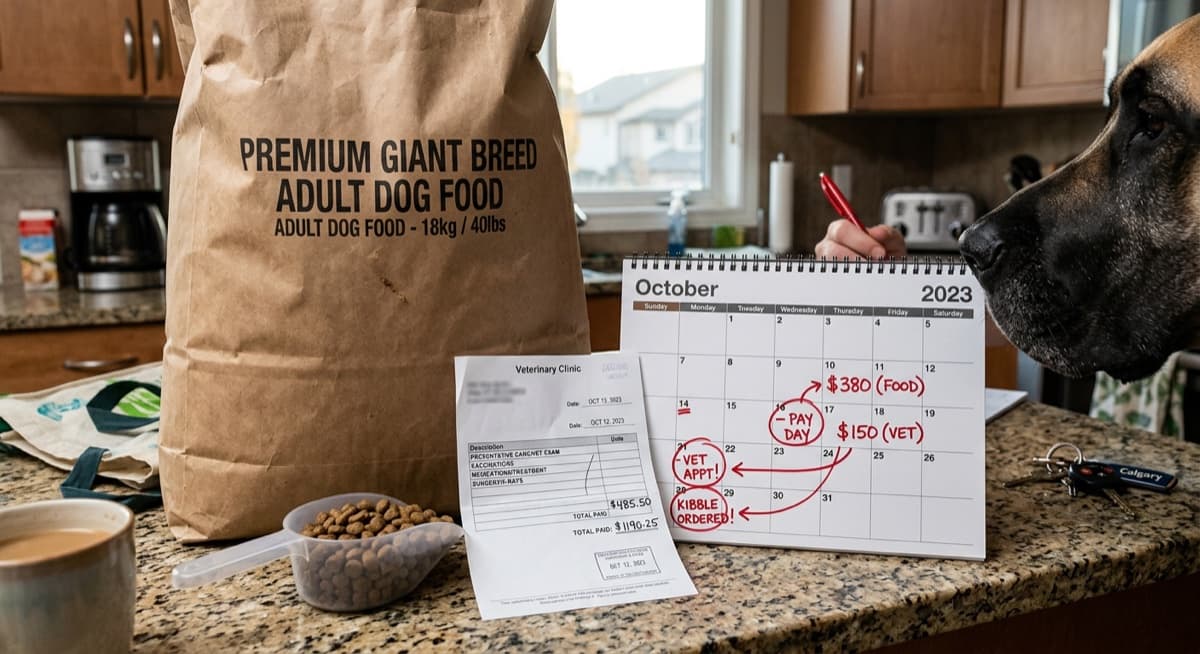
A Dane is one of the pricier breeds, driven overwhelmingly by size. The big ones: food (a giant dog eats a lot, a substantial monthly bill), and especially veterinary care (medications dosed by weight, so a Dane's doses and costs are large, and procedures, anesthesia, and hospitalization all cost more, plus the breed's serious potential health issues, bloat surgery, cardiac care, cancer, can be very expensive). Also: giant-sized supplies, a preventive gastropexy (worthwhile given bloat risk), a winter coat, training, possibly a larger vehicle, and insurance or a health fund (strongly advisable).
The upshot: a Dane's lifetime cost is high, dominated by food and vet care (both amplified by size), plus the real possibility of major health expenses. Budget honestly, financial readiness is a genuine, non-optional part of responsible ownership, and underestimating the cost is a common reason giant breeds end up in rescue. If the cost is a stretch, it's better to know that before adopting. See the health guide on the medical costs.
Managing giant-breed puppy growth
Danes grow from a small puppy to an enormous dog astonishingly fast, and that rapid growth makes developing bones and joints vulnerable, so improper growth management can contribute to orthopedic problems. Diet: feed an appropriate large/giant-breed puppy food (vet-directed) for controlled, steady growth, don't overfeed or push fast growth (excess weight and too-rapid growth stress the joints). Exercise: moderate and appropriate, avoid high-impact activity, excessive running, and repetitive jumping during growth (giant breeds mature slowly, often ~18 to 24 months).
Also provide good footing (rugs) and be cautious with stairs for a large, growing puppy, keep the puppy lean (not chubby), and follow your vet's guidance. The giant-breed growth period is genuinely vulnerable: getting diet and exercise right supports healthy development and reduces orthopedic risk; getting it wrong can contribute to lifelong issues. Adopting an adult Dane skips this demanding stage entirely, one of the real advantages of adopting an adult giant.
Everyday logistics, and is a Dane right for you?
Living with a giant means adapting to daily realities that are easy to overlook until there's a Dane in the house: everything is bigger (furniture space, bowls, beds); a Dane is tall enough to counter-surf effortlessly, so you keep things out of reach, and a wag can clear a coffee table; even a gentle Dane is very strong, so good leash manners matter and a happy lean or body-slam is something to manage (especially around children or anyone unsteady); transport may need a larger vehicle; and there's some drool and shedding to clean up. None of this is necessarily a dealbreaker, owners generally find the trade-offs well worth it, but picture the day-to-day reality in your actual home.
Is a Dane right for you? A great fit if you can provide the space, genuinely afford the high cost, provide exercise/training/companionship (and puppy growth management), manage the giant-dog logistics, provide winter warmth, and, crucially, understand and emotionally accept the serious health risks (especially bloat) and the sadly short (~7 to 10 year) lifespan. Not a fit if you can't accommodate the size or cost, want a long-lived dog, or your living situation can't practically accommodate a giant. Be honest, the size, cost, and short lifespan are non-negotiable realities, not obstacles to wish away.
A reputable rescue can help you honestly assess fit, and adopting an adult (known size, temperament, and sometimes health, and past the demanding puppy stage) can be a wise route, though the short lifespan means possibly even less time. If you can meet and accept the demands, a Great Dane is a deeply rewarding, unforgettable companion; if you can't, choosing a different breed honestly and up front is the responsible, kinder decision. See our adoption guide.
Browse adoptable dogs in Montreal
Adopting an adult Dane skips the demanding puppy-growth stage and gives you a known size and temperament. Refreshed regularly across Montreal-area organizations.
See Available Dogs →Frequently Asked Questions
How much space does a Dane need? Can one live in an apartment?
A Dane needs room to exist comfortably, but can live in an apartment/condo because they're calm indoors, if given room to stretch out, enough daily exercise, manageable logistics (elevators, corridors), and a living situation that permits a giant dog. More space and yard access are easier but not strictly required. What matters is whether you can accommodate the size in daily life.
What does a Great Dane really cost?
One of the pricier breeds, driven by size. The big costs: large food bills and expensive giant-breed vet care (weight-dosed meds, pricier procedures, plus serious potential health issues). Also giant-sized supplies, preventive gastropexy, a winter coat, training, possibly a larger vehicle, and insurance or a health fund. Budget honestly, underestimating cost is a common reason giants end up in rescue.
How do I manage a Dane puppy's rapid growth?
Carefully, because fast growth makes developing joints vulnerable. Feed an appropriate giant-breed puppy diet (vet-directed) for controlled, steady growth (don't overfeed or push fast growth), and keep exercise moderate, avoiding high-impact activity and jumping during the growth period (giants mature slowly, ~18 to 24 months). Keep the puppy lean, provide good footing. Adopting an adult skips this demanding stage.
What are the everyday logistics?
Everything is bigger (furniture space, bowls, beds); a Dane counter-surfs effortlessly and a wag can clear a table; even a gentle Dane is very strong (leash manners matter, and a lean or body-slam is real); transport may need a larger vehicle; and there's some drool and shedding. Not dealbreakers, but picture the day-to-day reality of a giant in your actual home and life.
Is a Great Dane right for me?
A great fit if you can provide the space, afford the high cost, provide exercise/training/companionship (and puppy growth management), manage giant-dog logistics, provide winter warmth, and, crucially, understand and accept the serious health risks (especially bloat) and the short (~7 to 10 year) lifespan. Not a fit if you can't accommodate the size or cost or want a long-lived dog. Be honest, these are non-negotiable realities.
Related Montreal guides
Great Dane Adoption in Montreal
Where to adopt, the gentle-giant temperament, family and climate fit, real costs, and who the breed suits.
Great Dane Health Issues
Bloat (GDV), dilated cardiomyopathy, hip dysplasia, wobbler syndrome, the short giant-breed lifespan, and the strong pet-insurance case.
Adoptable Dogs in Montreal
All currently available dogs across Montreal-area organizations, including giant breeds and mixes. Updates regularly.
Montreal Dog Adoption Resources
All our Montreal dog adoption guides in one place.
New dog? Start with these care guides
Everything a new adopter needs to set up a safe, happy home.