The short answer
Poodles have a curly, single, continuously-growing coat that is low-shedding but high-maintenance, the single biggest commitment of owning one. It mats readily, so brush frequently (daily for a long coat, several times a week for a short clip), down to the skin, focusing on friction areas (behind the ears, armpits, groin). Plan on professional grooming every 4 to 8 weeks (a defining recurring cost). Most pet owners choose a practical puppy/teddy-bear cut. Care for the ears (infection-prone, dry after swimming) and eyes (tear staining), and always dry the curly coat thoroughly when it gets wet, doubly important in Montreal.
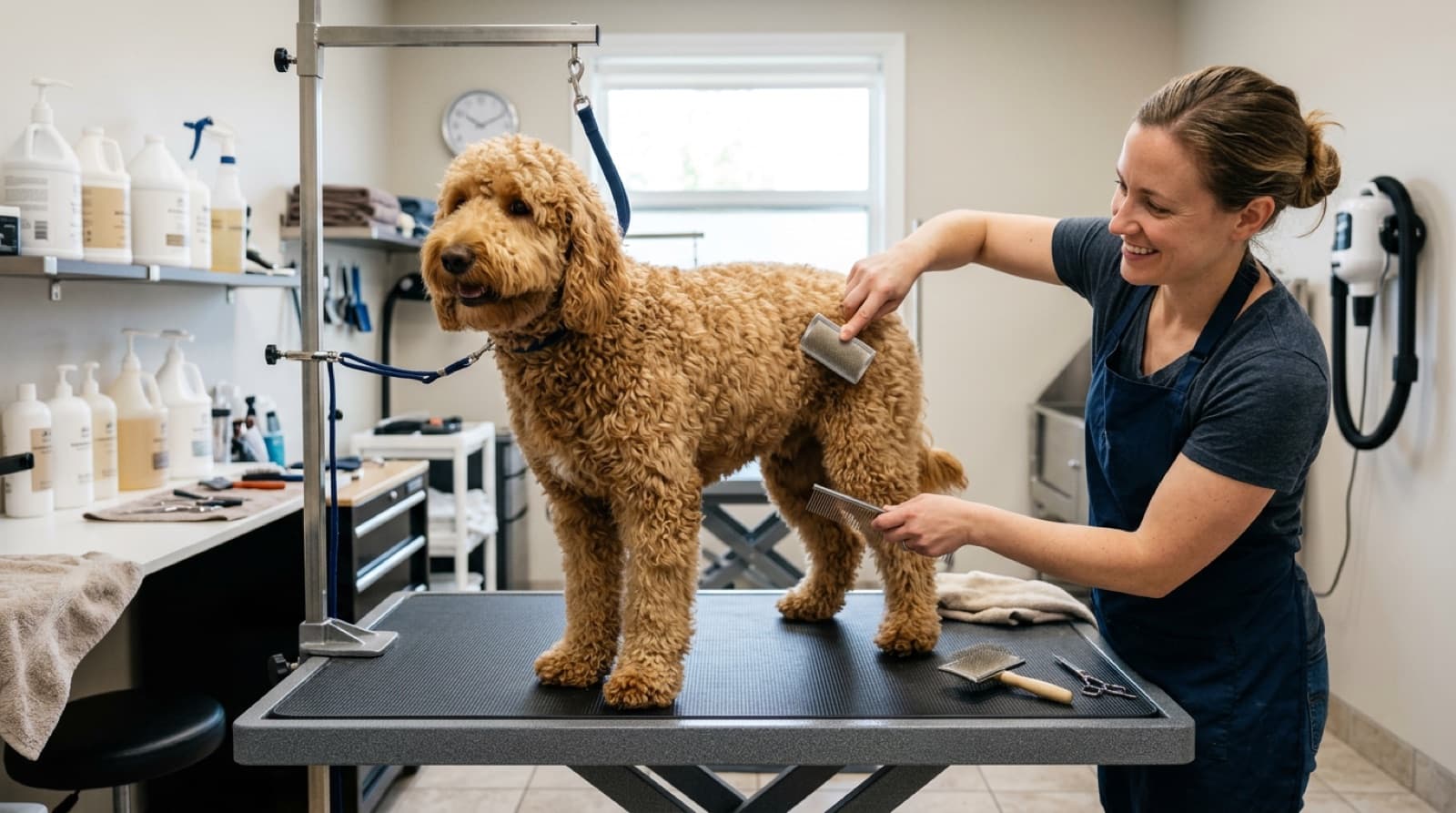
If there's one thing that defines the practical reality of Poodle ownership, it's the coat. That gorgeous, low-shedding curly coat is exactly why so many people want a Poodle, and it's also the biggest ongoing commitment the breed demands. Skimp on grooming and you get painful mats and a dog that has to be shaved down; stay on top of it and you have a beautiful, comfortable dog. Here is how to do it right in Montreal.
The Poodle coat
Poodles have a curly, dense, single coat (no undercoat) that grows continuously rather than shedding out. That's the source of both the advantage and the challenge. Advantage: low shedding (loose hairs catch in the curls), the reason for the breed's appeal and the Doodle crosses. Challenge: because it grows continuously and is curly and dense, it's prone to matting and needs significant, regular grooming, an ungroomed Poodle coat mats quickly, which is uncomfortable and unhealthy.
The coat needs both regular at-home brushing (to prevent mats between appointments) and regular professional grooming (clipping, every 4 to 8 weeks). The key thing to understand: the Poodle coat, while wonderful for low shedding, is high-maintenance and the single biggest ongoing commitment of Poodle ownership, in both time (brushing) and money (professional grooming). Being prepared for that is essential.
Brushing and professional grooming
Brushing: a long coat needs brushing daily or close to it; even a short clip needs it several times a week. Brush all the way down to the skin (not just over the curls) with a slicker brush and comb, checking for and working out mats, especially in the friction areas (behind the ears, armpits, belly, groin, and where a collar or harness sits). A superficially-brushed coat develops mats close to the skin that can force a shave-down. Professional grooming every 4 to 8 weeks for a bath, clip, nails, ear care, and sanitary trim, a defining recurring cost.
Running a comb through to the skin is a good check of whether you're actually preventing mats or just brushing the surface. Some dedicated owners learn to clip their Poodles themselves (with clippers and practice) to save money over the dog's life, though it takes skill and equipment. The bottom line: a genuine, ongoing routine of frequent home brushing plus regular professional grooming, a commitment of both time and money, is the single most important practical consideration in owning the breed.
The clips: which to choose
For a pet Poodle, the most popular choice is a short, practical, even clip, the “puppy cut” or “teddy bear” clip, clipped fairly short all over for a manageable, adorable look. It's the sensible choice for most owners: easier to maintain (less coat to brush, less severe matting), more practical for an active dog, and more comfortable in warm weather, while still looking great. The elaborate show clips (like the Continental with its pom-poms) are high-maintenance and impractical for a pet, so rarely used.
Beyond overall length, there are stylistic choices for the face, ears, feet, and tail your groomer can advise on, and you can ask for a shorter or longer version to suit your maintenance appetite. For the vast majority of pet owners, and especially an adopted Poodle in a normal active home, a short practical clip is the sensible, comfortable choice, there's no downside to it. A good groomer will help you find a length and style that suits your dog and how much home grooming you'll do.
Preventing and dealing with matting
Mats aren't just unsightly, they're uncomfortable and unhealthy (tight mats pull the skin, trap moisture and dirt, and cause irritation, sores, and infections). Prevention beats cure: brush frequently, down to the skin, focusing on the mat-prone friction areas. Keep the coat in a shorter clip (mats less), ensure it's fully dry after baths, swimming, or wet weather (a damp curly coat mats more), and address the coat after the dog gets wet or muddy (common in Montreal).
Small, loose mats can be gently teased apart with fingers and a comb (working from the edges, a detangling product helps), but never cut a mat out with scissors (you can easily cut the skin pulled up into it). Severe or extensive matting is best handled by a professional groomer, and for serious matting close to the skin the humane solution is often to shave down and start fresh, far kinder than brushing out painful, tight mats. The best approach, though, is simply staying on top of regular brushing so severe mats never develop.
Ears, eyes, and Montreal's seasons
Ears: Poodles have floppy ears with hair in the canal, reducing air flow and trapping moisture, so they're prone to ear infections, check regularly, clean with a vet-recommended cleaner as needed, and dry the ears after baths and swimming. Eyes: Poodles (especially light-coloured ones) can get tear staining, managed by keeping the eye hair trimmed and gently cleaning the area, and watch for eye irritation.
Montreal's seasons shape the routine: in winter, a wet curly coat (from snow) mats and needs drying, and salt and ice irritate the paws (wipe/rinse and dry after walks; some keep the coat a bit longer for warmth). In the humid summer, many keep a shorter clip for comfort, and swimming means drying the coat and ears thoroughly. In the wet, muddy spring and fall, expect the coat to get dirty and wet often, needing more cleaning, drying, and brushing. The through-line: stay on top of brushing, ear care, and, especially, thorough drying whenever the curly coat gets wet, year-round. See our health guide (grooming doubles as a skin check for sebaceous adenitis).
Browse adoptable dogs in Montreal
If you're ready for the coat commitment, a Poodle is a brilliant, low-shedding companion. Refreshed regularly across Montreal-area organizations.
See Available Dogs →Frequently Asked Questions
What kind of coat do they have?
A curly, dense, single coat (no undercoat) that grows continuously rather than shedding out. Advantage: low shedding (why Poodles and Doodles appeal). Challenge: prone to matting, needing frequent brushing plus professional grooming. It's high-maintenance and the single biggest commitment of Poodle ownership.
How often should I brush and groom?
A long coat needs daily brushing; a short clip several times a week, always down to the skin (not just over the curls), focusing on friction areas. Plus professional grooming every 4 to 8 weeks (a defining recurring cost). Superficial brushing lets mats form near the skin and can force a shave-down.
What clips are there, and which should I choose?
Most pet owners choose a short, practical “puppy cut” or “teddy bear” clip, easier to maintain, comfortable, and cute. The elaborate show clips (like the Continental) are high-maintenance and impractical for a pet. Your groomer can advise on face, ear, and length variations. No downside to a practical clip.
How do I prevent and deal with matting?
Prevent with frequent brushing down to the skin (focusing on friction areas), a shorter clip, and drying the coat fully when wet. Never cut a mat out with scissors (you can cut the skin). Tease small mats apart gently; leave severe matting to a groomer, sometimes a humane shave-down. Best of all, stay on top of brushing.
How do I care for the ears and eyes?
Ears: floppy with hair in the canal, so prone to infection, check regularly, clean as needed, and dry after baths and swimming. Eyes: Poodles (especially light ones) can get tear staining, managed by trimming the eye hair and gently cleaning. Watch for any eye irritation.
How does Montreal's climate affect grooming?
Winter: a snowy coat mats and needs drying, and salt irritates paws (wipe and dry after walks; some keep the coat longer for warmth). Summer: many use a shorter clip, and swimming means drying the coat and ears. Wet, muddy seasons need more cleaning and brushing. Always dry the curly coat thoroughly when wet.
Related Montreal guides
Poodle Adoption in Montreal
Where to adopt in Montreal, the three sizes, the brilliant temperament, the low-shedding coat, real costs, and who it suits.
Poodle Health Issues
Size-varying conditions: bloat and Addison's in Standards, dental and patellar in small sizes, plus eye conditions and the insurance case.
Adoptable Dogs in Montreal
All currently available dogs across Montreal-area organizations, including Poodles and Poodle mixes. Updates regularly.
Montreal Dog Adoption Resources
All our Montreal dog adoption guides in one place.
New dog? Start with these care guides
Everything a new adopter needs to set up a safe, happy home.