The short answer
Poodles are generally healthy and long-lived (Toys/Minis often 14 to 16 years, Standards 12 to 14), but the conditions vary by size. Standards (large, deep-chested): bloat/GDV (know the signs), hip dysplasia, and Addison's disease (a hormonal condition with vague signs, very treatable once diagnosed). Miniatures/Toys (small): dental disease (take it seriously), patellar luxation, and Legg-Calve-Perthes. Across the breed: eye conditions (PRA, cataracts) and sebaceous adenitis (a skin condition). The levers you control: keep the dog lean, do diligent dental care (small sizes), know your size's risks, and stay on routine vet care. Insurance is worth considering, insure while young.
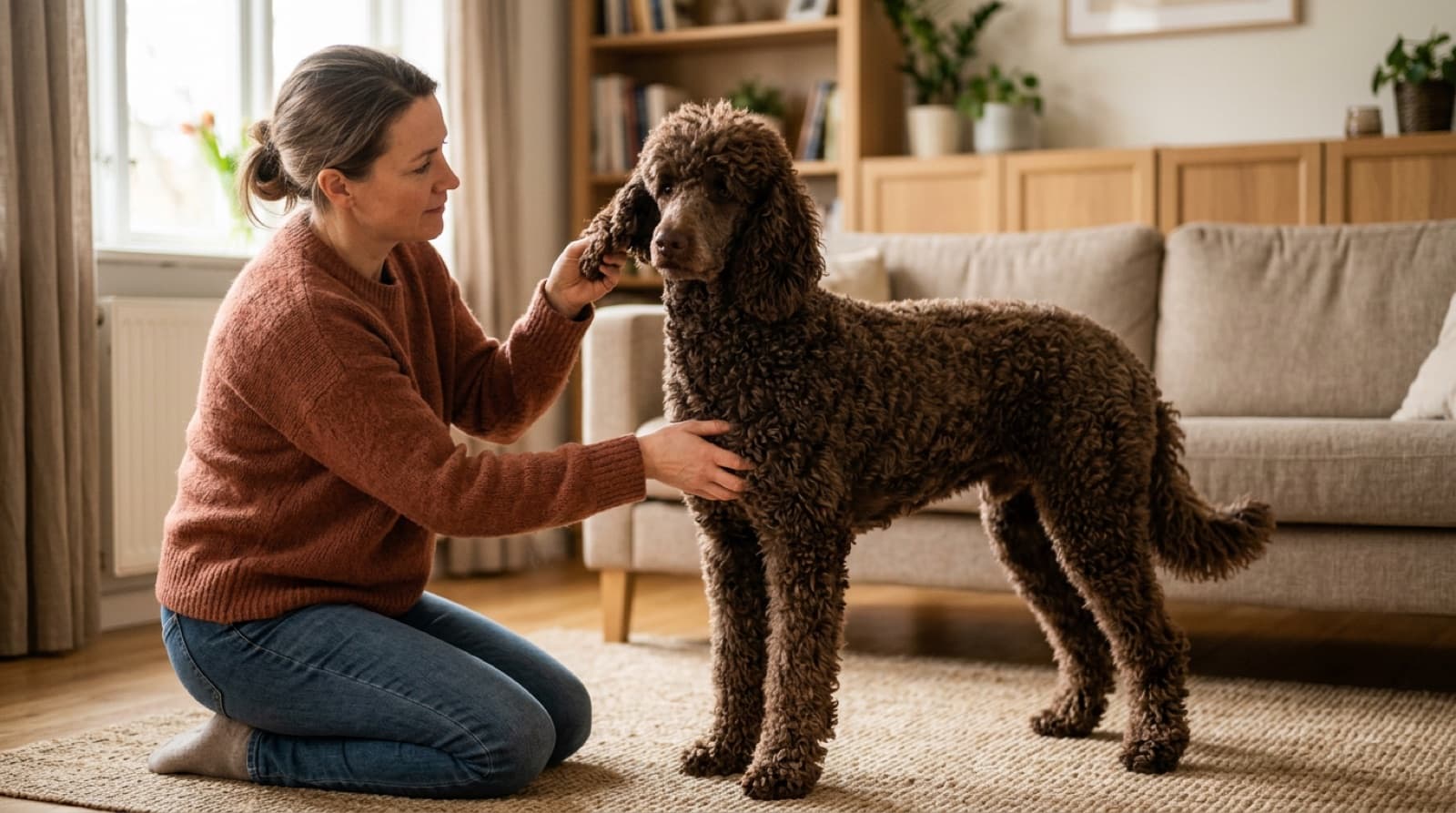
The Poodle is a generally healthy, notably long-lived breed, but its health picture has an unusual feature: because the breed comes in three sizes, the conditions that matter most depend on which Poodle you have. A Standard's risks are a big dog's risks; a Toy's are a little dog's. Here is the medical picture, organized by size.
Conditions across the breed
A few conditions span all three sizes: eye conditions, especially progressive retinal atrophy (PRA, gradual vision loss) and cataracts, so monitor the eyes and assess any changes; and sebaceous adenitis (a skin condition affecting the oil glands the breed is prone to), which regular grooming helps you spot. The breed can also be affected by epilepsy, von Willebrand disease (a clotting disorder, worth knowing before surgery), and hypothyroidism (easily diagnosed and treatable).
Poodles are, on the whole, a robust, long-lived breed, and much of managing their health is within your control: keep the dog lean, provide good routine vet care (including eye monitoring), and be aware of the conditions relevant to your dog's size. Regular grooming doubles as a chance to check the skin (see our grooming guide).
Addison's disease (especially Standards)
Addison's disease (hypoadrenocorticism) is a hormonal condition Poodles, particularly Standards, are notably prone to, and worth knowing because its signs are vague and easy to miss: lethargy, poor appetite, vomiting, diarrhea, weight loss, weakness, and increased thirst, often waxing and waning, and occasionally a sudden severe crisis (an emergency). The good news: once diagnosed, it's very manageable with lifelong medication, and dogs live full lives.
The key is getting the diagnosis (blood tests), so if a Poodle (especially a Standard) shows those recurring vague signs, mention Addison's to your vet given the breed predisposition, it's sometimes overlooked precisely because its signs are non-specific. For a Standard Poodle owner, awareness is genuinely valuable, catching it before it progresses to a crisis makes management much smoother. Its potential for expensive diagnosis and lifelong treatment is part of the insurance argument.
Standard Poodle: bloat and joints
As a large, deep-chested dog, the Standard is at risk of bloat (gastric dilatation-volvulus, GDV), a sudden, life-threatening emergency where the stomach fills with gas and twists, needing immediate surgery. Know the warning signs: a distended abdomen, unproductive retching, restlessness, drooling, and distress, and get to an emergency vet immediately. Also hip dysplasia (managed by keeping the dog lean and appropriate exercise).
Consider bloat-prevention feeding (smaller meals, avoiding vigorous exercise around eating) and discussing preventive gastropexy with your vet, as for other deep-chested breeds. Standards are also the size most prone to Addison's. On the plus side, they're athletic, generally robust dogs, and keeping one lean and fit goes a long way. This larger size has the most significant potential health issues of the three, worth factoring into the decision and into insurance. The VCA guide to bloat is essential reading for Standard owners.
Miniature & Toy: dental and knees
As small dogs, Minis and Toys share the small-breed profile: dental disease (small breeds are highly prone, so regular tooth brushing and professional cleanings are genuinely important), patellar luxation (slipping kneecaps, an intermittent skip in the gait, mild to surgical), Legg-Calve-Perthes disease (a small-breed hip condition), and, in the smallest Toys, hypoglycemia in puppies. Plus the eye conditions seen across the breed.
Priorities for a Mini or Toy: take dental care seriously (one of the most important things for small breeds), watch for a skipping gait or leg-holding (have the knees assessed), keep the dog lean and protected from injury, monitor the eyes, and for a very small Toy be mindful of its delicacy and the puppy hypoglycemia risk. Small Poodles are typically long-lived, robust companions, and good routine care, especially dental, keeps them healthy.
Lifespan and the insurance case
Lifespan varies by size: Toys and Minis often 14 to 16+ years, Standards ~12 to 14. Keep the dog lean, provide size-tailored routine care (diligent dental for small sizes, eye monitoring across the breed), know your size's risks (bloat and Addison's for a Standard; dental and patellar for the small sizes), maintain grooming (which supports skin health), and provide good nutrition and prevention. On insurance: worth considering, the breed's potential conditions, Addison's (lifelong medication), bloat surgery (Standards), orthopedic issues, and dental (a recurring small-dog cost), can be expensive, and Montreal vet care isn't cheap.
Take out insurance while the dog is young and healthy, before any condition is diagnosed and excluded. Compare providers, check whether hereditary, chronic, and dental conditions are covered, and read the fine print. If you self-insure, keep a reasonable vet fund tailored to your dog's size (larger for a Standard given bloat and Addison's; dental-focused for small sizes). For an adopted adult or senior, understand what a policy covers. See our adoption guide for the cost picture.
Browse adoptable dogs in Montreal
A good rescue shares a dog's known health history, and its size tells you which risks to plan for. Refreshed regularly across Montreal-area organizations.
See Available Dogs →Frequently Asked Questions
What are the main health problems?
They vary by size. Across the breed: Addison's (especially Standards), eye conditions (PRA, cataracts), and sebaceous adenitis. Standards: bloat and hip dysplasia. Minis/Toys: dental disease, patellar luxation, Legg-Calve-Perthes. Generally a robust, long-lived breed despite the list.
What is Addison's disease?
A hormonal condition Poodles (especially Standards) are prone to, with vague, easy-to-miss signs (lethargy, poor appetite, vomiting, weakness). Very manageable with lifelong medication once diagnosed. If a Poodle shows those recurring signs, mention Addison's to your vet given the breed predisposition. Catching it before a crisis matters.
What affects Standard Poodles specifically?
As a large, deep-chested dog: bloat/GDV (a sudden emergency, know the signs, get to a vet immediately, consider gastropexy), hip dysplasia, and the highest Addison's risk of the three sizes. Athletic and generally robust, but this size has the most significant potential health issues.
What affects Miniature and Toy Poodles?
Small-breed issues: dental disease (take it seriously, brush and get cleanings), patellar luxation (a skipping gait), Legg-Calve-Perthes, and, in the smallest Toys, puppy hypoglycemia, plus the breed's eye conditions. Typically long-lived, robust companions with good routine care, especially dental.
How long do they live?
Varies by size, Toys and Minis often 14 to 16+ years, Standards ~12 to 14. Keep the dog lean, provide size-tailored care (diligent dental for small sizes, eye monitoring across the breed), know your size's risks, and maintain grooming and good nutrition.
Is pet insurance worth it?
Worth considering, Addison's (lifelong medication), bloat surgery (Standards), orthopedic issues, and dental (a recurring small-dog cost) can be expensive, and the long lifespan means more years for conditions to arise. Take insurance out while the dog is young. For an adopted adult, understand what a policy covers.
Related Montreal guides
Poodle Adoption in Montreal
Where to adopt in Montreal, the three sizes, the brilliant temperament, the low-shedding coat, real costs, and who it suits.
Poodle Grooming
The curly coat, brushing and matting, clips, professional grooming, and coat care in Montreal.
Adoptable Dogs in Montreal
All currently available dogs across Montreal-area organizations, including Poodles and Poodle mixes. Updates regularly.
Montreal Dog Adoption Resources
All our Montreal dog adoption guides in one place.
New dog? Start with these care guides
Everything a new adopter needs to set up a safe, happy home.