The short answer
The Shiba's independent, cat-like nature is its charm and its challenge. Because of a strong prey drive and notoriously unreliable recall, Shibas generally cannot be trusted off-leash in unfenced areas, even a well-trained one, the one time prey drive overrides training can be fatal. They're also escape artists (they climb, dig, door-dash, and slip harnesses), so secure high fencing, careful door management, a secure harness, leashed walking, and microchipping/ID are essential. Train with patient, positive, motivating methods that respect the independence (harsh methods backfire), and set realistic expectations. Expect the dramatic “Shiba scream” (usually protest, not injury). Wonderful for owners who appreciate a self-possessed dog; frustrating if you want an off-leash, biddable, cuddly one.
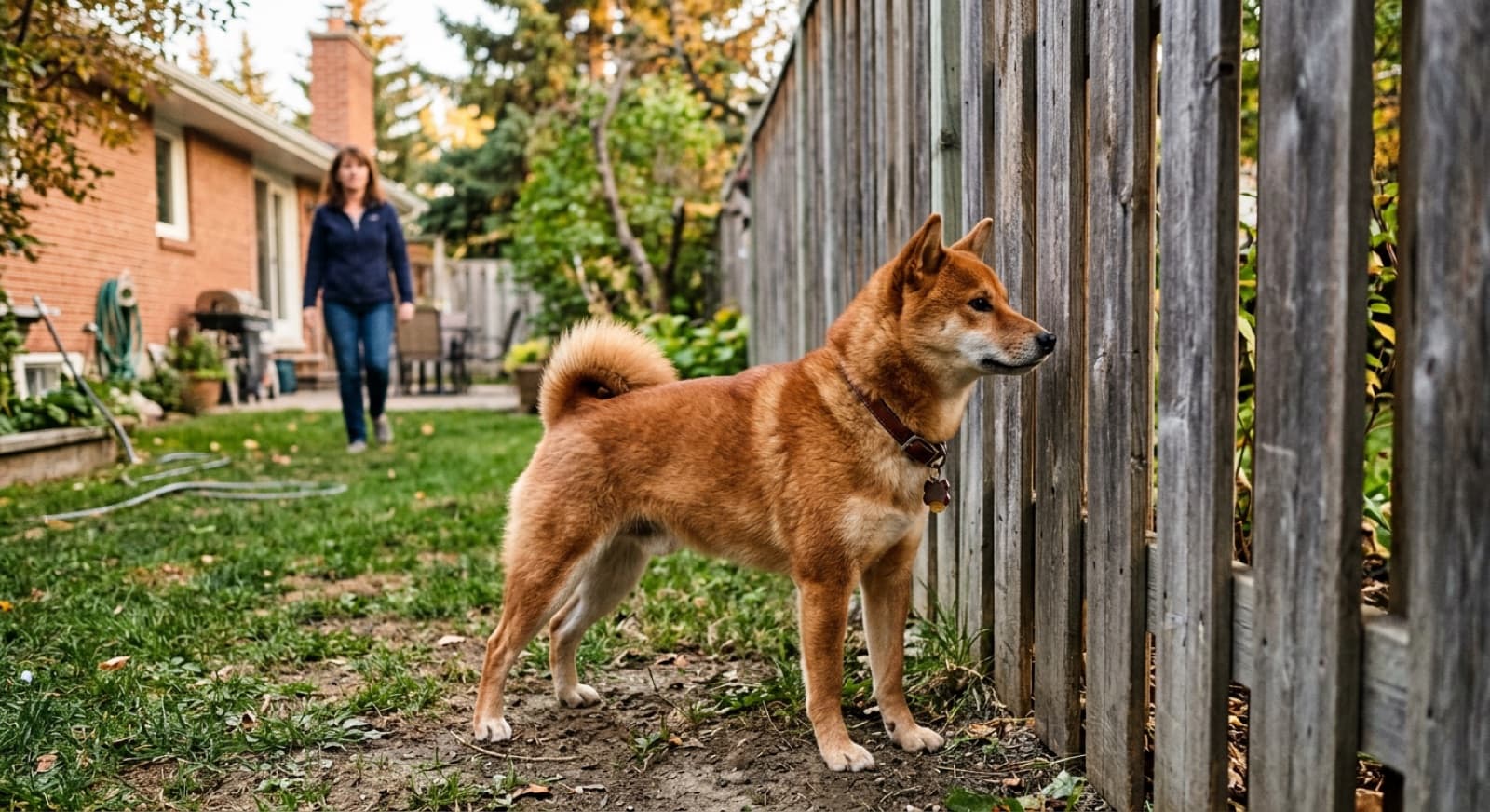
Everything charming about the Shiba, the independence, the dignity, the on-its-own-terms character, is tied to the breed's single biggest practical challenge: it doesn't reliably come when called, and it's very good at getting loose. Understanding and managing that isn't optional; it's the core of keeping a Shiba safe and being happy together. Here's how.
Why Shibas can't be trusted off-leash
As a rule, Shibas cannot be trusted off-leash in unfenced areas. Two reasons: a strong prey drive (bred to hunt, they'll bolt after squirrels, cats, or birds with no regard for traffic or their owner) and notoriously unreliable recall (independent-minded, they'll often ignore a recall in favour of doing their own thing, and once loose may treat being chased as a game). Combined, an off-leash Shiba in an open area is at real risk of running off, getting lost, or being hit by a car, and Shibas are tragically lost this way.
This isn't a training failure to be overcome, recall training is worthwhile and some individuals do better than others, but the breed's independent, high-prey-drive nature means even a well-trained Shiba generally shouldn't be trusted off-leash in an unsecured area, because the one time prey drive overrides training can be fatal. The practical rules: keep it on-leash outdoors in any unfenced area (secure harness), only allow off-leash freedom within securely fenced areas, and never rely on recall to keep it safe in the open. Owners dreaming of off-leash hikes should know a Shiba generally isn't that dog.
Escape-proofing: secure containment
Shibas are notorious escape artists, intelligent, athletic, and motivated, they climb and jump fences, dig under them, squeeze through gaps, door-dash, and slip poorly-fitted collars/harnesses. Combined with prey drive and poor recall, an escaped Shiba gets far fast and is very hard to catch.
To contain one safely: use secure, high fencing (tall enough it can't jump or climb, often 6+ feet, no climbable objects nearby, consider an inward-angled top, and secure the bottom against digging); supervise in the yard rather than leaving the dog unattended; manage doors and gates carefully against door-dashing (baby gates, double-gating/airlocks, a trained “wait,” and a careful household); always use a secure, well-fitted harness the dog can't back out of, on leash outdoors; and ensure the dog is microchipped and wears ID (given the real escape risk). For an adopted Shiba, be especially careful in the first days/weeks (an unsettled new dog is a higher escape risk) and set up secure containment before bringing it home.
Training an independent dog
Shibas are intelligent and capable of learning, but not biddable or eager-to-please, they're independent, self-interested, and ask “what's in it for me?” Training works best when it's positive, reward-based, motivating, and genuinely worthwhile for the dog. Harsh or forceful methods backfire (an independent Shiba shuts down, resists, or screams). Keep sessions short and engaging, be patient and consistent, and accept a Shiba may never be as reliably obedient as a biddable breed, that's normal.
Focus on the safety-critical behaviours: impulse control, a solid “wait”/“stay” (great for door management), leash manners, and as much recall as you can build (worthwhile, but never fully relied on off-leash in the open). Start early, and consider a positive-reinforcement trainer experienced with independent or primitive breeds (in Montreal, seek one out). Also: early, ongoing socialization (the breed can be aloof and not very dog-social) and mental engagement (puzzles, activities) to satisfy a smart dog. The mindset: respect the independence, motivate rather than force, keep it positive, and appreciate a dog that cooperates on its own terms.
The “Shiba scream,” and is the breed right for you?
The famous “Shiba scream” is a loud, dramatic, almost human-sounding shriek a Shiba may let out when unhappy, frustrated, or objecting to something (classically nail trims, baths, or restraint, and sometimes excitement). It can sound alarming, but it's usually dramatic protest, not genuine injury, very in keeping with the breed's opinionated personality. Otherwise Shibas aren't especially barky in daily life, but are expressive (grumbles, “talking,” yodels). Make disliked procedures more positive through gradual desensitization and cooperative-care training, and appreciate the expressiveness as part of the charm.
A Shiba may suit you if you appreciate an independent, cat-like, opinionated dog, are okay with the leashed-and-contained reality, can provide patient positive training and realistic expectations, and value the breed's cleanliness, cold-hardiness, and character. It may not suit you if you want an off-leash hiking companion with reliable recall, a highly obedient or effusively cuddly dog, or if you have very young children or small pets and aren't prepared to manage the independence, possible resource-guarding, and prey drive.
The key is clear, realistic expectations: embrace what a Shiba actually is, an independent, characterful, escape-prone, cat-like spitz, and if that appeals and you can meet its needs, it's a deeply rewarding, entertaining companion. A reputable rescue can help you honestly assess fit and match you with the right dog. See our adoption guide and health guide.
Browse adoptable dogs in Montreal
A reputable rescue can help you honestly assess whether a Shiba's independent nature suits you. Refreshed regularly across Montreal-area organizations.
See Available Dogs →Frequently Asked Questions
Why can't Shibas be trusted off-leash?
Because of a strong prey drive (they bolt after small animals) combined with notoriously unreliable recall (they'll often ignore a call to do their own thing, and treat being chased as a game). Even a well-trained Shiba generally shouldn't be off-leash in unfenced areas, the one time prey drive overrides training can be fatal. Keep them leashed outdoors and only loose in securely fenced areas.
Why are they escape artists, and how do I contain one?
Shibas are smart, athletic, and motivated, they climb and jump fences, dig under, door-dash, and slip harnesses. Use secure high fencing (6+ feet, no climbable objects, secure against digging), supervise in the yard, manage doors carefully (gates, a trained “wait”), use a secure well-fitted harness on leash, and microchip and ID the dog. Be extra careful with a newly adopted Shiba.
How do I train such an independent dog?
Work with the independence, not against it: positive, reward-based, motivating training that's genuinely worthwhile for the dog (harsh methods backfire). Keep sessions short, be patient and consistent, and set realistic expectations. Focus on safety-critical behaviours (impulse control, “wait,” leash manners, as much recall as you can build). A positive trainer experienced with independent breeds helps, as does socialization and mental engagement.
What is the “Shiba scream”?
A loud, dramatic, almost human-sounding shriek a Shiba lets out when unhappy or objecting (classically nail trims, baths, or restraint, sometimes excitement). It can sound alarming but is usually dramatic protest, not injury, very in keeping with the opinionated breed. Otherwise Shibas aren't especially barky but are expressive. Gradual, positive desensitization to disliked procedures reduces the drama.
Is a Shiba Inu right for me?
A great fit if you appreciate an independent, cat-like, opinionated dog, are okay with the leashed-and-contained reality, and can provide patient positive training and realistic expectations. Not a fit if you want an off-leash hiking companion, a highly obedient or effusively cuddly dog, or if you have very young children or small pets and can't manage the independence and prey drive. Go in with clear, realistic expectations.
Related Montreal guides
Shiba Inu Adoption in Montreal
Where to adopt, the independent cat-like temperament, family and cold-weather fit, real costs, and who the breed suits.
Shiba Inu Health Issues
Allergies and skin issues, patellar luxation, hip dysplasia, eye conditions, the generally-healthy long life, and the pet-insurance case.
Adoptable Dogs in Montreal
All currently available dogs across Montreal-area organizations, including Shibas and Shiba mixes. Updates regularly.
Montreal Dog Adoption Resources
All our Montreal dog adoption guides in one place.
New dog? Start with these care guides
Everything a new adopter needs to set up a safe, happy home.