The short answer
The Vizsla needs a LOT of exercise, roughly 1 to 2+ hours of real, vigorous daily activity (running, hiking, fetch, dog sports), not just leisurely walks, plus mental stimulation (training, puzzles, nose work), since a bored Vizsla is restless and destructive. And it's an intense “velcro dog”: it bonds so closely it can't be left alone much and is notably prone to separation anxiety. Manage that by choosing the breed only if you can provide companionship, keeping the dog well-exercised, building positive alone-time habits, using daycare/dog-walking for longer absences, and getting professional help if genuine anxiety develops. The big Montreal challenge: high exercise needs plus a cold-sensitive coat, so plan winter exercise around dressed-for-it outdoor time plus indoor exercise, enrichment, and daycare.
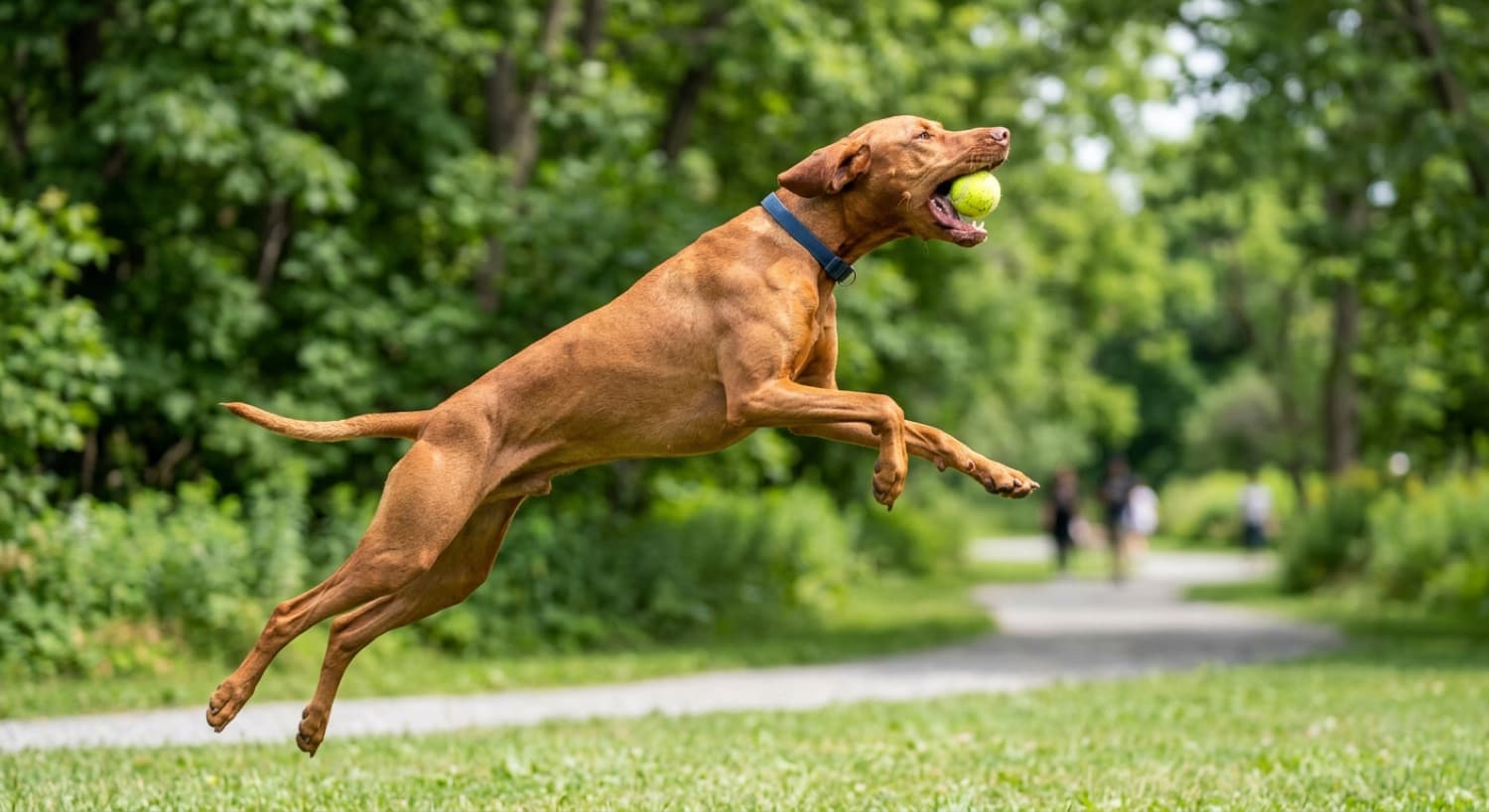
More than health or grooming, two things decide whether Vizsla ownership works: can you exercise this athlete enough, and can you be present enough for this intensely-bonded dog? Get those right and the Vizsla is a dream companion. Get them wrong and you'll have an anxious, destructive, unhappy dog. Here's how to meet the breed's two defining needs, in Montreal.
How much exercise a Vizsla really needs
A Vizsla needs a LOT of exercise, more than most people expect. As an athletic sporting dog bred for long hunting days, it needs roughly 1 to 2+ hours of real, vigorous daily activity, and crucially that means REAL exercise, not a leisurely walk around the block: running (Vizslas make great running companions), long hikes, safe off-leash running and play, fetch, swimming, or dog sports. A couple of short leash walks is not enough and leaves the dog under-exercised.
The consequences of under-exercising are real and are the main reason Vizslas get surrendered: an under-exercised, under-stimulated Vizsla becomes restless, hyperactive, anxious, and destructive (chewing, digging, barking) and generally unhappy. So a prospective owner must honestly ask whether they can commit to this substantial daily exercise, every day, year-round (including Montreal winters), for the dog's whole life (12 to 14 years). The Vizsla suits active people, runners, hikers, athletic households, and is a poor fit for sedentary owners. This is the defining commitment of the breed, and meeting it is the difference between a calm, happy companion and a miserable, destructive one.
Mental stimulation matters too
Physical exercise alone isn't enough, the intelligent, driven Vizsla also needs mental stimulation. A physically-tired-but-mentally-bored Vizsla can still be restless and problematic. Mental work tires a dog out in a complementary (and often more efficient) way and satisfies the breed's need to think and engage. Good options: training (the eager-to-please Vizsla loves to learn), dog sports (agility, field work, nose work, rally, which the breed excels at), puzzle and food-dispensing toys, and nose work / “find it” games.
The most effective approach combines physical and mental exercise, a hike with training along the way, fetch with commands mixed in, or a dog sport engage body and mind at once. This is especially valuable in a Montreal winter (below), when outdoor physical exercise is limited by cold and the breed's cold-sensitivity, mental stimulation and indoor enrichment become an important way to keep a Vizsla satisfied when it can't be out as long. For this breed, engaging the mind isn't optional enrichment, it's a core part of meeting its needs.
The velcro bond and separation anxiety
The Vizsla is a classic “velcro dog”: it bonds extremely closely and wants to be with its people constantly, following you room to room, leaning and touching, trying to be a lap dog, burrowing under blankets. It's profoundly people-oriented, affectionate, and devoted, and thrives on being fully included in family life, a wonderfully bonded companion for the right owner.
The flip side is crucial: because Vizslas bond so closely, they do NOT do well left alone, and the breed is notably prone to separation anxiety (destructiveness, vocalizing, pacing, house-soiling, or distress when alone). So the breed needs to be with its people and is a poor fit for a household where the dog would be alone all day. Be honest about how much time the dog will spend alone before adopting, a Vizsla is not a leave-home-all-day breed.
To prevent or manage separation anxiety: first, don't get a Vizsla if it'll regularly be alone for long stretches. For one alone part of the day: keep it well-exercised and mentally stimulated (a tired Vizsla copes far better, so exercise is itself a key tool), build up alone-time gradually and positively from the start with calm, low-key departures, provide enrichment when leaving (a food-stuffed toy), and arrange company for longer absences (doggy daycare, a dog walker, a midday visit). If genuine separation anxiety develops, it's treatable, work with your vet and a qualified positive-reinforcement trainer or veterinary behaviourist on a structured plan (sometimes with temporary medication). Montreal has qualified trainers/behaviourists and widely-available daycare. For an adopted Vizsla, ask about any separation history and introduce alone-time gradually.
Exercising a Vizsla through a Montreal winter
This is a genuine, specific challenge, because the Vizsla combines very high exercise needs with real cold-sensitivity (the thin coat and lean build make it poorly suited to prolonged cold, see the health guide). You can't spend hours outside as in milder weather, yet the dog still needs its exercise. The solution is a combination of dressed-for-it outdoor exercise and indoor exercise/enrichment:
- •Dressed outdoor exercise: a warm coat (and often booties) makes outdoor activity more tolerable; watch for the dog getting too cold, and shorten or skip sessions in extreme cold. Higher-intensity, shorter sessions (a vigorous run) accomplish more in less exposure time.
- •Indoor exercise and enrichment: on too-cold days, lean on indoor play (hallway fetch, tug, chase), training, puzzle toys, nose work, stairs, or even a dog treadmill (some high-energy-dog owners use one).
- •Mental stimulation becomes especially valuable, it tires the dog without needing the outdoors, so lean heavily on training, puzzles, and games.
- •Doggy daycare: a genuinely useful winter tool, providing warm indoor exercise, play, socialization, and company (also helping the velcro breed's companionship needs).
The key is a realistic winter plan: go into Vizsla ownership in Montreal knowing you'll work harder and more creatively to meet the dog's needs in the cold months. Be honest about whether you can, but with a good plan combining coated outdoor time, indoor exercise and enrichment, mental work, and possibly daycare, a Vizsla can absolutely be kept well-exercised and happy through a Montreal winter. See the adoption guide.
Browse adoptable dogs in Montreal
If you're active and present enough for a Vizsla, it's a devoted, athletic companion. Refreshed regularly across Montreal-area organizations.
See Available Dogs →Frequently Asked Questions
How much exercise does a Vizsla really need?
A lot, roughly 1 to 2+ hours of real, vigorous daily activity (running, hiking, fetch, dog sports), not just leisurely walks, plus mental stimulation. A couple of short walks isn't enough. Under-exercised, a Vizsla becomes restless, anxious, and destructive (the main reason the breed is surrendered). You must be able to commit to this every day, year-round, for the dog's life. It suits active people, not sedentary ones.
Why does it need mental stimulation too?
Because it's a highly intelligent, driven sporting breed whose mind needs a job. Physical exercise alone doesn't fully satisfy it, a physically-tired-but-bored Vizsla can still be restless. Mental work (training, dog sports, puzzle toys, nose work) tires the dog in a complementary way and satisfies its need to think. Combining physical and mental exercise is ideal, and mental work is especially valuable in winter when outdoor time is limited.
What does “velcro dog” mean?
The Vizsla bonds extremely closely and wants to be with its people constantly, following you around, leaning, trying to be a lap dog, burrowing under blankets. It's a wonderfully devoted companion, but the flip side is it doesn't do well left alone and is prone to separation anxiety. So it needs to be with its people and is a poor fit for a household where it'd be alone all day. Be honest about that before adopting.
How do I manage separation anxiety?
First, don't get a Vizsla if it'll regularly be alone for long stretches. Otherwise: keep it well-exercised and mentally stimulated (a tired Vizsla copes better), build up alone-time gradually and positively with calm departures, give enrichment when leaving, and arrange company for longer absences (daycare, dog walker). If genuine anxiety develops, it's treatable, work with your vet and a positive-reinforcement trainer or behaviourist (sometimes with temporary medication).
How do I exercise a Vizsla through a Montreal winter?
It's a real challenge (high exercise needs plus cold-sensitivity), so combine dressed-for-it outdoor exercise (warm coat, booties, shorter/higher-intensity sessions, skip extreme cold) with indoor exercise and enrichment (play, training, puzzles, nose work, even a dog treadmill), leaning heavily on mental stimulation. Doggy daycare is a genuinely useful winter tool. Go in with a realistic winter plan, with one, a Vizsla can be kept happy and well-exercised through the cold.
Related Montreal guides
Vizsla Adoption in Montreal
Where to adopt, the affectionate high-energy velcro temperament, family and climate fit, real costs, and who the breed suits.
Vizsla Health Issues
A generally healthy breed: hip dysplasia, eye and skin issues, epilepsy, certain cancers, the cold-sensitive coat, and the pet-insurance case.
Adoptable Dogs in Montreal
All currently available dogs across Montreal-area organizations, including Vizslas and Vizsla mixes. Updates regularly.
Montreal Dog Adoption Resources
All our Montreal dog adoption guides in one place.
New dog? Start with these care guides
Everything a new adopter needs to set up a safe, happy home.