The short answer
The Vizsla is generally healthy, athletic, and long-lived (~12 to 14 years), one of the healthier breeds, with low grooming needs too. But it has some predispositions to know. The most significant: an elevated cancer risk (lymphoma, mast cell tumours, hemangiosarcoma), so stay attentive and check any lumps. Also hip dysplasia (less than in heavier breeds), eye conditions (PRA, cataracts, entropion), skin/allergy issues (the thin coat offers little protection), and epilepsy. The thin coat also makes the breed notably cold-sensitive, a real Montreal winter consideration (a winter coat, and a plan to meet its exercise needs in the cold). Levers you control: keep the dog lean and fit, watch for skin/eye issues, check lumps, protect from cold, and maintain routine care. Insurance is worth considering (mainly for the cancer risk), insure while young.
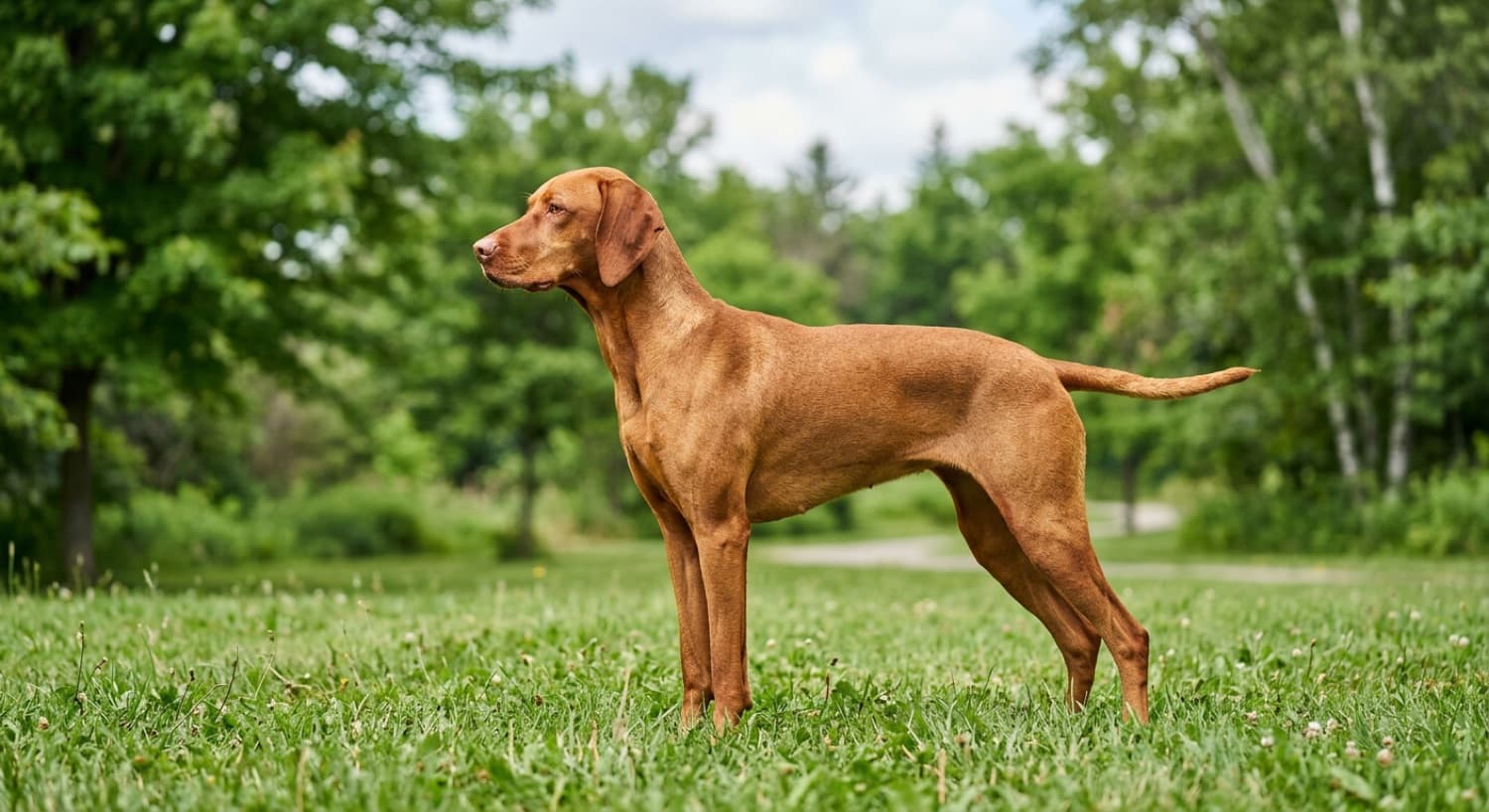
Here's some good news among the demands of the breed: the Vizsla is one of the healthier, longer-lived dogs you can adopt, with minimal grooming to boot. It's not problem-free, the elevated cancer risk in particular is worth taking seriously, but the breed's general hardiness is a real plus. Here's the health picture, condition by condition, plus the Montreal cold-sensitivity angle.
Cancer: the most significant predisposition
The Vizsla has an elevated predisposition to certain cancers, the breed's most significant health concern despite its general good health. The cancers it's somewhat prone to include lymphoma, mast cell tumours (a common, variable-severity skin cancer), and hemangiosarcoma (an aggressive blood-vessel cancer). Keep it in perspective, many individual Vizslas never develop cancer, but the elevated risk means owners should be aware and attentive.
You can't reliably prevent cancer, but you can: maintain excellent routine vet care (so anything is caught early), stay attentive and watch for signs, have any new or growing lump checked (especially given the mast-cell risk), plus unexplained weight loss, lethargy, lameness, pale gums, or persistent changes, and be especially vigilant as the dog ages. If cancer is diagnosed, your vet or a veterinary oncologist (Montreal has oncology services) can discuss options, some cancers caught early are very treatable. The cancer risk is also a key reason insurance is worth considering for a Vizsla, taken out while the dog is young.
Joints, eyes, skin, and epilepsy
Joints: like many sporting breeds, some hip dysplasia (though the lean, medium-sized Vizsla is less affected than heavier breeds), keep the dog lean and fit and watch for stiffness or limping. Eyes: progressive retinal atrophy (progressive vision loss), cataracts, and entropion, include eye health in routine care. Skin/allergies: the breed can have allergies and skin sensitivities, and the thin coat offers little protection (from irritants, sun, or cold). Epilepsy: idiopathic epilepsy (a seizure disorder) is seen in the breed, seek prompt care for any seizures.
Practically: keep the dog lean and watch for joint problems (support joint health with sensible exercise, especially in growing puppies), include eye health in routine care, watch for and manage skin/allergy issues (and protect the thin coat from sun in summer), and be aware of the seizure predisposition. Most individual Vizslas won't develop most of these, but awareness helps catch issues early. Reputable breeders screen hips, eyes, and thyroid. See our exercise & velcro guide.
The thin coat and Montreal's cold
Not a disease, but a real welfare consideration: the Vizsla's very short, thin, single coat (almost no undercoat) and lean, low-body-fat build make it notably cold-sensitive and not built for Montreal winters. It loses heat quickly, so it needs a warm winter coat (and often booties for the paws against cold, ice, and salt), shorter outings in extreme cold, and care not to get chilled.
This creates a real Montreal challenge: the Vizsla has very high exercise needs yet is poorly suited to prolonged winter cold, so you need a plan to meet its exercise and mental-stimulation needs through winter, properly-dressed outdoor exercise in tolerable conditions, plus indoor exercise and enrichment (play, training, food puzzles, indoor sports, daycare), covered in the exercise guide. In summer, the thin coat offers little sun protection (Vizslas can sunburn), so exercise sensibly in heat. Year-round, the thin coat means the dog feels the elements and loves a warm indoor spot (Vizslas famously burrow under blankets). See the adoption guide.
Lifespan and the insurance case
Vizslas are fairly long-lived, typically ~12 to 14 years, and generally healthy and athletic, real advantages. Keep one healthy by keeping it lean and fit, meeting its exercise and mental-stimulation needs, watching for skin/eye issues, staying alert to the cancer and epilepsy predispositions (checking lumps, prompt care for seizures), protecting from the cold, and good routine care. On insurance: worth considering even for a healthy breed, primarily because of the elevated cancer risk (cancer treatment can be very expensive, and it's the main financial risk for this otherwise-healthy breed), plus epilepsy management, orthopedic, or eye issues.
Take out insurance while the dog is young and healthy, before any condition is excluded, worth doing early given the cancer risk that can emerge later in life. If you self-insure, keep a solid vet fund with the possibility of expensive cancer treatment particularly in mind. For an adopted adult or senior, some conditions may already be present and cancer risk rises with age, so go in aware. Overall, the Vizsla's general good health and longevity are real advantages, but the elevated cancer risk makes financial preparedness (insurance or a fund) genuinely worthwhile, alongside good preventive care and attentiveness.
Browse adoptable dogs in Montreal
A good rescue shares a dog's known health history. Refreshed regularly across Montreal-area organizations.
See Available Dogs →Frequently Asked Questions
What are the main health problems?
The Vizsla is generally healthy and long-lived (~12 to 14 years), with low grooming needs, real pluses. But it has predispositions: most significantly an elevated cancer risk (lymphoma, mast cell tumours, hemangiosarcoma), plus hip dysplasia (less than heavier breeds), eye conditions (PRA, cataracts, entropion), skin/allergy issues, and epilepsy. The thin coat also makes it cold-sensitive, a Montreal consideration.
Are they prone to cancer?
Yes, the Vizsla has an elevated predisposition to certain cancers (lymphoma, mast cell tumours, hemangiosarcoma), its most significant health concern despite general good health. Many individuals never develop it, but stay aware and attentive: maintain routine vet care, check any new or growing lumps, watch for unexplained illness, and be especially vigilant with age. The cancer risk is a key reason to consider insurance early.
What joint, eye, and skin issues affect them?
Some hip dysplasia (less than in heavier breeds, keep the dog lean), eye conditions (progressive retinal atrophy, cataracts, entropion), and skin/allergy issues (the thin coat offers little protection from irritants, sun, or cold). Epilepsy is also seen in the breed (seek prompt care for seizures). Most individuals aren't significantly affected; good preventive care and attentiveness help.
Does the thin coat cause issues in Montreal?
The coat isn't a disease, but the very short, thin single coat and lean build make the Vizsla notably cold-sensitive and not built for Montreal winters. It needs a warm coat (and often booties), shorter outings in extreme cold, and care not to get chilled. The challenge: high exercise needs plus poor cold tolerance, so plan winter exercise with proper gear plus indoor options. In summer, the thin coat can sunburn.
How long do they live, and is insurance worth it?
Fairly long-lived, typically 12 to 14 years, and generally healthy. Insurance is worth considering even so, primarily because of the elevated cancer risk (cancer treatment can be very expensive, the main financial risk for this otherwise-healthy breed), plus epilepsy, orthopedic, or eye issues. Insure while young and healthy (before conditions are excluded), or keep a solid vet fund with cancer treatment in mind.
Related Montreal guides
Vizsla Adoption in Montreal
Where to adopt, the affectionate high-energy velcro temperament, family and climate fit, real costs, and who the breed suits.
Vizsla Exercise & the Velcro Dog
How much exercise a Vizsla really needs, mental stimulation, the velcro bond, managing separation anxiety, and exercising through a Montreal winter.
Adoptable Dogs in Montreal
All currently available dogs across Montreal-area organizations, including Vizslas and Vizsla mixes. Updates regularly.
Montreal Dog Adoption Resources
All our Montreal dog adoption guides in one place.
New dog? Start with these care guides
Everything a new adopter needs to set up a safe, happy home.