The short answer
Budget $25 a year for the licence, which is the rate for a fixed dog and therefore the rate for an adopted one. You need it to use the off-leash parks. Get your building's pet terms in writing before you apply, treat a coat and boots as equipment rather than decoration, and expect house training to stall over winter.
The licence, and a four-times gap
Regina charges $25 a year for a sterilized dog and $100 otherwise. The reduced rate also applies to puppies under six months and to show dogs with documentation. Licensing is mandatory, dogs must wear the tag at all times, and a replacement is $5.
A fourfold difference is among the widest in the country, and it is deliberate: a gap that size exists to push owners toward getting dogs fixed. For an adopter it is simply a discount that arrives without being asked for, because rescue dogs are spayed or neutered before they go home. Where it does matter is if someone offers you an unfixed dog privately. That is $75 a year, every year, for the life of the animal, on top of what the procedure itself costs.
The licence also gates something you probably want. A current licence is required to use Regina's off-leash dog parks, and dogs must be wearing the tag in city parks generally. Two of the five year-round parks have separate small dog areas, which is the detail most worth knowing for this breed. Our Regina reactivity guide covers where those are and why they matter.
Get the pet terms in writing first
A very small dog is the easiest case a tenant ever has to make, and it is still worth having in writing before you apply to adopt rather than afterwards. Where a building restricts pets it is usually by size or number rather than an outright ban, and a Chihuahua clears any weight limit anyone bothers to write down.
Ask about noise expectations while you are asking about permission, because that is the clause most likely to matter later. Rescues will want to know whether pets are allowed where you live, and a question you cannot answer is a question that costs you a dog while another applicant moves ahead.
Barking through shared walls
This is what generates complaints, not the dog's size. Chihuahuas are watchful and a corridor supplies an endless run of things worth watching. Work out which of three problems you have before trying to fix it: noise passing the door, distress at being left, or a dog with nothing to do reacting to everything.
Each has a different answer. Corridor traffic is environmental, so move the bed away from the door and mask the hallway. Alone-time barking needs departures built up in short pieces rather than a full working day on the first Monday. An under-occupied dog needs more to think about. Punishing the noise tends to make an anxious dog more anxious, and it removes your warning that the dog was struggling in the first place.
Winter is the real work
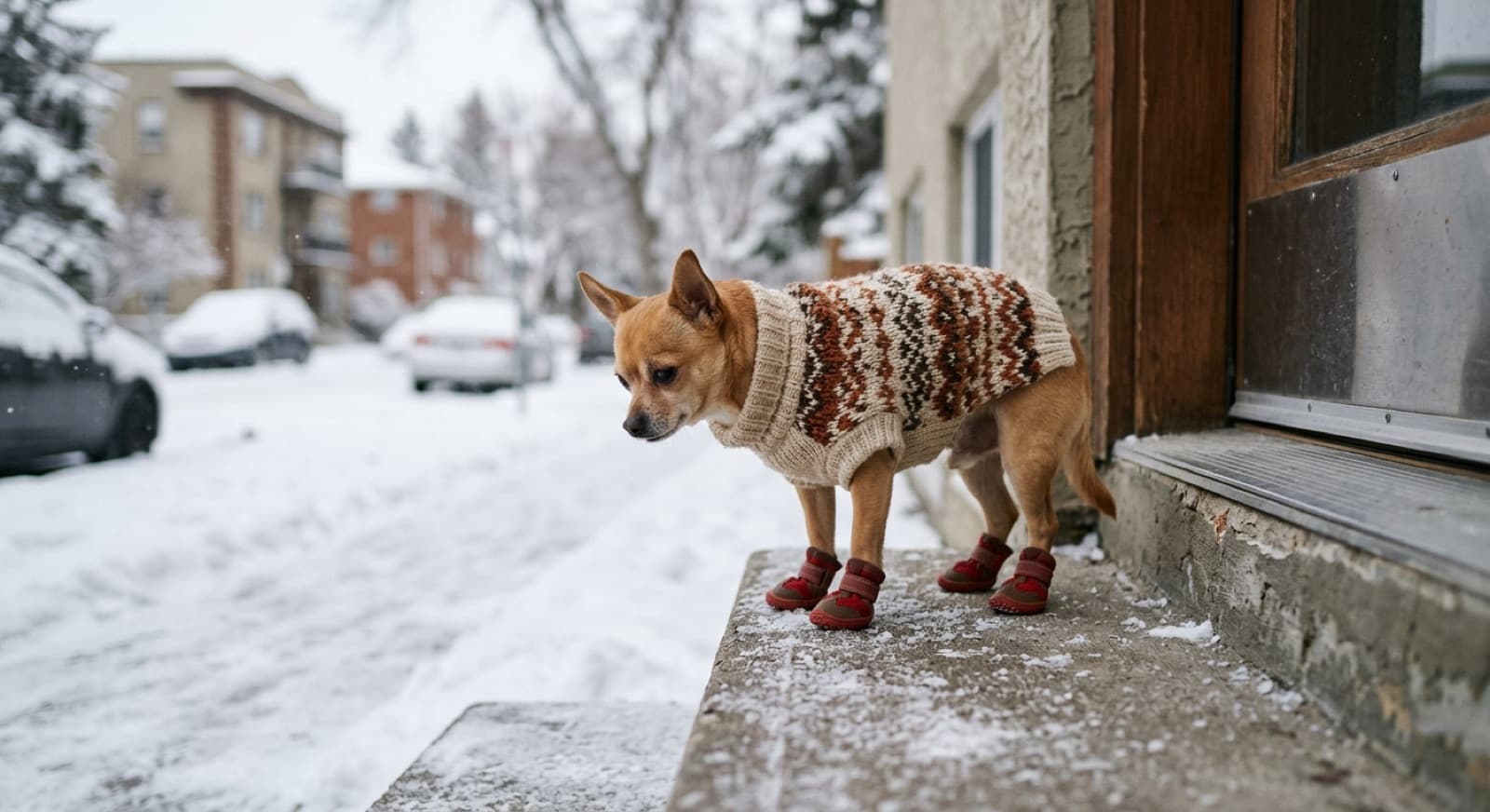
A dog weighing a few pounds has very little mass to hold heat and a lot of surface to lose it from, so it chills far faster than a larger dog doing the same walk. A coat and boots here are equipment rather than decoration. They buy back outings you would otherwise skip, and a newly adopted dog needs those outings more than a settled one does.
House training is where this bites hardest. A short-coated dog facing cold and salt will hold on rather than go, then have an accident indoors, which reads as disobedience and is really weather. Keep winter trips very short and very frequent instead of long, work to a clock rather than waiting for the dog to ask, and reward outdoors on the spot. Rinse salt and ice-melt off the paws when you come in.
Indoors, this breed needs thinking rather than distance. Food puzzles, scent games with treats hidden around a room and a few minutes of training twice a day cover a Chihuahua comfortably in February. The dog that struggles in a small flat is the bored one, not the under-walked one. Our Regina training guide covers what those sessions look like.
Browse adoptable Chihuahuas in Regina
Already spayed or neutered, so already on the $25 licence rate. Foster homes can tell you how a dog handles being left.
See Available Chihuahuas →Questions Regina adopters ask
Are Chihuahuas good apartment dogs in Regina?▼
Yes, and they are one of the better small-space choices. A Chihuahua needs far less distance than its energy suggests and sits well under any size limit a landlord is likely to set. Two things need planning rather than hoping: barking, because a watchful dog behind a shared wall finds plenty to announce, and winter, because a short-coated four-pound dog cannot simply be sent out into a prairie cold snap.
What does a dog licence cost in Regina?▼
The annual fee is $25 for a sterilized dog and $100 otherwise, so an intact dog costs four times as much. The reduced $25 rate also covers puppies under six months and show dogs with documentation. Licensing is mandatory and dogs are required to wear their tags at all times. A replacement tag is $5. Adopting settles the question for you, because rescue dogs are spayed or neutered before they go home, so you start at $25 without doing anything.
Why does an intact dog cost four times as much?▼
It is a deliberate policy lever rather than an administrative quirk. A fee gap that size exists to push owners toward sterilisation, and it is one of the widest in the country. For an adopter it is simply a discount that arrives automatically. It is worth keeping in mind if someone offers you an unfixed dog privately, because $75 a year for the life of the animal is real money on top of the cost of having the procedure done.
Do I need a licence to use Regina dog parks?▼
Yes. Dogs need a current licence to use the off-leash parks and must be wearing the tag while in city parks. So the licence is not only a compliance cost, it gates the facilities you probably want. Regina runs five year-round off-leash parks, two of which have separate small dog areas, which is worth knowing before you buy a licence and assume you cannot use it.
Will my landlord allow a Chihuahua?▼
Often, and a very small dog is the easiest case a tenant ever has to make, but get it in writing before you apply to adopt rather than afterwards. Where a building restricts pets it is usually by size or number rather than an outright ban, and a Chihuahua clears any weight threshold anyone bothers to write down. Ask about noise expectations at the same time, since that is the term most likely to be enforced later. Rescues will ask whether pets are permitted where you live, and a question you cannot answer can cost you a dog.
How do I stop a Chihuahua barking in an apartment?▼
Work out the trigger before trying to suppress the noise. Most apartment barking is one of three things: hallway traffic passing the door, distress at being left, or an under-occupied dog reacting to everything. The fixes differ. For corridor noise, move the bed away from the door and give the dog something else to listen to. For alone-time barking, build departures up in short increments rather than starting with a full working day. For a bored dog, more sniffing walks and food puzzles beat any correction. Punishing the barking usually makes an anxious dog worse.
How do I house train a Chihuahua through a Regina winter?▼
Accept that it will take longer than the books say. A small dog holds less and needs more trips out than a bigger puppy, and in January a short-coated dog will hold on rather than face the cold, then have an accident indoors. Work to a fixed schedule rather than waiting for a signal, reward outdoors immediately, and keep winter trips very short and very frequent rather than long. Plenty of owners here run an indoor pad option through the coldest weeks, which is a sensible accommodation for a four-pound animal rather than a training failure.
Does a Chihuahua get enough exercise in a small flat in winter?▼
Easily, if you do the mental side. This breed wants company and something to think about far more than it wants kilometres, so short outdoor trips plus indoor work covers it even in February. Food puzzles, scent games with treats hidden around a room, and a few minutes of training twice a day do more for a Chihuahua than a long walk would. The dog that struggles in a small flat is the bored one, not the under-walked one.
Anxiety and Reactivity →
Fear, not attitude, and the small dog areas.
Chihuahua Health Issues →
Teeth, knees, windpipe and heart, and what they cost.
Temperament and Training →
What the breed is like and where to start.
Chihuahua Adoption in Regina →
Where to look, real costs, and what to ask a foster.
New dog? Start with these care guides
Everything a new adopter needs to set up a safe, happy home.