The short answer
A well-raised Chihuahua is bold, affectionate, and loyal, with a personality far bigger than its body. The snappy reputation is fear-based, not genuine aggression, and it is created by how the dog is raised: under-socialization, over-babying, and rewarding fearfulness by scooping the dog up. The fix is to treat the Chihuahua like a real dog: socialize it thoroughly, train with gentle reward-based methods, set normal boundaries, and don't reinforce fear. Avoid small dog syndrome by expecting manners and walking the dog on its own legs. House-training takes consistency, and prairie winters make it harder, so an indoor potty option helps. Above all, protect and keep the tiny dog warm in winter. Do this and a Chihuahua is a confident, friendly, devoted companion.
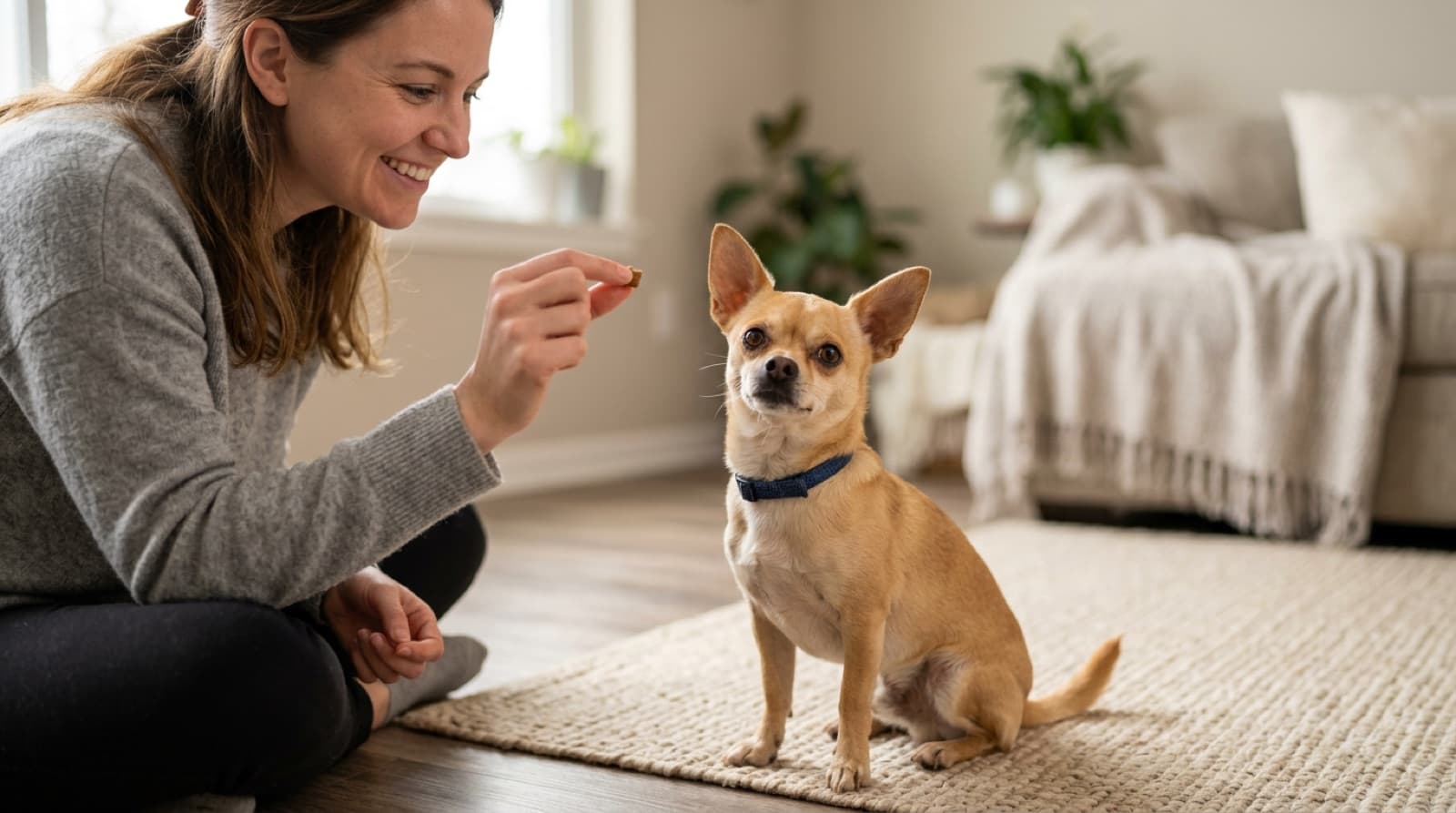
The reframe: fear, not aggression
Chihuahuas are not naturally aggressive. The snapping the breed is known for is almost always fear-based defensive behaviour, created by how the dog is raised, not genetics. A Chihuahua is one of the smallest animals in any room, everything is enormous, and it is often picked up without warning and coddled, so a fearful Chihuahua learns that snapping makes scary things back off and that being anxious gets it scooped up and soothed.
Both teach the dog that defensive behaviour works. A confident, well-socialized Chihuahua, exposed positively to people, dogs, handling, and the world, and not rewarded for fearfulness, is typically the alert, devoted little companion the Canadian Kennel Club describes for the breed. The behaviour is a training and socialization issue, not a breed flaw, and it is very fixable, which is exactly why so many surrendered, mislabelled Chihuahuas turn into lovely pets. Choosing a foster-assessed rescue dog, as covered in our Chihuahua adoption guide, lets you start with a known temperament.
Socialization: the most important thing you do
Give your Chihuahua positive, controlled exposure to people, dogs, places, sounds, surfaces, and handling, so it learns the world is safe. For this fear-prone breed it is the single most important thing you do. Start where the dog is comfortable, go at its pace, never flood a frightened dog, and pair new experiences with treats and calm praise.
Expose the dog gently to being handled, having its feet, ears, and mouth touched (which also helps vet and dental care), meeting calm friendly people and dogs, hearing everyday noises, and walking on different surfaces. Crucially, do not comfort or pick up the dog every time it is nervous, which teaches it that being afraid works; instead stay calm, let it observe, and reward brave, relaxed behaviour. For an adult rescue with an unknown history or existing fearfulness, go slowly and consider a force-free trainer experienced with small or fearful dogs. Ongoing gentle socialization into adulthood is what turns a potentially nippy Chihuahua into a friendly one.
Avoiding small dog syndrome
Small dog syndrome is shorthand for the pushy, demanding, reactive behaviours small dogs are allowed to develop because owners do not train or set boundaries the way they would for a big dog. With a Chihuahua the risk is high, because it is easy to laugh off or carry a tiny dog rather than address behaviour. The cure is simple: treat your Chihuahua like a real dog.
That means teaching basic manners and cues, expecting the dog to walk on its own four legs rather than being carried everywhere, setting the same reasonable boundaries you would for a larger dog, socializing it properly, and not scooping it up and soothing it every time it shows fear or barks. None of this means being harsh, it means being consistent, gentle, and clear. A Chihuahua trained and socialized like a normal dog grows up confident and well-mannered, avoiding the syndrome entirely, and training is genuinely worthwhile even for a tiny dog.
Housetraining and handling
Chihuahuas can be trickier to house-train, because small dogs have small bladders and go more often, tiny accidents are easy to miss, and the breed is sensitive so harsh correction backfires. Success comes from a consistent schedule with frequent trips out, generous reward the moment the dog goes in the right place, thorough cleaning of accidents, close supervision, and patience without punishment. In a cold prairie climate, an indoor potty option (pads or a small indoor grass or litter setup) makes winter training much easier, and gentle crate training helps too.
On handling, respect the fragility: support the whole body when you pick the dog up, teach children (older, gentle ones) to handle it carefully, and avoid letting it leap from heights. Train the dog to accept handling of its feet, ears, and mouth for grooming and the all-important dental care. Keep training sessions short and positive with tiny treats, and use a harness rather than a collar. A Chihuahua that is handled gently and trained kindly becomes a relaxed, cooperative companion.
Browse adoptable Chihuahuas in Regina
An adult rescue Chihuahua with a foster-assessed temperament lets you choose a confident, sociable dog from the start. Chihuahuas and Chi crosses from Regina rescues. Refreshed regularly.
See Available Chihuahuas →Managing a Chihuahua through a prairie winter
A Chihuahua needs real winter management, because it is tiny and thin-coated and gets cold dangerously fast. Put a warm coat or sweater on for any time outside, keep outdoor trips very short in deep cold, and carry the dog to a cleared, sheltered potty spot rather than making it wade through deep snow, watching for shivering and lifted paws, which mean go in now.
Because a tiny dog will not want to go out in the cold, winter makes house-training harder, so an indoor potty option keeps the routine going through the coldest months. Indoors, keep the dog warm with a cozy bed, and keep up socialization and training with indoor games and gentle exposure so reduced outdoor time does not lead to boredom or regression. Watch the weight too, since less activity plus the same food adds up on a small frame. With a coat, short outings, an indoor potty backup, and a warm home, a Chihuahua comes through a prairie winter comfortably. Our Regina winter dog care guide has the full cold-weather routine.
Frequently Asked Questions
What is a Chihuahua's temperament really like?
A well-raised Chihuahua is a bold, alert, affectionate, and intensely loyal little dog with a personality far bigger than its body. Chihuahuas typically bond very closely with their person, are lively and playful, make excellent alert watchdogs, and are devoted, portable companions, and they are also intelligent and quite trainable when approached the right way. The breed's reputation for being snappy or bad-tempered is real but misunderstood: it is not the natural temperament of a well-socialized Chihuahua, it is what happens when a tiny, sensitive dog is under-socialized, over-babied, or never taught to cope with the world, so it becomes fearful and defensive. Treated like a real dog rather than a fragile accessory, socialized, trained, and given clear gentle guidance, a Chihuahua is typically confident, friendly, and delightful. The individual dog varies, of course, and a rescue foster assessment tells you a lot, but the breed itself is affectionate and bright, not aggressive by nature. Understanding that the temperament is shaped more by upbringing than by breed is the key to a great Chihuahua.
Are Chihuahuas naturally aggressive?
No, Chihuahuas are not naturally aggressive, and this is the single most important thing to understand about the breed. The snapping and growling Chihuahuas are known for is almost always fear-based defensive behaviour, not genuine aggression, and it is overwhelmingly created by how the dog is raised and handled rather than by its genetics. Think about the world from a Chihuahua's point of view: it is one of the smallest animals in any room, everything is enormous, and it is often picked up without warning, coddled, and never taught to handle normal situations, so a fearful Chihuahua learns that snapping makes scary things back off and that being anxious gets it scooped up and soothed. Both teach the dog that defensive behaviour works. A confident, well-socialized Chihuahua that has been treated like a capable dog, exposed positively to people, dogs, handling, and the world, and not rewarded for fearfulness, is typically friendly and relaxed. The behaviour is a training and socialization issue, not a breed flaw, and it is very fixable with the right approach, which is what makes so many surrendered, mislabelled Chihuahuas turn into lovely pets.
What is small dog syndrome and how do I avoid it?
Small dog syndrome is not a real medical or behavioural diagnosis, it is a shorthand for a cluster of pushy, demanding, or reactive behaviours, excessive barking, snapping, refusing to follow any rules, guarding laps, that small dogs are allowed to develop because owners do not train or set boundaries the way they would for a big dog. With a Chihuahua the risk is high, because it is so easy to laugh off or carry a tiny dog rather than address behaviour, and because people coddle small dogs and reinforce fearfulness. Avoiding it is straightforward in principle: treat your Chihuahua like a real dog. That means teaching it basic manners and cues, expecting it to walk on its own four legs rather than being carried everywhere, setting the same reasonable boundaries you would for a larger dog, socializing it properly, and not scooping it up and soothing it every time it shows fear or barks, which rewards the behaviour. None of this means being harsh, it means being consistent, gentle, and clear. A Chihuahua that is trained and socialized like a normal dog grows up confident and well-mannered, avoiding the syndrome entirely.
How do I socialize a Chihuahua properly?
Good socialization means giving your Chihuahua positive, controlled exposure to the variety of people, dogs, places, sounds, surfaces, and handling it will encounter in life, so it learns the world is safe rather than threatening, and for this fear-prone breed it is the single most important thing you do. Start where the dog is comfortable and go at its pace, never flooding a frightened dog, and pair new experiences with treats and calm praise so they build positive associations. Expose the dog gently to being handled, having its feet, ears, and mouth touched (which also helps with vet and dental care), meeting calm friendly people and dogs, hearing household and street noises, and walking on different surfaces. Crucially, do not comfort or pick up the dog every time it is nervous, which teaches it that being afraid works, instead stay calm, let it observe, and reward brave, relaxed behaviour. For an adult rescue Chihuahua with an unknown history or existing fearfulness, work at a slow pace and consider a force-free trainer experienced with small or fearful dogs. Ongoing gentle socialization into adulthood keeps a Chihuahua confident. Good socialization is what turns a potentially nippy Chihuahua into a friendly one.
Are Chihuahuas hard to house-train?
Chihuahuas can be more challenging to house-train than some breeds, but it is very doable with consistency and patience, and understanding why helps. Small dogs have small bladders and need to go more often, tiny accidents are easy to miss and clean up (so they get reinforced), and Chihuahuas are sensitive, so harsh correction backfires by making them anxious. On the prairies, the cold adds a real wrinkle, because a tiny dog is genuinely reluctant to go out into snow that may be taller than it is. The keys to success are a consistent schedule with frequent trips out (especially after eating, waking, and playing), generous reward the moment the dog goes in the right place, thorough cleaning of any accidents to remove the scent, close supervision or confinement to prevent unwitnessed accidents, and patience without punishment. Many Chihuahua owners in cold climates use an indoor potty option, such as pee pads or a small indoor grass or litter setup, especially through a Regina winter, which can make training much easier. Crate training done gently also helps. Consistency is everything, and most Chihuahuas do get reliably trained.
Are Chihuahuas good with children and other pets?
It depends on the situation, and the main issue is fragility and matching, not temperament. Chihuahuas can be good with gentle, respectful, older children who understand how to handle a tiny dog carefully, but they are generally not a good match for homes with very young or boisterous children, because a Chihuahua is so small and delicate that a fall, a squeeze, or rough handling can seriously injure it, and a frightened Chihuahua may snap defensively in self-protection. If you have young kids, this is an honest compatibility consideration rather than a knock on the breed. With other dogs, Chihuahuas are often happiest with other small dogs and can be wary of large ones, partly out of sensible self-preservation, so supervise interactions with big dogs closely. With cats, many Chihuahuas coexist fine. As always, a rescue foster assessment is the best guide to how a specific dog does with kids and other pets, so ask directly. A well-socialized Chihuahua in a suitable home, without very small children, is typically a friendly, adaptable companion.
How do I train a Chihuahua?
Train a Chihuahua the same way you would train any dog, with gentle, positive, reward-based methods and consistency, and take it seriously rather than dismissing training because the dog is small. Chihuahuas are intelligent and quite capable of learning cues, manners, and even tricks, and they respond well to small treats, praise, and short, upbeat sessions, while harsh or heavy-handed methods backfire badly with such a sensitive breed by increasing fear and defensiveness. Focus first on the things that make a small dog a good companion: basic cues like sit and come, calm behaviour around people and other dogs, accepting handling for grooming and vet care, a quiet cue for the barking, and walking on a harness. Keep sessions short because small dogs have short attention spans, use tiny treats so you do not overfeed a small frame, and end on a positive note. Group classes or a force-free trainer help with both training and socialization, and are worthwhile even for a tiny dog. The goal is a confident, mannerly Chihuahua that is treated and trained like a real dog, which is exactly the dog that avoids the breed's nippy reputation. Consistency and gentleness win.
How do I manage a Chihuahua through a Regina winter?
A Chihuahua needs real winter management, because it is tiny and thin-coated and gets cold dangerously fast, so warmth and short outings are the priorities. Put a warm, well-fitted coat or sweater on the dog for any time outside, keep outdoor trips very short in deep cold, and consider carrying the dog to a cleared, sheltered potty spot rather than making it wade through deep snow, watching constantly for shivering, lifted paws, and reluctance, which mean go in immediately. Because a tiny dog will not want to go out in the cold, winter makes house-training harder, so many Chihuahua owners use an indoor potty option like pads or a small indoor grass or litter setup through the coldest months, which keeps the routine going without forcing the dog into painful cold. Indoors, keep the dog warm with a cozy bed, and keep up socialization and training with indoor games and gentle exposure so the reduced outdoor time does not lead to boredom or regression. Watch the weight too, since less activity plus the same food adds up on a small frame. With a coat, short outings, an indoor potty backup, and a warm home, a Chihuahua comes through a prairie winter comfortably and stays well-behaved.
Related Guides
New dog? Start with these care guides
Everything a new adopter needs to set up a safe, happy home.