The short answer
Protecting the back is the single most important part of owning a Dachshund, because the breed has the highest disc-disease (IVDD) rate of any dog. The prevention playbook: keep the dog lean (the biggest modifiable risk), no jumping on or off furniture and no stair-running (use ramps, steps, and gates), support the whole body when lifting (never by the front end), use a harness, not a collar, and give sensible low-impact exercise to build supporting muscle. Memorise the warning signs: a hunched back, reluctance to move, yelping when touched, wobbly or dragging back legs, and, worst, inability to walk, which is a go-now emergency (the 24 HR Animal Care Centre) where speed of treatment decides the outcome. In a Regina winter, watch icy footing and keep exercise and weight steady. This is general information. Always consult your veterinarian.
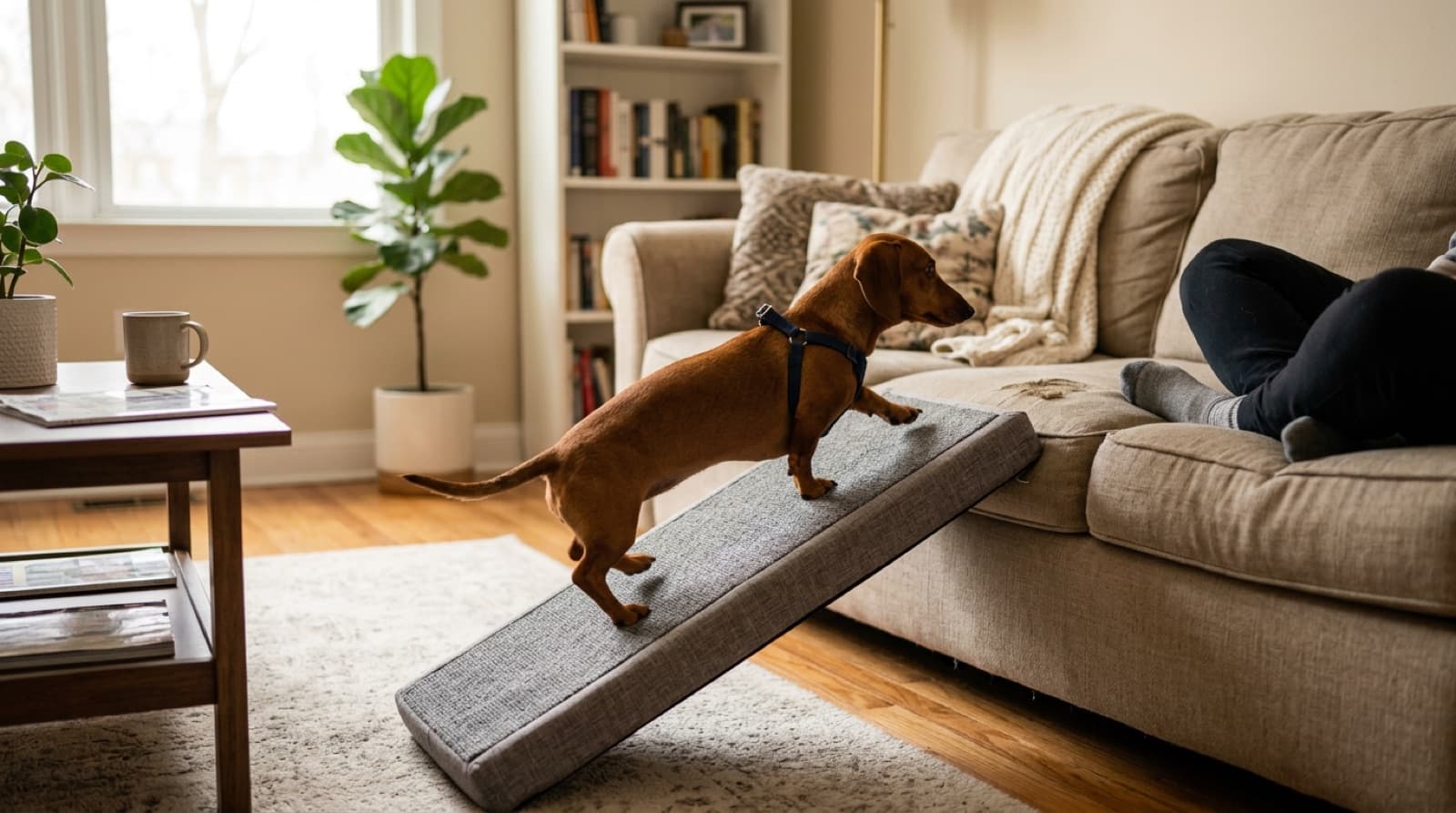
Understanding IVDD
IVDD (intervertebral disc disease) is when the discs cushioning the spine degenerate and bulge or rupture, pressing on the spinal cord and causing pain and, in serious cases, paralysis. Dachshunds get it more than any breed because their long-backed, short-legged build causes the discs to harden and become brittle early, so they can rupture with a jump, a twist, or normal activity, most commonly between about age three and seven.
The long, low build that makes IVDD so common is the same build the Canadian Kennel Club describes in the Dachshund standard, so it is intrinsic to the breed. The crucial point is that while you cannot change the genetics, you can dramatically reduce the risk and severity through prevention. The rest of this guide is that prevention playbook. For where IVDD sits among the breed's other health concerns, see our Dachshund health issues guide, and to understand the breed you are taking on, our Dachshund adoption guide.
The prevention playbook
A handful of habits, done consistently by everyone in the household, dramatically reduce the risk of a disc event.
- Keep the dog lean. Excess weight is the biggest modifiable risk factor for the spine, and on a small dog even a pound or two matters. Feel the ribs easily, see a waist.
- No jumping. Block jumping on and off furniture and beds and stair-running, the classic rupture triggers, with ramps, pet steps, and baby gates.
- Lift correctly. Cradle the chest and hindquarters together so the spine stays level. Never lift by the front end or let the dog dangle.
- Harness, not collar. A harness keeps leash force off the neck and spine (see the harness section below).
- Low-impact exercise. Walking and gentle play build the muscles that support the spine.
Teaching these from day one is the best insurance a Dachshund owner has, and it is far easier than managing a disc injury after the fact.
Ramps, no jumping, and the harness
Jumping on and off furniture and stair-running are the classic disc-rupture triggers, because the impact and twisting put sudden force on the spine. Provide sturdy ramps or pet steps to any furniture the dog is allowed on and train the dog to use them, block access to high furniture, and gate the stairs.
Most Dachshunds happily learn ramps with a little treat-based training, so think of ramps and gates as standard Dachshund equipment. On the leash, use a well-fitted harness, not a collar, because a collar concentrates pressure on the neck and transmits force along the spine, while a harness spreads it across the chest and shoulders. Keep a collar for ID tags, but attach the leash to the harness. These two changes, managing jumping and switching to a harness, remove two of the most avoidable sources of spinal stress in a Dachshund's daily life.
Warning signs and what to do in an emergency
Know these signs, and act fast, because speed of treatment can decide whether a Dachshund walks again. Milder signs: reluctance to move, jump, or climb, a hunched back, shivering, yelping when picked up or touched, a tense abdomen. Emergency signs: a wobbly back end, knuckling or dragging the back paws, hind-leg weakness, and inability to walk or move the back legs.
If your Dachshund suddenly cannot walk, treat it as a go-now emergency and head to the 24 HR Animal Care Centre (306-761-1449). Keep the dog as still and level as possible to prevent further spinal-cord damage: confine it to a small space or carry it flat and supported, cradling chest and hindquarters together without twisting the back, and do not let it walk or jump. Call the clinic on the way so they are ready. Do not give human pain medication, which can be toxic to dogs. This is not a monitor-overnight situation, it is an immediate one. Our Regina emergency vet guide has the details to keep on the fridge.
Browse adoptable Dachshunds in Regina
If you can commit to back care, a Dachshund is a wonderful, long-lived companion. Smooth, longhaired, and wirehaired Dachshunds and Doxie crosses from Regina rescues. Refreshed regularly.
See Available Dachshunds →Safe exercise and prairie-winter back care
Low-impact exercise protects the back; it does not threaten it. Building the core and back muscles that support the spine helps, so the goal is the right kind of exercise: flat-ground walks, gentle play, sniffing walks, and swimming where available. Avoid the high-impact, twisting, jarring activity, jumping for toys, rough twisting play, repetitive stair-running, that threatens the discs.
A Regina winter adds wrinkles. Cold and reduced exercise let weight creep up, which is bad for the spine, so keep up sensible movement with a warm coat and shorter, more frequent walks, and cut food if activity drops. Icy footing is a real hazard, because a slip can twist the back, so walk on gritted or cleared surfaces, consider booties for grip, and be careful on stairs and slick floors. Keep the ramps and no-jumping rules going even when winter keeps everyone inside, and use puzzle feeders and gentle games for indoor enrichment. Our Regina winter dog care guide has the full cold-weather routine.
Frequently Asked Questions
What is IVDD and why do Dachshunds get it?
IVDD stands for intervertebral disc disease, a condition where the discs that cushion the vertebrae of the spine degenerate and then bulge or rupture, pressing on the spinal cord and causing pain and, in serious cases, weakness or paralysis. Dachshunds get it more than any other breed because their signature long back and short legs are a form of dwarfism that causes the discs to harden and become brittle early in life, so they are prone to rupturing with normal activity, a jump, or a twist. A large share of Dachshunds are affected at some point, most commonly between about age three and seven, though it can happen at any age. IVDD ranges from a painful episode that resolves with rest and medication to a catastrophic rupture that paralyses the hind end. The crucial point for owners is that while you cannot change the genetics, you can dramatically reduce the risk and severity through prevention: weight control, no jumping, ramps, careful lifting, and a harness. Understanding IVDD is the single most important part of owning this breed responsibly. Always consult your veterinarian about your dog's specific risk.
How do I prevent back injury in my Dachshund?
Prevention comes down to a handful of habits that together dramatically reduce the risk of a disc event. First and most important, keep your Dachshund lean, because excess weight is the biggest modifiable risk factor for the spine. Second, prevent jumping on and off furniture and beds and up and down stairs, which are the classic triggers for a disc rupture, by blocking access, using ramps or pet steps, and gating stairs. Third, support the whole body when you lift, cradling the chest and the hindquarters together so the spine stays level, and never pick a Dachshund up by the front end or let it dangle. Fourth, use a well-fitted harness rather than a collar for walks, so leash pressure never pulls on the neck and spine. Fifth, provide sensible low-impact exercise like walking to build the core and back muscles that support the spine, while avoiding high-impact activities. Teaching these habits from day one, and to everyone in the household, is the best insurance a Dachshund owner has. Consult your veterinarian for guidance tailored to your dog.
Should Dachshunds be allowed to jump on and off furniture?
No, and this is one of the most important rules of Dachshund ownership. Jumping on and off furniture, beds, and couches, and running up and down stairs, are classic triggers for a disc rupture, because the impact and the twisting motion put sudden force on the vulnerable spine, so a Dachshund that habitually leaps off the couch is repeatedly risking its back. The solution is to manage the environment: provide sturdy ramps or pet steps up to any furniture the dog is allowed on, and train the dog to use them, block access to high furniture the dog cannot reach safely, and use baby gates to prevent stair running. Many Dachshunds happily learn to use ramps with a little treat-based training. It takes some setup and consistency, especially getting everyone in the household to enforce it, but preventing those repeated high-impact jumps is one of the most effective things you can do to protect the back over the dog's long life. Think of ramps and gates as standard Dachshund equipment, not optional extras. Consult your veterinarian for activity guidance.
Should I use a harness or a collar on my Dachshund?
Use a well-fitted harness, not a collar, for walking a Dachshund. A collar concentrates any leash pressure on the neck, and for a long-backed, disc-prone breed, pulling and jerking against a collar transmits force along the spine and stresses the neck, which is exactly what you want to avoid. A good harness distributes the pressure across the chest and shoulders instead, keeping force off the neck and spine, and it also gives you safer control without risking the back. Choose a harness that fits snugly but comfortably, does not rub in the armpits, and ideally has a back or front clip appropriate to your dog, and make sure it is adjusted so the dog cannot back out of it. You can still use a collar for identification tags, but the leash should attach to the harness. For a breed whose whole health strategy revolves around protecting the spine, switching from a collar to a harness is a simple, cheap change that removes one avoidable source of spinal stress. Consult your veterinarian or a knowledgeable fitter if you are unsure about harness fit.
What are the warning signs of a Dachshund back problem?
Knowing the signs of a disc problem, and acting fast, can genuinely change whether a Dachshund walks again, so every owner should have them memorised. Early or milder signs include reluctance to move, jump, or climb stairs, a hunched or arched back, shivering or trembling, crying out or yelping when picked up or touched along the spine, a tense abdomen, reduced appetite, and a general reluctance to be handled. More serious signs, which are emergencies, include a wobbly or uncoordinated back end, knuckling or dragging the back paws, weakness in the hind legs, and, most seriously, an inability to walk or move the back legs at all, which is a paralysis that needs immediate veterinary care. If you see any of the serious signs, treat it as an emergency and get to the 24 HR Animal Care Centre right away, because the speed of treatment strongly affects the outcome, and even the milder signs warrant a prompt vet visit and strict rest rather than a wait-and-see approach. When in doubt with this breed, err on the side of an urgent vet check. Always consult your veterinarian immediately for any suspected back problem.
What should I do if my Dachshund suddenly cannot walk?
Treat it as a medical emergency and get to a vet immediately, because a sudden inability to walk or move the back legs in a Dachshund usually means a disc has ruptured and is pressing on the spinal cord, and the speed of treatment strongly affects whether the dog recovers the ability to walk. In Regina that means the 24 HR Animal Care Centre. While arranging to go, keep the dog as still and calm as possible to prevent further damage, because movement can worsen a spinal injury: confine it to a small space or carry it supported flat and level, cradling the chest and hindquarters together without twisting or bending the back, ideally in a carrier or on a firm flat surface. Do not let it walk, jump, or move around. Call the emergency clinic on the way so they are ready for you. Do not give human pain medication, which can be toxic to dogs. Time matters enormously with spinal injuries, so this is not a situation to monitor overnight, it is a go-now situation. Keep the emergency clinic's address and phone somewhere everyone in the household can find them. Always consult your veterinarian immediately.
What exercise is safe for a Dachshund's back?
Sensible, low-impact exercise is not only safe for a Dachshund, it is beneficial, because building the core and back muscles that support the spine helps protect it, while a weak, under-exercised, overweight Dachshund is more vulnerable, so the goal is the right kind of exercise, not no exercise. Good activities include regular walks on flat ground at the dog's pace, gentle play, and sniffing walks that engage the mind, all of which build supporting muscle without high-impact stress. What to avoid is the high-impact, twisting, or jarring activity that threatens the discs: jumping on and off furniture, leaping for toys, rough play that involves twisting, repetitive stair running, and long high-intensity sessions, especially in a dog that is out of shape. Swimming, where available and appropriate, is an excellent low-impact option that builds muscle without loading the spine. Keep exercise consistent and moderate rather than occasional and intense, and in a Regina winter, break it into shorter sessions with a coat on. Ask your vet for an exercise plan suited to your individual Dachshund's age and back health. Consult your veterinarian for personalised advice.
Does the Regina winter affect a Dachshund's back care?
Yes, winter adds a few back-care wrinkles for a low, disc-prone breed. Cold and reduced exercise are the main concerns. When it is very cold and a small, low Dachshund does not want to go out, it is easy for exercise to drop off and weight to creep up, which is bad for the spine, so keep up sensible movement through winter with a warm coat and shorter, more frequent walks on cleared or packed paths, and adjust food downward if activity falls. Icy, slippery footing is a real hazard, because a slip or a scramble on ice can twist or jar the back, so walk on gritted or cleared surfaces, consider booties for grip, and be extra careful on stairs and slick floors. Indoors, keep up the ramps and no-jumping rules even when winter keeps everyone inside more, and use indoor enrichment like puzzle feeders and gentle games to keep the dog fit and mentally engaged without high-impact activity. With a coat, careful footing, steady low-impact exercise, and consistent weight control, a Dachshund's back stays protected through a prairie winter. Consult your veterinarian for winter exercise guidance.
Related Guides
New dog? Start with these care guides
Everything a new adopter needs to set up a safe, happy home.