The short answer
A Border Collie needs a job, not just a walk, and mental work matters more than physical exercise. Plan for one to two hours of activity a day, but know that you cannot out-walk a dog bred to work a farm all day. A fit BC just gets fitter and needs more. The dog that settles is the one whose brain is worked: training, scent games, puzzles, and a real job. Fifteen minutes of hard thinking tires a BC more than an hour of fetch. The herding instinct shows as chasing and nipping moving things, redirect it rather than punish it. A bored BC in a Saskatoon apartment self-destructs: barking, spinning, chewing, obsessive fixation. On the prairies, dog sports and enrichment are the answer, and winter is when mental work matters most, not least.
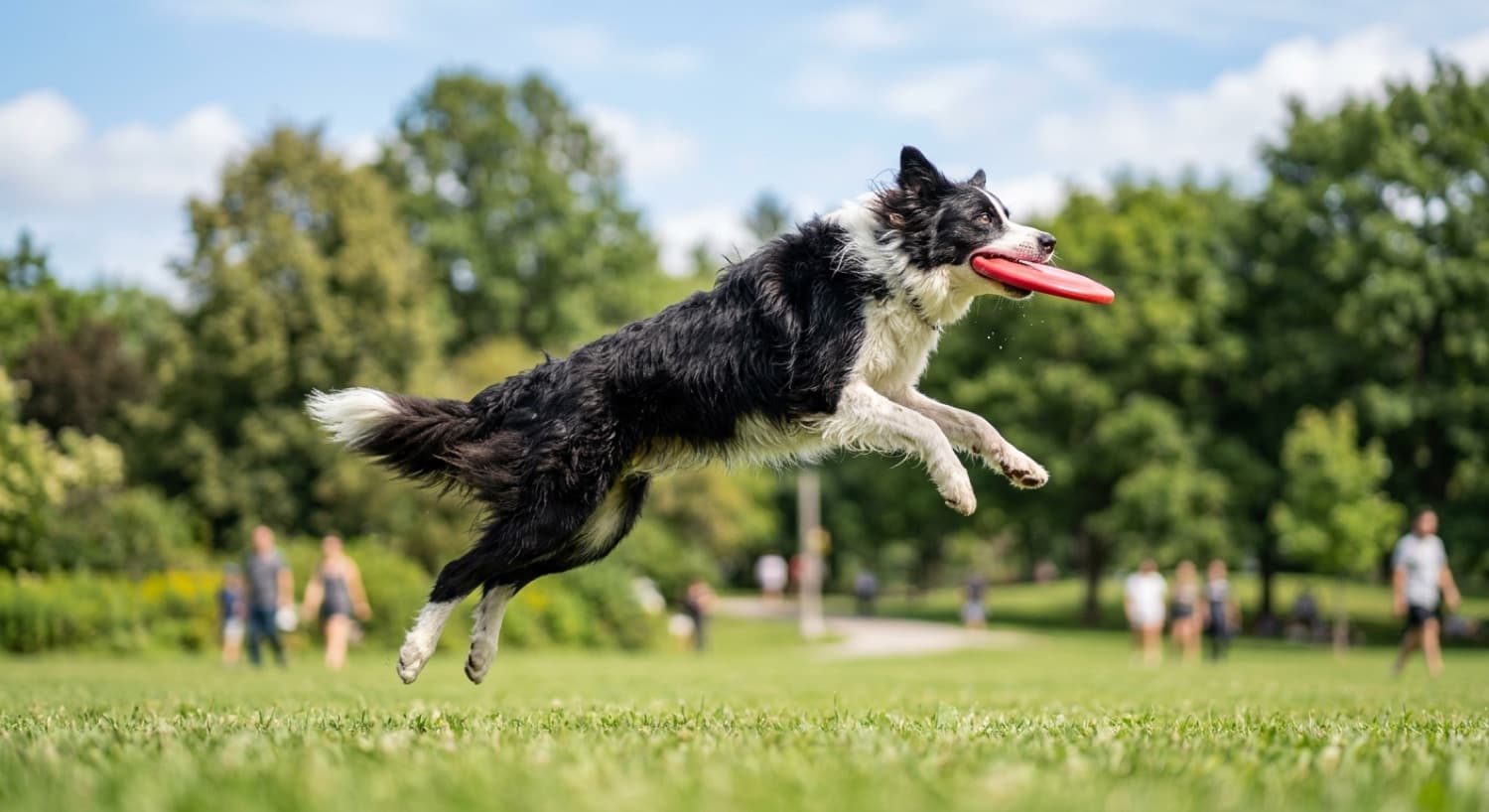
You cannot out-walk a Border Collie
The trap that fills prairie rescues is thinking more physical exercise is the fix. It is not, because a fit BC just becomes fitter and needs even more.
Plan for one to two hours of real activity a day, every day. But the hours are only half the answer. A Border Collie was bred over centuries to work a farm all day, so it has stamina most owners cannot match, and a dog that gets a long run but no thinking work is often still wired and looking for trouble.
Fifteen minutes of hard mental work can tire a Border Collie more than an hour of fetch. This is the single most important thing to understand about the breed. Owners who lean on mental enrichment succeed; owners who try to solve everything with more running end up with a fitter, more frustrated dog. The AKC Border Collie profile flags the breed's need for a job directly.
How a bored Border Collie self-destructs
A BC that does not get enough mental and physical work turns that unspent drive inward. By 8 to 18 months, an under-stimulated BC can look like a dog with a behaviour disorder when it just needs a job.
The classic bored-BC failure modes:
- Relentless barking and whining
- Spinning, tail-chasing, and pacing
- Chewing furniture, walls, and baseboards
- Obsessive light, shadow, or reflection chasing
- Herding and nipping at kids, pets, and ankles
In an apartment with no yard and long hours alone, the problems compound fast, and some habits (especially obsessive spinning or light-chasing) are genuinely hard to reverse once ingrained. A BC can live in an apartment, but only if the owner supplies serious daily exercise and mental work, and only if the dog is not left alone and idle for long stretches. This pattern is the leading reason Border Collies are surrendered, covered in our Border Collie adoption guide.
The herding instinct and how to channel it
The herding instinct is the hardwired urge to gather and control movement. In a pet home it shows up as chasing and nipping at running kids, cyclists, joggers, cars, other dogs, and livestock.
It is not aggression, it is a job instinct with no sheep to point it at, but it can still cause bites and dangerous chasing, so it needs management, not punishment.
How to channel it:
- Redirect onto acceptable outlets: a ball with rules, a flirt pole, or a herding-ball game called treibball
- Teach a rock-solid recall and a settle on cue
- Manage the environment around kids, and prevent the rehearsal of chasing bikes and cars, because every chase makes the habit stronger
- If you have acreage access, herding lessons or stock work channel the instinct at its source
A force-free trainer experienced with herding breeds can help you work with the instinct rather than fight it. On the prairies, an acreage or farm nearby can be a real asset for a dog built to work stock.
Give the dog a job: sports and enrichment near Saskatoon
A job does not have to mean sheep. Dog sports are the practical answer for a city Border Collie, and they work the mind and the body together.
Structured outlets that suit the breed: agility, flyball, disc, obedience, rally, scent work, and treibball. Saskatoon has an active dog-sport community you can find through local clubs and force-free trainers, and indoor sport classes are a winter lifesaver. If you have access to an acreage or farm, herding lessons channel the instinct at its source.
Everyday mental enrichment that actually satisfies a BC:
- Shaping and trick training, teaching a new trick a week
- Scent games and nosework, finding hidden treats or objects
- Food-puzzle feeders and snuffle mats for meals
- Impulse-control games like wait and leave-it
- Fetch with rules (sit, wait, release, clear end), not mindless throwing
The prairie helps on the physical side too: long summer runs on the Meewasin Trail and hard off-leash play at parks like Sutherland Beach and Hyde Park burn real energy. See our off-leash parks guide for access and rules. Remember the physical side is only half the plan.
The ball-obsession trap, and winter enrichment
Endless repetitive ball-throwing can tip a Border Collie into obsession, where the dog fixates, cannot switch off, and needs the ball to feel okay. That is the opposite of a calm mind.
Repetitive high-speed chase-and-stop also hammers joints. Use fetch in moderation with rules and a clear end, and spend more of the enrichment budget on thinking games than on adrenaline. The aim is a dog that can be aroused and then settle, not one stuck permanently in overdrive. Teaching a Border Collie to relax on cue is as valuable as any physical workout.
Winter is when this all matters most. Months of -30 to -40 windchill make long outdoor sessions impossible, and a bored BC in winter is a genuine welfare problem. Shift the work indoors and mental: hallway and stairwell fetch for sprint bursts, tug and a flirt pole in a basement, scent games around the house, trick-training sessions, and puzzle feeding for every meal. On milder days, take the outdoor exercise you can get with paw balm and a salt rinse. Our winter dog care guide covers the cold limits and paw routine.
Browse adoptable Border Collies in Saskatoon
A foster home that has lived with the dog can tell you a rescue BC's real drive level, which is the single most useful thing to match to your enrichment plan. Start with the dogs available right now.
See Available Border Collies →Frequently Asked Questions
How much exercise does a Border Collie really need?
Plan for one to two hours of real activity a day, every day, but understand that the hours are only half the answer. A Border Collie is the highest-drive breed there is, bred to work a farm all day, so it has stamina most owners cannot out-walk. The trap people fall into is thinking more physical exercise is the fix. It is not, because a fit BC just becomes fitter and needs even more. The dog that thrives is the one whose brain is worked as hard as its body: training, problem-solving, scent games, and a real job to do. A tired-out Border Collie is usually a mentally-tired one, not just a physically-tired one. If you only have time for a couple of walks a day and no mental work, this is not the breed for your situation, and that is an honest thing to know before you adopt.
Why does mental stimulation matter more than physical exercise for a BC?
Because you cannot physically exhaust a working dog bred for endurance, but you can mentally satisfy one. Border Collies were selected for hundreds of years to think, watch, make decisions, and respond to a handler across a field, so their minds need a job as much as their legs do. A BC that gets a five-kilometre run but no thinking work is often still wired and looking for trouble, while a BC that gets a solid training session, a puzzle feeder, and a scent game settles happily. Fifteen minutes of hard mental work can tire a Border Collie more than an hour of fetch. This is the single most important thing to understand about living with the breed. Owners who lean on mental enrichment succeed, and owners who try to solve everything with more running end up with a fitter, more frustrated dog.
How does a bored Border Collie self-destruct in a Saskatoon apartment?
Predictably and destructively. A Border Collie that does not get enough mental and physical work turns that unspent drive inward, and the results are the classic surrender reasons: relentless barking, spinning and tail-chasing, pacing, chewing furniture and walls, obsessive light or shadow chasing, and herding whatever moves, including kids, other pets, and your ankles. In an apartment with no yard and long hours alone, the problems compound fast, and by 8 to 18 months an under-stimulated BC can look like a dog with a behaviour disorder when it really just needs a job. Some of these habits, especially obsessive spinning or light-chasing, are genuinely hard to reverse once ingrained. A BC can live in an apartment, but only if the owner supplies serious daily exercise and mental work, and only if the dog is not left alone for long stretches without something to do.
What is the Border Collie herding instinct, and how do I manage it?
The herding instinct is the hardwired urge to gather and control movement, and in a pet home it shows up as chasing and nipping at moving things: running kids, cyclists, joggers, cars, other dogs, and livestock on a rural property. It is not aggression, it is a job instinct with no sheep to point it at, but it can still cause bites and dangerous chasing, so it needs management, not punishment. The approach is to redirect the instinct onto acceptable outlets (a ball, a flirt pole, a herding-ball game called treibball, or actual stock work if you have access) and to teach a rock-solid recall and a settle. Manage the environment around kids and prevent the rehearsal of chasing bikes and cars, because every chase makes the habit stronger. A good force-free trainer experienced with herding breeds can help you channel it rather than fight it.
Can I give a Border Collie a real job in or near Saskatoon?
Yes, and it is the best thing you can do for the breed. A job does not have to mean sheep. Dog sports are the practical answer for a city BC: agility, flyball, disc, obedience, rally, scent work, and treibball all give the dog structured mental and physical work, and Saskatoon has an active dog-sport community you can find through local clubs and force-free trainers. If you have access to an acreage or a farm, herding lessons or actual stock work channel the instinct at its source. Even without any of that, daily trick training, shaping games, and food puzzles give the dog a job to do. The prairie also helps: long summer runs on the Meewasin Trail and hard off-leash play at parks like Sutherland Beach and Hyde Park burn real energy, though remember the physical side is only half the plan.
What are good mental-enrichment activities for a Border Collie?
Anything that makes the dog think, and variety keeps it fresh. Strong options: shaping and trick training (teach a new trick a week, because BCs learn fast and love it), scent games and nosework where the dog finds hidden treats or objects, food-puzzle feeders and snuffle mats that turn meals into work, impulse-control games like wait and leave-it, and interactive fetch with rules rather than mindless ball-throwing. Rotate toys so they stay interesting, and build short training sessions into daily life. The goal is to work the problem-solving brain the breed was built around. Stacking two or three of these across a day, alongside physical exercise, is what actually produces a calm, satisfied Border Collie. A dog that gets to use its mind is a dog that can relax, which is the whole point.
Should I be careful about creating a ball-obsessed Border Collie?
Yes, this is a real trap with the breed. Because Border Collies are so drive-driven, endless repetitive ball-throwing can tip into obsession, where the dog becomes fixated, cannot switch off, and needs the ball to feel okay, which is the opposite of a calm mind. Repetitive high-speed chase-and-stop also hammers joints. Better to use fetch in moderation with rules (sit, wait, release, and a clear end), and to spend more of the enrichment budget on thinking games than on adrenaline. The aim is a dog that can be aroused and then settle, not a dog stuck permanently in overdrive. If your BC is already showing obsessive ball or light fixation, a force-free trainer or your vet can help you build in off-switches. Teaching a Border Collie to relax on cue is as valuable as any physical workout.
How do I exercise a Border Collie through a Saskatoon winter?
Shift most of the work indoors and mental, because months of -30 to -40 windchill make long outdoor sessions impossible and a bored BC in winter is a genuine welfare problem. Indoor options that actually help: hallway and stairwell fetch for sprint bursts, tug and a flirt pole in a basement, scent games hiding treats around the house, shaping and trick-training sessions, and food-puzzle feeding for every meal. Stack several across the day and you replace most of a skipped walk. On milder days, take the outdoor exercise you can get, with paw balm and a post-walk salt rinse, and apply the standard windchill limits even to a cold-hardy dog. Indoor dog sports and training classes are a winter lifesaver for this breed. The key is that winter is when mental enrichment matters most, not least, because the physical outlet shrinks.
How do I know if my Border Collie is under-stimulated?
The dog tells you, usually loudly. Signs of an under-worked BC include restlessness that never settles, destructive chewing or digging, excessive barking, spinning or tail-chasing, obsessive fixation on lights, shadows, or reflections, herding and nipping at family members, and general anxiety or hyper-vigilance. A well-exercised, mentally-satisfied Border Collie, by contrast, can switch off and relax in the house between sessions. If your BC cannot settle and is inventing its own jobs, the answer is almost always more mental work, not more punishment or more running. Add training, puzzles, and structured jobs before assuming the dog has a behaviour disorder, because for this breed the two look identical from the outside. If problems persist after you genuinely meet the enrichment needs, a force-free trainer or your vet can help rule out anxiety or a medical cause.
Is a Border Collie a good fit for a busy family or a full-time worker?
It depends entirely on the plan, not the intention. A BC can do well in a busy household if the family genuinely builds in daily exercise and mental work and does not leave the dog alone and idle for long stretches. It does poorly when everyone is out ten hours a day and the dog gets a rushed walk and nothing for its mind. If you work full time, you need a real plan: a mid-day walk or daycare, puzzle feeders and safe chews for the alone hours, and solid enrichment morning and evening. Dog daycare or a walker experienced with high-drive dogs can bridge the workday. Be honest with yourself before adopting, because this is the breed where good intentions without a concrete daily routine lead straight to the surrender pile. Matched to the right active, engaged home, a Border Collie is one of the most rewarding dogs you can own.
Would a Border Collie cross be easier than a purebred?
Sometimes, but not reliably, so judge the individual dog rather than the label. A Border Collie cross Lab (Borador) is often a bit softer and more forgiving than a purebred BC, which can make an active family's life easier. But a Border Collie cross Cattle Dog or cross Australian Shepherd stacks two herding drives and can be more demanding, not less. The cross does not guarantee lower drive, and prairie rescue is full of high-energy BC crosses that need exactly the same enrichment plan as a purebred. The reliable move is to work with a rescue whose foster has lived with the dog and can tell you its actual energy and drive level, then match honestly to your life. A calm, lower-drive BC cross exists, but so does a cross that is more intense than either parent breed. Ask, and watch the dog.
Border Collie Adoption Saskatoon
Where to find them, costs, the merle warning, and prairie crosses.
Border Collie Health Issues
Collie eye anomaly, hip dysplasia, epilepsy, and the MDR1 gene.
Best Off-Leash Parks Saskatoon
Where to burn a high-drive dog's physical energy in the warm months.
Adoptable Border Collies
All currently available BCs and Border Collie crosses in Saskatoon.
New dog? Start with these care guides
Everything a new adopter needs to set up a safe, happy home.