The short answer
A German Shepherd is a working breed that needs a job. Plan for 60 to 90 minutes of daily exercise plus mental work, lifelong socialisation starting young, and force-free, reward-based training. Shepherds are brilliant and handler-focused, which makes them highly trainable, but the same intelligence means they learn bad habits fast and grow reactive when under-socialised. Reactivity is the number-one behaviour problem, and it is managed with a force-free trainer and work under threshold, never punishment. In a Saskatoon winter, shift exercise indoors on -35 windchill days rather than cancelling it. An under-worked shepherd is a destructive shepherd.
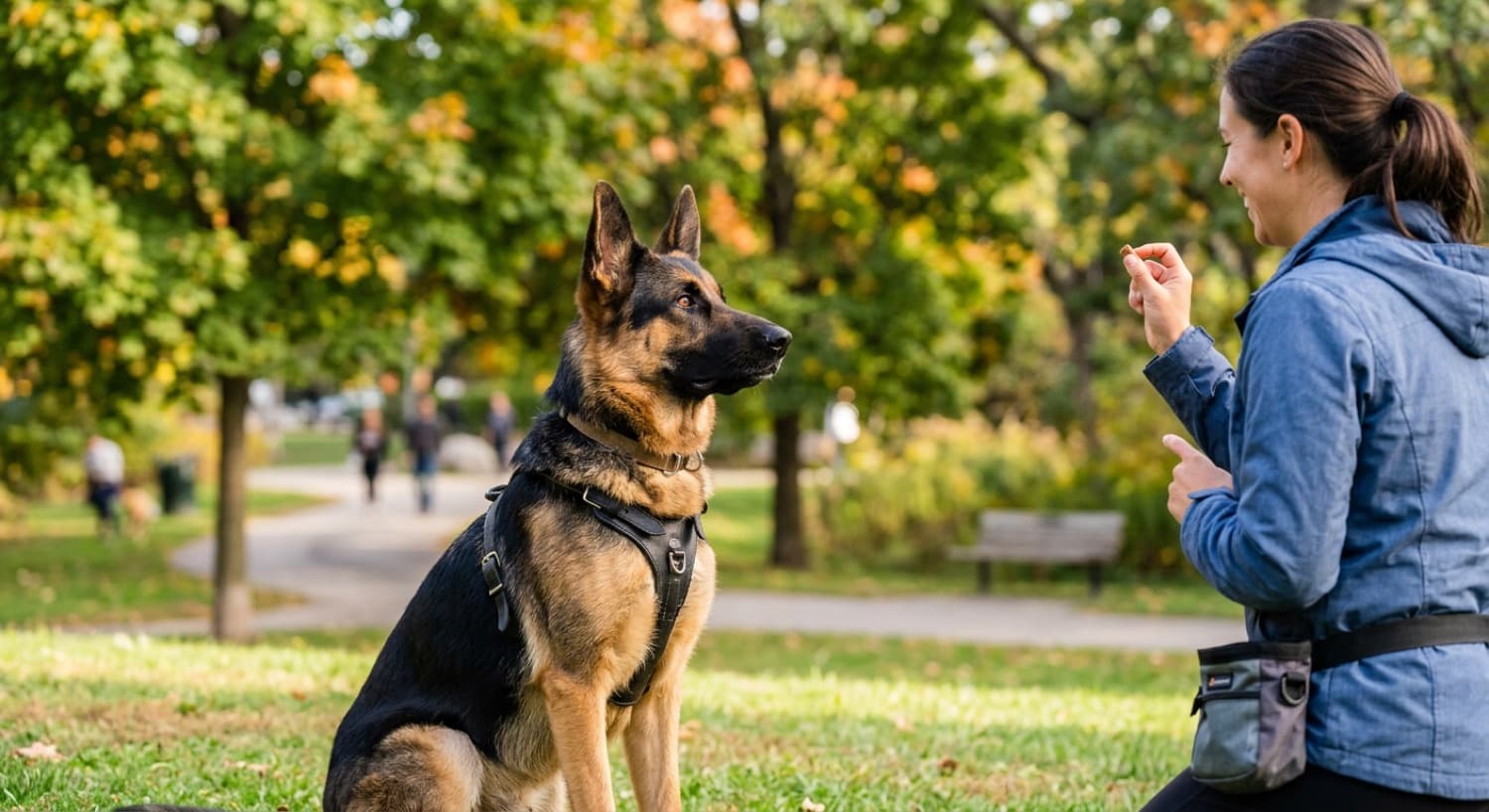
The working-breed reality
The German Shepherd was built to work all day beside a handler, herding, guarding, tracking, and problem-solving. That heritage did not disappear when the breed became a family favourite. A shepherd in a pet home still carries the drive to move, think, and have a purpose, and the single biggest reason shepherds end up in Saskatchewan rescue is that owners underestimate how much that drive demands.
Plan for real daily exercise, 60 to 90 minutes for a healthy adult, and understand that physical exercise is only half the job. Mental work matters just as much. A shepherd that gets a long walk but no training, no problem-solving, and no outlet for its brain is still an under-stimulated dog. The American Kennel Club breed profile describes the shepherd as an energetic, purpose-driven dog that needs a job, and that is the frame to hold onto.
Force-free training is the approach that works
Shepherds are sensitive dogs, and reward-based training gets far better results than harsh correction. Punishment often creates the anxiety and reactivity it is meant to stop.
Because shepherds are so handler-focused, they respond quickly to clear, consistent, positive training. Keep sessions short and upbeat, reward the behaviour you want, and build a reliable recall and a solid leave-it early. A shepherd that learns to look to you for direction is calm and easy to manage in public.
The Saskatoon SPCA runs certified positive-reinforcement classes from puppy through advanced levels, and there are independent force-free trainers in the city. If you are a first-time shepherd owner, a group class is one of the best investments you can make, both for the training and for the controlled socialisation. Confirm any trainer uses reward-based methods before booking, and steer clear of anyone who leads with dominance or correction-collar approaches for a sensitive working breed.
Managing reactivity
Reactivity is the number-one behaviour problem in German Shepherds, and it almost always traces back to poor early socialisation combined with the breed's natural wariness of strangers.
An under-socialised shepherd becomes suspicious of new people, dogs, or situations, and that shows up as barking, leash-lunging, and fence-running. Prevention through early positive exposure is ideal, but for an adult rescue with an established pattern, the path is management and counter-conditioning:
- Work with a force-free trainer experienced with working breeds, and consider a veterinary behaviourist for serious cases
- Keep the dog under threshold, far enough from the trigger that it can stay calm, and reward the calm
- Do not punish the reaction, because punishment often deepens a fear-based response
- Manage the environment: distance, timing your walks to quieter hours, and avoiding known triggers while you work
This is genuine, patient work, and it is worth doing with professional help. A reactive shepherd is not a lost cause, but it is not a solo project either. For an adult rescue still settling in, give the dog its decompression time first. Our first-week guide covers the 3-3-3 timeline that has to come before any serious training.
Exercising a shepherd through a Saskatoon winter
A shepherd's double coat handles prairie winter better than the owner does, so cold is rarely the limiter. The windchill is.
On days above about -20, a healthy shepherd is fine for a normal walk with paw protection against road salt. The problem is the deep cold snaps, when a -35 windchill makes a real walk unsafe for days at a time. That is when an under-worked shepherd gets destructive, so the plan is to shift the work indoors, not cancel it:
- Training sessions: five to ten minutes of obedience, tricks, or place work, run a few times a day
- Scent games: hide a treat and let the dog find it, building up to hides across rooms
- Puzzle feeders and snuffle mats in place of the food bowl
- Stairs, if you have them, for physical work
- A doggy daycare day during a long cold snap for a high-drive dog
Twenty minutes of brain work settles most shepherds. On milder days, the fenced off-leash parks and the Meewasin Trail give a shepherd room to move. Our off-leash parks guide and winter dog care guide cover the details.
Browse adoptable German Shepherds in Saskatoon
A foster-based rescue can tell you a shepherd's real energy level, training, and how it does with people and other pets, which matters more than any label. Refreshed regularly.
See Available German Shepherds →Frequently Asked Questions
How much exercise does a German Shepherd need?
A healthy adult German Shepherd needs about 60 to 90 minutes of real exercise a day, plus mental work. This is not a dog you can satisfy with a short block walk. Shepherds are a working breed bred to move and think all day, and a bored, under-exercised one invents its own jobs, which usually means barking, digging, chewing, or fixating on movement. Physical exercise alone is not enough either. Twenty minutes of training, scent games, or a puzzle feeder tires a shepherd faster than an extra half-hour of walking. In a Saskatoon winter, when a -35 windchill cancels the long walk, mental enrichment indoors is what keeps a shepherd sane. Under-exercised shepherds are a big share of the ones that end up in prairie rescue.
Are German Shepherds easy to train?
Yes and no. German Shepherds are one of the most trainable breeds because they are highly intelligent and handler-focused, they look to their person for direction and thrive on having a job. That is why they excel at obedience, tracking, and protection sport. The catch is that the same intelligence means they learn bad habits just as fast as good ones, and they are sensitive dogs that shut down or grow anxious under harsh handling. Force-free, reward-based training is the approach that works. Start early, stay consistent, and keep sessions short and positive. A shepherd trained well is one of the easiest large dogs to live with. One trained carelessly becomes reactive and difficult.
Why are German Shepherds reactive, and how do I manage it?
Reactivity in German Shepherds usually comes from poor early socialisation combined with the breed's natural wariness of strangers. An under-socialised shepherd becomes suspicious of new people, dogs, or situations, and that shows up as barking, lunging, and fence-running. The fix is prevention through early, positive exposure, but for an adult rescue with an established pattern, management and counter-conditioning are the path. Work with a force-free trainer experienced with working breeds, keep the dog under threshold (far enough from the trigger that it can stay calm), and reward calm behaviour. Do not punish the reaction, because punishment often makes a fearful dog more reactive. This is real work, and it is worth doing with professional help rather than alone.
Do German Shepherds need a fenced yard in Saskatoon?
A secure yard helps a lot, but it is not strictly required if you are committed to daily leashed exercise. Shepherds are less prone to the roaming and escape drive that huskies are famous for, so a fenced yard is more about giving a high-energy dog a safe place to burn off steam than about containment. That said, shepherd-husky crosses, which are very common in Saskatoon rescue, do inherit husky escape drive, so for those dogs a secure fence matters far more. Whatever your setup, a shepherd needs genuine exercise and training every day, not just yard access. A dog left alone in a yard gets no mental stimulation and often becomes a barker or a digger.
Are German Shepherds good with kids and other pets?
Well-raised German Shepherds are typically loyal, gentle family dogs that bond closely with children, and many are excellent with the kids in their own household. The keys are early socialisation, supervision, and teaching both the dog and the kids to respect boundaries. With other dogs and cats, it depends heavily on the individual dog and its socialisation history, which is exactly why adopting an adult through a foster-based rescue is an advantage: the foster has watched the dog live with other animals and can tell you the truth. A shepherd with a strong prey drive may not be safe with cats, while another is fine. Ask the rescue, and do slow, managed introductions.
How do I socialise a German Shepherd puppy in Saskatoon?
Socialisation is the single most important thing you can do for a shepherd, and the window is widest in the first few months. Expose the puppy, calmly and positively, to as many people, dogs, sounds, surfaces, and situations as you safely can before about 16 weeks, while keeping every experience good. In Saskatoon that means planning around winter: a puppy that arrives in January still needs socialisation, so use indoor puppy classes, carry the pup through busy places, and invite calm visitors over. A well-run puppy class with a positive-reinforcement trainer is worth the money. Under-socialised shepherds become the reactive adults that fill rescues, so this early work pays off for a decade.
Can I train a German Shepherd myself, or do I need a trainer?
You can do a lot yourself with consistency and good information, but for a working breed a professional trainer is a smart investment, especially for a first-time shepherd owner. A force-free group class gives you structure, real-world socialisation, and coaching on timing, which matters more than most owners realise. For any sign of reactivity, fear, or aggression, work with a qualified trainer or a veterinary behaviourist rather than trying to fix it alone, because getting it wrong with a large, powerful dog raises the stakes. The Saskatoon SPCA runs positive-reinforcement classes, and there are independent force-free trainers in the city. Confirm any trainer uses reward-based methods before you book.
What is the working-line vs pet temperament difference?
Working-line German Shepherds are bred for drive, and they are genuinely more than most pet homes can handle. They need a job, intense daily work, and an experienced handler, and they become destructive or reactive when under-stimulated. Show-line and pet-line shepherds are generally calmer and better suited to family life, though still high-energy by any normal standard. Most Saskatoon rescue shepherds are pet-line dogs or crosses rather than purpose-bred working dogs, which is good news for the average adopter. If a rescue describes a dog as extremely high-drive or best for an experienced working home, believe them. That honesty is protecting both you and the dog from a mismatch that ends in a return.
How do I exercise a German Shepherd through a Saskatoon winter?
A shepherd's double coat means it can handle prairie winter far better than the owner can, so cold is rarely the limiter, the windchill is. On days above about -20, a shepherd is fine for a normal walk with paw protection against road salt. When a -35 windchill cancels the walk, replace it with indoor mental work: training sessions, scent games, puzzle feeders, and stairs if you have them. Twenty minutes of brain work settles most shepherds. A doggy daycare day during a long cold snap is a reasonable option for a high-drive dog. The owners who skip all exercise on cold days end up with a stir-crazy, destructive shepherd, so the plan is to shift the work indoors, not cancel it.
Are German Shepherds good for first-time owners?
Generally challenging, but not impossible with commitment. A shepherd is a lot of dog: high energy, high intelligence, strong bond, and a real need for training and socialisation. First-time owners who underestimate that end up with a reactive or destructive dog, which is why shepherds are common in rescue. If you want a shepherd as your first dog, adopt an adult through a foster-based rescue so the temperament is already known, commit to force-free training from day one, budget the daily exercise honestly, and lean on a trainer. An even-tempered adult shepherd whose personality a foster can vouch for is a far safer first-time choice than a puppy or a high-drive working-line dog.
German Shepherd Adoption Saskatoon
Where to find them, costs, scam warnings, and shepherd crosses.
German Shepherd Health Issues
Hip dysplasia, degenerative myelopathy, bloat, and WCVM specialty care.
Saskatoon Off-Leash Parks
Where to exercise a high-energy dog, and which parks suit each dog.
Adoptable German Shepherds
All currently available GSDs and shepherd crosses in Saskatoon.
New dog? Start with these care guides
Everything a new adopter needs to set up a safe, happy home.