The short answer
Huskies are one of the healthier purebreds overall, typically living 12 to 15 years. The conditions Saskatoon owners should know: hereditary eye disease (cataracts, PRA, glaucoma, corneal dystrophy), hypothyroidism (usually managed long-term with vet-prescribed medication), and zinc-responsive dermatosis (a husky-linked absorption issue often misread as allergies). Hip dysplasia and bloat are reported less often than in many large breeds. The two risks you actually control on the prairies: summer heat (a double-coated arctic dog overheats fast in a +30 Saskatoon July) and winter paw care against road salt. Specialty care sits in-city at WCVM. Every treatment here is a conversation with your vet.
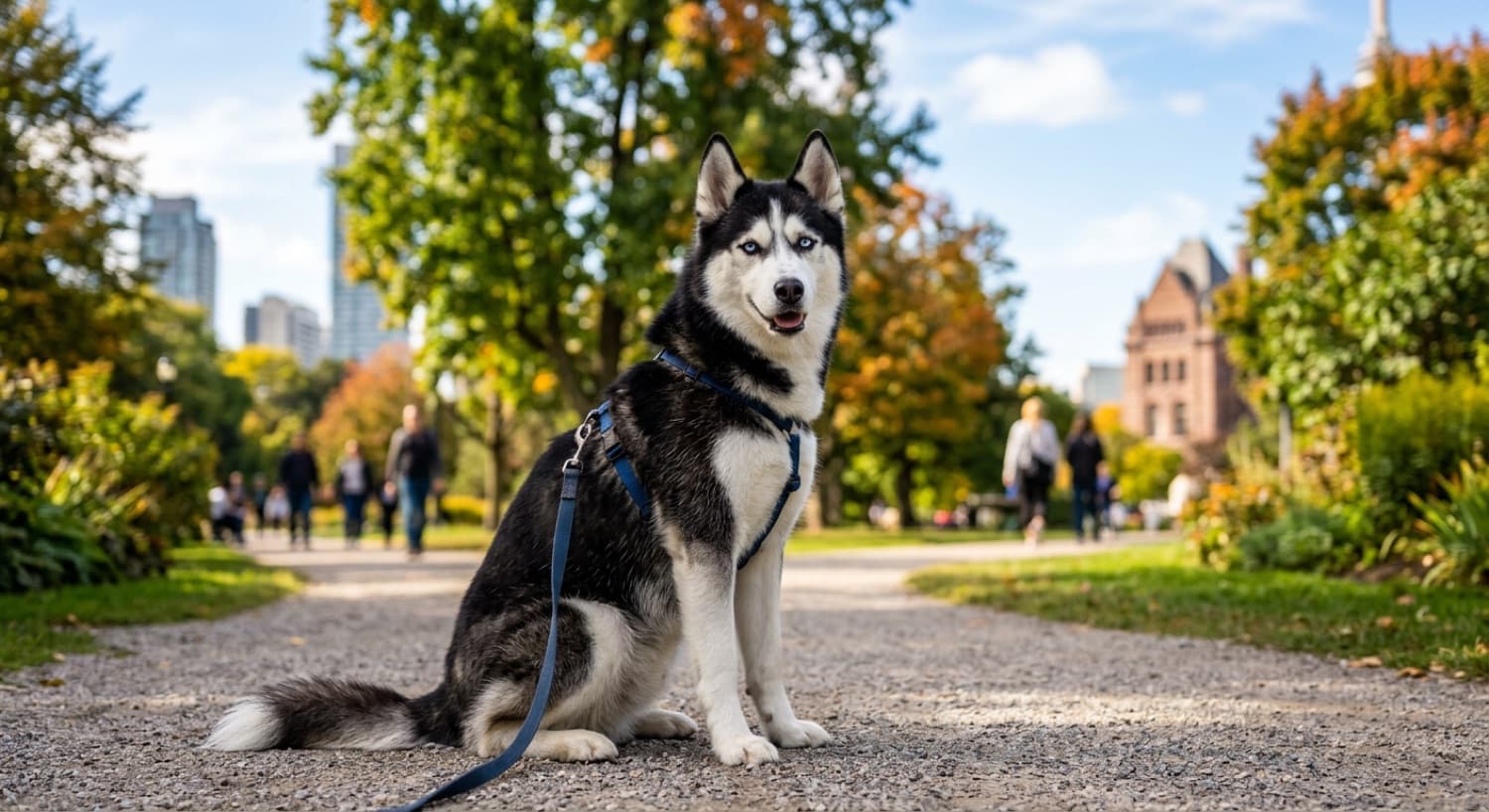
This guide is informational and is not veterinary advice. Diagnosis, medication, and treatment decisions belong with a licensed veterinarian who has examined your dog.
Summer heat: the risk that surprises Saskatoon husky owners
Everyone thinks of the husky as a cold-weather dog, and forgets the flip side. That dense double coat, a gift in January, is a liability in a +30 Saskatoon July, and heatstroke is a true emergency.
Saskatoon summers regularly reach the high 20s and low 30s Celsius, and a husky does not shed its undercoat fast enough to keep up with a real heat wave. A midday walk on a hot day can push a husky into trouble that a short-coated dog would shrug off.
Warning signs to act on fast:
- Heavy panting that does not settle when the dog rests
- Bright red gums and thick, ropey drooling
- Wobbliness, disorientation, or weakness
- Vomiting, then collapse in severe cases
Sensible prevention: walk in the early morning or evening on hot days, never leave a husky in a parked car, provide constant shade and water, and offer a cooling mat or a shaded kiddie pool during heat waves. If you suspect heatstroke, begin cooling with room-temperature (not ice-cold) water and get to an emergency vet immediately. The American Kennel Club breed profile flags the double coat and heat sensitivity directly.
Hereditary eye disease
Huskies are widely associated with breed-related eye disease, which is why breed authorities recommend annual exams by a veterinary ophthalmologist. Screening data is maintained by the Orthopedic Foundation for Animals.
Husky-associated eye conditions to discuss with your vet:
- Juvenile cataracts, often appearing in the first 6 to 24 months and often hereditary
- Progressive retinal atrophy (PRA), a gradual retinal degeneration; a DNA test identifies carriers, and most huskies adapt well if vision loss is slow
- Glaucoma, a sudden painful rise in eye pressure that can blind a dog within hours. Emergency signs: red eye, squinting, cloudy cornea. Same-day vet
- Corneal dystrophy, an opacity often cosmetic but sometimes vision-affecting
The Saskatoon advantage: veterinary ophthalmology is available in-city at the Western College of Veterinary Medicine, sparing the long drive owners in many prairie towns face. For an adult adoption, ask the rescue whether a recent eye exam has been done.
Hypothyroidism and zinc-responsive dermatosis
Two husky-linked conditions that both show up in the skin and coat, and both are commonly missed.
Hypothyroidism (an underactive thyroid) is commonly reported in middle-aged huskies. Watch for weight gain on a normal diet, lethargy, dry or flaky skin, hair loss (often symmetrical, sometimes a thinning tail), and cold intolerance, which is striking in a cold-adapted breed. Diagnosis is a thyroid panel your vet orders; treatment is a daily oral thyroid hormone replacement chosen and monitored by your vet, usually lifelong. If a senior husky is gaining weight and slowing down more than ageing explains, ask for a thyroid panel.
Zinc-responsive dermatosis is a husky-linked genetic absorption issue causing crusty lesions around the face, paws, elbows, and knees, with hair loss and depigmentation. It is often misdiagnosed as allergies for years. Diagnosis is a skin biopsy plus a documented response to supplementation, both ordered by your vet, and the formulation and dose must be vet-selected, because human pharmacy zinc is not a substitute. If your husky has chronic skin issues that have not responded to allergy treatment, ask your vet about zinc-responsive dermatosis by name. Do not start any medication or supplement without veterinary direction.
Winter, paws, and the low-risk breed picture
A husky handles prairie cold better than almost any breed, so the winter health concern is paws, not the body.
Road salt and de-icer crack and burn paw pads and can make a dog sick if licked off, so use paw balm before walks and rinse paws afterward, drying between the toes. Trim toe hair so ice balls do not form. Even a cold-hardy husky can get frostbite on ear tips, paw pads, and the nose during very long outings in an extreme windchill, so the standard Saskatoon windchill limits still apply to the extremities.
Hip dysplasia and bloat both exist in the breed but are reported less often than in many large breeds. The Canadian Kennel Club lists the recognized health screens for the breed. For the full cold-weather routine, see our winter dog care guide, and for the escape-and-recall reality that is the real husky winter danger, see our husky winter guide.
Browse adoptable Huskies in Saskatoon
A foster home that has lived with the dog can often tell you more about a husky's coat, skin, eyes, and heat tolerance than a kennel record alone. Start with the dogs available right now.
See Available Huskies →Frequently Asked Questions
Are huskies healthy dogs?
Yes, on the whole. Siberian Huskies are one of the healthier purebreds, typically living 12 to 15 years, with fewer of the serious genetic problems that plague many popular breeds. That is partly because they were bred for function over appearance. The conditions to know about are mostly manageable: hereditary eye disease, hypothyroidism, and a husky-linked skin condition called zinc-responsive dermatosis, plus the two environmental risks a Saskatoon owner controls, summer heat and winter paw care. Hip dysplasia and bloat exist in the breed but are reported less often than in many large breeds. None of this should scare anyone off a husky. It just tells you what to watch for and discuss with your vet.
Can huskies overheat in a Saskatoon summer?
Yes, and it surprises people because everyone thinks of the husky as a cold-weather dog. A husky carries a dense double coat built for arctic conditions, and Saskatoon summers regularly hit the high 20s and 30s Celsius. That coat that is a gift in January becomes a liability in July. Heatstroke is a true emergency. Warning signs to act on include heavy panting that does not settle, bright red gums, thick drooling, wobbliness, vomiting, and collapse. Sensible prevention: exercise in the early morning or evening on hot days, never leave a husky in a parked car, provide shade and water, and consider a cooling mat or a kiddie pool during heat waves. If you suspect heatstroke, begin cooling with room-temperature water and get to an emergency vet immediately.
What eye problems do huskies have?
Huskies are widely recognized for hereditary eye disease, and breed authorities recommend annual eye exams by a veterinary ophthalmologist. The conditions to discuss with your vet include juvenile cataracts, which can appear in the first 6 to 24 months; progressive retinal atrophy (PRA), a gradual retinal degeneration that a DNA test can flag in carriers; glaucoma, a sudden painful rise in eye pressure that can blind a dog within hours and is a same-day emergency (signs: red eye, squinting, cloudy cornea); and corneal dystrophy, usually cosmetic but sometimes vision-affecting. In Saskatoon, veterinary ophthalmology is available in-city at the Western College of Veterinary Medicine, which spares the long drive owners in smaller centres face. For an adult adoption, ask whether a recent eye exam has been done.
Are huskies prone to hypothyroidism?
Hypothyroidism, an underactive thyroid, is commonly reported in huskies and usually appears in middle-aged adults. Signs to discuss with your vet include weight gain despite normal feeding, lethargy, dry or flaky skin, hair loss (often symmetrical on the flanks, sometimes a thinning tail), cold intolerance, a slow heart rate, and recurrent skin or ear infections. Diagnosis is a full thyroid panel your vet orders, and treatment is typically a daily oral thyroid hormone replacement, chosen and monitored by your vet, and usually lifelong. If your senior husky is gaining weight and slowing down more than normal ageing explains, ask your vet for a thyroid panel before assuming it is just old age. Do not start any medication without veterinary direction.
What is zinc-responsive dermatosis in huskies?
Zinc-responsive dermatosis is a husky-linked skin condition where the dog cannot absorb zinc from food efficiently, causing chronic skin issues that respond to vet-directed zinc supplementation but recur if treatment stops. The adult form appears in huskies on a normal diet and is a genetic absorption issue, with crusty lesions around the eyes, ears, mouth, foot pads, elbows, and knees, plus hair loss and depigmentation. It is often misdiagnosed as allergies for years. Diagnosis is a skin biopsy plus a documented response to supplementation, both ordered by your vet, and the specific formulation and dose must be selected by your vet, since human pharmacy zinc is not a substitute. If your husky has chronic skin issues that have not responded to allergy treatment, ask your vet about zinc-responsive dermatosis by name.
Do huskies get hip dysplasia?
Yes, but reported less often than in Labs, Goldens, or German Shepherds. The breed sits among the lower-incidence large breeds in orthopedic screening data, though responsible breeders still test. Signs to watch for include a bunny-hopping gait, reluctance to jump or use stairs, hindlimb stiffness after rest, and muscle wasting in the hindquarters. Diagnosis is by X-ray read by your vet. Most cases are managed conservatively with weight control, joint supplements, physiotherapy, and pain medication your vet selects, and overweight huskies do noticeably worse, so keeping the dog lean matters. For severe cases, orthopedic surgery is available in-city at the Western College of Veterinary Medicine. If you are adopting an adult husky, ask whether the hips have been assessed.
Are huskies at risk for bloat (GDV)?
Lower risk than the deepest-chested giant breeds, but bloat (gastric dilatation-volvulus) is still possible and always a true emergency. The stomach fills with gas and twists, and it can be fatal within hours without surgery. Reported risk factors include fast eating, exercise within one to two hours of meals, a single large daily meal, and stress. Reasonable prevention includes two or three smaller meals a day, a slow-feeder bowl, and quiet rest around meals. Warning signs that need an emergency vet immediately: a distended abdomen, unproductive retching, restlessness, drooling, and collapse. In Saskatoon the 24/7 emergency hospital is the WCVM Veterinary Medical Centre, and bloat is a call-first, drive-straight-there situation.
How do I protect a husky's paws in a Saskatoon winter?
A husky's coat handles prairie cold beautifully, so the winter health concern is not the body, it is the paws, and mostly it is road salt rather than cold. De-icer on Saskatoon sidewalks and lots cracks and burns paw pads, and dogs lick it off and get sick. The routine is simple: apply paw balm before the walk to create a barrier, and wipe or rinse each paw with lukewarm water afterward, drying between the toes. Trim the hair between the toes so ice balls do not form. Even a cold-hardy husky can get frostbite on ear tips, paw pads, and the nose during very long outings in extreme windchill, so the same windchill limits apply. Our winter dog care guide covers the full paw-and-salt routine.
Should I get pet insurance for a husky?
Insurance is generally less critical for huskies than for high-risk breeds, but it can still be worth it, and eye conditions are usually the biggest single claim category, with cataract or glaucoma care running into the thousands at a specialty practice. Hip surgery, lifelong thyroid medication, and heat-related emergencies can also add up. Premiums vary by provider, breed risk, and age, so request real quotes from several Canadian insurers and compare the deductible, the reimbursement percentage, and per-condition versus annual limits. Enrol while your husky is young and symptom-free, because every Canadian provider excludes pre-existing conditions. Remember Saskatchewan taxes vet services at about 11 percent, which nudges the case for coverage.
Do huskies need a special diet?
Quality matters more than special-breed formulations. Most pet huskies do well on a balanced, protein-forward, moderate-fat commercial diet that meets AAFCO standards. Working sled-dog formulations are far too rich for a non-working pet husky. Avoid high-cereal or high-corn kibbles, which can worsen zinc absorption issues. Many owners notice their husky's appetite waxes and wanes, and skipping the occasional meal is usually normal, because huskies were bred to skip meals on long runs. Skipping multiple consecutive meals, especially with lethargy, vomiting, or weight loss, is a vet visit. For specific brand or supplement choices, and for any husky with diagnosed skin or digestive issues, ask your vet rather than picking from internet recommendations.
How long do huskies live, and what changes in old age?
Huskies are among the longer-lived working breeds, typically 12 to 15 years, so senior care usually begins later than for the largest breeds. Reasonable adjustments in the senior years, all guided by your vet: lower-intensity but still meaningful exercise, ongoing joint support, an annual eye exam to track any hereditary eye conditions, periodic thyroid rechecks, routine dental care, and weight monitoring, since overweight seniors do worse on every front. Some huskies develop cognitive changes in old age, with anxiety or disorientation, and your vet can advise. The Western College of Veterinary Medicine keeps ophthalmology and specialty care in-city, which is a real advantage for an ageing husky. A senior husky is often calmer and less escape-prone than a young one, which some adopters see as a plus.
Husky Adoption Saskatoon
Where to find them, costs, scam warnings, and husky crosses.
Huskies in Saskatoon Winter
The double coat thrives in cold, but the escape drive is the real problem.
Emergency Vet Saskatoon
Where to go at 2 a.m. for heatstroke, a bloat, or a crisis.
Adoptable Huskies
All currently available huskies and husky crosses in Saskatoon.
New dog? Start with these care guides
Everything a new adopter needs to set up a safe, happy home.