The short answer
For the first 3 days, keep your new Chow Chow's world small: one quiet room, a crate, the same food the rescue or breeder used, and absolutely no visitors. For the first 3 weeks, lock in a calm routine and expect very little affection: a Chow does not bond on day one, and that is not a sign of trouble. Book the first vet visit within 7 days (entropion + a hip baseline are the headline items), enrol pet insurance before that exam, walk on a back-clip harness, and plan around Calgary's climate (the thick double coat is an advantage in winter, a real risk above 22 degrees Celsius in summer). The 3-3-3 rule is the frame: 3 days of decompression, 3 weeks of routine, 3 months for the real dog to emerge. With most breeds the bond is visible by week 3 or 4. With a Chow, expect a directional turning point between week 4 and week 12, and a fully settled household by month 3 to 6. If you feel overwhelmed or rejected in week 1, you are not failing. It is the breed.
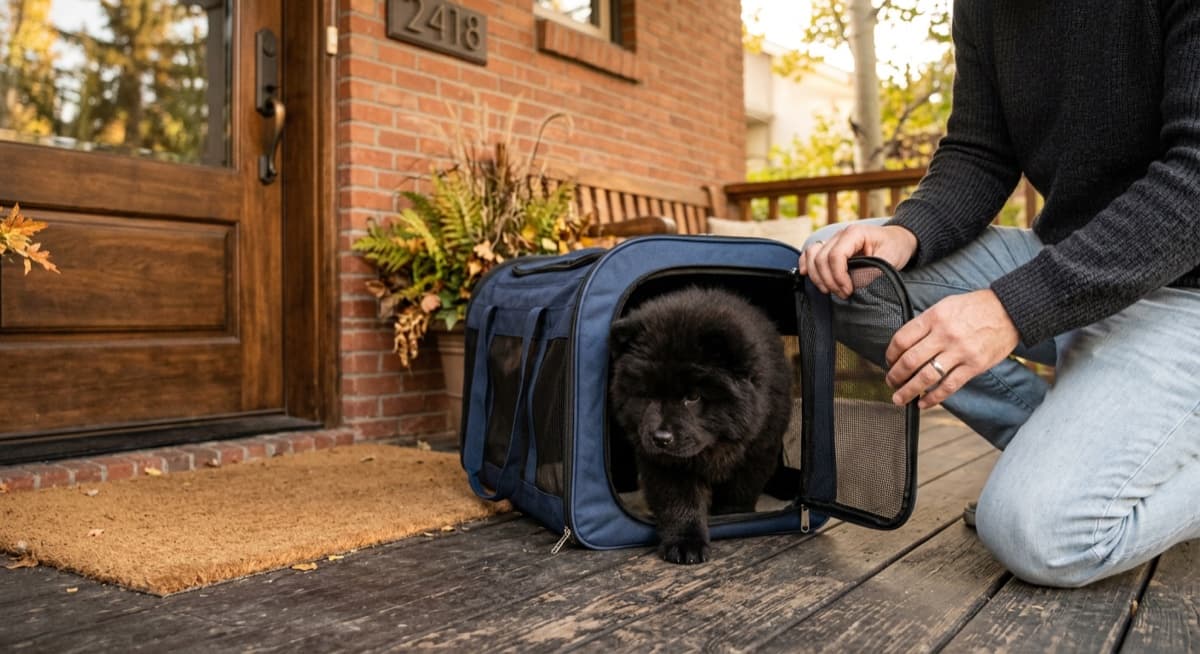
Before pickup: the Chow Chow supply checklist
A Chow Chow is a medium-to-large dog (40 to 70 lbs), with a heavy double coat, deep-set almond eyes, and a temperament the American Kennel Club Chow Chow page calls dignified and cat-like. The Chow Chow Club Inc (the AKC parent club) underlines two practical realities every new owner should plan for: the eyes need attention (entropion is the headline breed health item) and the coat needs regular maintenance, with two heavy seasonal sheds. Buy the core kit before pickup so the first 48 hours are about settling, not shopping. Calgary cost ranges below are directional and typical at Pet Valu, Bosley's, Tail Blazers, and large-format pet stores; online options vary.
| Item | Calgary cost | Why it matters for a Chow |
|---|---|---|
| Back-clip harness (L) | $45 to $90 | Chows resist front-clip rigs and dislike pressure on a thick neck ruff. A padded back-clip harness sits well. |
| Wire crate (42 inch) + divider | $120 to $180 | An aloof breed values defined personal space. Many Chows choose the crate as a safe spot once the door stays open. |
| Washable crate bed + 2 blankets | $50 to $110 | Cool, cleanable surface. A Chow on a hot pad in a Calgary July is at heat-stroke risk. |
| Raised stainless or ceramic bowls | $30 to $60 | Better posture for a deep-chested medium-large dog. Plastic causes chin acne in some Chows. |
| Slow-feeder / puzzle bowl | $15 to $30 | Many Chows gulp food. A slow-feeder reduces regurgitation and bloat risk in a deep-chested breed. |
| Eye-wipes + vet ear cleaner | $25 to $55 | The Chow-specific item. The deep-set, almond eye is prone to entropion. Daily soft eye-wipe checks for redness, tear-staining, or rolling lashes. |
| Slicker brush + greyhound comb + undercoat rake | $50 to $110 | A double coat needs all three. Daily slicker, weekly rake, twice-yearly heavy shed where the Chow blows the undercoat completely. |
| High-velocity dryer (or groomer plan) | $200 to $400, or $80 to $140 per groom | Coat blows need real airflow. Most owners book a groomer twice a year and slicker-brush at home in between. |
| 4-foot biothane or rope leash | $25 to $45 | Short, controllable leash for an aloof breed that may not love close pedestrian traffic on Calgary sidewalks. |
| Cooling mat (summer) | $30 to $60 | Critical. A Chow above 22 degrees Celsius cannot regulate heat well. A cooling mat is non-negotiable in a Calgary summer. |
| Frozen Kong + training treats | $25 to $50 | Alone-time conditioning, decompression chewing, and slow positive associations with quiet handling. |
| Pet insurance (enrolled day 1) | $60 to $130/mo | Entropion surgery and orthopaedic claims are the top Chow items; pre-existing exclusions kick in after the first vet visit. |
| Winter coat | $0 | Skip it. A Chow wears its own. The double coat is built for prairie winters. |
| Day-1 setup total | $590 to $1,190 | Plus first-month insurance and the wellness exam. |
Calgary cost ranges are directional; actual prices vary by retailer and season. Costs cited for example only.
Pickup day: what to expect on the drive home
Calgary pickups happen across the city: from Calgary Humane Society in the south, from AARCS intakes, from Pawsitive Match Rescue Foundation fosters, and from breeders or rural surrenderers in Airdrie, Okotoks, Cochrane, and the country south of the city. For a Chow Chow the drive matters more than the breed pages let on. Three details to plan for:
- Secure restraint. A crash-tested medium-large crate strapped to the back seat, or a seatbelt-clipped back-clip harness, is safest. A loose 60-lb dog in the front seat is dangerous for both of you and not legal under Calgary distracted-driving rules.
- Temperature. In summer, pre-cool the cabin and never leave a Chow unattended in a parked car, not even for 5 minutes. In winter, the cabin can be cooler than you would normally drive: the double coat heats up fast in a closed car.
- Quiet ride. Skip the meal right before pickup (carsickness is common), bring a towel, and keep the trip direct. No errands, no stops, no “just one quick introduction” on the way home.
Expect a quiet, watchful dog on arrival. Many Chows shut down completely for the first 24 to 48 hours, observe everything, and only start engaging on day 4 or 5. Some appear neutral on arrival and crash on day 3 when the adrenaline wears off. Both patterns are normal. Almost none will greet you at the door wagging. That is not coming. That is not what you adopted.
The 3-3-3 rule, applied to a Chow Chow
The 3-3-3 rule is the directional timeline rescues use to describe decompression: 3 days, 3 weeks, 3 months. With most breeds the bond is visible by the routine-forming phase. With a Chow Chow, the aloof temperament extends each phase, and real affection signals usually do not appear until well into the third phase. The pattern most Chow owners describe:
Hidden, sleeping, may not eat
Many newly adopted Chows spend the first 72 hours in the back of the crate, the corner of one room, or under a piece of furniture. Skipped meals are common. So is no eye contact, no tail movement, and very little response when called. Your job is low pressure: same room, same food, same potty spot, absolutely no visitors, no grooming session beyond a calm look-don't-touch check. Talk softly, drop treats nearby, and let the Chow set the pace. Survivors of neglect or backyard-breeder backgrounds may stay in this phase 1 to 2 weeks. Resist the urge to pet, hug, or test. Chows interpret unsolicited contact as rude in the first week, and a bad first impression of human handling sticks.
Watchful, quiet, slowly choosing your rooms
Around day 4 to 7, the Chow starts coming out. Watching from a corner. Eating in your presence. Walking past you without flinching. By week 2 you may notice the dog starts following you to the same rooms, not at your heels (that is not a Chow thing) but in the same general space. Housetraining for adult rescues usually solidifies in weeks 2 to 5. This is also the phase where any early warning signs of resource guarding, stranger reactivity, or same-sex dog tension are most likely to surface. Note them and consult a force-free trainer if anything escalates. Keep the schedule boring: same wake-up, same meals, same walks. Boring is what builds trust in an aloof breed.
Affection on Chow terms
Somewhere between week 4 and week 12, most owners describe a directional turning point. The dog chooses to lie down in the room you are in. Sighs deeply when you sit. Lets you brush the ruff without backing off. Takes a treat softly instead of guardedly. Rests its chin briefly against your leg. None of these are Labrador-grade affection. All of them count. By month 3 to 6, the bond is unmistakable. Some new behaviours also fully surface in this window (territorial barking, suspicion of new visitors, guarding around food or favourite spots). Treat the first 3 months as a non-decision window: do not rehome unless safety is at stake.
Setting up the home: spaces, gates, and the safe spot
A Chow does not need a big setup, but it does need a deliberate one. Six zones worth defining before pickup:
- The safe spot. A 42-inch crate in a low-traffic corner with bed, water, and a Kong. Place it in or near your bedroom for the first week so the dog is not isolated overnight, but far enough from the door that it is not the welcome committee for every visitor.
- Gated areas. Baby gates block off any room you do not want the dog in until housetraining is solid. Chows are stair-tolerant as adults, but young or recovering Chows should not have free run of the whole house for the first week. Keep stairs limited until the orthopaedic conversation with your vet.
- Potty area. One outdoor spot near the door for fast trips in cold weather. Indoor backups are less needed than with small breeds: the double coat handles Calgary winters comfortably. The harder month is July, when many Chows resist daytime outdoor potty trips because the pavement is too warm.
- Feeding station. Quiet corner, raised bowls, slow-feeder, away from foot traffic. A startled Chow at the bowl will learn to guard food, and Chows already sit in the higher-risk bracket for resource guarding. Do not stand over the dog while it eats, do not let children near the bowl, and do not test the food bowl by reaching in.
- Grooming station. A non-slip towel on a counter or low table where eye-wipe checks, ear inspections, and short brushing happen daily. Familiarising a Chow with this spot in week 1 saves grooming battles later. The aloof breed will accept handling much better if it associates the spot with treats and short sessions, not full grooming marathons.
- A “no-go” couch zone for week 1. Decide before pickup whether the dog is allowed on furniture. Switching mid-week confuses a settling dog and Chows sometimes guard sleeping spots. Easiest first-week default: not on the furniture, then re-decide at week 3 with calm intent.
Daily routine in week 1
Predictable schedules speed up settling more than any single training trick. A reasonable Chow Chow day for the first week:
| Time | Activity |
|---|---|
| 7:00 am | Wake, immediate potty trip, short sniff walk if calm. Cool morning air is the Chow's preference. |
| 7:30 am | Breakfast in quiet feeding spot. Raised slow-feeder bowl. |
| 8:00 am | 30-second eye-and-ear look (no touching the face yet), light slicker brush across the back only. Pay with a treat. |
| 10:00 am | Potty trip, frozen Kong in the safe spot, 30 to 60 min alone-time practice. |
| 12:00 pm | Lunch (puppies) or potty + sniff break (adults). Indoors on hot days. |
| 3:00 pm | Potty trip, 5 min positive reinforcement session (name recognition, sit). Keep sessions short; Chows tune out long drills. |
| 5:30 pm | Dinner. Quiet meal, same spot. |
| 7:30 pm | Calm walk on harness, 20 to 35 min. Evening is cooler in Calgary summer and the dog is happier. |
| 9:30 pm | Last potty trip. Lights down, settle in crate. |
| 2:00 am (puppies only) | One overnight potty trip in the first few weeks for puppies under 6 months. |
Browse adoptable Chow Chows and Chow mixes in Calgary
Live listings from 15+ Calgary rescues, updated regularly. Foster reports include known health, temperament, and household compatibility.
See Available Chow Chows →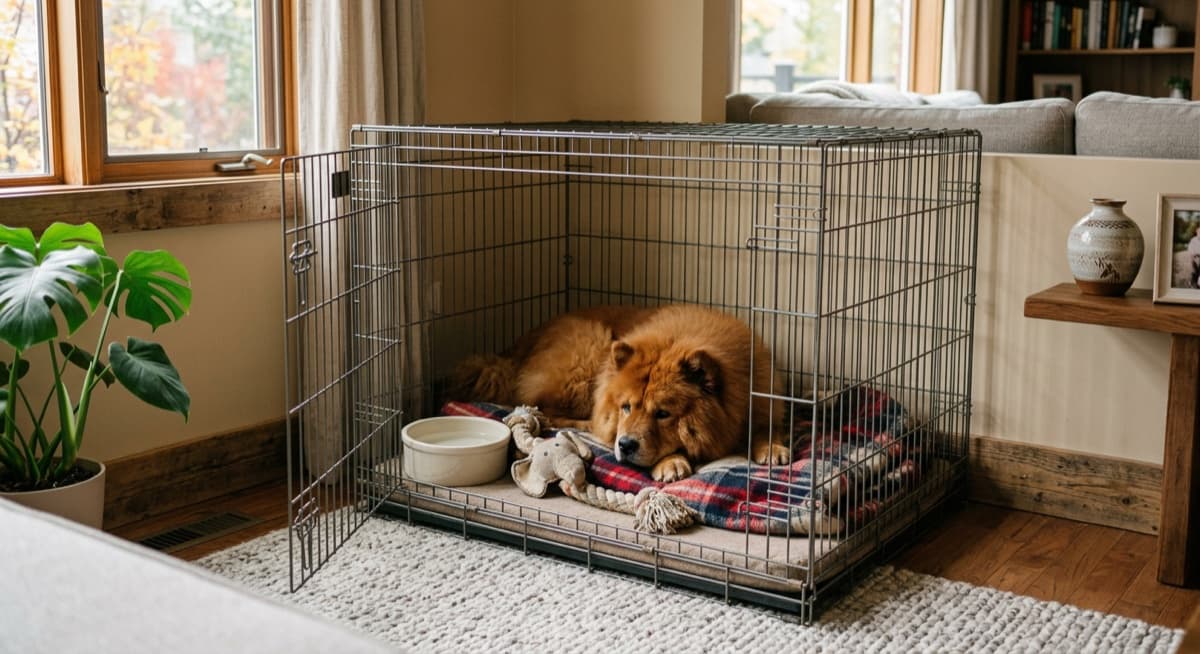
Feeding: gradual transition over 7 to 10 days
Whatever food the rescue or breeder has been using, get a 1 to 2 week supply at pickup. A cold-turkey food switch causes diarrhea, vomiting, and skipped meals on top of an already stressful arrival. Transition gradually over 7 to 10 days per AAHA general guidance:
- Days 1 to 3: 75% old food, 25% new food.
- Days 4 to 6: 50% old, 50% new.
- Days 7 to 9: 25% old, 75% new.
- Day 10+: 100% new food.
Feed 2 small meals daily for adults, 3 to 4 for puppies under 6 months. Use a raised slow-feeder bowl: many Chows gulp food, and slow-feeders reduce regurgitation and the deep-chested-breed bloat conversation. Keep the meal spot quiet, do not stand over a dog while it eats, and let the dog finish at its own pace. A bowl that gets reached into is the most common starting point for food guarding in this breed.
If your Chow refuses food entirely for more than 24 hours and you also see vomiting, diarrhea, lethargy, or breathing difficulty, call your vet. For puppies under 6 months, any skipped meal is worth a phone call. Per the AAHA puppy guidelines, puppies can drop into hypoglycemia quickly.
Critical socialisation window note. If you are bringing home a Chow puppy under 16 weeks old, the AAHA-recognised socialisation window is closing fast (roughly 6 to 16 weeks). For an aloof breed already wired to be wary, the calm, positive exposures you build in this window matter for the rest of the dog's life. Calm visits to a quiet vet lobby, controlled meetings with one calm dog at a time, low-pressure new surfaces and sounds, all with treats. Skip dog parks and crowded environments. Most of the Chow Chow aggression cases Calgary trainers see in adulthood trace back to a missed socialisation window in puppyhood.
Calgary climate notes: the winter advantage, the summer caution
The Chow Chow is built for Calgary winter and badly mismatched with Calgary summer. The double coat that gives the breed its silhouette is a thermal jacket built for northern Chinese winters, and the Calgary climate flips between the two extremes the breed handles best and worst. The ASPCA cold-weather guide and the AVMA both note temperature tolerance varies enormously by coat type.
Winter (November to March), the Chow advantage:
- Skip the winter coat. A Chow wears its own. Adding a coat over the double coat can overheat the dog.
- Decompression walks through Nose Hill Park, Fish Creek Park, Edworthy Park, Bowmont Park, or the Bow River pathway are easy first-week wins for a Chow even in -15 degrees Celsius weather. Cold air and quiet trails suit the breed.
- Below -25 degrees Celsius, even a Chow needs shorter trips. Watch for ice balls between the toes and snow built up in the chest feathering. Towel at the door.
- Chinooks (sudden warm-ups) can swing daytime temperatures 20 degrees Celsius in hours. Re-check conditions before each walk; +5 degrees Celsius after a -20 degrees Celsius morning feels mild to humans but is fine for a Chow.
Summer (May to September), the Chow caution:
- Above 22 degrees Celsius, shift walks to before 8 a.m. and after 8 p.m. Hot pavement burns paws fast, and the double coat traps heat.
- Above 27 degrees Celsius, skip walks entirely. Use indoor enrichment, a cooling mat, and a fan. A Chow at 30 degrees Celsius on a July afternoon is at real heat-stroke risk.
- Never leave a Chow in a parked car, not even for 5 minutes. The double-coat dog overheats faster than thin-coated breeds.
- Many Chow owners shift the daily routine entirely around heat in July and August: dawn walk, indoor day, evening walk. That is normal and not over-cautious for this breed.
- Resist the urge to shave the coat in summer. The double coat actually insulates against heat as well as cold, and shaving damages regrowth. Brush more instead.
Sleeping arrangements: crate, bed, or yours
Most Calgary trainers recommend the crate near your bed for the first 1 to 2 weeks. An aloof breed separated to another room can take longer to settle simply because nothing in the environment is familiar yet. After settling, the choice is yours. A few realities:
- Crate in bedroom. Best default. Quiet, contained, the dog can see you. Most adult rescue Chows sleep through within a few nights and continue to choose the crate even with the door open.
- Dog bed on the floor. Works once housetraining is solid (typically week 4+ for adults). Use a cooling-style bed rather than a thick orthopaedic foam in summer.
- Your bed. Many Chows will accept this in time, but most prefer the cool floor or their own crate. Two caveats: some Chows guard sleeping spots once attached, and bed-sharing during housetraining slows progress.
- Puppies. Stay crated near you for at least the first 2 to 3 months. Bed-sharing under 6 months can suppress housetraining progress, and a young Chow needs the safe-spot conditioning.
The first vet visit: book within 7 days
Book the wellness exam before pickup if you can. The first appointment is short (30 to 45 min) and for a Chow Chow it has two headline items beyond the standard checklist:
- Eye exam for entropion. The deep-set, almond eye is the breed's most-claimed insurance item. Entropion (lashes rolled inward) irritates the cornea and, untreated, can scar it. The vet looks for redness, squinting, excess tearing, and inward-rolling lid margins. Surgical correction, if needed, is most successful when caught early. The Chow Chow Club Inc lists entropion as the breed's top monitoring item.
- Hip and elbow baseline. The Orthopedic Foundation for Animals lists Chow Chow among breeds at elevated risk for hip and elbow dysplasia. A baseline conversation with the vet about gait, stair behaviour, and any limp lets you catch problems early. X-ray screening can happen later if symptoms arise.
- Baseline weight, body condition score, dental check.
- Vaccination status review and any missing boosters.
- Microchip and parasite-prevention plan.
- Diet review, including any rescue-flagged sensitivities.
Calgary wellness exam pricing typically runs $80 to $150 for a first visit (directional; costs vary by clinic). Bring all paperwork from the rescue or breeder. Ask about a baseline blood panel for seniors. Take notes on the vet's recommended deworming, flea and tick, and heartworm schedule. The ASPCA new-pet guide also recommends scheduling a wellness exam within the first week for any newly adopted dog.
Enrol pet insurance before the wellness exam. Anything noted at that appointment can become a pre-existing exclusion later. For Chows, the items that most often become exclusions are entropion (the single highest-cost surgical item if missed), hip and elbow dysplasia, and any skin issue tied to the double coat. These are exactly the things owners most want covered.
The most common first-week mistakes
These are the patterns Calgary rescues see most often in week-1 follow-up calls. None is fatal, but each makes the first month harder than it needs to be.
- Forcing affection. The single most-common Chow mistake. New owners read about “cat-like” and think they will be the exception. They will not. Hugging, kissing the face, pulling the dog onto a lap, or invading the safe spot can damage trust for months. Wait for the Chow to ask.
- Over-handling. Brushing for 30 minutes on day 1, full bath on day 2, ear and eye exams every couple of hours. The dog will tolerate it briefly and then start avoiding the grooming station. Short, calm, paid sessions only.
- Strangers and other dogs too soon. An aloof breed still decompressing cannot process your whole social circle. Hold guests off for 7 to 14 days, neighbour dogs longer. Set up the home so the dog can retreat from any visitor at any time.
- Misreading aloofness as something is wrong. A Chow watching from the corner, sleeping for long stretches, and not greeting you is decompressing as a Chow does. That is not depression. That is the breed.
- Ignoring early aggression signs. The flip side of misreading aloofness: missing actual warning signs. Stiffening at the door, hard staring at visitors, lip lifts at the food bowl, low growls when handled around the face. These warrant a force-free trainer consultation within the first 30 days. Chows escalate from warning to bite faster than most breeds when warnings are missed.
- Cold-turkey food switch. Causes diarrhea and skipped meals during a phase when you need stable digestion.
- Walking in summer above 22 degrees Celsius. A Chow on a Calgary July afternoon overheats fast. Shift the schedule entirely around heat.
- Returning to a full work day in week 1. Build alone time slowly. Chows can develop separation issues if isolated suddenly, even though they are not classically a velcro breed.
- Shaving the coat to “cool the dog down.” The double coat regulates both heat and cold. Shaving damages regrowth and reduces the dog's heat tolerance, not the other way around.
For the new owner who thinks they made a mistake
If you are 4 days in and silently wondering whether you adopted the wrong dog, you are not alone. With a Chow Chow this feeling shows up more reliably than with most breeds. The dog has not greeted you at the door. It has not wagged. It has not licked your hand. It walks past you. It eats and goes back to the crate. You wonder if it likes you at all.
That is the Chow Chow. It is not a Labrador. It is not a Golden. The AKC Chow Chow page describes the breed as dignified, aloof, and cat-like; the Chow Chow Club Inc describes the breed as reserved with strangers and deeply bonded with one or two people once trust is earned. The keyword is “earned.” That takes weeks to months, not days.
Most behavioural literature uses the term puppy blues for what new owners feel in the first weeks (the ASPCA notes adjustment difficulty is common for both adopters and dogs). It is documented for adult adoptions too, and with aloof breeds the feeling tends to extend further. Common symptoms: grief, regret, panic, intrusive thoughts about returning the dog, exhaustion, irritability, crying. Most owners report these almost always pass between weeks 4 and 12 as the routine settles and the first real affection signals show up.
What helps in week 1:
- Lower the bar. Clean house, finished work, picture-perfect routine: none of it matters in week 1. The bar is: dog is fed, watered, walked, safe.
- Reset your expectations. You did not adopt a Lab. Affection in this breed looks different. The dog sleeping in the same room as you is affection. The dog taking a treat softly is affection. The deep sigh as it lies down is affection. Learn to read Chow-sized signals.
- Sleep when you can. A sleep-deprived owner cannot make calm decisions. Take naps when the dog naps.
- Talk to the rescue or foster. The person who placed your Chow usually has week-1 advice specific to this dog. They have done this before.
- Remind yourself the dog is also overwhelmed. Your Chow is going through the same week, with less ability to ask for help. The mutual quiet decompression is the bond forming, even if it does not look like it.
- Keep a 30-day journal. One line per day. You will not believe at day 30 how much has changed.
- Talk to a professional if feelings of dread persist past month 1. New-pet adjustment can interact with existing anxiety or depression. Your doctor is a reasonable first call.
Most owners describe a directional turning point at 4 to 12 weeks: the moment the Chow chose to lie down in the same room, leaned in slightly, took a treat softly. After that, the bond builds steadily. Calgary rescue follow-ups show almost no one regrets the dog after month 3. The first month is the hardest part of the entire 10 to 12 year relationship. You are not failing. You are in the slow part of an aloof-breed timeline.
Frequently asked questions
What do I need to buy before bringing home a Chow Chow?
A back-clip harness (not a flat collar), a 42-inch wire crate, washable bed and blankets, raised stainless or ceramic bowls, a slow-feeder bowl, the same food the rescue or breeder used, a vet ear cleaner and soft eye wipes, a slicker brush, greyhound comb and undercoat rake, a short biothane leash, a summer cooling mat, a frozen Kong, and pet insurance enrolled before the first vet visit. Skip the winter coat: a Chow wears its own. Calgary setup total typically runs $590 to $1,190.
Why is my new Chow Chow ignoring me?
Because Chows are aloof by design, and a newly adopted one is also decompressing. The breed does not greet you at the door, lean on you, or seek constant petting, especially in the first weeks. The dog watching you from across the room and walking away is not rejection. It is the breed. Trust builds in small, quiet moments over weeks and months.
How long does it take a Chow Chow to bond?
Directionally longer than most breeds. Many owners describe weeks 1 to 3 as the dog living in the house but not yet of it, weeks 4 to 12 as the period when the Chow starts choosing to be near you, and months 3 to 6 as a fully visible bond. Survivors of neglect, kennel, or backyard-breeder backgrounds can take 6 to 12 months or longer.
Should I crate train my new Chow Chow?
Yes. Most Calgary trainers and rescues recommend introducing a crate from day 1. The breed values defined personal space, and many Chows actually choose the crate over open floor once trust is built. Place the crate in or near your bedroom for the first week, use a frozen Kong and treats, and never use the crate as punishment.
When should the first vet visit happen?
Within 7 days of pickup. Two Chow-specific headline items: an eye exam for entropion (lashes rolled inward, the breed's top insurance claim) and a baseline orthopaedic conversation about hips and elbows. The visit also sets weight, dental, vaccination, and microchip baselines, and lets you enrol pet insurance before any pre-existing exclusions kick in. Calgary first-visit pricing typically runs $80 to $150.
What are common first-week mistakes with a Chow Chow?
Forcing affection, over-handling for grooming, strangers and other dogs too soon, misreading aloofness as depression, ignoring early aggression warning signs, cold-turkey food switches, walking above 22 degrees Celsius in summer, returning to a full work day in week 1, and shaving the double coat. Each is fixable; the combination of all of them sets a difficult tone for months.
I think I made a mistake adopting a Chow Chow — is this normal?
Yes, and it is more common with Chows than most breeds. The breed gives almost no early affection feedback: no wagging at the door, no leaning, no licking. New owners often confuse that for failure. It is not. It is the breed. Most owners report a turning point between week 4 and week 12, and almost no one regrets the dog after month 3. If feelings of dread persist past month 1, talk to your doctor.
When does it get easier with a new Chow Chow?
Most owners describe a turning point somewhere between week 4 and week 12. Signs are quiet: the Chow chooses the same room you are in, sighs deeply when you sit, lets you brush the ruff without backing off, takes a treat softly, rests its chin briefly on your leg. Months 3 to 6 is when the household feels settled and the bond is unmistakable to outsiders.
More Chow Chow guides
Chow Chow Adoption Calgary →
Where to adopt, real costs, why so many Chows end up in rescue, and what to ask the foster before applying.
Is a Chow Chow Right for You? →
Calgary lifestyle, family, and home-type check for an aloof double-coated breed with specific climate needs.
Chow Chow Temperament and Aggression →
Aloofness vs reactivity, early warning signs, the socialisation window, and when to call a force-free trainer.
Adoptable Chow Chows in Calgary →
Current Chow Chows and Chow mixes across 15+ Calgary rescues, updated regularly.
New dog? Start with these care guides
Everything a new adopter needs to set up a safe, happy home.