The short answer
Whippets are among the healthiest, longest-lived dogs, often reaching their early-to-mid teens without the long list of inherited problems many breeds carry. The things to know are sighthound-specific: a genuine anesthesia sensitivity (always flag the breed before any procedure), thin skin that cuts easily, a low tolerance for cold that means coats and short outings in a Calgary winter, and occasional heart murmurs that need a vet to assess. This is general information, not veterinary advice: build a plan with your Calgary vet, and price pet insurance while your dog is young.
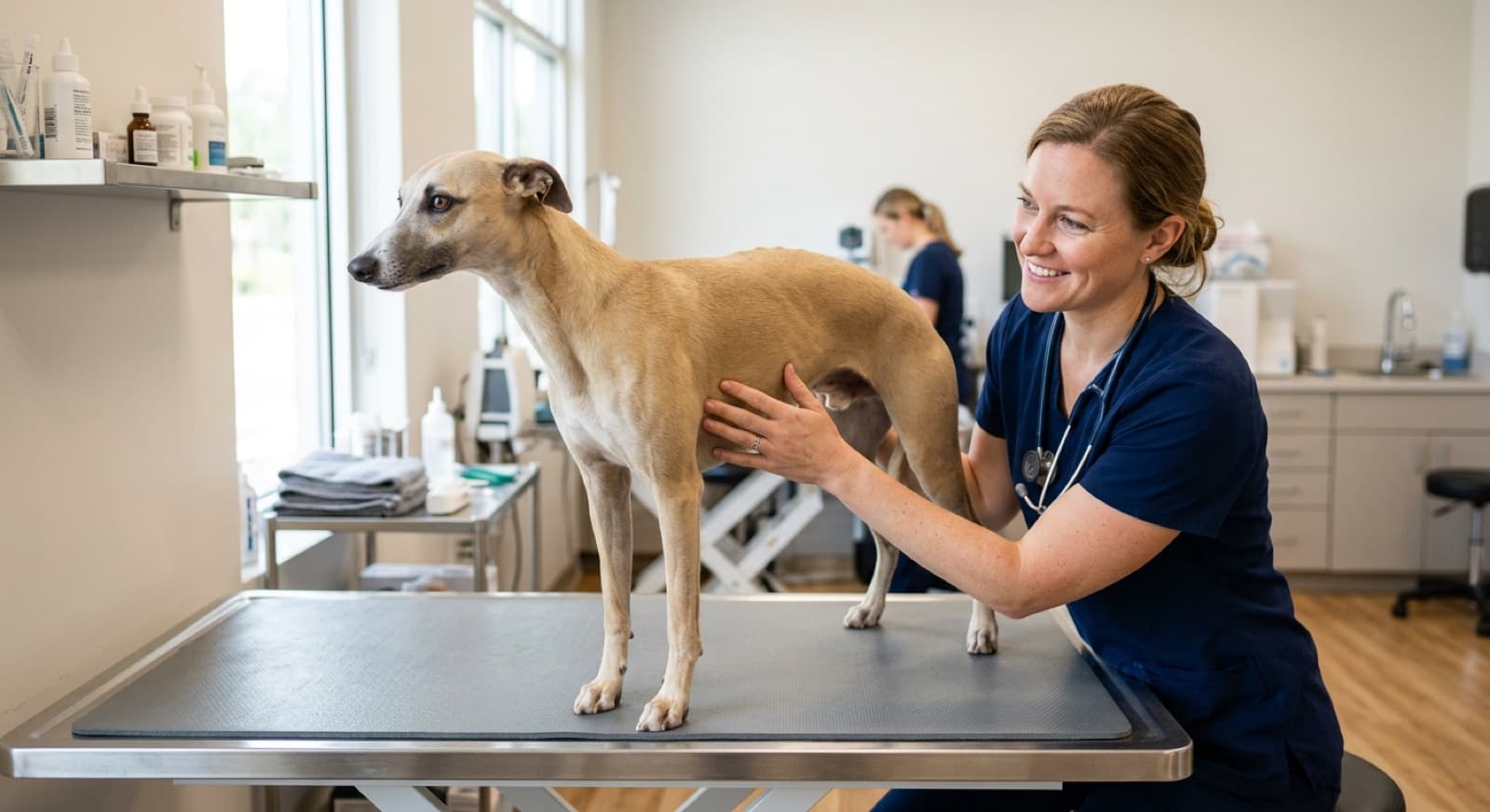
Here is the happy headline: the Whippet is a genuinely sound breed, and one of the healthier choices you can make. Most of what an owner needs to know is not a list of diseases but a short set of sighthound quirks, the kind of things that, once you understand them, are easy to manage for a long and healthy life. This guide covers each with authoritative sources, then the everyday care that keeps a Whippet well in Calgary, where the cold is a real part of the picture.
Anesthesia sensitivity: the one every owner must know
This is the most important health fact about the breed. Sighthounds, including Whippets, have very low body fat and a distinct physiology, and as a result they are more sensitive to anesthetic drugs than other dogs of similar weight, a sensitivity well documented in the veterinary anesthesia literature. Veterinary teams use protocols developed specifically for sighthounds to keep them safe.
Your job as an owner is simple and essential: always tell your vet the breed before any procedure, whether it is a spay, neuter, dental cleaning, or surgery, so the team can choose appropriate anesthetic agents and monitor for the low body temperature sighthounds are prone to under anesthesia. This is entirely a veterinary matter, never something to manage or medicate yourself. Flagging the breed is the whole ask, and it makes routine procedures safe.
Cold and thin skin: real Calgary considerations
A Whippet's thin single coat and near-absence of body fat make it lose heat quickly, so this breed genuinely feels the cold and can be at risk in a hard Calgary winter. This is physiology, not fussiness. Plan for a warm, well-fitted coat on walks, keep outings short on the coldest days, and protect the paws from ice and road salt. Many Whippets happily wear sweaters indoors and love to burrow deep under blankets, which is normal and worth accommodating. Our Calgary winter dog care guide has more on protecting a cold-sensitive dog.
That same thin, fine skin also tears and cuts more easily than a thick-coated breed's, especially during fast play on rough ground or through brush. It is rarely serious, but it means keeping an eye out during exercise and cleaning any cut promptly, and seeing your vet for anything deep. Dental care is another everyday need in the breed, so regular tooth brushing and vet dental checks pay off over a long life.
Heart, screening, and a long healthy life
Whippets are athletes with large, efficient hearts, and some have soft heart murmurs that are benign and tied to that athleticism, while others can signal a genuine heart condition. Only a vet can tell the two apart, often with additional tests, so any murmur is worth following up on rather than dismissing or panicking over. Reputable breeders have hearts and eyes evaluated, with screening registered through databases like the Orthopedic Foundation for Animals (OFA).
Beyond those notes, keeping a Whippet healthy is refreshingly straightforward, which is part of the breed's appeal. The American Kennel Club describes a gentle, athletic sighthound, and a lean but not underweight body, routine vet care, dental attention, cold protection, and the anesthesia note cover most of it. Price pet insurance while your dog is young, since accidents happen even in a sound breed, and enjoy one of the healthier, longer-lived dogs you can share your life with. For what daily life with this breed demands, see our guide to Whippet prey drive and recall.
Considering a Whippet?
One of the healthiest, gentlest breeds around. Adopting an adult through a rescue that has done a vet workup means much of the health history is already known. See who is available across Calgary rescues.
See Calgary Whippets →Frequently Asked Questions
Are Whippets a healthy breed?↓
Are Whippets sensitive to anesthesia?↓
Do Whippets get cold easily?↓
Should I worry about a heart murmur in my Whippet?↓
How long do Whippets live?↓
Continue reading
Rescues, costs, temperament, and who the breed suits.
The sighthound chase instinct and off-leash reality.
Live listings across Calgary rescues.
Protecting a thin-coated, cold-sensitive breed.
New dog? Start with these care guides
Everything a new adopter needs to set up a safe, happy home.