The short answer
Whippets are calm, gentle, and sleepy indoors, and hardwired sighthound chasers the moment something moves fast. That prey drive is the whole design of the breed, so it cannot be trained away, only managed. It makes recall genuinely hard: a full-speed chase outruns any command. Build the best recall you can with high-value rewards and a long line, use fully fenced areas to let a Whippet sprint safely, and keep a long line on in open Calgary spaces where hares and coyotes are present. Exercise-wise they are sprint-and-nap dogs, not endurance runners. Respect the chase instinct and a Whippet is a wonderful, easy companion.
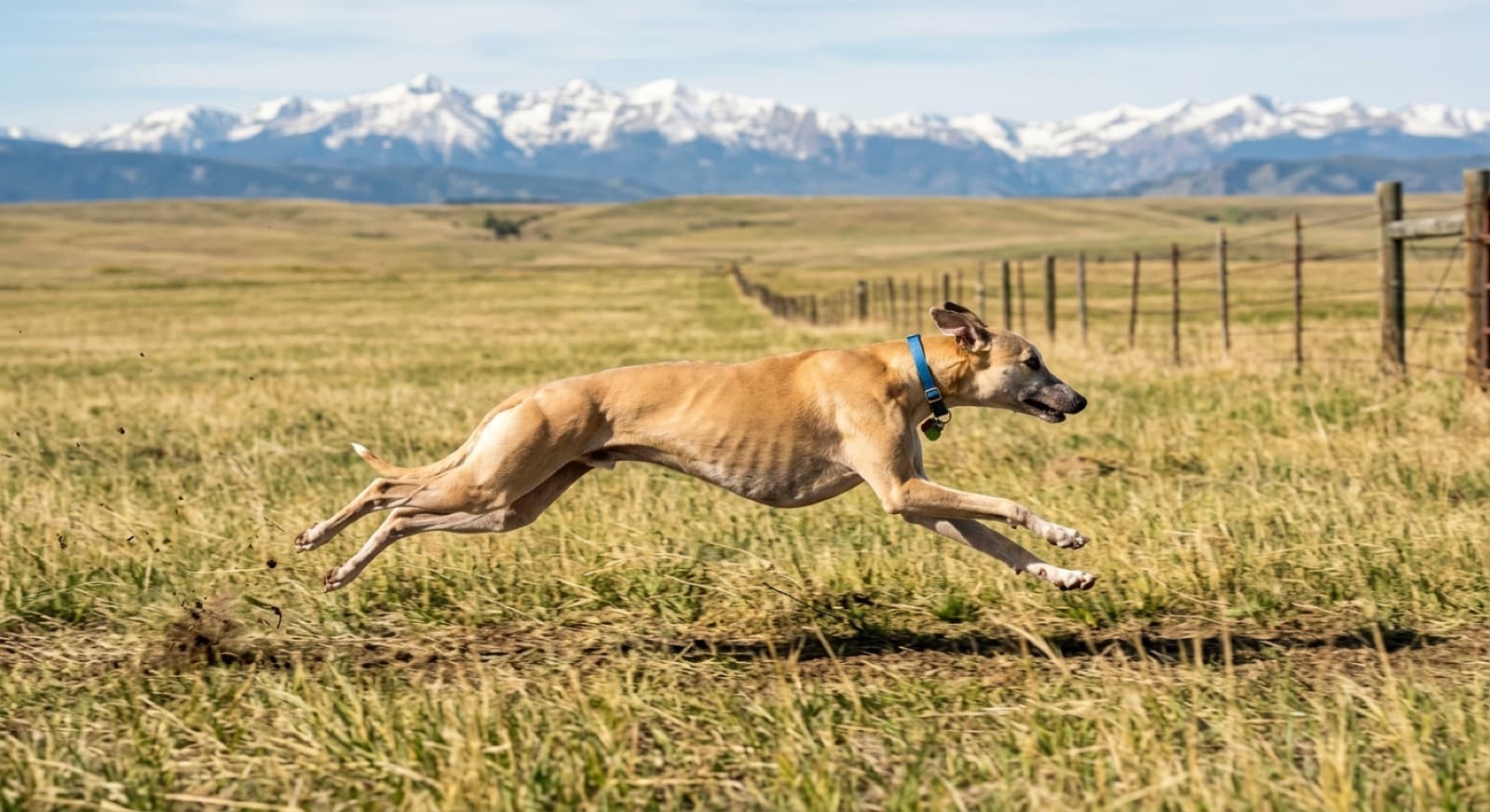
The Whippet surprises new owners twice. First with how calm and sleepy it is at home, a genuine couch dog that will happily doze the day away. Then with how instantly and completely it transforms when something runs. Understanding both sides, and especially respecting the chase, is what separates a safe, happy Whippet life from a frightening dash across a busy road. This guide is about that chase instinct and how to live with it wisely in Calgary.
The chase instinct: bred to run, not to check in
The American Kennel Club puts the Whippet perfectly: a gentle soul who, given something to chase, is all business. This is a sighthound built to spot fast movement and run it down by sight, at remarkable speed. When a hare breaks cover or a squirrel bolts, a Whippet does not weigh its options; instinct takes over and it is gone, often before you have registered what it saw. That is not disobedience. It is the breed doing exactly what it was made for.
The consequence matters: a chasing Whippet can be hundreds of metres away, across whatever lies between, in seconds. Near roads, that is a genuine danger. So the starting assumption with this breed is that the prey drive is always present and can override training in an instant, and you build your safety around that fact rather than hoping to erase it.
Building the best recall you can
A strong recall is still absolutely worth training, as one important layer of safety even if it is not a guarantee. The general approach that works for prey-driven dogs applies with extra patience:
- Pay generously, every time. Coming back must be the best thing that happens. Use genuinely high-value food or a favourite toy, especially early on.
- Start easy, build slowly. Practise recall in the house and yard first, then quiet areas, and only add distraction once it is solid. Rushing this is why recalls fall apart outdoors.
- Use a long line. A long training line lets your Whippet feel free while making sure it can never rehearse ignoring you. Every successful blow-off makes the next more likely; the line prevents that.
- Never punish a return. If coming back ends the fun or brings anger, the dog learns to stay away. Returning to you must always be safe and rewarding.
- Read the environment. Learn to spot the hare before your dog does. Managing the setting is half of safety with a sighthound.
A Calgary trainer experienced with sighthounds can accelerate this and troubleshoot your specific dog. But hold the honest expectation throughout: even a beautifully trained Whippet may, in the grip of a full chase, not hear you. That is why the environment you choose matters as much as the training.
Sprinting, napping, and off-leash in Calgary
The good news is that a Whippet's exercise needs are easy to meet once you understand the pattern. These are sprinters, not marathoners: they need chances to run flat-out in short bursts, ideally in a securely fenced space, and then they are content to be the famously calm, sleepy couch dogs they are indoors. A couple of good walks plus regular safe sprints usually keeps a Whippet happy and fit. A dog with no outlet for that speed gets restless, so the running genuinely matters, but the total time is modest.
For off-leash, choose the environment honestly. A fully fenced off-leash area lets a Whippet do the one thing it loves most, run, without the risk. In open spaces like Nose Hill or the river pathways, where prey and coyotes are present and roads are not far, many experienced owners keep a long line on and some never fully trust off-leash. Always follow the City of Calgary off-leash rules, and in winter keep a cold-sensitive Whippet warm and the sessions shorter. Our guide to Calgary off-leash parks can help you find fenced options, and our Whippet health guide covers the cold-weather side.
Ready for a gentle, speedy companion?
Adopting an adult Whippet through a Calgary rescue lets you learn a specific dog's prey drive and how it does around cats and small pets, which matters more than any rule. See who is available now.
See Calgary Whippets →Frequently Asked Questions
Can you let a Whippet off-leash?↓
Why do Whippets have such a strong prey drive?↓
How do you train a Whippet to come back?↓
How much exercise does a Whippet need?↓
Are Whippets good with cats and small pets?↓
Continue reading
Rescues, costs, temperament, and who the breed suits.
Anesthesia sensitivity, heart, and cold-weather care.
Live listings across Calgary rescues.
Fenced areas where a sighthound can sprint safely.
New dog? Start with these care guides
Everything a new adopter needs to set up a safe, happy home.