The short answer
Adopt from Edmonton rescue ($500 to $900). Malamutes appear occasionally through SCARS, Edmonton Humane Society, Zoe's Animal Rescue, AHHRB, and AARCS Edmonton fosters. Malamute mixes (Malamute-Husky, Malamute-Lab, Malamute-Shepherd) appear more frequently and are often easier first-large-breed matches. Malamute vs Husky: Malamute is the larger 75 to 100 lb freight dog from Arctic Alaska; Husky is the smaller 35 to 60 lb sled racer from Siberia. Escape-proof 6-foot dig-proof fencing is non-negotiable. Summer heat above 25C is genuinely dangerous; modify routines accordingly. Extraordinary Edmonton winter dog; the breed is happier at -25C than at 25C. Force-free training for 75-100 lb working strength. 10 to 14 year lifespan, not a first-dog breed in most cases.
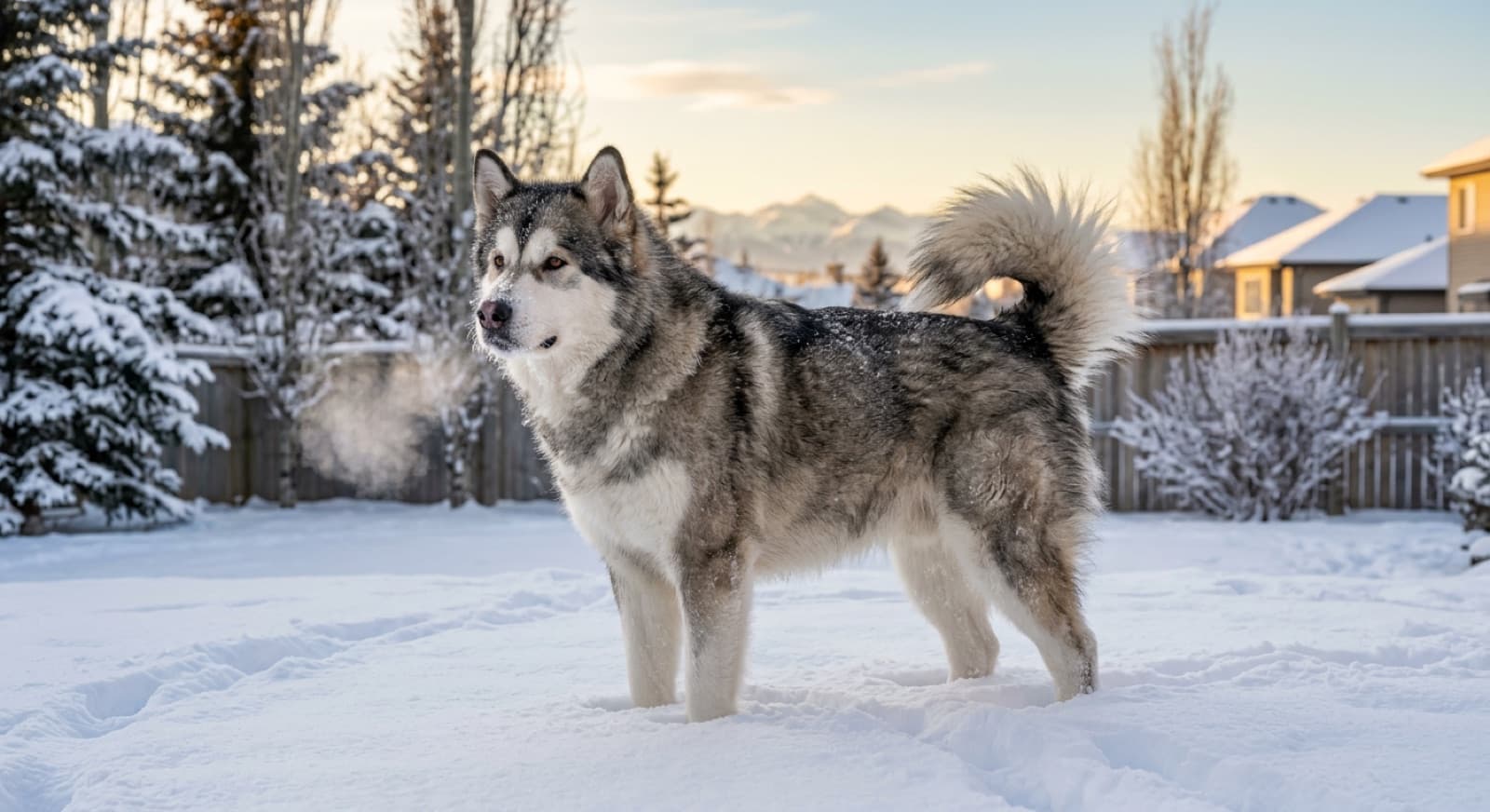
Browse adoptable northern breeds in Edmonton
Malamutes and Malamute mixes appear regularly. Flexibility on mix vs purebred substantially shortens the wait.
See Available Dogs →Malamute vs Husky at a glance
| Feature | Alaskan Malamute | Siberian Husky |
|---|---|---|
| Adult weight | 75 to 100 lbs | 35 to 60 lbs |
| Origin | Arctic Alaska (Mahlemut people) | Siberia (Chukchi people) |
| Working role | Freight hauling, heavy loads, long distance | Sled racing, light loads, speed over distance |
| Temperament | Calmer, more independent, more stubborn | More energetic, more reactive, more vocal |
| Edmonton rescue availability | Uncommon | Common |
| Lifespan | 10 to 14 years | 12 to 15 years |
Both breeds share double-coated northern appearance and require escape-proof fencing, force-free training, no cats or small animals, and summer heat management. The size difference (35 to 100 lbs) means physical management requirements differ substantially. The Canadian Kennel Club registers both as separate working-group breeds.
Escape-proof fencing is non-negotiable
Malamutes are working sled dogs with drive, problem-solving intelligence, and physical strength to defeat most consumer fencing. 6-foot dig-proof fencing is the minimum; 7 feet is more reliable for determined dogs.
Fencing requirements:
- 6-foot height minimum (7 feet is more reliable for athletic individuals)
- Dig-proofed: concrete footings, chain-link buried 1 to 2 feet below ground, or L-footer (chain link extending horizontally outward from the fence base)
- Tight vertical panels; horizontal wood planks can be climbed by determined dogs
- Secured latches; some Malamutes learn to open standard gate latches
- No gaps at the base where the fence meets concrete or gates
- Walk-through verification before adoption: foster home should observe whether the dog has shown escape attempts
Outside the fence: the breed should never be off-leash in unfenced areas. Working sled dogs were bred to run forward; recall reliability is poor. Edmonton Bylaw 21244 leash law applies in unfenced public spaces. Edmonton lost-dog services see meaningful Malamute incident reports. GPS tracking collars (Fi, Tractive, similar consumer GPS) are worth considering for redundancy. The American Kennel Club breed standard notes the working-dog drive that drives escape attempts.
Frequently Asked Questions
Where can I adopt an Alaskan Malamute in Edmonton?
Malamutes appear in Edmonton rescue occasionally; they are not numerically common and the surrender rate is meaningful because of underestimated exercise, escape, and grooming demands. SCARS (Second Chance Animal Rescue Society), Edmonton Humane Society, Zoe's Animal Rescue, AHHRB (Alberta Homeward Hound Rescue Bureau), and AARCS Edmonton fosters all see Malamutes and Malamute mixes through the year. National northern-breed and working-dog rescue networks coordinate placement across Canada when foster homes are available. Many Edmonton Malamutes are surrendered because of escape incidents, exercise underestimation, or shedding overwhelm. Malamute mixes (Malamute-Husky, Malamute-Shepherd, Malamute-Lab) appear more frequently than purebreds and are equally well-suited adoption candidates.
Malamute vs Husky: which is which?
Two distinct northern breeds frequently confused. Alaskan Malamute is a freight dog bred by the Mahlemut people of Alaska for hauling heavy loads over long distances; adult Malamutes typically weigh 75 to 100 lbs (males 80 to 100, females 75 to 85), substantially larger and more substantial than Huskies. Siberian Husky is a sled racing dog bred by the Chukchi people of Siberia for pulling lighter loads at speed over long distances; adult Huskies typically weigh 35 to 60 lbs (males 45 to 60, females 35 to 50). Both breeds have double coats and similar northern appearance but the size difference is dramatic. Temperament differences: Malamute is calmer and more independent than Husky, less reactive to environmental stimuli, but more stubborn and physically harder to manage; Husky is more athletic and energetic, more inclined to chase, more vocal. Both breeds have high prey drive, both are escape artists, both shed substantially, both should never be off-leash outside fenced areas. Edmonton rescue sees Huskies far more frequently than Malamutes.
How much does it cost to adopt a Malamute in Edmonton?
Edmonton rescue adoption fees for Alaskan Malamutes typically run $500 to $900 covering spay/neuter, current vaccinations, microchip, and a baseline vet workup. The fee is well below ethical breeder pricing ($2,500 to $5,000 for a properly health-tested Malamute puppy from a CKC-registered breeder with parents OFA hip and elbow tested, eye certified, and DNA tested for polyneuropathy and other breed-specific concerns). Initial setup costs are substantial: large-dog harness ($60 to $120; sized for 75 to 100 lb dog), 6-ft leash, slicker brush plus undercoat rake plus optional high-velocity dryer ($80 to $700 depending on home setup), 6-ft secure fenced yard infrastructure (mandatory; budget for fencing assessment and reinforcement), large crate ($200 to $400), large dog bed ($150 to $300). Annual ownership cost $2,500 to $4,000: quality large-breed food ($700 to $1,200; the volume is real), routine veterinary care ($500 to $800), pet insurance ($500 to $900), grooming every 8 to 12 weeks during coat-blow seasons or as supplemental help ($200 to $500/year if used), Edmonton dog licence (confirm current fee with the City of Edmonton), seasonal gear.
How does Malamute escape prevention work in Edmonton?
Escape-proof fencing is non-negotiable. Malamutes are working sled dogs with strong drive, problem-solving intelligence, and physical strength to defeat most consumer fencing. A 6-foot fence is the minimum height; 7 feet is more reliable for determined dogs. The fence must be dig-proofed: either concrete footings, chain-link buried 1 to 2 feet below ground, or L-footer (chain link extending horizontally from the base of the fence outward to prevent digging under). Vertical chain-link and wood fencing should be tight; horizontal wood planks can be climbed by determined dogs. Latches must be secured; some Malamutes learn to open standard gate latches. Free roam in unfenced areas is not appropriate; the breed will run substantial distances when escaped. Edmonton Bylaw 21244 leash law applies in unfenced public spaces. Edmonton lost-dog services see meaningful Malamute incident reports; pet insurance and GPS tracking collars (Fi, Tractive, similar consumer GPS) are worth considering. Foster home should disclose any escape history during the phone screen.
Are Malamutes good first dogs for Edmonton families?
Generally not. The breed-specific reality typically exceeds first-time owner capacity: 75 to 100 lb working sled dog with strong drive is physically difficult to manage if training is skipped, the escape-prevention infrastructure (6-foot dig-proof fencing) is a substantial commitment, the exercise requirements (60 to 120 minutes of structured daily activity for an adult Malamute) are real and consistent, the shedding is substantial, the prey drive on cats and small animals is strong, recall reliability is poor (working sled dogs were bred to run forward, not return). Adult Malamutes from Edmonton rescue (3+ years) with documented foster-home temperament observation CAN be appropriate matches for experienced large-dog owners or first-time owners with realistic expectations and willingness to commit to force-free training within the first 4 weeks. Edmonton force-free trainers (CCPDT, KPA, IAABC, or Fear Free certified) familiar with working breeds matter substantially. Working with a trainer from the start prevents adolescent behaviour problems that lead to surrender.
How do Malamutes handle Edmonton winters?
Extraordinarily well. The breed evolved for harsh Arctic Alaskan weather and the double coat handles Edmonton winter better than almost any other breed. Healthy adult Malamutes tolerate -30C and colder walks for 30 to 60 minutes without a coat. Booties help on heavily salted Edmonton sidewalks (salt accumulates in the long coat and irritates paws). The breed enjoys deep cold and will be happier outside in -25C than in 25C. The challenge is keeping the dog mentally engaged; Edmonton winter walks are genuinely pleasant for Malamutes and structured activity should reflect that. Edmonton dry winter air (15-25% indoor humidity from furnace heat) can flare skin issues; a humidifier helps. Watch for ice-ball buildup between paw pads after walks; paw balm or booties prevent this. The breed is built for Edmonton winter; the breed is poorly built for Edmonton summer.
What about Malamute summer heat in Edmonton?
Genuinely problematic above 25C. The double coat that handles -30C winter cold also traps heat in summer; even modest exercise above 25C creates heat-stress risk. Edmonton summer management: avoid outdoor exercise above 25C ambient temperature; modify walks to early morning (before 8 AM) or late evening (after 8 PM) during heat waves, never leave the dog in a vehicle even briefly, indoor air conditioning matters more for Malamutes than for most breeds, cool water access throughout the day, cooling mat for hot afternoons, watch for heat-stroke symptoms (excessive panting, weakness, vomiting, blue or purple gums, collapse) and have an Edmonton 24-hour ER vet pre-identified. The breed is much more vulnerable to summer overheating than to winter cold. Never shave a Malamute (same rule as Husky, Samoyed, Chow Chow: shaving destroys the temperature-regulating double coat and exposes skin to direct sun).
What are common Alaskan Malamute health issues to plan for?
The breed lifespan is 10 to 14 years. Breed-specific health concerns: hip and elbow dysplasia (OFA-tested parents are responsible breeding), polyneuropathy (an inherited neurological condition; ethical breeders DNA-test parents), chondrodysplasia or "dwarfism" (an inherited skeletal condition; DNA-tested parents are responsible breeding), eye conditions including cataracts, progressive retinal atrophy, and day blindness in some lines, bloat/GDV (deep-chested giant breed risk; slow-feeder bowl, two meals daily, no elevated bowl, no vigorous exercise within 30 to 60 minutes of feeding), hypothyroidism in some lines, cancer (giant breeds have elevated lifetime cancer risk), allergies. Pet insurance enrolled at adoption is valuable; the breed orthopedic and neurological surgical exposure is real. Edmonton specialty orthopedic, ophthalmology, and neurology referrals available; WCVM Saskatoon handles complex cases.
How does Malamute grooming work in Edmonton?
Substantial year-round commitment plus two heavy coat-blow seasons. The Malamute double coat (dense soft undercoat plus longer outer coat) sheds steadily year-round with dramatic spring (March-April) and fall (September-October) coat-blow lasting 2 to 4 weeks each. Weekly brushing baseline (30 to 60 minutes with an undercoat rake plus slicker brush); daily brushing during coat-blow seasons. Optional high-velocity dryer ($150 to $700) transforms coat-blow management; many owners invest in one. Professional grooming every 8 to 12 weeks at Edmonton groomer prices of $80 to $150 per visit during coat-blow ($200 to $500/year if used). Bath every 8 to 12 weeks (less frequent than smaller breeds; over-bathing strips coat oils). Never shave a Malamute. Edmonton dry winter air (15-25% indoor humidity) can dry coat and skin; a humidifier helps. Nail trim every 3 to 4 weeks. The breed is NOT hypoallergenic.
What are common Malamute mixes in Edmonton rescue?
Malamute-Husky cross (the closely-related northern breeds; 55 to 90 lbs, combining traits of both, very common Edmonton rescue dog), Malamute-Shepherd cross (working-dog combination; 65 to 100 lbs, athletic and intelligent), Malamute-Lab cross (60 to 90 lbs, friendlier outgoing temperament than purebred Malamute, often easier first-large-breed match), Malamute-Pit cross (60 to 90 lbs, athletic), Malamute-Akita cross (75 to 110 lbs, combining two northern guardian-type breeds, requires experienced handler). All these mixes appear in Edmonton rescue at the same $500 to $900 fee range. Mixed-breed Malamutes sometimes have less extreme exercise demands or shedding because of the second-breed influence; the cross can be a better first-large-breed match than purebred. Foster home should disclose body structure, exercise observation, escape history, and prey-drive observation during the phone screen.
How long does it take to adopt a Malamute in Edmonton?
Typically 3 to 9 months for a Malamute or Malamute mix; 6 to 18 months for a specifically purebred Malamute from a reputable Edmonton-area rescue. Set up email alerts at multiple rescues (SCARS, Edmonton Humane Society, Zoe's Animal Rescue, AARCS, AHHRB) with broad keywords: Malamute, Alaskan Malamute, Mal, Mal mix, Malamute-Husky, Husky-Malamute mix, northern breed, freight dog. Be flexible on mix vs purebred and on age. Adult and senior Malamutes (5+ years) often have shorter wait times than puppies because adult demand for working breeds is lower. Foster home temperament notes matter substantially; ask explicitly about escape history, exercise tolerance, recall reliability, prey-drive observation, and household-fit assessment during the phone screen.
Bottom line for Edmonton Malamute adoption?
Malamutes are extraordinary Edmonton winter dogs for the right household. Affectionate with family, dignified, intelligent, beautiful, perfectly adapted to Edmonton winter, 10 to 14 year lifespan. The breed-specific demands that determine fit: 6-foot dig-proof escape-proof fenced yard infrastructure (non-negotiable), 60 to 120 minutes daily structured exercise even in deep winter, substantial year-round shedding plus heavy coat-blow seasons, summer heat management above 25C, force-free training commitment from the start (75 to 100 lb working sled dogs are difficult to manage if training is skipped), pet insurance for orthopedic and neurological exposure, no cats or small animals in most cases. Adopt from SCARS, Edmonton Humane Society, Zoe's, AHHRB, AARCS Edmonton fosters; $500 to $900 fee covers spay/neuter, vaccines, microchip, baseline workup. Malamute mixes (Malamute-Lab, Malamute-Husky, Malamute-Shepherd) appear more frequently and are equally well-suited adoption candidates. Adult adoption (3+ years) skips the most intense puppy phase and arrives with documented foster-home temperament. The breed is for experienced large-dog owners or first-timers with realistic preparation.
Adoptable Dogs in Edmonton
Live listings from SCARS, EHS, Zoe's, AHHRB, and AARCS Edmonton fosters.
Husky Adoption Edmonton
The smaller northern cousin; similar care framework at smaller size, more common in Edmonton rescue.
How to Groom a Husky
A Siberian Husky grooming guide: why you never shave the double coat, surviving the coat blow, the self-cleaning coat, why Huskies are low-maintenance, and cost.
Samoyed Adoption Edmonton
Another double-coated northern breed; similar Edmonton winter performance and grooming.
New dog? Start with these care guides
Everything a new adopter needs to set up a safe, happy home.