The short answer
Edmonton Samoyed adoption is a 3 to 9 month project. Purebred Sammies appear a few times a year across Edmonton-area rescues; mixes more often. Monitor Edmonton Humane Society, Zoe's, AARCS Edmonton fosters, AHHRB, SCARS, GEARS, and Hope Lives Here. Fees $500 to $800 plus a $400 to $600 baseline workup. Plan for daily brushing, professional grooming every 6 to 10 weeks, and the Samoyed Hereditary Glomerulopathy reality before you apply.
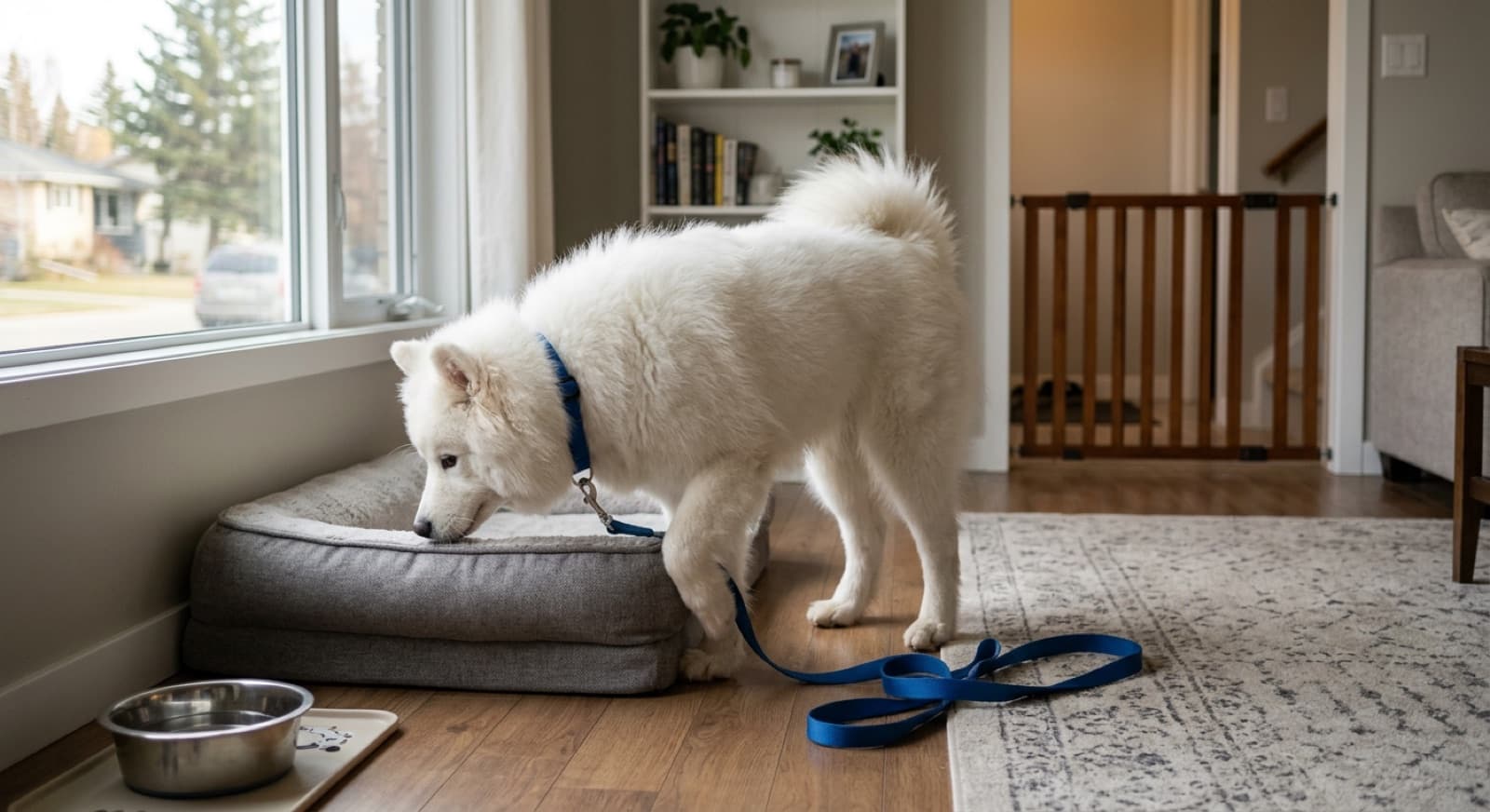
Why Samoyeds surrender to Edmonton rescue
Samoyeds are not a high-volume Edmonton rescue breed. Most months no Edmonton-area rescue lists a purebred Sammy at all. The breed has lower surrender rates than working breeds because Samoyed buyers usually pay a substantial breeder price ($2,500 to $4,000 in Alberta) and tend to be committed up front. When a Sammy does reach rescue, the surrender story almost always involves an underestimated grooming reality, a medical diagnosis, or a forced circumstance. Five patterns dominate.
The first pattern is grooming overwhelm. An owner pictures a glamorous white fluffy dog and skips the homework on what the coat actually requires. Six months in, the dog is matting around the ears and hindquarters, the house is covered in white fur, coat-blow season has hit, and the grooming bill is a recurring stressor. These dogs come to Edmonton rescue at the 1 to 3 year mark and are usually in decent condition once the rescue or foster home invests in a deep brush-out and a professional groom. The temperament is normally social and unbroken.
The second pattern is the Samoyed Hereditary Glomerulopathy (SHG) diagnosis. SHG is a breed-specific kidney disease appearing in some lines, typically diagnosed between 8 months and 15 months of age in affected dogs. A family without pet insurance facing $200 to $400 per month in kidney-supportive care, a prescription renal diet, and progressive renal failure sometimes cannot continue. These dogs reach Edmonton rescue with an active vet plan and a medical history; the adopter needs to be financially prepared and emotionally ready for a shorter potential lifespan.
The third pattern is allergy diagnosis in a family member. White fur is heavy and visible, and an allergist recommendation to remove the dog from the home can happen suddenly. These surrenders are emotionally hard on the family, and the dog itself is usually well-adjusted. They often move quickly through rescue because no behavioural rehabilitation is needed.
The fourth pattern is exercise mismatch. Samoyeds are moderately active rather than hyper, but they do need 45 to 75 minutes of daily activity, and a sedentary household sometimes underestimates this. The under-exercised Sammy starts vocalising, fence-running, and destroying things. By the time the household identifies the problem, the relationship has soured. A few weeks of consistent exercise in the foster home usually reverses these behaviours.
The fifth pattern is owner death or breeder retirement. Older adopters sometimes choose Sammies for the calm indoor temperament and the social personality, and the owner sometimes dies before the dog. Breeder retirement happens when a small Alberta breeder closes their program and rehomes retired breeding adults. These dogs are usually well-raised and well-mannered. They settle quickly into a structured home.
Samoyed vs Husky vs American Eskimo Dog
Three different breeds, three different histories, three different temperaments. People shopping for a “fluffy white dog” often conflate them, and Edmonton rescues sometimes get applications for a Samoyed from adopters who would be much better matched to one of the others. The differences matter.
- Samoyed (35 to 65 pounds, 12 to 14 year lifespan). A Siberian spitz breed developed by the nomadic Samoyedic people to herd reindeer, haul light sledges, and sleep among the family in deep Arctic cold. The herding heritage shows in family-oriented temperament; these dogs were bred to work close to humans. The coat is the densest of the three (long outer guard hairs over a thick wool undercoat) and the Sammy smile is a real thermal adaptation. Recall is moderate, vocalisation is moderate to high, and prey drive is moderate. The best fit for active Edmonton families who want a cold-weather companion and have the grooming bandwidth.
- Siberian Husky (35 to 60 pounds, 12 to 15 year lifespan). A Chukchi sled dog from northeastern Siberia bred for long-distance pulling in teams. The working role explains everything: high exercise need, very low recall reliability, high prey drive (small wildlife are not safe around Huskies), heavy vocalisation, and a real talent for escape. The coat is dense but shorter than the Sammy. Best fit for experienced owners with secure six-foot dig-proofed fencing and a real exercise plan. See our Husky adoption Edmonton guide for the full breed read-out.
- American Eskimo Dog (toy 6 to 10 lb, miniature 10 to 20 lb, standard 20 to 35 lb, 13 to 15 year lifespan). A descendant of the German Spitz, brought to North America by German immigrants and rebranded during World War I. More terrier-like than the Sammy or Husky: alert, sharp, often barky, smart, and trainable. The coat is fluffy and white but lighter than a Samoyed's. Eskimo Dogs are uncommon in Edmonton rescue but they do appear, often labelled as Sammy mixes when the parentage is uncertain.
For Edmonton adopters, the practical takeaway: if you want family-oriented and you can groom daily, a Samoyed fits. If you want high-drive and you have escape-proof fencing, a Husky fits. If you want a smaller version of the white-spitz look and you can tolerate barking, an Eskimo Dog fits. Confusing the three at the adoption stage is the most common path to a mismatch.
Edmonton rescues that occasionally list Samoyeds
Because Samoyed intake is intermittent rather than monthly, the realistic local strategy is to monitor every Edmonton-area rescue that could see the breed, set up listing alerts, and be ready to act fast when a Sammy appears.
- Edmonton Humane Society: the highest-volume Edmonton intake source and the most likely place to see a Sammy in any given quarter. EHS lists purebred Samoyeds a few times a year and Sammy mixes more often. The behaviour team produces detailed temperament assessments and the medical team flags SHG concerns and hip and elbow findings clearly. More on adoptable dogs is on the Edmonton Humane Society website.
- Zoe's Animal Rescue: long-running Edmonton foster-based rescue. Sammy volume is low but Sammy mixes (especially Sammy-Husky and Sammy-Eskimo crosses) appear periodically. Zoe's temperament assessments are thorough and the application emphasises fit and prior coat-care experience.
- AARCS (Alberta Animal Rescue Crew Society): headquartered in Calgary with Edmonton-area foster homes. AARCS tags each dog with current foster location, so Edmonton-foster Sammies surface on Edmonton listings. AARCS foster write-ups are among the most detailed in the province and explicit about kid, cat, and multi-dog compatibility.
- Alberta Homeward Hound Rescue Bureau (AHHRB): Edmonton-area foster-based rescue intaking from northern Alberta. AHHRB labels every dog as Mixed Breed on paper as a matter of policy, so Sammy-type dogs are identified by photo and description rather than a breed tag. Worth checking even when a breed search returns nothing.
- SCARS (Second Chance Animal Rescue Society): the largest northern-Alberta intake rescue. Purebred Sammies are uncommon in that pipeline, but Sammy-Husky and Sammy-spitz crosses appear more often than at most other Edmonton-area rescues because spitz-type dogs are common in northern communities.
- GEARS and Hope Lives Here: smaller Edmonton foster-based rescues with intermittent Sammy intake. Worth following for inventory updates and for Sammy-Husky or Sammy-Eskimo listings, which both rescues see from time to time.
The practical tactic for monitoring local rescues is to set up email alerts on each rescue site that supports them, follow each rescue on Facebook and Instagram (Sammies are often posted on social before the website), and check inventory regularly. Acting within 24 to 72 hours of a Samoyed being posted is often the difference between meeting the dog and missing the placement because spitz-breed applications stack up quickly.
National and breed-specific Samoyed rescue
Because Edmonton local intake is uneven, national breed-specific rescue is a parallel path worth pursuing. The Canadian Kennel Club recognises a Samoyed Club of Canada as the breed parent club. The club maintains breed-rescue referrals and connects adopters with retired show dogs, owner-surrender adults from ethical breeder homes, and Samoyeds whose original placement did not work out. Application is online; expect a thorough screening process and a longer timeline than a local rescue. Dogs placed through parent-club rescue are almost always well-bred and come with full medical history including SHG status if tested.
South of the border, the Samoyed Club of America runs a national rescue network through regional chapters. Western Canadian adopters sometimes connect with the SCA rescue committee directly, particularly when a Pacific Northwest or western United States foster home is willing to coordinate cross-border placement. The path is slower (often 3 to 6 months from application to dog-in-house) and adds Canadian Food Inspection Agency import documentation, but the dogs are typically well-vetted and well-documented.
Beyond breed-specific rescue, established spitz-breed rescue groups in Western Canada (Husky rescue, Akita rescue, Malamute rescue) occasionally intake Samoyeds and Sammy crosses. If your search has been quiet for four months, contacting those organisations directly and asking to be on a Samoyed-specific notification list is worth the time. The Edmonton Humane Society also accepts transfer dogs from out-of-area rescue partners, so occasionally a Sammy from a different Canadian region ends up listed locally.
Common Samoyed mixes in Edmonton rescue
Mixes are more common than purebreds in Edmonton Samoyed intake. Understanding the major crosses helps adopters read foster notes accurately and pick a dog that matches their household.
- Sammy-Husky (sometimes called Samusky). The most common Samoyed mix in Edmonton rescue. Higher energy than pure Sammy, more vocalisation, lower recall reliability, and stronger prey drive. The Husky side adds escape tendency; the Sammy side adds family-bonding. Often a beautiful dog with the Sammy smile and Husky markings. Best for active experienced homes with secure fencing.
- Sammy-Eskimo Dog. Often a smaller fluffy white dog (35 to 45 pounds) with more bark and sharper alertness than a pure Sammy. Trainable but vocal. Suits homes that can tolerate a watchdog tendency.
- Sammypoo (Sammy-Poodle). The Poodle cross is usually marketed as low-shed but Sammypoos still shed heavily because the Sammy coat genetics dominate. The Poodle side adds trainability and softness to the coat texture but does not eliminate the grooming burden. Coat needs professional grooming every 4 to 8 weeks rather than 6 to 10.
- Sammy-Lab or Sammy-Golden. The calmest of the common Sammy crosses and often the easiest first-time-spitz-breed fit. The retriever side adds biddability, water-affinity, and reduced vocalisation. Coat is usually slightly less dense than pure Sammy but still requires regular brushing. A common match for active Edmonton families.
- Sammy-Spitz crosses. A catch-all label when parentage is uncertain. Could be Sammy-American Eskimo, Sammy-Keeshond, Sammy-Pomeranian (rare but happens through accidental breeding), or unknown spitz mix. Foster write-ups capture what the actual dog is like; the label matters less than the temperament read-out.
- Sammy-Border Collie. Uncommon but appears occasionally. Combines herding drive from both sides into a high-energy, intensely bonded, sometimes nippy adolescent. Suits an active home with structured training. Not a first-dog choice.
Mix labels at intake are foster best-guess from physical appearance and any owner-provided history. The actual dog's temperament, energy, and compatibility are what the foster write-up captures, and that description is more useful than any breed label. A “Sammy mix” in Edmonton rescue could be 75 percent Sammy or 25 percent Sammy; the dog in front of you is what you are adopting.
What an Edmonton rescue Samoyed actually costs
Edmonton rescue adoption fees for Samoyeds generally land between $500 and $800. The fee is a recovery on costs the rescue has already incurred, not a sale price. A typical Samoyed adoption fee covers:
- Spay or neuter surgery. Standalone, this runs $400 to $700 at an Edmonton vet clinic for a medium to large dog.
- Core vaccinations. DAPP and rabies at minimum. Bordetella is often included if the dog has been boarded.
- Microchip implant and registration. Required for licensed dogs under City of Edmonton Animal Care and Control Bylaw 21244.
- Deworming and flea and tick treatment. Standard intake processing.
- Baseline kidney panel. Many Edmonton rescues include or recommend this given the breed's Samoyed Hereditary Glomerulopathy risk. A full urinalysis with protein:creatinine ratio adds $100 to $200 if not bundled.
- Hip and elbow palpation. Hip dysplasia rates in Samoyeds are moderate but real, and a baseline palpation plus gait observation flags any orthopaedic concern early.
- Basic vet workup. Physical exam, dental check, thyroid panel (hypothyroidism appears in the breed), and a behaviour assessment from the foster home.
Stacked at retail Edmonton vet pricing, those services cost $1,400 to $2,200 for a Samoyed rescue intake. The rescue fee is a partial recovery. Senior Sammies (8 years and up) often have reduced fees of $300 to $500 because the rescue prioritises placement and senior dogs are harder to home.
Beyond the fee, plan on ongoing Samoyed costs of $3,000 to $4,500 per year for a healthy adult. The biggest single line item is grooming. Professional grooming every 6 to 10 weeks runs $80 to $130, totalling $400 to $900 annually. Home brushing tools (slicker brush, undercoat rake, de-shedding tool, high-velocity blow dryer if you go that route) run $150 to $400 upfront. Food costs are moderate (a Sammy eats 3 to 4 cups of quality kibble daily). Pet insurance for a young healthy Samoyed in Edmonton runs $60 to $110 per month, climbing as the dog ages.
For comparison, a Samoyed puppy from an ethical Alberta breeder runs $2,500 to $4,000 with health-tested parents (hip, elbow, eye, thyroid, and ideally SHG genetic testing for breeding lines). The breeder puppy comes with health testing and a known pedigree, but with none of the spay or neuter work, vaccinations, or microchip the rescue dog already has. The cost gap to the rescue path is significant and the local rescue dogs need homes. The breeder waitlist for an ethical Alberta Sammy often runs 12 to 24 months, which overlaps with a patient rescue search.
The white-coat daily reality
More Samoyeds end up in Edmonton rescue because of coat overwhelm than any other single reason. Understanding the actual daily and seasonal coat work before applying is the single highest-impact thing an Edmonton Sammy adopter can do.
Daily. Five to ten minutes of brushing with a slicker brush plus a few minutes with an undercoat rake. Focus on ears, hindquarters, behind the elbows, and under the tail (the spots that mat fastest). Paw-pad fur trimming every few weeks to keep slush, salt, and ice balls out. After most Edmonton winter walks a quick paw rinse is necessary because city de-icing salt is heavy on the sidewalks from November through April.
Twice a year coat blows. Spring (March to May in Edmonton) and fall (September to November) the Sammy releases the undercoat in tumbleweed volume. For 3 to 6 weeks during each blow you will be brushing 20 to 40 minutes most days and still finding white fur on every surface in the house. A high-velocity dryer makes a real difference for owners who go this route ($150 to $400 for a quality unit). The blow-out is intense; once it passes, daily maintenance returns to the 5 to 10 minute baseline.
Professional grooming every 6 to 10 weeks. $80 to $130 per appointment in Edmonton for a bath, blow-out, sanitary trim, paw-pad trim, nail trim, and ear clean. Some adopters stretch to 12 weeks between professional appointments by doing thorough home grooming; others go every 4 to 6 weeks during coat-blow season. Find a groomer who is comfortable with heavy-double-coat breeds and never asks to shave. A groomer who recommends shaving is a groomer to leave; the Samoyed coat does not regrow correctly after a shave-down for many dogs.
White-coat staining. Edmonton mud, river-valley clay, and city slush all show on a Sammy coat immediately. Tear staining around the eyes is common, especially in puppies and seniors. A daily eye wipe with a damp cloth helps. Some adopters use waterless dog shampoo between baths for spot cleaning. Beard staining from water bowls is normal and harmless.
For deeper coat-specific guidance, see our Edmonton Samoyed grooming guide and our Edmonton Samoyed winter care guide. The bottom line is this: a Samoyed adopter who is honest about the daily commitment does fine. An adopter who underestimates it is the next surrender story. The 12 to 14 year lifespan multiplied by daily brushing is a real time investment, and the rescue will probe this in the application process.
Edmonton Samoyed adopter readiness check
Before applying, work through this honestly. Most failed Edmonton Sammy placements come back to one or two of these questions not being answered before the dog moves in.
- Honest about daily grooming? Five to ten minutes of brushing most days, 20 to 40 minutes during coat blows. If that sounds tedious now, it will be impossible at year three. The single most important question for this breed.
- Professional grooming budget? $80 to $130 every 6 to 10 weeks, totalling $400 to $900 annually. Plus the upfront home grooming tools ($150 to $400). Plus the de-icing-salt paw rinse routine through Edmonton winter.
- Allergy reality? Anyone in the household with a dog allergy has spent time around a Sammy and confirmed they tolerate the breed. The hypoallergenic Sammy myth has caused more rehoming than almost any other allergy misunderstanding. If allergies are a concern, consult an allergist before committing.
- Exercise capacity? 45 to 75 minutes of daily activity for an adult Sammy. More for adolescents, less for seniors. What does that look like at minus 25 degrees Celsius in January? What does it look like at plus 28 degrees Celsius in July (early morning or evening walks only, heat sensitivity is real)?
- SHG and pet-insurance preparedness? Pet insurance enrolment in week one to cover any future Samoyed Hereditary Glomerulopathy or hip dysplasia diagnosis. Emergency fund of $2,000 to $3,000 for the deductible-and-co-insurance gap. Willingness to manage chronic renal disease if the diagnosis comes.
- Indoor white-fur tolerance? White hair on every surface of the house, every car seat, every dark sweater. Vacuum a few times a week minimum. Furniture choices and clothing colour preferences sometimes shift after a Samoyed moves in.
- Vocalisation tolerance? Samoyeds talk. The volume is generally lower than a Husky howl but more frequent. Conversational woo-woo, grumbles, and singing are normal Sammy behaviour. Noise-sensitive housing situations are not always a fit.
- Housing approval in writing? Condo bylaws confirmed for any weight limits, or landlord pet addendum that specifically names the dog and the size, or owned home. Verbal approval is not enough.
- Vet identified, ideally one familiar with spitz breeds? Samoyeds benefit from a vet comfortable with renal-protein testing, hip palpation, thyroid panels, and prompt internal-medicine referral if needed. Continuity of care matters.
- Household consensus? Every adult in the household commits to the dog and to the grooming reality. Sammy adoptions fail fastest when one person wanted the dog and the rest of the household did not anticipate the coat work.
If most of these check out, you are a strong candidate. If a few do not, the rescue may steer you toward a different breed or a more settled adult Sammy where the coat work is already proven. Either way, honesty in the application strengthens it.
Browse adoptable Edmonton Samoyeds and Sammy mixes
Sammies appear several times a year across EHS, Zoe's, AARCS Edmonton fosters, AHHRB, SCARS, GEARS, and Hope Lives Here. Sammy mixes (especially Sammy-Husky and Sammy-Eskimo) are more common than purebreds. Foster temperament notes help match the right dog to your household, grooming capacity, and prior coat experience.
See Edmonton Adoptable Dogs →What Edmonton rescues evaluate for Samoyed placement
Edmonton Sammy applications are screened thoroughly. The screening is not adversarial; it protects both the dog and the adopter, and it is most stringent for younger Sammies and dogs with active medical conditions like SHG. The eight criteria most Edmonton rescues weigh for Samoyed placement:
- Grooming commitment. The first question many Sammy placements turn on. Has the adopter brushed a double-coated dog before? Do they know the difference between a slicker and an undercoat rake? Foster phone screens often probe this directly.
- Financial preparedness for chronic conditions. Pet-insurance plans, emergency fund, willingness to commit to renal disease management or hip surgery if a diagnosis comes. Specific numbers in the application read better than vague reassurances.
- Allergy verification. Anyone in the household with allergies has met a Sammy in person and confirmed tolerance. Rescues sometimes ask for an allergist statement when allergy is the explicit reason for choosing a Samoyed.
- Exercise capacity. 45 to 75 minutes of daily activity year-round. Edmonton winter walking commitment matters; under-exercised Sammies in January are the next surrender.
- Housing verification. Written condo-board approval confirming weight limits, or written landlord pet addendum that specifically names the dog and the size. Verbal approval is not enough.
- Schedule. How many hours the dog will be alone on a typical day. Working-from-home situations are preferred; daycare or dog-walker plans for full-time-out households can be acceptable.
- Existing pets compatibility. Documented introduction with any existing dog, clear answer on cat compatibility if applicable. Most Sammies are good with other dogs and most are tolerant of cats raised together, but individuals vary.
- Vet identified. Most Edmonton rescues will ask whether you have a vet relationship already, and bonus points if that vet has spitz-breed or working-breed experience. Continuity of care matters.
Specificity wins applications. If your daily walking plan runs through Mill Creek Ravine or Terwillegar Park, say so. If you have already requested pet insurance quotes, say so. If you have a $3,000 emergency veterinary fund and you have already located the nearest emergency clinic, say so. Rescues are not looking for a perfect adopter; they are looking for an honest adopter whose situation matches the dog in front of them.
How to apply for an Edmonton Samoyed adoption
Most Edmonton rescues run their Samoyed adoption process online. The typical sequence:
- Find a specific dog you want to apply for. Edmonton rescues apply per-dog rather than maintaining a general waitlist. Browse current Edmonton listings and identify a specific Sammy or Sammy mix whose foster notes match your home situation. Read the entire write-up, including kid tolerance, dog tolerance, energy, and any medical notes.
- Confirm housing, vet relationship, and pet-insurance quotes BEFORE applying. Call your condo board or landlord; get the breed-and-weight-specific written approval in hand. Identify your nearest emergency veterinary clinic. Request pet-insurance quotes from two carriers and have them ready.
- Complete the online application. Expect 45 to 90 minutes for a thorough Samoyed application. Have your housing approval ready to attach, pet-insurance plan, your vet's name if you have other pets, and two non-family references. Be specific about grooming experience.
- Phone screen with the foster. If the application clears the first review, the dog's foster home will call you. This conversation decides most applications. Be honest about prior breed experience, grooming capacity, schedule, financial preparedness, and any concerns. Foster homes look for honesty, not perfection.
- Home check or virtual home tour. Edmonton rescues frequently do in-person home checks for Sammy placements, particularly for younger dogs and dogs with medical histories.
- Meet-and-greet. Either at the foster's home, a neutral location, or the rescue facility. If you have other dogs, this is when the dog-dog introduction happens on neutral ground.
- Reference checks. Most Edmonton rescues call two references, including any prior vet if you have other pets. Give your references a heads-up so they pick up.
- Adoption contract and fee. Standard contracts specify the dog must be returned to the rescue if you can no longer keep them. Sammy contracts often include additional clauses about coat-care commitments and about not rehoming the dog independently.
Realistic timeline from application to dog-in-your-house is 2 to 5 weeks for a Sammy placement. The wait is not rejection; it is the verification process doing its job. The realistic timeline from starting your search to bringing a dog home is 3 to 9 months because of intermittent local intake. National breed-rescue paths often shorten the “find the dog” phase but add transport time on the back end.
The first 30 days with an Edmonton rescue Samoyed
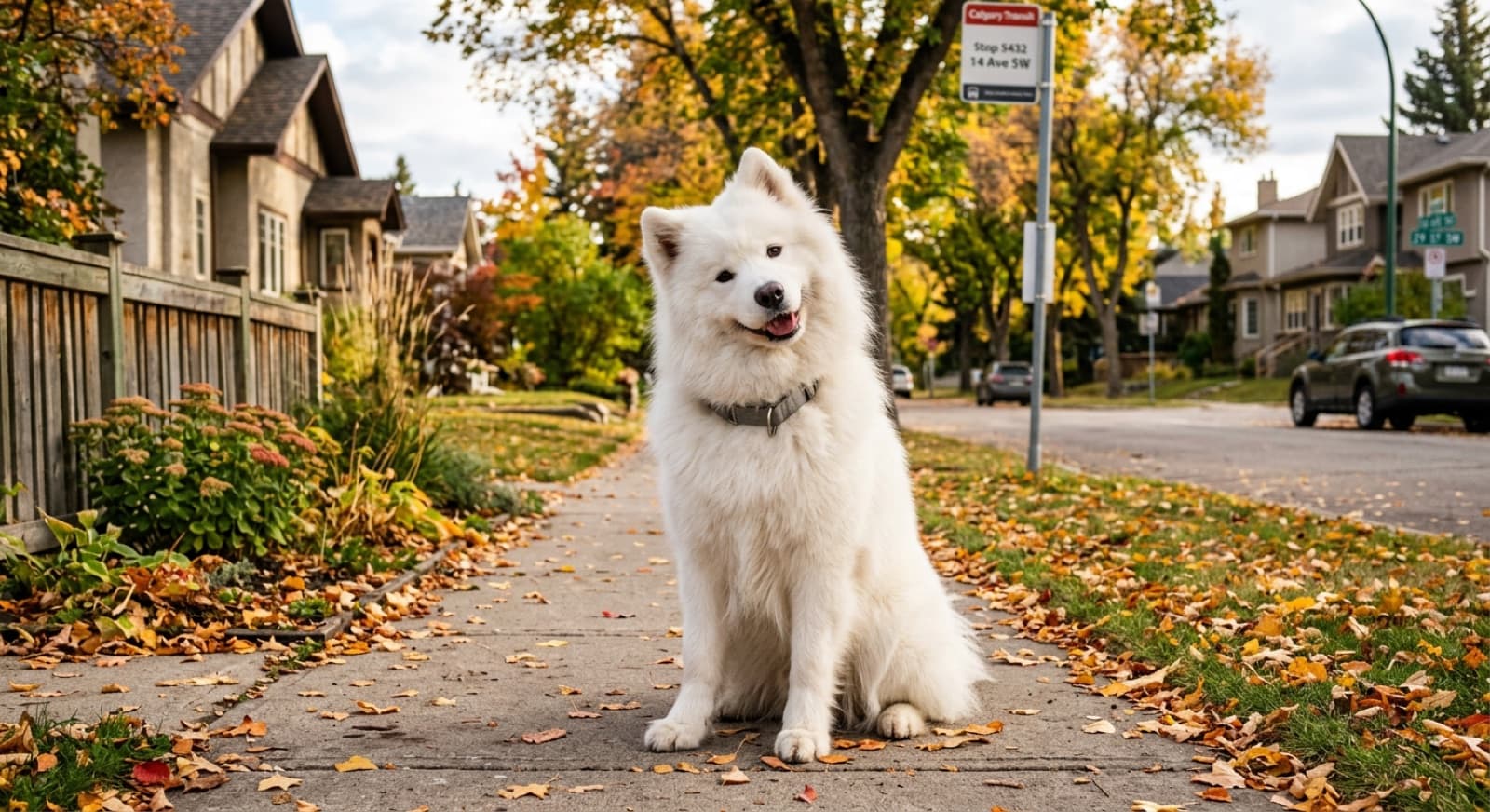
The 3-3-3 decompression principle applies to every rescue dog. With Sammies the first three days are about survival mode and quiet safety. The first three weeks are about routine and gentle adjustment. The first three months are about real personality emerging and the social, family-oriented Sammy character settling in. Plan around it rather than against it.
Shelter-stressed Sammies often present quieter than the dog they actually are, which can mask real temperament. A dog that seemed reserved on day three is frequently more playful, vocal, and demonstrative by week three. This is normal and is the breed coming back online. Twelve practical week-one and month-one priorities for an Edmonton rescue Samoyed:
- Kidney baseline within the first 30 days. Have your Edmonton vet pull a urinalysis with protein:creatinine ratio plus baseline bloodwork. Samoyed Hereditary Glomerulopathy is a real breed concern and an early baseline matters for future comparison. The American College of Veterinary Internal Medicine publishes renal-disease guidance worth referencing if a follow-up referral becomes necessary.
- Orthopaedic baseline. Hip and elbow palpation, gait observation, range-of-motion check. The breed has moderate hip dysplasia rates and an early baseline helps detect changes later.
- Enrol pet insurance in week one. The most important single financial decision for this breed. Any condition that appears after enrolment is covered; anything diagnosed before enrolment is pre-existing and excluded. SHG, hip dysplasia, and hypothyroidism are the three Sammy conditions most worth insuring against.
- Identify the nearest emergency veterinary clinic. Put the address and phone number in your phone before you need it. Samoyeds are not as emergency-prone as giant breeds, but a clinic identified in advance is a clinic you can drive to without thinking.
- License the dog with the City of Edmonton. Required for any dog over six months under Animal Care and Control Bylaw 21244. Tags should be visible on the collar from day one. Information is on the City of Edmonton dogs page.
- Start the grooming routine immediately. Daily brushing from day one builds tolerance and identifies any matting the rescue did not catch. The first deep brush-out can take an hour for a heavily matted dog; subsequent daily sessions take 5 to 10 minutes. Book a professional groom in week three or four to reset the coat baseline.
- Yard and indoor-space check. Walk the fence line for gaps (Sammies are not typically escape artists like Huskies, but a curious nose-led dog can find weak spots). Check indoor space for white-fur-magnet surfaces and plan vacuum routines.
- Stay on leash everywhere outside the yard. Recall is not yet established. Use a six-foot leash for transit and a 10 to 15 metre long-line for any open-space exploration. River-valley trails work for long-line walks; off-leash zones are not yet appropriate.
- Establish structure. Twice-daily meals at consistent times, predictable walk windows, and clear house rules. Sammies settle into structure faster than most spitz breeds; they want to know what is expected.
- Start moderate exercise. Long leashed walks for the first two weeks. Forty-five minutes per day is the starting point; build to 60 to 75 minutes by week four. Watch paw pads on de-icing salt and consider booties for the worst stretches of winter.
- Add mental work early. A Sammy that gets only physical exercise is still under-stimulated. Puzzle feeders, basic obedience refreshers, chew enrichment, and short training sessions burn brain energy. The herding heritage means most Sammies enjoy structured tasks.
- Hold off on the dog park. Not for the first two weeks at minimum, and longer if foster notes flag any dog-tolerance variability. The stimulation and dog density are too much for a still-decompressing rescue Sammy. The Edmonton Humane Society behaviour resources cover dog-park readiness for adopted dogs.
By week three, the real dog starts emerging. By month three, structure, exercise, and a settled grooming routine have done most of their work, and the foster-write-up dog is the dog living in your house. For Samoyeds, this is when the social, smiling, family-oriented character really emerges, and the work of the first 30 days pays off.
Edmonton Samoyed Adoption FAQ
Tap a question to expand
Where can I adopt a Samoyed near me in Edmonton?▼
How much does it cost to adopt a Samoyed in Edmonton?▼
Why are Samoyeds rare in Edmonton rescue?▼
Why do owners surrender Samoyeds?▼
What is the difference between a Samoyed, a Husky, and an American Eskimo Dog?▼
Are Samoyed mixes common in Edmonton rescue?▼
How much grooming does a Samoyed in Edmonton actually need?▼
Are Samoyeds good for Edmonton winters?▼
Are Samoyeds good for first-time owners in Edmonton?▼
Are Samoyeds hypoallergenic in Edmonton?▼
Will home insurance in Edmonton cover a Samoyed?▼
Related Edmonton Samoyed guides
Edmonton Adoptable Dogs
Current Edmonton-area Samoyed, Sammy-mix, and Samusky listings from EHS, Zoe's, AARCS Edmonton fosters, AHHRB, SCARS, GEARS, and Hope Lives Here.
Samoyed Health Issues: Diabetes, Eyes, Kidneys
Samoyed health issues to plan for: a very high diabetes risk, eye disease and glaucoma, inherited kidney disease in young males, skin disease, sulfa sensitivity and hips.
Samoyed Winter Care Edmonton
The cold-weather breed that thrives in Edmonton winter. Paw care on de-icing salt, summer heat-sensitivity reversal, snow-rolling, and never shaving the coat.
Samoyed Grooming Edmonton
Daily brushing routine, coat-blow seasons, professional grooming every 6 to 10 weeks, white-coat staining, paw-pad trimming, and why you never shave a Samoyed.
Find your Edmonton rescue Samoyed
Browse current Edmonton-area Samoyed, Sammy-mix, and Samusky listings. Foster temperament notes help you find the right match for your household, grooming capacity, housing situation, and prior experience.
Browse All Edmonton Dogs →New dog? Start with these care guides
Everything a new adopter needs to set up a safe, happy home.