The short answer
Basset ear infections are largely preventable, but only with a consistent weekly cleaning, a daily visual check, and a snood at every meal. The breed's 12-to-14-inch ear flap traps moisture in the canal AND drags the tip through food bowls, snow, salt, and trail debris, so the routine has two parts the Cocker routine does not. Fill the canal with a chlorhexidine, ketoconazole, or tris-EDTA cleanser, massage the base for 30 seconds, let the dog shake, and wipe only the outer flap with a cotton ball (never a Q-tip into the canal). Inspect the ear tip daily for tears, scabs, or food stuck in the feathering. Dry the ears after every swim, bath, or wet walk. Pet insurance enrolled in week one (before any ear diagnosis) covers the recurrent vet visits the breed predictably accrues. For medical management of active infections, see our Edmonton Basset Hound health guide.
Why Basset ears get infected
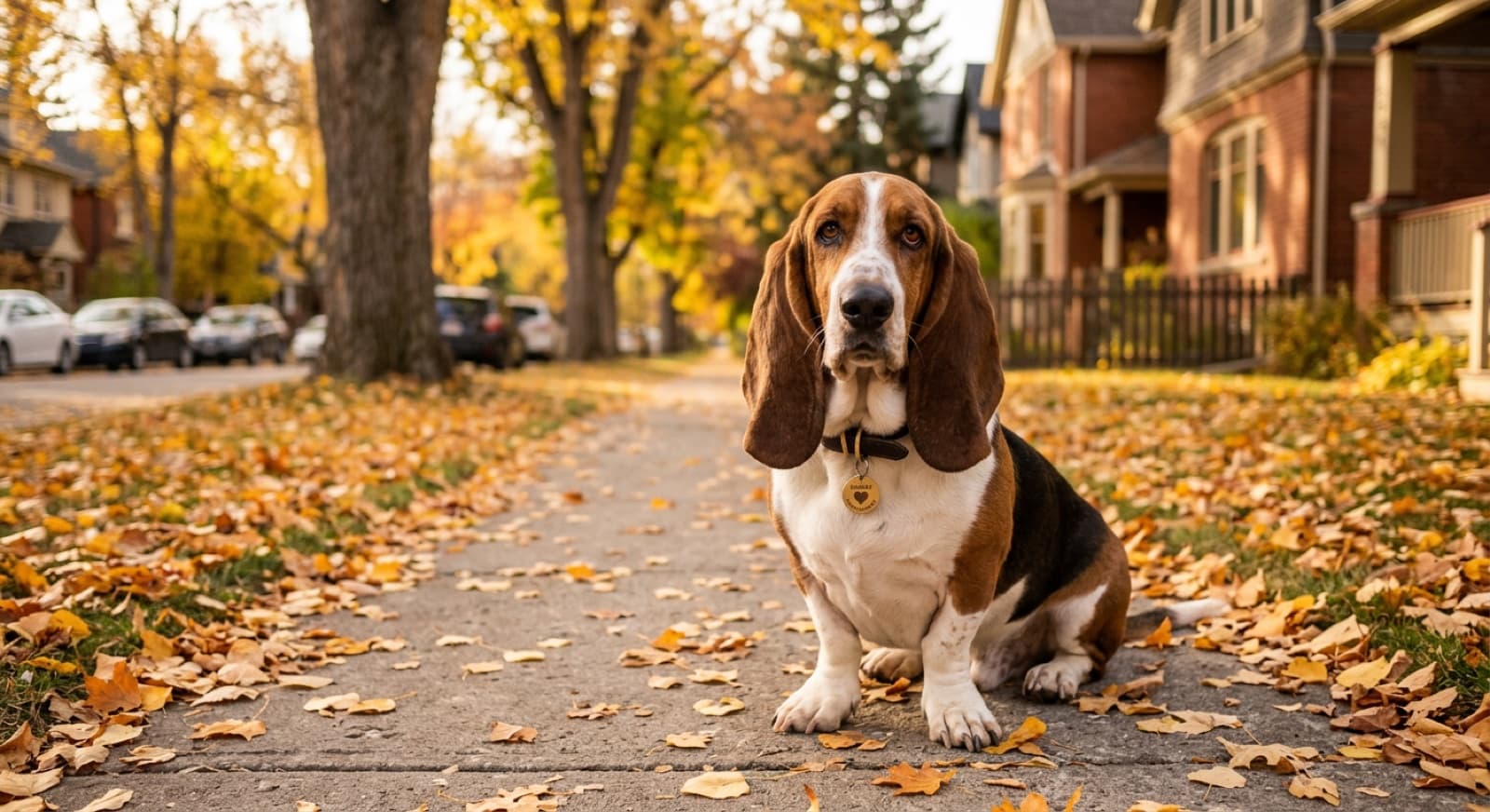
Four anatomical realities stack against the Basset Hound ear, one more than any other long-eared breed. The 12-to-14-inch ear flap covers the canal opening and prevents air circulation. The narrow vertically-angled canal that all dogs have is narrower in the Basset than in most breeds and holds debris and moisture more readily. The canal grows dense hair that traps further debris and limits airflow. And the ear tip drags on the ground during normal head-down trailing behaviour, picking up contaminants that the other three breeds with similar flap length do not collect. The combined effect is a warm, moist, dark, enclosed environment that bacteria and yeast colonise within days of any moisture exposure, plus a contamination route from the outside world that runs straight up the ear feathering.
The dog's normal ear flora (mostly low-level bacteria and Malassezia yeast) live on every ear and cause no problem on a well-ventilated ear. In the Basset ear environment, those same organisms overgrow rapidly into a pathogenic infection. The American College of Veterinary Dermatology treats Basset otitis as a separate clinical category with breed-specific protocols. Most adult Bassets will experience an ear infection in any 12-month period the owner relaxes the routine.
The owner mindset shift: ear care is not an optional grooming task for this breed; it is a weekly routine on the order of brushing teeth. A few minutes of cleaning each week becomes habitual within a month. The Edmonton Basset owners who never deal with chronic otitis are the ones who never skip a week. The owners who clean when they remember (every few weeks, monthly, or only after they notice a smell) typically carry a chronic ear problem for the dog's life and a steady stream of vet visits. The routine is small. The consequence of skipping it is not.
The Basset ear: the longest ears in dogdom
Bassets hold the Guinness world record for the longest ears of any breed. Typical adult Basset ear length runs 12 to 14 inches from base to tip; some show-line Bassets exceed 18 inches. The ear is constructed of a heavy cartilage frame covered in skin and feathered with dense soft hair along the inner surface and the outer edge. The weight of the flap pulls the ear opening closed against the head and seals the canal from airflow more completely than any other breed.
| Breed | Typical ear length | Ear-tip ground contact |
|---|---|---|
| Basset Hound | 12 to 14+ inches | Constant (head-down trailing posture) |
| Cocker Spaniel (American) | 8 to 10 inches | Occasional |
| Beagle | 6 to 8 inches | Rare |
| Bloodhound | 10 to 13 inches | Frequent |
The functional difference is the constant ground contact. A Cocker flap dips into a food bowl occasionally; a Basset flap drags through the bowl, across the floor, through outdoor mud, and over Edmonton sidewalk salt every day. The Cocker routine focuses on what happens inside the canal. The Basset routine has to add the outside of the ear: tip inspection, feathering cleanliness, and a snood to keep food residue from collecting on the daily-contaminated surface that then folds back against the canal opening.
The daily ear-tip inspection
Bassets walk head-down. The ear tip touches the ground continuously. Daily inspection catches injuries before they progress into infections that climb the ear feathering into the canal.
What to check at the tip each day:
- Tears and lacerations. The thin tip skin tears on twigs, rocks, broken glass, and ice edges. A 5 mm tear that the dog then shakes can bleed dramatically because the head-shake whips the bleeding tip against walls and floors. Tears need cleaning with sterile saline, a pressure bandage if bleeding persists, and a vet visit if the wound is more than skin-deep.
- Scabs and chronic friction wounds. The same patch of ear tip rubs the same doorframe or floor edge daily and develops a recurring scab. Trim the feathering around it, keep it clean, and ask the vet about a topical barrier ointment.
- Food and water stuck in the feathering. Kibble, raw food residue, gravy, water, broth. If you see any of it on the tip, wipe it off with a damp cloth before it ferments.
- Frostbite damage. In Edmonton winter below -20C, the ear tip is the most exposed extremity on the dog. Look for white or grey colour change, hardening, or scabbing at the very tip. Shorten walks in deep cold and protect with a snood or ear covering.
- Foreign objects in the feathering. Foxtails, grass awns, burrs, and small twigs work their way into the long feathering and migrate toward the canal. Comb the feathering during the daily check and remove anything tangled.
- Mat formation. Long ear hair mats when wet and dries into a tight knot that pulls on the skin. Comb out small tangles immediately; cut out (do not pull) tight mats. A matted ear tip becomes a moisture trap directly above the canal.
The daily ear-tip inspection takes 30 seconds and adds onto the same routine as the daily canal check. Most experienced Basset owners do both at the same time: lift the flap, sniff for canal odour, look at the inner canal, then look at the tip and run fingers along the feathering. One minute total per dog.
The snood: feeding without bowl-dip contamination
A snood is a soft fabric tube that slips over the head and holds the ears back against the neck. Most Bassets need one at every meal. Without it, the long ear feathering dips into food and water bowls at every bite, and the residue rots between the flap and the canal where it traps moisture, attracts yeast and bacteria, and stains the feathering. Bowl-dip contamination is the most common preventable cause of Basset ear infection that other long-eared breeds simply do not face at the same scale.
The snood goes on at the start of the meal and comes off after the dog finishes. Most Bassets accept a snood within two to three feeding sessions if introduced calmly. Some owners also use a snood during bath drying to keep the wet ears out of towels and bedding, and a heavier outdoor snood during muddy or snowy walks to keep the ear feathering out of contaminated ground.
Snood specifications that work for Bassets:
- Fabric: soft cotton, fleece, or microfiber. Avoid stiff synthetics that chafe the neck.
- Sizing: the snood must be loose enough to slip on and off easily without pulling on the ear flap. Too-tight snoods fold the ear cartilage and cause discomfort.
- Length: long enough to cover both ear flaps fully without leaving the tip exposed below the snood opening.
- Cleanliness: wash the snood weekly. A dirty snood reintroduces the contamination you bought the snood to prevent.
- Two-snood rotation: own at least two so you can wash one while the dog wears the other.
- Cost: $10 to $25 per snood at Edmonton pet supply stores or online. A two-snood starter set is a $30 investment that pays back within weeks in avoided ear vet visits.
Cocker Spaniel owners use snoods less commonly because Cocker ears are shorter and dip less often. Bassets are at the extreme end of the long-eared spectrum and snood culture is part of the breed's daily life. The first time you watch a snood-wearing Basset eat a wet meal and see clean dry ears afterward, the case is made.
The weekly cleaning routine (5 to 10 minutes)
Pick a consistent day and time so the routine becomes habit for both you and the dog. Sunday evening works for most owners. Pick a consistent surface (bathroom counter or sofa with a towel down because the dog will shake cleanser droplets everywhere) and a consistent order (left ear first, then right ear, every time). Most Bassets settle into the routine within a few sessions.
- Lift the ear flap and gently fold it back across the head to expose the canal opening. Look at the inner flap and the visible upper canal: pink and clean is normal; red, brown, yellow, or discharge is a vet visit, not a cleaning task.
- Fill the canal with cleanser using a vet-recommended ear cleaning solution (chlorhexidine, ketoconazole, or tris-EDTA based). The bottle nozzle goes into the canal opening; a generous squeeze fills the canal completely. Some cleanser will run back out; that is normal. Bassets often need slightly more cleanser per ear than smaller-eared breeds because of the canal depth.
- Massage the base of the ear with your fingers at the soft tissue below the ear opening, for 30 full seconds. You will hear a squelchy sound: that means cleanser is reaching the horizontal canal and dissolving wax and debris there. The massage is the critical step that does the deep cleaning the owner cannot reach directly.
- Let the dog shake the head vigorously. Get out of the way; cleanser will spray several feet, and a Basset shake throws cleanser harder than a smaller dog. The shaking is how debris exits the canal.
- Wipe ONLY the outer ear flap and the visible upper canal with clean cotton balls. Use two or three cotton balls per Basset ear (more than the Cocker routine because the flap surface is larger). Fold them into the visible canal opening, and gently absorb the moisture and loosened debris. Never push a cotton ball or any tool past the visible opening.
- Comb the outer feathering with a wide-tooth comb to clear any loose debris, lift any feathering that is sticking to the wet flap, and check for tangles. This step is Basset-specific and adds 30 seconds per ear.
- Reward the dog with a small training treat at the end. The dog associates the routine with reward and tolerates it more readily over months and years.
Repeat for the second ear with fresh cotton balls to avoid cross-contaminating one ear with the other. The whole sequence takes 5 to 10 minutes for both ears. Experienced Basset owners finish in 5 to 7 minutes. The first few weeks may take longer as the dog learns the routine and you find the comfortable grip and position.
The daily check (30 seconds)
Between weekly cleanings, do a quick daily check. It takes 30 seconds and catches early flares before they progress.
- Lift the flap and sniff. A healthy ear smells slightly waxy and faintly musky. A yeasty sweet odour, a sharp foul odour, or a sour odour is the first sign of infection, usually before any visible change.
- Look at the inner flap and canal opening. Pink and clean is healthy. Red, swollen, or with any visible discharge is a vet visit.
- Inspect the ear tip and feathering. Tears, scabs, food residue, frostbite damage, foreign objects, mats. The Basset-specific step that other breeds skip.
- Watch the dog's behaviour. Head shaking, scratching at the ear with a back foot, head tilting, or rubbing the ear against furniture are early signs of discomfort.
- Note any change from yesterday. The daily check works because subtle changes from baseline are easier to catch than absolute thresholds. You become the expert on what is normal for your specific dog.
The 30-second daily check is the most cost-effective vet visit prevention in the breed. An ear infection caught on day one of the smell-change usually resolves with a few days of extra cleaning and one vet visit. The same infection caught two weeks later usually needs longer treatment, often combination medication, and sometimes referral. Early detection is everything.
Recognising otitis externa: bacterial, yeast, mixed, or mites
Otitis externa (outer ear canal inflammation, almost always with secondary infection) is the most common Basset ear diagnosis. Three categories of infection plus one parasite are seen, and the category determines treatment.
Yeast (Malassezia) otitis is the most common in Bassets. Discharge is typically brown, greasy, and has a sweet or yeasty odour. The canal looks reddened and may have waxy buildup. Yeast thrives in warm moist environments, which is exactly the Basset ear after a swim, a missed cleaning week, or a feeding session without a snood. Treatment is antifungal topical medication (miconazole, ketoconazole, clotrimazole) applied directly to the canal, usually for 2 to 3 weeks. The infection often clears completely but recurs if the underlying moisture cycle is not addressed.
Bacterial otitis presents with yellow, green, or pus-like discharge and a sharper foul odour. Common bacterial culprits include Staphylococcus, Streptococcus, Pseudomonas, and Proteus species. Treatment is topical antibiotic (often a combination product with steroid to reduce inflammation), usually for 2 to 4 weeks. Pseudomonas infections in particular can be resistant to first-line antibiotics and may need culture and sensitivity testing to choose effective medication.
Mixed otitis has features of both: brown greasy yeast component plus yellow bacterial component. Combination topical products treat both, but the medication choice matters and empirical guessing without cytology often misses one component or the other.
Ear mites are a separate cause occasionally seen in young Bassets from puppy mills or hoarding situations, less common in adopted adults. Mites present with dark gritty discharge that looks like coffee grounds, intense itchiness, and head shaking. Treatment is topical or systemic miticide; the household and other pets must be treated together to prevent reinfection.
The cytology and culture step
Ear cytology is a simple in-clinic test where the vet rolls a cotton swab in the canal, transfers the sample to a glass slide, stains it, and looks at it under the microscope. The test identifies yeast (round budding cells), bacteria (rods or cocci), inflammatory cells, and ear mite eggs. It takes 10 minutes, costs $40 to $80 at most Edmonton clinics, and determines which category of infection is present and therefore which medication is appropriate.
Push for cytology at the first vet visit for any new infection. Empirical treatment without cytology (the vet guesses based on what the discharge looks like) works some of the time but misses cases often enough to be the wrong default. Basset ears in particular have variable presentations because the deep canal accumulates mixed debris over time, and an experienced vet still benefits from the slide.
Culture and sensitivity testing is the next step up. The lab grows the bacteria from a sample, identifies the species, and tests which antibiotics will kill it. Culture costs $150 to $300 and takes 3 to 7 days for results. It is indicated when first-line antibiotics fail to clear an infection, when Pseudomonas or resistant bacteria are suspected, or for any chronic or recurrent infection that has not responded to standard treatment. The medical management of recurrent and chronic otitis belongs in our Basset Hound health guide.
Aural haematoma: amplified in a heavy-flap breed
An aural haematoma is a blood-filled swelling between the layers of the ear flap. Small blood vessels inside the pinna rupture and bleed into the space between the skin and the cartilage. The ear flap fills with blood within hours and becomes a soft swollen pouch that hangs heavier than the other ear and feels squishy when touched. The dog may flinch when the ear is handled, and the swelling is usually obvious within a day.
Bassets are particularly prone to aural haematoma for two reasons that compound. The long heavy ear flap carries more inertia during head-shaking than a Cocker or Beagle flap, so each shake delivers more force to the vessels inside the pinna. And chronic ear infections trigger the head-shaking that causes the haematoma: untreated otitis irritates the canal, the dog shakes the head to relieve the irritation, the repeated shaking ruptures small vessels in the heavier flap, and the flap fills with blood. The haematoma is the visible end of a chain that started weeks earlier at the canal.
Treatment is surgical at a veterinary clinic. The surgeon drains the blood under sedation or general anaesthesia, then places sutures through the layers of the ear flap to compress them together and prevent re-accumulation while healing. Some clinics use a specialised mattress-suture pattern with through-and-through bandage support. The procedure costs $1,500 to $3,000 in Edmonton depending on the clinic and complexity. The American College of Veterinary Surgeons publishes owner-facing references on aural haematoma repair.
The underlying ear infection must also be treated or the haematoma recurs. Untreated haematomas eventually clot, scar, and crumple the ear (cauliflower ear) with permanent disfigurement that, in a breed defined by its ears, is more visually obvious than in any other breed. Prevention is the weekly cleaning routine that prevents the infections that cause the head-shaking that causes the haematoma. The chain starts at the canal and ends at a $2,000 surgery; the upstream fix is a 10-minute weekly clean.
Browse adoptable Basset Hounds in Edmonton
Weekly ear cleaning, daily ear-tip inspection, and a snood at meals are part of the breed's baseline lifestyle, not optional tasks. Foster temperament notes flag prior ear issues, chronic otitis history, and any recent treatment that matters for the first 30 days of adoption. Browse current adoptable Bassets and Basset mixes.
See Edmonton Adoptable Dogs →
End-stage ear and TECA-BO surgery
Years of untreated or under-treated chronic otitis cause permanent changes to the ear canal: thickening of the canal walls, calcification of the cartilage, narrowing of the canal opening, and sometimes complete stenosis where the canal closes off. Senior Bassets with this history often live with low-grade chronic discomfort, ongoing infection that no longer fully resolves, and reduced hearing on the affected side.
When the canal can no longer be salvaged medically, the surgical solution is total ear canal ablation with bulla osteotomy (TECA-BO). A board-certified veterinary surgeon removes the entire diseased ear canal, then drains and removes infected material from the middle ear (the bulla). The procedure costs $4,000 to $7,000 per ear in Edmonton, requires general anaesthesia and a few days of post-op hospitalisation, and is considered when medical management has failed despite a proper diagnostic workup and appropriate treatment course.
TECA-BO is end-stage surgery, not a routine treatment. Most Bassets who have it have spent years on failed medical management and the surgery eliminates the chronic pain. Dogs lose hearing on the operated side (the canal is removed) but most adapt well, and the freedom from chronic ear pain dramatically improves quality of life. The procedure is most often performed at Edmonton specialty surgery practices or referred to Calgary or to WCVM Saskatoon. The preventive answer for every Basset adopter is to lock in the weekly routine from day one and avoid the chronic otitis cycle entirely.
Cleansers (what to use, what to skip)
The first-line maintenance cleansers are veterinary ear cleaning solutions containing chlorhexidine, ketoconazole, or tris-EDTA. All three are gentle, broadly antimicrobial, and well-tolerated for weekly use. Tris-EDTA solutions have an additional drying effect that some owners prefer for post-swim use. A bottle of veterinary ear cleanser runs $20 to $40 at Edmonton vet clinics and pet supply stores; one bottle usually lasts a Basset about 3 to 5 months at weekly use (Bassets use more cleanser per session than smaller-eared breeds because the canal depth is greater).
For active flares, a vet may prescribe medicated ear drops containing antifungals (miconazole, ketoconazole), antibiotics (gentamicin, enrofloxacin, polymyxin), and a steroid (dexamethasone, hydrocortisone) to reduce inflammation. These prescription products are applied directly to the canal during a treatment course (usually 2 to 4 weeks), then the routine returns to plain maintenance cleanser.
For post-swim drying, tris-EDTA based solutions or a drying ear product designed for swimming dogs work well. A few drops in each ear after every swim, no massage required, just lift the flap and let it run in.
What to skip:
- Rubbing alcohol or any alcohol-based home solution (severely irritating to inflamed canal tissue, can cause chemical burn)
- Hydrogen peroxide (irritating, can damage delicate canal tissue)
- Vinegar and water mixtures (sometimes recommended online, but the acid irritates inflamed tissue and the water-based solution leaves residual moisture)
- Olive oil or any food oil (occludes the canal, prevents proper drying, can rancidify)
- Q-tips pushed into the canal (already covered; never)
- Human ear drops (formulated for human ear chemistry, not canine)
- Aggressive scrubbing of the canal opening (the tissue is delicate and easily abraded)
The cleanser choice matters less than the routine itself. Any vet-approved gentle weekly clean beats an exotic product applied sporadically. If you are seeing recurrent flares despite weekly cleaning with a vet-approved product, the next step is a vet visit for cytology, not a stronger cleanser. The underlying problem may be allergy, hormone imbalance, or chronic canal change, none of which respond to product changes alone.
Hair plucking from the canal (the split opinion)
Bassets grow hair inside the ear canal that can trap debris and limit airflow. Veterinary opinion on whether to pluck this hair routinely is genuinely split, and the right answer depends on the individual dog.
The traditional grooming view: pluck the canal hair routinely during grooming appointments to keep the canal clear and airflow open. Less hair means less debris trapped and less moisture retained.
The modern dermatology view: plucking creates microscopic wounds in the canal lining that bacteria and yeast colonise, sometimes making infections worse rather than better. Some board-certified dermatologists advise against routine plucking and instead recommend regular cleaning around the hair without removing it.
The reasonable middle ground: if your dog has no history of ear infections and the hair is genuinely matted or blocking the canal opening, a careful pluck during a regular grooming appointment is reasonable. If your dog has recurrent infections, leave the hair alone and work the underlying problem with your vet. Never pluck during an active infection. If you do pluck, have an experienced groomer or vet do it; amateur plucking causes more harm than good. The canal hair is rarely the primary cause of Basset ear problems; moisture, ground contamination, and underlying allergy are. Focus the energy on those.
Swimming, lakes, and water exposure
Water in the canal is the most common ear infection trigger in Bassets. Edmonton has plenty of water exposure opportunities (Pigeon Lake, Alberta Beach, Wabamun Lake, Astotin Lake at Elk Island, the river paths along the North Saskatchewan, backyard kiddie pools, splash parks). Bassets enjoy wading but are surprisingly poor swimmers proper: the heavy front end and short legs make swimming exhausting. Most Bassets prefer shallow water to deep swimming, which is good news for ear management but means owners should never assume a Basset will be a confident swimmer.
The post-swim protocol:
- Lift each ear flap and tilt the head gently to let water drain.
- Wipe the inside of the flap and the visible canal opening with a clean dry cotton ball.
- Apply a few drops of a tris-EDTA based drying ear solution to each canal.
- Let the dog shake the head to distribute and expel residual moisture.
- Wipe the outer ear again with a clean cotton ball.
- Comb the wet feathering and pat it dry with a towel to prevent matting as it dries.
The whole sequence takes 3 to 4 minutes per ear (slightly longer than a Cocker post-swim because the feathering needs combing) and prevents the swim-to-infection chain that puts so many Bassets in vet offices. Skip it once and you may get away with it; skip it routinely and you guarantee an infection within weeks.
Bath water: the same principle applies to baths at home or at the groomer. Dry the ears thoroughly afterward. Many post-bath ear infections trace to residual bath water that the owner did not notice trapped in the canal. The groomer should be drying ears as part of the bath service; ask the question explicitly at booking.
Bowl design and feeding setup
The food bowl is one of the highest-frequency contamination sources for Basset ears. Even with a snood, the bowl design matters. Three setups work for most Basset households.
Narrow tall bowls. A bowl with a smaller diameter and taller walls keeps the food at the bottom and limits ear contact with the rim. Ceramic spaniel bowls (sold for Cockers and other long-eared breeds) work for Bassets too, though the dog needs a bowl wide enough for the muzzle to reach the bottom comfortably. Pair with a snood for the best result.
Slow-feeder bowls. Maze-pattern slow feeders distribute the food across raised ridges, reducing the depth the dog has to dive into. Slow-feeders also slow down a food-driven Basset (most Bassets gulp), reducing bloat risk and aiding weight management. The ridged design does limit ear-dip somewhat, though a snood is still preferable.
Raised feeders. A raised platform that holds the bowl at chest height is sometimes recommended for long-eared breeds to reduce the angle the ears dip at. Two cautions for Bassets specifically. Raised feeders have been associated with increased bloat (GDV) risk in some studies, and Bassets are at elevated GDV risk because of the deep-chested low-bodied conformation. The evidence is mixed. Discuss with your Edmonton vet before adopting a raised feeder for a Basset. For most Basset households, a snood plus a narrow flat-floor bowl is the safer combination.
Water bowls. The same principles apply. Most Bassets ear-dip more in water bowls than food bowls because water bowls sit out continuously. Consider a vacuum-fed pet fountain with a smaller drinking aperture, or position the water bowl near the food bowl so the snood stays on during drinking too. Multiple Basset households should use a water bowl per dog or one large narrow-aperture fountain to keep one dog from waiting and dipping.
Edmonton seasonal ear patterns
Edmonton has four meaningful seasonal patterns for Basset ears, and the routine adjusts modestly across the year.
Summer (June to August). The hardest ear season. Lake swimming, splash parks, rain showers, humid warm air, and outdoor feeding all combine to increase moisture exposure. The risk peaks during lake season weekends and during sustained warm humid weather. Step up to twice-weekly cleaning during the heaviest swim weeks, follow the post-swim protocol religiously, and watch the ear feathering for grass awns and foxtails that proliferate in Edmonton meadows from mid-June through August.
Autumn transition (September to October). Ears generally settle as humidity drops and water exposure decreases. A good window to confirm the routine is working and the dog is in a stable ear state heading into winter. Watch for foxtails and burs through late September as fields dry.
Winter (November to March). Edmonton furnace season dries indoor air to 15 to 25 percent humidity in many homes, which slightly works in favour of ear health (less ambient moisture). The Basset-specific winter concern is the ear tip: at -20C and colder, the very tip is the most exposed extremity on the dog, and frostbite-related damage shows up as white or grey discolouration, hardening, or scabbing. Shorten walks in deep cold below -25C and consider a winter snood or ear-covering for any dog with prior tip frostbite. Wet snow on the feathering during heavy storms is a periodic flare trigger; towel-dry the feathering after every winter walk just as you would the rest of the coat. Salt accumulating in the paw fur and on the ear tip should be rinsed away after walks on salted Edmonton sidewalks. Continue weekly cleaning without major modification through winter.
Spring transition (April to May). The calmest period for Basset ears. Humidity climbs back to comfortable levels, the dog has not yet started lake season, and most Bassets in stable management have low ear-event rates. Use this window to reinforce the routine and reset any habits that may have slipped during winter. April is also a good month to book the annual veterinary skin and ear baseline.
Pet insurance for ear claims
Basset ear issues are a predictable lifetime cost and pet insurance generally covers them well, but only if the policy is enrolled before the first diagnosis is documented in vet records. Ear issues are the most common pre-existing exclusion category for the breed; a dog already carrying an otitis diagnosis at the time of policy enrolment will likely have ear-related claims excluded permanently.
Typical claim picture for an Edmonton Basset: 2 to 6 ear-related vet visits per year ranging $150 to $400 per visit for the exam, cytology, topical medication, and follow-up. Aural haematoma repair runs $1,500 to $3,000. Veterinary dermatology workups for chronic recurrent cases run $500 to $1,500 for the initial consult and diagnostic workup. End-stage TECA-BO surgery runs $4,000 to $7,000 per ear. A pet insurance policy with a $500 to $750 deductible and 80 to 90 percent reimbursement typically pays back within the first 18 months for a Basset given the flare frequency and the breed's elevated haematoma risk, and continues to deliver value over the dog's life.
Read the fine print on chronic-condition coverage. Most reputable policies treat chronic otitis as a single ongoing condition with lifetime coverage that continues year over year, but some policies treat each new infection as a separate event that resets the deductible each time, and some have annual condition-specific limits. Ask the question explicitly at policy enrolment: is recurrent otitis covered as a chronic condition or does each flare reset to the deductible? The week-one enrolment rule is firm: enrol before any ear diagnosis is documented, because the breed will have flares and you want them covered.
When to call the vet
Same-day vet visit for any of these signs:
- Brown, yellow, green, or pus-like discharge from the canal
- The dog tilting the head persistently or losing balance
- Raw weeping tissue inside the flap
- The dog refusing to let the ear be touched
- Hot or swollen tissue around the ear base
- A soft squishy swelling on the inner flap (possible aural haematoma)
- An ear-tip wound that is bleeding heavily, deep, or weeping
- Whole-body signs (fever, lethargy, decreased appetite)
Book within the week for:
- Redness inside the flap or canal that does not resolve within 3 to 5 days of increased cleaning
- Mild persistent odour
- Occasional head shaking without visible discharge
- Hair loss along the inner flap
- Wax buildup that returns quickly after cleaning
- Persistent or recurring ear-tip scabbing or friction wounds
- Any concerning change from the dog's baseline
The American Animal Hospital Association publishes owner-facing references on when to seek veterinary care for ear and skin conditions.
Edmonton veterinary dermatology access
For chronic recurrent otitis (three or more infections per year despite proper home care), a veterinary dermatology specialist is the next step. Most Edmonton primary-care vets handle mild and moderate cases well; severe chronic cases benefit from a specialist workup that includes detailed cytology, culture and sensitivity, allergy testing, and a targeted long-term management plan.
Board-certified veterinary dermatologists in Alberta are limited; the Western College of Veterinary Medicine at the University of Saskatchewan in Saskatoon is the closest academic centre with dermatology specialty service and accepts Alberta referrals through a referring vet. Calgary specialty practices occasionally have visiting dermatology consultants; Edmonton primary-care vets can also book telemedicine consultations with North American dermatology specialists for second opinions on chronic cases.
Referral criteria: three or more otitis flares per year despite proper home care, otitis that does not respond to first-line vet treatment, suspected underlying atopic dermatitis or food allergy contributing to ear problems, suspected hypothyroidism contributing to recurrent infection, severe chronic disease being considered for TECA-BO surgery, or any unusual presentation that needs definitive diagnosis. The American Veterinary Medical Association publishes owner references on when veterinary specialist referrals are appropriate.
Senior Basset ear care (tighter routine)
Basset Hounds typically live 10 to 12 years and the senior window opens around 7 to 8. Senior Bassets often carry the accumulated effects of years of ear management (or under-management): some have stable healthy canals, some have chronic low-grade otitis that never fully resolves, some have post-inflammatory canal narrowing, and a few have advanced canal disease being considered for surgery. The ear routine becomes more important rather than less.
Specific senior considerations: the skin and canal tissue is thinner and more easily abraded, so cleaning needs to be gentler; arthritis in the spine, hips, and elbows can make the dog less tolerant of being positioned for cleaning, so adapt the routine to wherever the dog is comfortable (sofa, dog bed, floor); hearing loss may be partial or complete on one or both sides, so introduce the cleaning routine with visible hand signals or gentle touch cues; and the daily check becomes more important because subtle ongoing inflammation that the dog cannot communicate needs the owner's observation.
Senior Bassets also accumulate skin lumps, fatty masses, and skin tags that can sit near the ear base and complicate cleaning. Note any new lumps, take photos for comparison over time, and book a vet visit for any rapid growth, change in shape, or discharge from a lump. Most are benign but the breed has a moderate cancer load and any concerning lump warrants a fine-needle aspirate.
Multi-Basset household logistics
Two Bassets is double the weekly ear work. Three is triple. The logistics matter: a 7 to 10 minute routine per dog adds up to 20 to 30 minutes of dedicated weekly ear work in a three-Basset household, plus daily ear-tip inspections, plus snood management at every meal for every dog. Plan the time honestly before adding a second Basset to the home.
Use separate bottles of cleanser per dog (never share a bottle nozzle that has touched one dog's canal with another dog's ear to avoid cross-contamination), keep separate cotton ball supplies, own a snood per dog with a backup, and run each dog through the full routine before starting the next. Many multi-Basset households build the routine into a Sunday evening time block so it does not feel like an additional task. The dogs learn the sequence and most tolerate it as part of the weekly rhythm.
If one dog has an active otitis flare, isolate the cleaning supplies for the affected dog (separate cleanser, separate cotton balls, separate towel) until the flare resolves. The infection can be transferred between dogs in some cases, particularly Pseudomonas bacterial infections which are highly contagious in immunocompromised animals. Wash hands thoroughly between dogs during any active treatment, and consider feeding the affected dog in a separate room to reduce cross-contamination through shared bowls.
Frequently asked questions
How do I prevent ear infections in my Basset Hound?
Weekly cleaning plus a daily visual check plus a snood at meals. Pick one day a week (Sunday evening works for most owners) and clean both ears with a veterinary chlorhexidine, ketoconazole, or tris-EDTA cleanser. Fill the canal, massage the base of the ear for 30 seconds, let the dog shake, then wipe the visible outer flap with a cotton ball. Never push a Q-tip into the canal. Every day, lift each ear flap, sniff for any yeasty or sour odour, look for redness or discharge, and inspect the ear tip for tears, scrapes, or food stuck in the feathering. Use a snood (a fabric tube that holds the ears back) at every meal so the ears do not dip into the bowl. Dry the ears thoroughly after every swim, bath, or wet walk. Edmonton lake season (June through August) is the highest-risk window. Owners who keep the routine through summer almost always avoid the chronic otitis cycle. The few minutes a week is the most cost-effective prevention in the breed.
How often should I clean my Basset Hound's ears?
Weekly as a baseline for a healthy Basset with no current infection. Twice weekly during summer or any week the dog has been swimming, lake-bathing, or caught in a heavy rainstorm. Daily during an active flare under vet direction with prescription medicated cleanser. Bassets do not need daily cleaning of healthy ears: over-cleaning strips the ear canal of its protective wax barrier and can trigger reactive inflammation. The pattern is weekly clean, daily look. The daily look catches early changes (subtle redness, mild odour, slight wax change) before they progress to a full infection. Reset the schedule the moment you notice the dog scratching, shaking, or tilting the head: those signals mean the routine needs reinforcement or a vet visit.
How long are Basset Hound ears compared to other long-eared breeds?
Bassets hold the world record for the longest ears of any breed. Typical adult Basset ear length runs 12 to 14 inches measured from the base to the tip, and some show-line Bassets push past 18 inches. For comparison, an American Cocker Spaniel ear runs 8 to 10 inches, and a Beagle ear runs 6 to 8 inches. The extra length matters for daily life in three ways: the ear tip drags on the ground when the dog walks with head down (which is most of the time), the tip dips into food and water bowls, and the heavier flap traps more moisture and weighs more during head-shaking. The same anatomy that defines the breed visually also defines the daily routine. Long ears need long-ear care, and the Basset routine is more involved than the Cocker or Beagle routine for that reason.
What is a snood and does my Basset really need one?
A snood is a soft fabric tube that slips over the dog's head and holds the ears back against the neck, keeping the ear tips out of food bowls, water bowls, mud, and snow. Yes, most Bassets do need one. Without a snood, the long ears dip into food at every meal: kibble pieces, raw food, wet food, broth, gravy. The food residue clings to the ear feathering, attracts bacteria and yeast, and rots between the flap and the canal where it traps moisture. The ear-tip skin reddens, then scabs, then weeps, then infects. A snood at meals (and during bath drying for some owners) eliminates the bowl-dip problem entirely. Snoods are cheap ($10 to $25), washable, and most Bassets accept them within a few sessions. Some owners only use a snood at meals; others use one for outdoor walks in muddy or snowy conditions to keep the ear tips clean. Cocker Spaniel owners use snoods less frequently because Cocker ears are shorter and dip less often.
My Basset keeps catching ear-tip injuries. What is happening?
Long ears that drag on the ground are exposed to everything the dog walks over. Sticks, rocks, ice chunks, salt crystals on Edmonton sidewalks, sharp grass blades, broken glass, and other dogs at off-leash parks all create ear-tip trauma. The skin on the ear tip is thin, lightly vascularised at the edge, and slow to heal. Common Basset ear-tip injuries: small lacerations that bleed disproportionately because the dog shakes the head, scabbing that builds and recracks during shaking, frostbite at the very tip in deep Edmonton cold below -20C, and chronic friction wounds where the same spot rubs ground or doorframes daily. Prevention: a daily ear-tip inspection during your 30-second daily check, keep the ear feathering trimmed neatly (do not let it become matted and ground-dragging), use a snood for snowy or muddy walks, and consider booties or a body-wrap setup for dogs that consistently injure the tips. A persistent or weeping ear-tip wound needs a vet visit because the chain from tip wound to flap infection to canal infection can happen quickly in this breed.
What does a Basset ear infection look like?
Three early signs: head shaking, scratching at the ear with a back foot, and a sour or yeasty smell when you lift the flap. Visual signs follow: redness inside the ear canal opening, brown or yellow discharge, swelling of the canal opening, hair loss along the inner flap, and the dog flinching when you touch the ear base. Severe cases progress to constant head tilt, balance issues, raw weeping tissue inside the flap, and visible pain when the ear is approached. The three otitis categories (bacterial, yeast, mixed) look subtly different: yeast tends to be brown, greasy, and sweet-smelling; bacterial tends to be yellow or green discharge with a sharper foul odour; mixed infections share features. The category matters because antibiotics treat bacterial and antifungals treat yeast. The only reliable way to know which infection a dog has is veterinary cytology, which is why empirical home treatment (guessing) often makes infections worse.
Can I use Q-tips in my Basset's ears?
Not in the ear canal. Cotton balls on the outer ear and visible inner flap are fine; Q-tips pushed into the canal push wax and debris deeper, can perforate the eardrum, and leave cotton fibres behind in the L-shaped canal. The veterinary standard: fill the canal with cleanser, massage the base of the ear for 30 seconds (you will hear a squelchy sound, which means cleanser is reaching the horizontal canal), let the dog shake the head to expel debris, then wipe ONLY the outer ear and visible folds with cotton balls. The dog does the deep cleaning by shaking; the owner does the surface cleaning by wiping. The Basset ear canal is narrow and dives deep before it turns, so a tool pushed straight down shoves debris further into a place that cannot drain.
My Basset keeps getting ear infections. What now?
Recurrent otitis (three or more infections per year) means the routine alone is not enough and you need a veterinary workup for the underlying cause. Possibilities include atopic dermatitis (food or environmental allergy expressing through ear infections), hypothyroidism (slows immune response in the ear canal), chronic canal changes from past untreated infections, anatomical narrowing of the canal, or polyps and growths. The workup typically includes cytology and culture of the discharge to identify the exact bacterial or yeast species, an allergy workup if atopy is suspected, blood work to screen for hypothyroidism, and sometimes advanced imaging (CT or MRI) for canal anatomy. The medical management of chronic otitis belongs in our Basset Hound health guide. The takeaway: do not keep treating recurrent infections empirically. Push for diagnostics. Untreated chronic otitis leads to permanent canal changes and sometimes ear canal ablation surgery.
What is an aural haematoma and why are Bassets so prone to it?
An aural haematoma is a blood-filled swelling between the layers of the ear flap, caused by violent head-shaking that ruptures small blood vessels inside the pinna. Bassets are particularly prone for two reasons. First, the long heavy ear flap carries more inertia during head-shaking than a Cocker or Beagle flap, so each shake delivers more force to the vessels inside. Second, chronic ear infections trigger the head-shaking that causes the haematoma in the first place: the infection irritates the canal, the dog shakes the head to relieve it, and the shaking ruptures the vessels. The ear flap fills with blood within hours and becomes a soft swollen pouch heavier than the other ear. Untreated haematomas eventually scar and crumple the ear (cauliflower ear). Treatment is surgical: a veterinary surgeon drains the blood and stitches the flap layers together to prevent re-accumulation, typically $1,500 to $3,000 in Edmonton. The underlying ear infection must also be treated or the haematoma recurs. Prevention is the weekly cleaning routine that prevents the infections that cause the head-shaking that causes the haematoma. The chain starts at the canal.
Can I swim my Basset in the summer?
Yes, but you must dry the ears thoroughly after every swim. Edmonton lake season (Pigeon Lake, Alberta Beach, Wabamun, Astotin at Elk Island) is the highest-risk window for Basset ear infections precisely because water in the canal is the most common flare trigger. The protocol: after every swim, lift each ear flap, tilt the head gently to let water drain, wipe the inside of the flap with a clean dry cotton ball, and finish with a few drops of a drying ear solution (tris-EDTA based solutions sold at vet clinics are designed for this). Skip the cleanser on swim days unless the dog has been in particularly murky water; the drying solution alone is enough. Owners who skip post-swim drying are the ones whose Bassets get an ear infection within a week of every lake trip. The fix is not avoiding swimming; it is consistent post-swim drying. Note that Bassets are surprisingly poor swimmers despite the water-loving temperament: the heavy front end and short legs make swimming exhausting, and many Bassets prefer wading to swimming proper.
When should I escalate from home cleaning to a vet visit?
Same-day vet visit if you see: brown or yellow discharge from the canal, the dog tilting the head persistently or losing balance, raw weeping tissue inside the flap, the dog refusing to let the ear be touched, hot or swollen tissue around the ear base, a soft squishy swelling on the inner flap (possible aural haematoma), or any whole-body signs (fever, lethargy, decreased appetite). Book within the week for redness that does not resolve after 3 to 5 days of cleaning, mild persistent odour, occasional head shaking with no visible discharge, or hair loss along the inner flap. Continue home cleaning for faint occasional odour after a swim that clears with drying, the dog scratching once or twice with no other signs, or slight redness after a particularly dirty walk that resolves overnight. The general rule: if anything from the ear is visible, audible, or smellable from across the room, it is a vet visit. Basset ear infections progress fast; early treatment is short and cheap, late treatment is long and expensive.
Related Edmonton Basset Hound guides
Adoptable Basset Hounds in Edmonton
Browse current Basset Hounds and Basset mixes listed with Edmonton-area rescues. Updated regularly.
Basset Hound Adoption Edmonton
Edmonton Basset rescue sources, surrender patterns, real adoption costs, and the breed-vs-buy honesty.
Basset Hound Health Issues: Back, Ears, Bloat
Basset Hound health issues to plan for: back disease (IVDD), weight, ear infections, glaucoma and bloat, and what to ask your vet in your first month.
Basset Hound Recall + Scent Drive Edmonton
Long-line living, fence specs, scent-driven escape behaviour, and the lost-Basset recovery protocol.
Find your Edmonton Basset Hound
Browse adoptable Basset Hounds and Basset mixes from Edmonton-area rescues. Foster temperament notes flag prior ear issues, chronic otitis history, ear-tip injury patterns, and any recent treatment that matters for daily routine planning.
Browse All Edmonton Dogs →New dog? Start with these care guides
Everything a new adopter needs to set up a safe, happy home.