The short answer
Bassets are chondrodystrophic (the same dwarf-breed pattern that drives IVDD risk in Dachshunds), they have breed-defining chronic ear infections, and they are food-driven dogs prone to clinical obesity that loads every joint and disc they own. Add a glaucoma profile that blinds within 24 to 48 hours, a deep-chested bloat risk that kills within hours, and moderate hip and elbow dysplasia, and the picture is layered. The single most modifiable risk is weight: a lean Basset at body condition 4 to 5 of 9 lives longer, moves better, and avoids most of the orthopaedic spiral. Enrol in pet insurance week one: every Canadian provider excludes pre-existing conditions, and the first documented ear infection, back episode, or murmur becomes a permanent exclusion on any policy enrolled afterward.
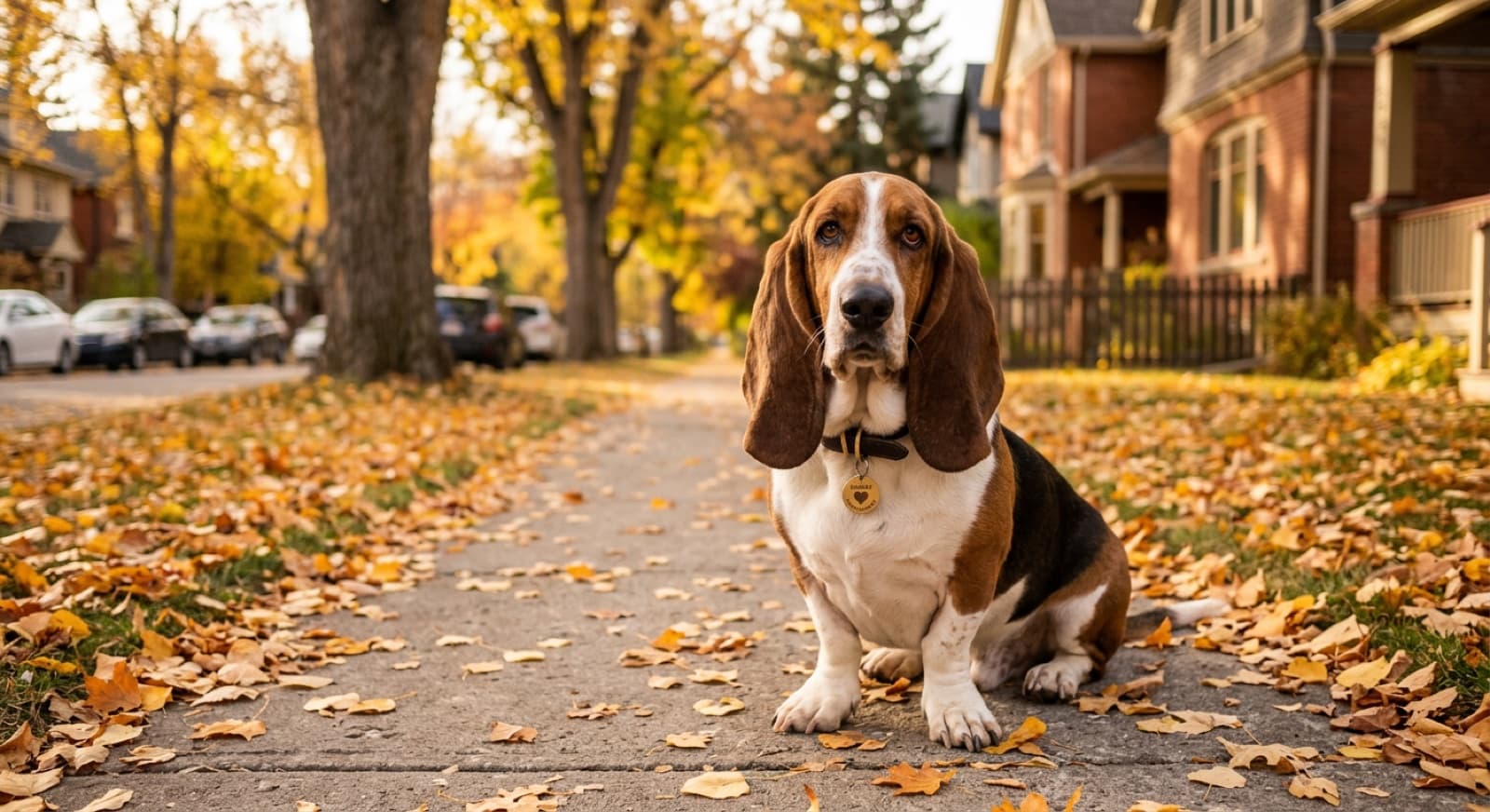
The Basset breed health picture, briefly
Bassets are a chondrodystrophic dwarf breed. The long body, short legs, and heavy bone come from a genetic mutation that also affects intervertebral disc cartilage. Lifespan averages 10 to 12 years, reasonable for a medium-to-large breed at 40 to 65 lb. Most Edmonton rescue Bassets arrive in functional health; the medical work is shaping the next decade with realistic weight discipline, an ear-care routine that becomes muscle memory, and a strong vet relationship.
The Basset prioritisation list is layered rather than dominated by a single condition. Obesity is the most powerful modifiable risk factor and deserves the same priority as any surgical condition because it multiplies the others. Chronic otitis externa is universal and lifelong. IVDD is meaningful in a chondrodystrophic breed though less catastrophic than in Dachshunds. Glaucoma is a 24 to 48 hour emergency that the breed is overrepresented for. Bloat (GDV) is a same-night emergency in a deep-chested low-bodied dog. Hip and elbow dysplasia, hypothyroidism, atopic dermatitis, drool-related dermatitis, von Willebrand Disease, patellar luxation, OCD in young dogs, and an elevated cancer load fill out the picture. Lafora disease is a rare breed-noted neurological concern.
Pet insurance enrolled in week one is the single highest-leverage health decision for a Basset. The breed stacks predictable lifetime claims: weekly ear cleaning is preventive but treatment of an acute flare runs $200 to $500, glaucoma surgery runs $3,000 to $6,000 per eye, IVDD decompression runs $5,000 to $10,000, bloat emergency surgery runs $5,000 to $10,000, hip replacement runs $7,000 to $10,000 per hip, and chronic allergy management adds $400 to $2,000 annually. Every Canadian provider excludes pre-existing conditions. The clock starts the day you adopt.
Obesity: the multiplier you can actually control
Obesity gets discussed first because it amplifies every other risk on the list. Extra weight loads the IVDD-prone back, accelerates hip and elbow arthritis, worsens chronic ear inflammation through systemic adipose-driven inflammation, complicates anaesthesia for any future surgery, and makes Edmonton winter mobility much harder for a low-bodied dog already prone to belly-dragging through snow. Bassets are exceptionally food-motivated (a breed trait, not a training failure) and their lower exercise requirement burns fewer calories than an active medium dog of similar weight. The result is one of the highest breed-prevalence rates of canine obesity.
Body condition scoring is more useful than the scale. Aim for body condition score 4 to 5 of 9: ribs felt easily without seeing them, visible waist from above, abdomen tucked from the side. Many Edmonton Basset owners genuinely do not realise the dog is overweight because the breed silhouette masks visual cues, and a 60 lb Basset at body condition 7 looks normal to an untrained eye.
Practical weight management:
- A 50 lb adult Basset typically needs 700 to 1,000 kcal daily depending on activity; consult your Edmonton vet for breed-and-dog-specific targets
- Treats no more than 10 percent of daily calories; the food-motivated Basset will accept training treats broken into thirds or quarters and not notice the smaller size
- Measure food by weight, not by volume; the difference between a level and a heaped cup is 20 to 30 percent
- Slow-feeder bowls and food puzzles extend meal time and add mental enrichment, which matters for a scent-driven breed
- Indoor enrichment for the winter months: snuffle mats, scent games, food puzzles, and gentle indoor work keep activity up when -25 to -30C cold limits outdoor walks
- If the dog is gaining despite calorie restriction, ask your vet about hypothyroidism testing before further dietary changes
- Skip table scraps entirely; Basset eyes are persuasive but a single human meal can be 30 to 50 percent of daily calorie budget
Reducing your Basset from body condition 7 to 5 may be the single most effective prevention step you take for IVDD, hip arthritis, and ear-flare frequency combined. The American Animal Hospital Association publishes weight management guidance at aaha.org.
Chronic otitis externa: the breed-defining ear reality
Chronic ear infections are the lifetime condition that defines Basset ownership. The mechanism is structural and unavoidable. The long heavy pendulous ears trap moisture and warmth, the narrow ventrally-angled ear canal limits air circulation, and the ear flap functions as a lid sealing in heat. Add breed-typical food allergies and atopic dermatitis that drive recurrent ear inflammation, and chronic otitis externa is the norm rather than the exception. Most Bassets will have multiple ear infections per year, and many will have continuous low-grade inflammation managed with maintenance cleaning rather than periodic flares.
The cycle is predictable: mild redness and head shaking, progression to discharge and odour, severe pain with secondary bacterial and yeast overgrowth, ruptured eardrums in untreated cases, and ultimately permanent canal stenosis requiring total ear canal ablation surgery at $4,000 to $7,000 per ear at an Edmonton specialty practice. Catching the cycle at the head-shaking stage costs $200 to $500 per flare. Letting it progress costs surgical correction.
The home routine that actually works:
- Weekly ear cleaning with a vet-recommended ear cleaner, no exceptions
- Thorough drying after baths, after rain, after wet-grass walks, and after any swim
- Lifting the ear flap once a day for a quick check during routine petting; you are looking for redness, discharge, odour, or scratching
- Same-week vet visit at the first sign of head shaking, scratching at the ear, or odour
- Cytology and culture-and-sensitivity testing when an infection is documented; do not let your vet treat empirically without cytology on a recurring case
- Deep ear flush under sedation at $400 to $700 for severe or refractory cases
- Annual dermatology consultation if infections recur more than 3 to 4 times per year, to evaluate for underlying atopic dermatitis or food allergy
The American College of Veterinary Dermatology (acvd.org) board-certifies the specialists who manage refractory cases. See our companion Basset ear care guide for the full weekly protocol and the cleaning technique that works without flooding the canal.
Intervertebral Disc Disease (IVDD) in a chondrodystrophic breed
Bassets are chondrodystrophic, the same dwarf-breed pattern that defines Dachshund IVDD risk. The intervertebral discs between vertebrae calcify abnormally from a young age instead of remaining flexible, and the long Basset back plus heavy front-end body mass adds mechanical load. Calcified discs are brittle and prone to herniation: the inner disc material extrudes into the spinal canal, compressing the spinal cord. The result is back pain, weakness, or paralysis depending on severity and location. Basset IVDD is less catastrophic than Dachshund IVDD overall but is meaningful in the breed; most cases present between 3 and 7 years of age.
IVDD is graded 1 to 5:
- Grade 1: Back pain only, no neurological deficits. Reluctant to move, hunched, sensitive to spinal palpation. Conservative management usually succeeds.
- Grade 2: Mild hindlimb weakness or ataxia (knuckling, wobbling) but still walking. Conservative management often succeeds; surgical consultation reasonable if no improvement.
- Grade 3: Cannot walk but can move the hindlimbs voluntarily. Surgical decompression strongly indicated.
- Grade 4: Complete hindlimb paralysis but deep pain sensation preserved. Surgical decompression urgent, ideally within 24 to 48 hours.
- Grade 5: Complete hindlimb paralysis with loss of deep pain sensation. The surgical window for the best outcome closes within 24 hours.
Surgical decompression (hemilaminectomy) by a board-certified veterinary neurologist or surgeon at an Edmonton or Calgary specialty practice runs $5,000 to $10,000 total including pre-operative MRI ($1,800 to $3,000) and post-operative hospitalisation. The American College of Veterinary Surgeons (acvs.org) board-certifies the relevant specialty. Add $500 to $2,000 for post-op rehabilitation. Conservative management of grade 1 and 2 cases costs $500 to $1,500 for medication, vet rechecks, and crate rest discipline.
Prevention follows the chondrodystrophic-breed playbook: ramps or stairs for all furniture and vehicle access (no jumping on or off the couch, no jumping into the truck bed or back of an SUV), a harness instead of a collar to spare the cervical spine, lean body condition (body condition 4 to 5 of 9), and modulated exercise (regular daily walks build supporting back musculature without high-impact trauma). See our companion Dachshund IVDD prevention article for the same principles applied to a related breed.
Browse adoptable Edmonton Bassets
Current Edmonton Basset Hound and Basset-mix listings. Foster notes flag any documented back history, weight status, ear condition, and dental needs. Plan a first-month vet workup that establishes spinal, ear, ophthalmologic, and metabolic baselines. A vet who sees Bassets regularly is the most important first-month decision.
See Available Bassets →Hip and elbow dysplasia in the heavy-frame body
Hip dysplasia is moderate to high prevalence in Bassets and elbow dysplasia is moderate. The heavy front-end Basset body mass loading lax hip joints predisposes the breed despite the small overall stature: the engineering load on each joint is closer to a 70 lb dog than a 50 lb one. Hip dysplasia is abnormal development of the hip joint that leads to arthritis over months to years. Elbow dysplasia is a related developmental condition of the elbow joint that presents as forelimb lameness.
Diagnosis is by radiographic grading through the Orthopedic Foundation for Animals (ofa.org) or PennHIP at an Edmonton clinic at $300 to $600 with sedation and films. Elbow dysplasia diagnosis sometimes requires CT or arthroscopy beyond plain radiographs.
Treatment depends on severity. Most mild-to-moderate cases manage with weight control, joint supplements (glucosamine, chondroitin, omega-3), anti-inflammatory medication (carprofen, meloxicam, or grapiprant) during flares, and structured low-impact exercise like leash walks and swimming rather than off-leash running. Severe cases benefit from femoral head ostectomy at $3,000 to $5,000, total hip replacement at $7,000 to $10,000 per hip, or elbow arthroscopy and fragment removal at $2,500 to $4,500 at an Edmonton or Calgary specialty practice. Bilateral hip surgery is staged 4 to 6 months apart. Weight control is the single most useful intervention for both conditions, which is why the obesity conversation runs through every chapter of Basset health.
Bloat (gastric dilatation-volvulus): a same-night emergency
Gastric dilatation-volvulus (bloat or GDV) is the acute condition where the stomach fills with gas and twists on itself, cutting off blood supply to the stomach wall and producing shock and death within hours if untreated. Bassets are not at giant-breed risk levels (Great Danes lead the literature) but the deep-chested low-bodied conformation places the breed at elevated risk relative to most medium dogs. Every Edmonton Basset owner should know the signs and have a 24-hour Edmonton emergency clinic pre-saved in their phone.
The reliable early sign is non-productive retching: the dog tries repeatedly to vomit but nothing comes up, the abdomen looks visibly distended (it may feel drum-tight to the touch), the dog is restless and pacing, drooling is excessive, and visible distress is unmistakable. Any of these in a Basset is a same-night emergency, not a wait-and-see, and not a call-the-clinic-in-the-morning. Drive straight to the 24-hour emergency clinic.
Emergency surgical correction at an Edmonton 24-hour clinic runs $5,000 to $10,000 with mortality even with prompt surgery. Time to surgery is the single biggest predictor of survival.
Prophylactic gastropexy (surgical tacking of the stomach to the body wall to prevent the twist; often performed at the same time as spay or neuter, or laparoscopically as a separate procedure) runs $1,500 to $3,000 and is one of the higher-value preventive surgeries for the breed. The procedure does not prevent gas dilation but eliminates the life-threatening twist component. Ask your Edmonton vet about gastropexy at the first visit, particularly for a young intact Basset and for any Basset with siblings or parents documented as bloat affected.
Risk-reduction habits: feed two or three smaller meals daily rather than one large meal, use a slow-feeder bowl, avoid heavy exercise within an hour of feeding (no fetch right after dinner), avoid bowls elevated off the ground (older advice favoured raised bowls but the literature now suggests the opposite), and do not let an anxious or restless dog eat alone or fast. Manage household stress around mealtime.
Eye disease: glaucoma, cherry eye, entropion, ectropion
Glaucoma (the 24 to 48 hour emergency)
Bassets are one of the most overrepresented breeds in the veterinary literature for primary (inherited) glaucoma. The disease is elevated pressure inside the eye that damages the optic nerve and causes permanent blindness if untreated. Acute glaucoma is a 24 to 48 hour emergency: pressure must come down within hours to save vision. Presentation is a painful red eye, often with squinting, cloudiness, a dilated unresponsive pupil, behavioural pain signs (the dog is withdrawn, off food, may resent any head touch), and in advanced cases visible eye enlargement.
Diagnosis is by intraocular pressure measurement at any vet with a tonometer ($50 to $100 for the exam). Treatment includes topical pressure-lowering medications at $30 to $80 monthly and sometimes surgical cyclophotocoagulation or gonioimplantation at an Edmonton or Calgary ophthalmology specialty practice at $3,000 to $6,000 per eye. End-stage blind painful eyes benefit from enucleation at $1,800 to $3,500 per eye, and most Bassets adapt remarkably well to monocular or binocular blindness in a familiar home.
The critical reality: the contralateral (other) eye almost always develops glaucoma within months to two years of the first. Prophylactic medical management of the second eye is standard of care once the first eye is diagnosed, and annual ophthalmology exams from age three are the standard breed-screening recommendation. The American College of Veterinary Ophthalmologists (acvo.org) board-certifies the surgeons who perform glaucoma procedures.
Cherry eye
Cherry eye is prolapse of the third-eyelid gland and is common in Bassets, often bilateral over time. The gland slips out of position behind the third eyelid and appears as a pink or red lump in the inner corner of the eye. Treatment is surgical repositioning at $600 to $1,200 per eye at an Edmonton clinic. Modern standard-of-care preserves the gland (tucking or pocket procedure) rather than excising it; gland removal predisposes the dog to lifelong dry eye requiring topical cyclosporine for life. Confirm with your Edmonton vet that the surgical approach repositions rather than removes.
Entropion and ectropion
Entropion (eyelid rolling inward) and ectropion (eyelid drooping outward) both occur in Bassets because of the loose facial conformation and heavy lower lid. Entropion causes corneal irritation as eyelashes contact the cornea, producing corneal ulcers and pain. Ectropion exposes the conjunctiva to drying and infection. Both are surgically correctable at $1,500 to $3,500 per eye at an Edmonton general practice and $2,500 to $4,500 at specialty ophthalmology. Severe cases may require staged procedures, particularly in young dogs whose facial conformation is still developing. Keratoconjunctivitis sicca (dry eye) and age-related cataracts add to the late-life eye picture and benefit from annual ophthalmology checks from middle age forward.
Atopic dermatitis and drool-related facial-fold dermatitis
Atopic dermatitis is the chronic itchy skin disease driven by environmental allergens (dust mites, pollens, moulds) and food sensitivities. Bassets carry moderate prevalence, and atopic dermatitis is one of the primary drivers of recurrent ear infections in the breed. Presentation is chronic licking, scratching, recurrent ear infections, recurrent paw and skin infections, and reddened skin in the armpits, belly, and feet.
Diagnosis is by exclusion of parasitic and infectious causes plus intradermal or serum allergy testing at an Edmonton dermatology specialty practice. Treatment uses a stepwise approach: topical medicated shampoos and conditioners ($30 to $80 monthly), Apoquel or Cytopoint to control acute itch ($80 to $200 monthly), and allergy-specific immunotherapy (sublingual drops or injections) for long-term management ($60 to $150 monthly). Food trials using novel-protein or hydrolysed-protein prescription diets identify food allergies in a subset of cases. Annual cost typically runs $400 to $2,000 once management is stable. Insurance enrolled before any documented skin or ear condition covers the lifetime claim load; insurance enrolled afterward permanently excludes atopy.
Drool-related facial-fold dermatitis is a Basset-specific concern. The heavy jowls and loose lower lip allow chronic moisture, drool, and food residue to collect along the lip folds and the area below the lower jaw, allowing secondary bacterial infection to develop. Heavier-jowled dogs are more affected.
Prevention is daily and simple: wipe the facial folds and the area below the lower jaw with a damp cloth after meals and water bowl trips, particularly for dogs that drink messily. Treatment of an established fold infection is topical antibacterial preparation plus addressing the moisture cycle. Watch for ulcerated reddened skin in the lip fold and persistent unpleasant odour from the muzzle area.
Hypothyroidism, cancer, and senior cardiac concerns
Hypothyroidism
Hypothyroidism is common in middle-aged and senior Bassets. Symptoms cluster around metabolism: weight gain despite stable diet, lethargy beyond normal Basset baseline, recurrent skin and ear infections (which then drive frustrating treatment cycles if the root cause is missed), hair loss particularly on the flanks and tail, dull or oily coat, and cold intolerance which Edmonton winter makes obvious. Diagnosis uses a full thyroid panel rather than total T4 alone (free T4 by equilibrium dialysis, TSH, and thyroglobulin autoantibody) at an Edmonton clinic at $200 to $350. Treatment is daily oral levothyroxine at $25 to $50 monthly with rechecks at 4 to 6 weeks initially, then twice-yearly once stable. Most treated dogs recover normal energy, coat quality, and skin health within 4 to 8 weeks. Rule out hypothyroidism before any weight management programme in a Basset that is gaining despite calorie restriction.
Cancer load
Bassets carry moderate cancer load relative to the dog population, with lymphoma and mast cell tumours documented at elevated rates. Lymphoma typically presents as enlarged peripheral lymph nodes (under the jaw, in front of the shoulders, behind the knees) detected on routine palpation or by the owner. CHOP chemotherapy at an Edmonton oncology specialty practice runs $6,000 to $10,000 over 19 to 25 weeks with median survival of 12 months. Mast cell tumours present as new skin lumps that may change size, redden, or ulcerate; aspirate any new lump rather than watching it. Surgical excision with appropriate margins at $1,200 to $3,000 cures most low-grade mast cell tumours. Edmonton oncology specialty referrals route through your general vet.
Senior cardiac auscultation
Senior Bassets, like many breeds, develop mitral valve disease at moderate rates: progressive thickening and incompetence of the mitral valve produces a heart murmur first, then exercise intolerance, then signs of congestive heart failure if the disease advances. Annual cardiac auscultation by your Edmonton vet from middle age forward catches the disease early. A documented murmur warrants cardiology referral for echocardiogram and staging ($500 to $900). Pimobendan (Vetmedin) at $80 to $200 monthly is the standard medication for stage B2 and onward; furosemide and ACE inhibitors are added as needed. Most cases progress slowly and Bassets often live years with a documented murmur before any clinical signs develop.
vWD, Lafora disease, patellar luxation, and OCD in young Bassets
von Willebrand Disease (a clotting disorder)
von Willebrand Disease (vWD) is an inherited bleeding disorder documented at moderate prevalence in Bassets. The disease is caused by reduced or dysfunctional von Willebrand factor, a protein involved in platelet adhesion at the start of blood clotting. Many affected dogs show no clinical signs day to day but bleed excessively during surgery, dental cleanings, or after a traumatic injury. DNA testing is available from veterinary genetics labs at $80 to $150 and screens pre-surgically. A buccal mucosal bleeding time test at an Edmonton clinic is the older functional screening method. Affected dogs benefit from desmopressin (DDAVP) administration before any planned surgery and may need fresh frozen plasma transfusion if significant bleeding develops. Ask your Edmonton vet about vWD screening as part of the first-year workup for any Basset, particularly before any planned surgery (spay or neuter, gastropexy, dental cleaning with extractions).
Lafora disease
Lafora disease is an inherited progressive neurological disease noted in Bassets and several other breeds. The disease causes abnormal accumulation of polyglucosan bodies in nervous tissue, producing recurrent myoclonic seizures (sudden brief muscle jerks, often triggered by light, sound, or movement) typically beginning at 5 to 7 years of age. Diagnosis is by genetic testing from a veterinary genetics lab. Management includes anti-seizure medication and triggering avoidance. Progression is variable. Lafora is rare in Bassets compared to wire-haired Dachshunds (where it is much more common), but worth knowing about if your Basset develops adult-onset seizures or visible muscle jerks.
Patellar luxation
Patellar luxation (kneecap dislocation) is moderate prevalence in Bassets. The kneecap slips out of its groove during movement, producing a characteristic intermittent hindlimb skip where the dog hops on three legs for a few steps and then resumes normal walking. Grades 1 and 2 (mild) often need no treatment beyond weight management and avoiding rough play. Grades 3 and 4 (moderate to severe) benefit from surgical correction at an Edmonton specialty practice at $3,000 to $5,000 per knee. Diagnosis is by physical exam and confirmed by radiographs.
Osteochondritis dissecans (OCD)
OCD presents in young rapidly-growing Bassets (typically 5 to 12 months of age) as forelimb or shoulder lameness. The condition is a developmental disorder of joint cartilage where a fragment of cartilage detaches from the underlying bone. Diagnosis is by radiographs, sometimes with CT or arthroscopy for definitive imaging. Mild cases manage with strict rest and controlled exercise; moderate to severe cases benefit from arthroscopic fragment removal at $2,500 to $4,500. Controlled large-breed-puppy diets, avoidance of high-impact exercise before growth plates close (around 12 to 14 months), and lean body condition reduce OCD risk in young Bassets. Most rescue Bassets are past the OCD-risk window by the time they arrive in adoption, but a puppy or young adolescent placement deserves a baseline ortho check.
Edmonton specialty veterinary access
Edmonton has solid general-practice veterinary coverage for Bassets, and the breed is common enough that most clinics see Bassets regularly. For routine care (annual physical, vaccinations, dental, bloodwork, weight management, ear care guidance), any reputable Edmonton clinic is a fine starting point. For Basset-specific specialty work, the picture varies by discipline.
Edmonton ophthalmology and dermatology
These are the two highest-use Basset specialty pathways and Edmonton has reasonable board-certified capacity in both. Acute glaucoma is the most time-sensitive Basset eye emergency: pre-save the contact info for an Edmonton ophthalmology practice and a 24-hour clinic that can run a tonometry reading after hours. Refractory chronic otitis externa cases benefit from dermatology consultation for underlying atopy workup.
Edmonton neurology and surgery
Edmonton has limited board-certified veterinary neurosurgical capacity, and the most complex IVDD decompressions (grade 4 and 5 cases with paralysis) sometimes route to Calgary specialty centres or to WCVM Saskatoon. Your general-practice vet handles triage and refers. Ask your primary vet (before any incident) which neurology referral pathway they use for chondrodystrophic-breed IVDD, and write down the answer.
WCVM Saskatoon
The Western College of Veterinary Medicine at the University of Saskatchewan is the closest full veterinary teaching hospital, about five and a half hours each way from Edmonton. WCVM handles complex Basset referrals beyond local Edmonton capacity, particularly grade 4 and 5 IVDD cases needing immediate surgical intervention, advanced oncology, and complex ophthalmology. The University of Alberta does not have a veterinary school, which is why Saskatoon is the closest academic referral. For grade 5 paralysis emergencies, many Edmonton vet teams advise stabilisation and a faster surgical referral to Calgary instead.
Building your network in month one
The practical move when you adopt a Basset: establish a primary Edmonton vet in the first month, ask specifically which neurology, ophthalmology, and dermatology specialists they refer Bassets to, and pre-save the contact info for at least one 24-hour Edmonton emergency clinic. Bassets stack predictable emergencies (glaucoma, bloat, acute IVDD) where minutes to hours matter; knowing the referral pathway before the incident cuts response time and improves outcomes.
Pet insurance for an Edmonton Basset Hound
Week-one pet insurance enrolment is the single highest-leverage health decision for any rescue Basset. Every Canadian provider excludes pre-existing conditions, which means the day a vet documents anything (an ear infection, back pain, a heart murmur, elevated thyroid antibody, mild lameness, atopy), that condition becomes a permanent exclusion on any policy enrolled afterward. The clock starts the day you adopt.
The Basset-specific value math is exceptional because the lifetime claim load is unusually layered:
- Glaucoma medical workup and surgical management: $3,000 to $6,000 per eye, often bilateral over time
- IVDD MRI plus surgical decompression: $5,000 to $10,000 per episode
- Bloat (GDV) emergency surgery: $5,000 to $10,000 per episode
- Prophylactic gastropexy: $1,500 to $3,000 (one-time, often performed at spay or neuter)
- Hip dysplasia management: surgical $3,000 to $10,000 per hip
- Cherry eye correction: $600 to $1,200 per eye, often bilateral
- Entropion or ectropion correction: $1,500 to $4,500 per eye
- Chronic ear infection flares: $200 to $500 per flare, often 3 to 6 times annually until allergy management stable
- Atopic dermatitis ongoing management: $400 to $2,000 annually
- Total ear canal ablation (refractory end-stage otitis): $4,000 to $7,000 per ear
- Lymphoma CHOP chemotherapy: $6,000 to $10,000
- Dental cleanings: $400 to $800 annually
Read coverage clauses carefully before enrolling. Some Canadian pet insurance policies have specific exclusions or sub-limits on IVDD, hereditary eye conditions, or chronic otitis despite covering “hereditary conditions” in general terms. The exclusion may be buried in appendices. Ask the carrier explicitly: “Does this policy cover IVDD, primary glaucoma, and chronic otitis externa in a Basset Hound without separate exclusion or sub-limit?” A typical Basset pet insurance policy in Edmonton runs $55 to $95 monthly depending on deductible, reimbursement percentage, and coverage limits.
What to look for in a Basset policy:
- Hereditary and congenital conditions explicitly covered with no IVDD, glaucoma, or otitis-specific exclusion or sub-limit
- Annual coverage caps of $15,000 or more (the Basset claim stack can exceed lower caps)
- Coverage for diagnostic imaging including MRI (IVDD diagnosis depends on it)
- Reasonable wait times for hereditary and orthopaedic conditions (typically 14 to 30 days)
- Chronic-condition coverage for ongoing atopy and ear management
Compare three to four providers before enrolling. The American Animal Hospital Association publishes general guidance on pet insurance evaluation that applies to Canadian providers. Your Edmonton vet and your foster contact can both share which providers other Basset adopters have used and what their claim experience has been, particularly for glaucoma and IVDD claims.
Adoption health workup: what the rescue covers vs what you re-screen
Edmonton rescues do a baseline vet workup before adoption, but the depth varies by rescue and by individual dog. Understanding what is and is not covered helps you plan the first-month vet visit, which for a Basset should explicitly establish ear, ophthalmologic, spinal, orthopaedic, and metabolic baselines.
What most Edmonton rescues cover
- Physical exam by a vet at intake, including ear and spinal palpation
- Core vaccinations (DAPP and rabies, sometimes Bordetella if boarded)
- Spay or neuter surgery
- Microchip implant and registration
- Deworming and flea and tick treatment
- Basic adult bloodwork (CBC and chemistry panel) in many cases
- Treatment of any acute concerns identified at intake, often including ear infection treatment
- Occasionally, dental assessment with cleaning if visibly needed
What is usually NOT covered (and what to plan for)
- Spinal radiographs as a baseline (not routinely done unless symptomatic)
- Specialty neurology consultation
- MRI imaging
- Hip and elbow radiographic grading through OFA or PennHIP
- Full thyroid panel for dogs over two
- Intraocular pressure measurement as a glaucoma baseline
- Comprehensive eye exam by a board-certified veterinary ophthalmologist
- Ear cytology and culture-and-sensitivity testing on a previously documented infection
- von Willebrand Disease DNA or functional testing
- Body condition scoring conversation and weight management plan
- Dental radiographs and full periodontal probing
Plan a first-month vet visit with your chosen Edmonton vet that establishes the Basset baseline. The standard ask: a careful ear assessment with cytology if any inflammation is visible, intraocular pressure measurement on both eyes as a glaucoma baseline, careful spinal palpation and neurological exam, hip and elbow assessment by physical exam (with radiographs if any lameness or stiffness is noted), thorough dental assessment, body condition scoring with a realistic weight target, baseline thyroid panel, and a frank conversation about referral pathways for glaucoma, IVDD, and bloat. If the dog is 5 or older, add baseline senior bloodwork including liver enzymes and urinalysis. If the rescue can share intake imaging, bloodwork, or vet notes, bring them.
For senior Bassets (eight years and up), the first-month workup is more involved: full senior bloodwork, urinalysis, baseline thyroid panel, careful cardiac auscultation with low threshold to refer for echocardiogram, dental evaluation, ophthalmology baseline including tonometry, and a thorough body-fold skin check. Budget $500 to $1,200 for the senior intake workup at an Edmonton clinic.
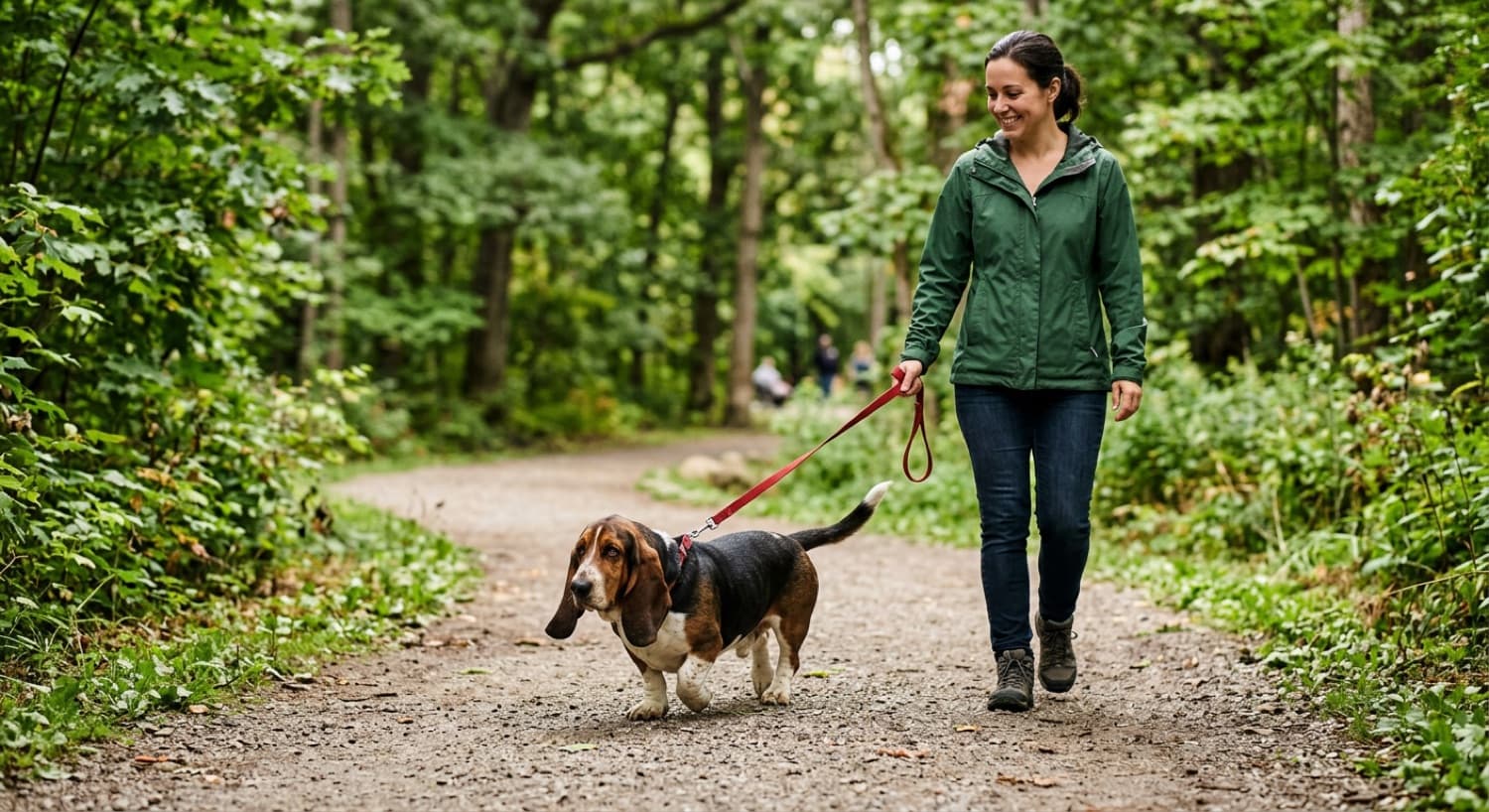
Senior Basset Hound health after age eight
Bassets reach senior status around age 8, with most living 10 to 12 years and some reaching 13 or 14 in good general health. Senior Basset adoption is a rewarding placement: the dogs are typically past the IVDD-peak years of 3 to 7, the ear management routine is established, the temperament has settled, and the bond with a new attentive home is often deep and immediate.
Reasonable senior-care adjustments, all guided by your Edmonton vet:
- Biannual vet exams instead of annual
- Full annual senior bloodwork including liver enzymes and urinalysis
- Annual ophthalmology check (glaucoma surveillance becomes more important with age)
- Annual cardiac auscultation with low threshold to refer for echocardiogram
- Periodic thyroid panel rechecks
- Routine dental care including professional cleanings every 12 to 18 months
- Joint support (glucosamine, chondroitin, omega-3) and prescription anti-inflammatories during arthritis flares
- Tight weight monitoring (overweight senior Bassets do worse on every front including IVDD, hip arthritis, and ear flare frequency)
- Strict no-jumping habits, ramps for all furniture and vehicle access, traction rugs on hardwood, and a low orthopaedic bed
- Climate comfort: a warm coat for Edmonton -25 to -30C cold snaps, cleared paths to avoid belly-dragging through deep snow, and salt-free paws on return
- Increased lump monitoring (mast cell tumours and lipomas both increase in frequency from middle age)
- Continued weekly ear care, with same-week vet visit at any flare given thinner senior tissue
Some senior Bassets develop canine cognitive dysfunction, with disorientation, anxiety, or sleep changes. Your vet can advise on management options ranging from environmental adjustments to prescription medications.
Pet insurance becomes harder and more expensive to obtain for first-time enrolment past age eight, and some providers will not enrol senior Bassets at all (particularly those with documented spinal, ear, or eye findings). If you adopt a senior Basset, price-compare carefully and consider whether a dedicated savings account makes more sense than insurance. Talk through the math with your vet at the first visit, and discuss honest quality-of-life conversations early; for many senior Bassets, the eventual choice is calm comfortable years rather than aggressive intervention.
Frequently asked questions
Where can I find a vet for a Basset Hound near me in Edmonton?
Any reputable Edmonton general-practice clinic can handle routine Basset Hound care, and the breed is common enough that most clinics see Bassets regularly. At your first visit ask whether the vet has experience managing the breed-defining triad: chronic ear infections, weight control in a food-motivated chondrodystrophic dog, and IVDD recognition in a long-backed breed. For specialty work, ask which Edmonton practices your general vet refers Bassets to for ophthalmology (glaucoma is a Basset-overrepresented emergency), dermatology (chronic otitis externa), neurology and surgery (IVDD imaging and decompression), and internal medicine (Cushings, hypothyroidism, thyroid panels). Edmonton has limited board-certified veterinary neurosurgical capacity, so complex IVDD decompressions sometimes route to Calgary specialty centres or to the Western College of Veterinary Medicine in Saskatoon. Pre-save at least one 24-hour Edmonton emergency clinic in your phone now: acute glaucoma blinds within 24 to 48 hours, bloat kills within hours, and grade 4 to 5 IVDD has a 24 to 48 hour surgical window. The American College of Veterinary Internal Medicine board-certifies the relevant specialty for endocrine and immune-mediated disease.
What are the main Basset Hound health issues to know before adopting?
Bassets carry a recognisable health profile shaped by chondrodystrophic dwarfism, ear anatomy, food motivation, and breed-specific genetic disease patterns. In rough order of practical importance: obesity (very high prevalence and the dominant modifiable risk multiplier for every other condition), chronic otitis externa (lifelong ear-infection management driven by long heavy ears and a narrow ventral canal), intervertebral disc disease (Bassets are chondrodystrophic like Dachshunds with elevated IVDD risk), hip and elbow dysplasia (moderate to high prevalence), glaucoma (Basset-overrepresented eye emergency), bloat or gastric dilatation-volvulus (deep-chested anatomy), cherry eye, entropion and ectropion, atopic dermatitis and allergies, hypothyroidism, drool-related facial-fold dermatitis, von Willebrand Disease (a clotting disorder, screen before surgery), patellar luxation, osteochondritis dissecans in young dogs, and an elevated cancer load with lymphoma and mast cell tumours documented. Lafora disease is a Basset-noted rare neurological concern. Lifespan averages 10 to 12 years, reasonable for a medium-to-large breed. Week-one pet insurance enrolment matters because back, ear, eye, and orthopaedic claims stack across the lifetime.
How serious is IVDD in Basset Hounds?
Serious. Bassets are chondrodystrophic, the same dwarf-breed pattern that drives extreme IVDD risk in Dachshunds. The intervertebral discs between vertebrae calcify abnormally from a young age instead of remaining flexible, and the long Basset back plus heavy front-end body mass adds mechanical load. The result is elevated lifetime risk of acute disc herniation: the inner disc material extrudes into the spinal canal, compressing the spinal cord, producing back pain, hindlimb weakness, knuckling, or complete paralysis depending on severity. Most cases present between 3 and 7 years of age. IVDD is graded 1 to 5 (pain only through complete paralysis with loss of deep pain sensation). Grades 1 and 2 often respond to conservative management (8 weeks strict crate rest plus medication). Grades 3 to 5 typically need surgical decompression at an Edmonton or Calgary specialty centre, ideally within 24 to 48 hours of paralysis onset for the best functional recovery. See our companion Dachshund IVDD article for the same chondrodystrophic prevention principles: ramps over jumps, harness over collar, lean body condition, and disciplined no-jumping household habits. The American College of Veterinary Surgeons board-certifies the surgeons who perform spinal decompression.
Why are chronic ear infections such a big deal in Bassets?
Because the ear anatomy is breed-defining. The long heavy pendulous ears trap moisture and warmth, the narrow ventrally-angled ear canal limits air circulation, and the ear flap acts as a lid sealing in heat. Add the breed-typical food allergies and atopic dermatitis that drive recurrent ear inflammation, and chronic otitis externa is the lifetime norm rather than the exception. The cycle starts with mild redness and head shaking, progresses to discharge and odour, then to severe pain, secondary bacterial and yeast overgrowth, ruptured eardrums, and in untreated cases permanent canal stenosis requiring total ear canal ablation surgery at $4,000 to $7,000 per ear at an Edmonton specialty practice. Routine prevention is weekly cleaning with a vet-recommended ear cleaner, thorough drying after baths or any wet-weather walk, and an immediate vet visit at the first sign of head shaking, scratching at the ear, or odour. See our companion Basset ear care guide for the full weekly protocol and the cleaning technique that works without flooding the canal. The American College of Veterinary Dermatology board-certifies the specialists who manage refractory cases.
Why is obesity so dangerous for a Basset Hound?
Obesity multiplies almost every other risk the breed carries. The mechanism is mechanical and metabolic: extra weight loads the long IVDD-prone back and the dysplastic hips and elbows, accelerates orthopaedic arthritis, worsens chronic ear inflammation by adding adipose-driven systemic inflammation, increases anaesthetic risk for any future surgery, and makes Edmonton winter mobility much harder for a low-bodied dog already prone to belly-drag through snow. Bassets are exceptionally food-motivated, and their lower exercise requirement burns fewer calories than a comparable-sized active breed. The result is one of the highest breed-prevalence rates of canine obesity. Body condition score 4 to 5 of 9 is the target: ribs felt easily without seeing them, visible waist from above, abdomen tucked from the side. The Association for Pet Obesity Prevention publishes visual scoring guides you can use at home. A 50 lb adult Basset typically needs 700 to 1,000 kcal daily depending on activity level, and treats should be no more than 10 percent of that. Measure food by weight, not by volume. If your Basset is gaining despite calorie restriction, ask your vet about hypothyroidism testing before changing the diet further.
How worried should I be about bloat (GDV) in a Basset?
Worried enough to know the signs and have a 24-hour Edmonton emergency clinic pre-saved. Gastric dilatation-volvulus (bloat or GDV) is the acute condition where the stomach fills with gas and twists on itself, cutting off blood supply and causing shock and death within hours if untreated. Bassets are not at the giant-breed levels seen in Great Danes, but the deep-chested low-bodied conformation puts the breed at elevated risk relative to most medium dogs. The reliable early sign is non-productive retching: the dog tries to vomit repeatedly but nothing comes up, the abdomen looks distended, the dog is restless and visibly uncomfortable, drool and pacing are common. Any of these in a Basset is a same-night emergency, not a wait-and-see. Emergency surgical correction at an Edmonton 24-hour clinic runs $5,000 to $10,000 with mortality even with prompt surgery. Prophylactic gastropexy (surgical tacking of the stomach to the body wall to prevent the twist; often performed at the same time as spay or neuter) runs $1,500 to $3,000 and is one of the higher-value preventive surgeries for the breed. Ask your Edmonton vet about gastropexy at the first visit, particularly for a young intact Basset. Risk-reduction habits: feed two or three smaller meals daily, use a slow-feeder bowl, avoid heavy exercise within an hour of feeding, and avoid bowls elevated off the ground.
What about hip dysplasia and other orthopaedic concerns?
Hip dysplasia is moderate to high prevalence in Bassets and elbow dysplasia is moderate. Hip dysplasia is the abnormal development of the hip joint that leads to arthritis over time; the heavy front-end Basset body mass loading lax hips makes the breed predisposed despite the small overall stature. Diagnosis is by radiographic grading through the Orthopedic Foundation for Animals (OFA, ofa.org) or PennHIP at an Edmonton clinic at $300 to $600 with sedation and films. Treatment depends on severity: most mild-to-moderate cases manage with weight control, joint supplements, anti-inflammatory medication during flares, and structured low-impact exercise. Severe cases benefit from femoral head ostectomy at $3,000 to $5,000 or total hip replacement at $7,000 to $10,000 per hip at an Edmonton or Calgary specialty practice. Elbow dysplasia presents as forelimb lameness and is diagnosed by radiographs plus CT or arthroscopy. Patellar luxation is moderate prevalence and graded 1 to 4. Osteochondritis dissecans (OCD) presents in young rapidly-growing Bassets as forelimb or shoulder lameness, managed with rest in mild cases and arthroscopic fragment removal in moderate to severe ones. Weight control is the single most useful intervention for all of these, which is why the obesity conversation is so central.
How serious is glaucoma in Bassets?
Serious and time-critical. Bassets are one of the most overrepresented breeds in the veterinary literature for primary (inherited) glaucoma. The disease is elevated pressure inside the eye that damages the optic nerve and causes permanent blindness if untreated. Acute glaucoma is a 24 to 48 hour emergency: pressure must come down within hours to save vision. Presentation is a painful red eye, often with squinting, cloudiness, a dilated unresponsive pupil, behavioural pain signs (the dog is withdrawn, off food, may resent head touch), and in advanced cases visible eye enlargement. Diagnosis is by intraocular pressure measurement at any vet with a tonometer ($50 to $100 for the exam). Treatment includes topical pressure-lowering medications at $30 to $80 monthly and sometimes surgical cyclophotocoagulation or gonioimplantation at an Edmonton or Calgary ophthalmology specialty practice at $3,000 to $6,000 per eye. End-stage blind painful eyes benefit from enucleation at $1,800 to $3,500 per eye. The contralateral eye almost always develops glaucoma within months to two years of the first, so prophylactic medical management of the second eye is standard of care once the first eye is diagnosed. The American College of Veterinary Ophthalmologists (acvo.org) board-certifies the surgeons. Annual ophthalmology exam from age three is the standard breed-screening recommendation.
What other eye problems do Bassets get?
Cherry eye is the colloquial name for prolapse of the third-eyelid gland and is common in Bassets, often bilateral. The gland slips out and appears as a pink lump in the inner corner of the eye. Treatment is surgical repositioning at $600 to $1,200 per eye; modern standard-of-care preserves the gland rather than excising it (gland removal predisposes the dog to lifelong dry eye). Confirm with your Edmonton vet that the surgical approach tucks rather than removes. Entropion (eyelid rolling inward) and ectropion (eyelid drooping outward) both occur in Bassets because of the loose facial conformation and heavy lower lid. Entropion causes corneal irritation as eyelashes contact the cornea; ectropion exposes the conjunctiva to drying and infection. Both are surgically correctable at $1,500 to $3,500 per eye at an Edmonton general practice and $2,500 to $4,500 at specialty ophthalmology. Keratoconjunctivitis sicca (dry eye) is moderate prevalence and managed with topical cyclosporine for life. The breed also has moderate cataract rates that can develop with age or alongside diabetes. Annual ophthalmology checks become increasingly valuable from middle age forward.
Do Bassets have skin and allergy problems?
Yes, moderate prevalence and worth planning for. Atopic dermatitis is the chronic itchy skin disease driven by environmental allergens (dust mites, pollens, moulds) and food sensitivities. Presentation is chronic licking, scratching, recurrent ear infections (cross-referenced above), recurrent skin and paw infections, and reddened skin in the armpits, belly, and feet. Diagnosis is by exclusion of parasitic and infectious causes plus intradermal or serum allergy testing at an Edmonton dermatology specialty practice. Treatment uses a stepwise approach: topical medicated shampoos and conditioners ($30 to $80 monthly), Apoquel or Cytopoint to control acute itch ($80 to $200 monthly), and allergy-specific immunotherapy (sublingual drops or injections) for long-term management ($60 to $150 monthly). Annual cost typically runs $400 to $2,000. Bassets also develop a breed-specific drool-related dermatitis along the lip folds and chin where chronic moisture and food residue allow secondary bacterial infection: daily wiping of the facial folds with a damp cloth is the prevention. Watch for ulcerated reddened skin in the lip fold and the area below the lower jaw, particularly in heavier-jowled dogs.
How is hypothyroidism handled in Bassets?
Common, easily managed once diagnosed, and worth screening for in the breed. Hypothyroidism is the underactive thyroid condition that develops in many Bassets over middle age. Clinical signs cluster around metabolism: weight gain despite stable diet, lethargy beyond normal Basset baseline, recurrent skin and ear infections (which then drive frustrating treatment cycles if the root cause is missed), hair loss particularly on the flanks and tail, dull or oily coat, and cold intolerance which Edmonton winter makes obvious. Diagnosis uses a full thyroid panel rather than total T4 alone (free T4 by equilibrium dialysis, TSH, and thyroglobulin autoantibody) at an Edmonton clinic at $200 to $350. Treatment is daily oral levothyroxine at $25 to $50 monthly with bloodwork at 4 to 6 weeks initially, then twice-yearly once stable. Most treated dogs recover normal energy, coat quality, and skin health within 4 to 8 weeks of starting medication. A Basset with chronic ear infections, chronic skin infections, or weight gain despite reasonable calorie restriction deserves a full thyroid workup before assuming the root cause is dietary or environmental. The American College of Veterinary Internal Medicine board-certifies the relevant internal-medicine specialty.
Related Edmonton Basset Hound guides
Edmonton Adoptable Dogs
Current Edmonton-area Basset and Basset-mix listings from SCARS, Zoe's, EHS, GEARS, Hope Lives Here, AHHRB, and AARCS Edmonton fosters.
Basset Hound Adoption Edmonton
Rescue sources, real adoption costs, Basset vs Basset-mix availability, surrender patterns, and the breed-vs-buy reframe for Edmonton adopters.
Basset Recall and Scent Drive Edmonton
Why Basset recall fails on a scent line, the Edmonton long-line protocol for river-valley trails, and how to build conservative off-leash habits in a nose-led hound.
Basset Ear Care Edmonton
The weekly cleaning protocol that prevents chronic otitis, the early-warning signs of a flare, and the Edmonton dermatology referral path for refractory cases.
Find your Edmonton rescue Basset
Browse current Edmonton-area Basset Hound and Basset-mix listings. Foster temperament notes help you flag any documented back history, weight status, ear condition, or eye history before you apply, and your first-month vet workup builds the spinal, ear, ophthalmologic, and metabolic baseline that protects the next decade.
Browse All Edmonton Dogs →New dog? Start with these care guides
Everything a new adopter needs to set up a safe, happy home.