The short answer
Bath every 4 to 8 weeks max (longer in Edmonton dry winter). Over-bathing strips natural oils and makes Bassets smell WORSE, not better. Weekly ear cleaning is non-negotiable: the breed-defining grooming task. Long pendulous ears + narrow canal + hair growth = chronic infections in most Bassets without weekly cleaning. Daily 5 to 10 minute routine: jowl wipe, skin fold check, eye corners, paw inspection. Drool is genetic and cannot be eliminated; manage with towels at every door and post-meal wipe-downs. Anal glands often need expression every 4 to 8 weeks. Nails every 3 to 4 weeks (outsourcing is fine). NEVER shave; the double coat regulates temperature in both seasons. The “constantly smelly Basset” is almost always a medical issue (ears, folds, glands, dental), not just the breed. Edmonton winter compounds skin dryness and interdigital cyst risk; daily paw care is non-negotiable through November to March.
Why Bassets smell (and when it is medical)
All Bassets have a natural mild “houndy” smell. That is the breed. Mild musky body odour, slightly stronger after exercise, slight oily smell from healthy skin. Acceptable. Does not change much over time.
Beyond breed-normal is medical. The “constantly smelly Basset” most Edmonton owners describe is almost always one or more chronic medical issues, not just the breed.
Common Edmonton Basset odour culprits in order of frequency:
- Ear infections (most common breed complaint)
- Skin fold dermatitis
- Anal gland impaction
- Dental disease
- Yeast skin infection
- UTI
- Allergies (chronic ongoing low-level inflammation produces stronger body odour)
The investigative approach: identify WHERE the smell originates (mouth, ear, fold, paw, anal area, all-over body). Each location has typical causes. The AKC Basset Hound breed profile describes the breed as “charming, patient, low-key” without foregrounding the daily grooming reality. The breed-club community is more honest: every Basset owner needs a daily wipe-down routine and weekly ear cleaning.
The over-bathing trap
Bath every 4 to 8 weeks max (longer in Edmonton dry winter). Over-bathing strips natural oils and makes Bassets smell WORSE through compensatory oil overproduction.
Bassets have natural skin oils that protect coat and skin health. Over-bathing strips these oils, which causes dry itchy skin, dandruff, increased shedding, and ironically MORE odour as the skin overproduces oil to compensate.
Standard Basset bath frequency: every 4 to 8 weeks for most Bassets, with skin-condition Bassets going 6 to 12 weeks between full baths.
Edmonton dry-winter consideration: the 5 to 6 month furnace-heated dry indoor air season already dehydrates Basset skin. Over-bathing in winter is especially counterproductive. Many Edmonton Basset owners stretch bath frequency to 6 to 10 weeks through winter and pull tighter (4 to 6 weeks) in summer.
Bath protocol:
- Veterinary or oatmeal-based dog shampoo (Earthbath Oatmeal, Burt's Bees Oatmeal Shampoo, Veterinary Formula)
- NEVER human shampoo (pH wrong for dogs)
- Cotton balls in ears (Bassets get water in ear canal easily)
- Lukewarm water
- Rinse twice (soap residue in skin folds causes irritation)
- Towel dry then air dry (Bassets do not tolerate hair dryer well; 4 to 6 hours to fully dry)
- Re-clean ears after bath if moisture entered
Edmonton professional grooming: $50 to $90 for a basic Basset bath plus nail trim. The “smelly Basset” problem in most Edmonton homes is over-bathing, not under-bathing.
Weekly ear cleaning: the most important task
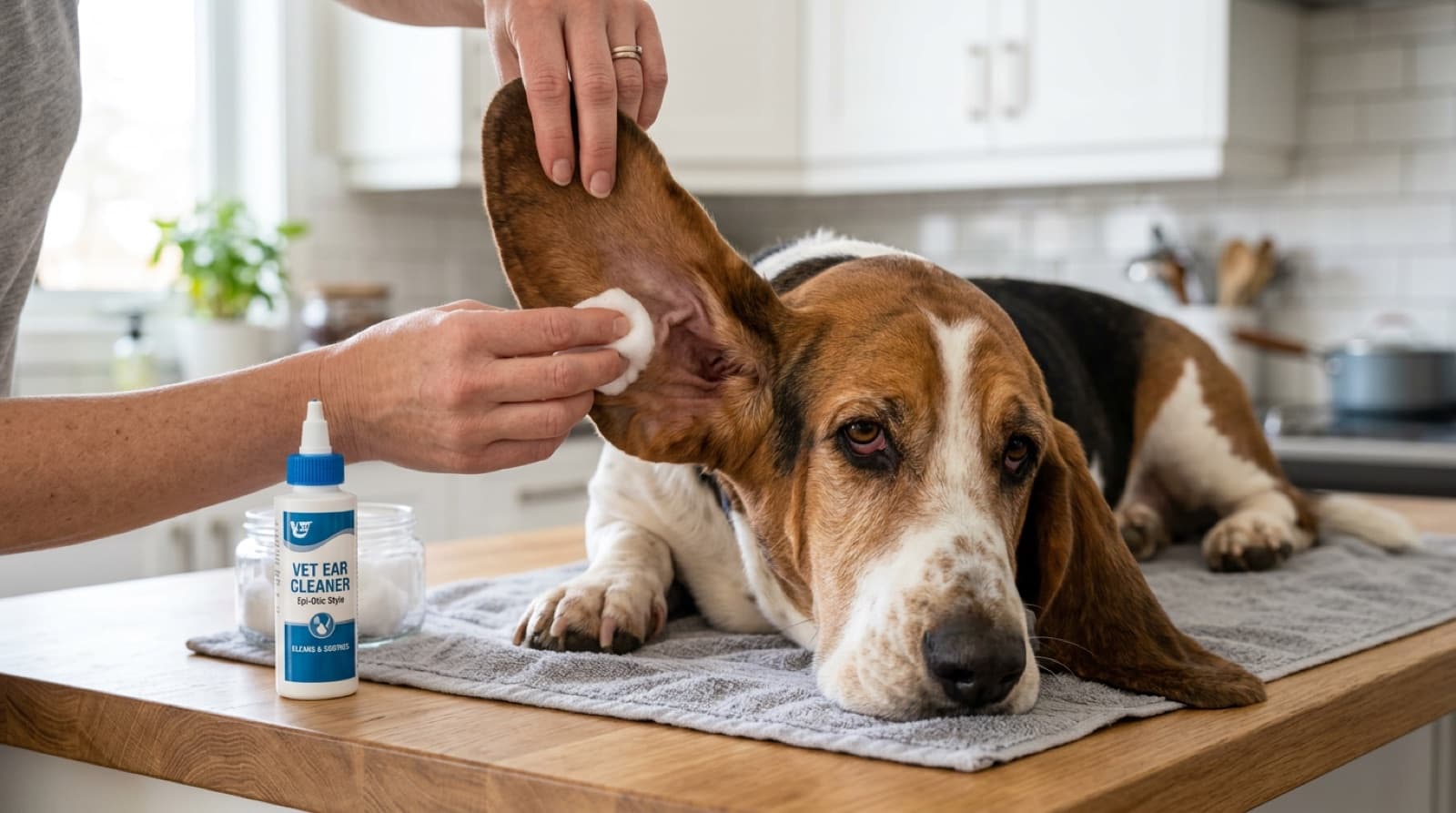
Most Edmonton owners under-clean Basset ears, leading to chronic infections. The Basset ear anatomy challenge: long pendulous ears block air circulation, narrow ear canal traps debris and moisture, hair growing inside the canal traps wax, ears drag through grass and dirt picking up bacteria.
A large share of Bassets get at least one ear infection per year. Most are preventable with weekly cleaning.
Protocol:
- Frequency: weekly minimum for healthy Bassets, 2 to 3 times per week for infection-prone Bassets.
- Cleaner: veterinary ear cleaner (Epi-Otic Advanced, MalAcetic Otic, Zymox Otic Plus). NEVER hydrogen peroxide, alcohol, or human ear cleaners (too harsh).
- Process: lift ear flap, squirt cleaner into ear canal until full, massage base of ear for 30 seconds (you should hear squelching sound meaning cleaner is breaking up debris), let dog shake head (in bathroom, debris flies everywhere), wipe outer ear and accessible canal with cotton ball or gauze.
- NEVER push cotton swabs (Q-tips) into the ear canal. Can damage eardrum.
- After water: any time water enters Basset ears (bath, swimming, rain), clean immediately to prevent bacterial growth.
Infection signs (vet visit): redness, dark waxy or pus-like discharge, foul yeasty odour, head shaking and scratching, sensitivity to ear handling. Edmonton cost: $200 to $400 per ear infection visit.
Hair plucking debate: some Edmonton groomers pluck hair from inside Basset ear canal monthly. Others argue this irritates the ear and worsens infections. Discuss with your vet. Most Bassets do better with hair trimmed (not plucked) every 4 to 6 weeks.
5 minutes weekly home cleaning prevents most $200 to $400 vet visits.
Browse adoptable Basset Hounds in Edmonton
Adult and senior Bassets often arrive with documented chronic conditions (ears, folds, glands). Edmonton rescue foster notes set baseline so you can plan the routine and budget.
See Available Basset Hounds →The daily 5 to 10 minute routine
| Task | Why | Tool |
|---|---|---|
| Jowl wipe (2x daily) | Drool + food cause odour and skin irritation | Damp cloth or vet wipe |
| Skin fold check | Moisture/redness/smell indicates early fold dermatitis | Hands + vet wipe if needed |
| Eye corner wipe | Tear staining and dried discharge | Saline cotton ball or eye wipe |
| Paw inspection | Salt residue, ice, interdigital cyst signs | Hands + lukewarm water rinse if salty |
Weekly additions (15 to 30 min total): ear cleaning (the key task), brushing 3 to 4 times per week, skin fold deep clean with medicated wipes for problem zones, anal gland check, paw and nail inspection.
Monthly: full bath if needed (often less than monthly), nail trim if not done at vet or groomer, anal gland expression, dental check.
Edmonton winter paw protocol
Edmonton winter creates specific paw challenges most Basset owners underestimate. Risks:
- Salt and ice-melt on Edmonton sidewalks irritate paw pads (some ice melts contain calcium chloride, more toxic if licked)
- Ice between toes (especially with Bassets' webbed feet) causes pain
- Frostbite on paw pads at -25C and below
- Interdigital cysts from moisture trapped between toes after winter walks (snow melts in warm house, sits in webbing); Bassets are especially prone due to deep webbing
Edmonton winter paw protocol:
- Boots (Pawz disposable rubber boots work for short-leg Bassets where rigid boots do not fit; $20 to $30 per pack)
- Musher's Secret wax applied before walks creates barrier between paw and salt/ice ($20 to $30 per tin, lasts months)
- Immediate post-walk paw care: rinse paws with lukewarm water at door, towel dry thoroughly between toes
- Paw balm 2 to 3 times per week (Burt's Bees, Bag Balm, or vet paw balm) to keep pads moisturised
- Short walks in extreme cold (under -20C with wind chill)
- Watch for signs: limping, licking paws, redness between toes, swelling, pus equals vet visit
Five minutes of door-side paw care prevents most cysts and lameness.
Frequently Asked Questions
How often should I bathe my Basset Hound in Edmonton?
Once a month maximum, often less. Bassets have natural skin oils that protect coat and skin health, and over-bathing strips these oils causing dry itchy skin, dandruff, increased shedding, and ironically MORE odour as the skin overproduces oil to compensate. Standard Basset bath frequency: every 4 to 8 weeks for most Bassets, with skin-condition Bassets going 6 to 12 weeks between full baths. Edmonton dry-winter consideration: the 5 to 6 month furnace-heated dry indoor air season already dehydrates Basset skin; over-bathing in winter is especially counterproductive. Many Edmonton Basset owners stretch bath frequency to 6 to 10 weeks through winter and pull tighter (4 to 6 weeks) in summer. Exception: emergency bathing after rolling in something dead or covered in mud. Do partial wipe-downs with veterinary skin wipes (Douxo S3, Earthbath grooming wipes) instead of full baths whenever possible. Bath protocol: veterinary or oatmeal-based dog shampoo (Earthbath Oatmeal, Burt's Bees Oatmeal Shampoo, Veterinary Formula); NEVER human shampoo (pH wrong for dogs); cotton balls in ears (Bassets get water in ear canal easily, leading to ear infections); lukewarm water; rinse twice (soap residue in skin folds causes irritation); towel dry then air dry (Bassets do not tolerate hair dryer well, 4 to 6 hours to fully dry); re-clean ears after bath if moisture entered. Edmonton professional grooming: $50 to $90 for a basic Basset bath plus nail trim. The "smelly Basset" problem in most Edmonton homes is over-bathing, not under-bathing.
How do I manage Basset Hound drool?
Bassets are moderate-to-heavy droolers, with peak drool around food, exercise, water, and excitement. The biology: Bassets have loose pendulous lips (called "flews") that do not seal tightly. Saliva accumulates in the flews and slings outward when the dog shakes its head, drinks water, or eats. This is genetic and cannot be eliminated. Drool management protocol: drool towels at every door, water bowl, food area, and your favourite couch spot (bar-mop towels work well: large, absorbent, inexpensive at Edmonton Dollarama or Costco multi-packs); wipe jowls 2 to 3 times daily with a clean dry cloth or veterinary wipe, especially after meals (food sticks to flews) and water (extra saliva); bib for messy eaters (baby bibs or dog-specific drool bibs during meals, particularly helpful for Bassets with severe flew folds); manage eating posture (elevated bowls actually worsen flew accumulation; floor-level slow-feeder bowls work best); wipe down water bowl rim daily (drool and food backwash accumulates); remove from carpeted areas during peak drool times (post-meal, post-water, post-exercise); wood/tile/laminate floors are easier; furniture covers and throws on couches your Basset uses (washable, replaceable). Excessive drool can signal medical issue: sudden increased drooling can indicate dental disease, oral foreign body, nausea, organ disease, or heat stroke. Constant heavy drool that is new is vet-visit territory. If drool is a deal-breaker, Bassets are the wrong breed for you.
How much does a Basset Hound shed and what tools work?
Bassets shed moderately year-round and heavily during twice-yearly coat blowouts (spring and fall). Despite their short coat, Basset hair gets everywhere: clothes, furniture, food, places you did not know dogs could reach. Edmonton climate impact: Edmonton has more predictable seasonal shedding than chinook-affected southern Alberta. Spring blow March to May, fall blow September to November typically. Indoor heating in winter dries skin, slightly increasing maintenance shed. Edmonton shedding management: daily brushing 5 to 10 minutes during shed seasons (March to May and September to November); year-round 3 to 4 days per week is standard maintenance. The right brushes: rubber curry brush or Zoom Groom (loosens dead hair from short coat better than wire brushes), FURminator deShedding tool (use weekly during peak shed seasons, daily use can damage coat), bristle brush (final smoothing), de-shedding shampoo during peak seasons. AVOID wire slicker brushes (designed for long coats, can scratch Basset skin). Bath plus blow-out approach during peak shed: bathe with deshedding shampoo, then high-velocity dryer (or shop vac in reverse) to blast out loose undercoat. Edmonton professional groomers offer this service for $60 to $120. Worth it twice yearly during peak shed seasons. Daily lint-rolling becomes routine. Vacuum 2 to 3 times per week during shed seasons. Robot vacuum is essential investment ($200 to $500). Air filter helps respiratory if anyone in the household has hair allergies. NEVER shave a Basset for shedding reduction. The double coat regulates temperature in both summer and winter; shaving permanently damages coat regrowth and increases skin sun exposure.
Daily and weekly Basset wipe-down routine?
Non-negotiable for breed health and odour management. DAILY (5 to 10 minutes total): wipe jowls with veterinary wipe or damp cloth (removes food, drool, debris that causes odour and skin irritation); quick check of skin folds (face, neck) for moisture, redness, smell (wipe clean if concerns); eye corner wipe (Bassets get tear staining and dried discharge; saline-soaked cotton ball or veterinary eye wipes); quick paw inspection especially in Edmonton winter (salt residue, ice between toes) or wet seasons (interdigital cyst risk); wipe paws after every walk. WEEKLY (15 to 30 minutes total): ear cleaning (single most important Basset grooming task; Epi-Otic Advanced, MalAcetic Otic, or Zymox Otic; squirt into ear, massage base for 30 seconds, let dog shake, wipe with cotton ball; NEVER push cotton swabs into the ear canal); brushing 3 to 4 times per week (daily during shed seasons) with rubber curry or FURminator; skin fold deep clean (gently wipe between facial folds with vet wipe to prevent fold dermatitis); anal gland check (feel under tail for swelling or discomfort; many Bassets need expression every 4 to 6 weeks); paw and nail check (examine pads for cracks, between toes for cysts or foreign bodies). MONTHLY: full bath if needed (often less frequent than monthly); nail trim if not done at vet or groomer; anal gland expression (vet or groomer if you do not do it yourself); look in mouth for dental issues (tartar buildup, gum recession, broken teeth). Basset grooming is more time-intensive than the "low-maintenance" reputation suggests.
How do I clean Basset Hound ears properly?
Weekly ear cleaning is the single most important Basset grooming task. Most Edmonton owners under-clean Basset ears, leading to chronic infections. The Basset ear anatomy challenge: long pendulous ears block air circulation, narrow ear canal traps debris and moisture, hair growing inside the canal traps wax, ears drag through grass and dirt picking up bacteria. A large share of Bassets get at least one ear infection per year. Most of those infections are preventable with weekly cleaning. Protocol: FREQUENCY weekly minimum for healthy Bassets, more frequently (2 to 3 times per week) for Bassets prone to infections. CLEANER veterinary ear cleaner (Epi-Otic Advanced, MalAcetic Otic, Zymox Otic Plus); NEVER hydrogen peroxide, alcohol, or human ear cleaners (too harsh). PROCESS lift ear flap, squirt cleaner into ear canal until full, massage base of ear for 30 seconds (you should hear squelching sound meaning cleaner is breaking up debris), let dog shake head (in bathroom, debris flies everywhere), wipe outer ear and accessible canal with cotton ball or gauze; NEVER push cotton swabs (Q-tips) into the ear canal (can damage eardrum). AFTER WATER any time water enters Basset ears (bath, swimming, rain), clean immediately to prevent bacterial growth. INFECTION SIGNS: redness, dark waxy or pus-like discharge, foul yeasty odour, head shaking and scratching, sensitivity to ear handling. Any of these is vet visit immediately. Edmonton cost: $200 to $400 per ear infection visit. HAIR PLUCKING DEBATE: some Edmonton groomers pluck hair from inside Basset ear canal monthly. Others argue this irritates the ear and worsens infections. Discuss with your vet. Most Bassets do better with hair trimmed (not plucked) every 4 to 6 weeks. Edmonton specialty veterinary dermatology referral for chronic cases. Five minutes weekly home cleaning prevents most $200 to $400 vet visits.
How do I care for Basset facial wrinkles and skin folds?
Bassets have moderate skin folds, less extreme than Bulldogs or Shar-Pei but enough to require daily care to prevent fold dermatitis. Fold zones: facial folds around eyes and muzzle, neck folds, armpit folds, ear-base folds. Each can trap moisture, food debris, drool, and bacteria. Untreated fold dermatitis becomes chronic, smelly, and uncomfortable. Daily fold care: after meals wipe facial folds (especially around mouth) with veterinary skin wipe (Earthbath All-Natural, Veterinary Formula Antiseptic & Antifungal Wipes); daily check by feeling between folds for moisture, redness, smell (even subtle yeasty smell indicates early infection); after exercise or heat extra wipe-down because sweating in folds creates moist environment; weekly deeper clean with medicated wipes (Douxo S3 PYO Wipes for inflammatory cases) for problem zones; folds must DRY thoroughly after cleaning (moisture trapped in folds is the cause of dermatitis); pat dry with soft cloth (some owners use cornstarch lightly in folds to absorb moisture, NOT talcum powder). Treatment when fold dermatitis develops: medicated topicals (chlorhexidine wipes, miconazole spray, sometimes oral antibiotics, all vet-prescribed). Edmonton vet visit $200 to $400 for diagnosis and treatment. Severe chronic cases may need surgical fold reduction (rare for Bassets). Common signs: redness, hair loss in fold area, yeasty smell, sensitivity to touch, dog scratching or rubbing the area. Treat early. Chronic folds are much harder to clear than acute ones. Edmonton dry winter heating cycles can dehydrate fold skin (use vet-approved moisturiser if dryness is severe); summer days create moisture buildup (extra cleaning).
How do I express anal glands or tell if they need expression?
Anal glands are scent glands on either side of the anus that release strong-smelling fluid during normal defecation. When they do not empty properly, they can become impacted, infected, or abscessed. Bassets are predisposed to anal gland issues due to body conformation. Symptoms: scooting (dragging rear on carpet), licking or biting at base of tail, foul fishy smell from rear area (different from normal Basset body odour), swelling around anus, sudden yelping when sitting, reluctance to sit, blood or pus from anal area. Frequency: most Bassets need expression every 4 to 8 weeks. Some never need it (glands express during normal defecation). Some need it every 2 to 3 weeks (chronic issues). Expression options: VET expression $30 to $60 per visit (most thorough method, can detect infection or abscess during exam); GROOMER expression $15 to $30 added to grooming visit (many Edmonton groomers offer; less thorough than vet but adequate for healthy dogs); HOME expression technically possible but most owners should not do it (risk of injury, infection, or incomplete expression; if you want to learn, ask your vet to demonstrate first). DIETARY MANAGEMENT high-fibre diet (psyllium husk supplement, pumpkin puree, fibre-added kibble) can firm stool and improve natural gland expression during defecation. Worth trying for chronic anal gland dogs (Hill's w/d, Royal Canin Gastrointestinal High Fiber). Anal gland abscess is an emergency requiring vet visit immediately ($400 to $800 Edmonton cost). Do not leave gland problems untreated; they progress to abscess, rupture, surgery. Edmonton owners with chronic gland issues should discuss surgical removal with vet (rare but available for severe recurring cases).
How do I trim Basset Hound nails?
Basset nail trimming is harder than for most breeds due to body shape, weight, and the fact that Bassets HATE nail trimming. Challenges: heavy body sits on paws making access difficult, dark nails make quick (blood vessel) hard to see, Bassets often refuse to cooperate, weight on paws causes discomfort during trimming. Protocol: FREQUENCY every 3 to 4 weeks (Bassets do not wear nails down naturally because they do not walk on hard surfaces enough; long nails change foot posture and worsen back and joint issues). START YOUNG condition puppies to nail handling from week 8 (touch paws daily, file rather than cut at first, build positive association with treats); adult adopted Bassets often need months of conditioning before tolerating clipping. TOOLS large sharp clippers (Millers Forge Pro, Safari Professional; dull clippers crush instead of cut, painful for dog) or Dremel grinder (40K Pet Buddy; works gradually, less risk of cutting quick, but takes longer and dog must accept noise). POSITIONING Bassets sit best on a non-slip surface (some owners put the dog on a table, others sit on floor with Basset between their legs; use a helper if dog struggles). DARK NAIL TECHNIQUE cut tiny slivers (2mm at a time) until you see a small dark dot in the cross-section (this is the start of the quick, stop here); going slowly equals safer than fast deep cuts. STYPTIC POWDER on hand for accidental cuts (apply firm pressure for 30 seconds; dark blood looks alarming but bleeding stops quickly). PROFESSIONAL many Edmonton groomers ($15 to $30) and vets ($25 to $50) do nail trims; worth it for Bassets that fight nail trimming (both safer and less stressful); Edmonton mobile groomers come to your home ($50 to $100, less stressful for some Bassets). Many Edmonton Basset owners outsource nail trimming entirely. No shame in this; the dog gets trimmed, your relationship stays good, no one gets cut.
When is Basset Hound odour a medical issue, not normal?
All Bassets have a natural mild "houndy" smell. That is the breed. But certain odours signal medical issues. Distinguishing normal Basset smell from medical odour matters because chronic infections worsen if left untreated. NORMAL Basset smell: mild musky and houndy body odour, slightly stronger after exercise, slight oily smell from healthy skin (acceptable, does not change much over time). ABNORMAL odour signs (vet workup required): YEASTY or SOUR smell concentrated in skin folds, between toes, ears, or anal area equals yeast infection (Edmonton cost $200 to $400 vet visit plus medicated wash plus topical treatment); FISHY smell from rear area equals anal gland impaction or infection; ROTTING or SWEET smell from mouth equals severe dental disease or oral infection (annual cleaning $500 to $1,500 Edmonton); AMMONIA smell on coat equals kidney issues or UTI (vet workup); SUDDEN STRONG body odour without explanation equals systemic infection, hormonal issue, kidney or liver disease (vet workup); FRUITY smell (acetone-like) equals diabetic ketoacidosis (EMERGENCY, Edmonton 24-hour vet immediately); FOUL discharge smell from any orifice equals infection in that area (vet visit); FUNGAL or MUSTY smell from coat equals fungal skin infection (vet treatment). Common Edmonton Basset odour culprits in order of frequency: ear infections (most common breed complaint), skin fold dermatitis, anal gland impaction, dental disease, yeast skin infection, UTI, allergies (chronic ongoing low-level inflammation produces stronger body odour). The investigative approach: identify WHERE the smell originates (mouth, ear, fold, paw, anal area, all-over body). Each location has typical causes and Edmonton specialty referral. The "constantly smelly Basset" is almost always a medical issue (often multiple compounding issues), not just "the breed." Address underlying causes and Bassets smell normal-doggy.
Edmonton winter paw care for Bassets: what is special?
Edmonton winter creates specific paw challenges for Bassets that owners often miss. Risks: salt and ice-melt on Edmonton sidewalks irritate paw pads, causing burns and chronic dryness (some ice melts contain calcium chloride, more toxic if licked); compacted ice between toes (especially with Bassets' webbed feet) causes pain, sometimes leading to refusing to walk; cold-weather frostbite on paw pads at -25C and below; INTERDIGITAL CYSTS from moisture trapped between toes after winter walks (snow melts in warm house, sits in webbing) causes inflammatory cysts (Bassets are especially prone due to deep webbing; chronic problem in winter Edmonton households). Protocol: BOOTS Pawz disposable rubber boots work for short-leg Bassets where rigid boots do not fit ($20 to $30 per pack, several uses per pair; some Bassets accept boots, many refuse). MUSHER'S SECRET wax applied before walks creates barrier between paw and salt/ice ($20 to $30 per tin, lasts months; easier than boots for Bassets that refuse them). IMMEDIATE POST-WALK PAW CARE rinse paws with lukewarm water at door, towel dry thoroughly between toes, check for ice chunks or salt residue; dry between toes is non-negotiable for interdigital cyst prevention. PAW BALM Burt's Bees Paw and Nose Lotion, Bag Balm, or veterinary paw balm applied 2 to 3 times per week to keep pads moisturised (Edmonton winter dry air dries pads quickly). WATCH FOR SIGNS limping, licking paws, redness between toes, swelling, pus equals vet visit. INTERDIGITAL CYST treatment warm compresses plus medicated wash plus topical antibiotic if mild; vet visit plus oral antibiotic if severe; chronic cases may need surgery. SHORT WALKS in extreme cold (under -20C with wind chill); Bassets refuse to potty in deep cold anyway. Edmonton winter Basset paw care is a daily-routine investment. Owners who skip it face chronic interdigital cysts, ear infections (cyst-related licking), and lameness. Five minutes of door-side paw care prevents most issues.
Summer hot-spots and grooming in Edmonton heat?
Edmonton summers (25 to 30C+ days) create their own Basset grooming challenges. Summer-specific issues: HOT SPOTS (acute moist dermatitis) sudden inflamed wet sores on skin, usually triggered by heat plus moisture plus scratching or licking plus bacterial growth (develop rapidly in hours, painful, smelly; Bassets predisposed due to skin folds and undercoat density); increased shedding from heat (mid-summer secondary shed in Edmonton); skin fold yeast infections in humid summer days; increased ear infections from swimming or splash play; heat-related grooming stress (hot dogs do not tolerate brushing well). Protocol: HOT SPOT prevention brush more frequently (daily 5 minutes), wipe down skin folds twice daily, dry thoroughly after any water exposure, avoid leaving wet collar or harness on dog. Hot spot treatment if developed: shave hair around the area (allows airflow plus treatment access), wash with antibacterial shampoo or chlorhexidine wipes, apply veterinary spray (Vetericyn, Microcyn) twice daily, prevent licking with cone if needed. Mild cases resolve in 5 to 7 days; severe cases need vet visit ($200 to $400 Edmonton). AVOID heat-stressing baths on hot days (bath in early morning or evening only). Trim coat MORE often during summer (every 6 to 8 weeks vs winter 8 to 12 weeks); NEVER shave but coat trimming for hygiene around belly and legs is fine. Edmonton professional grooming summer cost $50 to $95 for Basset. Check anal gland expression frequency (Bassets in summer heat sometimes need more frequent expression). Ear care after any swimming or rain (water in ears is the primary trigger for summer infections). Edmonton swimming consideration: many owners take Bassets to lakes in summer; Bassets can swim but their body shape makes them poor swimmers (supervise closely, dry ears immediately afterward, watch for cold-water hypothermia even in July).
Bottom line for Edmonton Basset owners on grooming?
Right for you if: realistic about the daily 5 to 10 minute grooming commitment, willing to invest $50 to $90 quarterly in professional grooming, committed to weekly ear cleaning and skin fold care, accept that drool is part of the package, have the patience for Basset nail trimming (or willingness to outsource), comfortable with mild houndy smell as breed-normal. Challenging if: limited time for daily routine, expectation that "short coat equals low maintenance" (it does not for Bassets), apartment with sensitive smell tolerance, allergies in household to dog hair or dander. Wrong if: cannot commit to weekly ear cleaning (chronic infections inevitable), refuse to manage drool (cannot be eliminated), expect to bathe more than monthly to mask odour (makes it worse), unwilling to invest in pet insurance for the breed's elevated medical issues. Annual Basset grooming and dermatology investment: ear care products $10 to $20/month, fold care products $5 to $15/month, professional grooming quarterly $200 to $400/year, occasional vet visits for ear or fold infections $400 to $800/year for problem-prone Bassets, pet insurance $50 to $90/month. Total grooming and dermatology line $1,500 to $3,500/year typical. Lifetime 10 to 12 years equals $15K to $42K+ investment beyond food and routine vet. Edmonton senior Basset adoption (8+ years) from SCARS, Edmonton Humane Society, Zoe's Animal Rescue, AHHRB, or AARCS Edmonton fosters often arrives with documented chronic conditions disclosed by foster home; budget accordingly.
Adoptable Basset Hounds in Edmonton
Live listings from SCARS, Edmonton Humane Society, Zoe's, AHHRB, and AARCS Edmonton fosters.
Basset Hound Adoption Edmonton
Rescue pipelines, costs, breed-mix patterns, family-fit framework.
Basset Ear Care Edmonton
Chronic ear infection prevention, weekly cleaning protocol, when to see your vet.
Basset Recall + Scent Drive
Why recall is unreliable, scent-driven escape patterns, force-free management.
New dog? Start with these care guides
Everything a new adopter needs to set up a safe, happy home.