The short answer
Bichons are moderate-to-rare in Edmonton rescue, and adopting one is patient work. Most arrive through the Edmonton Humane Society, Zoe's Animal Rescue, and AARCS Edmonton fosters. Fees $400 to $700 with a skin and urinalysis baseline that costs another $300 to $500 in the first month. Atopic dermatitis and bladder stones are the breed's defining medical issues; allergy diagnoses and senior owner transitions drive most surrenders. Plan three to six months from search to dog-in-your-house, and budget for a daily grooming routine plus a professional groom every four to six weeks.
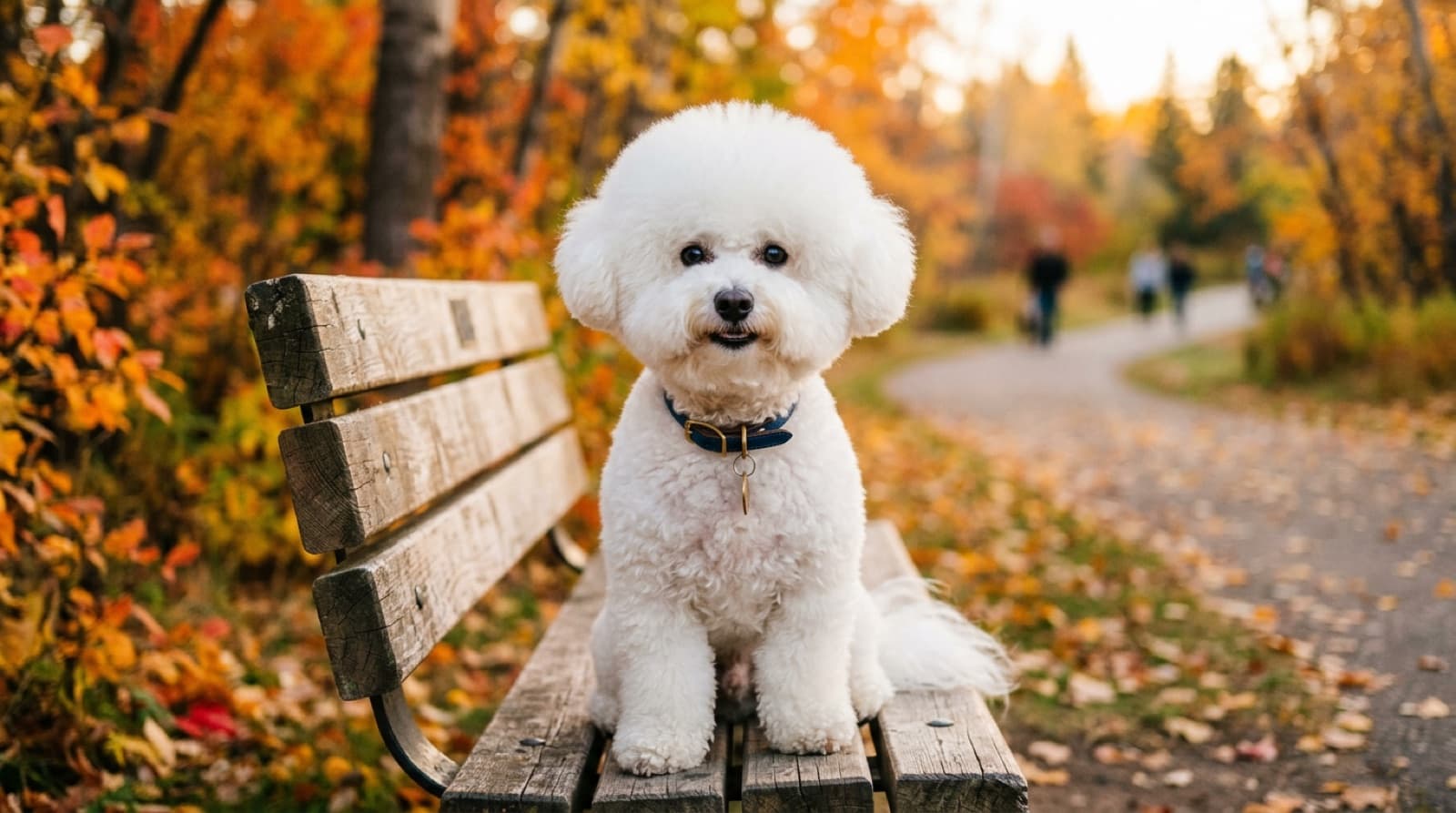
Why Bichons end up in Edmonton rescue
Bichons reach Edmonton rescue through a different pipeline than the working breeds that fill SCARS and AARCS intake. Almost every Bichon surrender ties back to one of five urban household patterns, and reading these patterns helps you understand why a specific dog is listed and what the long-term commitment looks like.
- Chronic atopic dermatitis the household could not sustain. Bichons carry one of the higher atopy rates of any small breed. When the daily medicated bathing, Apoquel or Cytopoint costs, and dermatology referral bills stack up over years, some households reach a breaking point. The dog arrives at rescue with documented skin history and a clear management plan. The right adopter is someone who can absorb the routine without resentment, which is harder than it sounds on month 36.
- Bladder stones and the diet that follows. Calcium oxalate and struvite stones are common in Bichons, often requiring surgical removal. After surgery the dog needs a prescription urinary diet for life plus urinalysis every three to six months. Some owners underestimate the food cost (prescription diet runs $90 to $130 a month) and the ongoing vet follow-up, and the dog ends up surrendered six to twelve months after the first stone episode.
- Family allergy diagnosis. A child or partner develops dog allergy symptoms, an allergist test confirms dog-specific reactivity, and the Bichon is the one who has to leave. Painful for the family, painful for the dog. These Bichons usually have clean medical histories and excellent home temperament references; they place fast.
- Senior owner transition or death. A senior Bichon owner enters assisted living that does not allow dogs, or passes away, and no family member can take the dog. Senior Bichons (nine years and up) are common in this pipeline, and the retiree adopter pool in Edmonton actively wants them. These placements are often the most stable in the rescue intake.
- Breeder retirement. A small breeder rehomes adult breeding dogs into rescue when their breeding program closes. The dogs are typically four to seven years old, have never lived in a family home, and need patient socialization to apartment or condo life. They are often deeply rewarding adoptions for someone who has the patience to introduce house manners from scratch.
A sixth pattern now adds steady volume: the Bichon Poo and Poochon pandemic wave. Designer Poodle crosses purchased on Kijiji and Marketplace from 2019 through 2022 are reaching adolescence in homes that were not ready for them. We cover this pattern separately below.
Edmonton rescues that occasionally list Bichons and Bichon mixes
Six Edmonton-area rescues plus one Calgary-headquartered rescue with Edmonton fosters carry Bichons or Bichon crosses from time to time. Volume is intermittent for purebreds and moderate for mixes, so set listing alerts wherever you can and check current Edmonton listings before committing to a single rescue.
- Edmonton Humane Society: the most visible source of Bichon intake in the city. EHS sees Bichons primarily through owner surrenders tied to medical management, allergy diagnoses, and senior transition. The centralised facility lets you meet the dog in person, and the behaviour team produces detailed temperament assessments. Bichon turnover is fast; apply same-day. According to the Edmonton Humane Society intake statistics, small-breed surrenders cluster around medical and life-transition causes.
- Zoe's Animal Rescue: long-running Edmonton foster-based rescue. Lower-volume Bichon intake than EHS but a real source, especially for Bichon mixes. Foster temperament assessments are thorough and the application emphasises fit over speed, which suits a breed where medical history matters.
- AARCS (Alberta Animal Rescue Crew Society): headquartered in Calgary but with Edmonton-area foster homes. AARCS tags each dog with its current foster location, so Edmonton-foster Bichons surface on Edmonton listings. AARCS foster write-ups are among the most detailed in the province and explicitly cover skin condition, energy level, and household compatibility.
- Alberta Homeward Hound Rescue Bureau (AHHRB): Edmonton-area foster-based rescue. AHHRB lists every dog as Mixed Breed on paper, so Bichons and Bichon mixes are identified by photo and description rather than a breed tag. Worth checking even if a Bichon search returns nothing. Some of their foster homes specialise in small breeds with medical management.
- GEARS (Greater Edmonton Animal Rescue Society) and Hope Lives Here Animal Rescue: both Edmonton-area rescues with smaller rotating dog inventory that occasionally includes a Bichon, Poochon, or Yorkichon. Lower frequency than the four rescues above, but worth following if you are willing to wait.
- SCARS (Second Chance Animal Rescue Society): primarily a northern Alberta intake rescue, so purebred Bichons are uncommon. Bichon mixes (often Bichon-Shih Tzu or Bichon-Poodle crosses with unclear parentage) do surface in SCARS rotating inventory, usually identified by appearance rather than verified pedigree.
A separate national breed-specific path exists through the Bichon Frise Club of Canada rescue committee. The club's rescue volunteers occasionally coordinate placements across provinces when a Bichon enters rescue in a region without enough adopters. Volume is genuinely small and directional. If you find a group representing itself as an Alberta Bichon-specific rescue, verify it the same way you would verify any pet transaction: a Canada Revenue Agency charitable registry check, a real address or named foster network, public-facing vet references, and a current adoptable-dog list. Most Edmonton Bichon adopters find their dog through the six rescues above.
What an Edmonton rescue Bichon actually costs
Edmonton rescue adoption fees for Bichons generally land between $400 and $700, with young adults at the upper end given the rarity. Senior Bichons (around nine years and up) often have reduced fees of $200 to $400. The fee is not a sale price; it covers the medical work the rescue has already done. A typical Bichon adoption fee covers:
- Spay or neuter surgery. Standalone, this is $250 to $450 at an Edmonton vet clinic for a small dog.
- Core vaccinations. DAPP and rabies at minimum. Bordetella is often included if the dog was boarded.
- Microchip implant and registration. Required for licensed dogs under City of Edmonton Animal Care and Control Bylaw 21244.
- Deworming and parasite treatment. Standard intake processing.
- Basic vet workup. Physical exam, dental assessment, urinalysis (especially important for Bichons given bladder-stone risk), and skin exam to baseline atopy status.
- Dental work, often. Bichons frequently arrive with significant dental disease, and the rescue may complete a cleaning or extraction before listing. That alone runs $500 to $1,100 at retail Edmonton vet pricing.
Stacked on their own, those services cost $900 to $1,800 at retail Edmonton vet pricing. The rescue fee is a partial recovery, not a profit. Beyond the adoption fee, plan a first-month vet baseline of $300 to $500 covering a thorough skin exam, a urinalysis to baseline bladder-stone risk, and pet insurance enrolment before any chronic condition gets documented (insurance excludes pre-existing conditions, so enrolment timing matters for this breed in particular).
Ongoing annual cost for a Bichon in Edmonton averages $2,200 to $3,800. Food is modest because the breed is small, but a quality diet matters for skin and bladder health (and a prescription urinary diet for stone-history dogs adds about $1,100 to $1,600 per year). Grooming is the breed's biggest ongoing line item: a professional groom every four to six weeks at $80 to $120 plus brushes, conditioner, and tear-stain care at home. Pet insurance for a young healthy Bichon in Edmonton runs $40 to $70 per month and is worth it given the breed's skin and urinary risk profile. The American Animal Hospital Association recommends annual dental cleanings for small breeds given their elevated periodontal disease rates, which adds another $500 to $900 per year by mid-life.
For comparison, a Bichon Frise puppy from a Canadian Kennel Club registered breeder runs $1,500 to $3,500 for pet-quality. The breeder puppy comes with none of the vet work the rescue dog already has, and a CKC breeder cannot guarantee freedom from atopy or bladder-stone predisposition; these are breed-wide tendencies, not lineage-specific defects. The rescue path is significantly cheaper, and for a breed this slow to surface in northern Alberta intake, every Bichon placed from a shelter opens capacity for another dog.
The Bichon Poo and Poochon surrender wave
Between 2019 and 2022, designer Poodle crosses surged across Alberta. Households working from home wanted a small low-shed family dog, breeders on Kijiji and Marketplace scaled up Bichon-Poodle, Yorkie-Bichon, and Maltese-Bichon litters, and prices climbed past $2,500 for pet-quality dogs. The marketing emphasised hypoallergenic, low-maintenance, apartment-friendly. Many buyers were genuinely good homes; some were not.
Four years later, that wave is reaching Edmonton rescue. The Poochons purchased in 2019 to 2022 are now two to four years old, deep in adolescence, and showing the behavioural patterns the marketing did not mention. Edmonton rescues now see steady intake of Bichon hybrids in this age band, almost always tied to one of three causes: return-to-office schedule changes that left the dog alone nine hours a day, behavioural issues the owner was not prepared for (housetraining regression, separation anxiety, alert barking), or major life events (move, baby, divorce) that broke the household.
The hybrid mix patterns to know:
- Bichon Poo / Poochon (Bichon-Poodle). Typically 10 to 18 pounds, curly or wavy coat, generally clever and trainable. First-generation Poochons vary widely. Surrender pressure point is usually housetraining gaps and the owner's assumption that hypoallergenic meant low-maintenance (it does not; daily brushing plus four-to-six-week professional grooms are still required).
- Yorkichon (Yorkie-Bichon). Typically 6 to 12 pounds, soft cottony coat that mats easily, devoted companion temperament. Surrender pressure point is grooming maintenance and the alert-barking pattern that comes from the Yorkie side.
- Maltichon (Maltese-Bichon). Typically 8 to 15 pounds, silky-curly coat blend, very people-oriented. Surrender pressure point is separation anxiety, which both parent breeds carry.
- Cavachon (Cavalier-Bichon). Typically 12 to 18 pounds, soft wavy coat. Carries the Cavalier mitral valve disease risk plus Bichon atopy and bladder-stone risk; medical management can be heavy by middle age. Surrender pressure point is often a Cavalier-side cardiac diagnosis the family was not financially ready for.
- Shichon / Teddy Bear (Shih Tzu-Bichon). Typically 10 to 18 pounds, fluffy coat blend. Carries Shih Tzu dental and brachycephalic-adjacent breathing tendencies; the Bichon side adds atopy risk. Surrender pressure point is grooming demands and chronic ear infections.
If you see a Bichon hybrid listed in Edmonton rescue, read the foster notes carefully and ask the foster home directly: housetraining status, alert barking pattern, separation tolerance, grooming maintenance, and whether the dog has lived with kids or other pets. First-generation crosses are unpredictable in size, coat, and temperament, and the foster home's read on the specific dog is the most reliable information available.
Browse adoptable Edmonton Bichons and Bichon mixes
Current Edmonton listings from EHS, Zoe's, AARCS Edmonton-foster dogs, AHHRB, GEARS, Hope Lives Here, and SCARS in one place. Bichon inventory rotates fast; set listing alerts to catch them when they appear and check foster medical notes carefully.
See Adoptable Bichons in Edmonton →Bichon temperament and Edmonton fit
Bichons were bred for one job: human company. They are not working dogs, they are not bred to alert or guard or hunt, and the breed does not pretend otherwise. The temperament profile is consistently friendly, social, and bonded to people. A well-socialized Bichon greets strangers with curiosity rather than caution, gets along with most other dogs given a gradual introduction, and tolerates being picked up, brushed, and handled in a way that many other small breeds resist.
For Edmonton households, this profile fits a specific lifestyle well. Apartment and condo dwellers who want a small companion that stays close. Retirees and semi-retirees with time at home. Households with calm older children. Multi-pet homes with other small to medium dogs or cats already established. Households that travel less and want a dog that adjusts to a quieter routine. The breed is genuinely suited to long Edmonton winters because they are content indoors and require only modest daily exercise: two short walks of 20 to 30 minutes each, plus indoor play, covers the daily needs for most adults.
Where Bichons struggle is in households that leave them alone for long workdays without a structured separation plan. The breed's closeness to its people becomes separation anxiety when the rhythm is wrong. Most Edmonton rescue Bichons we see returned within the first six months come from households where the work schedule did not match the breed's emotional needs. If you are considering a Bichon and your household has a 50-hour-a-week in-office adult with no one home during the day, the rescue will look hard at the application and may steer you toward a different breed or ask you to lay out an explicit separation plan involving daycare, dog walkers, or a midday family member.
The atopy reality: skin care is a daily commitment
Atopic dermatitis is the single most common medical issue in adult Bichons, and it is the issue that drives most of the medical-management surrenders we see in Edmonton rescue. The breed inherits a tendency toward environmental allergy reactivity (pollen, grass, dust mites, certain food proteins) and the immune response shows up on the skin: chronic itching, recurrent ear infections, paw chewing, redness on the belly and inner thighs, and secondary bacterial or yeast infections from the constant scratching.
Edmonton specifically is a heavy atopy environment between May and October. Grass pollen peaks in June and July, tree pollen earlier, and the river-valley parkland that makes Edmonton great for dog walking is exactly the environment that triggers Bichon flares. Winter brings dry indoor heating that adds skin-barrier stress on top of the underlying allergy. Most Bichon owners describe a year-round low-grade management plus two seasonal peaks where the dog needs significantly more attention.
The management toolkit, in increasing order of intensity:
- Daily skin care at home. Medicated weekly bathing with veterinary shampoo (Douxo or Malaseb), daily paw wipes after walks during pollen season, omega-3 supplementation, and a regular grooming schedule that keeps the coat clean and well-aerated.
- Apoquel or Cytopoint. Both manage itch directly. Apoquel is a daily oral medication at $90 to $150 per month for a Bichon-sized dog. Cytopoint is an injection given every four to eight weeks at $80 to $140 per visit. Many Bichon owners use one or the other long-term, sometimes switching between them based on response.
- Dermatology referral and allergen testing. If skin signs are not controlled with first-line management, an Edmonton dermatology referral runs $300 to $500 for the initial consult plus $400 to $1,200 for allergen testing (intradermal or serum). The result informs hyposensitization injection therapy, which is the most effective long-term management for severe cases but takes six to twelve months to show benefit.
Lifetime cost of moderate atopy management for an Edmonton Bichon averages $1,800 to $3,500 per year, sometimes more in severe cases. Pet insurance enrolment before any skin condition is documented is essential for this breed. Our companion article on Bichon atopy and skin care covers the daily routine, the medication options, and the Edmonton dermatology referral path in detail.
Adopter readiness check
Bichon adopter screening is not about exercise capacity or yard size. It is about whether you can sustain the daily routine for ten to fifteen years, because that is the breed's lifespan. Before you apply for a Bichon listing, work through these questions honestly. If you cannot answer most of them yes, the placement may not last.
- Can someone in the household groom the dog every one to two days, every week, for the next decade?
- Are you budgeting $80 to $120 every four to six weeks for professional grooming, and is there an Edmonton groomer you have already identified?
- Are you financially and emotionally prepared for daily skin-care management if the dog has atopy?
- Have you enrolled or are you ready to enrol in pet insurance before any chronic condition gets documented?
- Is someone home most of the day, or is there a separation-management plan involving daycare, a dog walker, or a midday family member?
- If the dog has bladder-stone history, are you prepared for the prescription diet (about $90 to $130 per month) and follow-up urinalysis every three to six months?
- Are children in the household at least five or six years old, and are they coached to interact gently with a small dog?
- If you have other dogs, are they small to medium and gentle, or do you have a plan to separate them from a small breed when supervision is not possible?
- Do you have a plan for managing alert barking in a condo or apartment with shared walls?
- Are you willing to wait three to six months from the start of your search until the right Bichon is listed and your application is accepted?
What Edmonton rescues evaluate in a Bichon application
Bichon applications are screened differently from working-breed applications. The rescue is not worried about exercise capacity or yard size; they are worried about household fit, child safety, medical commitment, multi-pet compatibility, and the long-term grooming and skin-care reality. The screening typically covers:
- Household structure and kid age. Most Edmonton rescues will not place a Bichon into a home with children under five or six. Bichons are sturdier than Yorkies or Maltese, but rough handling still causes injury. Households with calm older kids are usually fine; foster notes specify the individual dog's tolerance.
- Medical commitment. If the dog has documented atopy, bladder stones, or dental disease, the rescue will ask about your willingness and ability to sustain the management routine. Honest answers matter; aspirational ones do not last.
- Pet insurance plans. Most Edmonton rescues now ask whether you plan to enrol in pet insurance, specifically because the breed's atopy and stone risk profile makes it one of the highest-payback small breeds for insurance.
- Existing pets. Bichons live happily with other small dogs and with cats they are introduced to gradually. Households with large or high-prey-drive dogs face more scrutiny because of the size mismatch.
- Grooming commitment. The curly double coat needs daily attention and a professional groom every four to six weeks. Rescues will ask whether you have lined up a groomer and whether you understand the maintenance.
- Schedule and time alone. Bichons are companion dogs and struggle with long workdays alone. The rescue will ask about your daily schedule, and a 50-hour-a-week in-office schedule without a separation plan is a harder fit.
- Housing situation. Apartment and condo dwellers, especially in shared-wall buildings, will be asked about alert-barking management. Owned home versus rental matters less than the actual living arrangement and noise sensitivity.
- Prior small-breed experience. Not required, but it strengthens the application. First-time small-breed adopters benefit from showing real homework: a vet identified, an Edmonton groomer chosen, a training class plan, and a clear understanding that a Bichon is a real dog with real needs.
The screening is the conversation that determines whether this placement lasts. Specificity wins applications. Honest answers about your household's rhythm beat aspirational ones every time, and Edmonton rescues are very good at reading the difference.
How to apply for an Edmonton Bichon adoption
Most Edmonton rescues run their Bichon adoption process online. Given the rarity and fast turnover, speed matters. The typical sequence:
- Set up listing alerts. Before a Bichon is listed, register for adoption alerts on the rescue websites and watch our Edmonton listings page. Bichons move within days; a same-day application is often the difference between meeting the dog and not.
- Find a specific dog you want to apply for. Edmonton rescues apply per-dog rather than maintaining a general waitlist. Read the entire foster write-up, including skin history, urinalysis status, kid tolerance, dog tolerance, and grooming notes.
- Complete the online application same day. Expect 30 to 45 minutes for a thorough application. Have your vet's name ready if you have other pets, your landlord's name if you rent, and two non-family references. A same-day application puts you in the first review round.
- Phone screen with the foster. If the application clears the first review, the foster home will call you. This is where most applications are decided. Be honest about household rhythm, work schedule, and prior small-breed experience.
- Meet-and-greet. Either at the foster's home or a neutral location. Bichons warm up faster in a quiet environment than in a busy rescue facility, so a home visit usually shows the better version of the dog.
- Skin and medical review. If the Bichon has a documented medical history, the rescue will walk you through it before the contract is signed. Ask questions. The rescue wants you to know what you are taking on.
- Reference checks. Most Edmonton rescues call two references, including any prior vet if you have other pets. Give your references a heads-up so they pick up promptly.
- Adoption contract and fee. Most rescues use a standard contract that specifies the dog must be returned to the rescue if you can no longer keep them, ever. Read it. Bichon contracts sometimes include clauses about not allowing the dog to be used for breeding given the medical risk profile.
Realistic timeline from application to dog-in-your-house is one to three weeks for a Bichon placement, faster than most breeds because the rescue is happy to see a strong-fit adopter for one of the rarer dogs they list. The compressed timeline is one more reason to prepare your application materials before the listing goes up.
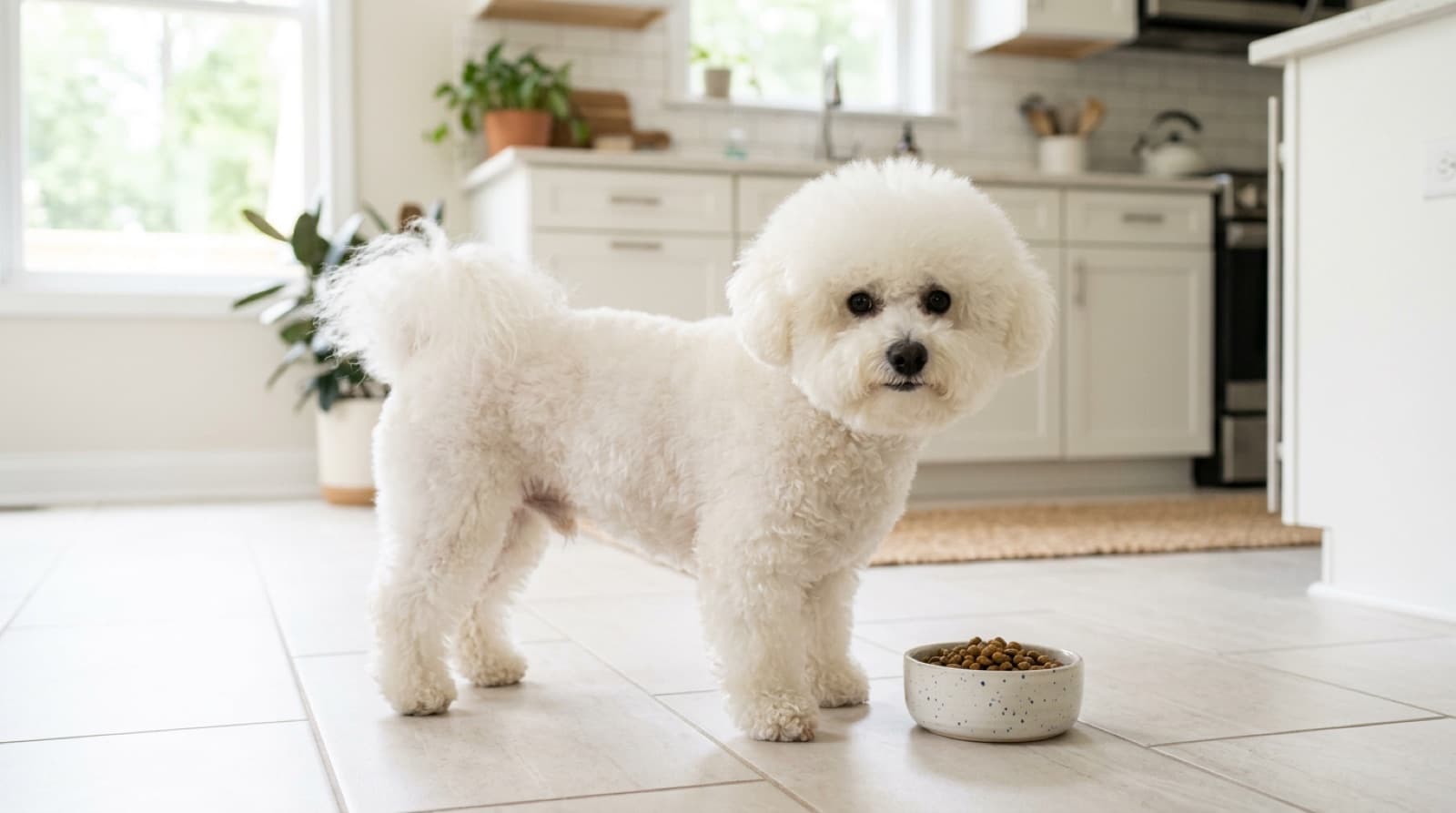
The first 30 days with an Edmonton rescue Bichon
The 3-3-3 decompression principle applies to Bichons just as it does to larger rescue dogs, but the rhythm is faster. Small-breed adjustment often compresses to three days, three weeks, and three months, with the first-week stress phase sometimes resolving in days. Do not assume a quiet first week means the dog is fully settled; real personality usually emerges around week three.
Practical week-one priorities for an Edmonton rescue Bichon:
- Bichon-proof the home. Walk the house at Bichon height before the dog arrives. Block under-furniture gaps if needed. Tiny dogs disappear into spaces a larger dog never would. Watch for stairs and balcony railings.
- Use a harness, not a collar. Bichons are prone to tracheal sensitivity and a small step-in or H-harness is the right walking gear from day one. A flat collar with tags is fine; the leash goes on the harness.
- Watch the yard for predator risk. Edmonton has urban coyotes, magpies, and the occasional bird of prey. A 12-pound Bichon is a prey-sized target. Supervised yard time only, especially at dawn and dusk, especially near river-valley parkland. Never leave a Bichon alone outside.
- License the dog with the City of Edmonton. Required for any dog over six months under Animal Care and Control Bylaw 21244. Tags should be visible on the harness or collar from day one. Details are on the City of Edmonton dogs page.
- Establish a skin and urinalysis baseline. Book a vet visit in the first two weeks. Even if the rescue did a workup, your vet needs a baseline relationship with the dog. A urinalysis baselines bladder-stone risk; a skin exam baselines atopy status. These two data points will guide the next decade of care.
- Enrol in pet insurance immediately. Before week three is ideal. Most policies have a 14 to 30 day waiting period, and any condition documented during that window is excluded as pre-existing. For a Bichon, this matters significantly more than for many breeds.
- Establish structure. Twice-daily meals at consistent times, predictable walk windows, clear house rules about furniture. Bichons settle into routine quickly, and a clear structure prevents the demanding behaviour that comes from a confused dog.
- Start light exercise. Two short walks per day (20 to 30 minutes each) plus indoor play covers a young adult Bichon. Senior Bichons may want only one short walk plus rest time. Build slowly as the dog settles.
- Begin grooming routine right away. Daily two-minute brushing sessions normalize handling before mats develop. The curly double coat tangles quickly without daily attention. Book the first professional groom for week three or four so the dog has time to settle before a new groomer environment.
- Start tooth brushing. Daily, with a dog-safe enzymatic toothpaste. Bichons have elevated rates of periodontal disease, and daily home care prevents thousands of dollars of extraction work over the dog's lifetime.
- Hold off on the dog park. Not for the first three weeks, and longer if foster notes flag any size-related anxiety. Large dogs at off-leash parks can injure a Bichon in seconds even without intent to harm. Many Bichon owners skip dog parks entirely in favour of small-dog playdates or quiet leashed walks.
- Winter routine startup. If you adopt in winter, Bichons handle cold better than thin-coated toy breeds because of the double coat, but a small body still chills fast. A sweater or coat for outings below -20 C, paw-pad rinses after salted-sidewalk walks, and watch for ice balls forming in the leg furnishings. Indoor play covers the rest of the daily exercise on the coldest days.
By week three, you will start seeing the real dog. Senior Bichons often warm up faster than younger ones because they have lived in homes before and recognise the rhythm. Puppy Bichons need more structure and patience, and a clear housetraining plan from day one. By month three, the routine is established and the foster-write-up dog is the dog living in your house. For Bichons, this is when the cheerful, devoted, attentive temperament really comes through, and it is genuinely delightful.
Frequently asked questions
Where can I adopt a Bichon Frise near me in Edmonton?
Bichons surface in Edmonton rescue intermittently rather than weekly. The Edmonton Humane Society sees them most often, usually through senior owner surrender, allergy diagnoses in the family, or chronic-skin owners who could not keep up with the medical commitment. Zoe's Animal Rescue lists Bichons through their Edmonton foster network at lower volume. AARCS, headquartered in Calgary, tags Edmonton-foster dogs and a Bichon or Bichon mix surfaces there from time to time. AHHRB, GEARS, and Hope Lives Here see Bichons less often but worth checking. SCARS occasionally pulls a Bichon mix from northern Alberta intake. Bichon Poo, Poochon, Yorkichon, Maltichon, and Cavachon crosses surface more often than purebreds. Check current Edmonton listings, set alerts, and apply same-day when a Bichon is listed.
Why are Bichons surrendered to Edmonton rescue?
Five surrender patterns drive nearly all Bichon intake in Edmonton. Chronic atopic dermatitis where the owner could not afford or sustain the daily skin-care commitment. Bladder stones where the diet and follow-up vet work overwhelmed the household. A family member developing a dog allergy and the Bichon being the one who has to leave. Owner death or assisted-living transition for a senior Bichon owner. Breeder retirement, where a small breeder rehomes adult breeding dogs into rescue. The Bichon Poo and Poochon waves add a sixth pattern: pandemic-era purchases from Kijiji and Marketplace breeders, now in adolescence with behavioural patterns the marketing hid.
How much does it cost to adopt a Bichon in Edmonton?
Edmonton rescue adoption fees for Bichons typically run $400 to $700, with young adults at the upper end given the rarity. Senior Bichons (around nine years and up) often have reduced fees of $200 to $400. The fee covers spay or neuter surgery, core vaccinations (DAPP and rabies), microchip registration under City of Edmonton Animal Care and Control Bylaw 21244, deworming, parasite treatment, and a basic vet workup. Bichons often arrive with a dental cleaning and a skin baseline already done. Beyond the fee, plan a first-month vet baseline of $300 to $500 for a thorough skin exam, a urinalysis to baseline bladder-stone risk, and pet insurance enrolment before any chronic condition is documented.
What is a Bichon Poo or Poochon?
Bichon Poo (also called Poochon) is a Bichon Frise and Miniature Poodle cross, typically 10 to 18 pounds, with a curly or wavy coat that varies widely in first-generation crosses. The breed surged from 2019 through 2022 as a hypoallergenic apartment-friendly designer dog, with breeders on Kijiji and Marketplace asking $2,000 to $3,500 per puppy. Four years later, that wave is reaching Edmonton rescue. Pandemic Poochons aged two to four years now arrive at EHS, Zoe's, and AARCS Edmonton fosters with patterns the marketing did not mention: housetraining gaps, separation anxiety, alert barking, and the same atopic dermatitis the purebred Bichon side often carries. Read the foster notes carefully; first-generation Bichon Poos vary widely in coat, size, and temperament.
Are Bichons good for Edmonton apartments and condos?
Yes, Bichons are one of the better small-breed choices for an Edmonton condo or apartment. They are quiet compared to most terriers, content indoors through long winters, and low-exercise (45 minutes daily plus some indoor play). The breed's main behavioural risk in a single-occupant condo is separation anxiety. Bichons bond hard to their household and struggle when alone for long workdays. If you live in a condo with shared walls, the rescue will ask about your plan for separation anxiety prevention and alert-barking management. Early training, a tired dog, and a not-lonely dog are the three pieces.
Can people with dog allergies live with a Bichon?
Bichons are often tolerated by mildly allergic adopters because the curly double coat sheds minimally and traps dander in the coat rather than releasing it into the air. No dog is truly hypoallergenic; the Fel d 1 protein equivalent in dogs (Can f 1) is in the saliva and skin secretions, not just the fur. According to the American College of Veterinary Dermatology, no breed is fully hypoallergenic and individual reactivity varies. If allergy management is the reason you are considering a Bichon, spend two hours in the foster home with the specific dog before applying, ideally with the household member who has the allergy present.
Are Bichons prone to chronic skin conditions?
Yes. Bichons carry one of the higher rates of atopic dermatitis (environmental allergy skin disease) among small breeds. Symptoms include chronic itching, recurrent ear infections, paw chewing, and skin redness, often seasonal in Edmonton between May and October when grass and tree pollen peak. Management is daily and lifelong: medicated bathing, topical sprays, Apoquel or Cytopoint injections, and in some cases hyposensitization injections after allergen testing. Edmonton dermatology referrals run $300 to $500 for an initial consult plus $400 to $1,200 for allergen testing. Pet insurance enrolment before any skin condition is documented is essential. See our companion article on Bichon atopy and skin care.
Are Bichons prone to bladder stones?
Yes. Bichon Frises are among the breeds most predisposed to calcium oxalate and struvite bladder stones, often requiring surgical removal (cystotomy) at $1,800 to $3,500 in Edmonton. Prevention is dietary: a prescription urinary diet, controlled water intake, and frequent urination opportunities. Many rescue Bichons arrive with a urinalysis already done and a documented stone history; ask about urine pH, urinalysis results, and prior surgery. If a Bichon you are considering has a stone history, the lifetime food cost moves up significantly (prescription diet at $90 to $130 per month) and urinalysis monitoring runs every three to six months.
How much grooming does a Bichon need?
Daily. The Bichon's curly double coat needs brushing every one to two days at home and a professional groom every four to six weeks. Skipping grooming leads to painful matting close to the skin, especially in the leg furnishings, behind the ears, and on the belly. Professional grooms in Edmonton run $80 to $120 per visit for a Bichon, depending on coat condition. A clean-trimmed Bichon (sometimes called a teddy bear cut) reduces home maintenance but does not eliminate it. Many adopters underestimate the grooming time; the most common Bichon surrender reason after senior owner transition is grooming burnout.
Are Bichons good with children and other pets?
Generally yes for both, with caveats. Bichons are one of the more child-tolerant toy breeds because they are sturdy for their size (12 to 18 pounds) and have a stable, friendly temperament. Most Edmonton rescues will place a Bichon into a home with kids age five and up; under five gets more scrutiny because of the size mismatch and grabbing risk. Bichons live happily with cats they are introduced to gradually and with other small to medium dogs. Households with large high-prey-drive dogs (sighthounds, livestock guardians, working herders in drive) face more scrutiny because of the size mismatch. Foster notes specify the individual dog's tolerance.
How long do Bichons wait in Edmonton rescue?
It depends on age and medical disclosure. Senior Bichons (nine years and up) with documented health management plans adopt within two to four weeks; the retiree adopter pool actively wants them. Young adult Bichons (two to five years) with clean medical histories often place within days of listing because demand outpaces supply. Bichons with documented chronic conditions (skin, bladder stones, dental disease) wait longer, sometimes two to four months, because the medical commitment narrows the adopter pool. Bichon mixes (Poochon, Yorkichon, Maltichon, Cavachon, Shichon) are more common in Edmonton rescue and place at a similar pace.
Related Edmonton Bichon guides
Edmonton Adoptable Dogs
Current Edmonton-area Bichon, Poochon, Yorkichon, Maltichon, and Cavachon listings from EHS, Zoe's, AARCS Edmonton fosters, AHHRB, GEARS, Hope Lives Here, and SCARS.
Bichon Frise Health Issues: Stones, Knees, Teeth
Bichon Frise health issues to plan for: bladder stones, slipping kneecaps, dental disease, itchy skin and allergies, and what to ask your vet after adoption.
Bichon Atopy and Skin Care Edmonton
Daily skin-care routine, medicated bathing, Apoquel vs Cytopoint economics, Edmonton dermatology referral path, allergen testing, and seasonal flare management.
How to Groom a Bichon Frise
A Bichon Frise grooming guide: why the coat mats so fast, the pre-bath rule that prevents disasters, the powder-puff trim, tear stains, and the honest cost.
Find your Edmonton rescue Bichon
Browse current Edmonton-area Bichon Frise and Bichon-mix listings. Inventory rotates fast for this breed, so set alerts and apply same-day when a Bichon is listed.
Browse All Edmonton Dogs →New dog? Start with these care guides
Everything a new adopter needs to set up a safe, happy home.