The short answer
Plan on a professional groom every four to six weeks plus daily home brushing. A Bichon has a curly double coat that mats close to the skin within a week without brushing. A full Edmonton clip runs $80 to $130 every four to six weeks (bath, blow-dry, body trim, signature round head, sanitary, paws, ears, nails). Daily five to ten minute brushing prevents the matting that otherwise forces a shave-down. Bath every two to four weeks. White coat tear staining responds to a daily face-wipe routine plus a short face trim. Atopic Bichons run a medicated bath protocol covered in the atopy guide.
How the Bichon coat actually works
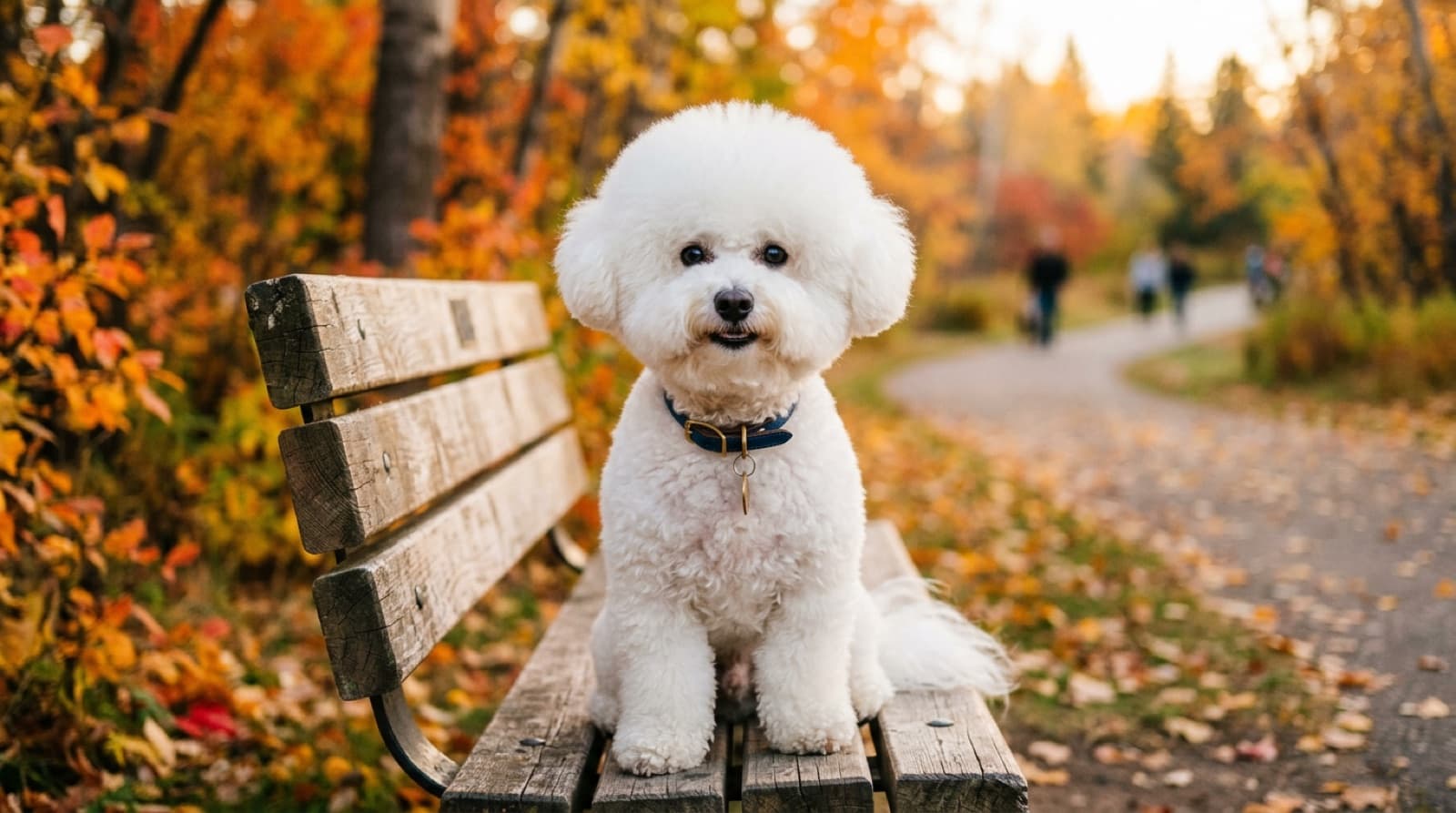
A Bichon Frise wears a curly double coat. The outer layer is soft, loose, and curly. The undercoat is shorter, denser, and silkier in texture. Together they create the signature plush feel and the powder-puff silhouette that defines the breed. Hair grows continuously, like human hair, rather than cycling through shed seasons the way most double-coated working breeds do. The coat is white with occasional cream or apricot shading on the ears, which intensifies in puppyhood and fades by adulthood.
The Canadian Kennel Club Bichon Frise breed standard describes the coat as profuse, silky to the touch, with a corkscrew or spiral curl, soft and dense undercoat. That definition matters because it tells you what the coat is built to do (be plush and round when sculpted) and what it is not built to do (self-clean, lie flat, or shed bulk seasonally). Two practical implications follow.
First, Bichons shed minimally because hair grows continuously and falls out at a slow steady rate rather than in seasonal blowouts. That is why the breed is often tolerated by people with mild dog allergies. The dander load is genuinely lower than most breeds, although the Bichon is not truly hypoallergenic because canine allergens (Can f 1, Can f 2) live in saliva and skin secretions and not just in hair. Second, without seasonal shedding to clear loose hair from the coat, dead strands tangle into the live curls and form mats close to the skin if not removed by daily brushing. The mat formation rate is faster than the silky single coats of Yorkies or Maltese because two coat layers tangle into each other.
Comparison to other curly-coated breeds matters for setting expectations. A Poodle coat is denser and curlier still and mats even faster. A Goldendoodle (Poodle and Golden Retriever cross) varies widely from straight to tight curls depending on coat inheritance. A Maltese has a silky single coat that lies flat and matts differently. The Bichon sits in the middle of these breeds for daily maintenance. The closest grooming routine comparison among Edmonton-popular breeds is the Goldendoodle grooming routine, which shares the same four to six week professional clip cadence and similar mat-prone zones.
The signature round-head powder-puff trim
The round-head trim is what makes a Bichon look like a Bichon. The head and face are scissored into a perfect sphere with the eyes and nose set into the curve, the cheeks rounded out, and no hard angles anywhere. The ears blend seamlessly into the head curve rather than hanging separately, the muzzle is short and rounded, and the overall effect is a soft cotton ball with two dark eyes and a black button nose looking out of it. A well-executed round head reads as the dog the breed standard describes. A clipper-finished flat-topped Bichon does not.
Technique matters. The round head is built almost entirely with scissor work, not clippers. The groomer sculpts the head from the muzzle backward in short layered cuts that follow the natural curve of the skull, blending the ears into the cheek and the cheek into the top of the head. Clipper-only head finishing produces flat surfaces, visible blade lines, and a face that looks shaved rather than sculpted. That is the single biggest tell of an inexperienced Bichon groomer. The body coat can be partially clipper-worked (most pet trims clip the body and scissor-finish the legs, head, and tail), but the head is always scissors.
When booking an Edmonton groomer, ask explicitly whether they scissor the round head or clipper-finish it. The answer determines whether the breed silhouette will be preserved. Some salons will say they do both depending on owner preference; ask for reference photos of previous Bichon clients to confirm. Some salons will admit they do not have specific Bichon scissor experience; that is a useful honest answer because it tells you to look elsewhere. The National Dog Groomers Association of America certifies groomers in breed-specific technique through written and practical exams. Certification is not required to be a good groomer, but a groomer who has invested in NDGAA breed certification has demonstrated commitment to the craft.
Three pet-trim variations on the signature round head exist. The classic show-style round head keeps the body coat at two to three inches and the head fully spherical (highest maintenance, most dramatic silhouette). The teddy bear cut keeps the body shorter at one to one and a half inches but preserves the rounded face (most popular pet trim, balances appearance with daily workload). The puppy cut clips the body to half an inch to one inch and rounds the face more loosely (lowest maintenance, sacrifices some of the dramatic silhouette). Most Edmonton pet Bichon owners settle into the teddy bear cut by the second appointment.
The professional grooming routine
A full professional Bichon groom in Edmonton typically takes 90 to 150 minutes and includes a structured sequence of work. Most salons follow a similar order: pre-bath brush-out to remove tangles and loose coat, bath with a brightening shampoo plus conditioner, towel dry then blow dry while brushing in sections (this step often takes 30 to 45 minutes alone on a thick double coat), full body clip or scissor to the chosen length, scissor finish on the head and face, sanitary trim, paw trim around and between the pads, ear cleaning and hair removal from the canal entrance, and nail trim.
Pricing across Edmonton runs $80 to $130 for a standard pet clip in this format. Mobile groomers and higher-end salons charge $130 to $180 for the same service plus convenience or premium products. Show-style scissor work that preserves the longer round-head and feathered silhouette runs $150 to $220. Dematting surcharges add $30 to $80 if the coat arrives matted. A full shave-down because the mats are too tight to brush through humanely runs $150 to $220 and produces a very different looking dog for the next two to three months while the coat regrows.
The cadence question matters. Why every four to six weeks and not every six to eight like Schnauzers or Poodle clips? Two reasons. First, the double coat tangles into itself faster than single coats or low-density double coats. By week six, a daily-brushed Bichon shows tight mat starting points at the four hotspot zones; by week eight, the mats are tight enough that dematting cost or shave-down becomes likely. Second, the round-head silhouette grows out within four to five weeks. By week six, the face looks shaggy and the breed silhouette starts to disappear. Stretching to eight weeks defeats the purpose of paying for a Bichon clip in the first place.
Edmonton waitlists are a real factor in the planning. Established Bichon-experienced groomers run three to six weeks for new clients during normal months, and longer in November and December when holiday volume spikes. Small-breed-only salons fill faster than generalist salons. The practical strategy is to book your next appointment when you check out of the current one rather than waiting until you notice the coat looks long. Trying a new groomer means starting the waitlist clock over, so building a long-term relationship with one Bichon-experienced groomer is the lower-friction path.
Browse adoptable Edmonton Bichons
Edmonton rescue Bichons often arrive needing a full groom in week one because surrender homes rarely kept up with the four-to-six week cadence. Foster notes on current coat condition, matting status, and grooming tolerance help you book the first appointment with the right time block and the right groomer.
See Available Bichons →The daily home brushing routine
Daily brushing is the single most important piece of Bichon ownership after vet care. Five to ten minutes a day prevents the mats that otherwise build up to a shave-down within a few weeks. Three days a week is the absolute minimum; below that, mats form faster than you can remove them. The math always favours prevention over rescue because brushing through an existing mat pulls the skin painfully and is much harder on the dog than a daily five-minute session.
Technique. Sit the dog on a non-slip surface at a comfortable height for both of you. A small grooming table is worth the $80 to $150 investment if you brush regularly because back strain otherwise wears out the routine fast. Start at the head and work backward through the body. The line brushing technique is what actually reaches the undercoat: lift a section of coat with one hand, brush the section underneath from the skin outward in short strokes (not dragging along the length), drop the lifted hair back down, and move to the next section. Surface brushing alone misses the undercoat where mats form.
The four mat hotspots get extra attention every day. Behind the ears at the base of the ear leather is where mats form fastest because the ear constantly rubs against the head and the area is hidden under the long ear hair. The armpits and chest under the collar zone is the second hotspot, especially in dogs wearing harnesses. The rear feathering and the anal area collects soiling and tangles into rope-like mats if not checked daily. The leg furnishings around the elbows and hocks tangle from movement and contact with grass and snow. A daily 60-second scan of these four areas catches mats while they still brush out.
Face hair around the eyes deserves daily attention with a small comb to clear tear residue and food debris. A clean face is the single most useful tear-stain intervention. The mouth area collects saliva and small food particles that contribute to porphyrin staining; a daily wipe with a damp cloth after meals helps. Paws get a quick brush and check for foxtails, ice balls in winter, or burrs after off-leash work.
Essential home grooming tools
Six tools cover most of the daily and weekly home grooming work. None of these are luxury items; a one-time investment of around $150 to $250 sets up a multi-year kit.
- Slicker brush. The primary daily tool. Fine bent wires lift loose hair and separate curls. Buy a medium size suited to a 10 to 18 pound dog. $20 to $35.
- Pin brush. Used after the slicker for finishing and topcoat smoothing. Round-tipped wire pins set in a rubber cushion. $15 to $30.
- Metal greyhound-style comb. The check tool. Pass through after brushing; if the comb snags, the brushwork was not finished. $15 to $25.
- Dematter or mat splitter. A small blade tool for breaking tight mats apart so the slicker can brush through. Used only when needed, not daily. $15 to $25.
- Curved blunt-tip scissors. For at-home face trims around the eyes, sanitary touch-ups, and paw trim between pads. Round tips prevent stab injuries. $25 to $50.
- Hairdryer with cool-warm setting. A standard hairdryer with a temperature control works for monthly home baths. A small stand dryer ($150 to $300) is worth the investment for multi-Bichon households.
Skip Furminator-style deshedding tools entirely. They cut the curly outer hair shafts and damage coat texture, leaving a Bichon with frayed-looking curls that take weeks to grow out. They are designed for short double-coated shedding breeds, not curly coats. Skip combination brush-and-comb tools that look efficient but do neither job well. Skip dollar-store brushes with sharp wire ends that can scratch skin. The six core tools above plus the right shampoo and conditioner cover everything a pet owner needs.
Bathing protocol
Pet Bichons bathe every two to four weeks at home, which is more frequent than most breeds. The white coat shows dirt fast, the curls trap debris from outdoor walks, and the breed is genuinely prone to looking grimy by week three after a professional groom. Weekly bathing is generally too often unless there is a medical reason; over-bathing dries the skin barrier and triggers itching in dogs predisposed to atopy. Senior Bichons with thinner skin can stretch the cadence to every four to five weeks.
Brush thoroughly before bathing. A matted Bichon in the bath turns matted-and-wet, which is worse and harder to fix because wet coat tangles tighter. Pre-bath brushing is non-negotiable. Wet the dog with lukewarm water, apply a gentle dog shampoo formulated for white coats or sensitive skin, lather the whole body including paws and belly, and rinse thoroughly. Bichon curls trap shampoo residue; a careless rinse leaves residue in the coat that causes itching and dull texture within a day. A second lather and rinse on heavily soiled days is fine. Apply a conditioner pass for slip and breakage reduction, leave on for a minute, and rinse fully.
The drying step is where most home baths go wrong. A wet Bichon coat that air-dries tangles into tight close-to-skin mats as it dries because the curls reset against each other in random directions. Always blow-dry on a low warm setting while brushing in sections. Use a standard hairdryer with a temperature control held about a hand-width away from the coat, work section by section from the rear forward, and brush through each section as it dries. Total drying time runs 20 to 40 minutes depending on coat thickness and dog tolerance. The dog should be completely dry to the skin, especially in the armpits, groin, and ear hair, because damp areas develop hot spots and yeast overgrowth within days.
Atopic Bichons follow a different bath protocol with medicated chlorhexidine and miconazole shampoos prescribed by a vet, longer contact times, and weekly to ten-day cadence during flares. That protocol is a medical decision discussed with your vet; see the Bichon atopy and skin care guide for the full medicated bath protocol and how it fits into the broader atopic dermatitis treatment plan.
Mat-prone areas and dematting
Four areas matt first on most Bichons. Knowing them turns the daily brushing routine into 30 seconds of targeted work plus the broader pass.
- Behind the ears. The fastest-matting zone. The ear constantly rubs against the head, the area is hidden under the ear leather, and the hair is fine where it meets the skull. Check daily by lifting each ear and combing the base.
- Armpits and chest. Friction from movement and harness use produces mats here within days. Harness rotation between sessions and a daily slicker pass under each front leg prevents most cases.
- Anal area and rear feathering. Soiling from bathroom breaks combines with body movement to rope the rear feathering into mats. A daily sanitary check is faster than weekly cleanup.
- Leg furnishings. Around the elbows, behind the knees, and at the hocks. Movement, grass contact, and snow build-up tangles the longer leg hair.
When you find a mat, choose the tool by the mat size. A small loose mat (smaller than a fingernail) often brushes out with a slicker after a spray of detangler. A medium mat (fingernail to grape size) needs a dematter or mat splitter to break it into smaller sections that the slicker can then work through. A large tight mat close to the skin (larger than a grape, or any mat that pulls the skin when handled) needs a groomer or scissors. Cutting out a mat with scissors at home is high-risk because Bichon skin tents up into the mat and is often nicked.
The honest call. If the coat is widely matted close to the skin, a shave-down is the humane choice. Forcing a brush through tight matting hurts the dog and damages the coat. Tell the groomer the coat condition before the appointment so they can allocate time and prepare you for the result. The coat regrows in two to three months and the next routine cycle resets the situation. Repeated shave-downs are a signal to either commit to the daily brushing routine or accept a shorter clipped style that needs less between-appointment maintenance.
Tear stain management
Tear staining on a white Bichon is the most visible cosmetic concern in the breed. The reddish-brown discolouration under the eyes is porphyrin pigments (iron-based compounds naturally present in tears and saliva) reacting with bacteria and yeast on damp facial hair and oxidising with light exposure to a rust colour. The staining itself is cosmetic and not painful, but the routine matters and the underlying causes range from minor to clinically important.
The daily routine. Trim face hair short so tears cannot pool against fur (this alone fixes a majority of cosmetic cases). Wipe gently under each eye with a damp cotton pad and then dry the area. Use a separate pad for each eye to avoid moving bacteria from one side to the other. Skip hydrogen peroxide near the eye because it can cause serious eye injury and is not necessary for porphyrin breakdown. Avoid tear-stain supplements containing tylosin (a low-dose antibiotic), which is not approved for cosmetic use in Canada and creates antibiotic resistance risk with long-term low-dose exposure.
Environmental tweaks that help. Switch from plastic to ceramic or stainless steel water bowls because plastic harbours bacteria in microscopic scratches. If Edmonton tap water leaves heavy mineral residue in your kettle, try filtered water. Check whether your food contains artificial colours or excessive iron, both of which can intensify staining. The American College of Veterinary Dermatology treats persistent tear staining as a presenting sign worth working up rather than a purely cosmetic complaint, because allergic skin disease and chronic ocular discharge often present this way first.
When to see a vet. Sudden onset of staining, worsening that does not respond to a daily wipe routine, eye redness, squinting, or visible discharge are all signals that something underlying needs attention. Possibilities include blocked nasolacrimal ducts, entropion (eyelids that roll inward), allergies, conjunctivitis, dental disease (a common silent cause in small breeds, especially Bichons with crowded teeth), or a foreign body. These need a vet visit, not a cosmetic fix. The American Animal Hospital Association guidance for chronic ocular discharge points to a structured workup including a fluorescein eye stain and an oral exam before treating tear staining cosmetically. The full medical workup for chronic Bichon eye conditions is covered in the Bichon health issues guide.
Mouth and paw staining
Mouth and paw staining come from the same porphyrin chemistry as tear staining, but with different sources. Saliva from licking and chewing deposits porphyrin on the mouth fur and on the paws (which dogs lick constantly). Grass, dirt, and outdoor staining contribute additional discolouration to the paw area. On a white Bichon, the staining shows obviously and is one of the more common cosmetic complaints owners bring to the groomer.
The cosmetic routine. Wipe the mouth area with a damp cloth after meals and water. Wipe paws after walks with a damp cloth or unscented baby wipe to remove dirt and saliva residue. Weekly foot trims with blunt-tip scissors keep the foot fur short enough to clean easily and reduce the porphyrin deposit zone. A monthly home bath with a white-coat-brightening shampoo helps reset visible staining.
The clinical signal. Heavy paw staining in particular often means the dog is licking the paws much more than the owner registers. In an atopic Bichon, constant low-grade paw licking from environmental allergies can produce dramatic paw staining within a few months. The cosmetic routine treats the surface but not the cause. If paw staining develops or worsens noticeably, the underlying licking pattern deserves a vet conversation rather than another bottle of coat brightener. The Bichon atopy guide covers the broader picture of paw licking as a skin disease sign.
Ear care and weekly check
Bichons have drop ears with hair growing inside the canal, which is a moderate-risk anatomy for ear infections (worse than erect-eared breeds, better than Basset Hounds or Cocker Spaniels). The drop ear flap traps moisture, reduces airflow, and creates conditions where yeast and bacteria overgrow. Chronic ear infections are common in atopic Bichons and signal underlying allergic disease in many cases.
Weekly cleaning routine. Use a vet-approved ear cleaning solution (your vet will recommend a brand suited to your dog). Fill the ear canal with cleaner, gently massage the base of the ear for ten to fifteen seconds (a squishy wet sound means the cleaner is reaching the canal), let the dog shake their head (this brings debris up out of the canal), then wipe the visible ear flap and entrance with a cotton pad. Do not use cotton swabs deep in the canal because they push wax further in and risk eardrum damage.
Hair removal from the canal entrance is part of the professional groom. A small amount of hair grows inside the Bichon canal and traps moisture if not removed. Most groomers pluck or trim a small amount at each appointment. The plucking-versus-not debate continues in veterinary dermatology circles; ask your vet what they prefer for your specific dog because the right answer varies with individual ear anatomy and disease history.
Signs that need a vet, not a cleaning. Strong odour, dark waxy discharge, redness inside the ear flap, head shaking or scratching at the ear, head tilting, or sensitivity when the ear is touched all point to infection (bacterial, yeast, or both) that needs medication. Chronic recurrent ear infections almost always have an underlying allergic component, which a vet can work up with a food trial or referral to a veterinary dermatologist. Two or more ear infections per year in a Bichon is a flag for the atopic dermatitis workup covered in the dedicated guide.
Nail trim every 2 to 3 weeks
Bichons do not wear nails down naturally because their indoor lifestyle and 12 to 18 pound body weight produce almost no abrasion against pavement. Nails grow continuously and need trimming every two to three weeks, and at every professional groom. Overlong nails change foot mechanics, contribute to splayed toes and joint stress, and on a small breed can curl into the paw pad. The black nails on most Bichons are harder to trim safely than white nails because the quick is not visible through the nail.
At-home trim options. Small dog nail clippers (guillotine-style or scissor-style) or a small rotary grinder both work. Grinders are quieter and safer for owners who fear cutting the quick because the grinding action allows you to take off small amounts gradually until the quick is just visible. Trim a small amount weekly rather than a large amount monthly because the quick gradually recedes when nails stay short. If your Bichon hates nail trims (most do at first), build tolerance with daily handling of the paws paired with treats over weeks, not a single forced session.
If nail trims are a battle, let the groomer do them every four weeks rather than fighting at home. The cost is small and the relationship with your dog matters more than the savings. Some Edmonton vet clinics offer drop-in nail trims for $15 to $25 if the groomer is fully booked.
Anal gland expression
Most pet Bichons need occasional anal gland expression as part of the professional groom, typically every second or third appointment. Small-breed dogs have small anal sacs that sometimes do not fully empty during normal bowel movements and accumulate fluid that becomes uncomfortable or infected. Signs that a Bichon needs expression include scooting on the floor, excessive rear licking, a strong fishy odour, or visible discomfort sitting.
Most Edmonton groomers offer anal gland expression as part of the standard service. Vet clinics also offer the service for $20 to $40. Some dogs benefit from a higher-fibre diet to encourage natural emptying; ask your vet if your Bichon needs gland work more than every other groom. Recurrent impactions or signs of infection (swelling, abnormal colour, blood) need vet attention rather than groomer expression.
Edmonton winter coat care
Edmonton winters are harder on Bichon coats than summers, and the damage is mostly indoor. Forced-air heating drops indoor humidity into the teens or twenties in January, creating static that knots the fine curls and drying the skin out. Repeated transitions between cold outdoor air and dry indoor heat compress the coat further. The white coat also picks up visible road salt and yellowing on the legs and belly within a week if not rinsed off after walks.
The winter routine. Brush daily without exception (more important in winter than summer because static-driven matting accelerates). Run a humidifier in the rooms your dog spends the most time in (aim for 40 to 50 percent indoor humidity, measured with a $15 hygrometer). Rinse paws and belly with lukewarm water after walks on salted sidewalks, then towel dry and follow with a low-heat blow dry on the belly fur if it is wet. De-icing salt is genuinely hard on fur, skin, and paw pads, and Bichons lick their paws which adds an ingestion risk.
Outdoor sessions stay short below -20 C. A healthy adult Bichon handles -15 to -20 C for ten to fifteen minutes of walking, but they will start lifting paws and shivering before they damage themselves. A well-fitted sweater or coat is sensible for any Bichon outdoors below -15 C because the curly double coat insulates moderately but compresses when wet. Boots solve the salt-paw problem if your dog tolerates them. Trust the dog signals. Indoor exercise (fetch in a hallway, training sessions, stair work) fills the gap during -25 C stretches.
For atopic Bichons, winter is also when the medicated bath protocol shifts cadence. The dry indoor air damages the already-weak atopic skin barrier and can trigger flares even when outdoor allergens are dormant. Owners managing atopy through winter often step up to weekly chlorhexidine baths and run a humidifier in the dog living area. That protocol belongs in the atopy guide, not here, because it is a medical decision made with your vet.
Edmonton seasonal patterns
The Edmonton year shapes the Bichon grooming calendar in predictable ways. Spring (April to June) brings shedding-coat texture changes as the undercoat refreshes after the dry winter, plus river-valley pollen exposure that drives paw licking and tear flow in atopic dogs. Add a damp-paw rinse to the post-walk routine starting in May. Summer (June to August) brings outdoor activity, foxtail and burr exposure on Hawrelak, Mill Creek, Whitemud, and Terwillegar trails, and the visible grass-stain pattern on white leg furnishings. Daily post-walk check for foxtails and burrs is essential.
Autumn (September to October) is the lowest-friction season for Bichon grooming. Outdoor activity continues but pollen is dropping, mud and salt have not yet arrived, and indoor humidity has not yet collapsed under furnace use. Many owners book a deep groom in October to reset the coat before winter. Winter (November to March) is the highest-maintenance season with static, dry skin, salt, and visible yellowing. Step up brushing frequency, run a humidifier, and consider booking grooming appointments every four weeks rather than six during the deepest months.
Spring flare timing matters for atopic Bichons specifically. The medicated bath protocol typically intensifies from April through October when outdoor allergens peak. Track the months when your specific dog flares hardest and adjust the bath cadence accordingly. Edmonton owners with multiple years of Bichon experience often run a calendar of seasonal protocols rather than one routine year-round.
Senior Bichon grooming
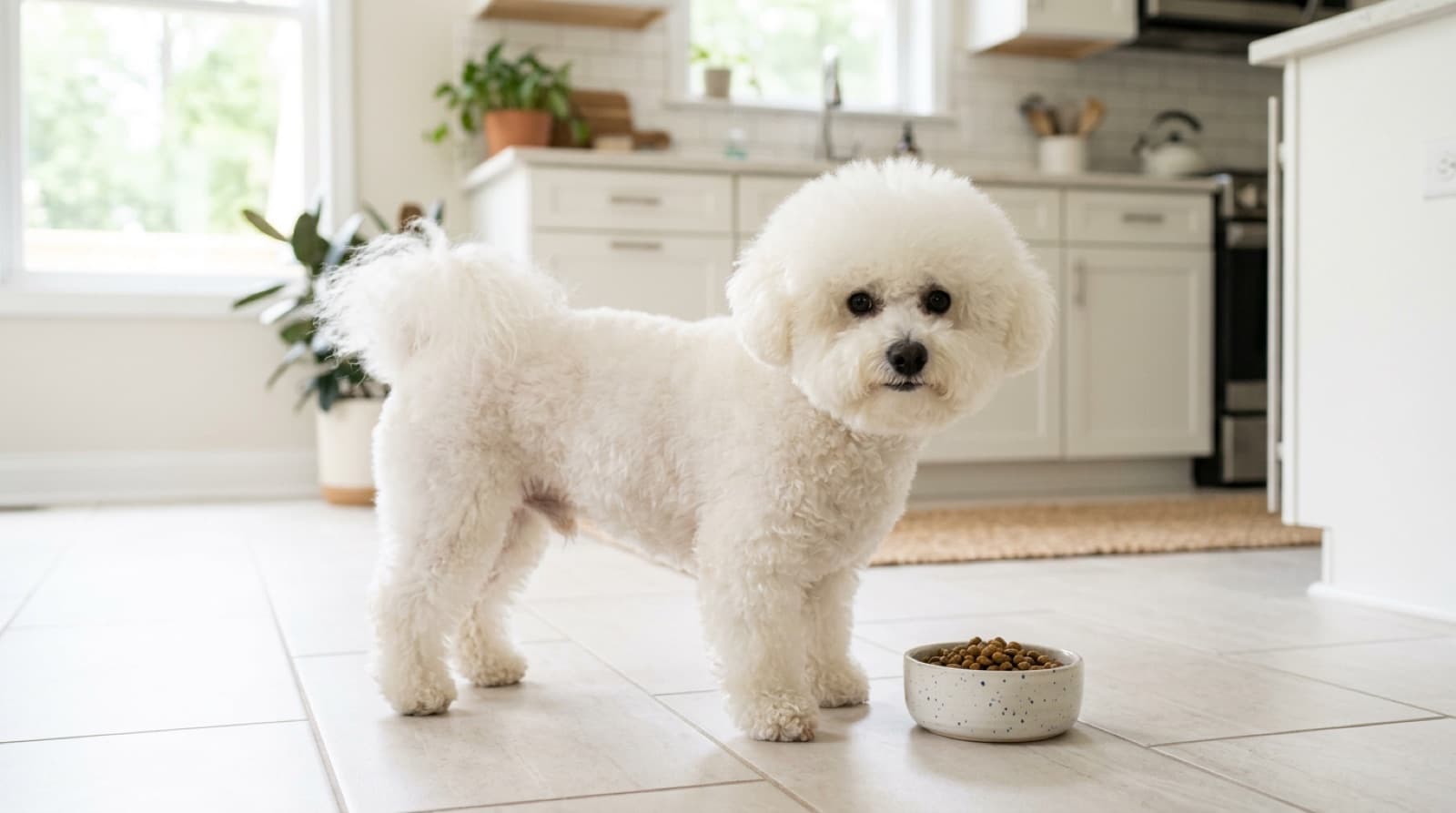
From around ten years of age, the Bichon coat thins, the skin becomes more sensitive, and joint stiffness makes long grooming sessions harder for the dog. Adapt the routine to the dog rather than asking the dog to adapt to the routine. Brushing stays daily but becomes gentler because thinning skin is more sensitive to slicker brush wires. Bath frequency stretches to every four to five weeks because senior skin dries out faster. Switch to a senior-appropriate oatmeal-based or sensitive-skin shampoo.
Many senior Bichons do better with shorter clipped coats (half an inch to one inch all over) because longer hair gets harder for them to keep clean and they tolerate shorter sessions on the grooming table better. Break a full groom into two shorter sessions on the same day or over two days if the dog struggles to stand for the whole appointment. Many Edmonton groomers offer senior-friendly appointments with shorter sessions, more breaks, and seated work for dogs that struggle to stand.
Watch for sudden coat or skin changes that signal an underlying condition rather than normal aging. Bilateral symmetric hair loss on the flanks and tail, dull or oily coat, new dandruff, slow-growing coat, or weight gain alongside coat changes can signal hypothyroidism (common in senior Bichons), Cushings disease, or skin allergies that are flaring with age. These need a vet workup including a full thyroid panel and an ACTH stim test, not a grooming change. The Bichon health guide covers the senior workup in detail.
Multi-Bichon household logistics
Multi-Bichon households (two or three dogs) need realistic planning around the per-dog time and cost. Daily brushing scales linearly: ten to fifteen minutes per dog per day. Professional grooming scales linearly: $80 to $130 per dog per appointment every four to six weeks. Groomers rarely discount the second dog because each one still gets a full session. The home bath day becomes a two to three hour project rather than 45 minutes.
Practical setup. Schedule both dogs for the same groomer appointment slot when possible; some Edmonton salons offer same-time slots with two groomers working in parallel. At home, dedicate one evening per dog for the full bath-and-dry rather than trying to do both in the same session. Buy duplicates of essential tools so you can rotate without cross-contamination during active skin or ear infections; brushes and combs can transfer yeast and bacteria between dogs.
Coat texture varies between Bichons even from the same litter. One dog might be daily-brushable while another mats within hours of skipping a day. Treat each dog as an individual and build a routine around the dog with the higher-maintenance coat. The lower-maintenance dog tolerates the extra brushing fine; the higher-maintenance dog will mat if the routine drops to the easier dog level.
Finding a Bichon-experienced Edmonton groomer
The single most important factor in long-term Bichon grooming satisfaction is finding a groomer with specific Bichon experience. The breed silhouette depends on scissor technique that not every groomer offers, and the round-head trim is the most common source of dissatisfaction with generalist grooming. Three sources of recommendations work better than online review searches.
First, ask the rescue you adopted from. The Edmonton Humane Society, Zoe's Animal Rescue, AARCS Edmonton fosters, GEARS, Hope Lives Here, AHHRB, and SCARS all see Bichons in intake and maintain informal lists of groomers their fosters and adopters have used. Second, ask your vet. Vet clinics see the work of every groomer in their catchment and have honest opinions on who produces good outcomes for which breeds. Third, check breed-specific Facebook groups for Edmonton Bichon owners; the same groomers tend to surface repeatedly in recommendation threads.
What to ask when booking. Do they have specific Bichon Frise experience and do they scissor the round head or clipper-finish it? How do they handle a wiggly small dog through a 90 to 120 minute session? What would they do if they found a mat? Do they offer photos of previous Bichon clients? A groomer who answers these questions clearly is the groomer you want. A groomer who deflects or sounds annoyed by the questions is the wrong groomer for a Bichon.
Once you find a groomer who produces good Bichon work, stay with them. The relationship pays off over years because the groomer learns your specific dog (mat patterns, sensitive areas, fear triggers, exact preferred length) and the appointments get smoother and shorter each cycle. Trying a new groomer means starting the waitlist clock over and risking a stretch of clips that do not fit the breed silhouette. The National Dog Groomers Association of America directory lists certified groomers who have passed breed-specific exams; certification is one signal among several.
Frequently asked questions
How often does a Bichon Frise need grooming?
Every four to six weeks for a full professional clip is the standard cadence for a pet Bichon Frise. Between professional appointments, plan on daily home brushing (five to ten minutes minimum), a face wipe routine for tear staining, weekly ear checks, and a bath every two to four weeks. Stretching the professional interval past six weeks usually shows up as matting in the leg furnishings, behind the ears, the armpits, and the rear feathering. Owners who push to eight weeks or longer typically pay a dematting surcharge or a shave-down because the curly double coat tangles close to the skin where brushing cannot reach. Book your next Edmonton appointment when you check out of the current one. Bichon-experienced groomers in Edmonton fill three to six weeks out, so waiting until the dog looks shaggy means a longer wait.
How much does Bichon Frise grooming cost in Edmonton?
A standard pet clip at an Edmonton groomer runs $80 to $130 for a Bichon Frise, including bath, blow-dry, full brush-out, body clip or scissor to your chosen length, signature round-head trim, sanitary trim, paw-pad trim, ear cleaning, and nail trim. Show-style scissor work that preserves the powder-puff silhouette runs $130 to $180. Dematting surcharges add $30 to $80 when the coat arrives matted, and a full shave-down on a heavily matted Bichon runs $150 to $220 because the work is slower and harder on the groomer. Annual grooming budget for a single Bichon at the recommended four to six week cadence is $1,000 to $1,800. Multi-Bichon households should plan the per-dog cost in full; groomers rarely discount the second dog because each one still gets a full session. A Bichon-experienced groomer charges a premium over a generalist and is worth it because the round-head trim is technique-specific.
What is the signature Bichon round-head trim?
The round-head trim (sometimes called the powder-puff trim or the Bichon trim) is the signature scissor finish that gives a Bichon the iconic round, full-face look. The groomer scissors the head into a perfect sphere with the eyes and nose set into the curve, the cheeks rounded out, and no hard angles anywhere. Done well, the face reads as a soft cotton ball rather than a clipped dog. Done poorly with clippers alone, the head looks flat-topped, ears blend into the cheek, and the breed silhouette disappears. The round-head trim is the single biggest reason Bichon owners pay a premium for a Bichon-experienced groomer. A generalist groomer doing a standard puppy cut on a Bichon almost always produces a clipped face that does not look like a Bichon. When booking, ask explicitly whether the groomer scissors the round head or clipper-finishes; the answer tells you what you are paying for.
How often should I brush my Bichon at home?
Daily for five to ten minutes is the practical floor. Three days a week is the absolute minimum for a clipped pet Bichon, and skipping more than that almost always produces a mat behind the ears or in the armpits within a week. The Bichon coat is a curly double coat where the soft outer curls and silkier undercoat tangle into each other when not separated regularly. The line brushing technique (lifting layers of coat and brushing from the skin outward in sections) is more effective than surface brushing because it reaches the undercoat where mats actually form. Five tools cover most of the work: a slicker brush for daily line brushing, a pin brush for the topcoat, a metal greyhound-style comb to check that you reached the skin, a dematter or mat splitter for trouble spots, and a stand dryer or hairdryer on cool-warm for after bathing. Watch the four mat hotspots every single day: behind the ears, the armpits and chest, the rear feathering and anal area, and the leg furnishings around the elbows and hocks.
How often should I bathe my Bichon Frise?
Every two to four weeks is the standard cadence for a pet Bichon, which is more frequent than most breeds because the white coat shows dirt fast and the curly texture traps debris. Atopic Bichons on a medicated bath protocol may bathe weekly to every ten days; that protocol is covered in the Bichon atopy guide and is a medical decision made with your vet, not a grooming choice. Use a gentle white-coat-brightening dog shampoo (avoid human shampoo, which has wrong pH for canine skin) and always apply a conditioner pass for slip and breakage reduction. Rinse thoroughly because Bichon curls trap shampoo residue and produce itching if not fully rinsed. The drying step is where most home baths fail. A wet Bichon coat tangles as it dries on its own, so always blow-dry on a low warm setting while brushing in sections. A handheld hairdryer with a vented hood works, or a small pet dryer is worth the investment for multi-Bichon households. Air-drying a Bichon coat is the fastest route to tight matting close to the skin.
How do I manage tear staining on a white Bichon?
Daily face-wipe routine plus a short face trim is the cosmetic fix that handles most cases. Use a damp cotton pad on each eye area (a separate pad per eye to avoid moving bacteria across), then dry the area gently. Keep the hair around the eyes trimmed short so tears cannot pool against the fur and oxidise into the reddish-brown porphyrin stain. Switch from plastic to ceramic or stainless steel water bowls because plastic harbours bacteria in microscopic scratches. If Edmonton tap water leaves heavy mineral residue in your kettle, try filtered water for the dog. Avoid hydrogen peroxide near the eye and avoid tear-stain supplements containing tylosin (a low-dose antibiotic not approved for this cosmetic use in Canada). Persistent staining that does not respond to the daily routine is a clinical signal, not a cosmetic problem. Sudden onset, worsening despite consistent wiping, eye redness, squinting, or visible discharge all need a vet visit because the underlying causes (blocked tear ducts, entropion, conjunctivitis, dental disease, or atopic flares) are treatable but need diagnosis first. The Bichon health guide covers the medical workup in more detail.
Why is my Bichon staining around the mouth and paws?
The brown or pink staining around the mouth and on the paws comes from the same porphyrin pigments as tear stains. Saliva from licking and chewing deposits porphyrin on the surrounding fur, where it oxidises with light exposure to a brown or rust colour. In an atopic Bichon, paw staining in particular is a tell because constant paw licking from environmental allergies often happens at low enough intensity that owners do not register it as a problem. Heavy paw staining usually means the dog is licking more than you realise. The cosmetic fix is daily paw wipes after walks with a damp cloth and weekly foot trims around the pads. The real fix is identifying and managing the underlying atopy that drives the licking. Coat brighteners and stain removers marketed to white breeds give a short-term cosmetic improvement but the staining returns as long as the underlying cause continues. Mouth staining responds to wiping after meals and water and a sanitary face trim every four to six weeks.
Should I clip my Bichon at home or use a professional groomer?
Most pet Bichon owners use a professional groomer for the full clip and do daily brushing plus minor touch-ups at home. The round-head trim is genuinely technique-specific and difficult to do well without training, and the curly double coat behaves differently under clippers than a single-coat breed. Clipping a Bichon at home requires real tool investment ($300 to $600 for clippers, blades, shears, and a stable surface), two to three hours per full session for a beginner, and willingness to accept a stretch of bad haircuts while you learn. The cost-benefit usually favours professional grooming at $80 to $130 per session every four to six weeks. Reasonable at-home work includes daily brushing, weekly ear cleaning, weekly face and sanitary touch-ups with blunt-tip scissors, foot trims between pads, and nail trims. A full at-home body clip is a real skill commitment, not a cost-saver, and most owners are better served paying a Bichon-experienced groomer and using that time on the daily brushing routine that actually prevents mats.
How do I care for a Bichon coat in Edmonton winter?
Two Edmonton-specific factors make winter harder on a Bichon coat than summer. The first is forced-air heating, which drops indoor humidity into the teens or twenties in January and creates static that knots the fine curls and dries the skin barrier. The second is road salt and snow on a white coat, which shows every speck of staining and creates visible yellowing on the legs and belly within a week if not addressed. The winter routine: brush daily without exception (more important in winter than summer), run a humidifier in the rooms the dog spends most time in (aim for 40 to 50 percent indoor humidity), rinse paws and belly with lukewarm water after walks on salted sidewalks, then blot dry. De-icing salt is hard on skin and paw pads and is also licked off, which adds an ingestion risk. A medicated post-walk wipe routine matters more for atopic Bichons. Sweater or coat use is sensible in deep cold because the Bichon double coat insulates moderately but not at -25 C and below. Boots solve the salt-paw problem if your dog tolerates them. The Bichon atopy guide covers the medicated bath protocol that some Edmonton owners step up to during the dry winter months.
How do I find a Bichon-experienced groomer in Edmonton?
Ask three questions before booking. First, do they have specific Bichon Frise experience and do they scissor the round head or clipper-finish it (the answer tells you whether the breed silhouette will be preserved). Second, how do they handle a wiggly small dog through a 90 to 120 minute session (calm desensitisation, not restraint, and break frequency for the dog). Third, what would they do if they found a mat (the right answer is call you and ask before cutting it out, especially close to skin). A groomer who skips these questions or sounds annoyed by them is the wrong groomer for a Bichon. Sources of recommendations: ask the rescue you adopted from (Edmonton Humane Society, Zoe's Animal Rescue, AARCS Edmonton fosters, and AHHRB all see Bichons and have informal groomer lists), ask your vet (clinics see the results of every groomer in their catchment), check breed-specific Facebook groups for Edmonton Bichon owners, and request reference photos of previous Bichon clients on the groomer's social media or in-salon portfolio. The National Dog Groomers Association of America (<a href="https://www.ndgaa.com/" target="_blank" rel="noopener noreferrer nofollow">ndgaa.com</a>) maintains a certified-groomer directory that Canadian groomers can join voluntarily; certification is not required to be a good groomer but is one credibility signal among many.
Are Bichons truly hypoallergenic?
No dog is fully hypoallergenic, but Bichons are often tolerated by people with mild dog allergies. The myth that any breed is hypoallergenic comes from the marketing of low-shedding curly-coated dogs (Bichon, Poodle, Doodle crosses, Maltese). The reality is that the allergen most people react to is not fur. The two main canine allergens are Can f 1 and Can f 2, both proteins found in saliva and skin dander rather than the hair shaft itself. A low-shedding coat releases less dander into the air because dander stays trapped in the curly coat until brushed or bathed out. That helps mildly allergic adopters but does not eliminate the protein from the home. According to the <a href="https://www.acvd.org/" target="_blank" rel="noopener noreferrer nofollow">American College of Veterinary Dermatology</a>, no breed is fully hypoallergenic and individual reactivity varies widely. If a household allergy is the reason you are considering a Bichon, spend two hours in the foster home with the specific dog before applying and wait 48 hours for delayed allergic response. Weekly bathing of the dog and HEPA filtration in the bedroom both reduce dander load further. The Bichon adoption guide covers allergy-compatible trial fostering through Edmonton rescues.
Related Edmonton Bichon guides
Edmonton Adoptable Dogs
Current Edmonton-area listings from SCARS, Zoe's, EHS, GEARS, Hope Lives Here, AHHRB, and AARCS Edmonton fosters, including Bichons and Bichon mixes when available.
Bichon Frise Adoption Edmonton
Where Edmonton rescue Bichons come from, $400 to $700 fees, the Bichon Poo and Poochon pandemic surrender wave, allergy compatibility, and the grooming commitment up front.
Bichon Frise Health Issues Edmonton
Atopic dermatitis, calcium oxalate bladder stones, cataracts, ITP and AIHA, Cushings, diabetes, hypothyroidism, dental disease, and the 12 to 15 year lifespan.
Bichon Frise Atopic Dermatitis Edmonton
The Edmonton Bichon atopy treatment ladder: Cytopoint, Apoquel, immunotherapy, medicated bathing protocol, allergen seasons, and the $1,500 to $5,000 annual cost.
Find your Edmonton rescue Bichon
Browse current Edmonton-area Bichon and Bichon-mix listings. Foster notes on coat condition, current cut, and grooming tolerance help you set up the first groomer visit smoothly.
Browse Edmonton Bichons →New dog? Start with these care guides
Everything a new adopter needs to set up a safe, happy home.