The short answer
Bichon Frise atopic dermatitis is a breed-defining genetic condition; most Bichons have some form of it. The Edmonton management plan runs four tools in parallel: an itch-control medication (monthly Cytopoint injection or daily Apoquel), allergen-specific immunotherapy for dogs that respond, weekly to monthly medicated bathing, and environment management (HEPA filter, dust mite covers, winter humidifier). Expect $1,500 to $5,000 per year in managed care across a 12 to 15 year lifespan. Pet insurance enrolled in week one of adoption (before any flare is documented) is essentially mandatory. For a refractory case, the WCVM dermatology service in Saskatoon takes Alberta referrals.
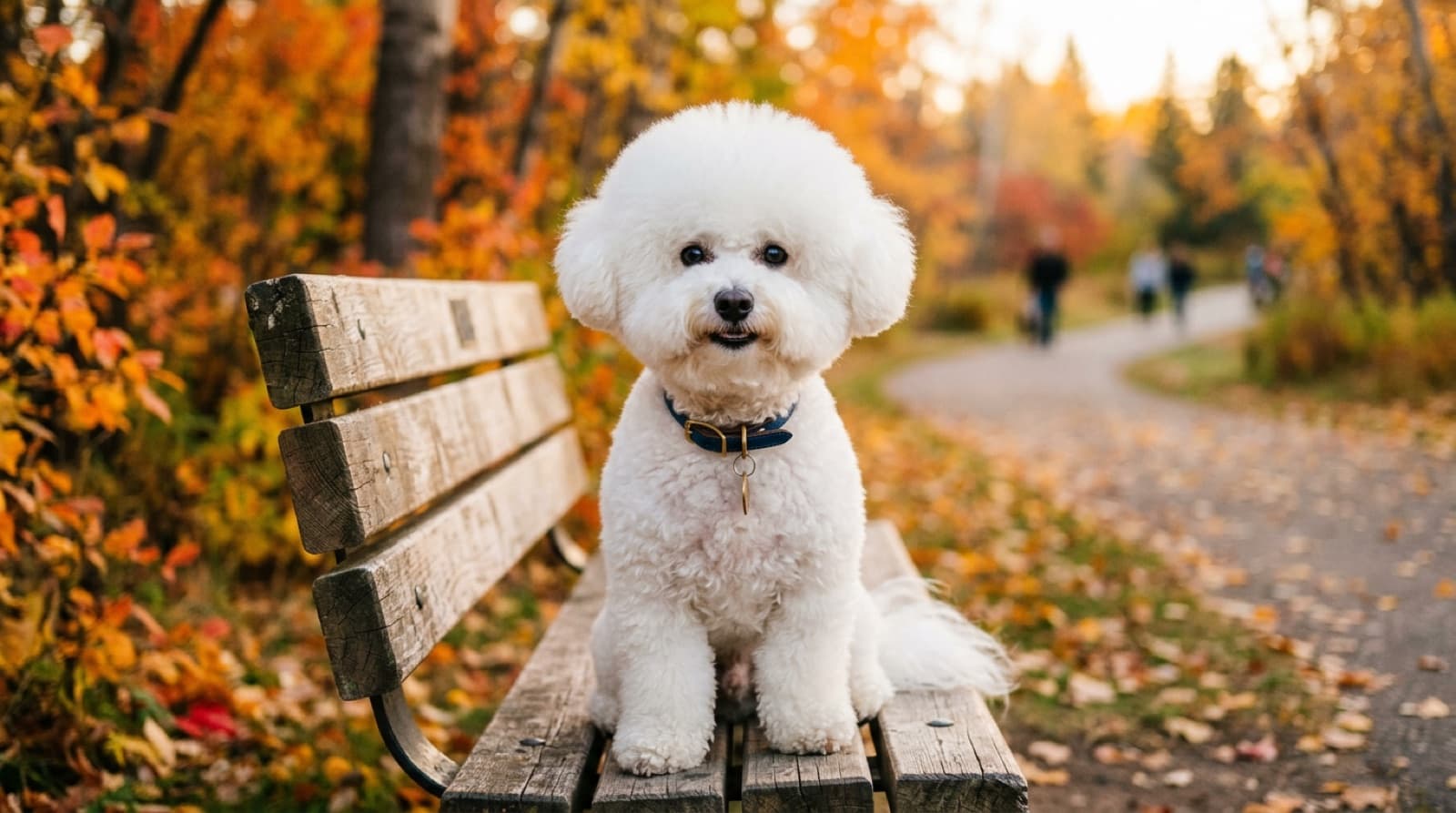
The Bichon atopy reality
Atopic dermatitis is a genetic predisposition to allergic skin inflammation in response to common environmental allergens. The dog inherits a weak skin barrier and an overactive immune response, both of which together let allergens through skin that a healthy dog would shrug off. The result is chronic itch, secondary infections, ear problems, and a long-term inflammatory load on the body. The breed is so consistently affected that the American College of Veterinary Dermatology lists the Bichon Frise among the highest-risk breeds for atopic dermatitis worldwide.
Most Bichons show their first signs between 6 months and 3 years of age, often with seasonal paw licking, facial rubbing, ear scratching, and belly redness. Some present earlier with year-round symptoms; some present later. Adopters who pick up a Bichon at 2 to 4 years from rescue often inherit a dog with an already-established pattern documented in the foster notes. Either way, the assumption to plan against is that the dog will need lifetime atopy management. Some Bichons land in the mild-and-easy quartile; most do not.
The Edmonton owner mindset shift is this: atopy is a chronic condition like diabetes or arthritis, not a passing skin irritation. The aim is not to cure it (you cannot) but to keep daily inflammation low enough that the scratch-bite-lick cycle never starts. A controlled atopic Bichon is a happy dog. An uncontrolled atopic Bichon is miserable, infected, and expensive. The difference between the two is consistent daily care plus the right medication strategy.
The allergens that drive Bichon flares
Atopic dermatitis is allergen-specific. The dog reacts to particular substances in its environment, not to everything. Most atopic Bichons have multi-allergen profiles (rarely one allergen alone), and a formal allergy panel run by a veterinary dermatologist identifies which ones matter for a given dog. The common drivers in Edmonton:
- Grass pollens. Timothy, Kentucky bluegrass, orchard grass. Peak May through August in the river valley.
- Tree pollens. Birch, alder, poplar, willow. Spring peak April to June.
- Weed pollens. Sage, ragweed, pigweed, lamb's quarters. Late summer and autumn.
- Outdoor mould spores. Alternaria, Cladosporium. Peak after warm rain in summer and during autumn leaf decomposition.
- House dust mites. Year-round indoors, worst in winter when houses are sealed.
- Storage mites. Live in stored kibble and grains; worth considering if bag-fed Bichons flare worse than fresh-fed.
- Indoor moulds. Bathrooms, basements, around humidifiers if poorly maintained.
- Food proteins. Less common as primary driver but real; chicken, beef, dairy, and wheat are the top suspects.
Knowing the specific allergens matters because immunotherapy is targeted to them, and because some environmental management is possible (dust mite covers and HEPA filtration for indoor mites; post-walk paw rinse for outdoor pollen) while other allergens are nearly impossible to avoid in daily life. The point of a formal allergy panel is to direct the long-term plan, not to eliminate every allergen from the dog's world.
Recognising atopy in a Bichon
The presenting signs are consistent enough across the breed that owner-side recognition is straightforward once you know what to look for. Early atopy in a Bichon looks like this:
- Paw licking and chewing. The most common early sign. Often dismissed as grooming. Heavy daily licking, especially after walks, is not normal.
- Facial rubbing. The dog drags its face on the carpet, sofa, or bedding to scratch the muzzle and eyes.
- Ear scratching. Combined with head shaking. The ear canals are part of the skin and inflame with the rest of it; recurrent ear infections often signal underlying atopy.
- Belly and groin redness. Visible pink or red skin on the underbelly, inner thighs, and groin (areas the dog cannot easily lick).
- Armpit and elbow rubbing. The dog scoots or rolls to scratch areas it cannot reach with the mouth.
- Recurrent secondary infections. Yeasty smell, sticky brown discharge between toes, bacterial pyoderma on the belly, repeat ear infections.
- Brown saliva staining. Especially on the paws and around the mouth. Heavy staining is a sign of constant licking.
The scratch-bite-lick cycle is the trap. A low-grade itch leads to licking, licking damages the skin barrier further, the damaged barrier lets more allergen through, inflammation rises, secondary bacterial or yeast infection starts, the itch intensifies, the dog licks more. The cycle is hard to break once it starts and easy to prevent if you catch it early. The early-recognition pay-off is large: an atopic Bichon caught in the early licking-and-rubbing phase responds to first-line treatment within 1 to 2 weeks. A dog already in established secondary infection needs antibiotics or antifungals plus the underlying atopy plan, and the work doubles.
The treatment ladder
Modern atopy treatment is multi-modal and stepwise. The right plan layers tools rather than relying on any single one. The Edmonton primary-care toolbox in 2026 looks like this:
| Tool | How it works | Edmonton cost |
|---|---|---|
| Cytopoint injection | Monoclonal antibody, blocks IL-31 itch cytokine, monthly | $80 to $150 per dose |
| Apoquel (oclacitinib) | Daily oral JAK1 inhibitor, blocks itch and inflammation pathways | $80 to $200 per month for 15 lb dog |
| Allergen-specific immunotherapy | Custom allergen injections or sublingual drops, retrains immune response | $200 to $400 initial panel, $50 to $100 monthly maintenance |
| Medicated bathing | Chlorhexidine plus miconazole shampoo, removes allergen and treats secondary infection | $30 to $50 per bottle, 2 to 4 months use |
| Antihistamines (Reactine, Benadryl) | Block H1 receptors, mild effect, useful for very mild cases only | $15 to $30 per month, dose with vet guidance |
| Oral steroids (prednisone) | Rescue use only for severe flares, long-term risks (Cushings, infections, weight, joint) | $20 to $50 short course |
Cytopoint and Apoquel are the modern first-line itch controls. Both target the actual biology of the itch signal rather than masking it with immunosuppression. The American Veterinary Medical Association and the American Animal Hospital Association both reference these as standard of care for canine atopy. Choice between them is patient-specific: needle-shy dogs and minimal-medication families lean Cytopoint; dogs whose itch breakthrough-spikes daily or whose owners want fast on-off control lean Apoquel.
Immunotherapy is the long-term curative option for dogs that respond. A veterinary dermatologist runs an allergy panel, identifies the specific allergens that drive the dog, and formulates a custom allergen injection or sublingual drops. Owner administers at home for 6 to 12 months minimum to see if response develops. Roughly 60 to 70 percent of dogs respond well enough to substantially reduce or stop Cytopoint or Apoquel. The Edmonton path is usually: start Cytopoint or Apoquel to control symptoms now, refer to a dermatologist for the panel within the first year, build immunotherapy alongside continued itch control, and re-evaluate at 12 to 18 months.
Oral steroids are for rescue only. Prednisone reliably knocks back a severe flare in 24 to 48 hours and that ability earns it a place in the toolbox. Long-term daily prednisone is not appropriate atopy management. Long-term use risks include iatrogenic Cushings disease, increased infection susceptibility, muscle wasting, weight gain, ligament weakening, and cataracts. A short course (5 to 14 days) at a flare break-the-cycle moment is fine. A 6-month-running prescription is a sign the underlying plan needs work, usually escalation to a dermatologist.
The food trial (8 to 12 weeks, strict)
Roughly 20 to 30 percent of atopic Bichons have a meaningful food allergy component on top of the environmental allergy. The two look identical clinically (paws, ears, belly, perineum, recurrent ear infections) and the only way to confirm or rule out food allergy is a strict elimination diet trial. Skipping the trial means missing a treatable component of the disease in roughly a quarter of dogs.
The protocol that works: 8 to 12 weeks on a single novel protein the dog has never eaten (kangaroo, alligator, rabbit, venison) or a hydrolysed prescription veterinary diet (Royal Canin Anallergenic, Hills z/d, Purina HA, $90 to $130 per bag). Absolutely no flavoured treats, flavoured chews, flavoured dental products, table scraps, or flavoured medications during the trial. Strict means strict. One milk-bone or a slice of cheese breaks the trial and resets the clock. The clinical signs need at least 8 weeks to clear before a change is detectable.
After 8 to 12 weeks, if symptoms improved, run a deliberate provocation: feed the original protein for 1 to 2 weeks and watch for symptoms to return. If they do, you have your answer and you keep the dog on the novel-protein or hydrolysed diet long-term. If they do not, food was not the driver and you stop the diet trial. The work is real (the social cost of saying no to grandkid table scraps for 12 weeks is real) but the lifetime pay-off is significant if the dog responds.
The medicated bath protocol
Medicated bathing does three things for an atopic Bichon: physically removes allergen pollens, mites, and grass dust from the coat; treats and prevents secondary bacterial and yeast skin infections; and supports the damaged skin barrier with moisturising ingredients in modern formulations. It is one of the most under-used tools in atopy management because owners either skip it entirely or use it as a regular shampoo without the proper contact time.
Product choice: chlorhexidine plus miconazole formulations (Malaseb, Douxo S3 PYO, Mal-A-Ket) are the standard first-line. They are antibacterial and antifungal and well-tolerated. A vet may also recommend moisturising chlorhexidine plus colloidal oatmeal formulations for dogs with dry winter skin alongside atopy. Skip harsh medicated formulations marketed at livestock or kennels; the formulations made for companion dogs are more skin-supportive.
Cadence: weekly during active flares, every 10 to 14 days during stable periods, every 3 to 4 weeks during the calmest seasons. The dog needs more bathing than a typical white companion, not less. The opposite intuition (atopic skin needs less bathing) is wrong; the issue is what shampoo is used and how it is used.
Technique: brush the coat thoroughly first to prevent matting traps. Wet with lukewarm water (not hot). Apply shampoo to the whole body including paws, belly, and base of tail. Leave on the skin for a full 10 minutes of contact time, set a timer. Without 10 minutes you are using a medicated product as a regular shampoo. Rinse thoroughly, towel dry, finish with a low-heat blow dry until the dog is completely dry to the skin, especially ears, paws, and groin. Damp Bichon coat traps moisture against atopic skin and provokes secondary infection. The drying step is the second-most-skipped step after the contact time.
Edmonton seasonal allergen patterns
Edmonton has four meaningful atopy seasons and the management plan shifts modestly across the year. Most atopic Bichons feel their worst in late summer and early autumn when outdoor pollen, weed, and mould loads stack.
Spring (April to June). Birch, alder, and poplar tree pollens dominate first, then grass pollens (timothy, Kentucky bluegrass) build through May. The river-valley trail network is heavy with both. Post-walk paw rinse and face wipe becomes daily; bathing cadence moves to every 10 to 14 days. Watch for the first paw-licking and facial-rubbing spike around mid to late April.
Summer (June to August). The peak grass season, plus weed pollens (sage, ragweed, pigweed) building through August. Outdoor mould spores rise after warm rain. The hardest season for most atopic Bichons. Daily paw rinse after every outdoor outing, weekly medicated baths, and a step-up to Cytopoint or Apoquel intensity if the dog has been on a low-dose plan. Time outdoor walks for early morning or late evening when pollen counts are lower.
Autumn (September to October). Worst outdoor mould season in many years as fallen leaves decompose; ragweed continues. River-valley walks pass through carpets of decomposing leaves loaded with spores. Bichons that did fine through summer often crash hard in September. Keep summer-level management running into October. Watch for the autumn flare cluster; pre-emptive medication step-up often beats the reactive treatment.
Winter (November to March). The load shifts indoors. House dust mites peak in sealed-up homes, storage mites grow in kibble bags, indoor moulds rise in damp basements, and low furnace humidity (15 to 25 percent) damages the skin barrier directly. Furnace humidifier set to 35 to 45 percent, dust mite covers on bedding, weekly hot wash of dog blankets, and a moisturising medicated shampoo to support the barrier. Watch for a winter dust-mite-driven flare that owners often blame on something else.
Browse adoptable Bichon Frises in Edmonton
Atopic dermatitis management is part of the breed baseline, not a complication. Foster temperament notes flag prior allergy diagnosis, treatment history, and seasonal patterns that matter for the first 30 days of adoption. Browse current adoptable Bichons and Bichon crosses.
See Edmonton Adoptable Dogs →
Secondary infections (the cycle escalator)
Most atopic Bichon vet visits are not for the atopy itself but for secondary skin and ear infections triggered by atopy. The damaged skin barrier lets normal flora bacteria (Staphylococcus pseudintermedius mostly) and yeast (Malassezia mostly) overgrow into clinical infection. Recurrent secondary infection is the single most common reason owners feel like the atopy plan is failing.
Bacterial pyoderma shows as red bumps, pustules, or weeping crusts, often on the belly, groin, and between toes. Treatment is a 3 to 4 week course of an oral antibiotic plus topical chlorhexidine or mupirocin. Cytology run by the vet ($40 to $80) confirms the infection type before treatment; culture and sensitivity ($150 to $300) is run for recurrent or non-responding cases to identify drug-resistant strains and pick the right antibiotic.
Malassezia yeast infection shows as a brown or grey greasy discharge, often between toes, in the ears, or on the belly, with a distinctive yeasty smell. Treatment is medicated bathing with miconazole or ketoconazole plus topical or oral antifungals for 2 to 4 weeks. Cytology confirms the diagnosis.
Otitis externa (ear infection) is the most common secondary issue in atopic Bichons because the ear canal is part of the skin and inflames with the rest of it. Recurrent ear infections in a Bichon almost always mean undiagnosed or uncontrolled atopy. The fix is to control the atopy, not just retreat each ear infection. Each ear visit runs $150 to $400 (exam, cytology, prescribed drops, follow-up). Three or more ear infections per year is a clear signal the atopy plan needs work.
White coat staining and tear streaks
The cosmetic side of atopy is its own conversation. White-coated Bichons stain brown around the eyes, mouth, paws, and anal area from porphyrin pigments in saliva and tears. The staining is cosmetic, but it is also a clinical sign: heavy paw staining means heavy licking; heavy eye staining means heavy tear overflow; heavy mouth staining often means chronic chin or lip licking from allergic discomfort.
Practical staining management runs alongside the atopy plan: a daily face wipe (plain water or saline cotton pad) around the eyes and mouth removes fresh tear and saliva residue before it oxidises onto the coat. A daily paw rinse after walks removes pollen plus saliva from licking. A weekly trim of the corner-of-mouth hair reduces saliva pooling. Coat bleaches and stain removers marketed at white breeds are mostly cosmetic; the underlying fix is to reduce the licking and tearing that cause the staining in the first place, which means controlling the atopy.
Heavy persistent eye discharge that is not clear (yellow, green, or thick), squinting, or any swelling around the eye is not a staining issue; it is a corneal or conjunctival problem that needs a vet visit. The American College of Veterinary Internal Medicine and the veterinary ophthalmology specialty maintain owner-facing references on companion-dog eye disease.
Indoor allergen management
Edmonton Bichons spend roughly 8 months of the year primarily indoors. Indoor allergen management is therefore the longest-running environmental lever an owner can pull. The practical setup that helps most atopic Bichons:
- HEPA air filter in the dog's main living area, running 24 hours. A unit rated for the room size is $150 to $400. Filter swaps every 6 to 12 months.
- Dust mite covers on the dog's bedding and on owner mattresses and pillows if the dog sleeps on the bed. Hot-wash all dog bedding weekly at 60 degrees Celsius minimum to kill mites.
- Regular vacuuming with a HEPA-rated vacuum, especially carpets and upholstered furniture. Twice a week minimum; daily during heavy flare periods.
- Hard floors over carpet where practical. Carpets hold dust mites, pollens tracked in from outside, and skin debris. The transition is expensive but is one of the most effective environmental moves for severe atopic dogs.
- Furnace humidifier at 35 to 45 percent through winter to support the skin barrier and reduce dust mite-related dryness flares.
- Kibble storage in a sealed container, refilled every 1 to 2 weeks. Loose bags grow storage mites that contaminate the food.
- Bathroom and basement humidity check. Dehumidifier or fix the moisture source if these areas read above 60 percent humidity; indoor moulds grow in damp.
No environmental change is a substitute for medical management; the dog still needs Cytopoint or Apoquel plus medicated bathing. But environmental work reduces the allergen load that the medication has to overcome and is often the difference between a marginal plan and a working one.
Outdoor allergen management
Outdoor allergen avoidance is harder than indoor management because you cannot remove tree pollens from the river valley. The practical lever is reducing the dog's exposure and removing allergen from the coat after every outing.
- Post-walk paw rinse. Lukewarm water in a small basin at the door; rinse all four paws, towel dry. Removes pollen and grass dust before the dog licks it off. Daily during spring through autumn.
- Face wipe. Plain water or saline pad around the eyes, mouth, and muzzle after every outdoor outing.
- Belly wipe. The belly fur drags through grass on summer walks and collects pollen. A damp cloth wipe of the belly after a grass-heavy outing reduces overnight scratch.
- Time outdoor walks early. Pollen counts are lower in the early morning before the air warms. Late evening is the second-best window. Midday in summer is worst.
- Avoid grass cuttings. Fresh-cut lawns release a heavy pollen pulse. Walk around them.
- Watch the air-quality index. On high-pollen or wildfire-smoke days, shorten outdoor outings and lean on indoor enrichment.
- Skip the dog park during heavy pollen weeks. An hour rolling in grass at Hawrelak Park during peak grass season undoes a week of management.
The Edmonton trail and park network (Mill Creek Ravine, Hawrelak, Terwillegar, Whitemud, Capilano, Rundle) is gorgeous and the Bichon does need to walk somewhere. The point is not to keep the dog indoors all summer; it is to be deliberate about timing, post-walk cleanup, and recognising flare-cluster weeks when the dog needs lighter routine and stronger medication management.
Edmonton veterinary dermatology access
Most Edmonton primary-care vets handle mild and moderate atopy well, including Cytopoint or Apoquel initiation, secondary infection treatment, and medicated bathing protocols. Severe chronic cases benefit from a board-certified veterinary dermatology workup that includes formal allergy testing, possible skin biopsy, and a targeted long-term management plan including immunotherapy formulation.
Board-certified veterinary dermatologists in Alberta are limited. The Western College of Veterinary Medicine at the University of Saskatchewan in Saskatoon is the closest academic centre with dermatology specialty service and accepts Alberta referrals through a primary-care vet. Calgary specialty practices occasionally have visiting dermatology consultants. Edmonton primary-care vets can also book telemedicine consultations with board-certified dermatologists for second opinions on complex cases. The referral pathway is through a primary-care vet, not direct.
Referral criteria: three or more flares per year despite proper home and medication management; treatment failure on first-line Cytopoint or Apoquel at full dose; recurrent secondary infections that suggest an underlying allergic driver not yet identified; family ready to pursue immunotherapy and needs a formal allergy panel; or any atypical skin lesion needing definitive diagnosis. The referral cost is real ($600 to $1,200 for the initial consultation plus allergy testing, before any treatment), and pet insurance usually covers it well if the policy was enrolled before any skin diagnosis was documented.
Pet insurance for atopy claims
Atopic dermatitis is a predictable lifetime cost in the breed, and pet insurance generally covers it well, but only if the policy is enrolled before the first diagnosis is documented in vet records. Skin disease is the single most common pre-existing exclusion category for the Bichon Frise. A dog already carrying an atopy diagnosis at the time of policy enrolment will almost always have skin-related claims excluded permanently.
Typical claim picture for an Edmonton atopic Bichon: monthly Cytopoint or Apoquel ($80 to $200), twice-yearly vet rechecks ($150 to $300 each), 2 to 4 secondary infection treatments per year ($200 to $500 each), one allergy panel and initial immunotherapy setup ($600 to $1,200 if pursued), and ongoing immunotherapy maintenance ($50 to $100 per month if pursued). A pet insurance policy at $50 to $75 per month with 80 to 90 percent reimbursement and a $500 to $750 annual deductible typically pays back within 18 to 24 months of enrolment and continues to deliver lifetime value because atopy is chronic.
Read the fine print on chronic-condition coverage. Most reputable policies treat atopic dermatitis as a single chronic condition with lifetime coverage that continues year over year. Some policies have annual caps or condition-specific limits. Ask the question explicitly at enrolment: is recurrent atopic dermatitis covered as a chronic condition or does each flare reset to the deductible? The answer determines whether the policy is worth the premium for the breed. The week-one enrolment rule applies absolutely: enrol before any flare is documented, because the breed will have flares and you want them covered.
The annual cost reality
Managed atopy in an Edmonton Bichon runs $1,500 to $5,000 per year, with most well-managed dogs landing in the $2,000 to $3,500 range. The breakdown for a typical moderate case:
- Monthly Cytopoint injections: $960 to $1,800 annually
- Twice-yearly vet rechecks: $300 to $600 annually
- Medicated shampoo: $90 to $200 annually
- Secondary infection treatment: $400 to $1,200 annually (2 to 3 infections)
- Immunotherapy maintenance (if pursued): $600 to $1,200 annually
- Ear infection treatment: $200 to $800 annually (recurring is common)
- Environmental supplies (filter, mite covers, humidifier): $200 to $400 in year one, less in subsequent years
Across a 14-year Bichon lifespan, total atopic dermatitis spend typically runs $25,000 to $65,000. This is not optional or avoidable spend; it is the structural cost of owning the breed. The right move is to plan for it from week one: pet insurance enrolled before the first vet visit at which atopy might be diagnosed, environmental setup in place before the dog comes home, and a primary-care vet who is familiar with modern atopy management identified before any flare hits.
Senior Bichon atopy (progression and comorbidity)
Bichon Frises typically live 12 to 15 years and the senior window opens around 9. Senior atopic Bichons often see disease progression rather than resolution: new allergens get added to the panel, secondary infections recur more often, response to first-line medications shifts, and other senior conditions stack on top. The plan tightens rather than relaxes.
Specific senior considerations: Apoquel and immunotherapy interact with renal and hepatic function, so annual bloodwork becomes more important; senior dental disease can drive secondary skin and ear flares through chronic low-grade infection; canine cognitive decline can change the dog's tolerance for daily handling and bathing; arthritis and joint pain can make positioning for medicated baths harder. The routine adapts to the dog.
Heart and kidney comorbidity becomes more common after 10. Mitral valve disease is common in small dogs and changes anaesthesia and some medication choices. Run senior bloodwork annually starting at 8 to catch changes early. Atopy management in a senior Bichon is more about steady control and infection prevention than about achieving symptom-free days; the goal is a comfortable dog who is not chewing at itself.
Multi-Bichon household logistics
Two atopic Bichons is double the daily care. Three is triple. The bathing day alone (with proper 10-minute contact time and full drying) runs 30 to 45 minutes per dog. Plan the time honestly before adding a second Bichon to the home.
Use separate towels and bedding per dog (never share to avoid cross-seeding secondary infections), keep separate medication records, and run each dog through the full routine before starting the next. If one dog has an active bacterial pyoderma or yeast flare, isolate the cleaning supplies until the flare resolves to prevent cross-contamination to the other dog. Wash hands thoroughly between dogs during an active infection.
The financial side is also doubled. Two atopic Bichons typically run $4,000 to $8,000 per year in combined atopy care. Pet insurance per dog plus the bigger environmental setup (multiple HEPA filters across the home, more frequent bedding hot-wash, more medicated shampoo) all add up. A pair is the right move for many households; going in with eyes open about the time and dollar load is the difference between a sustainable pair and a stressful one.
When to escalate beyond the primary-care plan
Most Edmonton Bichons are well-managed at the primary-care level with Cytopoint or Apoquel plus medicated bathing plus environmental work. Escalate when the primary-care plan is not controlling symptoms or when the workup needs a dermatology specialist.
Book a regular vet visit this week if:
- The dog is scratching more than usual despite normal medication
- Visible secondary infection signs (yeasty smell, sticky discharge, red bumps)
- Recurrent ear infection symptoms (head shaking, ear scratching, discharge)
- Heavy paw licking beyond the dog's normal baseline
- The medicated shampoo is not clearing a mild flare within 2 weeks
Book a dermatology specialist referral if:
- Three or more documented flares per year on proper first-line treatment
- Treatment failure on full-dose Apoquel (the dog is still scratching daily)
- Recurrent secondary infections needing repeat antibiotic courses
- Family wants formal allergy panel for immunotherapy
- Atypical skin lesions that need definitive diagnosis
- Dog is on long-term prednisone (more than 4 weeks at a time)
The escalation cost is real but is generally money well spent: a dermatology workup that identifies the right allergens for immunotherapy can reduce lifetime atopy spend significantly by reducing dependence on monthly itch medication. For severe atopy, the primary-care vet alone is often not enough.
Frequently asked questions
How do I manage Bichon atopic dermatitis day to day?
Daily management is built around three layers running in parallel. First, the treatment layer: most Edmonton Bichons end up on either monthly Cytopoint injections ($80 to $150 per dose at a primary-care vet) or daily oral Apoquel ($80 to $200 per month for a 15 lb dog), with allergen-specific immunotherapy ($200 to $400 for the initial allergy panel and $50 to $100 per month maintenance) as the long-term curative option for dogs that respond. Second, the bathing layer: a weekly to monthly medicated bath with a chlorhexidine plus miconazole shampoo, contact time of 10 minutes, full rinse, and thorough drying. Third, the environment layer: HEPA air filtration in the dog's main living area, dust mite covers on bedding, weekly hot-wash of dog blankets, daily post-walk paw rinse in spring and summer, and a furnace humidifier in winter set to 35 to 45 percent. The goal is not to eliminate the allergic response (you cannot) but to keep skin inflammation low enough that the scratch-bite-lick cycle never starts. The Edmonton Bichon owners who control atopy run all three layers consistently; the ones who treat reactively run from flare to flare.
What is the difference between Cytopoint and Apoquel?
Both target the itch signal at a biological level rather than masking it like steroids do, but they work differently. Cytopoint is a monoclonal antibody injection given roughly monthly that neutralises interleukin-31, the main itch cytokine in dogs. It is dog-protein based, has a very clean side-effect profile, and works well in dogs whose itch is predominantly interleukin-31-driven (most atopic Bichons). Apoquel is a daily oral tablet (oclacitinib) that blocks JAK1 enzyme signalling, hitting interleukin-31 plus several other itch and inflammation pathways. It works faster than Cytopoint (within hours versus a few days) and gives more complete relief in some dogs, but it modestly suppresses the immune system, so dogs on long-term Apoquel need annual bloodwork and careful monitoring for infection. The practical choice is usually patient-specific: needle-shy dogs and minimal-medication families lean Cytopoint; dogs whose itch breakthrough-spikes daily or whose owners want fast on-off control lean Apoquel. Many Edmonton Bichons rotate between the two over their lives as response shifts. Neither addresses the underlying allergy; that is what immunotherapy is for.
Is allergen-specific immunotherapy worth it for a Bichon?
For a young Bichon with confirmed atopy and a clear allergen profile, yes, it is the closest thing to a cure the breed has. Immunotherapy is the same concept as human allergy shots: a vet dermatologist runs an intradermal or serum allergy panel ($200 to $400 in Edmonton), identifies the specific allergens the dog reacts to (grass pollens, tree pollens, house dust mites, mould species, storage mites), and formulates a custom injection or sublingual drops that the owner administers at home for 6 to 12 months minimum. Roughly 60 to 70 percent of dogs respond well enough to substantially reduce or eliminate Cytopoint or Apoquel use. Maintenance runs $50 to $100 per month long-term. The catch is the time commitment: response takes 6 to 12 months to develop, and you continue daily symptom management during the build-up. For senior Bichons or dogs with strong response to Cytopoint or Apoquel alone, immunotherapy is often skipped. For young Bichons facing a 12 to 15 year atopic lifespan, the math usually favours immunotherapy.
Why is winter sometimes worse for my Bichon's skin in Edmonton?
Edmonton furnace season (roughly October to April) drops indoor humidity to 15 to 25 percent in many homes. Low humidity damages the skin barrier directly: the outer skin layer (stratum corneum) dries, cracks at the microscopic level, and lets through allergens and irritants that a healthy barrier would block. Bichons already have a genetically weak skin barrier as part of the atopy package, so winter dry indoor air amplifies an existing problem. The result is paw licking, facial rubbing, and general fussiness even when the outdoor pollen season is dormant. Two practical fixes: run a furnace humidifier (or several room humidifiers) at 35 to 45 percent through the dry months, and step the medicated bath cadence up to every 7 to 10 days using a moisturising chlorhexidine plus colloidal oatmeal formulation that supports the barrier rather than drying it further. Watch for dust-mite-driven flares too. House dust mites peak in winter when houses are sealed up and bedding gets less outdoor airing.
Should I do a food trial for my Bichon?
Yes, if the dog has year-round symptoms (not strictly seasonal) and especially if the symptoms include the ears, paws, perineum, and recurrent ear infections in addition to skin itch. Food allergy can coexist with environmental atopy and looks identical on the surface, so the only way to confirm or rule it out is an 8 to 12 week strict elimination diet using a novel protein (hydrolysed prescription diet, or a true single protein the dog has never eaten such as kangaroo, alligator, or rabbit) with absolutely no flavoured treats, chews, dental chews, table scraps, or flavoured medications during the trial. Strict means strict. One milk-bone breaks the trial. After 8 to 12 weeks if symptoms improved, the next step is a deliberate provocation: feed the original protein for 1 to 2 weeks and watch for symptoms to return. If they do, you have your answer. Roughly 20 to 30 percent of atopic Bichons have a meaningful food component. The work is real but the lifetime payoff is significant if the dog responds.
How do I run the medicated bath protocol at home?
The protocol that works in Edmonton homes is straightforward but the steps matter. Pre-bath, brush the coat thoroughly to remove tangles (a matted Bichon traps shampoo in the coat and irritates the skin further). Wet the dog with lukewarm water and apply a chlorhexidine plus miconazole shampoo from a veterinary supply (Malaseb, Douxo S3 PYO, or a vet-dispensed equivalent runs $30 to $50 per bottle and lasts 2 to 4 months). Lather the whole body including paws, belly, and the base of the tail. Then the part most owners skip: leave the shampoo on the skin for a full 10 minutes of contact time. Set a timer. Without 10 minutes of contact, you are using a medicated product as a regular shampoo and getting regular shampoo results. Rinse thoroughly, towel dry, and finish with a low-heat blow dry until the dog is completely dry to the skin, especially in the ears, paws, and groin. Cadence: weekly during active flares, every 10 to 14 days during stable periods, monthly during the calmest seasons. Skip the bath if the skin is raw and bleeding and book a vet visit instead.
What does atopic dermatitis cost over a Bichon's lifetime?
Managed atopy in an Edmonton Bichon costs roughly $1,500 to $5,000 per year depending on disease severity, treatment choice, and complication frequency. A mild-to-moderate case running monthly Cytopoint, twice-yearly vet rechecks, medicated shampoo, and occasional secondary-infection antibiotics lands around $1,800 to $2,500 annually. A moderate-to-severe case running daily Apoquel plus immunotherapy plus quarterly secondary skin or ear infection treatment lands $3,500 to $5,000 annually. Across a 14-year Bichon lifespan, total atopic dermatitis spend typically runs $25,000 to $65,000. This is why pet insurance enrolled before any skin diagnosis is documented is essentially mandatory for the breed. A policy at $50 to $75 per month with 80 to 90 percent reimbursement after a $500 to $750 annual deductible usually pays back within 18 to 24 months of enrolment and continues to deliver lifetime value because atopy is chronic. The wrong move is to skip insurance assuming the dog will be fine. The right move is to enrol in week one of adoption.
When should I escalate to a veterinary dermatologist?
Escalate when the primary-care plan is not controlling symptoms or when the workup needs allergy testing for immunotherapy. Specific triggers: three or more documented flares per year despite proper Cytopoint or Apoquel use plus medicated bathing; treatment failure on first-line itch medication (the dog is still scratching daily on full-dose Apoquel); recurrent secondary skin or ear infections needing repeat antibiotic courses (suggests an underlying allergic driver that has not been controlled); the family is ready to invest in immunotherapy and needs a formal allergy panel; or any unusual or atypical skin lesion that needs definitive diagnosis. Veterinary dermatologists in Alberta are limited. The Western College of Veterinary Medicine at the University of Saskatchewan in Saskatoon is the closest academic centre with dermatology specialty service and accepts Alberta referrals through a primary-care vet. Calgary specialty practices sometimes have visiting dermatology consultants. Edmonton primary-care vets can also book telemedicine consultations with board-certified dermatologists for second opinions on complex cases.
Why does my white Bichon stain around the eyes, mouth, and paws?
The brown or pinkish-red staining is caused by porphyrin pigments in saliva and tears reacting with the white coat. Constant licking (paws, anal area) and tear overflow (eyes) deposit porphyrin on the surrounding fur, where it oxidises with light exposure to a brown or rust colour. In an atopic Bichon, the staining is amplified because the dog licks more (paws), produces more tears (eye irritation from environmental allergens), and has more facial saliva contact from chewing irritated skin. The staining is cosmetic, not medical, but it is also a clinical sign: heavy paw staining in particular often means the dog is licking the paws much more than the owner realises. Daily face wipes (plain water or a saline cotton pad) reduce eye staining; daily paw wipes after walks reduce paw staining. The real fix is controlling the atopy that drives the licking. Coat bleaches and stain removers marketed to white breeds are mostly cosmetic; the staining recurs as long as the underlying cause continues.
Are there allergens specific to Edmonton that I should know about?
Yes. Edmonton has a distinct seasonal allergen calendar that shapes the year for an atopic Bichon. Spring (April to June) brings grass pollens including timothy and Kentucky bluegrass plus early tree pollens (birch, alder, poplar) that are heavy across the river valley. Summer (June to August) brings the dominant grass pollen load plus weed pollens (sage, ragweed, pigweed) and outdoor mould spores that rise after warm rain. Autumn (September to October) brings the worst outdoor mould season in many years as fallen leaves decompose; ragweed continues. Winter (November to March) shifts the load indoors: house dust mites, storage mites, indoor moulds in damp basements, and irritation from low-humidity furnace air. Most Edmonton Bichons have a multi-allergen profile (grass plus dust mite is common) and feel their worst in late summer and early autumn when outdoor and indoor sources stack. Tracking which months the dog flares hardest helps the vet target immunotherapy and time stronger interventions.
Does my Bichon need lifelong treatment or will atopy go away?
Atopic dermatitis is a lifelong genetic predisposition, not a temporary condition. It does not go away. What changes is how well controlled it is. Most well-managed atopic Bichons run a long stretch where Cytopoint plus medicated bathing plus environment management keeps daily life quiet (mild itch, occasional flares, no secondary infections); flares cluster around seasonal peaks and stress events. Young dogs (under 3 years) sometimes seem to outgrow mild atopy in the first year of treatment but typically that is well-controlled disease, not resolution. Older Bichons (over 10 years) often see disease progression with new allergens added to the panel, more frequent secondary infections, and reduced response to first-line medications. Plan for lifelong management when you adopt the breed. The good news is that the Edmonton treatment landscape is the strongest it has ever been: Cytopoint and Apoquel are the standard, immunotherapy is widely available, and pet insurance is generally cooperative on lifetime atopy claims for dogs enrolled before diagnosis.
Related Edmonton Bichon Frise guides
Adoptable Bichon Frises in Edmonton
Browse current Bichons and Bichon crosses listed with Edmonton-area rescues. Updated regularly.
Bichon Frise Adoption Edmonton
Edmonton Bichon rescue sources, surrender patterns, real adoption costs, and the breed-vs-buy reframe.
Bichon Frise Health Issues: Stones, Knees, Teeth
Bichon Frise health issues to plan for: bladder stones, slipping kneecaps, dental disease, itchy skin and allergies, and what to ask your vet after adoption.
How to Groom a Bichon Frise
A Bichon Frise grooming guide: why the coat mats so fast, the pre-bath rule that prevents disasters, the powder-puff trim, tear stains, and the honest cost.
Find your Edmonton Bichon Frise
Browse adoptable Bichons and Bichon mixes from Edmonton-area rescues. Foster temperament notes flag prior allergy diagnosis, treatment history, and the seasonal patterns that matter for the first 30 days of adoption.
Browse All Edmonton Dogs →New dog? Start with these care guides
Everything a new adopter needs to set up a safe, happy home.