The short answer
Adopt from Edmonton rescue ($400 to $700). Border Terriers are uncommon in Edmonton rescue; expect a 4 to 12 month timeline. SCARS, Edmonton Humane Society, Zoe's Animal Rescue, AHHRB, and AARCS Edmonton fosters see them occasionally. Border Terrier mixes (Border-Yorkie, Border-Schnauzer, Border-Westie, Border-Cairn) appear with similar frequency. Hand-stripping vs clipping coat decision matters: hand-stripping preserves weather-resistant double coat ($80-$150 per session every 4-6 months); clipping is easier but softens the coat over time. Terrier prey drive is high: no cats or small animals in most cases; leashed in unfenced areas. Force-free training for terrier stubbornness. Reasonable Edmonton winter dog with a coat below -20C. 12 to 15 year lifespan.
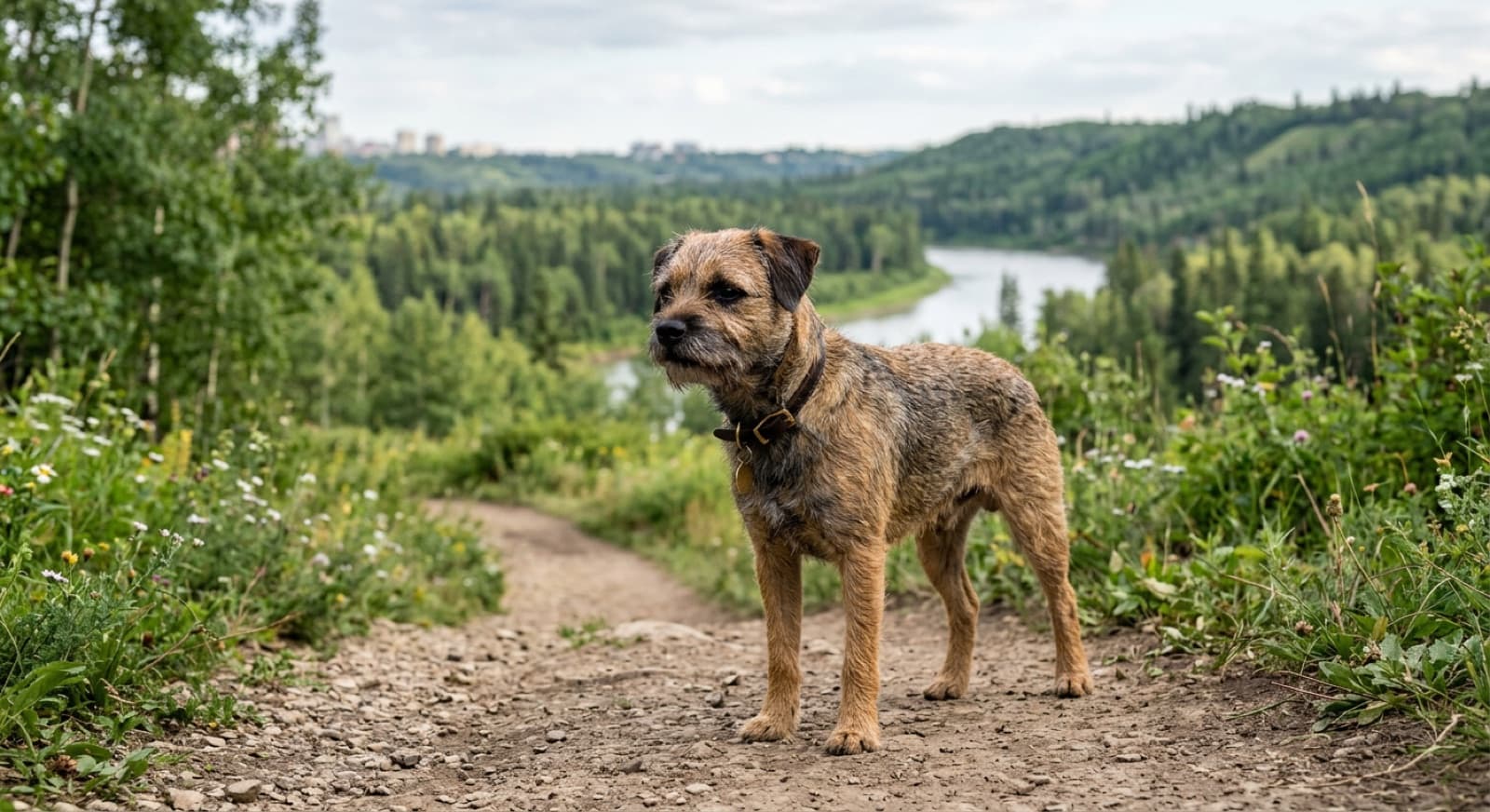
Browse adoptable small terriers in Edmonton
Border Terriers are uncommon. Flexibility on terrier mixes (Border-Yorkie, Border-Cairn, Border-Westie) substantially shortens the wait.
See Available Dogs →Hand-stripping vs clipping: the grooming decision
Hand-stripping preserves the breed's weather-resistant double coat by removing dead hairs from the root. Clipping (cutting hairs at the surface) is easier but the coat gradually softens and loses waterproof quality. The choice affects daily life modestly and winter weather-resistance meaningfully.
Hand-stripping is the traditional terrier grooming method. The technique takes 3 to 6 hours per full session and is done every 4 to 6 months for pet Border Terriers. Not all Edmonton groomers offer the service; ask specifically when booking. Cost: $80 to $150 per session at Edmonton groomers familiar with terrier coats. The result is the breed-defining wire coat that sheds water, resists mud, and provides moderate Edmonton winter insulation.
Clipping is the easier and more common pet-grooming approach. The coat is cut with electric clippers; the technique is faster and any general dog groomer can do it. Cost: $60 to $100 per session at typical Edmonton groomers. The trade-off: the clipped coat gradually softens over time and loses its weather-resistant texture. Border Terriers in clipped coats are more cold-sensitive than hand-stripped dogs and need a coat earlier in Edmonton winter.
Most pet Border Terrier owners choose clipping for simplicity and accept the coat texture change; the dog's functional warmth and weather-resistance is reduced but daily life is unaffected. Show dogs and working dogs maintain hand-stripping. The American Kennel Club breed standard describes the wire coat that hand-stripping preserves. The Canadian Kennel Club registers Border Terrier in the Terrier Group.
Frequently Asked Questions
Where can I adopt a Border Terrier in Edmonton?
Border Terriers are uncommon in Edmonton rescue. SCARS (Second Chance Animal Rescue Society), Edmonton Humane Society, Zoe's Animal Rescue, AHHRB (Alberta Homeward Hound Rescue Bureau), and AARCS Edmonton fosters all see Border Terriers occasionally, but the breed total population in Alberta is modest and surrender rates are lower than for popular breeds. National terrier rescue networks coordinate placement across Canada when foster homes are available. Border Terrier mixes (Border Terrier-Yorkie, Border Terrier-Schnauzer, Border Terrier-Westie) appear with similar frequency to purebreds. Many Edmonton adopters set up alerts for "terrier mix" and "small wire-coat terrier" to broaden the search since purebred availability is thin.
What is the Border Terrier origin?
The Border Terrier was developed in the border region between Scotland and England in the 19th century as a working farm terrier capable of going to ground after foxes during hunts. The breed needed to be small enough to follow a fox into a den but athletic enough to keep up with horses and Foxhounds during the chase. The result is a compact terrier with longer legs than most working terriers, an otter-shaped head, and a wiry weather-resistant double coat. Adult Border Terriers typically weigh 11 to 16 lbs and stand 10 to 11 inches at the shoulder. Despite the small size, the breed has substantial endurance and a working-dog mentality. Coat colours include red, grizzle and tan, blue and tan, and wheaten. The breed lives 12 to 15 years.
How much does it cost to adopt a Border Terrier in Edmonton?
Edmonton rescue adoption fees for Border Terriers typically run $400 to $700 covering spay/neuter, current vaccinations, microchip, dental assessment, and a baseline vet workup. The fee is well below ethical breeder pricing ($2,000 to $4,000 for a properly health-tested Border Terrier puppy from a CKC-registered breeder with parents OFA tested, eye certified, and DNA tested for breed-specific conditions). Initial setup costs after adoption: small-dog harness ($30 to $60), 6-ft leash, slicker brush plus stripping comb ($40 to $80 if hand-stripping; less if clipping), nail clippers, food bowls, winter coat ($40 to $80; the wire coat provides some insulation but Edmonton sub-zero needs a coat). Annual ownership cost $1,800 to $2,800: quality food ($300 to $500), routine veterinary care ($400 to $700), pet insurance ($350 to $700), grooming depending on approach ($300 to $800/year for hand-stripping; less for clipping), Edmonton dog licence (confirm current fee with the City of Edmonton).
What is hand-stripping and why does it matter for Border Terriers?
Hand-stripping is the traditional terrier grooming method that maintains the wire coat texture by removing dead hairs from the root rather than cutting them. The technique is essential for preserving the weather-resistant double coat that defines the breed; clipping (the easier and more common pet-grooming approach) cuts hairs at the surface and the coat gradually softens and loses its waterproof quality over time. Hand-stripping is done every 4 to 6 months for pet Border Terriers and more frequently for show dogs. The technique takes time (3 to 6 hours per session for a full strip) and skill; not all Edmonton groomers offer the service. Cost: $80 to $150 per stripping session at Edmonton groomers familiar with terrier coats. Many pet Border Terrier owners choose clipping for simplicity and accept the coat texture change; the dog's functional warmth and weather-resistance is reduced but daily life is unaffected. The choice between hand-stripping and clipping is a meaningful one for the breed.
Are Border Terriers good first dogs for Edmonton families?
Yes for many households who understand the terrier reality. Border Terriers are generally affectionate, sociable, family-friendly with most children when properly introduced (small-dog supervision around small children matters), adaptable to apartment or house living (small size, moderate energy, indoor-friendly), and intelligent and trainable. The breed-specific demands: terrier prey drive is real (cats, small dogs, squirrels, rabbits are at risk; recall reliability is variable when prey drive activates), grooming time commitment depending on stripping vs clipping approach, terrier stubbornness in training (force-free training works better than dominance-based approaches), some Border Terriers can be quite vocal. Adult Border Terriers from Edmonton rescue (3+ years) often arrive socialised with documented temperament and can be good first-dog matches for households who specifically want a terrier temperament and accept the limitations.
What is Border Terrier prey drive like?
High and consistent. The Border Terrier was bred for going to ground after foxes; the prey drive is part of the breed identity. Cats, small dogs, rabbits, hamsters, ground birds, and squirrels are all potential prey targets. Recall reliability when prey drive activates is variable; the breed should be leashed in unfenced areas. Edmonton off-leash dog parks (Hawrelak, Terwillegar, Mill Creek, Whitemud) are appropriate with caution; off-leash on open river-valley trails with abundant wildlife is not. Households with cats should approach Border Terrier adoption carefully (some individual Border Terriers raised with cats from puppy stage tolerate cats they grew up with; many do not). Small pet households (rabbits, guinea pigs, ferrets, hamsters) should not adopt a Border Terrier. Foster home observation of prey drive is gold; ask explicitly during the phone screen about observed behaviour with cats and small animals.
How do Border Terriers handle Edmonton winters?
Reasonably well thanks to the wire double coat, but they need a coat in deep cold. The breed was developed for variable Scottish-English border weather and the weather-resistant wire coat provides moderate insulation. Healthy adult Border Terriers tolerate -10C to -15C walks for 20 to 30 minutes without a coat (provided the coat is hand-stripped and maintaining proper texture); below -20C wind chill they benefit from a coat. Border Terriers in clipped coats are more cold-sensitive than hand-stripped dogs because the clipped coat loses some weather resistance. Booties help on heavily salted Edmonton sidewalks. The small size means Border Terriers are closer to cold pavement than larger dogs. The breed enjoys snow and most Border Terriers are enthusiastic winter walkers. Edmonton dry winter (15-25% indoor humidity from furnace heat) can dry skin; a humidifier helps. Watch for ice-ball buildup between paw pads after walks.
What are common Border Terrier health issues to plan for?
The breed lifespan is 12 to 15 years. Breed-specific health concerns: Canine Epileptoid Cramping Syndrome (CECS, also called Spike's Disease; a breed-specific neurological episode that resembles seizures but is distinct; usually manageable, sometimes diet-responsive), hip dysplasia in some lines, patellar luxation (loose kneecap), eye conditions including progressive retinal atrophy in some lines, cataracts in seniors, heart conditions in some lines, allergies common, dental disease (the small jaw can crowd teeth; annual or semi-annual dental cleanings are part of breed care). Pet insurance enrolled at adoption is valuable. Edmonton specialty veterinary referrals available; WCVM Saskatoon handles complex cases. The breed is generally hardy and longer-lived than many small breeds.
What are common Border Terrier mixes in Edmonton rescue?
Border Terrier-Yorkshire Terrier cross (Border-Yorkie; 8 to 14 lbs; soft coat from Yorkie influence with terrier temperament from both lines), Border Terrier-Schnauzer cross (12 to 22 lbs; wire-coat similarity from both breeds; alert active temperament), Border Terrier-Westie cross (Border-Westie or Bordie; 12 to 18 lbs; similar wire-coat Scottish terrier appearance), Border Terrier-Cairn Terrier cross (12 to 18 lbs; closely-related Scottish working terriers), Border Terrier-Jack Russell cross (10 to 18 lbs; very high terrier energy and prey drive). All these mixes appear in Edmonton rescue at the same $400 to $700 fee range. Mixed-breed Border Terriers sometimes have slightly less extreme prey drive because of the second-breed influence. Foster home should disclose coat type, prey-drive observation, and grooming history during the phone screen.
Are Border Terriers good with cats and other dogs?
Other dogs generally yes; cats generally no. Border Terriers are sociable with other dogs of similar size when properly introduced; the breed enjoys multi-dog households when temperaments match. Same-sex aggression is not particularly elevated compared with other terriers. Cats: most Border Terriers have strong prey drive on cats and small animals. Some individual dogs raised with cats from puppy stage tolerate cats they grew up with, but this is not the breed norm. Multi-pet Edmonton households with cats should plan for physical separation when unsupervised initially and accept that the management may be permanent. Foster home observation of cat-tolerance is the most reliable predictor; ask explicitly during the phone screen.
How long does it take to adopt a Border Terrier in Edmonton?
Typically 4 to 12 months for a Border Terrier or close terrier mix in Edmonton because the breed is uncommon in regional rescue. Set up email alerts at multiple rescues (SCARS, Edmonton Humane Society, Zoe's Animal Rescue, AARCS, AHHRB) with broad keywords: Border Terrier, wire-coat terrier, small terrier mix, Borderpoo, terrier rescue. National terrier rescue networks sometimes coordinate placement into Alberta from other provinces. Be flexible on age, exact mix, and coat condition (hand-stripped vs clipped) to improve match speed. Adult Border Terriers (5+ years) often have shorter wait times than puppies because puppy demand exceeds the limited Edmonton supply. CKC-registered breeder waitlists for purebred Border Terriers are typically 6 to 18 months in Alberta if the rescue path does not deliver.
Bottom line for Edmonton Border Terrier adoption?
Border Terriers are wonderful Edmonton companions for households committed to the terrier reality. Affectionate, sociable, family-friendly, intelligent, adaptable to apartment or house living, well-adapted to Edmonton winter, 12 to 15 year lifespan. The breed-specific demands that determine fit: terrier prey drive (no cats or small animals in most cases; leashed in unfenced areas), grooming approach decision (hand-stripping for traditional coat maintenance or clipping for ease; affects winter weather-resistance), force-free training for terrier stubbornness, mandatory winter coats below -20C wind chill, supervision around small children and large dogs. Adopt from SCARS, Edmonton Humane Society, Zoe's, AHHRB, AARCS Edmonton fosters; $400 to $700 fee covers spay/neuter, vaccines, microchip, dental assessment, baseline workup. Border Terrier mixes (Border-Yorkie, Border-Schnauzer, Border-Westie, Border-Cairn) appear with similar frequency and are equally well-suited candidates. Edmonton rescue availability is thin; set realistic 4 to 12 month timeline expectations and flexibility on exact mix substantially improves match speed.
Adoptable Dogs in Edmonton
Live listings from SCARS, EHS, Zoe's, AHHRB, and AARCS Edmonton fosters.
Westie Adoption Edmonton
Closely related Scottish working terrier; similar wire-coat hand-stripping consideration and terrier prey drive.
Yorkie Adoption Edmonton
Toy terrier; Border-Yorkie cross is a common related mix.
Mini Schnauzer Adoption Edmonton
Wire-coat terrier-type breed; Border-Schnauzer cross is a related mix with similar grooming considerations.
New dog? Start with these care guides
Everything a new adopter needs to set up a safe, happy home.