The short answer
Adopt from Edmonton rescue ($400 to $700). Westies appear regularly through SCARS, Edmonton Humane Society, Zoe's Animal Rescue, AHHRB, and AARCS Edmonton fosters. Westie mixes (Westiepoo, Westie-Yorkie, Westie-Maltese, Westie-Cairn) appear with similar frequency and are equally well-suited candidates. The breed-defining health concern is atopic dermatitis (skin allergies): budget for veterinary dermatology and lifelong management for affected dogs. Grooming commitment is $500 to $900/year professional plus weekly home brushing. Terrier prey drive means no cats or small animals in most cases; leashed in unfenced areas. Force-free training for terrier stubbornness. 12 to 16 year lifespan, well-suited to apartment and condo living, friendly family companion when expectations match the terrier-reality.
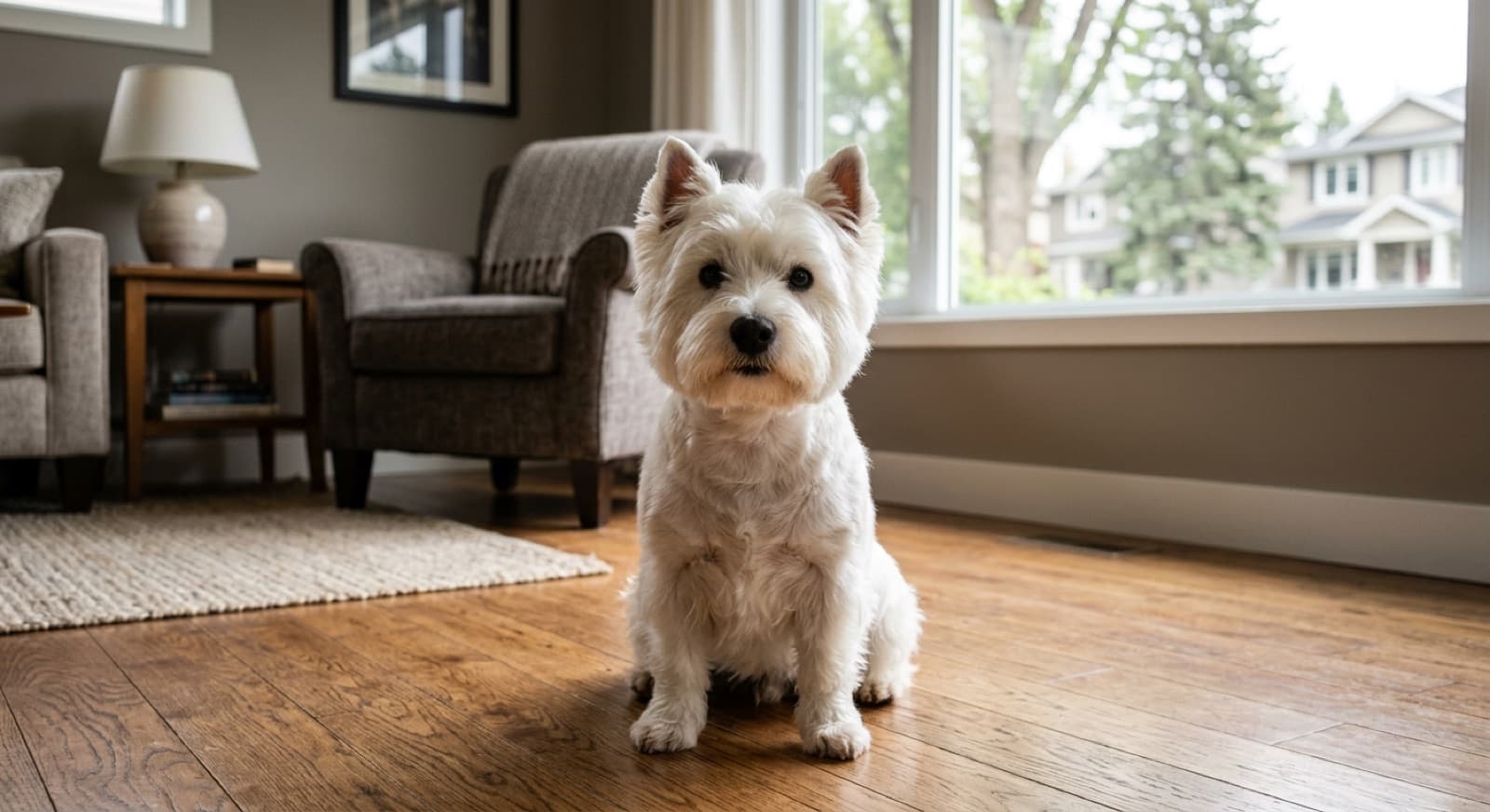
Browse adoptable small terriers in Edmonton
Westies and Westie mixes (Westiepoo, Westie-Yorkie) appear regularly. Flexibility on mix vs purebred substantially shortens the wait.
See Available Dogs →The Westie skin condition reality
Westies are predisposed to atopic dermatitis (allergic skin disease) at higher rates than most breeds. The breed-defining condition is sometimes called “Westie itch” and affected dogs often require lifelong veterinary management.
Atopic dermatitis in Westies presents as: chronic itching, frequent scratching and licking, secondary skin infections (yeast, bacteria), reddened skin in armpits and between paw pads, ear infections (the ears are part of the skin and often flare with allergies).
Management strategy:
- Identifying triggers through veterinary allergy workup (environmental allergens, food sensitivities)
- Hypoallergenic or limited-ingredient diet trials, supervised by your Edmonton vet
- Topical and systemic medications during flares; talk to your vet about specific options
- Regular medicated bathing as prescribed
- Fish-oil supplementation; discuss dosing with your Edmonton vet
- Close monitoring for secondary skin infections
- Edmonton dry winter (15-25% indoor humidity) can flare skin conditions; humidifier helps both dog and humans
- Edmonton veterinary dermatology referrals for severe cases (see Canadian Kennel Club Westie breed standard for additional context)
Pet insurance enrolled at adoption matters because skin condition management is ongoing and the breed predisposition is well-documented. Ask the rescue specifically about any skin history during the phone screen; foster home observation is valuable.
Frequently Asked Questions
Where can I adopt a Westie in Edmonton?
West Highland White Terriers appear in Edmonton rescue occasionally and place quickly when listed. SCARS (Second Chance Animal Rescue Society), Edmonton Humane Society, Zoe's Animal Rescue, AHHRB (Alberta Homeward Hound Rescue Bureau), and AARCS Edmonton fosters all see Westies and Westie mixes through the year. National terrier and breed-specific rescue networks coordinate placement across Canada when foster homes are available. Many Edmonton Westies are surrendered because of underestimated skin and grooming care commitment or family-circumstance changes. Westie mixes (Westie-Poodle = Westiepoo, Westie-Yorkie, Westie-Maltese) appear with similar frequency to purebreds and are equally well-suited adoption candidates.
What is the Westie origin and basic temperament?
The West Highland White Terrier originated in Argyll, Scotland in the 19th century, descended from the same Scottish terrier root stock as the Cairn Terrier, Scottish Terrier, and Skye Terrier. The breed was developed for hunting small game (rats, mice, badgers, otters) in the rocky highland terrain; the all-white coat was selected so hunters could distinguish the dog from prey during hunts. The temperament reflects the terrier working origin: confident, alert, energetic, independent, intelligent, sometimes stubborn, friendly with family but reserved with strangers, and prey-driven on small animals (squirrels, rabbits, cats). The breed is sociable with other dogs of similar size when properly introduced, generally good with children when supervised, and surprisingly long-lived for a working terrier breed (12 to 16 years typical). The Westie is one of the more popular small terriers globally and is well-recognised through the Cesar dog-food advertising and similar pop-culture exposure.
How much does it cost to adopt a Westie in Edmonton?
Edmonton rescue adoption fees for Westies typically run $400 to $700 covering spay/neuter, current vaccinations, microchip, dental assessment, and a baseline vet workup. The fee is well below ethical breeder pricing ($1,800 to $3,500 for a properly health-tested Westie puppy from a CKC-registered breeder with parents OFA and eye tested). Initial setup costs after adoption: small-dog harness ($30 to $60), 6-ft leash, slicker brush plus terrier stripping comb ($40 to $80), nail clippers, food bowls, sensitive-skin shampoo (the breed is predisposed to skin conditions). Annual ownership cost $1,800 to $2,800: quality food ($300 to $500), routine veterinary care including dental and dermatology ($600 to $1,000, higher than non-skin-prone breeds because of veterinary dermatology costs), pet insurance ($400 to $700), grooming every 6 to 8 weeks at $60 to $100 per visit ($500 to $900/year), Edmonton dog licence (confirm current fee with the City of Edmonton).
What is the Westie skin condition reality?
Westies are predisposed to atopic dermatitis (allergic skin disease) at higher rates than most breeds. Symptoms range from mild seasonal itching to severe chronic inflammation affecting the entire coat. The breed-defining condition is sometimes called "Westie itch" and many Westies require ongoing veterinary management. Management strategy includes: identifying triggers (environmental allergens, food sensitivities), hypoallergenic or limited-ingredient diet trials, topical and systemic medications during flares, regular medicated bathing, fish-oil supplementation (discuss dosing with your Edmonton vet), close monitoring for secondary skin infections (yeast, bacteria). Edmonton dry winter (15-25% indoor humidity from furnace heat) can flare skin conditions; a humidifier helps. Westies with diagnosed atopic dermatitis may require lifelong management through Edmonton veterinary dermatology referrals. Pet insurance enrolled at adoption is valuable because skin condition management is ongoing. Ask the rescue specifically about any skin history during the phone screen.
Are Westies good first dogs for Edmonton families?
Yes for many households who understand the terrier reality. The Westie is generally affectionate, sociable, family-oriented, friendly with children when properly introduced (small-dog supervision around small children matters because of size difference), well-suited to apartment or house living (small size, moderate-high energy, indoor-friendly), and intelligent and trainable. The breed-specific demands: terrier prey drive is real (cats, small dogs, squirrels, rabbits are at risk; recall reliability is variable when prey drive activates), grooming time commitment for the white coat (professional grooming every 6 to 8 weeks plus weekly home brushing), skin condition awareness and management, terrier stubbornness in training (the breed is intelligent but independent, force-free training methods work better than dominance-based approaches). Adult Westies from Edmonton rescue (3+ years) often arrive socialised with documented temperament and can be excellent first-dog matches for first-time small-dog owners with realistic expectations.
How does Westie grooming work in Edmonton?
Substantial commitment to maintain the breed-characteristic white double coat. Westies have a soft wire coat (sometimes called "harsh white coat" in breed-standard language) that requires regular hand-stripping or trimming to maintain texture and colour; clipping (the easier approach used in most pet grooming) softens the coat and may dull the white pigment over time. Many pet Westie owners choose a clipped-coat trim that simplifies grooming at some aesthetic cost. Professional grooming every 6 to 8 weeks at Edmonton groomer prices of $60 to $100 per visit ($500 to $900/year). Home grooming includes weekly brushing (15 to 30 minutes with slicker brush and metal comb), daily face cleaning (the white coat shows tear stains and food stains), monthly bath with mild dog-specific shampoo (or medicated shampoo if your vet recommends for skin condition). Edmonton dry winter air can dry coat and skin; humidifier helps both dog and humans. Nail trim every 3 to 4 weeks. Ear care matters (drop ears with infection risk).
How do Westies handle Edmonton winters?
Reasonably well thanks to the double coat, but they need a coat in deep cold. Healthy adult Westies tolerate -10C to -15C walks for 15 to 25 minutes without a coat; below -20C wind chill they benefit from a coat or sweater. Booties help on heavily salted Edmonton sidewalks (salt accumulates in the white coat and the small size means more contact with salted surfaces). The white coat shows dirt and salt residue noticeably so frequent paw and coat wipe-downs are part of winter care. Indoor dry winter air (15-25% humidity from furnace heat) can flare skin conditions; a humidifier helps. Watch for ice-ball buildup between paw pads and in the leg feathering after walks. The breed enjoys snow and most Westies are enthusiastic winter walkers. Structured walks of 20 to 40 minutes plus indoor enrichment is the breed-appropriate winter routine.
What are common Westie mixes in Edmonton rescue?
Westiepoo (Westie + Poodle cross; 10 to 20 lbs; low-shedding wavy coat for households with mild dog allergies; popular companion mix), Westie-Yorkie (Yorkie-Westie cross, sometimes called Yorkie Russell; 8 to 15 lbs; soft coat; mix of terrier influence from both parents), Westie-Maltese cross (8 to 14 lbs; soft white coat; gentler temperament than purebred Westie), Westie-Cairn Terrier cross (sometimes called Cairn-Westie; 12 to 20 lbs; closely related Scottish terrier breeds; similar care profile), Westie-Schnauzer cross (12 to 22 lbs; wiry coat; alert active temperament). All these mixes appear in Edmonton rescue at the same $400 to $700 fee range. Mixed-breed Westies often have less extreme skin sensitivity because of the second-breed influence; the cross can be a good first-Westie match. Foster home should disclose coat type, skin history, and prey-drive observation during the phone screen.
What are common Westie health issues to plan for?
The breed lifespan is 12 to 16 years (long for a working terrier). Breed-specific health concerns: atopic dermatitis (the breed-defining condition; affects a meaningful portion of the breed), Westie pulmonary fibrosis (a rare but progressive lung condition unique to Westies), Legg-Calve-Perthes disease (hip joint condition in some lines), patellar luxation (loose kneecap, common in small breeds), copper toxicosis (rare; some Westies cannot metabolise copper properly), eye conditions including cataracts and progressive retinal atrophy in some lines, jawbone calcium deficiency in some lines (craniomandibular osteopathy in young dogs), allergies generally. Pet insurance enrolled at adoption is valuable because skin condition management and other chronic conditions accumulate cost. Edmonton specialty dermatology and ophthalmology referrals available; WCVM Saskatoon handles complex referrals.
How long does it take to adopt a Westie in Edmonton?
Typically 1 to 4 months for a Westie or Westie mix; 3 to 8 months for a specifically purebred Westie from a reputable Edmonton-area rescue. Westies are highly desired and small-breed applications are competitive. Set up email alerts at multiple rescues (SCARS, Edmonton Humane Society, Zoe's Animal Rescue, AARCS, AHHRB) with broad keywords: Westie, West Highland White Terrier, white terrier, Scottish terrier, Westiepoo, Westie-Yorkie, Westie mix. Apply within 24 to 48 hours when a match appears. Be flexible on age and exact mix to improve match speed. Adult Westies (5+ years) often have shorter wait times than puppies; senior Westies are often available because the long lifespan means some older dogs come into rescue when owners can no longer care for them.
What about terrier prey drive in Edmonton?
Real and consistent across the breed. Westies were bred for hunting small game and the chase instinct activates on squirrels, rabbits, cats, and smaller dogs. Edmonton implications: recall reliability is variable, particularly on prey-driven trails like the river-valley paths with abundant wildlife. The breed should be leashed in unfenced areas. Off-leash play at fenced Edmonton dog parks (Hawrelak, Terwillegar, Mill Creek) is appropriate; off-leash on open trails is not. Households with cats should approach Westie adoption carefully (some individual Westies tolerate cats they grew up with; many do not). Small pet households (rabbits, guinea pigs, ferrets, hamsters) should not adopt a Westie. Foster home observation of prey drive is gold; ask explicitly during the phone screen about observed behaviour with cats and small animals. Force-free training with Edmonton trainers (CCPDT, KPA, IAABC, or Fear Free certified) helps with prey-drive management but does not eliminate it.
Bottom line for Edmonton Westie adoption?
Westies are wonderful Edmonton companions for households committed to the grooming routine and skin-care reality. Affectionate, sociable, family-friendly with most children when supervised, well-suited to apartment or house living, terrier-energetic, 12 to 16 year lifespan. The breed-specific demands: grooming every 6 to 8 weeks ($500 to $900/year), skin condition awareness (the breed is predisposed to atopic dermatitis; budget for veterinary dermatology), terrier prey drive (no cats or small animals in most cases; leashed in unfenced areas), force-free training for terrier stubbornness, mandatory winter coats for Edmonton -20C wind chill. Adopt from SCARS, Edmonton Humane Society, Zoe's, AHHRB, AARCS Edmonton fosters; $400 to $700 fee covers spay/neuter, vaccines, microchip, dental assessment, baseline workup. Westie mixes (Westiepoo, Westie-Yorkie, Westie-Maltese) are equally well-suited adoption candidates and often have less extreme skin sensitivity. Adult adoption (3+ years) skips the most intense puppy phase and arrives with documented temperament observation.
Adoptable Dogs in Edmonton
Live listings from SCARS, EHS, Zoe's, AHHRB, and AARCS Edmonton fosters.
Yorkie Adoption Edmonton
Another small terrier; Westie-Yorkie cross is a common Edmonton rescue match.
Mini Schnauzer Adoption Edmonton
Another small terrier-type breed with similar grooming commitment and family fit.
Bichon Frise Adoption Edmonton
Another small white-coated breed with similar grooming and skin-care considerations.
New dog? Start with these care guides
Everything a new adopter needs to set up a safe, happy home.