The short answer
Five primary German Shepherd lines. West German Show Line (WGSL) is the family-pet default: SV-registered, balanced temperament, moderate drive, 60 to 90 min daily exercise. West German Working Line (WGWL) is a sport-capable working dog needing 2+ hours of structured work. Czech Working Line is for serious sport or protection competitors only (NOT a family pet). East German DDR is substantial, protective, rare in modern breeding. American Show Line (ASL) has lower drive but the extreme rear angulation raises hip and elbow concern. Most Edmonton rescue GSDs are mixed-line or unknown-line (SCARS is the #1 source, pulling from northern Alberta communities); foster-home temperament evaluation matters more than line speculation. The most common Edmonton GSD surrender pattern is working-line dogs in family-pet homes; honest household assessment beats line preference.
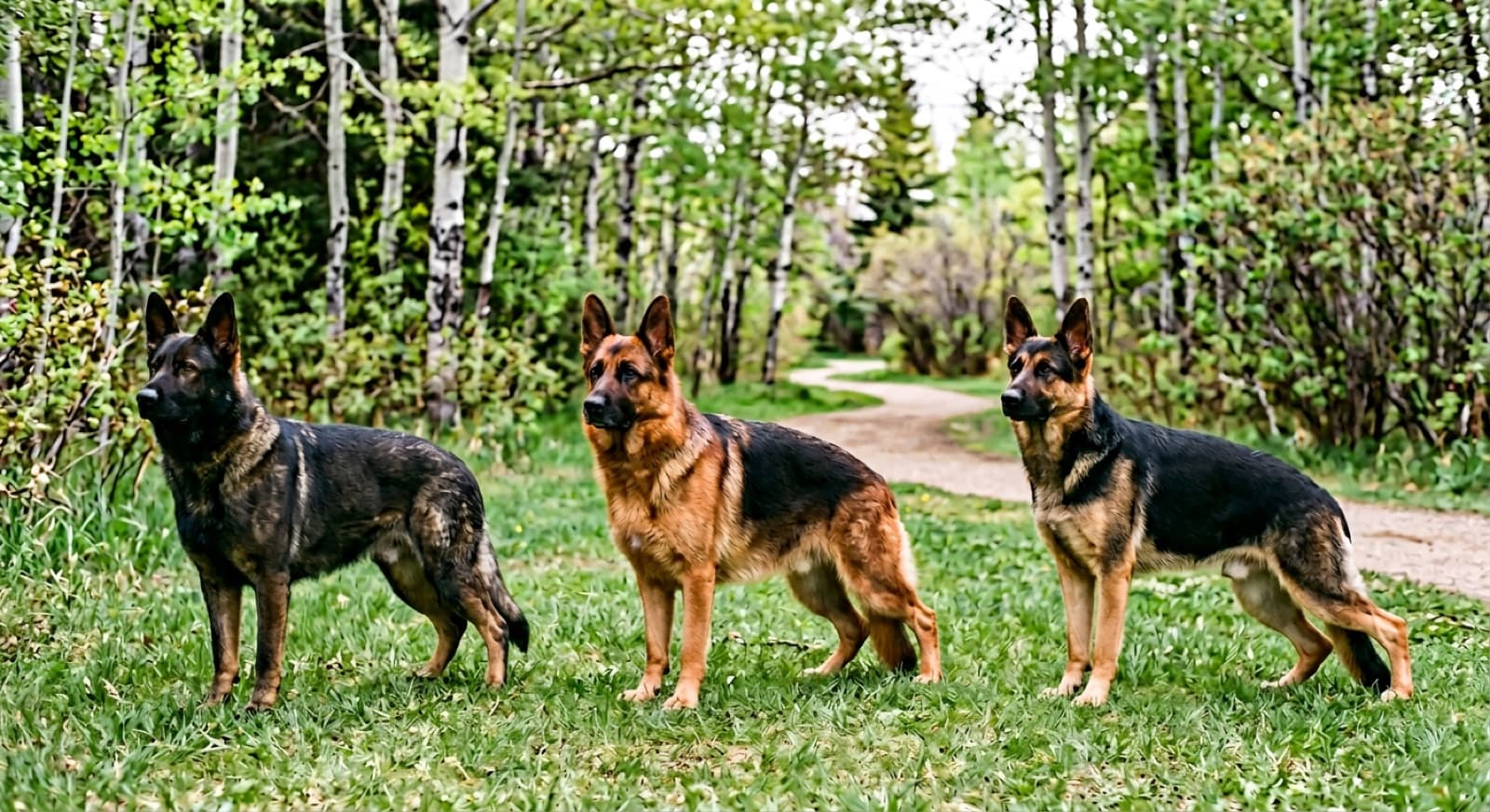
The five primary lines (visual + temperament)
| Line | Topline + structure | Drive level | Family pet fit |
|---|---|---|---|
| West German Show (WGSL) | Moderate slope, balanced bone | Moderate | Good (active household) |
| West German Working (WGWL) | Straighter topline, athletic | High | Conditional (needs job) |
| Czech Working | Straight topline, compact muscle | Very high | Poor (sport only) |
| East German DDR | Straight topline, blocky head, heavy bone | Medium-high | Conditional (experienced handler) |
| American Show (ASL) | Extreme slope, lighter bone | Lower | Good (lower-key household) |
Coat colour helps signal line influence but is not a reliable identifier. Sable and solid black often indicate working-line breeding; classic red/black or black/tan saddle pattern usually shows show-line breeding. Most Edmonton rescue dogs are mixed-line and the visual cues are unreliable.
Browse adoptable German Shepherds in Edmonton
SCARS is Edmonton's #1 GSD source. Most rescue dogs are mixed or unknown line; foster-home temperament evaluation matters more than line speculation.
See Available German Shepherds →Edmonton rescue reality vs breeder reality
Most Edmonton rescue GSDs are mixed or unknown line. SCARS is the largest source, pulling Shepherds and Shepherd crosses from northern Alberta communities and Indigenous community partnership intakes. Edmonton Humane Society, Zoe's Animal Rescue, AHHRB, and AARCS Edmonton fosters also see GSDs regularly. Adoption fee $400 to $700 typical.
For most family-pet households, adoption is the better path. Foster home temperament evaluation gives you the practical signal you need: drive level, dog-dog reactivity, kid-friendliness, prey drive on cats and small dogs, recall reliability, basic obedience baseline. The mixed-line label is honest acknowledgement of unknown breeding; it does not mean the dog will be a worse companion than a pedigree-documented purebred. Many Edmonton mixed-line GSDs are excellent family pets.
The breeder route is appropriate when a specific line or breeding is required for sport or work purposes. Edmonton-area verified breeders are best identified through the German Shepherd Schutzhund Club of Canada (SV-affiliated) for West German lines, working-dog clubs (PSA, IPO/IGP) for Czech and working lines, the German Shepherd Dog Club of Canada (CKC-affiliated). Pedigree verification, OFA hip and elbow, DM DNA testing, and MDR1 testing are non-negotiable for any breeder. Pricing $1,500 to $6,000+ depending on line and breeding.
The honest household assessment matters more than the line preference. Most Edmonton GSD surrenders are line-lifestyle mismatches: families buy a working-line puppy without the sport or work commitment to channel the drive, then surrender at 12 to 24 months when adolescent behaviour problems become unmanageable. If you are a first-time GSD owner or family-pet household, a West German Show Line dog or an Edmonton rescue mix with documented solid foster-home temperament is the right path; a working-line dog is not.
Frequently Asked Questions
How many German Shepherd bloodlines are there?
Five primary lines plus blends. (1) West German Show Line (WGSL): SV-registered conformation dogs from West German breeding, moderate slope to the topline, red/black or black/tan saddle pattern, balanced temperament, moderate drive. (2) West German Working Line (WGWL): also SV-registered but bred for work, straighter topline, often sable or solid black, higher drive than show line, sport-capable. (3) Czech Working Line: descended from Czechoslovak Border Patrol dogs (Pohranicni Straze) bred during the Cold War for border-guard work, very high drive, intense focus, often dark sable or solid black. (4) East German DDR Line: bred behind the Iron Curtain (1945-1990) for East German border patrol and Stasi work, larger blocky head, straighter topline, strong nerves, medium-to-high drive (modern DDR-line dogs are increasingly blended). (5) American Show Line (ASL): AKC conformation breeding, extreme rear angulation (rear legs often appear to crouch), lighter bone, often black/tan, generally lower drive than European lines. Most Edmonton rescue GSDs are mixed-line or unknown-line dogs from working/ranch/Indigenous community origins; foster home temperament evaluation matters more than the breed-line label for any specific dog.
Czech vs West German vs American GSD: which is right for my household?
The line should match the household lifestyle, not the other way around. Czech Working Line: very high drive, intense work ethic, often the wrong choice for family pet households. Edmonton owners of Czech-line GSDs commonly report needing 2+ hours of daily structured work plus sport training to keep the dog balanced; without it the dog becomes destructive, reactive, or anxious. West German Working Line: less extreme than Czech but still a working dog that needs a job. West German Show Line: the most common European pet-line GSD, balanced temperament, 60 to 90 minutes daily exercise typically sufficient, can be an excellent family dog for an active committed household. American Show Line: lower drive than European lines but the extreme rear angulation common in AKC show breeding raises structural concern (hip and elbow dysplasia rates elevated in some lines). East German DDR: substantial protective family-dog temperament, medium-high drive, rare in modern breeding (most claimed DDR-line dogs are blended). The Edmonton decision framework is straightforward: first-time owner and family pet usually means West German Show Line or rescue mix. Active outdoorsy owner wanting a working dog means West German Working Line or DDR. Sport or protection competitor means Czech Working Line. Most Edmonton family-pet failures with GSDs are working-line dogs in pet homes; honest assessment of household capacity is the most important decision.
What is a Czech working line German Shepherd?
Czech (sometimes called Czechoslovak) working line GSDs descend from dogs bred for the Czechoslovak Border Patrol during the Cold War. The breeding purpose was extreme working dogs for border guard, patrol, tracking, and attack training. Characteristics: very high drive (prey, defence, and civil drives all elevated), intense focus and work ethic, often dark sable or solid black, sometimes more compact and muscular than show lines, straighter topline with no extreme slope, strong nerves but often handler-aggressive if undertrained, high pain tolerance and courage. Edmonton context: Czech working line breeders are rare in Alberta and most dogs are imported from Europe with $2,500 to $6,000+ puppy pricing from verified European bloodlines. Health-tested parents (OFA hip and elbow, DM DNA test, MDR1) are essential. Edmonton working-dog clubs (IPO/IGP, PSA) provide the structured outlet the breed needs. Right for: experienced working-dog handlers with active sport or work commitment, 2+ hours of daily structured work capacity, household tolerant of an intense dog. Wrong for: first-time owners, family pet households, apartment dwellers, sedentary households. The surrender rate for Czech working line dogs placed in family pet homes is meaningful; the intensity is consistently underestimated.
West German show line vs American show line GSD?
Two very different show-breeding directions. West German Show Line (WGSL): SV-registered (German Shepherd Club of Germany), moderate slope to topline (not extreme), red/black or black/tan saddle pattern most common, health-tested (OFA hip and elbow, DM, MDR1, eye certification), working ability still required for SV registration (most have working titles in addition to conformation), balanced temperament target, Edmonton breeders aligned with the German Shepherd Schutzhund Club of Canada. American Show Line (ASL): AKC-registered, EXTREME rear angulation (rear legs often appear to crouch or squat), lighter bone structure typical, black/tan most common, working ability NOT required for AKC titling, often lower drive than European lines, sometimes structural compromise from extreme breeding (hip and elbow dysplasia rates elevated in some lines, degenerative myelopathy concern). Some ASL kennels do thorough health testing; others do not. Edmonton adoption reality: most rescue GSDs (through SCARS, Edmonton Humane Society, Zoe's Animal Rescue, AHHRB, AARCS Edmonton fosters) are mixed-line or unknown line. WGSL is preferred by serious owners and sport competitors; ASL is more common in pet homes wanting a calmer dog. Key takeaway: pedigree confirmation via documentation matters more than the line label.
East German DDR GSD: what makes them different?
East German DDR (Deutsche Demokratische Republik) GSDs descend from dogs bred behind the Iron Curtain from 1945 to 1990 by the East German government for border patrol and Stasi work. Characteristics: bigger and blockier head than other lines, straighter topline, often dark sable or solid black, very strong nerves, high pain tolerance, medium-to-high drive (lower than Czech, higher than show lines), solid temperament and protective instinct, heavier bone and muscle structure. Post-Cold-War reality: the DDR breeding pool became rare after German reunification in 1990. Modern DDR-line dogs are often blended with West German working or Czech lines; pure DDR breeding is very rare today. Edmonton availability: verified DDR-line breeders are rare; most claimed-DDR pedigrees are actually mixed lines. Verified European-bloodline puppy pricing $2,000 to $5,000+. Sometimes available through Edmonton working-dog club connections. Right for: experienced GSD handlers wanting a solid working temperament with family-protective character and moderate drive. Less extreme than Czech working line, more substantial than show lines. Pedigree verification is essential because the DDR label is frequently misused for marketing.
Working line vs show line GSD: which is better for an Edmonton family?
For most Edmonton families, the show line (especially West German Show Line) is the better choice. Working lines (Czech, West German Working, DDR working) are bred for intense work in military, police, protection sport, and search-and-rescue contexts. They need 2+ hours of daily structured work plus mental enrichment. Without that, they become destructive, reactive, and anxious. Working-line family pet failures are common in Edmonton rescue surrender data; the breed-line is sport competitor temperament, not pet temperament. Show lines (West German, American) are bred for conformation and companionship with moderate drive sufficient for an active family lifestyle. 60 to 90 minutes of daily exercise is typically sufficient. They tolerate apartment or condo living more reasonably (a yard is still preferred). Family-pet success rates are higher with show lines. Some American Show Line dogs have lower drive that suits first-time GSD owners. The Edmonton family GSD profile: best fit is a West German Show Line dog OR an Edmonton-area rescue mix with documented solid foster-home temperament. Avoid working-line GSDs unless you have serious sport commitment. Adult adoption (3+ years) is often easier than puppy. Force-free training relationship by month 6 to 8 (CCPDT, KPA, IAABC, or Fear Free certified Edmonton trainer) matters regardless of line. Pet insurance enrolled at adoption matters for both health-specific risks (line-dependent) and emergency surgical situations.
How do I verify breeder line claims in Edmonton?
Pedigree verification and health-testing documentation are non-negotiable. Red flags for any GSD breeder include: no CKC, AKC, or SV registration documentation; no OFA hip and elbow clearances on parents; no DM (Degenerative Myelopathy) DNA testing; no MDR1 testing where breed-relevant; refusing to show pedigree; selling under 8 weeks of age; cash-only sales; multiple litters available simultaneously; marketing "rare" colours (blue, white, panda) at premium pricing. What to ask: SV, AKC, or CKC registration number; 5-generation pedigree minimum; health-testing documentation (OFA, PennHIP, eyes, DM, MDR1, vWD); working titles on parents for working line claims; conformation titles on parents for show line claims; verification via online pedigree databases (PedigreeDatabase.com, Working-Dog.com); breeder contracts and health guarantees; references from a veterinarian and past puppy buyers. Edmonton resources: the German Shepherd Schutzhund Club of Canada (SV-affiliated breeder verification), the Canadian Kennel Club breeder directory, the German Shepherd Dog Club of Canada (CKC-affiliated), the Edmonton Kennel Club. Pricing reality: verified WGSL puppy $2,000 to $4,500 in Alberta; Czech working line $2,500 to $6,000+ (often imported); American Show Line $1,500 to $3,500; DDR-line puppy $2,000 to $5,000; pet-quality puppy from health-tested CKC parents $1,500 to $3,000.
Belgian Malinois vs German Shepherd: which one is which?
A common Edmonton confusion. The Belgian Malinois is a SEPARATE breed, not a German Shepherd line. Characteristics: smaller and leaner than GSD (45 to 80 lbs vs 50 to 90 lbs), shorter coat (smooth, fawn with black mask typical), MUCH higher drive than even working-line GSD, increasingly used by US and Canadian military and police (replacing GSD in many roles), nickname "malinator" for the intensity. Right for: experienced working-dog handlers with sport or work commitment and 3+ hours daily structured work. Wrong for: family pet households, apartment dwellers, first-time owners, sedentary households. Edmonton Malinois reality: verified breeders are rare in Alberta; puppy pricing $2,500 to $6,000; pet-home Mali surrender rate is very high because people see them in movies and military operations without understanding the intensity. Edmonton working-dog clubs (PSA, IPO/IGP) are the proper outlet. Similar working-breed confusions: Dutch Shepherd and Czechoslovak Vlcak (Wolfdog). All require working-dog experience plus sport or work commitment. If you want a GSD-look-alike that is easier to live with, you want a West German Show Line GSD or a rescue GSD mix, not a Malinois.
Edmonton GSD adoption vs breeder framework?
For most Edmonton family-pet households, adoption is the better path. Edmonton GSD rescue sources: SCARS (Second Chance Animal Rescue) is the #1 GSD source in Edmonton, pulling Shepherds and Shepherd crosses from northern Alberta communities and Indigenous community partnerships. Edmonton Humane Society sees GSDs frequently. Zoe's Animal Rescue, AHHRB, and AARCS Edmonton fosters also list GSDs steadily. Adoption fee $400 to $700 typical. Most rescue GSDs are mixed-line or unknown line; foster-home temperament evaluation is more important than line label for any specific dog. Adult adoption (3+ years) is preferred for first-time GSD owners. Breeder route: appropriate when a specific line or breeding is required for sport or work purposes, you want a puppy from known parents, your budget supports $1,500 to $6,000+, you are comfortable with breeder waitlists of 6 to 18 months, and you need specific drive or structure for purpose. Most working-line GSD failures in Edmonton are line-lifestyle mismatches: people buy a working-line puppy without the sport or work commitment to channel the drive. Honest household assessment beats line preference for first-time owners.
How does the line affect lifetime health and cost?
Line-specific health concerns: West German Show Line and West German Working Line are SV-required health-tested (OFA hip and elbow plus DM plus MDR1); risk profiles align with the breed overall (elevated hip and elbow dysplasia, degenerative myelopathy, bloat/GDV, hemangiosarcoma). American Show Line dogs from kennels with thorough health testing have similar profiles; dogs from kennels without testing carry higher dysplasia risk due to the extreme rear angulation breeding direction. Czech Working Line and DDR dogs from European bloodlines are typically health-tested but the breeding pool is smaller and individual genetic risk varies. Lifetime ownership cost is roughly similar across lines for a healthy dog: $25,000 to $50,000 over 10 to 13 years. Pet insurance enrolled within the first weeks of adoption is essential for any line because hip or elbow surgery alone can run $5,000 to $10,000, and bloat/GDV surgery $5,000 to $10,000+. WCVM Saskatoon (Western College of Veterinary Medicine) handles complex orthopedic and cardiac referrals from Edmonton specialists. Edmonton 24-hour ER vets handle bloat emergencies. Foster home health history disclosure during the Edmonton rescue phone screen is gold.
What if my Edmonton rescue GSD is unknown-line?
Most Edmonton rescue GSDs are exactly this: mixed-line or unknown-line dogs from working ranches, northern Alberta communities, and Indigenous community partnership intakes. The breeding history is rarely documented. Practical implications: the foster-home temperament assessment is the most important predictor of household fit, more important than any line speculation. Many mixed-line GSDs have working-line influence (drive, energy) which can be channelled with structured exercise and force-free training. Some have show-line influence (calmer temperament, lower drive). Coat colour and structure can hint at line influence but are not reliable predictors. Hip and elbow conformation can suggest American Show Line influence if the rear angulation is extreme. Health testing on the rescue dog is best done at the first vet visit (baseline bloodwork, hip and elbow radiographs at age 18 to 24 months if any concern). Pet insurance enrolled at adoption is essential. For unknown-line Edmonton rescue GSDs, assume working-line influence until temperament observation proves otherwise, plan for 60 to 90 minutes of daily structured exercise plus mental enrichment, commit to force-free training within the first 4 weeks of bringing the dog home, and trust the foster home temperament notes over your own first-week observations (the dog is still decompressing).
Which German Shepherd line should I pick for Edmonton?
Choose West German Show Line (WGSL) if: family pet plus active lifestyle, first-time GSD owner, suburban Edmonton house with yard, committed to 60 to 90 minutes daily exercise plus force-free training, want SV-registered and health-tested with balanced temperament, budget $2,000 to $4,500 puppy or $400 to $700 adoption. Choose West German Working Line (WGWL) if: experienced GSD handler, want sport-capable working dog, committed to 2+ hours daily structured work, Edmonton working-dog club membership (IPO/IGP, PSA), suburban or rural Edmonton lifestyle, budget $2,500 to $5,000 puppy. Choose Czech Working Line if: serious sport competitor (IPO/IGP, schutzhund, protection), experienced working-dog handler, European import comfort plus 6 to 18 month waitlist, committed 2 to 3 hours daily structured work, family tolerant of an intense dog, budget $2,500 to $6,000+ puppy. Choose East German DDR if: want a substantial protective family dog, experienced GSD handler, verified pedigree (rare in modern breeding), moderate-high drive comfort, budget $2,000 to $5,000 puppy. Choose American Show Line if: AKC conformation interest, prefer a lower-drive GSD, accept structural compromise risk from extreme rear angulation, budget $1,500 to $3,500 puppy. Choose rescue mix (most Edmonton GSDs) if: family pet sought, want an adult with known temperament, budget $400 to $700, flexible on appearance and structure, rely on Edmonton rescue foster-home evaluation over line label. The right line matches the right lifestyle. Most Edmonton GSD surrenders are line-lifestyle mismatches; adult adoption plus West German Show Line plus an experienced Edmonton rescue foster network give the highest success rates for Edmonton families.
Adoptable German Shepherds in Edmonton
Live listings from SCARS, Edmonton Humane Society, Zoe's, AHHRB, and AARCS Edmonton fosters.
German Shepherd Adoption Edmonton
Edmonton rescue pipelines, costs, foster network, surrender patterns.
GSD Exercise + Training Edmonton
60-90 min daily structured exercise, force-free training, Edmonton trainer network.
GSD Adolescence Edmonton
Surviving 8 to 30 months, force-free training timeline, drive channelling.
New dog? Start with these care guides
Everything a new adopter needs to set up a safe, happy home.