The short answer
Great Danes carry the heaviest stack of breed-defining diseases of any giant. DCM sits at roughly one in three lifetime risk, second only to the Doberman. Wobbler syndrome is classic Dane. Bloat is the breed's highest-prevalence emergency at roughly 40 percent unpexied lifetime risk, and prophylactic gastropexy is essentially standard of care. Osteosarcoma sits around 15 to 20 percent lifetime risk. Megaesophagus and a lean-body anaesthesia profile round out the picture. Median lifespan is 7 to 10 years. Enrol in pet insurance week one: the catastrophic risk is unusually predictable, and the American College of Veterinary Internal Medicine credentials the specialty boards that handle the workup.
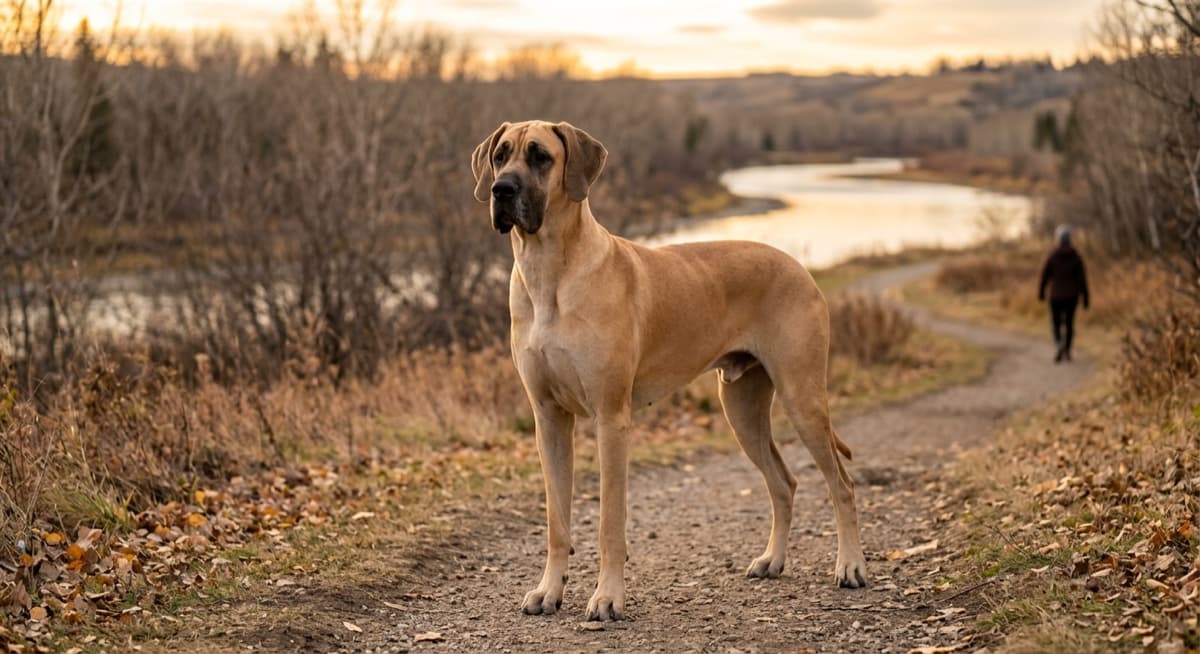
The Great Dane breed health picture, briefly
Great Danes are the most distinctive giant breed in veterinary medicine, and the disease load is unusually concentrated. Median lifespan sits between 7 and 10 years in published references. Cancer, cardiac disease, and bloat drive most early losses, with orthopaedic problems and spinal disease shaping daily life through the middle years. Most Edmonton rescue Danes arrive in functional health; the medical work is shaping the next decade with realistic expectations and a strong vet relationship.
The Dane prioritisation list is heavy. Dilated cardiomyopathy dominates (covered at depth below) and sits second only to the Doberman in breed risk. Wobbler syndrome is a Dane-classic spinal condition. Bloat (GDV) is the breed's defining emergency with the highest documented risk of any breed. Osteosarcoma is elevated. Hip and elbow dysplasia, cervical arthritis, cruciate tears, and OCD all reflect the giant-frame orthopaedic load. Hypothyroidism is common. Addison disease and cataracts and entropion sit at moderate rates. Megaesophagus is Dane-noted. The anaesthesia profile leans sighthound-like because of lean body composition. Heat and cold intolerance are both real, and double-merle health risk applies specifically to harlequin breeding errors.
The other reality every Edmonton Dane owner should know: pet insurance enrolled in week one is the single highest-leverage health decision you make. The cancer plus cardiac plus bloat plus orthopaedic stack produces unusually predictable lifetime medical spending. Every Canadian provider excludes pre-existing conditions, and skipping insurance is a defensible choice only if you can self-insure $40,000 to $80,000 in lifetime out-of-pocket vet costs. The American Animal Hospital Association publishes general pet insurance evaluation guidance that applies to Canadian providers.
Dilated cardiomyopathy (DCM): the second-highest breed risk
DCM is the cardiac reality that shapes Great Dane ownership. The heart muscle progressively weakens, the chambers dilate, and the heart loses contractile force. Eventually this produces either congestive heart failure (fluid backup in lungs or abdomen) or sudden cardiac death from a fatal ventricular arrhythmia. Great Danes sit second only to the Doberman among breeds for DCM risk, with veterinary cardiology references commonly citing a lifetime risk approaching one in three. Onset is typically between 4 and 6 years of age, which means cardiac screening should start younger than for most large breeds.
The two phases of DCM
DCM has two phases that matter for screening and intervention. The occult phase is the dangerous one: the dog is asymptomatic, exercise tolerance is normal, and routine physical exam may detect nothing, but the heart is already showing structural and electrical changes. The occult phase commonly lasts months to a couple of years before clinical signs appear. The symptomatic phase produces exercise intolerance, cough, laboured breathing, fainting (syncope), or abdominal distension from fluid accumulation. Many Dane sudden deaths are first-presentation DCM in dogs that appeared healthy.
Annual cardiac screening protocol
The standard of care recommended by the American College of Veterinary Internal Medicine for cardiac-risk breeds is annual screening from age 2 with two tests run together:
- 24-hour Holter monitor: a portable ECG that records every heartbeat for a full day. Catches ventricular premature complexes (VPCs) and atrial fibrillation that resting auscultation misses. Edmonton Holter rental and analysis runs $300 to $500.
- Echocardiogram: ultrasound of the heart performed by a board-certified veterinary cardiologist. Measures chamber size, contractile function, and valve performance. Edmonton echocardiogram runs $500 to $800.
- Specialty consultation: board-certified veterinary cardiologist interprets the studies and assigns a status (clear, equivocal, occult DCM, clinical DCM). Adds $150 to $300.
Total annual cost is roughly $1,000 to $1,600. This sounds expensive until you compare it to the alternative: treating clinical congestive heart failure or losing the dog to sudden cardiac death that screening would have caught. For rescue Danes with unknown cardiac history, baseline screening in month one is reasonable regardless of age, then annual from age 2 onward.
Preventive treatment of occult DCM
Danes diagnosed with occult DCM (echo or Holter abnormalities, no clinical signs yet) benefit from preventive pimobendan (brand name Vetmedin). Veterinary cardiology literature has shown that pimobendan extends the time from occult diagnosis to clinical heart failure, often by months to over a year. Atrial fibrillation is particularly common in Dane DCM progression and may require sotalol or other antiarrhythmics under cardiology guidance. Catching occult disease and starting preventive treatment changes the trajectory.
Clinical heart failure management
Danes that progress to clinical heart failure are managed with a combination of pimobendan, diuretics (furosemide), ACE inhibitors, and antiarrhythmics depending on rhythm findings. Monthly medication costs for clinical heart failure typically run $150 to $400 plus periodic specialist rechecks. Quality of life can be reasonable for months with good management. Edmonton cardiology specialty practices guide the protocol; your general-practice vet handles day-to-day medication management.
Wobbler syndrome (cervical vertebral instability)
Wobbler syndrome is spinal cord compression in the neck vertebrae that produces the characteristic wobbly hindlimb gait the name describes. Great Danes and Dobermans are the two breeds most associated with the condition, with Dane onset typically younger than Doberman onset, often appearing in late puppyhood or early adulthood. The Dane pattern usually involves bony malformation of the cervical vertebrae compressing the spinal cord, distinct from the disc-driven pattern more typical in middle-aged Dobermans.
Clinical signs to watch for:
- Proprioceptive ataxia (the dog does not know where its feet are, knuckling over on the tops of the paws)
- Wobbly or wide-based gait, especially in the hindlimbs
- Neck pain or stiffness, reluctance to lower the head to eat or drink from a floor-level bowl
- Reluctance to turn the head sharply
- Progressive weakness in the hindlimbs that can advance to weakness in all four limbs
- Difficulty rising from rest
Diagnosis is by MRI at a specialty practice (Edmonton MRI runs $1,800 to $3,000), which definitively images the spinal cord compression and locates the affected vertebrae. Mild cases respond to medical management: anti-inflammatories during flares, restricted activity, elevated feeding stations (so the dog does not have to lower the head deeply to eat), and a properly fitted harness instead of a collar (collar pressure on the cervical spine worsens the condition).
Moderate to severe cases benefit from surgical decompression at an Edmonton or Calgary specialty practice. The American College of Veterinary Surgeons governs the relevant specialty board. Surgery typically runs $5,000 to $10,000 depending on technique (ventral slot decompression versus distraction-stabilisation). Outcome depends on severity at diagnosis: dogs with mild to moderate signs do well with surgery, while severely compromised dogs have more variable outcomes. Catching the disease early changes the trajectory.
Bloat (GDV): the highest-risk breed in dogdom
Great Danes have the highest documented gastric dilatation-volvulus (GDV) risk of any breed in veterinary literature. Lifetime risk for an unpexied Dane is commonly cited as approaching 40 percent, driven by the deep narrow chest anatomy that the breed standard describes. Bloat is a life-threatening emergency where the stomach distends with gas and twists on its axis, cutting off blood supply to the stomach wall and disrupting venous return to the heart. Without surgical correction within hours it is fatal.
Symptoms to recognise immediately:
- Visibly distended or hard abdomen, sometimes drum-tight to the touch
- Non-productive retching (tries to vomit but nothing comes up; this is the most reliable early sign)
- Restlessness or inability to settle, pacing
- Drooling and frothy saliva
- Pale gums (check by lifting the lip)
- Rapid shallow breathing that does not match the activity
- Progressive weakness or collapse
If you see any combination of these in a Dane, drive directly to a 24-hour Edmonton emergency veterinary clinic without calling first. Bloat surgery typically runs $5,000 to $10,000 including post-op care; survival improves dramatically the earlier the dog arrives.
Prophylactic gastropexy: essentially standard of care
Prophylactic gastropexy is a preventive surgery that anchors the stomach to the body wall, preventing the twist that makes GDV fatal. The stomach can still distend (simple bloat), but the lethal volvulus component is largely eliminated. Performed at the time of spay or neuter (the standard timing) or as a standalone procedure, gastropexy runs $2,000 to $3,500 at Edmonton specialty practice. Most Edmonton specialty surgeons strongly recommend it for Great Danes, and many rescues coordinate it before adoption when feasible. The American College of Veterinary Surgeons consensus is that prophylactic gastropexy is essentially standard of care for high-risk giant breeds, with Great Danes at the top of the list.
For rescue Danes not pexied at spay or neuter, schedule a conversation about standalone laparoscopic gastropexy in the first month. Laparoscopic technique adds cost but reduces recovery time. The math is straightforward: paying $2,500 once dramatically reduces the chance of paying $7,500 in emergency surgery (with worse odds) later. Pre-save the contact info for at least one 24-hour Edmonton emergency vet before you need it; even pexied Danes can still bloat without the lethal twist component.
Browse adoptable Edmonton Great Danes
Current Edmonton Great Dane and Dane-mix listings. Foster notes flag any documented cardiac, gait, gastropexy, or orthopaedic history. Plan a first-month vet workup that establishes the cardiac, orthopaedic, and bloat-prevention baseline. A gastropexy conversation in month one matters more than almost any other Dane health decision.
See Available Great Danes →Osteosarcoma and the giant-frame cancer load
Osteosarcoma is a bone cancer with elevated incidence in giant breeds. Great Dane lifetime risk commonly sits around 15 to 20 percent in published references. The disease typically presents as persistent lameness in a single limb that does not resolve with rest, sometimes with visible swelling at the affected site. The classic location is the distal radius (front leg, just above the wrist), though osteosarcoma also occurs in the proximal humerus, distal femur, proximal tibia, and occasionally axial skeleton.
Diagnosis is by radiograph (the characteristic mixed lytic and proliferative bone lesion is recognisable to an experienced radiologist) and confirmed by bone biopsy. Staging adds thoracic radiographs or CT to look for pulmonary metastases at presentation. About 90 percent of dogs have microscopic pulmonary metastases at diagnosis even when chest imaging looks clean, which is why amputation alone (without chemotherapy) produces shorter survival.
Standard treatment is amputation of the affected limb followed by carboplatin chemotherapy. Most Danes adapt remarkably well to three-leg life despite the size; the breed-specific concern is the joint stress on the remaining limbs, particularly the contralateral front leg if the amputation was front. Modern protocols achieve median survival of 10 to 14 months from diagnosis with combined treatment, versus 4 to 6 months with amputation alone. Edmonton total treatment cost typically runs $8,000 to $15,000 depending on protocol at specialty oncology.
The American College of Veterinary Internal Medicine Oncology specialty board credentials veterinary oncologists. For senior Danes, any persistent single-limb lameness gets radiographs rather than wait-and-see. Other cancers documented in the breed at meaningful rates include lymphoma, hemangiosarcoma (often splenic, presenting as acute collapse from internal bleeding), and mast cell tumours. Build the monthly skin and lymph node check habit at home, and book aspirate cytology on every new lump rather than wait-and-see.
Hip dysplasia, elbow dysplasia, and the giant-frame orthopaedic load
Hip dysplasia has high prevalence in Great Danes given the giant frame. Abnormal development of the hip joint progresses to arthritis with age. Signs include a bunny-hopping gait, reluctance to climb stairs or jump into vehicles, stiffness after rest, weight shifting away from the affected hip, and visible muscle wasting in the hindquarters. Diagnosis is by hip radiographs graded under the Orthopedic Foundation for Animals or PennHIP systems, typically $400 to $700 at an Edmonton clinic. Conservative management with lean body weight, joint supplements, hydrotherapy, and prescription anti-inflammatories defers or replaces surgery in most cases. Severe cases get femoral head ostectomy ($3,500 to $6,000) or total hip replacement ($7,000 to $11,000 per hip) at specialty practice.
Elbow dysplasia (a collective term for several developmental conditions including fragmented coronoid process and ununited anconeal process) is common as well. Presentation is forelimb lameness, often bilateral. Arthroscopic surgery to address specific lesions runs $3,500 to $6,500 per elbow at Edmonton specialty practice.
Cranial cruciate ligament rupture is common given the body weight loading the stifle. Presentation is acute hindlimb lameness, often during play or after a slip. TPLO (tibial plateau levelling osteotomy) surgery at Edmonton specialty practice runs $5,000 to $8,000 per knee. Bilateral cruciate disease is common: one side blows and the other follows within 12 to 18 months in many cases. Budget mentally for the possibility.
Cervical arthritis becomes a daily-life issue in senior Danes given the size of the head and the long neck. Elevated feeding stations matter sooner for Danes than for most breeds. Osteochondritis dissecans (OCD) shows up in growing Dane puppies between 4 and 10 months, most often in the shoulder, elbow, or stifle. Prevention rests on a large or giant breed puppy food formulated for controlled growth, avoidance of repetitive high-impact exercise during the growth window, and strict lean weight. Diagnosis is by radiograph or MRI; arthroscopic surgery for larger lesions runs $3,500 to $6,000 per joint.
Eye disease, hypothyroidism, and Addison disease
Cataracts and entropion
Cataracts (lens opacity progressively reducing vision) appear at moderate rates in Great Danes and may be hereditary or secondary to other conditions (diabetes is rare in the breed but documented). Diagnosis is by ophthalmology exam. Cataract surgery (phacoemulsification) at a veterinary ophthalmologist runs $3,500 to $5,500 per eye when vision restoration is the goal. Entropion (inward rolling of the eyelid causing eyelashes to abrade the cornea) appears in some bloodlines and produces chronic ocular irritation and corneal ulceration. Surgical correction is straightforward and runs $800 to $1,500 per eye. Annual ophthalmology evaluation for senior Danes is reasonable.
Hypothyroidism
Hypothyroidism is common in Great Danes and frequently misread as normal ageing or behaviour problems. Symptoms cluster around metabolism and behaviour: weight gain despite stable diet, lethargy, reduced exercise tolerance, dull or thinning coat (often symmetrical hair loss on the flanks), recurrent skin or ear infections, cold intolerance (Edmonton winter makes this obvious), and behaviour changes including increased anxiety. Diagnosis is by full thyroid panel including TSH and free T4 by equilibrium dialysis. Baseline total T4 alone has limited diagnostic value. Treatment is daily levothyroxine at $25 to $50 per month plus periodic rechecks. Most hypothyroid Danes recover normal energy, coat, and temperament within four to eight weeks of starting medication.
Addison disease (hypoadrenocorticism)
Addison disease is moderately documented in Great Danes. The condition arises when the adrenal glands fail to produce adequate cortisol and aldosterone. Presentation is often vague and intermittent: episodic weakness, decreased appetite, vomiting or diarrhoea, weight loss, sometimes shaking or trembling. Acute presentation can be a life-threatening Addisonian crisis with collapse and hyperkalaemic cardiac arrhythmia. Diagnosis is by ACTH stimulation test. Treatment is lifelong, combining a monthly desoxycorticosterone injection (DOCP, around $80 to $150 per month for a giant-breed dose) and daily oral prednisone replacement. Diagnosed and well-managed Danes live normal lives.
Megaesophagus (Great Dane-noted)
Megaesophagus is a condition where the oesophagus loses normal muscular contraction and dilates, producing regurgitation of food and water rather than true vomiting. Great Danes are noted in veterinary literature for elevated congenital and acquired megaesophagus risk; some Danes are diagnosed as puppies, others develop the condition in adulthood secondary to other diseases (myasthenia gravis, hypothyroidism, hypoadrenocorticism).
The clinical distinction matters: regurgitation is passive (food sits in the dilated oesophagus and comes back up minutes to hours after eating, undigested), while vomiting is active (involves abdominal contraction and partially digested stomach contents). Aspiration pneumonia is the dangerous complication when regurgitated food is inhaled into the airway. Diagnosis is by contrast radiograph or fluoroscopy at an Edmonton specialty practice.
Management is lifelong but workable. Elevated feeding (a Bailey chair or upright feeding station holds the dog vertical during and after meals so gravity helps food move into the stomach), small frequent meals rather than two big meals, modified food consistency (often a slurry rather than dry kibble), and prompt vet evaluation for any coughing or respiratory change. Any underlying cause (hypothyroidism, Addison) gets specific treatment. Some puppy-diagnosed Danes outgrow congenital megaesophagus; others manage it lifelong. Any persistent regurgitation in a Dane deserves prompt vet workup rather than wait-and-see.
Anaesthesia profile: the lean-body and cardiac considerations
Great Danes have an unusual anaesthesia profile that experienced vets factor into every surgical or sedation plan. The breed's lean body composition (low body fat percentage relative to total weight) shifts drug pharmacokinetics in a sighthound-like direction. Standard dose-per-kilogram protocols can produce prolonged recovery or unexpected depth of anaesthesia. Drug selection (avoiding thiobarbiturates, preferring propofol or modern alternatives), careful titration to effect rather than weight-based dosing, and active warming during recovery (giants lose body heat fast on the table) all matter.
The cardiac picture compounds the anaesthesia conversation. Any Dane with a heart murmur, a known cardiac history, or unscreened cardiac status above age 2 deserves pre-operative cardiac assessment before non-emergency surgery. Echocardiogram is the gold standard pre-op screen for any concerning auscultation. The anaesthesia plan should account for cardiac status with appropriate drug choices and intra-operative monitoring including ECG, blood pressure, and capnography.
For routine procedures (spay, neuter, dental cleaning, mass removal), choose an Edmonton clinic with experience in giant breeds and ask explicitly about their anaesthesia protocol for Danes. The right answer involves cardiac auscultation, weight-and-body-condition-aware drug selection, intra-operative warming, and a recovery plan that accounts for prolonged depth. The wrong answer is “we use the same protocol for every dog.” The American College of Veterinary Surgeons publishes general anaesthesia guidance that informs giant-breed protocols.
Double-merle health risk in harlequin Great Danes
The harlequin Great Dane (white with black patches) carries the merle gene, which affects pigment cells and produces the distinctive coat pattern. The genetics work cleanly when bred responsibly: harlequin to non-merle solid colours produces a mix of harlequin, mantle, and solid puppies without the compound merle effects.
The problem arises when two merle dogs are bred together (sometimes through ignorance, sometimes through deliberate colour breeding). Each puppy has a roughly 25 percent chance of being double-merle, which combines the merle gene's effects on pigment cells across the embryo. Pigment cells are also involved in inner ear and eye development, so double-merle dogs have a high rate of congenital bilateral deafness, congenital blindness or severe eye abnormalities (microphthalmia, missing or malformed eyes, abnormally small or absent pupils), and sometimes other developmental defects.
Reputable breeders following Canadian Kennel Club and breed-club guidance do not breed merle to merle. A double-merle Dane in rescue is rare but real, and the dog is fully adoptable into the right home, just with deaf or blind accommodations: hand signals or vibration cues for deaf dogs, predictable home layout and verbal cueing for blind dogs, and extra safety planning around traffic and stairs. For rescue adopters looking at a mostly-white Dane with merle patches, ask the foster about hearing and vision testing, and ask the rescue about training resources for sensory accommodations.
Heat and cold intolerance: Edmonton climate reality
Great Danes have a thin single coat and a giant body that thermoregulates poorly at both temperature extremes. Edmonton exposes the reality in both seasons.
Edmonton winter protocol
Below freezing, the unprotected Dane is uncomfortable within minutes, not hours. Practical winter protocol:
- Insulated winter coat (not a fashion vest, an actual insulated coat with chest and belly coverage)
- Booties for paw protection on salt, ice, and extreme cold
- Short outings in deep cold (minus 20 C or colder); split exercise into multiple shorter outings
- Indoor exercise programming to make up the activity deficit
- Watch for shivering, lifted paws, reluctance to keep moving, and ear-tip frostbite risk
- Avoid leaving a Dane outside unattended in winter, even briefly in a yard
Edmonton summer protocol
Anything above 22 degrees Celsius starts to stress the breed and above 25 degrees Celsius is risky. The practical reality is morning and evening exercise only on warm days, constant access to water and shade, and a low threshold to skip a walk entirely on a hot day. Indoor air conditioning becomes a real consideration. Heat distress signs are excessive panting, drooling, gum colour changes from pink to deep red or pale, weakness, wobble, and progressive collapse. A Dane in heat distress needs immediate shade, water, and active cooling (wet the belly and groin with cool water, not ice). The cold-and-heat reality dovetails with the cardiac picture: a Dane in occult DCM (diagnosed or undiagnosed) should not be doing high-intensity exercise at either extreme.
The 7 to 10 year lifespan reality
Great Dane median lifespan sits between 7 and 10 years in most published veterinary references, with cardiac disease, cancer, and bloat driving most early losses. Some Danes reach 11. Few reach 12. This is meaningfully shorter than the average dog and shorter than most large breeds (and even shorter than some giant breeds like the Newfoundland or Saint Bernard, though the Bernese is shorter still). The reality matters at adoption planning: a four-year-old Dane is functionally middle-aged, a six-year-old Dane is a senior, and senior care should start in earnest by year five.
Many Edmonton rescue volunteers describe Great Danes as “all the love compressed into half the time.” The deep companionship, the calm indoor demeanour, the gentle giant temperament that the breed is famous for: it is real, and the trade-off is a shorter arc. The dedicated short-lifespan article (cross-linked below) covers the emotional and financial planning around the timeline in depth.
Edmonton specialty veterinary access reality
Edmonton has solid general-practice veterinary coverage for Great Danes. For routine care (annual physical, vaccinations, dental, bloodwork, weight management), any reputable Edmonton clinic with giant-breed experience is a fine starting point. For Dane-specific work, particularly cardiology, oncology, and spinal surgery, the picture is more nuanced.
Edmonton cardiology and oncology
Edmonton has board-certified veterinary cardiology and oncology capacity adequate for routine Dane cardiac screening (Holter analysis, echocardiogram, specialist interpretation) and for most cancer workups. The specialty network is smaller than Calgary's. For advanced procedures (pacemaker placement, complex arrhythmia management, advanced radiation oncology, clinical trial enrolment), some Edmonton owners route to Calgary specialty centres or to the Western College of Veterinary Medicine at the University of Saskatchewan, about five and a half hours each way from Edmonton.
Edmonton spinal and orthopaedic surgery
Edmonton has veterinary surgical specialty capacity handling cervical spinal surgery for wobbler syndrome, hip and elbow procedures, cruciate repair (TPLO), and prophylactic gastropexy. For complex spinal revisions or specific surgical techniques not available locally, some Edmonton owners travel to Calgary specialty practice. Most Dane orthopaedic and spinal work can be done in Edmonton.
Building your network in month one
The practical move when you adopt a Dane: establish a primary Edmonton vet in the first month, ask specifically which cardiologist and which orthopaedic surgeon they refer Danes to, and write the answers down. Pre-save at least one 24-hour Edmonton emergency clinic in your phone. Confirm the dog's gastropexy status (the rescue should know; if not, schedule the conversation). Most Edmonton Danes will need cardiology referral at some point, and many will need at least one orthopaedic consult. Knowing the pathway before age 2 (when annual cardiac screening starts) cuts friction out of the process.
Pet insurance for an Edmonton Great Dane
Week-one pet insurance enrolment is the single highest-leverage health decision for any rescue Dane. Every Canadian provider excludes pre-existing conditions, which means the day a vet documents anything (a heart murmur, an arrhythmia, a slight gait abnormality, a low T4, a skin lesion, a mild limp), that condition becomes a permanent exclusion on any policy enrolled afterward. The clock starts the day you adopt.
The Dane-specific value math is one of the strongest of any breed because the catastrophic risks are unusually predictable:
- DCM screening and management: $1,000 to $1,600 per year for annual cardiology; pimobendan and other medications for occult or clinical disease run $150 to $400 per month
- Clinical heart failure management: $2,000 to $6,000 per year in advanced disease
- Wobbler MRI plus surgery: $7,000 to $13,000
- Bloat (GDV) emergency surgery: $5,000 to $10,000
- Prophylactic gastropexy: $2,000 to $3,500 (preventive)
- Hip surgery: $7,000 to $11,000 per hip
- Elbow arthroscopy: $3,500 to $6,500 per elbow
- TPLO cruciate surgery: $5,000 to $8,000 per knee (often bilateral over time)
- Osteosarcoma amputation plus chemotherapy: $8,000 to $15,000
- Cataract surgery: $3,500 to $5,500 per eye
- Megaesophagus workup and management: $1,000 to $3,000 initial workup plus ongoing care
- Addison disease lifetime management: $1,200 to $2,400 per year
A Dane who develops DCM in middle age and faces a single bloat event or osteosarcoma diagnosis can easily generate $40,000 to $80,000 in out-of-pocket medical costs across the dog's lifetime. A typical pet insurance policy for a young healthy Dane in Edmonton runs $100 to $180 per month depending on deductible, reimbursement percentage, and coverage limits. The premium is higher than for most breeds because insurers know the risk profile.
What to look for in a Dane policy:
- Hereditary and congenital conditions explicitly covered (policies that exclude these are useless for a Dane)
- Annual coverage caps of $20,000 or more (DCM management plus a single emergency surgery can exceed lower caps)
- Explicit coverage of cardiac conditions, including ongoing medication for heart failure
- Explicit oncology coverage with no separate cancer cap
- Coverage for diagnostic imaging including CT and MRI (wobbler diagnosis depends on it)
- Reasonable wait times for cardiac, orthopaedic, and oncology coverage (typically 14 to 30 days)
Compare three to four providers before enrolling. The American Animal Hospital Association publishes general guidance on pet insurance evaluation; the checklist applies to Canadian providers. Your Edmonton vet and your foster contact can both share which providers other Dane adopters have used and what their claim experience has been.
Adoption health workup: what the rescue covers versus what you re-screen
Edmonton rescues do a baseline vet workup before adoption, but the depth varies by rescue and by individual dog. Understanding what is and is not covered helps you plan the first-month vet visit, which for a Dane should explicitly establish cardiac, orthopaedic, thyroid, and gastropexy baselines.
What most Edmonton rescues cover
- Physical exam by a vet at intake including cardiac auscultation and gait observation
- Core vaccinations (DAPP and rabies, sometimes Bordetella if boarded)
- Spay or neuter surgery (sometimes with prophylactic gastropexy at the same time for giant breeds, but confirm)
- Microchip implant and registration
- Deworming and flea and tick treatment
- Basic adult bloodwork (CBC and chemistry panel) in many cases
- Treatment of any acute concerns identified at intake
What is usually NOT covered (and what to plan for)
- Baseline echocardiogram and Holter monitor (the core Dane cardiac screen)
- Specialty cardiology consultation
- Full thyroid panel for dogs over two
- Hip and elbow radiographs (OFA or PennHIP grading)
- MRI for any subtle gait abnormality (wobbler rule-out)
- Hearing and vision testing for a possible double-merle harlequin
- Standalone prophylactic gastropexy if not done at spay or neuter
- Ophthalmology consult with a board-certified veterinary ophthalmologist
Plan a first-month vet visit with your chosen Edmonton vet that establishes the Dane baseline you can build on. The standard ask: a careful cardiac auscultation by a vet experienced with giant breeds, a thorough orthopaedic exam, baseline thyroid panel, gait and neurological assessment for wobbler signs, confirmation of gastropexy status (and scheduling if not done), and a frank conversation about the cardiology referral pathway. If the dog is 2 or older, schedule baseline cardiology screening (Holter plus echo) within the first 60 days. If the rescue can share intake imaging, bloodwork, or vet notes, bring them.
For senior Danes (six years and up given the breed lifespan), the first-month workup is more involved: full senior bloodwork, urinalysis, baseline thyroid panel, careful cardiac auscultation with low threshold to refer for echocardiogram, dental evaluation, abdominal ultrasound if budget allows (spleen assessment matters for hemangiosarcoma screening), and a thorough lump check with aspirate cytology on any suspicious lesion. Budget $1,000 to $2,000 for the senior intake workup at an Edmonton clinic.
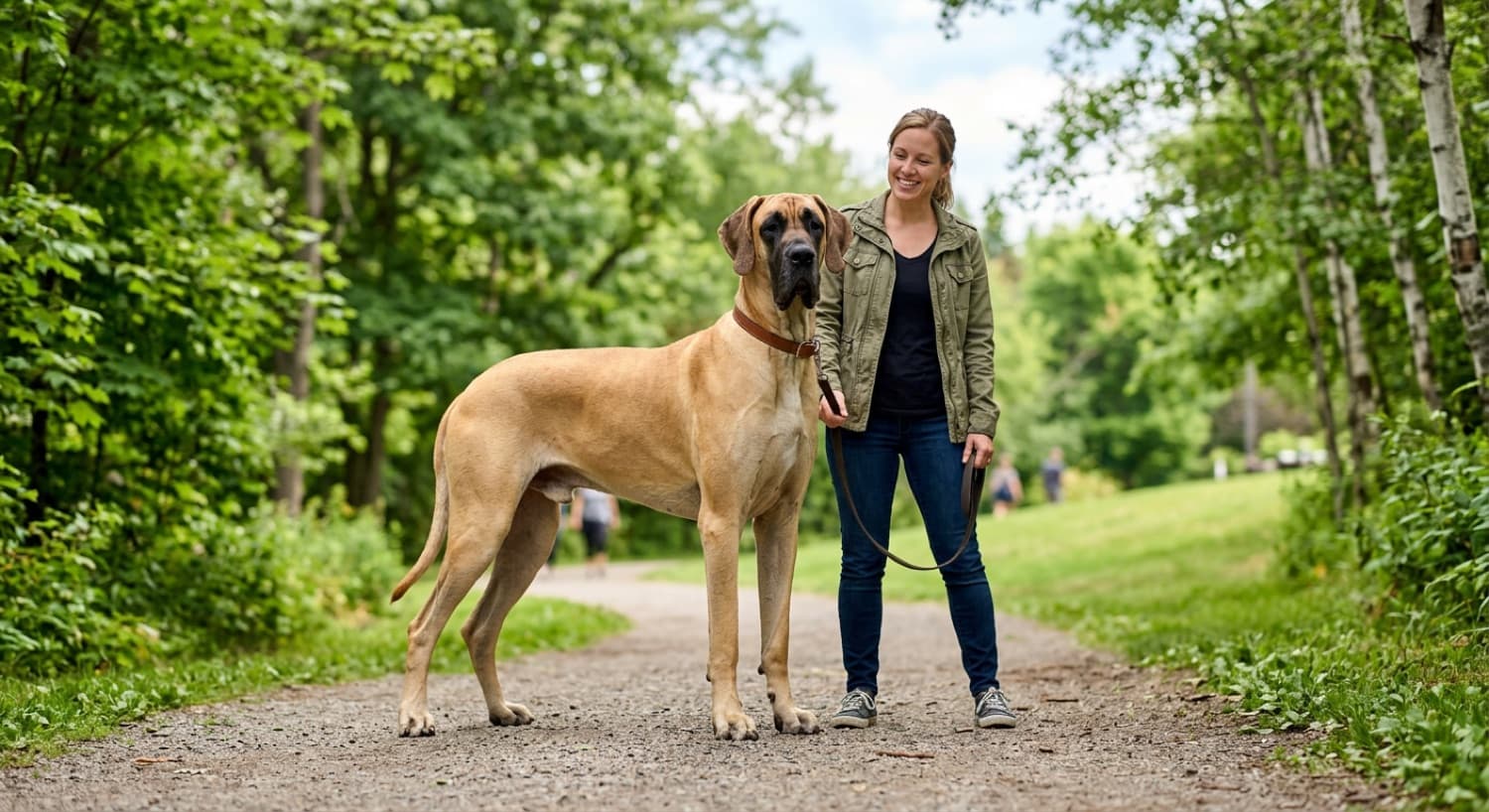
Senior Great Dane care after age six
Great Danes are at the shorter end of any large or giant breed lifespan range, so senior care begins in earnest around age five to six. The trade-off for adopting an older Dane is shorter overall companionship in exchange for a calmer, lower-output dog past the adolescent intensity of the breed. Many Edmonton rescue volunteers will tell you senior Dane adoptions are among the most rewarding placements they see; the dogs settle deeply and bond hard, and the families who adopt them go in with eyes open about the timeline.
Reasonable senior-care adjustments, all guided by your Edmonton vet:
- Biannual vet exams instead of annual
- Full annual senior bloodwork including thyroid panel, urinalysis, and liver enzymes
- Annual cardiology rechecks (Holter and echocardiogram) regardless of prior status
- Annual ophthalmology check (cataracts and PRA both progress through these years)
- Routine dental care including professional cleanings every 18 to 24 months
- Joint support (glucosamine, chondroitin, omega-3) and prescription anti-inflammatories during arthritis flares
- Tight weight monitoring (overweight Danes fail on every front)
- Aggressive lump monitoring with aspirate cytology on every new lesion rather than wait-and-see
- Elevated feeding stations to reduce cervical strain and aspiration risk
- Mobility aids: orthopaedic bed sized for a giant, traction rugs on hardwood, ramps for stairs and vehicles. These matter sooner for Danes than for most breeds
- Climate comfort: a warm bed for Edmonton winter, a cool refuge for summer; senior Danes thermoregulate even less efficiently than middle-aged dogs
Some Danes develop canine cognitive dysfunction in their later years, with disorientation, anxiety, or sleep changes. Your vet can advise on management options ranging from environmental adjustments to prescription medications.
Pet insurance becomes harder and more expensive to obtain for first-time enrolment past age six in this breed, and some providers will not enrol senior Danes at all (particularly those with documented cardiac, orthopaedic, or cancer findings). If you adopt a senior Dane, price-compare carefully and consider whether a dedicated savings account makes more sense than insurance. Talk through the math with your vet at the first visit, and have honest quality-of-life conversations early; for many senior Danes, the choice is calm comfortable years rather than aggressive intervention.
Frequently asked questions
Where can I find a vet for a Great Dane near me in Edmonton?
Start with your general-practice Edmonton vet, who refers to local board-certified veterinary cardiologists, surgeons, and oncologists for the workup a Great Dane typically needs. Edmonton has solid general-practice and intermediate specialty coverage adequate for annual cardiac screening, orthopaedic radiographs, and most cancer workups. For complex cases (cervical spinal surgery for wobbler syndrome, advanced cardiac arrhythmia management, radiation oncology), some Edmonton owners route to the Western College of Veterinary Medicine in Saskatoon or to Calgary specialty centres. Establish a primary vet in month one, ask which cardiologist and which orthopaedic surgeon they refer Danes to, and book the first month workup with cardiac auscultation, hip and elbow assessment, and a frank gastropexy conversation. The American College of Veterinary Internal Medicine cardiology specialty board credentials these specialists.
What is the lifespan of a Great Dane?
Published veterinary references put median Great Dane lifespan between 7 and 10 years, with cancer, cardiac disease, and bloat driving most early losses. Some Danes reach 11. Few reach 12. This is meaningfully shorter than the average dog and shorter than most large breeds. The reality matters at adoption: a four-year-old Dane is middle-aged, a six-year-old Dane is a senior, and senior care planning should start by year five. Many Edmonton Dane rescues say the trade-off for the breed is unusually deep companionship across a shorter arc, with calm temperament and intense bonding compensating for the short timeline.
How common is dilated cardiomyopathy (DCM) in Great Danes?
Great Danes carry the second-highest documented DCM risk of any breed, behind only the Doberman. Veterinary cardiology references commonly cite a lifetime DCM risk approaching one in three Danes, with onset typically between 4 and 6 years. The disease weakens the heart muscle, dilates the chambers, and produces congestive heart failure or sudden cardiac death from fatal arrhythmia. Many Dane sudden deaths are first-presentation DCM in dogs that appeared healthy. Annual cardiac screening with Holter monitor and echocardiogram starting at age 2 is the standard of care the American College of Veterinary Internal Medicine recommends for cardiac-risk breeds. Edmonton cardiology Holter plus echo plus specialist consult runs roughly $1,000 to $1,600 annually.
What is wobbler syndrome and how is it managed?
Wobbler syndrome (cervical vertebral instability or cervical spondylomyelopathy) is spinal cord compression in the neck vertebrae that produces a characteristic wobbly hindlimb gait. Great Danes and Dobermans are the two breeds most associated with the condition. Dane-typical onset is younger than Doberman-typical onset, often appearing in late puppyhood or early adulthood. Signs include proprioceptive ataxia (the dog does not know where its feet are, knuckling), neck pain or stiffness, reluctance to lower the head, and progressive weakness. Diagnosis is by MRI at a specialty practice (Edmonton MRI runs $1,800 to $3,000). Mild cases respond to medical management with restricted activity and a properly fitted harness instead of a collar. Moderate to severe cases benefit from surgical decompression at Edmonton or Calgary specialty practice, typically $5,000 to $10,000. The American College of Veterinary Surgeons governs the surgical board.
How serious is bloat (GDV) in a Great Dane?
Great Danes have the highest documented GDV risk of any breed in veterinary literature. Lifetime risk for an unpexied Dane is commonly cited as approaching 40 percent, and the deep-chested giant anatomy is the single biggest reason. Gastric dilatation-volvulus is a life-threatening emergency where the stomach distends with gas and twists on its axis, cutting off blood supply. Without surgical correction within hours it is fatal. Recognise non-productive retching (tries to vomit but nothing comes up), visibly distended abdomen, restlessness, drooling, pale gums, and rapid shallow breathing. Drive directly to a 24-hour Edmonton emergency veterinary clinic. Bloat surgery runs $5,000 to $10,000. Prophylactic gastropexy at the time of spay or neuter (or as a standalone procedure) is essentially the standard of care for Danes and runs $2,000 to $3,500. Most Edmonton specialty surgeons strongly recommend it; many rescues coordinate it before adoption.
How common is osteosarcoma in Great Danes?
Osteosarcoma incidence is elevated in Great Danes given the giant body frame; published lifetime risk commonly sits around 15 to 20 percent in the breed. The cancer arises in bone, most often a front limb (distal radius is the classic site), and presents as persistent unilateral lameness that does not resolve with rest, sometimes with visible swelling at the affected site. Diagnosis is by radiograph and confirmed by biopsy. Standard treatment is limb amputation followed by carboplatin chemotherapy, which achieves median survival of 10 to 14 months from diagnosis. Edmonton amputation plus adjuvant carboplatin runs $8,000 to $15,000 at specialty oncology. For senior Danes, any persistent single-limb lameness gets radiographs rather than wait-and-see. The American College of Veterinary Internal Medicine oncology specialty handles the protocol.
Should I get pet insurance for an Edmonton Great Dane?
Yes, and enrol in week one. The Dane-specific insurance math is one of the strongest of any breed because the catastrophic risks are unusually predictable. A single DCM workup plus medication management can reach $5,000 to $15,000 across a few years. Wobbler MRI plus surgery runs $7,000 to $13,000. Bloat surgery runs $5,000 to $10,000. Osteosarcoma amputation plus chemotherapy runs $8,000 to $15,000. Hip surgery runs $7,000 to $11,000 per hip. Every Canadian provider excludes pre-existing conditions, and the clock starts the day you adopt. A heart murmur, a mild gait abnormality, a low T4, or a skin lesion documented at any vet visit becomes a permanent exclusion. Monthly premiums for a young healthy Dane in Edmonton typically run $100 to $180 depending on deductible and reimbursement; the premium load is higher than most breeds because insurers know the risk profile. Look for explicit hereditary and congenital coverage, annual caps of $20,000 or more, and explicit oncology and cardiac coverage.
How do I recognise heat or cold distress in a Great Dane?
Great Danes have a thin single coat and a giant body that thermoregulates poorly at both temperature extremes. In Edmonton winter, the unprotected Dane is genuinely uncomfortable within minutes once temperatures drop below about minus 15 degrees Celsius. Signs include shivering, lifted paws, reluctance to keep moving, and ear-tip frostbite risk in extreme cold. Use an insulated winter coat, booties, and short outings in deep cold. In summer, anything above 22 degrees Celsius starts to stress the breed and above 25 degrees Celsius is risky for sustained activity. Watch for excessive panting, drooling, gum colour changes from pink to deep red or pale, weakness, and wobble. A Dane in heat distress needs immediate shade, water, and active cooling (wet the belly and groin with cool water, not ice). The cold-and-heat reality dovetails with the cardiac picture; a Dane in occult DCM should not be doing high-intensity exercise at either extreme.
What is double-merle health risk in harlequin Great Danes?
Harlequin Great Danes carry the merle gene, which produces the distinctive white-with-black-patches coat. Two merle parents bred together produce a roughly 25 percent chance of double-merle puppies, which combine compounded merle effects on pigment cells. Double-merle Danes have a high rate of congenital deafness (often bilateral), congenital blindness or severe eye abnormalities (microphthalmia, missing or malformed eyes), and other developmental defects. Reputable breeders do not breed merle to merle. A double-merle Dane in rescue is rare but real, and the dog is functional and adoptable with the right home, just with deaf or blind accommodations. The American Kennel Club and Canadian Kennel Club breed standards address harlequin colour genetics. For rescue adopters, ask the foster about hearing and vision testing if the dog is mostly white with merle patches.
What is megaesophagus in Great Danes?
Megaesophagus is a condition where the oesophagus loses normal muscular contraction and dilates, producing regurgitation of food and water rather than true vomiting. The food sits in the dilated oesophagus, and the dog regurgitates it minutes to hours after eating. Great Danes are noted in veterinary literature for elevated congenital and acquired megaesophagus risk. Aspiration pneumonia is the dangerous complication. Diagnosis is by contrast radiograph or fluoroscopy. Management is lifelong: elevated feeding (Bailey chair or upright feeding station so gravity helps food move into the stomach), small frequent meals, modified food consistency, and prompt treatment of aspiration pneumonia when it occurs. Some Danes outgrow congenital megaesophagus; others manage it lifelong. Any persistent regurgitation in a Dane deserves prompt vet workup rather than wait-and-see.
How do I manage a senior Great Dane after age six?
A six-year-old Dane is functionally a senior dog given the 7 to 10 year breed lifespan. Biannual vet exams, full senior bloodwork annually, annual cardiology recheck (Holter and echocardiogram regardless of prior status), annual ophthalmology check, and aggressive lump monitoring with fine needle aspirate on every new lesion become the baseline. Mobility aids matter sooner than for other breeds because the joint and spinal load is so heavy: orthopaedic bed, traction rugs on hardwood, ramps for stairs and vehicles, and elevated feeding stations. Tight weight monitoring matters more than for any other breed; an overweight Dane fails on every front. Climate comfort gets harder in both directions as the dog ages. Quality of life conversations should happen earlier than for most breeds; for many senior Danes, the right call is calm comfortable years rather than aggressive intervention.
Related Edmonton Great Dane guides
Edmonton Adoptable Dogs
Current Edmonton-area Great Dane and Dane-mix listings from SCARS, Zoe's, EHS, GEARS, Hope Lives Here, AHHRB, and AARCS Edmonton fosters.
Great Dane Adoption Edmonton
Rescue sources, real adoption costs, surrender patterns, breed-vs-buy reframe, and the first 30 days for an Edmonton Dane adopter.
Great Dane Puppy Growth Edmonton
Controlled-growth feeding, exercise restrictions during the growth window, OCD prevention, and the giant-breed puppy reality.
Great Dane Short Lifespan Edmonton
The 7 to 10 year reality. Financial and emotional planning around a shorter timeline, senior-care milestones, and quality-of-life conversations.
Find your Edmonton rescue Great Dane
Browse current Edmonton-area Great Dane and Dane-mix listings. Foster temperament notes help you flag any documented cardiac, gait, gastropexy, or orthopaedic history before you apply, and your first-month vet workup builds the cardiac, orthopaedic, and bloat-prevention baseline.
Browse All Edmonton Dogs →New dog? Start with these care guides
Everything a new adopter needs to set up a safe, happy home.