The short answer
Great Danes live 7 to 10 years. They become senior at age 5 to 6, which is half the age of medium breeds. Cancer (around 40 percent of deaths), cardiomyopathy (around 25 percent), and bloat (around 15 percent) drive the breed mortality profile. Plan twice-yearly cardiac echo from age 4, week-one pet insurance, and a quality-of-life scoring habit from age 7. In-home euthanasia is available in Edmonton and is meaningfully kinder for a large weak dog. For the clinical detail on what shortens a Dane lifespan, cross-link the Great Dane health issues guide.
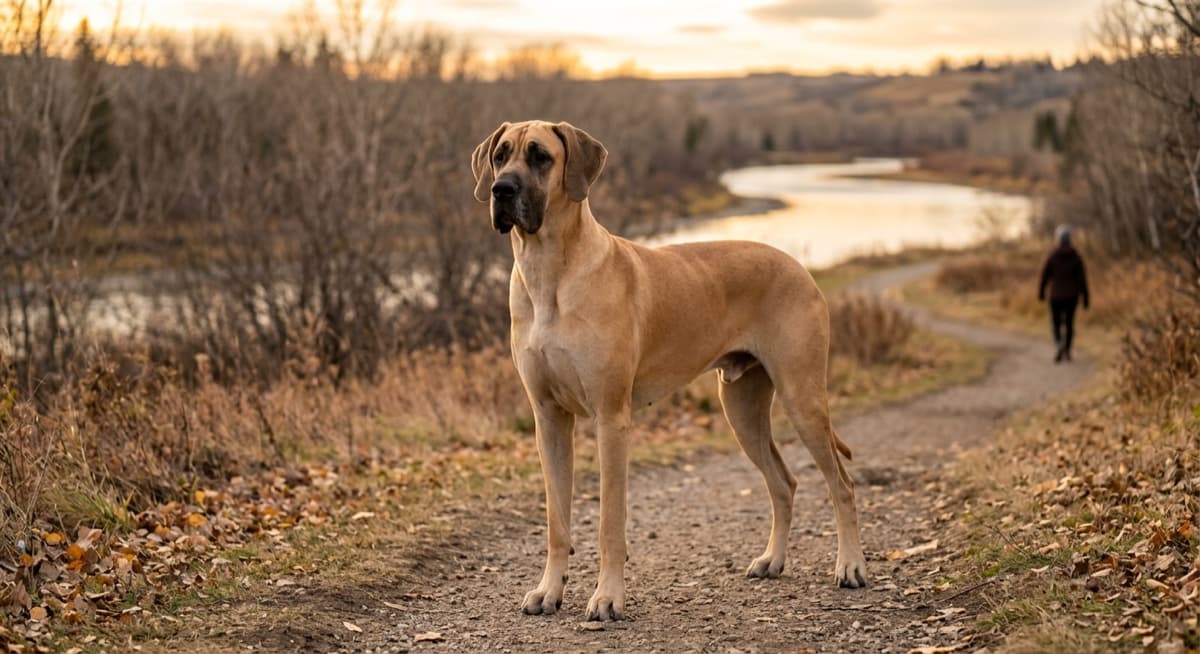
The Great Dane lifespan reality
Great Danes live 7 to 10 years on average, with a median around 8 to 9 years. Some lines run shorter (heavily built show types, Danes with cardiac disease in the pedigree, fast-grown puppies) and land closer to 6 or 7. A small number reach 11 or 12. This is roughly half the lifespan of most medium-sized breeds, and the gap is one of the biggest variables a Dane adopter signs up for. The breed is gentle, calm indoors, and famously good with families. The trade is that the relationship is shorter than most adopters initially expect.
The drivers of the short lifespan are well documented and almost all biological. Giant body size correlates strongly with shorter lifespan across all dog breeds, which is the inverse of the mammal pattern (in most species, larger means longer). The current best theory is that the rapid puppy growth rate, the high cellular turnover required to maintain a giant body, and the cardiac and skeletal load of carrying that body all compound into accelerated aging at the cellular level. The American Veterinary Medical Association publishes general guidance on canine longevity, and the giant-breed shortfall is treated as well-established in veterinary literature.
What an owner controls is not the breed average, but where their specific dog lands inside the range. A slow-grown puppy with controlled portions, week-one pet insurance, twice-yearly cardiac screening from age 4, aggressive bloat prevention, and a lean body condition score throughout adulthood usually lands in the upper half of the range. A fast-grown puppy with overweight adulthood, no cardiac monitoring, no insurance, and delayed intervention on the first cancer or cardiac diagnosis usually lands in the lower half. The gap between disciplined and undisciplined Dane ownership is 2 to 3 additional years of life, which is meaningful in a 7 to 10 year window.
What Great Danes die from
The Great Dane cause-of-death distribution is unusual because three categories dominate. Knowing the pattern shapes the prevention and the screening protocols.
- Cancer: around 40 percent. Osteosarcoma (bone cancer) is the breed signature and typically presents as a non-resolving lameness in a middle-aged or older Dane. Lymphoma is the second most common cancer in the breed. Other cancers (hemangiosarcoma, mast cell tumours) appear at lower rates but still elevated above average.
- Cardiac disease: around 25 percent. Dilated cardiomyopathy (DCM) is the leading cardiac killer. Atrial fibrillation, congestive heart failure, and sudden cardiac events all flow from underlying DCM or related structural disease. Cardiac screening from age 4 is the single most useful intervention.
- Gastric dilatation-volvulus (bloat): around 15 percent. A surgical emergency where the stomach twists. Time-critical. Without surgery within 90 minutes, mortality approaches 100 percent. With surgery and gastropexy, survival is high. Prophylactic gastropexy at spay or neuter is increasingly recommended for Great Danes specifically.
- Orthopaedic complications: around 10 percent. Severe hip or elbow dysplasia, cruciate ligament rupture, and degenerative joint disease can collectively reduce quality of life to the point of euthanasia. Slow puppy growth and lean adult weight are the main prevention levers.
- Other: around 10 percent. Renal disease, hepatic disease, neurologic conditions, and trauma make up the rest. Routine senior bloodwork catches many of these early.
The clinical pathology and the early-warning signs for each of these conditions live in the Great Dane health issues guide. The current article focuses on the planning, screening, and end-of-life layers rather than the diagnostic detail.
Senior at age 5 to 6: what changes
Great Danes become senior at age 5 to 6, which is roughly half the age that medium breeds become senior (age 9 to 10) and well before the age that many adopters expect a senior protocol to begin. The compressed timeline matters because the senior care interventions that buy time in a Dane (cardiac monitoring, cancer screening, mobility support) only work if they start before symptoms appear.
Visible aging signs typically begin around age 6 to 7: slower morning warmup, less interest in long walks, more couch time, the first grey hairs on the muzzle, and occasional stiffness after rest. These are gradual and easy to miss because Danes are calm dogs to begin with; the slide from adult calm to senior calm is subtle. The vet care protocol should shift before the visible signs, not after.
The senior protocol shift from age 5 to 6:
- Bloodwork. From annual to twice-yearly. Senior panel including kidney, liver, thyroid, and complete blood count. Catches renal disease, hepatic dysfunction, and early endocrine shifts before symptoms.
- Cardiac monitoring. From annual echo to twice-yearly. Holter monitor if any arrhythmia is detected on auscultation. Cardiology referral on any concerning finding.
- Cancer screening. Quarterly home lump checks. Chest radiographs annually from age 5. Abdominal ultrasound annually from age 6 if budget allows.
- Mobility support. Joint supplements (glucosamine, chondroitin, omega-3) if not already started. Orthopaedic bed, raised feeders, runners on slippery floors, ramps for vehicles and stairs.
- Nutrition. Senior large-breed formula or vet-recommended therapeutic diet. Body condition score target stays at 5 of 9 (lean), never higher. Extra weight on aging giant joints accelerates decline.
- Exercise. Maintain daily moderate activity but reduce duration and impact. Two 20-minute leash walks beat one 40-minute walk. Avoid hard launches, sustained running, and high-impact play.
The American Animal Hospital Association publishes senior care guidelines that align with this protocol, and most Edmonton general-practice vets will adapt them to the Great Dane timeline if asked. The conversation with the vet at the age 5 wellness visit is the right moment to set the senior protocol in motion.
Senior cardiac monitoring: the highest-value intervention
Twice-yearly echocardiograms from age 4 are the single most useful senior care intervention for a Great Dane. Dilated cardiomyopathy develops silently and often presents first as sudden collapse or cardiac event with no warning. Echo screening catches the disease in the preclinical phase, when medication can slow progression by 12 to 24 months.
The American College of Veterinary Internal Medicine cardiology guidelines flag Great Danes specifically as a high-risk breed for DCM screening. The recommended baseline is an echo plus Holter monitor by age 3 or 4, then repeat echo annually until age 5 or 6, then twice-yearly from age 6 onward. Holter monitoring (a 24-hour cardiac rhythm recording) is repeated if any arrhythmia is detected.
Edmonton has board-certified veterinary cardiologists who handle echo and Holter referrals through general-practice vets. Cost in Edmonton typically runs $400 to $700 per echo plus $200 to $400 for a Holter. Week-one pet insurance covers most of this at 70 to 90 percent reimbursement. Self-pay Dane owners should budget $1,500 to $2,500 a year for senior cardiac monitoring alone.
If DCM is detected in the preclinical phase, pimobendan is the standard medication and has good clinical evidence for slowing progression. Treatment is daily oral medication, typically $40 to $100 a month, and most Danes tolerate it well. Once clinical signs (cough, exercise intolerance, ascites) appear, the disease has advanced and the prognosis tightens significantly. Screening matters because it shifts the diagnosis earlier and buys the dog time the alternative does not offer.
Senior cancer screening
Cancer accounts for roughly 40 percent of Great Dane deaths. Osteosarcoma is the breed signature and presents most commonly as persistent lameness in a limb with no obvious injury. The lameness does not resolve with rest, does not respond well to anti-inflammatories, and often involves swelling at a specific bone location (distal radius, proximal humerus, distal femur, proximal tibia). Any lameness in a Great Dane over age 5 that does not resolve within 7 to 14 days warrants radiographs of the affected limb.
Lymphoma typically presents as enlarged peripheral lymph nodes (under the jaw, in front of the shoulder, behind the knee). Most Dane owners feel the enlarged nodes during a casual ear-scratch or chest rub. Quarterly home lump checks from age 5 onward catch most lymphoma cases at a stage where treatment options are meaningful.
Hemangiosarcoma is the silent killer of giant breeds. It often presents as sudden collapse from internal bleeding, with no preceding symptoms. There is no reliable screening test in general practice, but routine abdominal ultrasound at the annual senior visit can catch splenic masses before rupture. Cost in Edmonton typically runs $300 to $500 for screening ultrasound.
Cancer treatment decisions for a Great Dane are deeply personal. Some families pursue amputation plus chemotherapy for osteosarcoma, which buys 12 to 18 months on average. Some choose palliative care only, focusing on pain control and quality of life for the time remaining. Both choices are valid. The ACVIM oncology specialists can present treatment options without pressuring a particular path. Talk to your vet about referral to a veterinary oncologist as soon as a cancer diagnosis is suspected so the conversation happens with full information.
Financial planning across the Great Dane lifespan
Great Danes are expensive to own across their entire 7 to 10 year lifespan, and the senior years are the most expensive. Knowing the cost curve before adoption prevents the worst kind of crisis, which is the kind where treatment decisions are driven by money panic rather than quality of life.
Realistic Edmonton lifetime budget for a Great Dane, age 0 to 9, including week-one pet insurance and reasonable emergency intervention:
- Adoption fee plus first-year vet care. $1,000 to $2,000.
- Years 1 to 5 routine care. Food, insurance, vet visits, training, gear. $4,000 to $6,000 a year. Five year subtotal $20,000 to $30,000.
- Years 6 to 9 senior care. Senior bloodwork, cardiac monitoring, joint support, dental care, increased vet visits. $5,000 to $8,000 a year. Four year subtotal $20,000 to $32,000.
- Major intervention reserve. Cancer treatment, cardiac medication course, bloat surgery, ortho surgery. Budget $5,000 to $15,000 across the lifetime, more if multiple events occur.
- End-of-life expenses. $300 to $1,000 for in-home or in-clinic euthanasia plus cremation.
Lifetime total $46,000 to $80,000 across 7 to 9 years. The financial plan that holds up under that load includes week-one pet insurance (covers 70 to 90 percent of major intervention), a dedicated emergency fund ($150 a month minimum from week one), and honest conversation with the family about what will and will not be on the table when a major diagnosis arrives.
Families who adopt without the financial plan often arrive at the first major diagnosis already exhausted, and the treatment decision becomes financial rather than medical. The disciplined version of Great Dane ownership separates the medical decision from the financial decision by building the financial buffer before the medical event. Week-one insurance is the highest-leverage move because it is the only intervention available before any pre-existing condition forecloses it.
Emotional planning: the shorter timeline
Most Dane adopters are not emotionally prepared for the 7 to 10 year lifespan even when they intellectually know the number. The standard adopter framing is that the dog will be a family member for 12 to 15 years, and the breed reality compresses that timeline by roughly a third. The compressed timeline shows up in several specific ways across the years.
The puppy years feel normal because every breed has a puppy phase that feels long. The adult years from 2 to 5 also feel normal: walks, hikes, family life, the dog as a stable presence in the household routines. The shift starts around age 5 to 6 when the senior protocol begins and the dog starts to visibly age. Most families describe a feeling of compressed time around this point: the dog is still happy and engaged, but the awareness that the lifespan is closing in changes how the years feel.
The 6 to 8 year window is often when the first major diagnosis arrives. Cancer, cardiac disease, or accelerated joint disease can present in this window and force the family into treatment decisions earlier than they expected. The decisions are easier to make if the financial plan is already in place, the cardiac and cancer screening protocols have caught the disease in an early phase, and the family has already had the conversation about what kind of treatment they will and will not pursue.
The final year (age 7 to 10 depending on the dog) is the hospice or quality-of-life management year. Some Danes pass quickly after a sudden cardiac event or hemangiosarcoma rupture, with little warning. Others decline gradually over months, and the family makes the end-of-life decision when the quality-of-life scores drop below the threshold. Both paths are common. The emotional preparation in advance helps families be present for the dog in the final months instead of being blindsided. Naming the lifespan reality out loud, talking about it as a family, and treating the relationship as dense rather than long is the version most Dane families say worked for them.
Quality-of-life scoring: the HHHHHMM framework
The HHHHHMM scale is a structured quality-of-life scoring tool developed by veterinary oncologist Dr. Alice Villalobos and used widely in veterinary hospice. The seven dimensions are Hurt, Hunger, Hydration, Hygiene, Happiness, Mobility, and More good days than bad. Each is scored 0 to 10. A total of 35 or higher suggests acceptable quality of life. Below 35 suggests the time to discuss palliative or end-of-life options has arrived.
Most Dane families we work with begin scoring weekly around age 7 or 8, then daily once any chronic disease enters the picture. The scale is not a verdict; it is a structured conversation tool that separates love-driven optimism from the actual day-by-day experience the dog is having. A family scoring honestly often finds that the dog quality of life has been below 35 for longer than they wanted to admit, and the structured scoring makes the difficult conversation easier to have.
How to use the scale practically:
- Hurt: pain control. Is the dog comfortable on current medication? Does the dog show pain signs (restlessness, hiding, vocalising, refusing to lie down)?
- Hunger: eating well. Is the dog eating without prompting? Is food still rewarding to the dog?
- Hydration: drinking enough. Is the dog drinking voluntarily? Are there signs of dehydration (sunken eyes, tacky gums, skin tent)?
- Hygiene: kept clean. Is the dog keeping themselves clean? Are pressure sores or soiling appearing because the dog cannot move enough?
- Happiness: engagement with family. Does the dog still seek out family members? Does the dog show interest in the household around them?
- Mobility: able to move without distress. Can the dog get up, walk, eliminate, and lie down without significant difficulty? Is the dog still going outside voluntarily?
- More good days than bad. Across the past week, were there more days the dog seemed comfortable and engaged than days they seemed to suffer?
Score honestly. Some families find it helpful to have two people in the household score independently and compare; love can bias the scoring upward. The vet can also score, and the divergence between owner and vet scoring is often diagnostic. The point of the scale is to give the family a tool for making the hardest decision a Dane owner ever makes from a place of structure rather than from a place of pure emotion.
Browse adoptable Great Danes in Edmonton
Adolescent Dane surrenders past the puppy growth window are common at Edmonton-area rescues, and adopting a 2 to 4 year old Dane lets families skip the early protocol and focus on the adult plus senior years.
See Available Great Danes →Edmonton end-of-life options
Edmonton families have three primary end-of-life paths for a Great Dane. The choice depends on the dog mobility, the family preferences, and the timing of the decision.
In-clinic euthanasia at the regular vet
The most common path. The family brings the dog to the clinic, sedation is given to make the dog calm and comfortable, the family stays in a private room through the final injection, and most clinics offer cremation services on site. Cost in Edmonton typically runs $200 to $400 including private cremation. The downside for a Great Dane specifically is that loading a weak large dog into a vehicle on the hardest day is physically demanding for the family and stressful for the dog.
In-home euthanasia
Several Edmonton mobile veterinary practices offer in-home euthanasia. The vet comes to the home, sedates the dog on their own bed or favourite spot, and administers the final injection there. The family does not have to transport the dog. Cost typically runs $400 to $800 plus cremation if requested. For Great Danes specifically, this is meaningfully kinder because the breed often loses mobility before passing, and the in-home option lets the dog be in their familiar environment with their family rather than in a clinic. Ask your regular vet about which Edmonton in-home services they refer to; we do not name specific practices here because availability and contact details change. The International Association for Animal Hospice and Palliative Care maintains a national directory of certified hospice providers as a starting point.
Hospice care followed by planned euthanasia
Hospice care shifts the goal from cure to comfort when a disease is no longer treatable. The family works with their vet to manage pain, appetite, and mobility for the final weeks or months, and the euthanasia decision is planned proactively rather than emergency-driven. The IAAHPC standards cover hospice practice in detail, and most Edmonton general-practice vets can either provide hospice care themselves or refer to a mobile practice that does. Hospice can run from days to months depending on the disease.
Whichever path the family chooses, the cremation decision (communal versus private) and the memorial choice (paw print, fur clipping, framed photo) are usually made the day of euthanasia or just before. Some families find it easier to make these choices in advance so they are not navigating logistics on the hardest day. Others wait. Both are valid. The vet team usually walks the family through the options without pressure.
Multi-pet households during senior decline
Households with other pets face an additional layer of management during a Great Dane senior decline. The other animals notice the change in the senior dog and respond in different ways depending on the species and the bond.
Other dogs in the household often shift their behaviour around a declining senior. Some become protective and stay close. Some become avoidant. Some become more demanding because the routine has changed. The senior dog may not have the energy for play and may need separation at times when the other dogs would normally interact with them. Setting up quiet spaces where the senior can rest undisturbed helps. Continuing the other dogs routines (walks, training, play) prevents the household-wide depression that can otherwise set in.
Cats in the household are often the most overlooked grief partners. Many cats bond closely with the family dog and show clear distress after the loss. Allowing the cat to see the body briefly after euthanasia (if circumstances allow) helps some cats process the loss. Maintaining the cat routine is the main intervention.
After the loss, the surviving animals usually grieve for 2 to 6 weeks. Some need more attention from the family during this time. Some withdraw. Some show appetite changes or sleep pattern changes. These typically resolve on their own. If grief persists past 6 to 8 weeks or includes appetite loss, talk to the vet.
Children and Great Dane senior decline
Children who grow up with a Great Dane often live through the loss when they are still young. A child who got the dog at age 3 will likely lose the dog around age 10 to 13. The age-appropriate conversation about a senior dog declining is one of the harder parenting moments, and starting it before the crisis rather than during the crisis makes it easier on both the child and the family.
Younger children (under 7) benefit from concrete simple language: the dog is very sick, the vet is going to help the dog stop hurting, the dog will not be coming back. Avoiding euphemisms like went to sleep or passed away helps because young children take language literally and can become afraid of sleeping themselves. Letting the child be involved in small ways (drawing a picture for the dog, choosing a favourite toy for the cremation, being present for a final goodbye if developmentally appropriate) helps them process the loss as something that happens rather than something hidden from them.
Older children (7 to 12) benefit from being included in the quality-of-life conversations where developmentally appropriate. Looking at the HHHHHMM scores together, talking about what the dog still enjoys, and discussing when the kindest choice is to let go gives the child a framework for understanding the decision. Teenagers can usually handle the full conversation as adults and often have strong opinions worth listening to.
After the loss, follow the child lead on grief. Some want to talk about the dog often; some need quiet processing time. Memory rituals help most children: a framed photo, a paw print plaque, a written letter to the dog, a small memorial in the yard. Edmonton has pet loss support resources through some veterinary practices; ask your vet for a referral if grief is heavy or prolonged. Avoid the immediate-replacement pattern (getting a new dog within days to fill the gap) because young children especially can feel betrayed by it. Wait until the grief has had room to settle, then make the decision together as a family.
The shorter but bigger philosophy
Some Dane families frame the 7 to 10 year lifespan as a flaw of the breed that must be endured. Some frame it as the price of admission for the breed temperament. Some frame it as a feature: a dense, complete relationship that arrives, fills the house, and ends, rather than a long shallow one.
None of these framings is wrong. The relationship with a Great Dane is shorter than with most breeds, but it is also denser in the specific ways that giant breeds offer. A 150 pound dog takes up the whole couch, makes friends with everyone they meet, has a presence that smaller breeds do not, and is impossible to ignore in a home. The years are dense because the dog is dense. When the dog is gone, the loss is huge because the presence was huge.
Most Dane families we work with say the trade is worth it. Some say the trade is unbearable and they will not adopt another. Both are legitimate. The point is to know before adopting that the arc will be shorter than most breeds, to fill the years with the dog completely, and to do the planning (cardiac monitoring, insurance, emotional preparation) that lets the family be present for the dog in the final months rather than be blindsided by them.
A senior Great Dane in their final year is one of the most rewarding versions of dog ownership. The dog is calm, gentle, deeply bonded to the family, and present in a way that adolescent dogs and adult dogs simply are not. The protocol that gets the dog to that final year in good health (slow puppy growth, week-one insurance, twice-yearly cardiac monitoring, lean body condition, quality-of-life scoring from age 7) is the gift that makes the final months gentle rather than chaotic.
After the loss: when and whether to adopt again
Most Dane families do adopt again, but the timeline varies enormously. Some adopt within weeks because the empty house is harder than the grief. Some wait six months to two years. Some choose to never have another Great Dane and adopt a different breed or no dog. All of these are valid.
What does not work is adopting before the grief has had room to settle, then resenting the new dog for not being the one you lost. A reasonable framework: wait until the new dog can be welcomed for who they are, not as a replacement. For some families that is two months; for others it is two years. There is no correct number.
For families who return to the breed, the second Dane is often easier than the first because the family already knows the breed protocols, has the gear, has the emergency vet relationships, and has the financial plan in place. The grief for the first dog does not disappear, but it lives alongside the new relationship rather than blocking it.
For families who choose a different breed, the lifespan trade-off is the most common reason. Many Dane families switch to medium-sized breeds (Labradors, Goldens, mid-sized rescue mixes) specifically to get the 12 to 15 year arc the giant breeds cannot offer. There is nothing wrong with that choice; it is an honest response to the breed reality.
For families who choose to adopt an older Dane specifically, the senior Dane rescue path is one of the most meaningful versions of dog ownership available. Senior Danes in rescue have often been surrendered through no fault of their own and have 1 to 3 years left to give. Giving a senior Dane a soft landing is a gift the family receives back tenfold in the months that follow. The Great Dane adoption guide covers rescue paths in detail.
Veterinary partnership across the lifespan
A strong general-practice vet relationship is the single most useful piece of infrastructure a Great Dane family can build. The right vet knows the breed, refers early rather than late on specialty consultations, and is comfortable with the senior protocols from age 5 rather than age 8 or 9.
Specialty veterinary support in Edmonton includes board-certified cardiologists, oncologists, and orthopaedic surgeons. The general practice vet handles routine care and referrals; the specialists handle complex diagnostics and treatment. For complex cases, the Western College of Veterinary Medicine in Saskatoon (WCVM) is the regional teaching hospital and referral centre for the Prairies and offers specialty services not always available in private Edmonton clinics.
The vet partnership for end-of-life care matters specifically. Some general-practice vets are comfortable with hospice and at-home euthanasia; some refer out to mobile practices. Asking the vet about end-of-life options when the dog is still healthy (rather than during a crisis) gives the family time to plan and surfaces any concerns about the practice approach. Most Edmonton vets are happy to have this conversation when raised respectfully and in advance.
Frequently asked questions
How long do Great Danes live?
Most Great Danes live 7 to 10 years, with a median around 8 to 9. A small number reach 11 or 12, and some lines (particularly heavily built show types or Danes with cardiac disease in the pedigree) drop closer to 6 or 7. Compared to the 12 to 15 year lifespan of most medium-sized breeds, this is roughly half. The drivers are well documented: cancer (osteosarcoma and lymphoma) accounts for around 40 percent of Dane deaths, dilated cardiomyopathy and other cardiac disease around 25 percent, gastric dilatation-volvulus around 15 percent, and orthopaedic complications another 10 percent. The remaining 10 percent covers everything else. Slow controlled growth as a puppy, week-one pet insurance, twice-yearly cardiac screening from age 4, and aggressive bloat prevention buy a Dane meaningful additional time. They do not change the breed average.
When does a Great Dane become a senior?
Age 5 to 6 is the practical senior threshold for Great Danes, which is roughly half the age that medium-sized breeds become senior. Senior status means the vet care protocol shifts: annual senior bloodwork becomes twice-yearly, cardiac monitoring becomes twice-yearly (especially echo and Holter if there are any concerns), joint supplements move from optional to standard, and the home environment starts adapting for mobility. Most Danes show visible aging signs around age 6 or 7: a slower morning warmup, less interest in long walks, more couch time, the first grey hairs on the muzzle. The shift is gradual but the senior care protocol should be in place before symptoms appear, not after.
What is the HHHHHMM quality-of-life scale for dogs?
The HHHHHMM scale is a quality-of-life scoring framework developed by veterinary oncologist Dr. Alice Villalobos and widely used by veterinary hospice professionals. The seven dimensions are: Hurt (pain control), Hunger (eating well), Hydration (drinking enough), Hygiene (kept clean, no pressure sores), Happiness (engagement with family and life), Mobility (able to move without distress), and More good days than bad. Each dimension scores 0 to 10. A total of 35 or higher suggests acceptable quality of life. Below 35 suggests the time to discuss palliative or end-of-life options has arrived. The scale is not a verdict; it is a structured conversation tool. Most Dane families we work with start scoring weekly around age 7 or 8, then daily once any chronic disease enters the picture. The structure helps families separate love-driven optimism from the actual day-by-day quality the dog is experiencing.
What end-of-life options are available in Edmonton?
Edmonton families have three primary end-of-life options. In-clinic euthanasia at your regular vet is the most common path: the family brings the dog to the clinic, sedation is given, and the family stays through the final injection in a private room. Costs typically run $200 to $400 in Edmonton including cremation. In-home euthanasia is offered by several Edmonton mobile veterinary practices: the vet comes to your home, the dog is sedated on their own bed, and the family does not have to load a large weak dog into a vehicle on the hardest day. This is meaningfully kinder for Great Danes because the breed often loses mobility before passing and the transport itself is stressful. Costs typically run $400 to $800 plus cremation. Hospice care under veterinary guidance focuses on comfort and quality of life for the final weeks or months rather than curative treatment. Speak with your regular vet about local in-home and hospice options that fit your circumstances; the International Association for Animal Hospice and Palliative Care (IAAHPC) maintains national standards and family resources.
When should I start cardiac monitoring for my Great Dane?
By age 4 at the latest. Dilated cardiomyopathy is the second leading cause of death in Great Danes, and the disease frequently develops silently before clinical signs appear. The recommended baseline is an echocardiogram and Holter monitor by age 3 or 4, then repeat echo annually. From age 6 onward, twice-yearly echo is the standard recommended by veterinary cardiologists for the breed. The American College of Veterinary Internal Medicine (ACVIM) cardiology guidelines specifically flag Great Danes as a high-risk breed for DCM screening. Edmonton has board-certified veterinary cardiologists who handle echo and Holter referrals from general practice vets. Cost in Edmonton typically runs $400 to $700 per echo plus $200 to $400 for a Holter. Pet insurance enrolled before any diagnosis usually covers the diagnostic workup at 70 to 90 percent. The full clinical detail on DCM lives in the Great Dane health issues guide.
What is the right pet insurance approach for a Great Dane?
Enrol in week one of ownership, before any vet visit or diagnosis can create a pre-existing condition exclusion. Choose an accident-and-illness plan with no per-condition cap, an annual cap of at least $15,000, and 80 to 90 percent reimbursement after deductible. The breeds most likely to hit lifetime insurance value are giant breeds, and Great Danes specifically: cardiac workup, cancer treatment, bloat surgery, and ortho intervention can each cost $3,000 to $15,000 at Edmonton specialty clinics. A 7 to 10 year insurance lifetime at $80 to $130 a month totals $8,000 to $15,000 in premiums; a single ortho surgery or cancer treatment cycle can return that in one event. Some Dane owners self-insure with a dedicated emergency fund instead. The math works only with strict savings discipline ($150 a month minimum from week one, never touched) and a clear plan for what happens if a major bill arrives before the fund is built. Full details on insurance carrier comparison are in the Great Dane health issues guide.
How do I prepare children for the loss of a Great Dane?
Honest age-appropriate conversations starting before symptoms appear, not after. Children who grow up with a Great Dane often live through the loss when they are still young, because the dog ages and declines while they are still in elementary or middle school. Younger children (under 7) need concrete simple language: the dog is very sick, the vet is going to help the dog stop hurting, the dog will not be coming back. Older children benefit from being included in the quality-of-life decisions where possible: looking at the HHHHHMM scores together, talking about what the dog still enjoys, deciding together when the kindest choice is to let go. After the loss, follow the child lead on grief. Some want to talk about the dog often; some need quiet processing time. Memory rituals (paw print, framed photo, a written letter to the dog) help most children. Edmonton has pet loss support resources through local veterinary practices; ask your vet for referrals if grief is heavy or prolonged.
Should I adopt another Great Dane after I lose mine?
Most families do, eventually, but the timeline varies enormously. Some adopt again within weeks because the empty house is harder than the grief. Some wait six months to two years. Some choose to never have another Great Dane and adopt a different breed or no dog. All of these are valid choices. What does not work is adopting before grief has had room to settle, then resenting the new dog for not being the one you lost. A reasonable framework: wait until the new dog can be welcomed for who they are, not as a replacement. For families that do return, consider whether to adopt another Dane (knowing the same lifespan reality awaits) or a different breed (knowing you trade the gentle-giant temperament for a longer relationship). Some families alternate. Some families adopt an older Dane specifically to give a soft landing to a dog who would otherwise sit in rescue. There is no wrong answer.
What does it cost to care for a senior Great Dane in Edmonton?
Realistic Edmonton senior Dane annual budget, age 6 onward: twice-yearly senior bloodwork $400 to $700, twice-yearly cardiac echo $800 to $1,400, joint supplements and senior diet $1,500 to $2,400, pet insurance premium $1,000 to $1,600, routine vet visits and dental $600 to $1,200. Annual baseline $4,300 to $7,300 not including any major intervention. Cancer treatment for osteosarcoma or lymphoma can add $5,000 to $15,000 in the year of diagnosis. Cardiac medication for DCM runs $80 to $200 monthly once treatment starts. End-of-life expenses (in-home euthanasia plus cremation, or in-clinic euthanasia plus cremation) run $300 to $1,000. The decade-long total for a 7 to 10 year Dane lifetime, including week-one pet insurance and reasonable emergency intervention, lands at $35,000 to $60,000 across the dog full life. The financial planning side is real, and starting it before adoption rather than at the first diagnosis prevents the worst kind of decision making, which is the kind driven by money panic instead of the dog actual quality of life.
What is hospice care for a dog?
Hospice care shifts the goal of veterinary care from cure to comfort when a disease is no longer treatable. For a Great Dane diagnosed with terminal osteosarcoma, terminal cardiac failure, or untreatable lymphoma, hospice means: pain management is prioritised, appetite stimulation and nausea control are managed, the home environment is adapted for mobility and dignity, the family is supported through the emotional weight, and end-of-life is planned proactively rather than emergency-driven. The IAAHPC sets standards for veterinary hospice practice in North America. Edmonton has veterinarians and mobile clinics that offer hospice as a structured service; ask your regular vet for a referral when curative treatment is no longer the path. Hospice can run from days to months depending on the disease. The goal is not to extend life as long as possible; the goal is to make whatever time remains as good as it can be.
What is the philosophy of choosing a short-lived breed?
Some adopters frame the Great Dane lifespan as a flaw to manage. Some frame it as the deal you make for the breed. Both framings are honest. A 7 to 10 year relationship with a Great Dane is dense in the way a 50-year career is dense compared to a 30-year career, or the way an intense 5-year friendship can hold more than a casual 20-year acquaintance. The dog is enormous, takes up your whole couch, makes friends with everyone, and has a presence that smaller breeds do not. Then they are gone, and the loss is huge because the presence was huge. Most Dane families we work with say the trade is worth it. Some say the trade is unbearable and they will not adopt another. Both responses are legitimate. The point is to know before you adopt that the relationship arc will be shorter and to fill the years with the dog completely rather than worrying about the ending the whole way through.
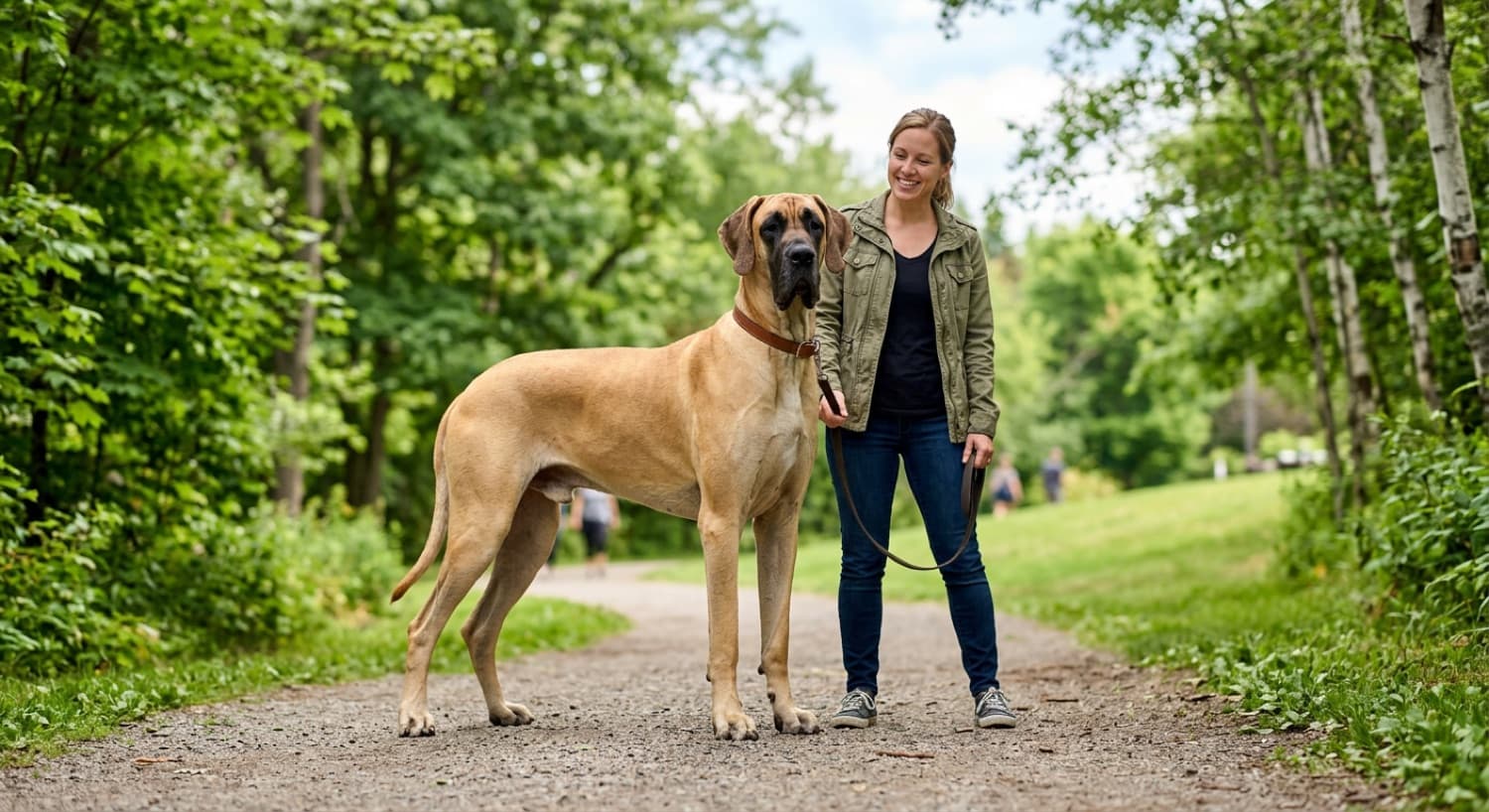
Related Edmonton Great Dane guides
Adoptable Great Danes in Edmonton
Browse current Great Danes and Dane crosses listed with Edmonton-area rescues. Updated regularly.
Great Dane Adoption Edmonton
Edmonton Great Dane rescue sources, adoption costs, surrender patterns, and giant-breed-vs-buy honesty.
Great Dane Health Issues: Bloat, Heart, Bones
Great Dane health issues to plan for: bloat, dilated cardiomyopathy, wobbler syndrome in young Danes, bone cancer, giant-breed growth and kneecaps.
Great Dane Puppy Growth Edmonton
Slow controlled growth, large-breed puppy food, leash walks only, and growth plate timing for the first 18 to 24 months.
Find your Edmonton Great Dane
Browse adoptable Great Danes and Dane crosses from Edmonton-area rescues. Adolescent and adult surrenders that skip the puppy protocol are common.
Browse All Edmonton Dogs →New dog? Start with these care guides
Everything a new adopter needs to set up a safe, happy home.