The short answer
Greyhound adoption in Edmonton is specialty rescue work. The Northwest Canadian Greyhound League (NCGL) is the regional specialty rescue with an Alberta foster network and the primary pipeline for retired racing Greyhounds plus Spanish Galgo Espanol intake. EHS, AARCS Edmonton fosters, Zoes, SCARS, GEARS, Hope Lives Here, and AHHRB list Greyhounds and Greyhound crosses rarely. Fees $300 to $600. Plan a three to six month search. The breed is famously a 45 mph couch potato that sleeps 16 to 18 hours a day. Sighthound prey drive, anaesthesia sensitivity, and the Edmonton winter coat reality are the three commitments to settle before applying.
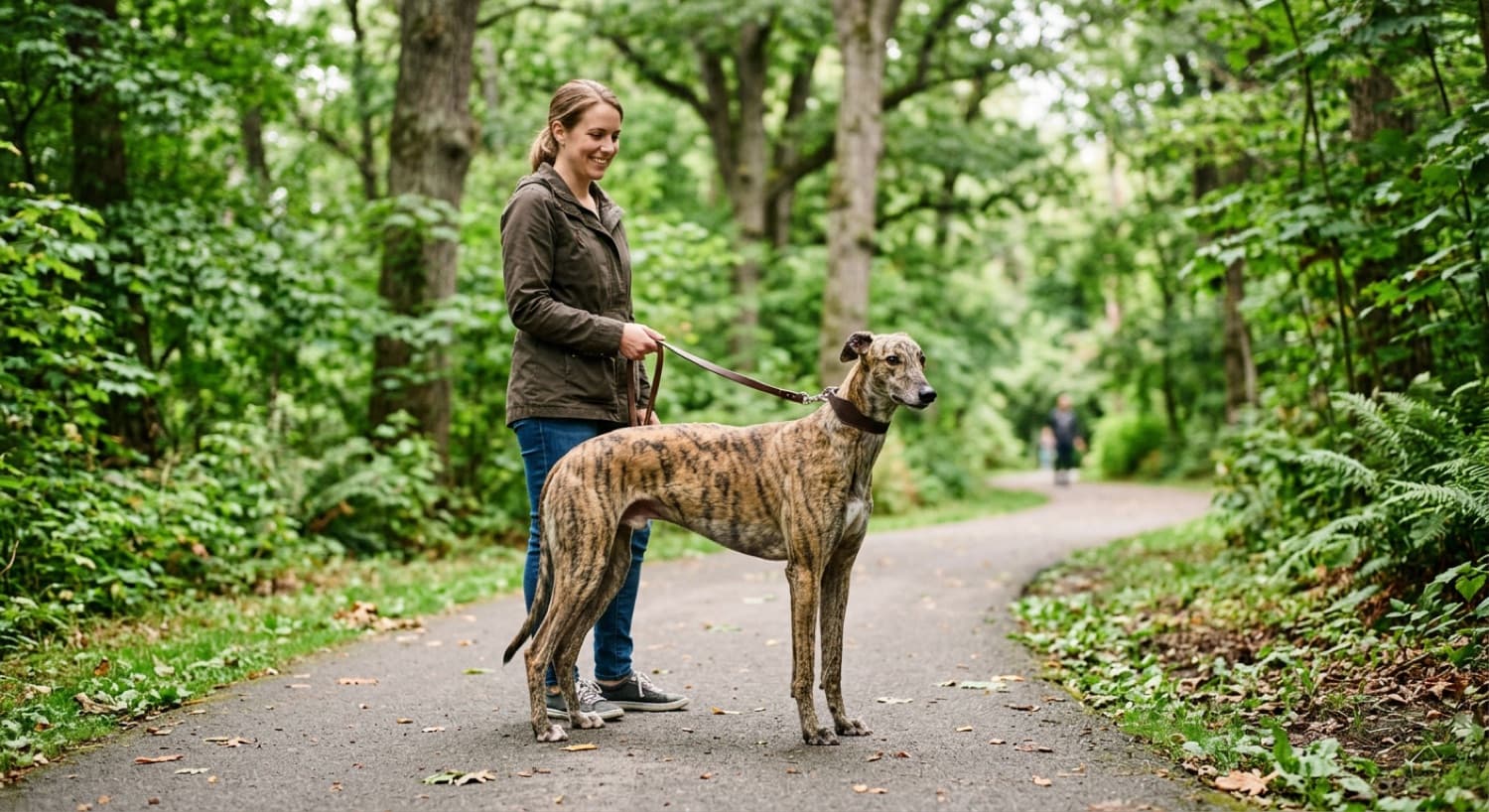
Why Greyhounds need rescue
Greyhounds are unusual in Edmonton rescue intake because they almost never arrive through the same channels that produce Labs, Shepherds, or Aussies. Backyard breeding is uncommon in Alberta because the Greyhound is not a pet-source breed in Canada the way it is in some US states. Accidental litters are rare because the breed is concentrated in racing and breed-rescue hands. Owner surrender to general rescues is low because most pet Greyhounds came from a rescue with a return-to-rescue clause and the rescue is contacted first.
What does feed Greyhound rescue is three specific pipelines, and understanding them shapes both the dogs you will see and the timeline you should plan.
Retired racing Greyhounds. The dominant pipeline historically. North American racing has contracted significantly since the early 2000s, with Florida ending live racing entirely in 2020 and many other US states following. A small number of US tracks still operate, and the Tijuana Mexico racing industry continues. Tracks coordinate with breed-rescue networks because the public-facing adoption story is part of the industry social licence. Retired racers leave the track at two to five years old, typically because they are not winning, are recovering from a minor injury, or have aged out of competitive racing. They are kennel-raised, never house-trained, never exposed to stairs or sliding glass doors, and arrive at Edmonton fosters with significant decompression work ahead.
Spanish Galgo Espanol rescue. The pipeline that has grown most in the past decade. Spain hosts a large working population of Galgos for hare coursing, and the welfare crisis at the end of each February hunting season is documented by Spanish welfare organisations and major Canadian and US rescue groups. Galgos are surrendered to high-volume Spanish shelters, abandoned, or in the worst documented cases killed. International rescue organisations coordinate transport to Canadian foster networks including NCGL. Galgos arrive with sometimes additional trauma history (handling fear, food insecurity, scarring) but with the same gentle sighthound temperament. The decompression timeline is often longer; the eventual house dog is similar.
General owner surrender. The smallest pipeline. A Greyhound that has lived as a pet for years occasionally surrenders to an Edmonton general rescue when the family faces forced circumstances (owner death, owner cancer diagnosis, divorce-driven downsizing). The rescue accepts and the dog goes to a quiet home quickly because Greyhound networks know the breed and applications come fast. These are the rare dogs that show up at EHS, Zoes, or AARCS rather than through NCGL, and the foster write-ups usually describe a fully house-trained dog with established routines.
The Northwest Canadian Greyhound League (NCGL) is the regional specialty rescue
the Northwest Canadian Greyhound League is the breed-specific rescue serving Alberta Greyhound adopters. The organisation operates a foster network spanning Edmonton, Calgary, Red Deer, and Lethbridge, coordinates retired racer transports from US tracks (Tijuana and the remaining US states), and partners with Spanish welfare groups to bring Galgos to Canadian placements. NCGL is the first stop for almost every serious Edmonton Greyhound adopter, and the foster network is where most placements actually happen.
The application process is more thorough than general shelter applications because the breed-specific knowledge matters and the rescue is screening for placements that last. Expect questions about your housing setup (fully fenced yard or not, condo or house, stairs in the home), your other pets (cats and small dogs need the cat-test rating discussed below), your work schedule and time-alone tolerance for the dog, your Edmonton winter gear plan, and your willingness to maintain the on-leash and long-line routine the breed requires. The application is also where NCGL documents your preferences (male or female, age range, retired racer or Galgo, cat-safe required or not) so the foster team can match you to incoming dogs.
Transport batches are the rhythm to understand. Retired racing Greyhounds arrive in batches when a track releases a group of dogs to rescue partners, typically two to six times a year. Spanish Galgo transports arrive on a similar irregular schedule keyed to the Spanish hunting season cycle. Approved applicants in the NCGL system get notified when a batch is incoming and matched to dogs as the foster team completes initial assessments. Adopters not yet approved miss the early window because batches sometimes match out within days of arrival.
Adopters sometimes ask about other Canadian Greyhound rescues. ROAR (Reality Of Adopted Racing greyhounds) is a BC-based rescue that serves Alberta on a smaller scale through coordinated transport. National breed-club referral through the Canadian Kennel Club Greyhound Club of Canada occasionally surfaces retired show-line or breeder placements for adult dogs. Most Edmonton Greyhound adoptions go through NCGL first, with the other paths as supplements for adopters with specific dog preferences or a tighter timeline who can travel.
Edmonton general rescues that occasionally list Greyhounds
Seven Edmonton-area rescues list a Greyhound or Greyhound cross from time to time. The frequency is low (most go months between Greyhound listings) but worth following because the dogs that arrive here are often the rare general-surrender Greyhound with established household manners. Register listing alerts where you can and check current Edmonton listings alongside your NCGL application.
- Edmonton Humane Society (EHS): the largest Edmonton general shelter and the most likely place a general-surrender Greyhound appears. EHS sees a Greyhound or Greyhound cross every few months on average, often as a senior pet whose owner faced forced circumstances. The behaviour team writes thorough assessments and the centralised facility makes meet-and-greet logistics straightforward. The EHS adoption page updates regularly.
- AARCS (Alberta Animal Rescue Crew Society): headquartered in Calgary with Edmonton-area foster homes. AARCS tags each dog with foster location so Edmonton-foster Greyhounds surface on Edmonton listings. Greyhounds at AARCS often arrive through rural southern Alberta surrenders or from urban Calgary intake routing through Edmonton. Foster notes explicitly cover cat tolerance, kid tolerance, and recall potential.
- Zoes Animal Rescue: long-running Edmonton foster-based rescue with low Greyhound volume but thorough write-ups when a dog appears. Zoes applications emphasise long-term fit, which suits Greyhound placement.
- SCARS (Second Chance Animal Rescue Society): pulls Greyhound crosses from northern Alberta rural intake more often than purebreds. The Greyhound-Husky cross and Greyhound-Heeler cross occasionally appear from working acreage surrenders. Foster notes flag rural-origin behaviour, recall potential, and any flagged conditions.
- GEARS (Greater Edmonton Animal Rescue Society): Edmonton-area rescue with smaller rotating inventory. Greyhound crosses appear here at low frequency.
- Hope Lives Here Animal Rescue: Edmonton foster-based rescue. Greyhound or sighthound-cross dogs appear rarely.
- Alberta Homeward Hound Rescue Bureau (AHHRB): Edmonton-area foster-based rescue. AHHRB lists every dog as Mixed Breed on paper, so sighthound and Greyhound-cross dogs are identified by photo and description rather than the breed tag. Worth checking even when a Greyhound search returns no results.
Adopters sometimes ask whether there is a dedicated Italian Greyhound rescue in Edmonton. As of writing we cannot verify a current Edmonton-based Italian Greyhound-specific rescue with active listings. The Italian Greyhound Rescue Foundation operates US-based with occasional Canadian placements. If you are looking for an Italian Greyhound (the toy breed) rather than a standard Greyhound, the toy-breed network and EHS small-dog intake are usually faster paths. Verify any rescue you find through Canada Revenue Agency charitable registry, a real address, public-facing vet references, and a current adoptable-dog list before sending money.
Greyhound, Italian Greyhound, Galgo Espanol: three different breeds often confused
The breed-name overlap causes regular confusion in adoption searches. Three different breeds, three different sets of expectations, and adopting the wrong one for your situation is a documented surrender driver.
- Greyhound (standard): the large sighthound, 55 to 80 lb, 27 to 30 inches at the shoulder, 10 to 14 year typical lifespan. Developed for coursing and later racing. Most rescue Greyhounds are retired racers (two to five years old when they retire) or Spanish Galgos. Daily routine: 16 to 18 hours of sleep, two short walks, occasional sprints in fenced spaces. Genuinely suits apartment and condo life.
- Italian Greyhound (IG, Iggy): a separately recognised toy breed at 7 to 14 lb, 13 to 15 inches, 14 to 16 year lifespan. Developed as a companion lapdog for Renaissance European nobility, not as a working sighthound. An IG is not a small Greyhound and the temperament differs notably. IGs are more reactive, more bonded to their handler, more fragile (delicate leg structure and dental issues common), and more demanding of attention than the standard Greyhound. IG adopters often work through the Italian Greyhound Rescue Foundation US network or general small-dog rescue, not NCGL.
- Galgo Espanol (Spanish Greyhound): similar size and structure to the North American Greyhound but a separate breed developed in Spain for hare coursing. Galgos arrive in Edmonton rescue through international Spanish welfare transport. Temperament is similar to retired racing Greyhound (gentle, quiet, low daily exercise) with sometimes additional trauma history requiring patient decompression. Functionally similar to the standard Greyhound in daily life; many adopters cannot tell the breeds apart at a glance.
The other sighthound cousins worth knowing: the Whippet (25 to 40 lb, the breed often called the poor relation of the Greyhound), the Saluki and Borzoi (rare in Edmonton rescue), and the Lurcher (a UK working cross of Greyhound or Whippet with collie, terrier, or deerhound, occasionally surfaces in northern intake). All share the sighthound prey-drive profile and the recall caution applies to all of them.
The couch potato reality despite the 45 mph reputation
The Greyhound is the fastest dog breed on earth at 45 mph (72 km/h), reaching full speed within a handful of strides. The reputation suggests a high-energy working dog. The daily reality is the opposite. Most retired racing Greyhounds and pet Greyhounds sleep 16 to 18 hours a day and have a daily exercise need that surprises new adopters with how modest it actually is.
The breed is built for short anaerobic sprints, not endurance. A typical Edmonton Greyhound day looks like a 20 to 30 minute morning walk, a 20 minute midday or after-work walk, and a 30 to 45 minute afternoon session that may include off-leash sprints in a fully fenced space several times a week. Total active time is often under two hours; total sleep time is 16 to 18 hours. After exercise the dog finds the softest surface in the house and is asleep within minutes.
This profile makes the breed unusually well-suited to apartment, condo, and townhouse living. Edmonton Greyhound owners in Oliver, Garneau, downtown, or Whyte Ave high-density housing are common because the dog needs less daily space than a Border Collie or a Husky needs in the same square footage. The breed is also unusually quiet in the home (most Greyhounds are non-barkers or rare-barkers), which fits neighbourly condo living.
The exceptions are the prey drive and recall question (covered next), the cold-weather coat requirement (covered later), and the early decompression period for retired racers and Galgos who have never lived in a house. None of those make the daily energy profile high. They make the planning before adoption real.
The sighthound prey drive and Edmonton recall reality
The sighthound prey drive is the single most important commitment to settle before adopting a Greyhound. The drive is sight-triggered, hardwired, and the chase response activates within one or two seconds of spotting a moving target. A Greyhound at full sprint travels at 45 mph (72 km/h) and reaches full speed within a few strides. When a Greyhound spots a rabbit, squirrel, hare, deer, or distant moving object across an Edmonton river valley path, the recall window closes faster than your voice carries. The dog is gone.
The breed cannot be reliably recalled off prey at speed because the behaviour is genetic, the chase reward is intrinsic, and the focus narrows to the target. Force-free training improves voluntary recall in low-distraction settings but does not override prey drive at the moment it activates. This is not a training failure; it is the breed working as designed. Greyhound experts and breed-rescue organisations universally recommend treating standard sighthounds as not safe off-leash in unfenced spaces.
What works in Edmonton: fully fenced off-leash spaces only. Private fenced yards are the gold standard. Some Edmonton off-leash dog parks have perimeter fencing; verify before relying on it. Rented fenced acreages through services that connect adopters with private fenced spaces are a useful alternative for Edmonton owners without a yard. Long-line work (a 30 to 50 foot long line attached to a Y-shaped sighthound harness, never a flat collar) lets the dog stretch out for short bursts in semi-open spaces while maintaining handler control. On-leash walks in all unfenced public spaces are the daily routine, with the Y-harness preventing the slip-out risk standard collars create on the deep-chest narrow-neck sighthound body type.
Our Edmonton Greyhound recall and off-leash guide covers the gear, the fenced options, the long-line technique, and the specific reasons standard recall training plateaus on this breed. Read it before adopting; the recall reality is the breed defining commitment.
Greyhound anaesthesia sensitivity
Greyhounds metabolise certain anaesthesia drugs differently than other breeds because of their unique muscle mass (highest lean-mass percentage of any dog breed), low body fat at 4 to 5 percent versus 15 to 35 percent in other breeds, and breed-specific liver enzyme profile. A standard anaesthesia protocol that works on a Labrador can produce a prolonged recovery, dangerously low body temperature, respiratory depression, and in documented cases fatal reactions on a Greyhound.
Drugs of concern include thiopental, acepromazine, certain barbiturates, and some standard sedation protocols at general-breed doses. The American College of Veterinary Surgeons and the Greyhound parent clubs document the safer drug list and dose adjustments. Most Edmonton vets who routinely work with sighthounds are aware of the protocol; awareness is not universal across general-practice vets.
Most retired racing Greyhounds arriving through NCGL have already been anaesthetised at least once for dental work or injury management using breed-appropriate protocols at the track or rescue intake. That documented anaesthesia history is gold; it confirms the dog tolerates the protocol used. Spanish Galgos may or may not have similar history depending on the originating rescue. The rescue should provide whatever anaesthesia notes exist when you adopt.
When your Greyhound needs any future procedure (dental cleaning, mass removal, emergency surgery), confirm in writing that the vet uses Greyhound-appropriate protocols. The conversation is straightforward and most sighthound-aware vets welcome it. Our Greyhound health guide covers the full anaesthesia protocol, the safer drug list, and how to ask your Edmonton vet about it.
What an Edmonton rescue Greyhound actually costs
the Northwest Canadian Greyhound League and general rescue adoption fees for Greyhounds in Edmonton typically land between $300 and $600. Standard retired racers from NCGL often price around $400 to $550. Spanish Galgos sometimes price slightly higher (toward $500 to $700) to recover the international transport cost. Senior Greyhounds (nine years and up) often have reduced fees of $200 to $400 to prioritise placement. The fee is not a sale price; it is a partial recovery on the medical work the rescue has already absorbed. A typical Greyhound adoption fee covers:
- Spay or neuter surgery. Standalone at an Edmonton vet clinic, spay or neuter for a large breed runs $400 to $650 (Greyhound surgery uses breed-appropriate anaesthesia, which adds slightly to the cost).
- Core vaccinations. DAPP and rabies at minimum. Bordetella often included if the dog has been boarded or transported.
- Microchip implant and registration. Required for licensed dogs by the City of Edmonton Animal Care and Control Bylaw.
- Deworming and flea and tick treatment. Standard intake processing.
- Dental cleaning. Most retired racers and Galgos need this on intake because track and Spanish kennel environments are hard on teeth. Standalone, an Edmonton dental costs $600 to $1,200.
- Basic vet workup. Physical exam, fecal screen, and where applicable a documented anaesthesia profile for future procedures.
- Foster temperament assessment. Most Greyhound adoptions include several weeks of foster observation covering cat tolerance, dog tolerance, kid tolerance, house manners, and recall potential. The cat-test rating in particular is the foster output most adopters lean on.
Stacked on their own at retail Edmonton vet pricing, those services and the foster time cost $1,200 to $2,800. The rescue fee is a partial recovery; the rest is subsidised by donations and volunteer foster homes.
Plan to add $200 to $400 in the first month for sighthound-specific baseline workup. This includes a Greyhound thyroid panel (the breed reference ranges differ from general dog ranges and a standard panel can flag a healthy Greyhound as hypothyroid), a documented baseline for any future anaesthesia conversation, and a winter coat fitting (the Greyhound deep-chest narrow-waist body does not fit general dog-coat sizing; expect $80 to $180 for a properly cut insulated winter coat).
Beyond the adoption fee, plan on ongoing Greyhound costs of $1,800 to $3,500 per year. Food for a 55 to 80 lb Greyhound runs $60 to $100 per month for a quality kibble. Routine vet care averages $400 to $800 per year. Pet insurance for a young adult Greyhound in Edmonton runs $55 to $95 per month and is worth enrolling in the first week before any pre-existing conditions appear in vet records. Compare the adoption math to a Greyhound puppy from a North American breeder at $2,500 to $4,000, which is rare in Alberta because the breed is dominated by rescue and racing-industry placement networks. The breeder route comes with none of the temperament assessment the rescue dog already has.
Edmonton winter coat reality
Greyhounds have almost no body fat, a paper-thin single coat, and minimal undercoat. They chill within minutes in deep cold. Edmonton January temperatures at -25 C or colder are genuinely dangerous for an unprotected Greyhound, and routine winter cold below -20 C requires gear that other large breeds do not need.
The required gear is a heavy insulated winter coat sized to the Greyhound body type. Greyhound-specific coat cuts exist because the breed deep chest and narrow waist do not fit general dog-coat sizing; a coat that fits a Lab will leave a Greyhound exposed in critical areas. Plan $80 to $180 for a properly cut insulated coat through a Greyhound-specialist supplier or a custom fitter, plus a second lighter coat for shoulder-season weather. Insulated booties protect against sidewalk salt, ice cuts on the thin foot pads, and frostbite during extended cold-snap outings. A neck snood or fleece cowl helps keep ears warm in the coldest weather.
The practical Edmonton winter routine for most Greyhound households is short outdoor outings (10 to 20 minutes in deep cold) with indoor enrichment for the bulk of the day. The dog still gets the daily 90 to 120 minutes of active time but distributed differently than summer. Many Edmonton Greyhound owners rotate through indoor puzzle feeders, scent games, sniff mats, and structured training sessions during cold snaps.
Indoors the dog wants soft warm bedding (most Greyhounds prefer raised beds with thick padding because the breed lacks the fat layer that lets other dogs sleep comfortably on hard floors), a sweater in poorly heated spaces, and protection from drafts. Summer brings the opposite challenge; Edmonton July days can overheat a Greyhound fast and the dog needs shaded outdoor time plus indoor cooling. Our Edmonton Greyhound winter care guide covers the gear in detail, the routine adjustments through deep cold, and the warning signs for cold-stress in the breed.
Browse adoptable Edmonton Greyhounds and sighthounds
Current Edmonton listings include any Greyhound or Greyhound-cross that has come through EHS, AARCS Edmonton fosters, Zoes, SCARS, GEARS, Hope Lives Here, and AHHRB. Pair the listing alerts with the Northwest Canadian Greyhound League application; the transport-batch system there is where most placements actually happen.
See Edmonton Adoptable Dogs →
The honest adopter readiness check
Greyhounds are gentle, quiet, low-energy companions who thrive in apartment and condo life and bond closely with their handler. The breed is also surrounded by three specific commitments that adopters underestimate: the prey-drive and recall reality, the anaesthesia sensitivity, and the Edmonton winter coat planning. The questions below are the honest filter. Most yes responses means a rescue Greyhound likely suits you. Several no or uncertain responses means the breed will probably surface the same patterns that fill rescues.
- Can you commit to on-leash and long-line exercise in all unfenced Edmonton spaces? Mill Creek Ravine, river valley paths, and most off-leash zones are unfenced. The recall reality means you walk on-leash or long-line in all of them. If you imagined off-leash river valley sprints, the breed will not suit.
- Do you have access to a fully fenced space several times a week? Private yard, fully fenced dog park, or a rented fenced acreage. The dog needs occasional sprint time and only fenced spaces are safe.
- Can you budget for proper Edmonton winter gear? $80 to $180 for an insulated coat, $40 to $80 for booties, plus replacements. Short outings in deep cold are non-negotiable.
- If you have cats or small dogs, are you willing to rely on the rescue cat-test rating? The sighthound prey drive can be lethal in untested combinations. Cat-safe and cat-workable Greyhounds exist; cat-unsafe Greyhounds must not be placed in cat homes.
- Are you prepared for early decompression with a retired racer or Galgo? Most arrive having never lived in a house, never climbed stairs, never seen sliding glass doors, never been left alone. The first 30 to 60 days are slow.
- Are you willing to maintain the breed-appropriate anaesthesia conversation with every future vet? Dental cleanings, mass removals, emergency surgery: the conversation is straightforward but it must happen.
- Are you home or available for the dog most of the day in the early months? Greyhounds bond closely and decompression goes faster with consistent handler presence.
- Can you absorb the soft-bedding requirement? The lack of body fat means thin Greyhound elbows and hips bruise on hard floors. Raised beds and thick padding throughout the house are standard.
- Are you willing to work through the three to six month timeline patiently? Most Edmonton Greyhound adoptions go through NCGL transport batches that arrive on an irregular schedule.
- Can you commit to a 10 to 14 year horizon? Greyhounds typically live 10 to 14 years, with adopted retired racers entering homes at two to five years old.
What Edmonton rescues evaluate in a Greyhound application
Greyhound applications, especially through NCGL, are screened for breed-knowledge and long-term fit rather than for whether you love the dog. The rescue is screening for placements that last because the return rate on poorly matched Greyhound placements is high and the breed-specific knowledge matters. The evaluation typically covers:
- Recall and prey-drive understanding. The application or phone screen will ask how you plan to exercise the dog and whether you understand the breed off-leash reality. A vague answer (“we will take him to the river valley”) loses applications. A specific answer (“on-leash for daily walks at Mill Creek Ravine, long-line work at our backyard, occasional fenced sprint time at a rented fenced acreage”) reassures.
- Cat-test rating match. If you have a cat, the rescue will only match you with a cat-safe or cat-workable Greyhound. Cat-unsafe dogs do not go to cat homes.
- Small-dog rating match. Same logic. If you have a small dog (under 20 lb), the rescue assesses for the specific match.
- Edmonton winter readiness. The rescue may ask about your winter exercise plan and gear budget.
- Housing setup. Apartment, condo, townhouse, or house. Fenced yard or not. Stairs in the home (most retired racers and Galgos have never seen stairs and need time to learn). Sliding glass doors (similar issue, sometimes requires marker tape during decompression).
- Time alone. Greyhounds are companion dogs and bond closely. A 50-hour-a-week work-from-office schedule with no midday check is harder to defend than a work-from-home or multi-adult household.
- Vet relationship and anaesthesia awareness. Adopters who can name a sighthound-aware Edmonton vet or articulate the anaesthesia conversation pass screening more easily.
- Decompression readiness. The rescue may ask how you plan to handle the first 30 to 60 days. Slow walks, quiet household, consistent routine, no early dog-park visits, and patience with house-training and stair-learning are the standard answers.
Specificity wins applications. “We work from home four days a week, walk daily along Mill Creek Ravine on a Y-harness with a 10-foot lead, have a rented fenced backyard twice a week for sprint time, have $200 budgeted for insulated coat and booties before the dog arrives, have identified a sighthound-aware Edmonton vet for the first-month workup, and have a savings buffer for vet emergencies plus pet insurance lined up before bringing the dog home” is much stronger than “we love Greyhounds and will take great care of the dog.”
How to apply prepared and apply early
Edmonton Greyhound adoptions reward early preparation more than fast applications because the NCGL transport-batch system matches approved-and-waiting applicants first. Most placements go to adopters who had a complete application on file before a batch arrived. The typical sequence:
- Confirm your housing and lifestyle fit honestly. If you imagined off-leash river valley sprints, the breed will not suit. Match the dog to your actual life.
- Apply to the Northwest Canadian Greyhound League first. The application is thorough. Submit it before you have a specific dog in mind so you are approved-and-waiting when the next transport arrives.
- Set up listing alerts on every Edmonton general rescue. Register on EHS, AARCS, Zoes, SCARS, GEARS, Hope Lives Here, and AHHRB. The occasional general-surrender Greyhound moves fast.
- Get your application materials ready in advance. Have your vet name and contact ready if you have other pets, your landlord or condo board approval in writing if you rent, pet insurance research done with a specific provider in mind, two non-family references with current phone numbers, a written summary of your typical weekly schedule and Edmonton winter exercise plan, anaesthesia awareness articulated, and a clear answer on cat or small-dog testing requirements if relevant.
- Wait for a specific dog you want to apply for, or wait for NCGL to match you to an incoming batch dog. The breed rarely produces same-day decisions because the matching process emphasises long-term fit.
- Phone screen with the foster or rescue coordinator. This conversation decides most placements. Be honest about your schedule, recall plan, winter gear plan, and household structure. The foster has lived with the dog and will tell you what they see.
- Meet-and-greet. At the foster home, the rescue facility, or a neutral location. Bring everyone in the household, including kids and other pets if relevant. For transport-batch dogs, the meet-and-greet may happen on the arrival weekend with multiple applicants meeting the dogs in sequence.
- Adoption contract and fee. Standard Greyhound contracts specify return-to-rescue terms if you cannot keep the dog. Read it before signing. The clause is universal in breed-rescue contracts and is why so few Greyhounds ever appear in general shelters.
Realistic timeline from first application to dog-in-your-house is three to six months for a Greyhound placement, sometimes faster when a transport batch arrives shortly after your approval and a dog matches well. Multiple applications on the same dog are normal in the matching phase; if you are not selected, ask the rescue to keep your application on file for similar dogs.
The first 30 days with an Edmonton rescue Greyhound
The 3-3-3 decompression principle (three days to start settling, three weeks to learn the routine, three months to fully bond) applies to Greyhounds with a longer initial stretch. Retired racers and Galgos have never lived in a house, never climbed stairs, never seen tile floors or sliding glass doors, and never been alone the way pet dogs are routinely alone. The first 30 days move slower than other breeds and the household adapts to the dog. Practical priorities:
- Slow the household down for the first week. Quiet rooms, predictable routine, no early dog-park visits, no new friends. The dog is learning that household environments exist.
- Stair training from day one. Many retired racers and Galgos approach the first staircase as a wall. Lure with treats, take stairs one at a time, and never force. Most dogs figure it out within a week.
- Glass-door and tile-floor awareness. Sliding glass doors get the marker-tape treatment in the first month so the dog sees them. Tile and laminate floors are slippery for the long Greyhound legs; runners and area rugs across the daily routes prevent splays and injuries.
- Soft bedding throughout the house. Raised beds with thick padding in the main rooms. The dog needs comfortable resting spots wherever it spends time.
- Y-harness and Greyhound-appropriate collar from day one. Standard flat collars slip off the deep-chest narrow-neck sighthound body. The breed-specific Y-harness or martingale collar is the safe option for walks.
- License the dog with the City of Edmonton. Required for any dog over six months under the Animal Care and Control Bylaw. Tags should be visible on the harness from day one. Information is on the City of Edmonton dogs page.
- Microchip registration verification. Confirm the chip is registered to your contact information. Most rescues handle the transfer, but verify directly with the chip registry.
- Pet insurance enrolment. Enrol in the first week before any pre-existing conditions appear in vet records. Coverage that includes the sighthound-specific anaesthesia surgery costs and orthopaedic work is worth comparing.
- Vet check in week one or two. Establish your relationship with a sighthound-aware Edmonton vet. Document the dog baseline (Greyhound thyroid panel using breed-appropriate reference ranges, weight, dental status, anaesthesia profile if surgery may be needed). The visit also lets you set up pet insurance with current records.
- Winter coat fitting. If adopting outside the warm months, the coat fitting is a week-one priority. Greyhound-specific cuts run $80 to $180 and prevent the cold-stress emergency that catches new owners off-guard.
- Cat or small-dog management if applicable. Even cat-safe Greyhounds get muzzled introductions in the first two weeks while the dog settles. Foster cat-test rating is a starting point, not a guarantee in your specific home.
- Same routes, same routine. Predictability speeds settling. Walks at the same time, the same direction, the same pace for the first two weeks. Save varied routes for week three.
- Sleep all night. Most Greyhounds settle into nighttime quickly because the kennel routine taught them to sleep. The household adjusts to the dog 16 to 18 hour sleep total.
By week three the routine is established and you will see the real dog. By month three the bond is solid and the household has fully adapted. Use the first 90 days as a non-decision window. Most early concerns (house-training accidents, stair hesitation, separation anxiety, food guarding) resolve with consistency and patience. The Greyhound that emerges is the gentle, quiet, devoted companion the breed reputation promises.
Frequently asked questions
Where can I adopt a Greyhound near me in Edmonton?
Greyhound adoption in Edmonton runs primarily through specialty breed rescue rather than general shelters. The Northwest Canadian Greyhound League (NCGL, formally the Northwest Canadian Greyhound League) is the regional specialty rescue and operates an Alberta foster network covering Edmonton, Calgary, Red Deer, and Lethbridge. Most adopters work through NCGL because retired racing Greyhounds arrive in transport batches from US tracks and Spanish Galgos arrive through coordinated international rescue. The Edmonton Humane Society, Zoes Animal Rescue, AARCS Edmonton fosters, SCARS, GEARS, Hope Lives Here, and AHHRB occasionally list a Greyhound or Greyhound cross, but at low frequency. Plan a three to six month search window. Most Edmonton Greyhound adopters apply through NCGL first, register listing alerts with the seven general rescues, and accept that the dog they bring home may be a Galgo Espanol rather than a retired North American racer.
What is the difference between a Greyhound, an Italian Greyhound, and a Galgo Espanol?
Three different breeds often confused. The Greyhound is the large sighthound, 55 to 80 lb, 27 to 30 inches at the shoulder, developed for coursing and later racing. The Italian Greyhound is a separately recognised toy breed at 7 to 14 lb, 13 to 15 inches, developed as a companion lapdog for Renaissance European nobility. An Italian Greyhound is not a small Greyhound; it is its own breed with different temperament, exercise needs, fragility, and care requirements. The Galgo Espanol is the Spanish Greyhound, similar in size and structure to the North American Greyhound but a separate breed developed in Spain for hare coursing. Galgos arrive in Edmonton rescue through Spanish welfare organisations that pull dogs from the end of hunting season each February when many are abandoned, hanged, or surrendered. Galgo temperament is similar to retired racing Greyhound (gentle, quiet, low-exercise) with sometimes additional trauma history requiring patient decompression. Adopters often pair well with either; the breeds are functionally similar in daily life.
Why do Greyhounds need rescue?
Three pipelines drive Greyhound rescue intake. Retired racing Greyhounds from US tracks (Florida historically dominant, Tijuana Mexico still operating, plus several remaining US states) come into rescue when they retire from racing at two to five years old. Tracks themselves coordinate with breed-rescue networks because the racing industry depends on a public-facing adoption story. Spanish Galgo rescue is the second pipeline. Spain hosts an estimated tens of thousands of working Galgos annually for hunting, and a documented welfare crisis sees many surrendered, abandoned, or killed at the end of each hunting season. Spanish rescue organisations coordinate international transport to Canadian and US placements through groups including Galgos del Sol and Scooby Medina. The third pipeline is general owner surrender to Edmonton rescues, which is rare because most pet Greyhounds in Edmonton come from rescue networks that include lifetime return clauses. Backyard breeding of Greyhounds is uncommon in Alberta because the breed is not a popular pet-source breed compared to Labs, Goldens, or Shepherds.
How much does it cost to adopt a Greyhound in Edmonton?
The Northwest Canadian Greyhound League and general rescue adoption fees for Greyhounds in Edmonton typically run $300 to $600. Senior Greyhounds (nine years and up) often have reduced fees of $200 to $400 to prioritise placement. Spanish Galgos sometimes price slightly higher to recover the international transport cost, but rarely above $700. The fee covers spay or neuter, core vaccinations, microchip, deworming, flea and tick treatment, dental cleaning (most retired racers need this on intake), and a basic vet workup. Plan to add $200 to $400 in the first month for sighthound-specific baseline workup, which includes a thyroid panel (Greyhound thyroid reference ranges differ from general dog ranges) and a documented anaesthesia profile for any future surgical procedures. Compare this to a Greyhound puppy from a North American breeder at $2,500 to $4,000, which is rare in Alberta because the breed is dominated by rescue and racing-industry placement networks. The rescue path costs a fraction and the dog has the medical work done.
Are Greyhounds really couch potatoes?
Yes, accurately and famously. The breed reputation as the fastest dog at 45 mph (72 km/h) coexists with a daily energy profile that is unusually low for a large athletic dog. Most retired racing Greyhounds sleep 16 to 18 hours a day and want two short sprints or brisk walks rather than long endurance work. A typical Edmonton Greyhound routine looks like a 20 to 30 minute walk in the morning, a 20 minute walk at midday or after work, and a 30 to 45 minute afternoon session with off-leash sprints in a fully fenced space several times a week. After exercise the dog finds the softest surface in the house and is asleep within minutes. The breed is excellent for apartment, condo, and townhouse living. The catch is the prey drive and recall problem (see the recall question below) plus the cold-weather coat requirement.
Can a Greyhound live with cats and small dogs?
Varies sharply by individual. The sighthound prey drive is sight-triggered, fast, and can be lethal in untested combinations. The Northwest Canadian Greyhound League and most rescues cat-test Greyhounds before placement and rate dogs as cat-safe, cat-workable with management, or cat-unsafe. Cat-safe dogs ignored or showed mild interest in resident cats during testing. Cat-workable dogs showed manageable interest that responded to redirection. Cat-unsafe dogs showed sustained predatory focus and must not be placed in homes with cats or small dogs. The rating goes into the foster write-up and is one of the most important data points in a Greyhound application. Small-dog tolerance follows a similar pattern. Many rescue Greyhounds live happily with other dogs in their size range. Small dogs (under 20 lb) that move quickly trigger prey drive in some Greyhounds even when larger dogs do not. Test individually, trust the rescue assessment, and never assume.
What is anaesthesia sensitivity in Greyhounds?
Greyhounds metabolise certain anaesthesia drugs differently than other breeds because of their unique muscle mass, low body fat (4 to 5 percent versus 15 to 35 percent in other breeds), and breed-specific liver enzyme profile. Drugs of concern include thiopental, acepromazine, and certain barbiturates, all of which produce prolonged recovery, dangerously low body temperature, and in some cases fatal reactions when dosed at standard rates. Most Edmonton vets are aware of the Greyhound anaesthesia profile but the awareness is not universal. The rescue should document the dog anaesthesia history (most retired racers have been anaesthetised for dental work or injury management with breed-appropriate protocols). When your Greyhound needs any future procedure including dental cleaning, mass removal, or emergency surgery, confirm in writing that the vet uses Greyhound-appropriate protocols. The American College of Veterinary Surgeons and the breed parent clubs document the safe drug list. Our Edmonton health guide covers the full protocol.
Do Greyhounds handle Edmonton winters?
Badly without gear and well with the right preparation. Greyhounds have almost no body fat, a paper-thin single coat, and minimal undercoat. They chill within minutes in deep cold, and Edmonton January at -25 C or below is genuinely dangerous for an unprotected Greyhound. The required gear is a heavy insulated winter coat sized to the dog body type (Greyhound-specific cuts exist because the breed deep chest and narrow waist do not fit general dog-coat sizing), insulated booties for sidewalk salt and ice, and short outing duration in cold-snap weather. Many Edmonton Greyhound owners do most winter exercise in brief bursts and rely on indoor enrichment for the bulk of the day. Indoors the dog wants soft warm bedding, a sweater in poorly heated spaces, and protection from drafts. Summer is the opposite problem: Edmonton summer days can overheat a Greyhound fast and the dog needs shaded outdoor time plus indoor cooling.
Can a Greyhound be off-leash in Edmonton off-leash parks?
Almost never safely in unfenced spaces. The sighthound recall problem is one of the most important things to understand about the breed before adopting. A Greyhound at full sprint travels at 45 mph (72 km/h) and reaches full speed within a few strides. When a Greyhound spots a rabbit, squirrel, deer, or distant moving object across an Edmonton river valley path, the recall window closes within one or two seconds and the dog is gone. The breed cannot be reliably recalled off prey at speed because the behaviour is hardwired and the chase reward is faster than your voice. Most Edmonton Greyhound owners use fully fenced off-leash spaces only (private yards, fenced dog parks like the off-leash zones at some Edmonton parks that include perimeter fencing, or rented sniff-spot fenced acreages) and walk on-leash or long-line elsewhere. Our Edmonton Greyhound off-leash and recall guide covers the gear, the fenced options, and the long-line work that gives the dog real running time safely.
How long does Edmonton Greyhound adoption take?
Realistically three to six months from starting your search to bringing a dog home through the Northwest Canadian Greyhound League. Sometimes faster if you are flexible on age, sex, and willing to accept a Galgo rather than a retired North American racer. Sometimes longer if you want a specific dog from a specific transport batch. The two strategies that shorten the timeline are applying directly to NCGL early in the process and registering for transport-batch notifications, and being open to senior dogs (nine years and up) who are often available immediately because the suitable home pool is smaller. General Edmonton rescues that occasionally list a Greyhound move at unpredictable speed: most placements go to applicants already approved and waiting. Once a specific dog is matched, expect three to six weeks from application to dog-in-your-house, including phone screen, home check, meet-and-greet, and the transport logistics if the dog is coming from an out-of-province batch.
What if I see a free Greyhound on Kijiji Edmonton?
Treat free-Greyhound listings with extreme caution. Greyhounds are not a common backyard-breeder or accidental-litter breed in Alberta, so most free or extremely cheap listings signal something off: an unverified rescue using free as a hook before adoption-fee details emerge, a private rehomer not affiliated with any legitimate network, a dog with undisclosed health or temperament issues, or in rare cases a scam asking for transport money up front. A legitimate Greyhound rehoming usually routes through the rescue that placed the dog originally because most adoption contracts include return-to-rescue clauses. If you do see a private listing, ask for vet records and the original rescue source, ask why the dog is being rehomed, visit the dog in its current home, confirm the previous rescue is aware of the rehoming, and never send transport money to anyone you have not verified through Canada Revenue Agency charitable registry or a public-facing organisation. The Canadian Anti-Fraud Centre tracks pet scams in Canada. Verify before you commit money or transport.
Related Edmonton Greyhound guides
Edmonton Adoptable Dogs
Current Edmonton-area Greyhound, Galgo Espanol, and Greyhound-mix listings from EHS, AARCS Edmonton fosters, Zoes, SCARS, GEARS, Hope Lives Here, and AHHRB, alongside any the Northwest Canadian Greyhound League dogs currently in foster.
Greyhound Health Issues: Bone Cancer, Bloodwork
Greyhound health issues to plan for: bone cancer, bloodwork that reads differently from other dogs, anaesthesia and cold, teeth, glaucoma and bloat.
Greyhound Recall and Off-Leash Edmonton
The sighthound prey-drive reality, why standard recall training plateaus on this breed, the Y-harness setup, long-line technique, and the fully fenced Edmonton spaces (private yards, perimeter-fenced parks, rented fenced acreages) that give the dog real running time safely.
Greyhound Winter Care Edmonton
Edmonton cold-weather gear for the thinnest-coated breed, the Greyhound-specific coat fitting, insulated booties, deep-cold outing limits, indoor enrichment routine through cold snaps, and the warning signs for cold-stress in a Greyhound.
Find your Edmonton rescue Greyhound
Apply to the Northwest Canadian Greyhound League first and pair it with listing alerts on every Edmonton general rescue. Three to six month timeline; preparation wins placements.
Browse All Edmonton Dogs →New dog? Start with these care guides
Everything a new adopter needs to set up a safe, happy home.