The short answer
Greyhounds have the highest documented osteosarcoma rate of any common breed and a sighthound-specific anaesthesia sensitivity that makes routine procedures genuinely riskier without breed-aware protocols. Standard blood reference ranges misread healthy Greyhounds (higher red blood cell counts, lower T4, lower platelets), so a sighthound-aware vet matters. Dental disease, bloat, pannus, and paw-pad corns round out the lifetime planning picture. Edmonton specialty access runs through local practices and the Western College of Veterinary Medicine in Saskatoon. Enrol in pet insurance week one: osteosarcoma alone runs $8,000 to $15,000.
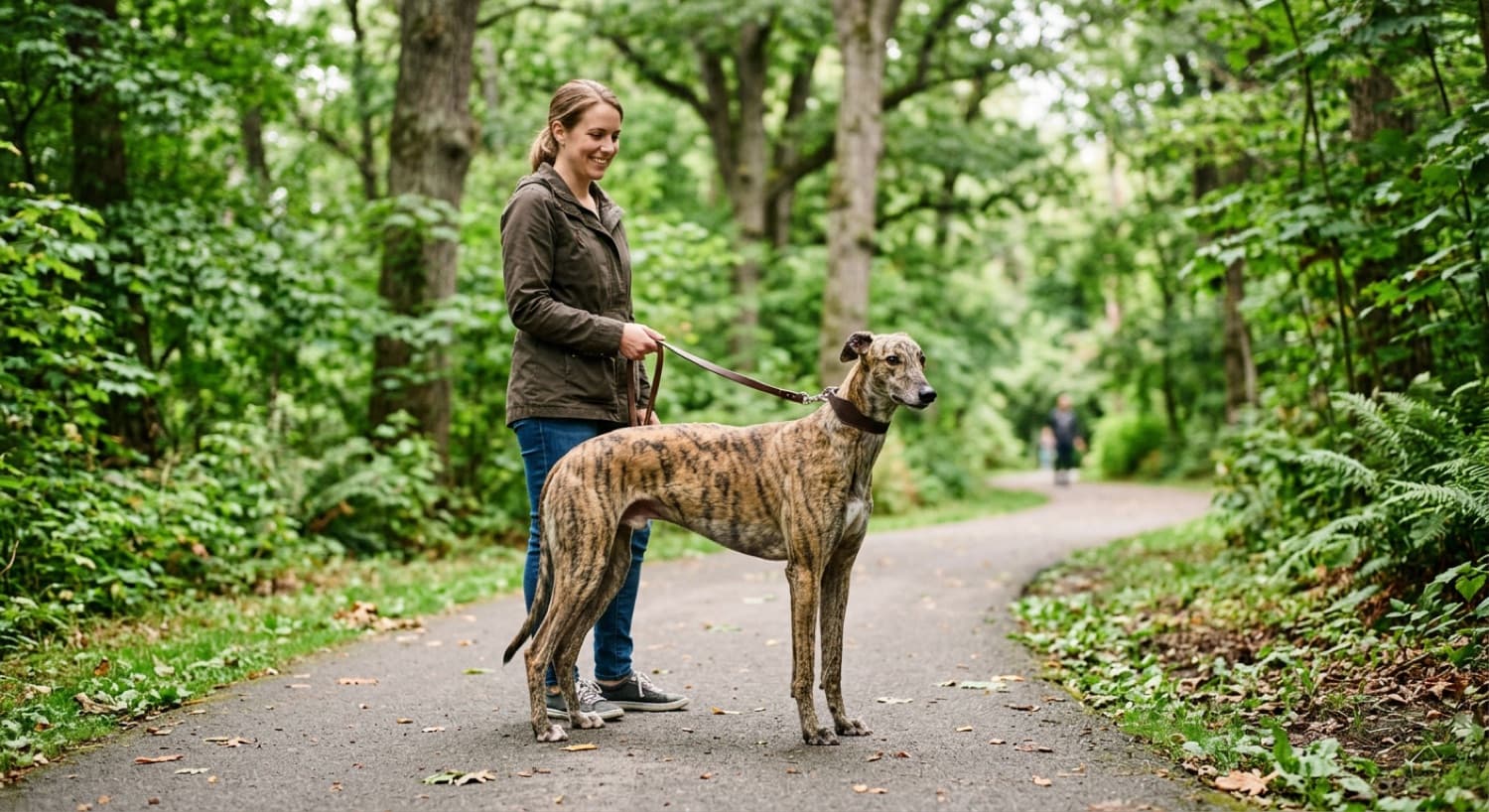
The Greyhound breed health picture, briefly
Greyhounds are the oldest documented breed in the sighthound family, bred for thousands of years for sprint speed and prey pursuit. The modern Greyhound is a 55 to 80 lb sprinter capable of 45 mph (72 km/h) over a quarter mile, with body composition closer to an elite human sprinter than to most family dogs. Lifespan averages 10 to 13 years. Most rescue Greyhounds in Edmonton arrive through retired racing pipelines (largely from US tracks via Canadian rescue networks), occasional ex-breeding dogs, or Greyhound-cross rescue dogs from Alberta intake.
The health picture is shaped by three structural realities. First, extreme leanness: under 7 percent body fat compared with 15 to 25 percent for most dogs. This affects drug metabolism, thermoregulation, anaesthesia recovery, and pressure-sore risk on hard surfaces. Second, breed-specific physiology that produces blood reference ranges outside the standard canine bands (higher red blood cell count and hematocrit, lower platelet count and total protein and T4). Third, an elevated cancer load with osteosarcoma as the dominant breed-defining condition.
The conditions worth knowing about cluster into five groups. Group one: cancer, headed by osteosarcoma with lymphoma and hemangiosarcoma also elevated. Group two: anaesthesia sensitivity, structural and predictable, requiring breed-aware protocols. Group three: dental disease, exceptionally severe and routinely undertreated. Group four: bloat (gastric dilatation-volvulus), elevated by deep-chested conformation. Group five: chronic management conditions including pannus, corns, hypothyroidism diagnostic caveats, and heat and cold intolerance. Pet insurance enrolled in week one is the single highest-leverage health decision for any rescue Greyhound. Every Canadian provider excludes pre-existing conditions, and the moment a vet documents anything (a limp, a heart murmur, a low T4, a corn), that condition becomes a permanent exclusion on any policy enrolled afterward.
Osteosarcoma: the breed-defining cancer
Osteosarcoma (bone cancer) is the headline Greyhound health condition. The breed carries one of the highest documented lifetime incidences of any common breed, with retired racing Greyhounds particularly affected. The cancer is locally aggressive and metastasises early, most commonly to the lungs. By the time a Greyhound is showing a clinical limp, microscopic metastatic disease is often already present even when chest radiographs look clean.
Front-limb sites dominate (distal radius near the wrist, proximal humerus near the shoulder). Hind-limb sites also occur (distal tibia, distal femur). The classic early presentation is a limp that comes and goes over weeks, often attributed to soft-tissue injury, then becomes persistent and worsens. There may be visible or palpable swelling at the affected bone. Pain comes from microfractures of bone being destroyed from the inside by the tumour.
The diagnostic sequence: any persistent limp in a Greyhound over age six (or unexplained acute lameness without trauma) warrants radiographs, not rest. Plain films of the affected limb show the characteristic lytic and proliferative bone changes. Definitive diagnosis requires bone biopsy. Staging includes chest radiographs (or chest CT for higher sensitivity) to look for pulmonary metastases, plus a blood profile.
Standard-of-care treatment is limb amputation followed by adjunctive carboplatin chemotherapy. Amputation removes the source of pain and the primary tumour; chemotherapy slows the inevitable metastatic disease. Edmonton specialty costs typically run $4,000 to $7,000 for amputation including pre-op workup and post-op care, plus $4,000 to $8,000 for a full carboplatin protocol (typically four to six doses). Combined treatment costs land in the $8,000 to $15,000 range. The American College of Veterinary Internal Medicine governs the oncology specialty board, and the American College of Veterinary Surgeons the surgical board most relevant to amputation.
Median survival with standard-of-care treatment runs 12 to 18 months. Without amputation, median survival drops to 1 to 2 months because the bone pain becomes uncontrollable with medication alone. Greyhounds tolerate amputation remarkably well; the structural lightness of the breed means the remaining three legs carry the modest body weight without the joint strain a heavier breed would face.
Owner-side practical reality: this is the cancer pet insurance is built for. A young healthy Greyhound enrolled in week one with hereditary and congenital coverage is positioned to claim most of the eventual treatment cost if osteosarcoma develops. A Greyhound enrolled after the first limp visit has osteosarcoma permanently excluded from coverage. The week-one decision is the difference between paying premiums and writing a $12,000 cheque.
Anaesthesia sensitivity: a sighthound-specific reality
Greyhound anaesthesia sensitivity is one of the most important conversations every Edmonton Greyhound owner needs to have with their vet, and it applies to every procedure that involves sedation: spay and neuter, dental cleanings, biopsies, imaging that requires the dog to hold still, and any surgical work. The two underlying mechanisms:
First, extreme leanness. A fit Greyhound carries under 7 percent body fat. Lipid-soluble drugs like thiopental and other barbiturates work in normal-fat dogs by inducing anaesthesia rapidly, then redistributing into body fat for a smooth recovery. A Greyhound has almost no fat to redistribute into, so blood concentrations stay high and recoveries become prolonged, rough, and prone to apnoea and hypothermia. Barbiturates are essentially contraindicated as induction agents in Greyhounds.
Second, breed-specific liver enzyme patterns affect metabolism of some sedatives. Acepromazine, a commonly used pre-anaesthetic sedative in general practice, causes prolonged and severe hypotension in Greyhounds and is contraindicated by most sighthound-aware protocols. Several other drugs have documented breed-specific cautions.
The safe modern protocol most sighthound-aware vets use combines propofol for induction (rapid onset, rapid offset, no fat redistribution required) with isoflurane or sevoflurane for maintenance. Pre-medication uses sighthound-friendly options (opioids like methadone or buprenorphine, sometimes alpha-2 agonists like dexmedetomidine in carefully titrated doses, rarely acepromazine). Active warming throughout the procedure is essential because Greyhounds also lose body heat fast under anaesthesia (lean dogs cool quickly). Reversal agents and monitoring are standard.
For Edmonton owners, the practical move before any procedure is a direct question: “Is your protocol sighthound-aware? What induction agent are you using? Are you using acepromazine in the premed?” A confident sighthound-aware vet will answer immediately. A vet who has not thought about it before is a clear signal to either ask them to review the literature first or seek a second opinion at a practice with documented sighthound experience. The American College of Veterinary Anesthesia and Analgesia is the specialty board governing this work, and the published sighthound anaesthesia literature is well established.
Document the dog as a sighthound on every chart. Verbal flag at every appointment. The risk is genuinely manageable with breed-aware protocols and genuinely elevated without them.
Bloat (GDV): elevated risk, real prevention
Gastric dilatation-volvulus (GDV, commonly called bloat) is a surgical emergency in which the stomach distends with gas and fluid then twists on itself, cutting off blood supply and triggering shock within hours. Untreated GDV is fatal. Greyhounds carry elevated structural risk because the breed is deep-chested with very little body fat to stabilise the stomach in the abdomen.
Risk factors that compound the structural baseline: eating one large meal per day rather than smaller meals, eating very fast, drinking large volumes of water immediately after eating, vigorous exercise immediately before or after meals, stress around feeding (a multi-dog household, a new feeding environment), and ageing (risk rises after middle age).
The prevention playbook for an Edmonton Greyhound:
- Feed two or three smaller meals per day rather than one large meal
- Use a slow-feeder bowl if the dog inhales food
- Separate vigorous exercise from meals by at least an hour on either side
- Manage feeding stress (separate feeding areas in multi-dog homes, calm environment)
- Consider prophylactic gastropexy
Prophylactic gastropexy is a surgical procedure that tacks the stomach to the abdominal wall, preventing the twisting component of GDV. The stomach can still distend (dilatation), which is treatable, but cannot rotate (volvulus), which is the fatal step. Edmonton specialty cost runs $1,500 to $3,000, often performed laparoscopically as a standalone elective. Many sighthound-aware vets recommend combining gastropexy with spay or neuter to consolidate anaesthesia events. For a deep-chested breed where GDV risk is structural and lifelong, the procedure substantially reduces the mortality risk.
Emergency recognition matters because hours decide outcomes. The classic GDV presentation: a distended abdomen, unproductive retching (the dog tries to vomit but nothing comes up), pacing and visible distress, excessive drooling, pale gums, and collapse as shock develops. A Greyhound with these signs needs an immediate drive to a 24-hour Edmonton emergency vet. Do not wait to see if it resolves. Surgical decompression and stomach derotation within the first few hours has good outcomes; delayed presentation has poor outcomes. Pre-save your nearest Edmonton 24-hour emergency clinic in your phone with the GPS route ready.
Dental disease: severe, common, and routinely undertreated
Greyhound dental disease is among the most severe of any breed, driven by a structural and historical stack: genetic crowding in a narrow jaw, racing-era nutrition of soft processed food that provided no dental abrasion, lack of routine dental care during a racing career for retired racers, and the breed-typical narrow tooth surfaces that trap plaque. The result is that many adopted Greyhounds arrive with substantial tartar, gingivitis, periodontal disease, and often multiple teeth requiring extraction.
The first-month vet visit must include a thorough dental evaluation by a vet who looks at every tooth and assesses gingival health. A visual exam catches the obvious problems. Definitive evaluation requires dental radiographs under anaesthesia because much of the disease lives below the gumline where surface inspection misses it. Most experienced sighthound vets recommend a full dental cleaning within the first six months of adoption for any retired racer, because the baseline is rarely good.
Edmonton dental cleaning costs vary by depth of work. A routine prophylactic cleaning (scaling, polishing, no extractions, sighthound-aware anaesthesia) runs $500 to $1,000. A cleaning with multiple extractions, broken tooth removal, and periodontal surgery runs $1,500 to $3,500. Pre-existing dental disease at adoption is a near-certain near-term cost. Sighthound-aware anaesthesia is essential for every dental (see the anaesthesia section above), so confirm the protocol when booking.
Once the mouth is healthy, daily home maintenance is the gold standard. Daily brushing with an enzymatic dog toothpaste, a soft brush sized for the Greyhound jaw, working through quadrants. Most Greyhounds tolerate brushing well after a few weeks of introduction. Dental chews and water additives provide modest supplementary benefit. Annual professional cleanings prevent the disease cycle from restarting.
Untreated dental disease in a Greyhound drives chronic oral pain (the dog often hides it stoically), weight loss because eating becomes uncomfortable, halitosis, and over time bacteraemia that contributes to inflammation in the heart valves, kidneys, and liver. AAHA publishes dental care guidelines that align with the routine recommended above. For a Greyhound this is the single most-skipped routine medical item that quietly degrades quality of life.
Browse adoptable Edmonton Greyhounds
Greyhounds reach Edmonton rescue through retired racing pipelines, ex-breeding dogs, and occasional cross-breed intakes. Use foster notes to flag any history of limp, lameness, or dental concerns before you apply, plan a sighthound-aware first-month vet workup, and enrol pet insurance before any condition is documented.
See Available Edmonton Dogs →Greyhound-specific blood reference ranges
Greyhounds have measurable differences from the general dog population in standard bloodwork, and a vet unfamiliar with the breed can misdiagnose a healthy Greyhound on lab values that are normal for sighthounds. The documented patterns:
- Red blood cell count, hematocrit, and haemoglobin: all run higher than the general canine reference. This is athlete physiology, similar to elite human endurance athletes, supporting the breed's oxygen delivery for sprint work. A hematocrit of 55 to 65 percent is genuinely normal for a healthy Greyhound but looks polycythaemic on a general reference range.
- Platelet count: runs lower than the general reference. A platelet count of 130,000 to 200,000 per microlitre is genuinely normal in the breed but looks thrombocytopenic on the general reference. Misdiagnosis triggers unnecessary workup for immune-mediated thrombocytopenia.
- Total protein and globulin: both run lower than the general reference. This rarely causes diagnostic confusion alone but matters in combined-panel interpretation.
- Total T4: runs substantially lower than the general canine reference. A Greyhound with a total T4 of 12 to 18 nmol/L is often euthyroid (normal thyroid function). Misdiagnosis triggers unnecessary lifetime levothyroxine supplementation.
- White blood cell count: runs slightly lower than the general reference. Rarely causes diagnostic confusion alone.
- Urine specific gravity: runs slightly lower than the general reference in some Greyhounds.
The clinical impact is real. A healthy Greyhound presented to a vet for routine bloodwork can return panel results that look alarming on a general reference range, leading to unnecessary workup, treatment, or breeding decisions. The published Greyhound-specific reference ranges are well established in sighthound veterinary literature. Most experienced sighthound vets either use the Greyhound-specific ranges directly or interpret general-range results with breed adjustment.
For Edmonton Greyhound owners, the practical move at the first vet visit is to ask whether the practice uses sighthound reference ranges or adjusts interpretation for the breed. If the answer is uncertain, a printed sighthound reference range kept in the dog's permanent file resolves most questions. A second opinion from a sighthound-experienced vet is worth seeking if a Greyhound is being treated based on lab values without breed-adjusted interpretation.
Hypothyroidism: why the breed-specific T4 reference matters
Hypothyroidism in Greyhounds is the area where the breed-specific reference range matters most, because total T4 in a healthy Greyhound often falls below the lower bound of the standard canine reference. Total T4 alone is not a reliable screening test in the breed. The reported overtreatment of healthy euthyroid Greyhounds with levothyroxine is a documented problem in general-practice settings.
The correct diagnostic workup uses a full thyroid panel: free T4 by equilibrium dialysis (the most reliable single value in Greyhounds, less affected by breed-specific protein binding), TSH (canine thyroid-stimulating hormone), and thyroglobulin autoantibody (TgAA, to identify the autoimmune form of the disease). A Greyhound with a low total T4 but a normal free T4 and normal TSH is euthyroid and does not need supplementation. A Greyhound with a low free T4, an elevated TSH, and clinical signs (weight gain without diet change, lethargy beyond the breed-typical sleeping, recurrent skin infections, dry coat, cold intolerance, recurrent ear infections) is genuinely hypothyroid and benefits from treatment.
Treatment for genuinely hypothyroid Greyhounds is daily oral levothyroxine ($15 to $40 monthly) with twice-yearly bloodwork to monitor dose. Most treated dogs return to normal energy and coat quality within 4 to 8 weeks. Edmonton clinics run a full thyroid panel for $200 to $350.
Timing matters for diagnostic accuracy. Behaviour and energy changes in a newly adopted Greyhound rarely warrant immediate thyroid testing in the first three months, because adjustment to the new home accounts for most variability. Reassess at month six if behavioural concerns persist alongside physical signs (coat changes, weight gain, recurrent skin infections). The Greyhound-specific reference range matters at every blood draw for life.
Cardiac: athlete heart vs dilated cardiomyopathy
Many healthy Greyhounds have a benign physiologic murmur on auscultation. The breed's athlete physiology produces a large heart with a high stroke volume, which generates audible flow turbulence that resembles a low-grade murmur. This is the equivalent of an athlete's heart in human medicine and is not pathologic.
Distinguishing athlete heart from dilated cardiomyopathy (DCM) or other structural disease requires echocardiography. Edmonton specialty cardiology echocardiogram runs $500 to $900. The clinical decision framework: a low-grade soft murmur in an asymptomatic Greyhound with normal exercise tolerance is most likely physiologic and warrants periodic monitoring rather than immediate workup. A louder murmur, a murmur with abnormal rhythm, a murmur in a dog with cough or exercise intolerance, or any concerning finding on initial workup warrants echocardiography. DCM is documented in the breed at lower rates than in Doberman Pinschers or Great Danes, but it occurs.
For Edmonton Greyhound owners, the practical sequence: an auscultation at every annual vet visit, a baseline ECG at intake if the dog is over age six, and echocardiography on any concerning clinical change. Treatment for DCM uses standard cardiac protocols (pimobendan, ACE inhibitors, sometimes diuretics) with breed-aware anaesthesia required for any procedure.
Pannus: lifelong UV-driven autoimmune eye disease
Pannus (chronic superficial keratitis) is an autoimmune corneal condition that affects Greyhounds at elevated rates compared to the general dog population. The immune system attacks the cornea, producing progressive scarring, pigmentation, and vascular ingrowth that can eventually obscure vision if untreated. UV light exposure drives flare-ups, which makes Edmonton summer (17 hours of daylight at the June solstice and UV indexes routinely 7 to 8) the high-risk season.
Presentation: a brownish, pinkish, or grey thickening at the edge of the cornea, often starting on the lateral (outer) edge, often bilateral. There may be visible blood vessels growing into the cornea. The dog is rarely in obvious pain in the early stages, which delays presentation. Some dogs squint or rub at the eye as the disease progresses. Diagnosis is by ophthalmology exam at an Edmonton specialty practice ($250 to $500). The American College of Veterinary Ophthalmologists certifies the specialists who manage the condition.
Management is lifelong and built around two pillars. First, topical cyclosporine eye drops (sometimes combined with a topical steroid for active flares) at $40 to $90 monthly, applied daily for life. Compliance matters; missed doses produce visible flare-ups within weeks. Second, UV protection through canine sunglasses (Doggles or similar protective eyewear) for outdoor time during high-UV months. Most Edmonton Greyhounds with pannus wear sunglasses for any outdoor time between May and September.
Annual ophthalmology follow-up is the standard once a diagnosis is established, with more frequent visits during active flares. Untreated pannus eventually causes vision loss. Well-managed pannus is compatible with normal vision and a normal life. Pet insurance enrolled before diagnosis covers the lifetime medication cost; insurance enrolled after diagnosis excludes pannus permanently. This is the second-strongest insurance ROI argument after osteosarcoma.
Corns: the Greyhound-specific paw-pad problem
Corns are a Greyhound-specific paw-pad condition that other breeds essentially do not develop. A corn is a hard, painful, raised callus on the weight-bearing surface of a paw pad, almost always on a front foot. The dog presents with intermittent lameness that is worse on hard surfaces (Edmonton concrete sidewalks, tile floors, exposed aggregate driveways) and better on soft ground (grass, carpet, dirt trails). The classic owner observation is that the dog walks fine on the lawn but limps the moment they hit pavement.
Diagnosis is by paw-pad inspection. A corn looks like a hard yellow or brown raised spot on an otherwise normal pad, often with a central core. The cause is not fully understood, with viral, mechanical, and structural theories all having support in the literature without consensus. Some Greyhounds develop multiple corns over a lifetime; others never get one.
Treatment options exist as a spectrum rather than a cure:
- Hulling: the corn is gently lifted out at the vet (no anaesthesia required in most cases). Relief typically lasts weeks to months before recurrence. Cost runs $50 to $150 per visit.
- Gel toe-pad covers: silicone or gel sleeves worn over the affected toe during walks. Provides cushioning that lets the dog walk comfortably on pavement. Cost runs $15 to $40 per set, and most owners use these as the day-to-day management.
- Prescription protective boots: rubber or fabric boots that protect the affected paw on all walking surfaces. Higher cost ($60 to $150) but more durable and lower-maintenance than gel pads.
- Surgical excision: reserved for refractory cases. Recurrence is common even after surgery.
- Topical salicylic acid: attempted in some protocols. Outcomes are mixed.
Most Edmonton Greyhound owners with a corn-prone dog combine periodic hulling at the vet with gel pads worn on every outdoor walk. Management is the realistic frame, not cure. The condition is chronic, frequently recurs, and is unique enough that some general-practice vets miss the diagnosis at first presentation. If a Greyhound is limping on hard surfaces but not on grass, inspect the paw pads carefully and ask the vet about corns specifically.
Heat and cold intolerance: real, manageable, planned
Greyhounds have less than 7 percent body fat and a thin single coat with no undercoat, which means thermoregulation is the breed weak point at both ends of the Edmonton temperature range. Edmonton winter is the headline planning concern. Below 0 degrees Celsius a Greyhound feels cold; below minus 10 they shiver without protection; below minus 20 they cannot regulate body temperature without serious insulation. A proper insulated winter coat is non-negotiable, and most Edmonton Greyhound owners layer a sweater under a coat below minus 15. Booties matter on salted sidewalks (paw pads are also thin in the breed and salt burns are common). Outings below minus 25 stay short and indoor enrichment becomes the routine.
Edmonton summer is the secondary planning concern. The breed overheats fast in high heat, particularly during the handful of weeks per year when Edmonton reaches the high 20s and low 30s. Exercise shifts to early morning and late evening, water is offered constantly, and hot pavement burns thin paw pads quickly (the back-of-hand test on the pavement is the reliable check; if it is too hot for you to hold your hand on for five seconds, it is too hot for the dog).
For full Edmonton winter protocols, cross-link our companion Greyhound winter care guide which covers the coat layering system, the salted-sidewalk paw care routine, indoor exercise alternatives during deep cold, and the booting protocol.
Cancer load beyond osteosarcoma
Osteosarcoma dominates the Greyhound cancer conversation, but the breed also carries elevated rates of other cancers. Lymphoma is the most common after osteosarcoma. Presentation is usually painless lymph node swelling (under the jaw, in front of the shoulder, behind the knee) noticed during routine handling. Diagnosis is by fine-needle aspirate ($150 to $300). Chemotherapy at an Edmonton or Calgary specialty oncology practice typically achieves remission, with median survival of 12 to 14 months on the standard CHOP protocol ($6,000 to $10,000 for the full course). Sighthound-aware anaesthesia matters for any procedure involved in workup or treatment.
Hemangiosarcoma is a vascular cancer of the spleen, heart, or other vascular tissue. The classic presentation is acute collapse from internal bleeding, often without prior warning. Splenic hemangiosarcoma diagnosis usually involves emergency splenectomy ($3,500 to $6,000); prognosis is guarded even with adjunctive chemotherapy. The breed elevation is real but the absolute rate is lower than in Golden Retrievers and German Shepherds.
Mast cell tumours appear in Greyhounds at general-population rates and warrant aspirate of any persistent skin lump on an adult dog ($150 to $300). Surgical removal runs $800 to $3,000 depending on location and grade. Grade matters substantially for prognosis.
The overall cancer message for Greyhound adopters: monthly home lump checks become a habit, any persistent lameness in an adult dog gets radiographs (not rest), any new skin lump gets an aspirate, and any sudden collapse triggers an emergency vet visit. Senior Greyhounds benefit from twice-yearly vet visits with bloodwork from age eight.
Edmonton specialty veterinary access reality
Edmonton has solid general-practice veterinary coverage for routine Greyhound care (annual physical, vaccinations, sighthound-aware dental cleanings, minor injuries, weight management). The breed-specific work depends on building a relationship with a sighthound-experienced practice. Some Edmonton clinics have substantial Greyhound experience from working with the rescue pipelines; others have very little. Ask the rescue who they recommend.
Edmonton specialty medicine includes oncology, internal medicine, surgery, neurology, ophthalmology, cardiology, and 24-hour emergency. The specialty network is smaller than Calgary's and substantially smaller than the largest Canadian hubs. For most Greyhound concerns, your general-practice vet refers you to a local specialty practice and the workup happens here. The conditions that most often warrant specialty referral for a Greyhound: osteosarcoma diagnosis and treatment (oncology and orthopaedic surgery), suspected DCM or complex cardiac workup (cardiology), pannus diagnosis and management (ophthalmology), refractory dental disease (veterinary dentistry), and any complex surgical case requiring sighthound-aware anaesthesia.
WCVM Saskatoon
The Western College of Veterinary Medicine at the University of Saskatchewan is the closest full veterinary teaching hospital, about five and a half hours each way from Edmonton. WCVM handles complex referrals beyond local capacity: rare-tumour oncology cases, complex orthopaedic reconstructions, advanced imaging, refractory pannus and other autoimmune ophthalmology, and unusual sighthound presentations. The University of Alberta does not have a veterinary school, which is why Saskatoon is the closest academic referral. Your general-practice or specialty vet initiates the referral.
Calgary specialty centres
Some Edmonton Greyhound owners drive to Calgary specialty centres for procedures not offered locally, for shorter wait times on specialty consultations, or for documented sighthound-experienced specialists. The drive is about three hours each way. This pattern is more common for elective work (gastropexy, pannus consultation, dental work with complex extractions) than for emergencies. Ask your local specialty practice whether the case is one that genuinely benefits from a Calgary referral.
Building your network in month one
Establish a primary Edmonton vet in the first month. Confirm they use sighthound-aware anaesthesia protocols and Greyhound-specific reference ranges. Ask which specialty practices they refer Greyhounds to and write the answer down. Pre-save at least one 24-hour Edmonton emergency clinic in your phone with GPS route ready. The Canadian Kennel Club publishes breed-club resources for sighthound owners that include rescue and veterinary referrals. Most Edmonton Greyhounds will never need a specialty referral; for the subset that do, knowing the pathway before you need it cuts hours off the response time when it matters.
Pet insurance for an Edmonton Greyhound
Week-one pet insurance enrolment is essentially mandatory for any rescue Greyhound. Every Canadian provider excludes pre-existing conditions, which means the day a vet documents anything (a limp, a corn, a pannus finding, a low T4, a heart murmur), that condition becomes a permanent exclusion on any policy enrolled afterward. The clock starts the day you adopt.
The breed-specific value math for Greyhounds is unusually strong because the conditions that drive the highest claims (osteosarcoma, pannus, dental work, gastropexy, anaesthetic emergencies) are individually expensive and collectively common:
- Osteosarcoma treatment (amputation plus chemotherapy): $8,000 to $15,000
- Lymphoma chemotherapy (full CHOP protocol): $6,000 to $10,000
- Hemangiosarcoma splenectomy and workup: $3,500 to $6,000
- Pannus diagnosis plus lifetime topical cyclosporine: $40 to $90 monthly for life
- Prophylactic gastropexy (elective): $1,500 to $3,000
- Emergency GDV surgery: $4,000 to $8,000
- Dental cleaning with extractions (often required within the first year): $1,500 to $3,500
- Corn hulling and management: $50 to $150 per visit, often quarterly
- Hypothyroidism workup and lifetime levothyroxine: $200 to $350 plus $15 to $40 monthly
A typical pet insurance policy for a young healthy Greyhound in Edmonton runs $50 to $90 per month depending on deductible, reimbursement percentage, and coverage limits. Over the dog's 10 to 13 year lifespan, premiums total $6,000 to $13,000. A Greyhound who develops osteosarcoma at age eight (a common breed presentation) generates a single claim that exceeds the lifetime premium total.
What to look for in a Greyhound policy:
- Hereditary and congenital conditions explicitly covered (cheaper policies that exclude these are nearly useless for the breed)
- Cancer coverage with no caps or with high caps
- Annual coverage caps rather than per-condition caps
- Annual caps of $15,000 or more
- Explicit coverage for chronic conditions like pannus and hypothyroidism
- Coverage for prescription medications (cyclosporine drops, levothyroxine, oncology drugs)
- Reasonable wait times for cancer and orthopaedic coverage (typically 14 to 30 days)
- Claims process that allows fast reimbursement
Compare three to four providers before enrolling. The American Animal Hospital Association publishes general guidance on what to look for in a pet insurance policy; the checklist applies to Canadian providers. The rescue you adopt from and your foster contact can both share which providers other Greyhound adopters have used and what their claim experience has been with the breed-specific conditions.
Adoption health workup: what the rescue covers vs what you re-screen
Edmonton rescues and the broader Greyhound rescue pipeline do a baseline workup before adoption, but the depth varies and the breed-specific items often need to be added at your first-month vet visit.
What most Greyhound rescues cover
- Physical exam by a vet at intake
- Core vaccinations (DAPP and rabies)
- Spay or neuter surgery (using sighthound-aware anaesthesia by experienced rescue partners)
- Microchip implant and registration
- Deworming and flea and tick treatment
- Basic adult bloodwork in many cases (sighthound-aware interpretation depends on the vet)
- A dental evaluation, sometimes a dental cleaning if budget allows
- Treatment of any acute concerns identified at intake
What is usually NOT covered (and what to plan for)
- Full thyroid panel with breed-specific reference interpretation
- Ophthalmology consult for pannus screening
- Cardiology echocardiogram if a murmur is heard
- Comprehensive dental cleaning with extractions and radiographs (often deferred for the new owner)
- Prophylactic gastropexy (rarely included)
- Baseline limb radiographs for osteosarcoma screening (not standard)
- Paw-pad evaluation for corns
Plan a first-month vet visit with your chosen Edmonton vet that establishes a sighthound-aware baseline. The standard ask: confirmation that the practice uses sighthound anaesthesia protocols and breed-specific blood reference interpretation, a careful orthopaedic exam, an ophthalmology referral for pannus screening if not screened, a thorough paw-pad inspection, a dental evaluation with radiographs if not recently done, a body condition score with a Greyhound-appropriate target (slightly lean is normal), and a frank conversation about gastropexy timing.
For senior Greyhounds (eight years and up), the first-month workup is more involved: full senior bloodwork including urinalysis with breed-specific reference interpretation, ophthalmology consult, dental evaluation, thyroid panel with breed-specific T4 interpretation, cardiology auscultation with a low threshold to refer for any murmur, and a careful lump and limb check. Budget $400 to $1,000 for the senior intake workup at an Edmonton clinic.
Senior Greyhound care: the 10-to-13-year picture
Greyhounds typically live 10 to 13 years, modest for the size of the breed because of the elevated cancer load. Senior management starts around age seven. The main conditions to watch for in senior Greyhounds: osteosarcoma (the dominant senior cancer, with peak incidence in the seven to ten range), arthritis particularly in the spine and hindquarters, dental disease accelerating if home brushing has lapsed, hypothyroidism developing in some dogs (with breed-specific reference interpretation), pannus progression in dogs with established disease, corn frequency increasing, and overall cancer load coming into play.
Senior Greyhound care plan to discuss with your Edmonton vet: twice-yearly vet visits with bloodwork and urinalysis from age seven, baseline limb radiographs at age seven and any persistent lameness afterward, annual ophthalmology follow-up for any dog with established pannus, proactive dental care with annual cleanings, careful weight management (an overweight senior Greyhound compounds every other condition and adds joint strain that the lean frame is not designed to carry), low-impact exercise tuned to comfort, soft bedding to prevent pressure sores on the bony frame, and monthly home lump checks. Pet insurance enrolled before the senior years pays off most reliably in this stage.
End-of-life planning matters, and it matters earlier for breeds where the cancer risk is structural. Have the conversation about quality of life, in-home euthanasia options, and your preferences before a crisis arrives. Edmonton has in-home veterinary end-of-life services that allow a peaceful passage at home for senior Greyhounds who would find a clinic visit stressful. For Greyhounds diagnosed with osteosarcoma who are not candidates for amputation, palliative pain management is the right path, and the quality-of-life window before pain becomes uncontrollable is typically four to eight weeks.
Frequently asked questions
Where can I find a vet for a Greyhound near me in Edmonton?
Any reputable Edmonton general-practice clinic is a fine starting point for routine Greyhound care, but the most important question to ask at your first visit is whether the vet has sighthound experience. Greyhounds metabolise certain anaesthetic and sedative drugs differently than the general dog population, and their normal bloodwork values fall outside standard reference ranges. A vet unfamiliar with the breed can misread a healthy Greyhound as anaemic or thyroid-deficient based on lab values that are normal for the breed. For breed-specific concerns (osteosarcoma evaluation and oncology, anaesthesia for any surgical procedure including dental cleanings, ophthalmology for pannus, internal medicine for hypothyroidism workup, cardiology for athlete heart vs dilated cardiomyopathy), ask your general-practice vet which Edmonton specialty practice they refer sighthounds to. Edmonton has a smaller specialty network than Calgary. Difficult cases occasionally route to the Western College of Veterinary Medicine in Saskatoon, the closest full teaching hospital. Some Edmonton Greyhound owners drive to Calgary for shorter wait times on specialty consultations. Establish a primary vet in month one, flag the dog as a sighthound on every chart, and pre-save at least one 24-hour Edmonton emergency clinic in your phone.
What are the main Greyhound health issues to know before adopting?
Greyhounds carry a distinct health profile shaped by extreme leanness, racing history, and breed-specific physiology. The conditions in rough order of practical importance: osteosarcoma (bone cancer with one of the highest documented breed incidences, typically front-limb, often presents as a limp that does not resolve), anaesthesia sensitivity (sighthound-specific metabolism of barbiturates, thiopental, and acepromazine, requiring breed-aware protocols), bloat (gastric dilatation-volvulus, elevated risk from deep-chested lean build), dental disease (exceptionally severe in the breed, annual cleanings essential), Greyhound-specific reference ranges (higher red blood cell count and hematocrit, lower platelet count and total protein and T4 than the general dog population), hypothyroidism (Greyhound-specific T4 reference matters), pannus (chronic superficial keratitis, autoimmune, UV-related), corns on paw pads (a Greyhound-specific painful condition), heat and cold intolerance (thin coat, low body fat), and overall cancer load (lymphoma and hemangiosarcoma also elevated). Lifespan averages 10 to 13 years. Week-one pet insurance enrolment is essentially mandatory for the breed because osteosarcoma alone can generate $8,000 to $15,000 in treatment costs.
How common is osteosarcoma in Greyhounds and what does it look like?
Osteosarcoma is the breed-defining cancer in Greyhounds, with one of the highest documented lifetime incidences of any breed. Most cases involve the front limbs (distal radius or proximal humerus), and the classic early presentation is a limp that comes and goes, then becomes persistent, with no clear trauma history. Owners often report the dog seemed fine after a fast sprint in the off-leash park, then started favouring a leg, then the limp got worse over weeks. The pain comes from microfractures in bone that is being eaten away from the inside. Diagnosis starts with radiographs (any persistent limp in a Greyhound over age six warrants imaging, not just rest), followed by biopsy to confirm. Standard-of-care treatment is amputation plus adjunctive carboplatin chemotherapy, with combined costs in Edmonton typically $8,000 to $15,000. Median survival with treatment runs 12 to 18 months. Without amputation, median survival drops to 1 to 2 months because the bone pain becomes uncontrollable. Greyhounds tolerate amputation remarkably well because the breed is structurally light and the remaining three legs carry the modest body weight without strain. The American College of Veterinary Internal Medicine governs the oncology specialty board.
Why are Greyhounds sensitive to anaesthesia and what should my vet know?
Greyhounds metabolise certain anaesthetic and sedative drugs slowly because of two physiological realities: extremely low body fat (under 7 percent for a fit Greyhound vs 15 to 25 percent for most dogs) and breed-specific liver enzyme patterns. Lipid-soluble drugs like thiopental and other barbiturates redistribute into fat after induction in normal dogs, allowing rapid recovery. A Greyhound has almost no fat to absorb the drug, so blood concentrations stay high and recoveries are prolonged and rough. Acepromazine, a commonly used pre-anaesthetic sedative, causes prolonged and severe hypotension in Greyhounds and is contraindicated by most sighthound-aware protocols. The safe modern protocol uses propofol for induction and isoflurane or sevoflurane for maintenance, with breed-aware reversal agents and active warming throughout (Greyhounds also lose body heat fast under anaesthesia). Before any procedure that involves sedation or anaesthesia, including routine dental cleanings, confirm with your Edmonton vet that the protocol is sighthound-aware. The American College of Veterinary Anesthesia and Analgesia maintains the specialty board governing this work.
How worried should I be about bloat in a Greyhound?
Worried enough to recognise it and plan for it, not so worried you cannot enjoy the dog. Greyhounds are deep-chested with very little body fat, which elevates the structural risk of gastric dilatation-volvulus (the stomach twists on itself, cutting off blood supply, with death within hours if untreated). Risk factors layered on top of breed conformation include eating large meals once a day, eating fast, drinking heavily right after eating, vigorous exercise immediately before or after meals, and stress around feeding. The prevention playbook: feed two or three smaller meals per day instead of one large meal, use a slow-feeder bowl if the dog inhales food, separate vigorous exercise from meals by at least an hour, and consider prophylactic gastropexy ($1,500 to $3,000 at an Edmonton specialty practice). Many sighthound veterinarians recommend prophylactic gastropexy at the same time as spay or neuter for any deep-chested breed, and several Edmonton specialty practices will perform laparoscopic gastropexy as a standalone elective procedure. Emergency recognition: a Greyhound with a distended abdomen, unproductive retching, pacing, and visible distress needs an immediate drive to a 24-hour emergency vet. Time matters in single digits of hours.
Why are Greyhound teeth so bad and what do I need to do?
Greyhound dental disease is among the most severe of any breed, driven by a stack of factors: genetic crowding in a narrow jaw, racing-era nutrition that was high in soft processed food without dental abrasion, lack of routine dental care during the racing career for retired racers, and the breed-typical narrow tooth surfaces that trap plaque. The result is that many adopted Greyhounds arrive with substantial tartar, gingivitis, and often multiple teeth that need extraction. The first-month vet visit must include a thorough dental evaluation. A full dental cleaning under anaesthesia at an Edmonton clinic runs $500 to $1,000 for a routine prophylactic cleaning, and $1,500 to $3,500 when extractions are needed. Anaesthesia must be sighthound-aware (see the anaesthesia question above). Daily home brushing with an enzymatic dog toothpaste is the gold-standard maintenance once the mouth is healthy, with annual professional cleanings to prevent the cycle from restarting. Untreated dental disease drives chronic pain, weight loss, and eventually heart, kidney, and liver inflammation from bacteraemia. For a Greyhound this is the single most-skipped routine medical item that quietly degrades quality of life.
What are Greyhound-specific blood values and why do they matter?
Greyhounds have measurable differences from the general dog population in standard bloodwork, and a vet unfamiliar with the breed can misdiagnose a healthy dog. The documented patterns: red blood cell count, hematocrit, and haemoglobin all run higher than the general canine reference range (this is the athlete-physiology adaptation for oxygen delivery, similar to elite human endurance athletes). Platelet count, total protein, and globulin all run lower than the general reference range. Total T4 (the standard thyroid screening value) runs substantially lower than the general reference, often falling below the lower bound of the standard reference range in a euthyroid Greyhound. White blood cell count runs slightly lower. The clinical impact: a Greyhound with a hematocrit of 60 percent (genuinely normal for the breed) looks polycythaemic to a vet using the general reference; a Greyhound with a T4 of 12 nmol/L (genuinely normal for the breed) looks hypothyroid; a Greyhound with a platelet count of 130,000 per microlitre (genuinely normal for the breed) looks thrombocytopenic. Print and carry the Greyhound-specific reference ranges or ask your vet to use them for interpretation. The published breed-specific ranges are well established in sighthound veterinary literature.
How is hypothyroidism handled in Greyhounds?
Hypothyroidism in Greyhounds is the area where breed-specific reference ranges matter most, because total T4 in a healthy Greyhound often falls below the lower bound of the standard canine reference. Diagnosing hypothyroidism based on total T4 alone leads to substantial overtreatment in the breed. The correct workup uses a full thyroid panel: free T4 by equilibrium dialysis (the most reliable single value in Greyhounds), TSH, and thyroglobulin autoantibody. A Greyhound with a low total T4 but normal free T4 and TSH is euthyroid and does not need supplementation. A Greyhound with low free T4, elevated TSH, and clinical signs (weight gain without diet change, lethargy beyond the breed-typical sleeping, recurrent skin infections, dry coat) is genuinely hypothyroid and benefits from daily oral levothyroxine ($15 to $40 monthly) with twice-yearly bloodwork. The full thyroid panel runs $200 to $350 at Edmonton clinics. Behaviour changes alone in an adopted Greyhound rarely warrant immediate thyroid testing in the first three months because adjustment to the new home accounts for most changes; reassess at month six if behavioural concerns persist alongside physical signs.
What is pannus and how is it managed?
Pannus, formally chronic superficial keratitis, is an autoimmune condition that affects Greyhounds at elevated rates compared to the general dog population. The immune system attacks the cornea, causing progressive scarring and pigmentation that can eventually lead to vision loss if untreated. UV light exposure drives flare-ups, which means Edmonton summer (17 hours of daylight at the solstice and UV indexes of 7 to 8) is the high-risk season. Presentation is a brownish or pinkish thickening at the edge of the cornea, often bilateral, sometimes with visible vascular ingrowth. Diagnosis is by ophthalmology exam ($250 to $500 at an Edmonton ophthalmology practice). Management is lifelong topical cyclosporine eye drops (sometimes combined with topical steroid for active flares) at $40 to $90 monthly, plus UV protection through canine sunglasses (Doggles or similar) for outdoor time during high-UV months. The American College of Veterinary Ophthalmologists certifies the specialists who manage pannus. Untreated pannus eventually causes blindness. Well-managed pannus is compatible with normal vision and a normal life. Annual ophthalmology follow-up is the standard once a diagnosis is established.
What are corns on Greyhound paws?
Corns are a Greyhound-specific paw-pad condition that other breeds essentially do not get. A corn is a hard, painful, raised callus on the weight-bearing surface of a paw pad, typically on a front foot. The dog presents with intermittent lameness that is worse on hard surfaces (sidewalks, tile floors) and better on soft ground (grass, carpet). The classic Greyhound owner observation is that the dog walks fine on the lawn but limps the moment they hit pavement. The cause is not fully understood; viral, mechanical, and structural theories all have support in the literature, with no consensus. Treatment options include hulling (the corn is gently lifted out at the vet, providing relief that typically lasts weeks to months before recurrence), gel toe-pad covers worn during walks ($15 to $40 per set, the most practical day-to-day management), prescription orthotic boots, and surgical excision in refractory cases. Most Edmonton Greyhound owners with a corn-prone dog combine periodic hulling with gel pads worn on every outdoor walk. The condition is chronic and frequently recurs even after surgery, so management is the realistic frame, not cure.
How do Greyhounds handle Edmonton heat and cold?
Badly without planning. Greyhounds have less than 7 percent body fat and a thin single coat with no undercoat, which means thermoregulation is the breed weak point at both ends of the temperature range. Edmonton winter is the headline concern. Below 0 degrees Celsius a Greyhound feels cold; below minus 10 they shiver without protection; below minus 20 they cannot regulate body temperature without serious insulation. A proper insulated winter coat is non-negotiable, not optional, and most Edmonton Greyhound owners layer a coat over a sweater below minus 15. Booties matter on salted sidewalks (paw pads are also thin in the breed). Outings below minus 25 stay short and indoor enrichment becomes the routine. Summer is also a real concern: lean dogs overheat fast in high heat, particularly during the few weeks per year Edmonton reaches the high 20s and low 30s. Exercise shifts to early morning and late evening, water is offered constantly, and hot pavement burns thin paw pads quickly. Cross-link our companion winter care article for the full Edmonton winter protocol.
Related Edmonton Greyhound guides
Edmonton Adoptable Dogs
Current Edmonton-area Greyhound and Greyhound-mix listings from SCARS, Zoe's, EHS, GEARS, Hope Lives Here, AHHRB, and AARCS Edmonton fosters.
Greyhound Adoption Edmonton
Rescue sources, the retired racer pipeline, real adoption fees, breed-vs-buy reframe, and the rescue evaluation checklist for Edmonton adopters.
Greyhound Recall Off-Leash Edmonton
Why Greyhounds should never be off-leash in unfenced spaces, fenced Edmonton off-leash options, long-line protocols, and the recall reality for the breed.
Greyhound Winter Care Edmonton
The Edmonton winter coat layering system, salted-sidewalk paw care, indoor exercise alternatives during deep cold, and the booting protocol for thin-coated sighthounds.
Find your Edmonton rescue Greyhound
Browse current Edmonton-area Greyhound and Greyhound-mix listings. Foster temperament notes help you flag any history of limp, lameness, dental concerns, or paw-pad issues before you apply, and your sighthound-aware first-month vet workup plus week-one pet insurance enrolment builds the baseline.
Browse All Edmonton Dogs →New dog? Start with these care guides
Everything a new adopter needs to set up a safe, happy home.