The short answer
First 72 hours: stay on the rescue's food, add probiotics (Fortiflora or Proviable), expect some stress colitis, watch for blood or lethargy. Days 4 to 14: slow transition (10 to 14 days) to a sensitive-stomach grain-inclusive kibble (Royal Canin Sensitive Digestion, Hill's Sensitive Stomach, Purina Pro Plan Sensitive, Eukanuba lamb-and-rice). Long-term: two meals daily, slow feeder bowl, NO elevated bowl (Glickman 2000 found elevated bowls INCREASE GDV risk by ~110% in deep-chested breeds), no vigorous exercise 30 to 60 min before or after eating. GDV is the catastrophic risk: know the symptoms (unproductive retching, distended belly, pacing, drooling), have Edmonton 24h ER vet pre-identified, have pet insurance enrolled before need arises. Avoid grain-free per FDA 2018 DCM warning unless vet-prescribed for elimination diet.
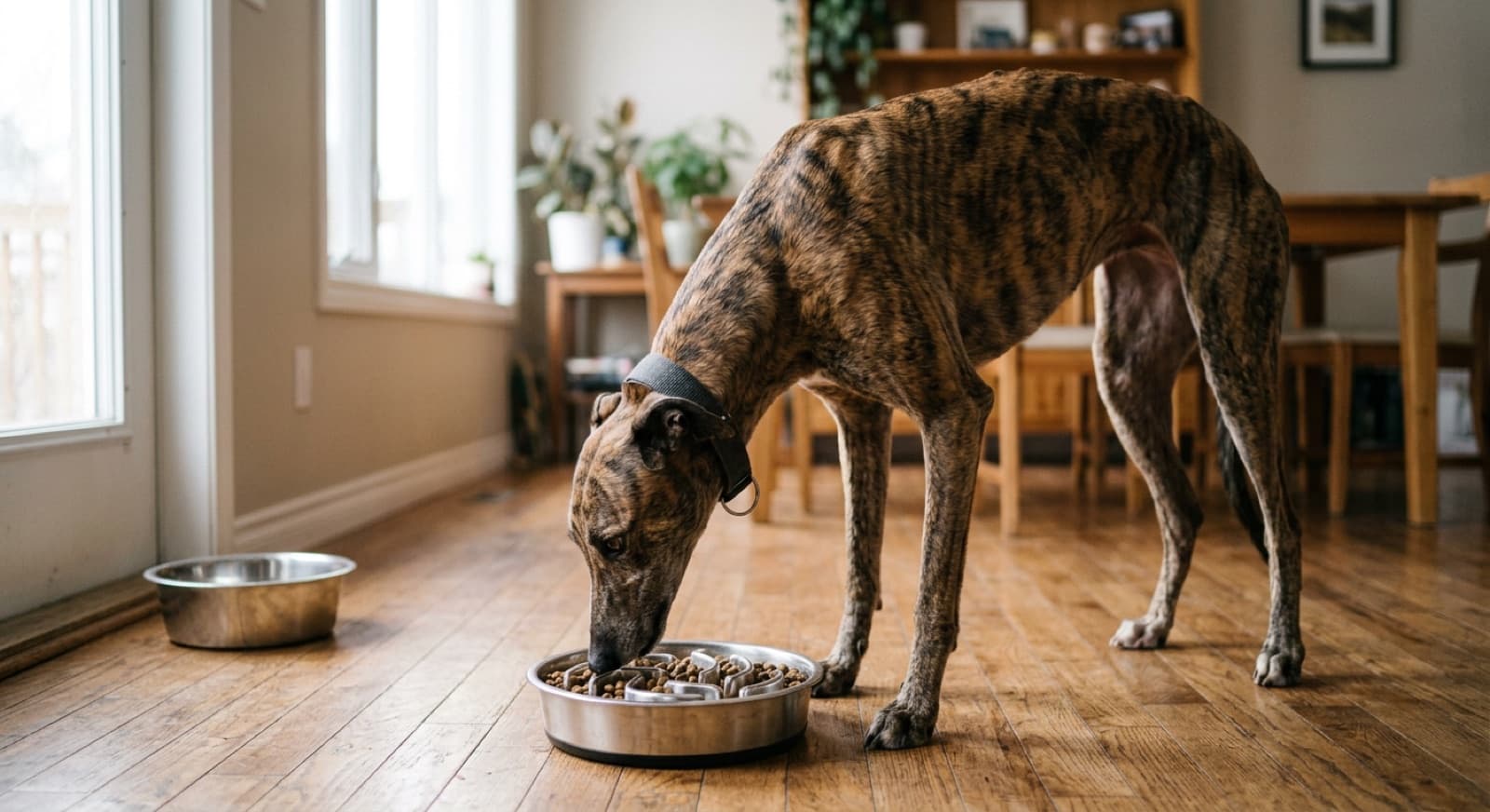
The GDV (bloat) emergency framework
Gastric Dilatation-Volvulus (GDV, bloat) is a life-threatening emergency. The Greyhound is at meaningfully elevated risk as a deep-chested breed. From first symptom to surgical intervention, every minute matters. Greyhound GDV survival drops sharply within hours of onset.
Symptoms to recognise:
- Restless pacing, unable to settle.
- Repeated unproductive retching (the dog tries to vomit but nothing comes up; this is the hallmark sign and the most specific predictor).
- Visibly distended abdomen (belly looks bloated, taut, drum-tight).
- Drooling excessively.
- Whining or signs of pain.
- Pale gums.
- Rapid shallow breathing.
- Collapse.
What to do: Go directly to a 24-hour ER vet. Do not call your primary vet first. Do not wait. Do not give human medications, water, or food. The drive itself burns survival time; have the Edmonton ER vet address pre-loaded in your phone GPS before adoption day.
Prevention strategy:
- Two smaller meals per day rather than one large meal.
- Slow-feeder bowl (silicone or stainless slow-feeders; $15 to $30).
- NO elevated bowl. The longstanding elevated-bowl recommendation was contradicted by the Glickman 2000 study and subsequent veterinary research showing elevated bowls substantially increase GDV risk in deep-chested breeds rather than reduce it. Use a normal bowl on the floor.
- Avoid vigorous exercise 30 to 60 minutes before and after eating.
- Avoid gulping large quantities of water immediately after exercise.
- Discuss prophylactic gastropexy with your vet, particularly if your dog is being spayed/neutered or having abdominal surgery for another reason. Gastropexy tacks the stomach to the body wall, preventing the rotation component of GDV. Adds modest time and cost during another surgery and provides effective lifetime protection against the catastrophic twisting.
Cost reality: Surgical GDV correction is a major emergency procedure that commonly runs into five figures at Edmonton specialty practice; confirm specific pricing with your Edmonton 24-hour ER. Pet insurance enrolled before adoption (or within days of adoption, before any symptoms appear) covers most of this. Canadian pet insurers have varying waiting periods for pre-existing conditions; enroll BEFORE the dog is sick.
Browse adoptable Greyhounds in Edmonton
Greyhounds appear in Edmonton rescue through Alberta-wide and Canadian Greyhound rescue networks. Foster home phone screen should disclose the racing diet and any GI history.
See Available Greyhounds →The grain-free DCM warning
In 2018 the US FDA issued an alert linking grain-free diets (specifically those high in peas, lentils, legumes, and potato as alternatives to grains) with elevated rates of Dilated Cardiomyopathy (DCM) in dogs. The data included breeds without genetic DCM predisposition, suggesting a diet-driven mechanism rather than purely genetic risk.
The mechanism is not fully understood. Current hypotheses involve taurine deficiency, bioavailability of nutrients in legume-heavy formulas, or other unidentified factors in the grain-free formulation pattern. Research is ongoing through veterinary cardiology and nutrition groups.
Practical implication for Greyhound adopters: avoid grain-free unless your vet has specifically prescribed it for an elimination diet for documented food allergies. Whole grains (rice, oats, barley) are highly digestible for most dogs including sensitive-stomach Greyhounds. The grain-allergy claim that drove the grain-free trend turns out to be overblown; true grain allergies in dogs are quite rare.
Greyhounds are not at elevated genetic DCM risk like Doberman Pinschers, but the FDA data shows risk in mixed breeds and large breeds without a genetic predisposition. The risk profile is real enough that the veterinary cardiology and nutrition consensus has shifted clearly. Stick with grain-inclusive sensitive-stomach kibble for your Greyhound.
Frequently Asked Questions
Why does my newly adopted Greyhound have diarrhea?
Almost certainly stress colitis. This is the single most common health issue in Greyhounds during the first 24 to 72 hours after rehoming. The combination of environmental change (new home, new people, new sounds, new routine) plus diet change (transitioning off the racing kennel feeding protocol) triggers GI inflammation, soft-to-watery stool, sometimes mucus or streaks of red blood. It is stressful for the owner but usually self-limits within 3 to 5 days as the dog settles. Management: keep the dog on the food they were eating at the rescue or foster (do NOT switch food on adoption day), introduce probiotics (Fortiflora or Proviable from your vet are gold standards), bland diet support if the stool stays loose past 48 hours (boiled chicken plus white rice in 1-to-3 ratio for 2 to 3 days). Vet visit if: blood becomes more than streaks, the dog becomes lethargic or stops eating entirely, vomiting starts, diarrhea continues past 5 days, or any sign of dehydration. Edmonton 24-hour ER vets handle dehydration support; primary vet should be established before adoption day so you have a relationship in place.
How do I transition a retired racer onto a new food?
Slowly. Minimum 7 to 10 days, ideally 14 days for sensitive-stomach Greyhounds. The standard transition: Days 1 to 3, 75% old food + 25% new food. Days 4 to 6, 50%/50%. Days 7 to 9, 25% old + 75% new. Days 10 onward, 100% new food. Watch stool quality throughout; if soft stool develops, hold at the current ratio for 2 to 3 days before progressing. Some Greyhounds need 14 to 21 day transitions. Retired racing Greyhounds often come from a kennel diet of high-quality kibble (Hi-Pro, Iams, Pro Plan, or similar mid-to-high-protein commercial food) often supplemented with raw meat (typically beef or chicken). The body is adapted to that profile. Switching to a substantially different food (different protein source, very different fat content, novel ingredients) without slow transition guarantees stress colitis. The Edmonton rescue or foster should disclose the racing diet at adoption; if not, ask explicitly during the adoption phone screen.
What kibble works for sensitive-stomach Greyhounds?
A short list of options widely recommended by Greyhound owners and rescues. Royal Canin Sensitive Digestion (or breed-size-equivalent), Hill's Science Diet Sensitive Stomach & Skin, Purina Pro Plan Sensitive Skin & Stomach (lamb and oat or salmon and rice), Eukanuba (their lamb-and-rice line). All are mid-priced commercial foods with proven track records on sensitive GI. Look for: single named protein source (lamb, salmon, or chicken), moderate protein 24 to 30%, moderate fat 12 to 16%, named whole-grain carbohydrate (rice, oats, barley), AAFCO-compliant for adult maintenance, manufactured by a brand with a robust quality-control track record. Avoid: very high protein (35%+ is unnecessary for retired racers and can stress kidneys long-term), grain-free (FDA DCM warning, more below), exotic protein sources (kangaroo, venison, novel meats) UNLESS your vet has prescribed for an elimination diet, brands with frequent recall history. Edmonton pet stores carry all the recommended brands; talk to a knowledgeable retail staff member but make the decision based on your vet's guidance, not store opinion.
Should I feed grain-free for my Greyhound?
No, unless your vet has specifically prescribed it for an elimination diet for documented food allergies. In 2018 the US FDA issued an alert linking grain-free diets (specifically those high in peas, lentils, legumes, and potato as alternatives to grains) with elevated rates of Dilated Cardiomyopathy (DCM) in dogs, including in breeds without genetic DCM predisposition. The mechanism is not fully understood but the correlation is well-documented in the data. The veterinary cardiology and nutrition consensus has shifted: grain-free is no longer a recommended default. Whole grains (rice, oats, barley) are highly digestible for most dogs including sensitive-stomach Greyhounds. The "grain allergy" claim that drove the grain-free trend turns out to be overblown; true grain allergies in dogs are quite rare. Greyhounds are not at elevated genetic DCM risk like Doberman Pinschers, but the FDA data shows risk in mixed breeds and large breeds without a genetic predisposition. Stick with grain-inclusive sensitive-stomach kibble for your Greyhound.
How do I prevent bloat (GDV) in my Greyhound?
Greyhounds are deep-chested and at meaningfully elevated risk for Gastric Dilatation-Volvulus (GDV, bloat). GDV is a life-threatening emergency where the stomach distends with gas, then twists on its axis, cutting off blood supply. Without immediate surgical intervention, GDV is fatal within hours. Prevention strategy: (1) Feed two smaller meals per day rather than one large meal. (2) Use a slow-feeder bowl (silicone slow-feeders or stainless slow-feeder bowls; budget $15 to $30). (3) Avoid vigorous exercise for 30 to 60 minutes before and after eating. (4) NO elevated bowl. The longstanding recommendation to use an elevated bowl was contradicted by the 2000 Glickman study which found elevated bowls actually INCREASE GDV risk in deep-chested breeds by roughly 110%. Use a normal bowl on the floor or a slow-feeder mat. (5) Avoid letting the dog gulp large quantities of water immediately after exercise; offer smaller amounts. (6) Discuss prophylactic gastropexy with your vet, particularly if your dog is being spayed/neutered or having abdominal surgery for another reason. Gastropexy tacks the stomach to the body wall, preventing the rotation component of GDV. The procedure adds modest time and cost during another surgery, and provides effective lifetime protection against twisting (though dilatation can still occur). Edmonton 24-hour ER vets handle GDV emergencies; WCVM Saskatoon handles complex surgical referrals.
What are the signs of bloat (GDV) emergency?
Recognise these and go straight to a 24-hour ER vet. Do not wait. Restless pacing, unable to settle. Repeated unproductive retching (the dog tries to vomit but nothing comes up; this is a hallmark sign and the most specific predictor). Visibly distended abdomen (the belly looks bloated, taut, drum-tight). Drooling excessively. Whining or signs of pain. Pale gums. Rapid shallow breathing. Collapse. Time matters: from first symptom to surgical intervention, every minute affects survival probability. Greyhound GDV survival drops sharply within hours of onset. Have an Edmonton 24-hour ER vet pre-identified and the address loaded in your phone GPS before adoption day. Surgical GDV correction is a major emergency procedure that commonly runs into five figures at Edmonton specialty practice. Pet insurance enrolled before adoption is the single best financial defence; Canadian pet insurers have varying waiting periods for pre-existing conditions, so enroll BEFORE the dog is sick.
Should I feed raw food to a Greyhound?
A complicated question with no single right answer. Racing kennels commonly feed kibble plus raw meat (typically beef, chicken, or 4D meat which is a specific lower-grade meat product). Retired racers are accustomed to raw protein and digest it well. However, raw food for adopters introduces meaningful risk factors: bacterial contamination (Salmonella, E. coli, Listeria), particularly with home-prepared raw which has variable handling standards; nutritional imbalance if recipes are not professionally formulated; transmission risk to immunocompromised humans in the household; cross-contamination of kitchen surfaces. Commercial raw diets formulated to AAFCO standards (Stella & Chewy's, Primal, Vital Essentials) reduce some risks but cost substantially more than equivalent kibble. The veterinary professional consensus has shifted somewhat toward caution on raw, particularly for puppies, seniors, and households with immunocompromised humans. Practical guidance for Edmonton Greyhound adopters: if you are comfortable with raw handling protocols and your dog is otherwise healthy, commercial AAFCO-formulated raw is reasonable; home-prepared raw should follow a veterinary nutritionist consultation; kibble (sensitive-stomach grain-inclusive) is the lower-risk default for most adopters.
How much food does a Greyhound need?
Less than most adopters expect. Retired racing Greyhounds are typically 55 to 80 lbs and need approximately 2 to 3 cups of quality kibble per day depending on body condition, age, and activity level. The exact amount is on the bag label adjusted for individual metabolism. Greyhounds have an unusually efficient metabolism (the breed evolved for endurance sprinting and food conversion is highly efficient) so caloric requirements are modest. Two meals per day rather than one large meal (GDV prevention). Body Condition Score target: 4 of 9 (you should be able to see the last 1 to 2 ribs faintly, easily feel ribs by light hand pressure, see a visible waist tuck from above and from the side). This is leaner than most dog breeds; a Greyhound at "normal" body condition for another breed is actually overweight for a Greyhound. Overweight Greyhounds develop orthopedic stress, exercise intolerance, and shortened lifespan. Edmonton vets familiar with Greyhound body condition can help calibrate; if your vet says your Greyhound is too thin, but Greyhound rescues say the dog looks correct, defer to the breed-specific judgment.
What treats can I give my Greyhound?
Sensible options that match the sensitive-stomach reality. Lean meat (boiled chicken breast, lean beef, plain cooked turkey) in moderate quantities. Single-ingredient freeze-dried treats (Stewart's, Bravo, Vital Essentials freeze-dried liver or chicken bites). Carrots and green beans (low calorie, fibrous, most Greyhounds enjoy them as crunchy snacks). Plain unsweetened pumpkin puree (excellent for GI support; 1 to 2 tablespoons daily). Edmonton-specific avoid list: anything from a grocery aisle marketed for dogs without veterinary-grade quality control (rawhides have choking and digestive risk and have been linked to bowel obstructions; "all natural" treats from non-major brands have variable safety; pigs ears can carry Salmonella in commercial production). High-value training treats during the early adoption phase should be low quantity, single-ingredient, and gradually phased in alongside the regular diet. Watch the total calorie count: treats should be under 10% of daily caloric intake.
How do I support hydration in Edmonton dry winter?
Edmonton furnace-heated indoor air through 5 to 6 months drops humidity to 15 to 25%, which can stress canine hydration even in dogs drinking normally. Practical support: (1) Indoor humidifier (covered in the Husky and Samoyed cluster articles too; the principle is the same for Greyhounds). Aim for 35 to 45% humidity in main living areas. (2) Multiple water bowls in different rooms; some Greyhounds drink more when water is convenient. (3) Add water to kibble (1 to 2 tablespoons per cup of dry kibble) particularly during the first weeks after adoption; this both increases water intake and slows eating speed. (4) Watch for early dehydration signs: sticky gums, slow skin tent recovery (pinch the skin at the back of the neck; it should snap back instantly), reduced energy. (5) Avoid letting an overheated dog gulp large quantities of water all at once (GDV risk); offer smaller amounts. Senior Greyhounds (8+ years) need closer hydration monitoring, particularly if on any chronic medications affecting kidney function.
What is the long-term feeding outlook for a senior Greyhound?
Greyhound lifespan averages 10 to 14 years, somewhat longer than other large breeds. Senior status begins around age 7 to 8 in most Greyhounds. Senior-specific feeding adjustments: (1) Reduce caloric intake by 10 to 20% if activity level drops (most senior Greyhounds slow down somewhat). (2) Move to a senior or sensitive-stomach formula with moderate protein quality if kidney values trend upward (this is a vet-led decision based on bloodwork). (3) Increase dental focus: Greyhounds are prone to dental disease; senior dental care matters. (4) Add joint support (glucosamine, chondroitin, omega-3 fish oil) at vet-recommended dosing. (5) Watch for early renal disease signs (increased thirst, increased urination, weight loss, decreased appetite); bloodwork twice yearly after age 9. (6) Continue GDV prevention protocols indefinitely (slow feeder, two meals, no elevated bowl, no vigorous post-meal exercise). (7) Quality of life considerations begin: chronic conditions, mobility changes, dental issues all enter the conversation. Working with an Edmonton vet familiar with senior Greyhounds matters; specialty geriatric referrals available locally.
Bottom line for Edmonton Greyhound feeding?
The first 72 hours: stay on the rescue's food, add probiotics, expect some stress colitis, do not panic about loose stool unless it is bloody or persists past 5 days. Days 4 to 14: slow transition to your chosen long-term food. Long-term: sensitive-stomach grain-inclusive kibble from a reputable brand (Royal Canin, Hill's, Purina Pro Plan, Eukanuba), two meals daily, slow feeder bowl, no elevated bowl, no vigorous exercise for 30 to 60 minutes before or after eating, Body Condition Score 4 of 9 (visibly lean is correct for the breed). GDV is the catastrophic risk: know the symptoms (unproductive retching, distended belly, pacing, drooling), know your nearest 24-hour ER vet, have pet insurance enrolled before the dog is in trouble. Edmonton infrastructure handles this well if you have a primary vet, a 24-hour ER pre-identified, and insurance in place. Adopt your Greyhound through Edmonton rescue connections (Greyhound rescues in Alberta typically coordinate via the Northwest Canadian Greyhound League and broader Canadian Greyhound rescue networks, with Edmonton fosters available periodically through general-rescue partnerships); foster home should disclose the racing diet and any GI history during the adoption phone screen.
Adoptable Greyhounds in Edmonton
Live listings through Alberta-wide and Canadian Greyhound rescue networks.
Greyhound Adoption Edmonton
Edmonton rescue pipelines, costs, retired-racer reality, household-fit framework.
Greyhound Health Issues: Bone Cancer, Bloodwork
Greyhound health issues to plan for: bone cancer, bloodwork that reads differently from other dogs, anaesthesia and cold, teeth, glaucoma and bloat.
Greyhound Recall & Off-Leash Edmonton
The never-off-leash rule, prey drive reality, fenced-area options, gear protocol.
New dog? Start with these care guides
Everything a new adopter needs to set up a safe, happy home.