The short answer
Pancreatitis is the most common breed-specific condition in the Mini Schnauzer, driven by inherited hyperlipidaemia. Acute attacks (vomiting, lethargy, abdominal pain, food refusal) are 24-hour emergencies and run $1,500 to $5,000 in Edmonton hospitals. The lifelong protocol is a low-fat diet at under 15 percent of calories from fat (under 10 percent for high-risk dogs), strict treat discipline, zero table scraps, and active holiday and barbecue management. Most Mini Schnauzers stay on the diet for life. Get pet insurance before the first episode if you can.
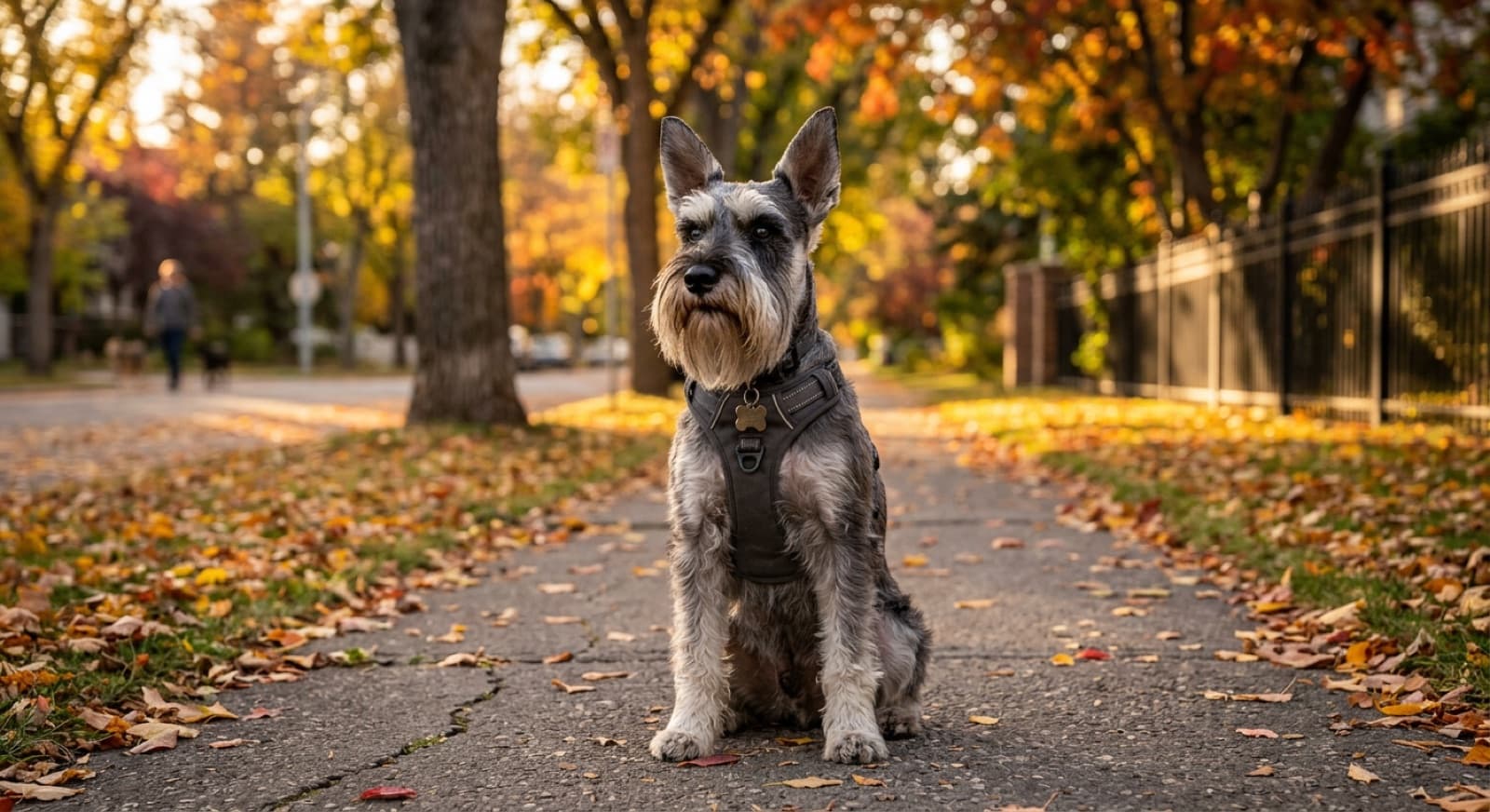
Why Mini Schnauzers get pancreatitis
The Mini Schnauzer is overrepresented in pancreatitis caseloads at every veterinary teaching hospital that tracks breed data. The mechanism is genetic. A large fraction of the breed carries inherited hyperlipidaemia, which means the dog runs elevated blood triglycerides and cholesterol even on a normal balanced diet. The fat circulating in the blood deposits in the pancreas, irritates the tissue, and lowers the threshold for inflammation. A fatty meal, a stressful event, or sometimes nothing identifiable at all then tips the pancreas into an acute inflammatory episode.
The condition is well documented in the veterinary literature. The American College of Veterinary Internal Medicine consensus statements on canine pancreatitis name the Mini Schnauzer as the most strongly predisposed breed. The genetic link runs deep enough that many breed-aware vets recommend annual triglyceride testing starting at age 3 for any Mini Schnauzer, not just those with prior episodes.
The practical implication is not optional. Every Mini Schnauzer owner needs to assume the dog is at elevated baseline risk and feed accordingly. Waiting for the first acute episode to start the protocol is the wrong order. The first episode is the medical emergency, not the wake-up call. Many Edmonton owners we work with started their dog on a low-fat diet after the first hospital visit and look back at the $3,500 bill as the expensive education.
The full diagnostic and medical detail belongs in the Mini Schnauzer breed page health overview. This article is the diet protocol, the emergency response, and the lifelong feeding plan.
Recognising an acute pancreatitis attack
Acute pancreatitis can move from mild discomfort to life-threatening within hours. Recognising the signs early matters. The classic presentation in a Mini Schnauzer:
- Vomiting, often repeated. May start clear and progress to yellow bile.
- Food refusal, sometimes even for the most reliable treats.
- Lethargy and reduced interest in normal activities.
- Abdominal pain. Many dogs adopt the “praying position” with front legs flat on the floor and rear elevated. This is a strong indicator of upper-abdominal pain.
- Hunched posture or a tucked, guarded belly.
- Fever in moderate to severe cases.
- Diarrhoea in some cases.
- Restlessness from pain, alternating with extreme lethargy.
One symptom alone in an otherwise healthy Schnauzer may be a stomach upset. Two or more symptoms together, especially vomiting plus food refusal plus a posture change, should be treated as a pancreatitis emergency until ruled out. In a Mini Schnauzer, the breed predisposition makes pancreatitis the most likely diagnosis when this cluster appears.
Do not wait to see if it passes. The American Animal Hospital Association emergency guidelines specifically flag canine pancreatitis as a time-sensitive condition. Delayed treatment increases the rate of complications including systemic inflammatory response, organ failure, and death. A Mini Schnauzer that started vomiting at 6 PM should be in a 24-hour emergency hospital by 8 PM, not waiting until the morning to call the regular vet.
The acute episode response in Edmonton
The Edmonton 24-hour emergency vet response for a Mini Schnauzer with suspected pancreatitis follows a predictable sequence:
- Triage and physical exam on arrival. Vital signs, hydration assessment, abdominal palpation. Most Schnauzers will react to belly pressure.
- Bloodwork. Complete blood count, biochemistry panel, and a canine pancreatic lipase (cPLI) snap test. The cPLI is the most sensitive single test for pancreatitis. Conventional lipase and amylase add context but are less specific.
- Abdominal ultrasound to visualise the pancreas. Inflammation, swelling, or fluid around the pancreas confirms the diagnosis and rules out other causes (foreign body, mass, biliary obstruction).
- IV fluid therapy for hydration support and to flush inflammatory mediators. This is the backbone of treatment.
- Anti-nausea medication (maropitant, ondansetron, or both) to stop the vomiting cycle.
- Pain control, typically an opioid such as buprenorphine. Pancreatitis is genuinely painful and untreated pain slows recovery.
- Nutritional support. Older protocols withheld food entirely. Current protocols favour early reintroduction of small low-fat meals once vomiting is controlled, often within 24 to 48 hours.
- Hospitalisation for 3 to 5 days in moderate cases, shorter for mild and longer for severe.
The cost range in Edmonton for an acute episode runs $1,500 to $5,000. Mild cases stabilised overnight on outpatient or short-stay protocols run $1,200 to $2,000. Moderate cases with 2 to 3 day hospitalisation run $2,500 to $4,000. Severe cases with ICU, plasma transfusion, or complications can exceed $8,000. Diagnostic workup alone runs $400 to $800.
Bring the dog along with any recent food, treats, or medications in a bag. The vet will ask what was eaten in the last 24 to 48 hours. If a family member fed the dog something unusual, this is the moment to disclose, not the moment to protect feelings. Knowing the trigger helps with both treatment and prevention.
Recovery and the chronic pancreatitis question
Discharge from the hospital is the start of recovery, not the end of treatment. Most Mini Schnauzers go home on a prescription low-fat diet, a short course of oral anti-nausea medication, and follow-up bloodwork in 1 to 2 weeks. The first 7 to 14 days are the highest-risk window for relapse. Strict diet, strict activity reduction, and zero treats or extras until the recheck.
Chronic pancreatitis is the long-term consequence in many Schnauzers. Even after the acute inflammation resolves, ongoing low-grade inflammation can persist for years. Symptoms are subtler: intermittent appetite changes, occasional vomiting, slow weight loss, and reduced energy. Some dogs go on to develop exocrine pancreatic insufficiency (the pancreas stops making digestive enzymes) or diabetes (the pancreas stops making insulin) as complications of repeated or chronic inflammation.
The protocol that prevents most chronic and recurrent disease is the same protocol that manages the first episode: a strict lifelong low-fat diet, no exceptions, and aggressive holiday management. Most Mini Schnauzer owners we work with who treated the post-episode diet as a temporary phase were back in the emergency hospital within 12 months. The owners who treated it as permanent are still in single-episode territory years later.
The low-fat diet protocol
The numerical target is under 15 percent of calories from fat for most Mini Schnauzers with pancreatitis history. For high-risk dogs (chronic pancreatitis, documented hyperlipidaemia, recurrent episodes), the target tightens to under 10 percent of calories from fat. The American College of Veterinary Nutrition publishes guidance on dietary fat restriction in pancreatitis cases and can refer owners to board-certified veterinary nutritionists for custom formulations.
The bag label catch: pet food fat percentages are usually listed as a percentage of dry weight, not as a percentage of calories. A kibble labelled 8 percent fat by weight often runs 18 to 22 percent of calories from fat once water content and other macronutrients are accounted for. A food that looks acceptable on the bag label can be too high in calorie-from-fat for a pancreatitis Schnauzer. Two options handle this reliably:
- Use a prescription veterinary low-fat formula. These are formulated and labelled with calorie-from-fat percentages verified. The math is already done.
- Ask your vet to calculate calorie-from-fat for any food you are considering. Most vets can run the math from the guaranteed analysis panel in a few minutes. Do not estimate it from the bag label.
Two or three measured meals a day works better than one large meal. Smaller meals reduce the pancreatic stimulus per feeding. Use a kitchen scale. Cup measurements drift 30 percent across owners, kibble bags, and tired evening feeders. A Mini Schnauzer overfed by 30 percent for months gains weight, runs higher blood lipids, and approaches the next pancreatitis episode faster.
Hydration matters. Fresh water always available. Some vets recommend adding warm water to kibble for the first few weeks post-discharge to improve digestibility and reduce GI stress.
Browse adoptable Mini Schnauzers in Edmonton
Most Mini Schnauzer surrenders in Edmonton are adults with documented health histories. A foster note about pancreatitis or hyperlipidaemia is genuine help to the adopter, not a deal-breaker. The diet protocol is the same for any Mini Schnauzer regardless of episode history.
See Edmonton Mini Schnauzers →
Prescription low-fat diet categories
Three veterinary prescription low-fat formula categories are commonly used in Edmonton for pancreatitis management. These are categories, not endorsements. The right choice for a specific Mini Schnauzer depends on the dog history, other conditions, palatability, and vet recommendation:
- Royal Canin Gastrointestinal Low Fat. Widely used post-acute episode. Available in dry and wet. Designed specifically for fat-sensitive GI conditions.
- Hill Prescription Diet i/d Low Fat. Another widely used post-episode option. Available in dry and wet. Often used for both pancreatitis and chronic GI issues.
- Purina Pro Plan Veterinary Diets EN Low Fat. The cost-effective veterinary low-fat option in this category for many households.
All three require a vet prescription, are stocked at most Edmonton vet clinics, and run roughly $90 to $160 a bag depending on size. Talk to your vet about which suits your Schnauzer. Some dogs do better on one formula than another for reasons that are not fully predictable. A 4 to 6 week trial is the standard way to evaluate fit.
Transition slowly. Sudden food changes cause GI upset in any dog and add stress to a recovering pancreas. Mix 25 percent new with 75 percent old for 3 days, then 50/50 for 3 days, then 75/25 for 3 days, then full new food. Total transition runs 9 to 12 days.
Safe treats and the AVOID list
Treats are not banned. Treats are restricted to low-fat options in small portions. Safe options for a pancreatitis Mini Schnauzer:
- Cooked plain chicken breast, small pieces, no skin, no seasoning.
- Cooked plain turkey breast, same preparation.
- Low-fat cottage cheese, 1 percent or 2 percent, a teaspoon at a time.
- Plain canned pumpkin (not pie filling), 1 tablespoon as a meal topper or kong stuffer.
- Baby carrots, raw or lightly steamed.
- Green beans, canned no-salt or fresh.
- Blueberries in small amounts.
- Cucumber slices.
- Ice cubes for crunch.
- Plain rice cakes broken into small pieces.
- Kibble from the daily allowance used as training treats. This is the safest training reward.
The AVOID list is longer than most owners expect:
- Fatty meats: bacon, sausage, hot dogs, ribs, brisket fat, lamb fat, beef fat trimmings.
- Pork in any form, even lean. Pork is high enough in fat across the cut to be unsafe.
- Table scraps as a general rule, regardless of what the food is.
- Peanut butter. Even small amounts. Standard peanut butter runs 50 percent of calories from fat.
- Cheese in normal portions. The teaspoon of low-fat cottage cheese is fine; a chunk of cheddar is not.
- Most commercial dog treats, including soft training treats, jerky, dental chews, and biscuits. Read every label. Most fail the calorie-from-fat test.
- Rawhide. High fat plus GI obstruction risk.
- Fried food in any form.
- Butter, oil, cream, gravy.
- Pizza crusts, breadsticks, garlic bread, all of which contain enough fat to be risky.
- Holiday meal leftovers as a category.
Always toxic and never appropriate for any dog regardless of pancreatitis status: grapes, raisins, chocolate, onion, garlic, xylitol (in many sugar-free products and some peanut butters), macadamia nuts, alcohol. These are emergencies on top of the pancreatitis risk.
The Edmonton holiday and barbecue trigger seasons
Holiday food access is the single most predictable pancreatitis trigger pattern. Edmonton emergency vets see clear spikes the day after Thanksgiving, Christmas, and the long August weekend. The triggers are not abstract:
- Thanksgiving and Christmas: turkey skin, gravy, stuffing, ham, butter-rich sides, pie scraps.
- Easter: ham, hot cross buns, chocolate (which is also toxic), Easter dinner leftovers.
- Summer barbecue (May long weekend through Labour Day): hot dogs, sausages, ribs, brisket, chicken skin, burger drippings, leftover plates left on patio tables, dropped scraps.
- Birthday parties and family gatherings: cake, party food, the well-meaning relative slipping the dog whatever is on the table.
- Halloween: chocolate (toxic) plus fatty Halloween-themed snacks.
- Trash access: the post-event trash that contains all of the above.
The Edmonton-specific pattern: outdoor entertaining ends earlier in fall than in warmer cities, pushing more indoor family meals from October through April. That stretches the high-risk indoor-food season to about 7 months a year. Summer barbecue season is shorter but more intense, concentrated into July and August when extended family gatherings cluster.
A practical holiday protocol that works for most Mini Schnauzer households:
- Brief every guest before they arrive. Send a group text the day before. “Our Schnauzer cannot have any food from the table. Pancreatitis risk. Please do not feed her even if she begs.” Be direct.
- Set up a separate room or crate for the dog during the meal if guests struggle with the rule.
- Lock the trash in a closed cabinet or take it out immediately after the meal.
- Run a safe-treat tray the dog can have: baby carrots, cucumber slices, plain rice cake pieces. This redirects guest energy from feeding the dog table food to feeding the dog approved treats.
- Watch the children. Kids drop food. Kids share food. Kids do not know the protocol.
- The day after a major holiday meal, watch the dog closely for any vomiting, lethargy, or appetite change. The window for symptoms after a trigger meal is typically 12 to 48 hours.
If you suspect the Schnauzer got into something despite the precautions, call your regular vet or an Edmonton 24-hour emergency line for advice. Sometimes a precautionary visit with anti-nausea medication prevents a full episode. Most Edmonton emergency clinics have a phone line that can triage the situation before you commit to a visit.
Multi-dog households: the other dogs cannot share treats
A pancreatitis Mini Schnauzer in a multi-dog home creates a logistical problem. The other dogs are likely on a normal diet that includes treats, chews, and occasional fatty foods that are fine for them and dangerous for the Schnauzer. The Schnauzer will steal the other dog kong, dental chew, or dropped food at every opportunity.
The practical solutions:
- Separate the dogs for high-value treats. Crates, baby gates, or different rooms during kong time and dental chew time.
- Move the whole household to low-fat treats. If the other dogs can eat low-fat treats (most can), this eliminates the steal risk. Talk to your vet about whether this is workable.
- Supervise meal time. Schnauzers will hoover the other dog bowl the moment the other dog walks away. Pick up bowls when meals are done.
- Watch the floor for dropped food from the other dogs treats. Sweep after treat time.
Travel and boarding add another layer. If you board the dog, brief the kennel in writing on the diet protocol and bring the prescription food with you. Generic boarding kibble is not appropriate. If you travel with the dog, pack measured meals in resealable bags labelled by day and meal so feeding stays consistent away from home.
Pet insurance for Mini Schnauzer pancreatitis
Pet insurance covers pancreatitis treatment if you enrol before the first episode. After the first episode, pancreatitis becomes a pre-existing condition in most policies and future episodes are excluded or limited. The window matters. Enrol when you bring the Mini Schnauzer home from rescue, before any symptoms, before any vet diagnosis.
Most Edmonton pet insurance plans cover an acute pancreatitis episode hospitalisation (typical claim: $2,500 to $4,000, of which 70 to 90 percent is reimbursed depending on plan). Annual claim limits vary; some plans cap at $5,000 per condition per year. Lifetime limits matter for a breed where pancreatitis can recur. Read the plan carefully before signing.
Many adopters from rescue receive a trial period of pet insurance bundled with the adoption fee from organisations like the Edmonton Humane Society. Use the trial period to bridge into a paid plan before it expires. The gap between the trial ending and the new plan starting is when most owners get caught.
Emergency response checklist
Before a crisis happens, have these set up:
- Closest 24-hour emergency vet phone number saved in your phone with the address. Know the drive time at the worst point in the day.
- Backup emergency vet number in case the first is at capacity.
- Your regular vet phone number for follow-up coordination.
- Pet insurance policy number and the claim phone line. Some plans require pre-authorisation.
- Credit card with at least $5,000 available limit for emergency payment. Most clinics require payment at the time of service.
- A reusable carrier or crate the dog will tolerate for the drive.
- A copy of recent bloodwork printed or accessible on phone. Saves the emergency vet time and you money.
- A list of current medications and supplements the dog takes.
When the moment comes: call the emergency line on the way in. Bring the dog and the bag of recent food. Disclose everything the dog ate or might have eaten in the last 48 hours. Honesty here is genuinely useful to the medical team.
The senior Mini Schnauzer: compounded risk
From age 8 onward, the senior Mini Schnauzer carries compounded health risks that intersect with pancreatitis management. Bladder stones, dental disease, hyperlipidaemia, and early kidney changes are all common in the breed at this stage. Each can complicate the diet plan.
The senior feeding adjustment: same low-fat target, but with attention to kidney support if bloodwork shows early renal changes. Senior wellness panels every 6 months catch the conditions that change the diet equation. Annual triglyceride monitoring should continue or intensify. The Western College of Veterinary Medicine in Saskatoon is the closest specialty referral centre for complex senior Schnauzer cases with multiple overlapping conditions.
Dental care matters here too. Periodontal disease creates ongoing inflammation that may contribute to pancreatitis recurrence. Regular dental cleanings under anaesthesia (typically $700 to $1,400 in Edmonton) are part of the senior Schnauzer health plan, not optional. Discuss anaesthesia risk with your vet given the pancreatitis history; most cases are safe with appropriate monitoring.
Multi-Schnauzer households: shared genetic risk
In a household with two or more Mini Schnauzers, both dogs share the genetic predisposition. If one Schnauzer has had a pancreatitis episode, the other is at elevated risk even if asymptomatic. Many Edmonton vets recommend baseline triglyceride bloodwork on the sibling, and a preventive low-fat diet for both dogs.
This actually simplifies multi-dog management: both dogs eat the same low-fat food, both dogs eat the same low-fat treats, and the household-wide protocol is consistent. The Schnauzer that has not had an episode benefits from the diet without missing anything meaningful. The breed-specific risk justifies the household-wide approach.
Frequently asked questions
What should I feed a Mini Schnauzer with pancreatitis?
Feed a low-fat diet with under 15 percent of calories from fat (under 10 percent if your Schnauzer has had repeat episodes or carries elevated triglycerides). The most reliable option is a prescription veterinary low-fat formula from your vet, eaten as two or three measured meals a day. Treats stay in the same category: cooked plain chicken breast, cooked turkey breast, low-fat cottage cheese in small amounts, plain canned pumpkin, baby carrots, green beans. Skip table scraps, fatty meats, pork in any form, peanut butter, cheese, and most commercial chews. Use a kitchen scale to measure kibble. Cup measurements drift 30 percent and a Mini Schnauzer on the wrong dose for months drifts into the next flare.
How do I know if my Mini Schnauzer is having a pancreatitis attack?
The classic signs are vomiting (often repeatedly, sometimes for hours), refusing food, lethargy, a hunched posture from abdominal pain, and a tucked or guarded belly. Some dogs develop a fever. Many adopt the “praying position” with front legs down and rear up, which signals belly pain. Acute pancreatitis can become life-threatening within hours. If you see vomiting plus food refusal plus a posture change in a Mini Schnauzer, call a 24-hour Edmonton emergency vet immediately and bring the dog in. Do not wait until the morning to call your regular vet. The breed predisposition makes pancreatitis the most likely cause and the most time-sensitive.
How much does pancreatitis treatment cost in Edmonton?
A typical acute episode runs $1,500 to $5,000 in Edmonton depending on severity and length of stay. Mild cases stabilised with overnight IV fluids and anti-nausea medication run $1,200 to $2,000. Moderate cases with 2 to 3 day hospitalisation run $2,500 to $4,000. Severe cases with ICU, plasma transfusion, or complications run $5,000 to $8,000 or more. Diagnostic workup adds $400 to $800 (cPLI snap test, full bloodwork, abdominal ultrasound). After discharge, the prescription low-fat diet plus follow-up bloodwork adds $80 to $150 a month for the first 2 to 3 months. Most Edmonton pet insurance plans cover pancreatitis treatment if enrolled before the first diagnosis; after the first episode it becomes a pre-existing condition and future flares may be excluded.
What fat percentage do I actually need to feed my Schnauzer?
For most Mini Schnauzers with one episode of pancreatitis, target under 15 percent of calories from fat. For Schnauzers with chronic pancreatitis, repeat episodes, or documented hyperlipidaemia (high blood fat), target under 10 percent of calories from fat. Bag labels list fat as a percentage of the dry food weight, not as a percentage of calories. A kibble labelled 8 percent fat by weight is often around 18 to 22 percent of calories from fat. Ask your vet to calculate the calorie-from-fat percentage for any food you are considering, or use a prescription low-fat formula where the math is already verified. Veterinary nutrition resources at the American College of Veterinary Internal Medicine and the American College of Veterinary Nutrition publish breed-specific dietary management guidance worth referencing.
Can I feed homemade food to a pancreatitis Schnauzer?
Yes but only with a veterinary nutritionist formulating the recipe. Generic internet recipes are not safe. A Mini Schnauzer with pancreatitis needs precisely balanced amino acids, vitamins, and minerals on top of the strict fat restriction. An unbalanced homemade diet for 6 months causes nutrient deficiencies that look like a separate disease and complicate recovery. The American College of Veterinary Nutrition can refer you to a board-certified veterinary nutritionist (DACVN) who will write a custom recipe based on your dog bloodwork and condition. Cost is typically $300 to $600 for the initial consultation and recipe, then minor follow-ups. Most Edmonton vets will refer to a remote DACVN consultation if you ask.
Why are Mini Schnauzers so prone to pancreatitis?
The predisposition is genetic. A large percentage of Mini Schnauzers carry inherited hyperlipidaemia, meaning they run high blood triglycerides and cholesterol even on a normal diet. The high blood fat sits in the pancreas and triggers inflammation. The genetic link is well documented in the veterinary literature and one of the reasons the breed is overrepresented in pancreatitis cases at university teaching hospitals. The practical consequence is that even a Mini Schnauzer that has never had an attack is at higher baseline risk than other small breeds. Many breed-aware Edmonton vets recommend annual triglyceride bloodwork from age 3 onward and a preventive low-fat diet for any Schnauzer running elevated numbers, even before a clinical episode.
What are the worst pancreatitis triggers around Edmonton holidays?
Holiday food access is the single biggest trigger pattern. Christmas turkey skin and gravy, Thanksgiving stuffing and gravy, Easter ham, summer barbecue (hot dogs, ribs, brisket fat trimmings), birthday cake, party leftovers, and the dropped table scraps that family members slip the dog when nobody is watching. Edmonton family gatherings are especially risky because well-meaning relatives feed the Schnauzer without knowing the protocol. The protocol for a holiday: brief every guest before they arrive, keep the dog in a separate room during the meal if needed, lock the trash, and run a low-fat treat tray your dog can have. We see a clear spike in emergency vet visits the day after Thanksgiving and Christmas. Plan for it.
Can my Mini Schnauzer ever eat treats again?
Yes, with the right treats and the right portions. Safe options for a pancreatitis Schnauzer include cooked plain chicken breast (small pieces), cooked plain turkey breast, low-fat cottage cheese (a teaspoon at a time), plain canned pumpkin (not pie filling), baby carrots, green beans, blueberries, and small pieces of plain rice cake. Avoid: anything fried, cheese in normal portions, peanut butter, fatty meats, pork in any form, table scraps, commercial dental chews unless verified low-fat, rawhide, and most jerky. Treats should still stay under 10 percent of daily calories. Using kibble from the daily allowance as training rewards works for most Mini Schnauzers and is the safest path.
Will my Schnauzer need this diet forever?
For most dogs, yes. Pancreatitis in a Mini Schnauzer is rarely a one-time event because the underlying genetic hyperlipidaemia does not go away. The first episode often signals a lifelong management problem. Some dogs recover well enough to return to a moderate-fat diet under vet supervision, but most stay on a low-fat protocol for life to prevent recurrence. The strict period is the first 3 to 6 months after the episode. After that, your vet may allow careful expansion of food variety if bloodwork stays clean and there are no symptoms. Plan and budget as if it is permanent. The owners we work with who treated the diet as optional after recovery are typically the ones back in the ER within 12 months.
How does Edmonton specialty vet access work for complex pancreatitis cases?
Most acute episodes are handled by 24-hour Edmonton emergency clinics and your regular vet. For complex cases (recurrent attacks, suspected exocrine pancreatic insufficiency, diabetes secondary to pancreatic damage, or chronic pancreatitis with poor weight maintenance), referral to a board-certified internal medicine specialist is the next step. Edmonton has internal medicine specialty practices; complex pancreatic surgery or unusual imaging needs are sometimes referred to the Western College of Veterinary Medicine in Saskatoon, about 5 hours by car. Your regular vet handles the referral paperwork. Plan on $800 to $1,500 for a specialist consultation plus imaging, and additional cost if surgery is needed. For most pancreatitis cases, your regular vet plus the local emergency clinic is sufficient.
How is Edmonton Mini Schnauzer pancreatitis management different from Calgary?
The core protocol is identical because pancreatitis biology does not care about geography. The Edmonton-specific differences are smaller and practical. Holiday season in Edmonton runs slightly longer because outdoor entertaining ends earlier in fall, pushing more indoor family meals from October through April. Summer barbecue season is shorter but more intense in July and August. Edmonton has fewer 24-hour emergency vet options than Calgary, so identifying your closest 24-hour clinic before a crisis matters more. The Western College of Veterinary Medicine in Saskatoon is a closer specialty referral than driving to Calgary, which simplifies complex cases. Otherwise the diet, the emergency response, and the long-term management are the same.
Related Edmonton Mini Schnauzer guides
Adoptable Dogs in Edmonton
Browse current dogs and Mini Schnauzer crosses listed with Edmonton-area rescues. Updated regularly.
Mini Schnauzer Adoption Edmonton
Rescue sources, costs, mixes, and what Edmonton rescues evaluate before placing a Mini Schnauzer.
Mini Schnauzer Health Issues Edmonton
Pancreatitis, hyperlipidaemia, bladder stones, Cushing's, and the Edmonton specialty access reality.
Mini Schnauzer Grooming Edmonton
Hand-stripping vs clipping, the Schnauzer beard, bushy eyebrows, and the every-6-weeks Edmonton routine.
Find your Edmonton Mini Schnauzer
Browse adoptable Mini Schnauzers and Schnauzer crosses from Edmonton-area rescues. Filter by age and energy to find one whose lifestyle fits yours.
Browse All Edmonton Dogs →New dog? Start with these care guides
Everything a new adopter needs to set up a safe, happy home.