The short answer
A Samoyed needs 3 to 5 brushing sessions per week, baths every 4 to 8 weeks, and two seasons per year (March through May, September through November) of daily coat-blow management. The hard rules are never shave the double coat, never skip the high-velocity drying step after a bath, and check the four mat zones (behind ears, neck ruff, tail base, leg feathering) every other day. Budget $200 to $400 for the home tool kit and $90 to $250 per professional visit.
The Samoyed coat anatomy
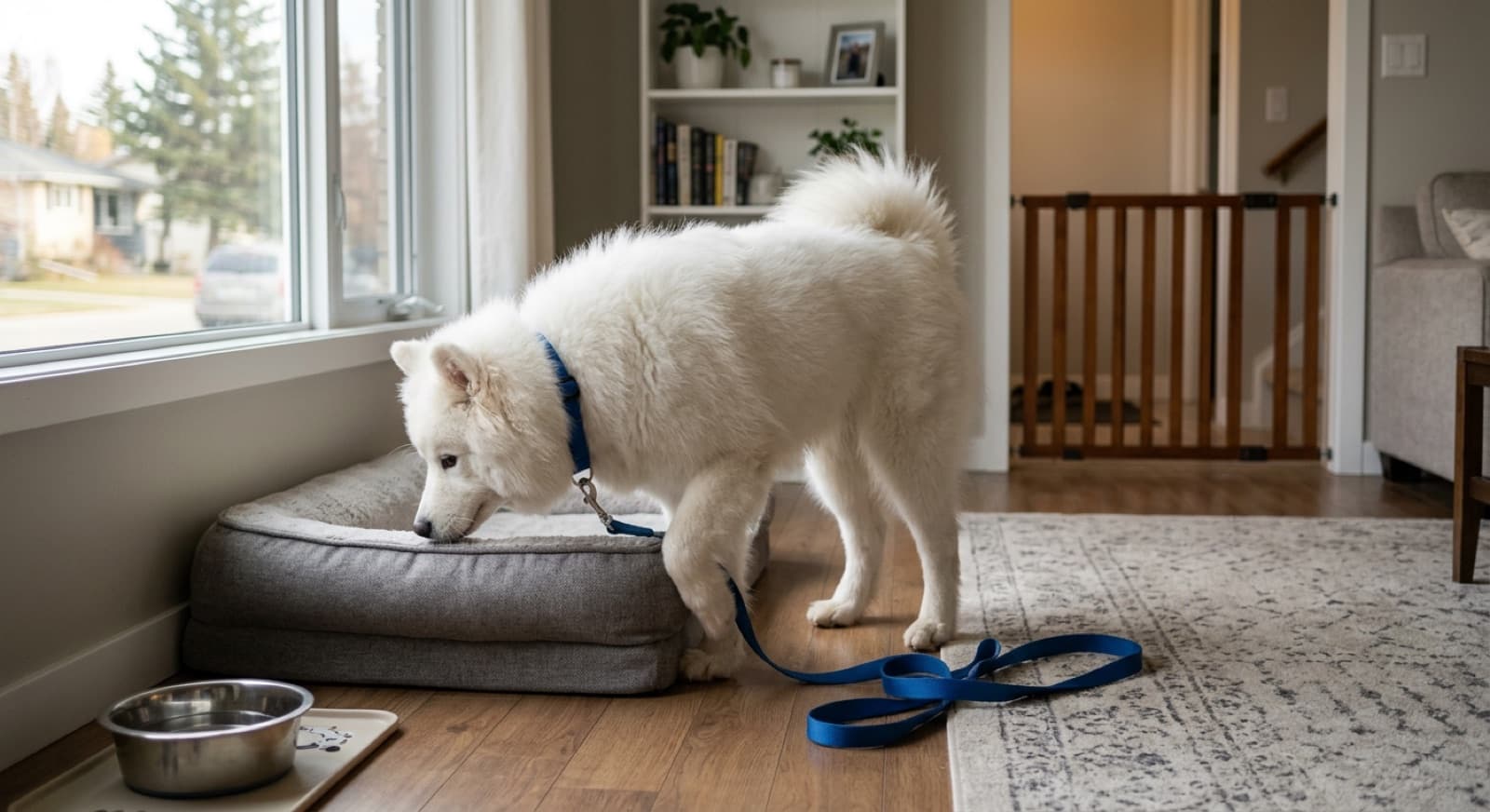
The Samoyed wears a double coat with two distinct layers doing different jobs. The longer outer layer (called the guard hairs) is straight, water-shedding, and white or biscuit-tinted. Underneath sits a dense, soft, woolly undercoat that traps air for insulation. The combination is what lets a Samoyed sleep outdoors at -30C in their breed-of-origin Siberia and still cool effectively in Edmonton summer when the undercoat is properly brushed out.
Grooming is the work that keeps both layers doing their jobs. Skipped brushing means dead undercoat stays trapped against the skin, the air layer collapses, and the dog overheats in summer and chills in winter. The shed cycle removes dead undercoat naturally; the brush only accelerates and directs the process. A correctly groomed Samoyed coat is also self-cleaning to a meaningful degree, which is why bathing every 4 to 8 weeks is enough and more frequent bathing actually causes problems.
The 2 annual coat blow seasons
Twice a year the Samoyed releases the majority of the undercoat in a 3 to 6 week window. Edmonton timing runs March through May for the spring blow and September through November for the fall blow. Daylight triggers the cycle more than temperature does, so a cold March or a warm October shifts the start by a week or two without changing the overall pattern.
During an active blow, brush every day with an undercoat rake first, then a slicker brush to finish. A single session removes a handful or two of undercoat. The house collects visible drifts on furniture and floor edges, and a robotic vacuum that runs twice a day is the single most useful purchase for Edmonton Samoyed households in March and October. Plan an extra professional visit in the middle of each blow window; the deshedding is the work groomers are best at and the home brush sessions hold the line between visits.
The home tool kit
- Pin brush — primary routine tool, gentle through the outer guard hairs.
- Slicker brush — finishes the work, pulls smaller dead pieces.
- Undercoat rake — wide-tooth, for coat blow only. Skip the narrow-tooth versions that pull live undercoat.
- Metal greyhound comb — for behind the ears, feathering, and tail plume detail work.
- High-velocity blow dryer — the single most expensive item, $250 to $500, and the one thing most home setups skip and then regret. Required for proper drying after baths and during heavy blow.
- Blunt-tip scissors — for monthly paw-pad and sanitary trims.
- Mat splitter — for the inevitable behind-the-ear mat that gets past the brush schedule.
Skip the deshedding blade tools (FURminator and similar). They cut the outer coat in a way that ruins the natural water-shedding texture, and Samoyed-experienced groomers will not use them. The undercoat rake does the same job correctly.
Some of the product links in this section are Amazon affiliate links — we may earn a small commission at no extra cost to you. It never changes which products we recommend.
Bathing protocol
Every 4 to 8 weeks. Use a shampoo formulated for white double coats (whitening shampoos help marginally; the daily face-wipe routine matters more). Dilute the shampoo to half strength in a separate bottle and apply through the wet coat with a gentle massage, not a rub that tangles the layers. Rinse for twice as long as you think you need to; residual shampoo in a Samoyed undercoat is the main cause of post-bath itching.
The drying step is where most home grooms go wrong. A regular bath towel dries the outer guard hairs but leaves the undercoat saturated for hours. The high-velocity blow dryer, used at low-medium speed and held 4 to 6 inches from the coat, lifts and dries the undercoat in 30 to 45 minutes. Skipping the dryer and air-drying instead lets the wet undercoat develop hot spots within a day, especially through Edmonton winter when the dog is back outside before the coat is bone dry.
Browse adoptable Samoyeds in Edmonton
Samoyeds are rare in Alberta rescue. Set up an alert and act fast when a Sammy or Sammy mix appears.
See Available Samoyeds →The mat-prone zones
Four areas mat first: behind the ears, the neck ruff under the collar line, the tail base where the plume meets the body, and the leg feathering at the back of the rear legs. Check all four every other brush session. The behind-the-ear mat is the most common and the most painful for the dog; it forms in days, not weeks, and once formed it grips the undercoat in a way that home tools cannot reverse.
For a small mat (quarter-sized or smaller), a mat splitter and a methodical work-from-the-outside-in approach with a metal comb gets it out without cutting. For anything larger, book a groomer rather than cutting it out yourself; a botched home dematting can damage the coat permanently and stress the dog enough to make future grooming difficult. The cost of a single dematting visit is far less than the cost of teaching a dog to fear the brush.
The never-shave rule
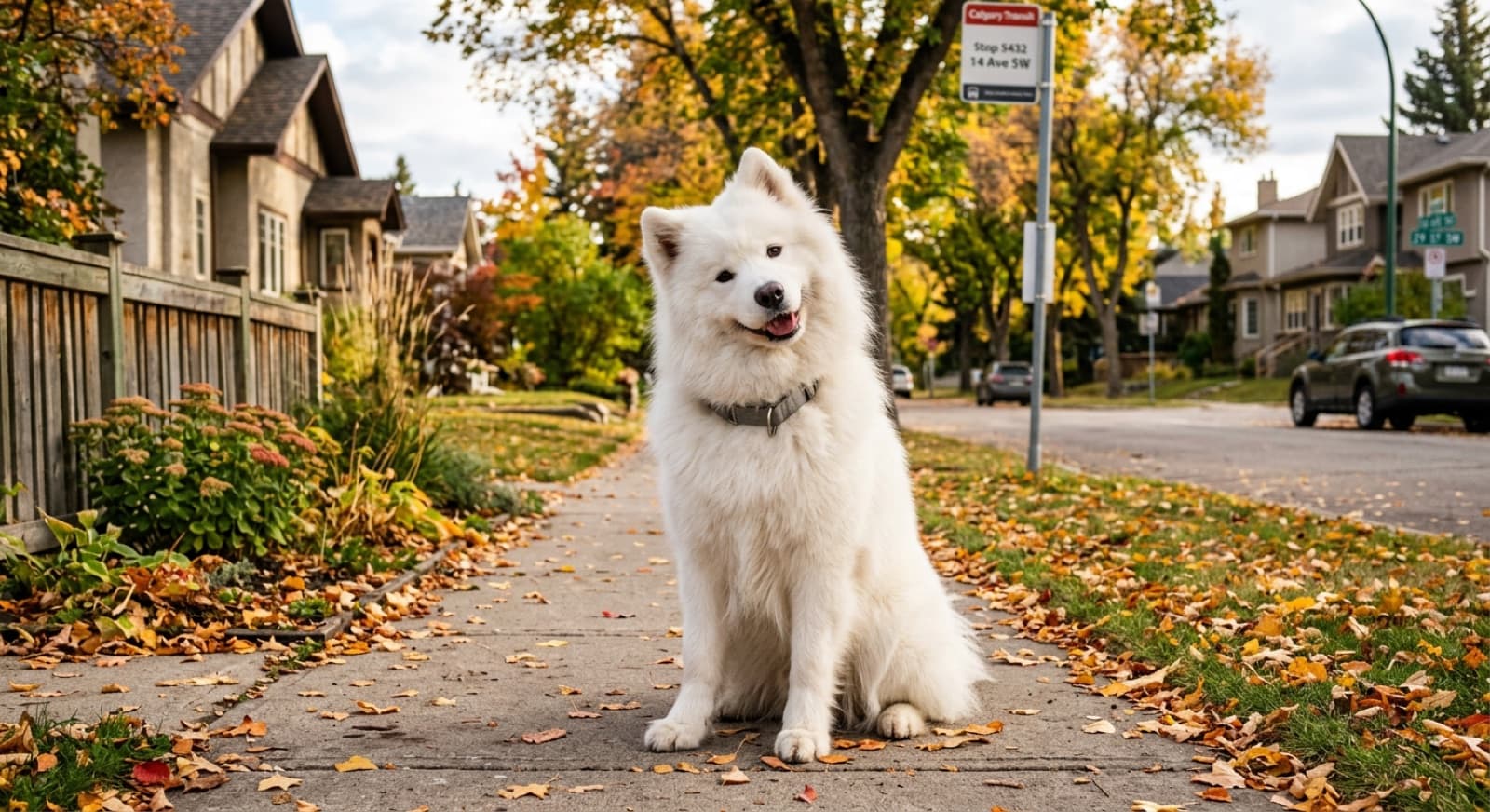
Samoyeds are never shaved. The double coat insulates in both directions, blocks UV from pink skin, and a sheared Samoyed regrows the coat patchy with permanent texture damage. The clinical name is Post-Clipping Alopecia, and it is common enough in Samoyeds and other double-coated spitz breeds that the AKC and CKC both list it as a do-not-shave consequence in breed standard guidance.
The summer-heat workaround is brushing out the dead undercoat, not removing the coat. A properly brushed Samoyed handles Edmonton summer better than most short-coated breeds because the air layer in the undercoat is genuinely a cooling system. The exception is a medical shave for surgery or severe matting that cannot be combed out; in those cases the coat regrows in 6 to 18 months and the dog is fine.
Edmonton groomer access
Routine Edmonton Samoyed grooming runs $90 to $150 for a bath, brush, and finish; full-coat work with deshedding and sanitary trim runs $140 to $220; coat-blow-season visits run $180 to $250. Dematting surcharges typically add $1 to $2 per minute over the standard time. Mobile groomers add $30 to $60 for the convenience.
Finding a Samoyed-experienced groomer matters more than finding the cheapest one. Ask three questions before booking: do they line-brush rather than use deshedding blades, do they own a high-velocity dryer, and have they worked Samoyeds before. If any answer is no, the dog will come home with the undercoat still wet and the coat blown but not finished. Word-of-mouth through the Edmonton breed-specific rescue networks beats top search results on review sites.
Senior Samoyed grooming
After age 10 the Samoyed coat changes. The undercoat may thin, the texture may soften, and the dog tolerates long brush sessions less well than they did at 5. The adjustment is shorter, more frequent sessions; a 10-minute brush every other day works better than a 45-minute session twice a week. Senior Samoyeds also handle the high-velocity dryer less well; lower the speed, hold the dryer further from the coat, and accept that drying will take longer.
For seniors with confirmed sebaceous adenitis, see the Samoyed health guide for the medicated bathing schedule and the medical workup. The home grooming routine doubles in time but the principles are unchanged.
Edmonton Samoyed Grooming FAQ
Tap a question to expand
How often should I brush my Samoyed in Edmonton?▼
When do Samoyeds blow their coat in Edmonton?▼
Can I shave my Samoyed in summer to keep them cool?▼
What tools do I need to groom a Samoyed at home?▼
How often should I bathe my Samoyed?▼
Where do Samoyeds mat the worst?▼
How much does professional Samoyed grooming cost in Edmonton?▼
How do I find a Samoyed-experienced groomer in Edmonton?▼
How do I keep my Samoyed white?▼
Should I trim my Samoyed paw pads?▼
What about sebaceous adenitis grooming?▼
Adoptable Dogs in Edmonton
Browse current rescue dogs from Edmonton-area shelters.
Samoyed Adoption Edmonton
Rescue paths, costs, and the white-coat reality.
Samoyed Health Issues: Diabetes, Eyes, Kidneys
Samoyed health issues to plan for: a very high diabetes risk, eye disease and glaucoma, inherited kidney disease in young males, skin disease, sulfa sensitivity and hips.
Samoyed Winter Care
Ice balls, salt paws, snow nose, and channelling joy at -30C.
New dog? Start with these care guides
Everything a new adopter needs to set up a safe, happy home.