The short answer
Edmonton Vizsla adoption is rare-to-moderate rescue work. The Edmonton Humane Society, Zoe's Animal Rescue, AARCS Edmonton fosters, and AHHRB list Vizslas and Vizsla mixes occasionally. Fees run $400 to $700. Plan a four-to-eight-month wait for a purebred. The three non-negotiable commitments are 90 minutes of real daily exercise year-round, work-from-home or a dog-friendly workplace because the breed cannot be alone for full workdays, and a winter coat plus booties because the thin single-coated body has almost no cold tolerance. This is not a dog you can leave alone.
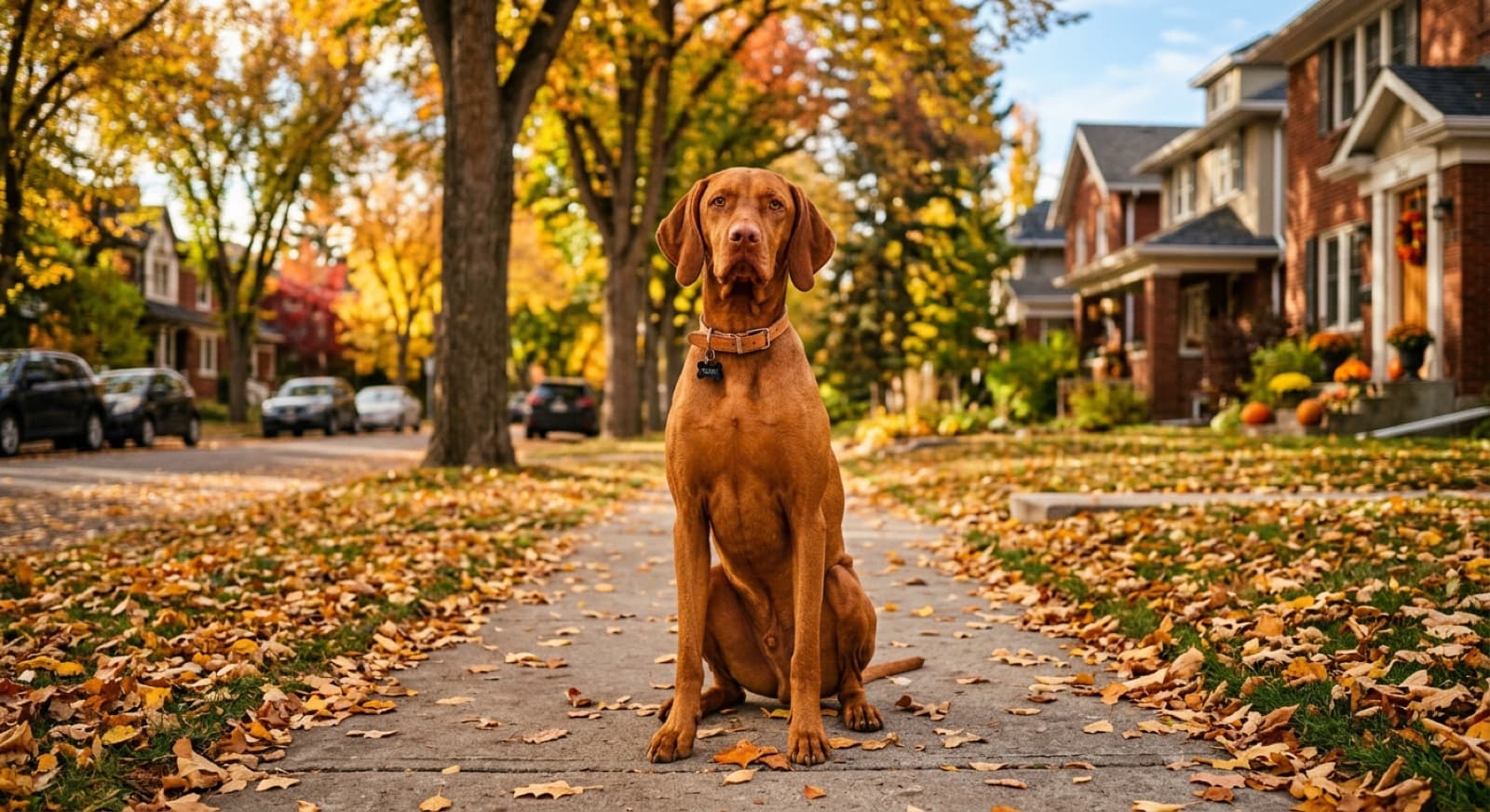
Why Vizslas end up in Edmonton rescue: the five surrender patterns
Edmonton Vizsla surrenders follow five repeating patterns. Most surrenders happen between two and six years of age when household life-stage changes collide with breed-specific needs. The dog is rarely the reason. The household's exercise capacity and time-alone tolerance almost always are.
- Separation anxiety. This is the breed-defining behavioural pattern and the most-cited Vizsla surrender reason in Edmonton intake records. The household work schedule shifted (return-to-office, custody change, new baby, second job), the dog began destroying door frames or self-injuring, and a behaviourist quoted $2,000 to $5,000 for a structured desensitisation programme the family could not fund or sustain. Vizslas were bred as field companions who shadowed their hunters all day; modern Canadian life often does not match that.
- Exercise mismatch. The original household pictured an attractive medium-sized sporting dog and underestimated the 90 minutes of real daily exercise plus mental work the breed needs to settle. Without sufficient outlet the dog escalates: counter surfing, reactive leash work, destruction during quiet periods, indoor zoomies that crash through furniture. The household tries to shortcut with a backyard or a slow walk; the dog gets worse; surrender follows.
- Adult-onset allergy diagnosis. Vizslas have a short single coat that sheds steadily year-round, and the dander triggers respiratory symptoms in adults whose immune systems shifted with age, pregnancy, or environmental change. Households unable to manage the allergy with HEPA filtration, separate sleeping areas, and frequent vacuuming sometimes surrender when symptoms become unmanageable. This is the surrender pattern adopters tend to misread as “the family did not love the dog”; almost always they loved the dog and could no longer breathe.
- Owner death or move to assisted living. Vizslas pair extraordinarily well with retirees and home-based older owners because the velcro temperament matches the household pattern. When the owner dies or transitions to assisted living, the dog often has nowhere to go. Adult children frequently cannot absorb the exercise commitment, and the dog enters rescue. These are typically well-loved, well-trained, household-stable Vizslas who simply need a new home.
- Adolescent reactivity. Vizsla adolescence runs roughly ten to twenty-four months and is genuinely demanding. The breed pushes back, tests recall, develops on-leash reactivity, and chews through household items. Families who expected a calm sporting breed get a teenager and surrender between 14 and 22 months. The same dogs frequently settle into excellent adults in homes that finished the training.
A Vizsla in a household that committed to 90-minute daily exercise, work-from-home or dog-friendly workplace arrangement, force-free training through adolescence, and an honest separation-anxiety prevention plan from week one gets 12 to 15 years of one of the most devoted, biddable, comic companions available. The breed rewards adopters who plan the time investment honestly.
Vizsla vs Wirehaired Vizsla: two separate breeds
The Canadian Kennel Club recognises the Vizsla and the Wirehaired Vizsla as two separate breeds. Adopters often assume they are coat variants of one breed. They are not. The breeds share a Hungarian pointing heritage and a similar temperament profile, but they have different histories, different conformation, and dramatically different rescue availability.
- Vizsla (sometimes called Smooth Vizsla). Short dense single coat in golden rust (the only colour recognised in the CKC breed standard, with minor white markings on chest and toes acceptable). 45 to 65 lb adults, lean athletic frame, soft expression, almost no body fat. The breed most adopters recognise. The Canadian Kennel Club Vizsla breed profile documents the standard.
- Wirehaired Vizsla. Dense wiry double coat, pronounced beard and eyebrows, slightly heavier and broader build, 45 to 65 lb adults. Developed in 1930s Hungary by crossing Vizslas with German Wirehaired Pointers for better cold tolerance, better protection in brush and bramble, and steadier work in difficult terrain. Notably better cold tolerance than the smooth Vizsla, though still not a Canadian-winter-ready breed.
- Rescue availability. Smooth Vizslas appear in Edmonton rescue rarely but predictably (a few per year across all rescues combined). Wirehaired Vizslas appear dramatically less often (likely fewer than one per year in Edmonton intake) because the breed is small in Canadian numbers overall.
- Temperament. Both breeds carry the velcro temperament, high energy, hunting drive, biddability, and tendency to separation anxiety. Foster-care behaviour reports are usually similar across the two breeds. The choice between them in rescue is rarely a real choice; whichever appears, you take.
- Identifying mixes. Smooth Vizsla mixes are easier to identify in rescue photographs because the rust colour and lean build carry through. Wirehaired Vizsla mixes often look like generic shaggy pointer crosses and get listed under names like “German Pointer mix” or “wirehaired pointer cross.” If you specifically want a Wirehaired, scan listing photographs and ask the foster directly.
For most Edmonton adopters, the practical answer is: prepare for a Smooth Vizsla because that is what the rescues actually list, and consider yourself fortunate if a Wirehaired appears. Both breeds need the same daily commitments. Both reward force-free training, structured exercise, and a household where the dog is rarely alone.
Edmonton rescues that occasionally list Vizslas and Vizsla mixes
Vizslas appear across most Edmonton-area rescues at rare-to-low volume. The breed is less common than Labradors, Goldens, or German Shepherds and more common than Wirehaired Vizslas or other rare Hungarian pointers. Mixes outnumber purebreds in intake records. Inventory rotates slowly; set up alerts and check current Edmonton listings before fixating on a single rescue.
- Edmonton Humane Society (EHS): the city's largest shelter and the most consistent source of urban Vizsla intake. EHS sees Vizslas primarily through work-schedule-change surrender, separation anxiety surrender, and owner-life-change transitions. The centralised facility lets adopters meet the dog in person, and the EHS behaviour team writes detailed temperament assessments noting time-alone tolerance, exercise capacity, and reactivity flags. EHS publishes adoption protocols on their adoption page.
- Zoe's Animal Rescue: long-running Edmonton foster-based rescue. Zoe's takes Vizslas through their foster network when they appear, often from rural Alberta surrender pipelines or hunting-household life-change situations. Zoe's foster write-ups are among the most thorough in Edmonton, which matters for matching a Vizsla's actual exercise level, separation-anxiety profile, and kid and dog tolerance to the right adopter.
- AARCS (Alberta Animal Rescue Crew Society): headquartered in Calgary with active Edmonton-area foster homes. AARCS tags each dog with its current foster location, so Edmonton-foster Vizslas surface on Edmonton listings. AARCS foster notes explicitly cover kid tolerance, multi-pet compatibility, exercise capacity, separation-anxiety history, and any documented hunting-drive observations during foster care.
- Alberta Homeward Hound Rescue Bureau (AHHRB): Edmonton-area foster-based rescue. AHHRB lists every dog as Mixed Breed by policy, so Vizslas and Vizsla-cross dogs are identified by photograph and description rather than a breed tag. The rust colour and lean build typically read clearly in photographs. Always worth checking even when a search for Vizsla returns nothing on a breed-tag filter.
- GEARS (Greater Edmonton Animal Rescue Society) and Hope Lives Here Animal Rescue: both Edmonton-area rescues with smaller rotating inventories that occasionally list Vizslas or Vizsla mixes. Lower frequency than the rescues above but worth following. Vizsla-Lab and Vizsla-Pointer crosses appear here more often than purebred Vizslas.
- SCARS (Second Chance Animal Rescue Society): northern-Alberta intake skews to working breeds, Northern dogs, and rural surrender, so purebred Vizslas appear rarely. When they do list, they tend to be from rural hunting households where the dog did not match the family's shifted hunting schedule. Vizsla-Pointer crosses from rural surrender pipelines show up more often. Worth following but not the primary source.
Beyond the general rescues, the national breed-specific path runs through the Vizsla Club of America rescue coordinator network (often called VCA-R) and the Vizsla Society of Canada referral channels. As of writing we cannot verify a current Alberta-based Vizsla-specific rescue with active adoptable listings. If you find one on social media, verify it through the Canada Revenue Agency charitable registry, a real Alberta address, public-facing vet references, and a current adoptable-dog list before engaging.
Common Vizsla mixes in Edmonton rescue
Mixed Vizslas outnumber purebreds in Edmonton intake records. Each combination shifts the temperament and physical profile in different directions. Foster notes are more reliable than breed-mix labels because most rescue intake records list parentage as a best guess from physical appearance.
- Vizsla-Labrador (sometimes called Vizslador): the most common Vizsla mix in Edmonton rescue. Larger (55 to 75 lb), heavier-boned, with retriever sociability layered on Vizsla velcro temperament. The Lab influence softens some of the separation anxiety, adds a slightly thicker coat for better Edmonton winter tolerance, and increases biddability. Vizsladors tend to be excellent family dogs and often a good first-time-Vizsla option. Recall tends to be more reliable than a purebred Vizsla's; exercise needs are similar.
- Vizsla-Pointer (often German Shorthaired Pointer cross): the closest blood-relative mix and behaviourally very similar to a purebred Vizsla. Slightly larger frame, often a ticked or patched coat layered on the rust base, equal or higher exercise needs, equal velcro temperament. Most adopters cannot tell the difference between a Vizsla-GSP cross and a purebred Vizsla in behaviour. The mix is often listed simply as “pointer mix” in rescue.
- Vizsla-Weimaraner (sometimes called Vizmaraner or similar): a tall, lean, athletic cross with elevated separation anxiety risk because both parent breeds are velcro to a fault. Coat colour ranges from rust to grey to mixed. The cross combines two of the most demanding sporting-breed temperaments in one dog and is best matched to experienced sporting-breed households with a work-from-home setup and serious exercise routine. Striking-looking dogs that often photograph well but live demanding lives.
- Vizsla-Hound mix (Coonhound, Treeing Walker, or similar): taller, slightly heavier, with elevated scent-drive on top of the pointing drive. Recall is usually worse than a purebred Vizsla's. Voice profile shifts to a deeper hound bay. Often serious escape risks because the hound parent typically carries strong scent compulsion. Best matched to experienced hound or sporting-breed households with fenced acreage.
- Vizsla-Boxer or Vizsla-Pit cross: shorter, blockier, with broader heads and rust-coloured coats that often read as “red bully mix” in rescue photographs. The Vizsla velcro temperament combines with the bully-breed sociability for an extraordinarily affectionate dog with similar exercise needs to a purebred Vizsla. Often listed under generic Mixed Breed or Bully Mix labels at AHHRB and other Edmonton rescues.
- Vizsla-Husky or Vizsla-Shepherd cross: uncommon but appears occasionally. Adds size, double-coat insulation, and shifted temperament. The Husky cross often has dramatically better Edmonton winter tolerance than a purebred Vizsla. Foster notes are the only reliable guide because no two are alike physically.
For any Vizsla mix, the foster will describe the dog's actual size, coat thickness, energy level, separation-anxiety profile, and known behaviour patterns. That information is more reliable than any breed-mix guess. Adult appearance and behaviour tell the story; lineage labels are decoration. Ask the rescue specifically about time-alone tolerance, recall reliability, and observed daily exercise needs during foster care.
What an Edmonton rescue Vizsla actually costs
Edmonton rescue adoption fees for Vizslas and Vizsla mixes generally land between $400 and $700, with senior Vizslas often reduced to $300 to $500. The fee is a partial recovery on medical work the rescue already absorbed, not a sale price. A typical Vizsla adoption fee covers:
- Spay or neuter surgery. Standalone at an Edmonton vet clinic, spay or neuter for a medium-sized breed runs $400 to $700.
- Core vaccinations. DAPP and rabies at minimum. Bordetella often included if the dog has been boarded.
- Microchip implant and registration. Required for licensed dogs under City of Edmonton Animal Care and Control Bylaw 21244.
- Deworming, flea, and tick treatment. Standard intake processing.
- Basic vet workup. Physical exam, thyroid screen for adults, fecal screen, hip and elbow palpation. Many Vizslas arrive with a recent orthopaedic note in the file.
Stacked at retail Edmonton vet pricing, those services cost $900 to $1,800. The rescue fee recovers part of that; donations cover the rest.
Plan an additional $300 to $500 in the first month for an Edmonton vet baseline covering a thorough orthopaedic exam, a full thyroid panel, and pet insurance enrolment. The American Animal Hospital Association publishes preventive-care guidelines that most accredited Edmonton vets follow for first-visit baselines.
Ongoing Vizsla costs run $2,500 to $4,000 per year. Food for a 45-to-65-pound Vizsla runs $70 to $110 per month for quality kibble at measured portions. Winter gear is a real ongoing cost: an insulated coat ($80 to $150), booties ($30 to $60 per set, replaced annually), and an indoor-exercise plan for deep cold. Routine vet care averages $500 to $1,000 per year. Pet insurance for a young adult Vizsla in Edmonton runs $50 to $90 per month and is worth enrolling in the first week before any pre-existing conditions appear in vet records. Compare the adoption math to a Vizsla puppy from a CKC breeder at $2,000 to $4,000, which comes with none of the vet work the rescue dog already has and the same daily commitments regardless of source.
The “Velcro dog” reality: what it actually means
The phrase “Velcro dog” is shorthand for the Vizsla temperament, and adopters who have not lived with one often underestimate what it means in practice. The breed was developed by Hungarian Magyar nobility as a hunting partner who shadowed the hunter through long days in the field. The selection pressure was relentless: dogs that stayed close worked; dogs that wandered did not. Centuries later, the modern Vizsla is wired for constant physical proximity to their human, and the trait expresses in three layered ways.
- Physical attachment. A Vizsla will follow you to the bathroom, sit on your feet during meals, lean against your leg when you stop walking, and sleep under blankets or on top of you given the option. The lean body is often described as “painted on” the owner. This is the part adopters find charming.
- Emotional dependence. A Vizsla reads your mood faster than most breeds and responds visibly to stress, conflict, or sadness in the household. The dog often becomes the household's emotional barometer. This sounds positive but creates a real maintenance burden in chaotic households or homes with frequent conflict.
- Separation distress as the default state when alone. The same wiring that makes the dog wonderful in the room makes them genuinely uncomfortable out of the room. Most Vizslas, even well-adjusted ones with good early socialisation, find time alone meaningfully stressful. Separation anxiety in the clinical sense (destruction, self-injury, vocalisation, house soiling) is the most-cited Vizsla behavioural surrender reason. The full breakdown is in the separate Vizsla separation anxiety guide.
The practical implication for Edmonton adopters is that the velcro temperament is not a quirk; it is the breed's core identity, and households that cannot match it (full-time office workers without a daycare or dogwalking plan, owners who travel frequently, families with frequent multi-day absences) routinely fail at Vizsla ownership. The Vizsla rewards a household where someone is home most of the day and the dog comes along on most outings.
Adopter readiness check: 10 questions before you apply
Honest answers to these ten questions sort the households that succeed with an Edmonton Vizsla from those that join the surrender pattern. If more than three answers are uncertain, the breed is probably wrong for the household right now.
- Can someone be home with the dog most of the day? Work-from-home, retirement, a dog-friendly workplace, or a serious daycare and dogwalking budget. A Vizsla alone for a typical 9-hour workday is a recipe for separation anxiety surrender.
- Can you commit to 90 minutes of real daily exercise, year-round? A leashed neighbourhood walk does not count. Running, structured trail work, off-leash play in fenced spaces, swimming in summer, treadmill or daycare in winter all count.
- Do you have a winter exercise plan that does not depend on outdoor time? Edmonton winter delivers stretches of -25C and below when a Vizsla cannot stay outside long. Daycare, treadmill conditioning, structured indoor scent work, and indoor agility are all valid.
- Are you ready to invest in winter gear from week one? Insulated coat, booties, and a contingency budget for replacements through the season. The short single coat is not optional gear territory.
- Do you have $500 to $1,000 ready for first-month vet baseline and pet insurance enrolment? Orthopaedic exam, thyroid panel, insurance signup, gear purchase. The first month is the most expensive.
- Will your housing tolerate the velcro temperament? Detached homes are easiest. Apartments and condos work only with neighbour buy-in about occasional vocalisation and a separation-anxiety prevention plan.
- Does your fence (if you have one) hold a determined sporting dog? Six-foot solid fence is the gold standard. Three-foot picket fences will be flagged. Vizslas can clear shorter fences and squeeze through gaps when motivated by prey or boredom.
- Are you ready to commit to force-free training through adolescence? Ten to twenty-four months of consistent positive reinforcement. The breed is sensitive and punishes harsh training with shutdown or increased anxiety. The Certification Council for Professional Dog Trainers (CCPDT) trainer directory lists certified Edmonton trainers.
- Is everyone in the household on board with the daily commitments? Exercise, time-with-dog, training consistency. A divided household is a Vizsla surrender risk because the breed reads household conflict and amplifies it.
- Are you ready for 12 to 15 years of one of the most attached, devoted dogs in the sporting group? The lifespan is good for the size. The commitment is the entire span.
Adopters who answer yes to all ten get one of the most affectionate, biddable, athletic companions available. Adopters who hedge on more than three are usually better served by a different breed or a different life stage.
Browse adoptable Edmonton Vizslas and Vizsla mixes
Current Edmonton listings from EHS, Zoe's, AARCS Edmonton fosters, AHHRB, GEARS, Hope Lives Here, and SCARS in one place. Vizsla inventory rotates slowly; set up listing alerts so you catch them the day they appear.
See Edmonton Adoptable Dogs →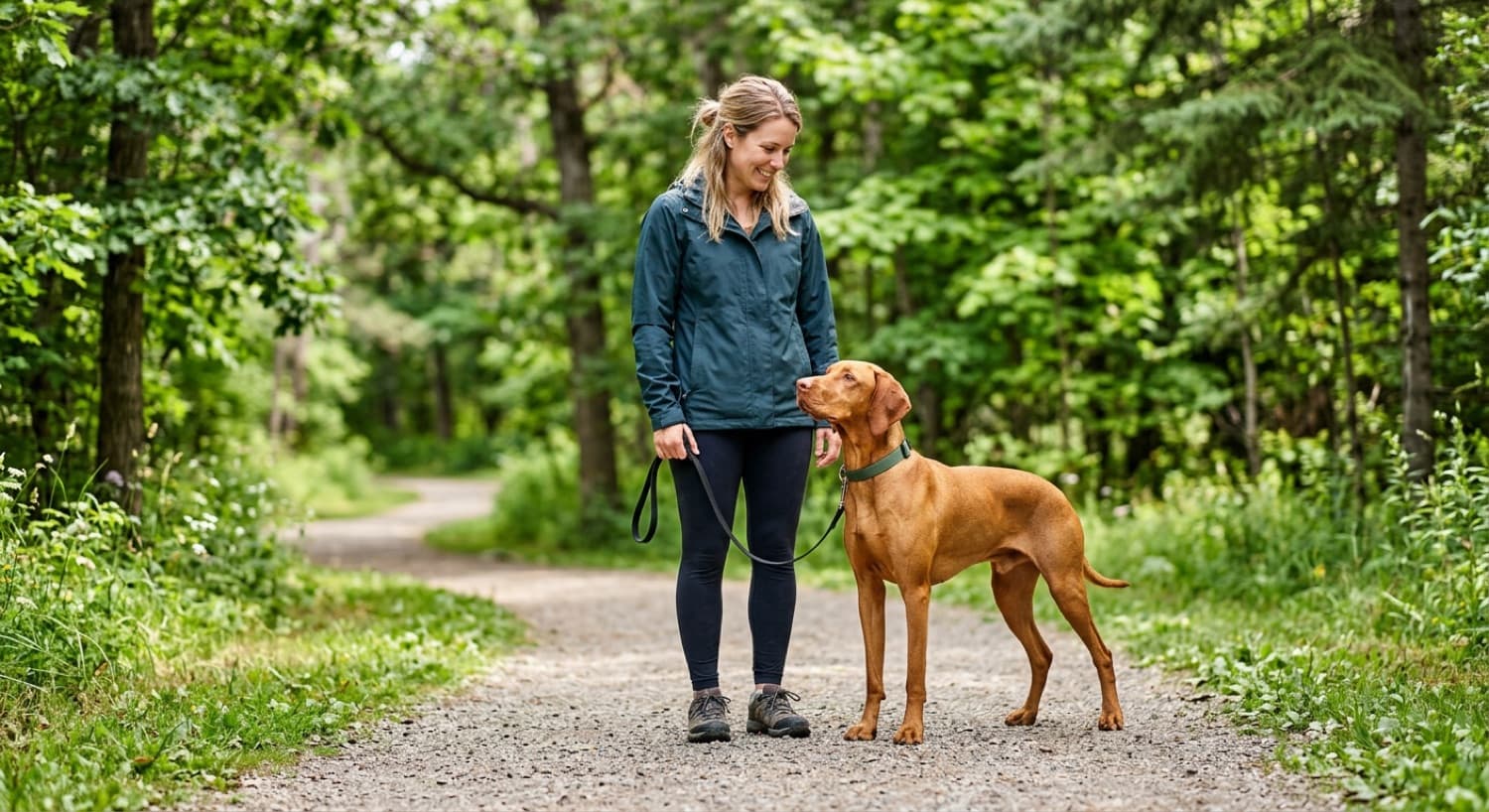
What Edmonton rescues evaluate in a Vizsla application
Vizsla applications are screened for time-alone tolerance, exercise capacity, and household stability. Edmonton rescues are not worried about whether you love Vizslas; everyone does. They are worried about whether the household can sustain 90 minutes of daily exercise, time-with-dog most of the day, force-free training through adolescence, and a 12-to-15-year commitment that survives life changes. The screening typically covers:
- Time-alone plan. The rescue will ask specifically how many hours the dog will be alone on a typical weekday, what the schedule looks like, and what backup (daycare, dogwalker, family member) covers longer absences. Vague answers get flagged.
- Daily exercise routine. Specific descriptions of how 90 minutes plus mental work get achieved year-round. Edmonton winter contingency matters.
- Housing type and noise tolerance. Detached homes preferred; condos require neighbour buy-in and a separation-anxiety prevention plan documented in writing.
- Fenced yard quality. Six-foot solid fence is the gold standard for the breed. Three-foot picket fences flagged. Specifics about gate latches, perimeter integrity, and any known weak spots help.
- Training approach. The rescue will ask about your training philosophy. Force-free or positive-reinforcement-only approaches are strongly preferred. Mention of e-collars, prong collars, or aversive methods often disqualifies for this breed.
- Existing pets. Most Vizslas do well with other dogs. Cat and small-pet compatibility is dog-specific and tested in foster care. Be honest about your other animals.
- Household consensus. Everyone in the household is interviewed, including kids. The rescue is looking for shared commitment, not one person pulling the others along.
- Pet insurance commitment. The rescue will ask whether you have or plan to enrol pet insurance. Recommended for this breed because of orthopaedic, thyroid, and behavioural workup costs over a long lifespan.
Specificity wins applications. “I work from home four days a week with one daycare day for socialisation, run with the dog 45 minutes every morning before work and do scent work or training in the evening, have a six-foot board fence with a buried perimeter, use Karen Pryor Academy graduate trainers for force-free classes, and have already chosen Trupanion for insurance” is much stronger than “we have a yard and love Vizslas.” The rescue is trying to determine whether the placement will survive the first life change. A specific plan signals a realistic commitment.
How to apply prepared and apply fast
Edmonton Vizsla adoptions move fast for purebreds because inventory is rare and the breed has a devoted Canadian fan base. Most placements go to applicants who applied within hours of the listing going live, with prepared application materials. The typical sequence:
- Set up listing alerts on every Edmonton rescue. Register on EHS, Zoe's, AARCS, AHHRB, GEARS, Hope Lives Here, and SCARS. Alerts catch listings the day they appear.
- Get application materials ready in advance. Vet contact for any existing pets, landlord or condo board approval in writing if you rent, fence photographs and dimensions ready to attach, pet insurance research done, two non-family references with current phone numbers, and a written summary of your weekly schedule, time-alone plan, exercise routine, and winter contingency.
- Find a specific dog you want to apply for. Read the entire foster write-up: time-alone tolerance, exercise capacity, kid tolerance, dog tolerance, cat tolerance, known medical history, training history. Watch any available videos.
- Submit the application same day. Expect 30 to 45 minutes for a thorough Vizsla application. Same-day applications are reviewed first; for a purebred Vizsla, applying within 24 hours of listing is often the difference between consideration and the dog being placed.
- Phone screen with the foster or shelter. The conversation that decides most placements. Be honest about your schedule, exercise capacity, training experience, and housing situation. The foster has lived with the dog and will tell you what they see.
- Meet-and-greet. At the foster's home, the shelter, or a neutral location. Bring everyone in the household, including kids and other dogs if relevant.
- Reference and home check. Most rescues call two references. Smaller foster-based rescues often do a home visit before approval, with attention to fence quality, time-alone setup, and household consensus.
- Adoption contract and fee. Standard contracts specify return-to-rescue terms if you cannot keep the dog. Read it before signing.
Realistic timeline from application to dog-in-your-house is one to four weeks for a Vizsla placement, longer if you are open to mixes and waiting for a specific match. If you are not selected for a specific dog, ask the rescue to keep your application on file for similar dogs.
The first 30 days with an Edmonton rescue Vizsla
The 3-3-3 decompression principle (three days to start settling, three weeks to learn the routine, three months to fully bond) applies to Vizslas, with a velcro-specific twist: the bond usually forms faster than three months, but it is a fragile early bond that needs gradual independence-building from day one. Practical week-one priorities for an Edmonton rescue Vizsla:
- Baseline orthopaedic exam at an Edmonton vet. Hip and elbow palpation, gait observation, body condition score. A baseline lets future vets compare if the dog later presents with joint symptoms.
- Full thyroid panel. Hypothyroidism is common in the breed and often misread as low energy or weight gain. A baseline panel during the first vet visit is worth requesting.
- Pet insurance enrolment in the first week. Enrol before any pre-existing conditions appear in vet records.
- License the dog with the City of Edmonton. Required for any dog over six months under Animal Care and Control Bylaw 21244. Tags should be visible on the collar from day one. Details are on the City of Edmonton dogs page.
- Microchip registration verification. Confirm the chip is registered to your contact information. Most rescues handle the transfer; verify directly with the chip registry.
- Begin gradual independence training from day one. Counter-intuitively, the most important week-one habit is teaching the dog that brief separations are safe and normal. Five-minute departures, then ten, then twenty, building up over the first month. The single biggest predictor of long-term Vizsla success is whether week one introduces gradual alone-time.
- Establish a structured exercise routine. Morning run or trail walk, evening play or training session. Predictability speeds settling and prevents the boredom that triggers destruction.
- Buy winter gear before the first cold day if adopting in autumn or winter. Insulated coat, booties, a treadmill if you have space and budget. The thin single coat needs gear before the temperature drops.
- Check fence integrity before the first yard release. Walk the perimeter looking for gaps, low spots, gate latch issues. Vizslas test fences quickly.
- Crate or safe-room familiarisation. Even Vizslas who do not need crating long-term benefit from a positive safe space for grooming, vet recovery, and short absences. Build the association in week one with high-value treats and short positive experiences.
- Same routes, same routine for the first two weeks. Predictability speeds settling. Save dog parks, new friends, and travel for after week three.
- Force-free training class enrolment by week four. Even if the dog is well-trained, a class with a CCPDT-certified trainer establishes the household-trainer relationship and gives you a behaviourist contact before any adolescent reactivity appears.
By week three the routine is established. By month three the bond is solid and the household has adapted to velcro temperament, 90-minute daily exercise, and gradual independence. Use the first 90 days as a non-decision window. Most early concerns resolve with consistency and time. Detailed decompression guidance is in the first week rescue dog guide.
Frequently asked questions
Where can I adopt a Vizsla near me in Edmonton?
Vizslas and Vizsla mixes appear in Edmonton-area rescue at low-to-moderate volume, less common than Labradors or Golden Retrievers but more common than Wirehaired Vizslas or other rare Hungarian pointing breeds. The Edmonton Humane Society lists Vizslas occasionally, usually tied to owner work-schedule change or separation anxiety surrender. Zoe's Animal Rescue takes Vizslas through their foster network when they surface from rural Alberta or Edmonton-area surrender pipelines. AARCS, headquartered in Calgary, tags Edmonton-foster Vizslas so they appear on Edmonton listings. AHHRB lists Vizsla-cross dogs under generic Mixed Breed labels, so check photos rather than breed filters. GEARS and Hope Lives Here see Vizslas rarely. Vizsla mixes (Vizslador, Vizsla-Pointer, Vizsla-Weimaraner) outnumber purebred Vizslas in Edmonton intake records. Set up listing alerts and plan a 4-to-8-month wait for the right match.
Why are Vizslas surrendered in Edmonton?
Five patterns drive almost every Edmonton Vizsla surrender. Separation anxiety where the household work schedule changed (return-to-office, custody change, new baby reducing dog time), the dog began destroying the home or self-injuring, and the family could not manage the behavioural workload. Exercise mismatch where the original household underestimated 90 minutes of real daily exercise plus mental work and the dog became reactive, destructive, or anxious. Adult-onset allergy diagnosis in a household member where the short single coat shed enough to trigger respiratory symptoms. Owner death or move to assisted living where the senior owner had paired well with the velcro temperament. Adolescent reactivity at 10 to 24 months where the household was not prepared for a hunting breed working through teenage frustration tolerance. The dogs themselves are typically affectionate and biddable. The surrender pattern reflects the household's exercise capacity and time-alone tolerance, not the dog.
How much does adopting a Vizsla cost in Edmonton?
Edmonton rescue adoption fees for Vizslas and Vizsla mixes typically run $400 to $700. Senior Vizslas (around nine years and up) often have reduced fees of $300 to $500. The fee covers spay or neuter surgery, core vaccinations (DAPP and rabies), microchip registration under City of Edmonton Animal Care and Control Bylaw 21244, deworming, parasite treatment, and a basic vet workup. Vizslas often arrive with a recent thyroid panel and a hip and elbow palpation note in the medical file. Beyond the adoption fee, plan a first-month vet baseline of $300 to $500 covering a thorough orthopaedic exam, a thyroid screen, and pet insurance enrolment. Ongoing annual cost averages $2,500 to $4,000 with food, routine vet care, winter gear (insulated coat plus booties are mandatory for the thin-coated breed), and insurance. Compare to a Vizsla puppy from a CKC breeder at $2,000 to $4,000, with none of the vet work the rescue dog already has.
What is the difference between a Vizsla and a Wirehaired Vizsla?
They are recognised by the Canadian Kennel Club as two separate breeds. The Vizsla (sometimes called the Smooth Vizsla) has a short single coat, slimmer frame, and the golden rust colour adopters typically recognise. The Wirehaired Vizsla has a dense wiry double coat, slightly heavier build, a pronounced beard and eyebrows, and was developed in 1930s Hungary by crossing Vizslas with German Wirehaired Pointers for better cold tolerance and brush work. Wirehaired Vizslas are dramatically rarer in Canada (and in rescue) than smooth Vizslas. If you see a Wirehaired Vizsla in Edmonton rescue, it will likely be listed under generic descriptions like 'shaggy pointer mix' rather than the breed name. The temperament profile is similar across both breeds: high-energy, velcro, hunting-driven, biddable. Cold tolerance is notably better in Wirehaireds but neither breed handles Edmonton winter without gear.
Is a Vizsla a good apartment or condo dog in Edmonton?
Usually no, and Edmonton rescues are usually upfront about it. The body size (45 to 65 lb) fits apartments physically, but two factors typically disqualify condo placements. First, separation anxiety is the breed-defining behavioural pattern. A Vizsla alone in a condo for a full workday will vocalise (which carries through shared walls), pace, destroy furniture or door frames, or self-injure. Second, exercise capacity is hard to meet from a condo without a dedicated routine. The breed needs 90 minutes of real daily exercise plus mental work, year-round, including Edmonton winters when the thin-coated body cannot stay outside long. Apartments and condos work only with a committed adopter who works from home or has a dog-friendly workplace, has buy-in from neighbours about occasional vocalisation, and has a winter exercise plan that does not depend on outdoor time. Detached homes with secure yards are the typical placement.
How do Vizslas handle Edmonton winters?
Poorly, without gear and planning. A Vizsla has a short single coat (just one layer, no insulating undercoat) and almost no subcutaneous body fat. They are genuinely thin-coated dogs, more comparable to a Whippet than a Lab. Edmonton winter is rough on them. An insulated winter coat is non-negotiable below -10C, booties protect against salted sidewalks and ice cuts, and walk duration drops to 20 to 30 minutes in deep cold. Wind chill below -25C usually means indoor exercise only: scent work, treadmill if conditioned, structured indoor games, daycare. The flip side is that a Vizsla is one of the best-built endurance running dogs in any rescue category, and the Terwillegar, Mill Creek Ravine, Whitemud, and river-valley trail network is a perfect summer fit. Edmonton households need to plan a 12-month exercise routine, not just a summer one.
What are the main Vizsla health concerns?
Hip dysplasia and elbow dysplasia are the main orthopaedic concerns; OFA or PennHIP radiographs are not always in the rescue file but worth asking about. Hypothyroidism is common and often misread as low energy or weight gain (a full thyroid panel during the first vet visit is worth requesting). Epilepsy and idiopathic seizure disorder appear in the breed at a moderate rate. Progressive retinal atrophy and entropion are documented. Sebaceous adenitis (a skin condition) is breed-noted. Vizsla-specific inflammatory polymyopathy is rare but worth knowing about. Cancer load is moderate, with lymphoma and hemangiosarcoma the most common adult-onset diagnoses. Lifespan averages 12 to 15 years, which is good for a sporting breed of this size. The separate Vizsla health issues guide covers each condition in depth with Edmonton specialty referral paths.
How long do Vizslas wait in Edmonton rescue?
Purebred Vizslas are often spoken for within days of listing because the breed has a small but devoted Canadian fan base that watches Edmonton listings closely. Young adult purebred Vizslas (two to four years) place within one week, often through pre-existing applications on file. Senior Vizslas (nine years and up) wait two to six weeks despite often being the easiest to live with. Vizslas with flagged behavioural concerns (active separation anxiety, severe reactivity, bite history) wait the longest and need experienced-Vizsla homes. Vizsla mixes (Vizslador, Vizsla-Pointer, Vizsla-Weimaraner) appear more frequently and wait two to four weeks on average. Set up alerts on every Edmonton rescue, have application materials ready in advance, and apply the day a listing appears.
Are Vizslas good with kids and other dogs?
Generally yes on both, with breed-specific caveats. Vizslas are typically affectionate and gentle with respectful children, and the velcro temperament often expresses as a dog who shadows household kids constantly. The caveat is energy: a young adult Vizsla can knock over a small child by accident, and toddler households often need supervised interaction in the first months. With other dogs, Vizslas are generally social and benefit from a household with a second dog who can share play and reduce time-alone anxiety. The caveat is that intact or under-socialised Vizslas can be reactive on-leash, especially during adolescence. With cats and small pets, Vizslas are pointing dogs by breeding: prey drive ranges from mild to strong, and rescues will test cat tolerance during foster care. Always ask the foster about specific kid, dog, and cat tolerance noted during care.
Should I adopt a Vizsla puppy or an adult?
For most Edmonton households, an adult Vizsla is dramatically easier. Vizsla puppy adolescence runs roughly six to twenty-four months and includes house-training, leash-reactivity learning, mouthing and nipping (the breed mouths hands when overstimulated), the chewing-through-household phase, and the velcro-but-untrained version of separation anxiety. An adult Vizsla has settled temperament, established household manners, documented medical history, and a known time-alone tolerance. Senior Vizslas (nine years and up) are often the most affectionate companions available with the trade-off that orthopaedic and dental work may be more immediate. If you specifically want a puppy and have time, energy, and budget for two years of intense training plus separation-anxiety prevention from week one, a Vizsla puppy can work. For most adopters, a four-to-seven-year-old rescue Vizsla is the sweet spot.
Is there an Alberta-based Vizsla rescue?
As of writing we cannot verify a current Alberta-based Vizsla-specific rescue with active adoptable listings. The Vizsla Club of America runs a rescue coordinator network (VCA-R) that occasionally helps coordinate Canadian placements through breed-club referral channels. The Vizsla Society of Canada maintains breeder and rescue contact information through its regional clubs. Most Edmonton Vizsla adopters find their dog through the general Edmonton rescues (EHS, Zoe's Animal Rescue, AARCS Edmonton fosters, AHHRB, GEARS, Hope Lives Here, SCARS). If you see a Vizsla-specific rescue name on social media, verify it through the Canada Revenue Agency charitable registry, a real Alberta address, public-facing vet references, and a current adoptable-dog list before sending money or filling out an application. Vizsla scammers exist; verify everything.
Related Edmonton Vizsla guides
Edmonton Adoptable Dogs
Current Edmonton-area Vizsla, Vizsla-mix, and sporting-breed listings from EHS, Zoe's, AARCS Edmonton fosters, AHHRB, GEARS, Hope Lives Here, and SCARS.
Vizsla Health Issues: Epilepsy, Skin, Muscle
Vizsla health issues to plan for: epilepsy, sebaceous adenitis and allergies, an immune-related muscle disease that affects swallowing, hips and bloat.
Vizsla Separation Anxiety Edmonton
The breed-defining behavioural challenge: prevention from week one, gradual independence training, when to call a behaviourist, and the Edmonton work-from-home and daycare options that keep the velcro temperament from becoming a clinical disorder.
Vizsla Exercise Needs Edmonton
The 90-minute daily reality: river-valley trail routines, off-leash options in fenced spaces, indoor exercise for deep winter, scent work and structured games, and the year-round programming that prevents destructive boredom.
Find your Edmonton rescue Vizsla
Browse current Edmonton-area Vizsla and Vizsla-mix listings. Inventory rotates slowly; alerts and same-day applications win.
Browse All Edmonton Dogs →New dog? Start with these care guides
Everything a new adopter needs to set up a safe, happy home.