The short answer
An Aussie needs at least two hours of real daily physical activity PLUS significant mental stimulation, and the mental work matters as much as the physical, a fifteen-minute training session can satisfy an Aussie more than an hour of fetch. Physical exercise alone does not tire the breed; it can even wind a high-drive dog up. Lean on dog sports (agility, herding, flyball, disc), training, scent work, and puzzles. Channel the herding instinct (heel-nipping, chasing) into an appropriate outlet rather than suppressing it. Vancouver's trails, seawall, off-leash areas, and sports clubs make it doable, if you actually go, most days. Under-met needs are the root of nearly every Aussie behaviour problem.
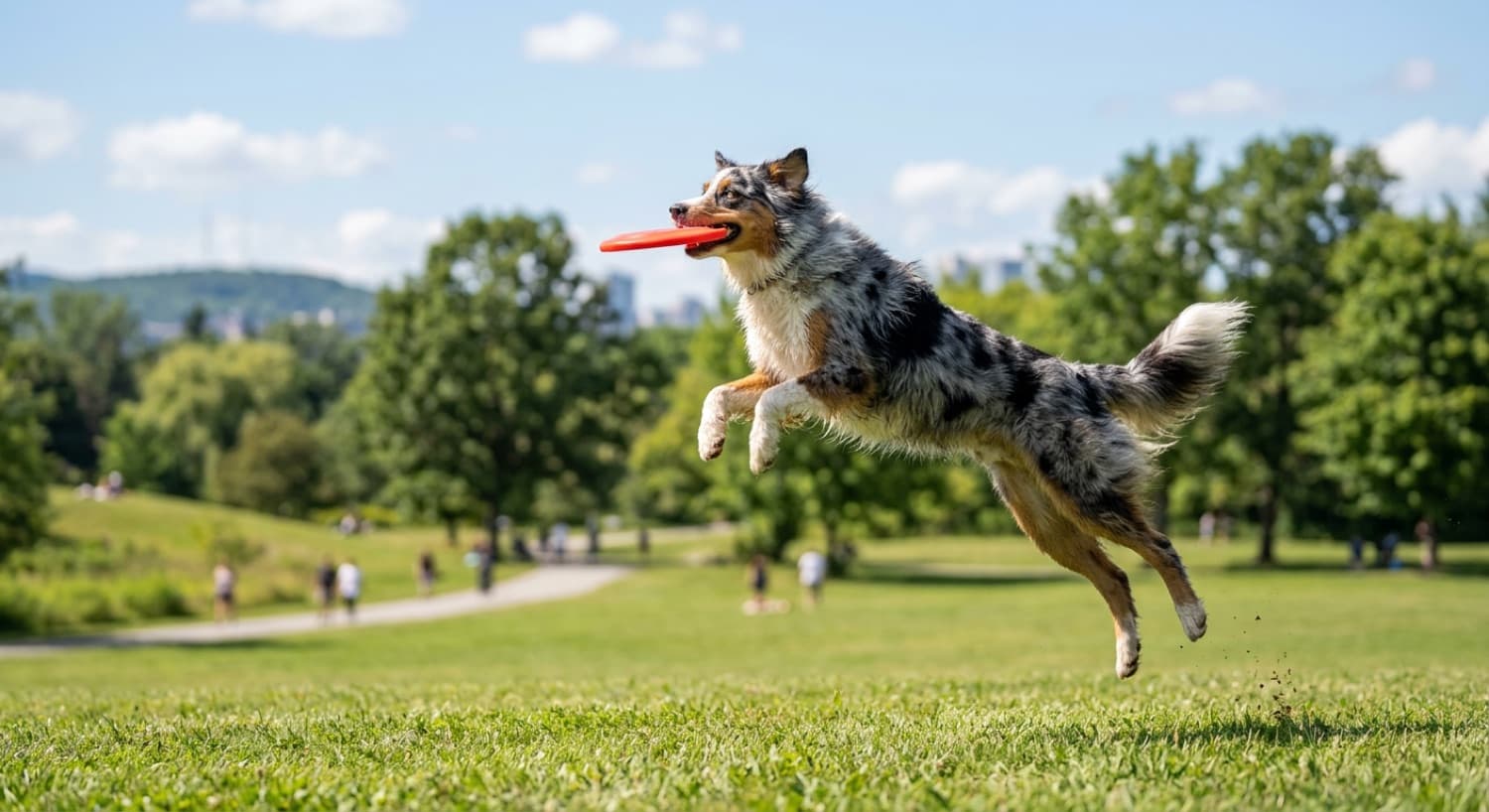
How much exercise does an Australian Shepherd need each day?
At least two hours of real physical activity a day, plus significant mental stimulation, and many want more. Good physical exercise includes brisk walking, running, off-leash running in safe areas, hiking, fetch, and swimming. But the key insight that surprises owners: physical exercise alone does not tire an Aussie, endless ball-chasing can wind a high-drive dog up further and even create obsessive behaviour. The dogs that are genuinely calm at home get a balance of physical exercise and mental work. So aim for a couple of hours of varied physical activity combined with training, problem-solving, and enrichment, not just running the dog into the ground. In Vancouver, the North Shore trails, Pacific Spirit Park, and the many off-leash areas make the physical side very doable, if you actually go, most days.
Why does mental stimulation matter as much as physical exercise?
Because the Aussie was bred to think and problem-solve while herding, not just to run, so its working brain needs a job as much as its body needs exercise. An Aussie that gets a long run but no mental engagement is often still restless and prone to inventing its own unwelcome jobs: obsessive behaviours, destructiveness, barking, herding the household, or anxiety. Mental work genuinely tires these dogs in a way physical exercise alone does not, a fifteen-minute training session or a challenging puzzle can leave an Aussie more satisfied than an hour of fetch. This is the single most useful thing for a new Aussie owner to internalize: you are giving a brilliant working mind something to do. Owners who provide both have calm, happy, well-behaved Aussies; owners who provide only physical exercise often have wired, difficult dogs and cannot understand why.
What are the best activities and dog sports for an Australian Shepherd?
Aussies excel at and love a wide range of activities that engage both body and brain. Dog sports are ideal: agility, herding (their original job, deeply satisfying), flyball, disc/frisbee, rally, obedience, and dock diving all suit the breed, and the Lower Mainland has clubs and classes for most. Beyond formal sports, Aussies thrive on trick training, advanced obedience, scent work and nose games, treibball (herding-style ball work), and interactive puzzle toys. Even simple daily enrichment, teaching new tricks, hiding treats to find, rotating puzzles, and practising skills on walks, adds up. The best approach combines a physical outlet (a hike or run) with a mental outlet (training or a sport) most days. For an active Vancouver owner, an Aussie is a wonderful partner for exactly this kind of engaged, activity-rich life.
What happens if an Aussie does not get enough exercise and stimulation?
An under-exercised, under-stimulated Aussie is an unhappy, difficult dog, and it is the root of most behaviour problems that land the breed in rescue. Without adequate physical and mental outlets, its energy and intelligence have nowhere to go, and it comes out as destructiveness, obsessive behaviours (shadow-chasing, spinning, light-chasing, which can become genuine compulsions), excessive barking, restlessness and inability to settle, herding and nipping at people or pets, and anxiety. A bored Aussie is also harder to train because it cannot focus. The frustrating part is that these are almost always symptoms of unmet needs rather than a “bad” dog, and they typically improve dramatically once the dog gets adequate exercise and, crucially, mental work. This is exactly why matching the breed to an active, engaged lifestyle is so important.
How do I manage the herding instinct in an Australian Shepherd?
The herding instinct is hardwired, so you manage and channel it rather than eliminate it. It can show up as nipping at the heels of running children, chasing bikes, joggers, cars, or pets, and trying to gather or control moving things, all normal herding behaviours that need shaping. Give the instinct an appropriate outlet through herding sports, treibball, or fetch-based games; teach a solid recall and impulse-control cues; interrupt and redirect heel-nipping or chasing to a toy or a trained behaviour; supervise around running children and fast-moving things until the dog is reliable; and never let chasing bikes or cars become a rehearsed habit. Positive-reinforcement training works well with this smart, eager breed. With a proper outlet and consistent training, the herding instinct becomes a manageable quirk, and channelled into a sport, one of the most rewarding things about the breed.
Can I meet an Aussie's exercise needs in a Vancouver condo?
Possible but demanding, and it takes real commitment, so be honest with yourself. An Aussie can live in a condo if, and only if, you genuinely meet its substantial physical and mental needs every day, which for an apartment dweller means the exercise and enrichment happen entirely outside the home: a couple of hours of real daily activity, dog sports or training, and structured mental work, plus likely a dog walker or daycare on workdays, since a high-drive dog left alone and unexercised in a small space is a recipe for destruction and distress. Vancouver's trails, seawall, beaches, off-leash areas, and sports clubs make it doable for a dedicated owner, but it is much harder than in a home with a yard, and unworkable for someone who cannot commit the daily time. If your schedule genuinely supports a couple of active, engaged hours a day, an Aussie can thrive in a condo; if not, a lower-energy breed is kinder for both of you.
Our Vancouver off-leash parks guide covers the best places to run and work a high-drive dog across the Lower Mainland.
Browse adoptable Australian Shepherds in Vancouver
If you can offer the daily exercise and mental work this brilliant breed needs, an Aussie is an extraordinary partner. Browse Lower Mainland rescues, each with a foster's notes on energy and drive, so you can match the dog to your life. Refreshed regularly.
See Available Australian Shepherds →Frequently Asked Questions
How much exercise do they need daily?
At least two hours of real physical activity plus significant mental work, and often more. A walk is nowhere near enough. Balance physical exercise with training and enrichment, because running alone does not tire the breed.
Why does mental work matter so much?
The breed was bred to think while herding, so the brain needs a job. Mental work tires an Aussie in a way physical exercise alone cannot, a short training session can beat an hour of fetch. Owners who provide both have calm dogs; those who provide only exercise often have wired ones.
Best sports and activities?
Agility, herding, flyball, disc, rally, obedience, and dock diving all suit the breed, and the Lower Mainland has clubs for most. Plus trick training, scent work, treibball, and puzzle toys. Combine a physical and a mental outlet most days.
What if needs go unmet?
Destructiveness, obsessive behaviours (spinning, light-chasing), barking, restlessness, herding and nipping, and anxiety, the root of most Aussie behaviour problems. Almost always unmet needs, not a “bad” dog, and they improve once exercise and mental work are provided.
How do I manage the herding instinct?
Channel it, do not suppress it. Give an outlet (herding sports, treibball, fetch), teach recall and impulse control, redirect heel-nipping and chasing, and supervise around running kids and bikes. Positive training works well.
Can they live in a condo?
Possible but demanding. Only if you meet the full physical and mental needs outside the home every day, likely with a walker or daycare on workdays. Vancouver's trails and clubs help, but it is much harder than a home with a yard.
Related Vancouver guides
Australian Shepherd Adoption in Vancouver
Where to adopt in BC, the energy reality, real costs, and who the breed truly suits.
Australian Shepherd Health Issues
MDR1 drug sensitivity, hips, eyes, epilepsy, and the double-merle risk.
Adoptable Australian Shepherds in Vancouver
All currently available Aussies and Aussie mixes with foster notes on energy. Updates regularly.
Vancouver Off-Leash Parks
Where a high-drive herding dog can run and work across the Lower Mainland.
New dog? Start with these care guides
Everything a new adopter needs to set up a safe, happy home.