The short answer
A Border Collie needs at least two hours of daily activity, but physical exercise alone will not settle one. The breed's intense, work-bred brain needs real mental stimulation (training, puzzles, scentwork, dog sports) every day, and mental work tires a Border Collie far more efficiently than distance. Channel the herding instinct into legitimate outlets rather than letting it fixate on cars or kids, and deliberately teach an off switch, because this breed can struggle to settle. Under-stimulation is the number one reason Border Collies are surrendered. Meet the body and the brain and you have one of the most rewarding dogs there is. Vancouver's parks and dog-sport scene make it very doable.
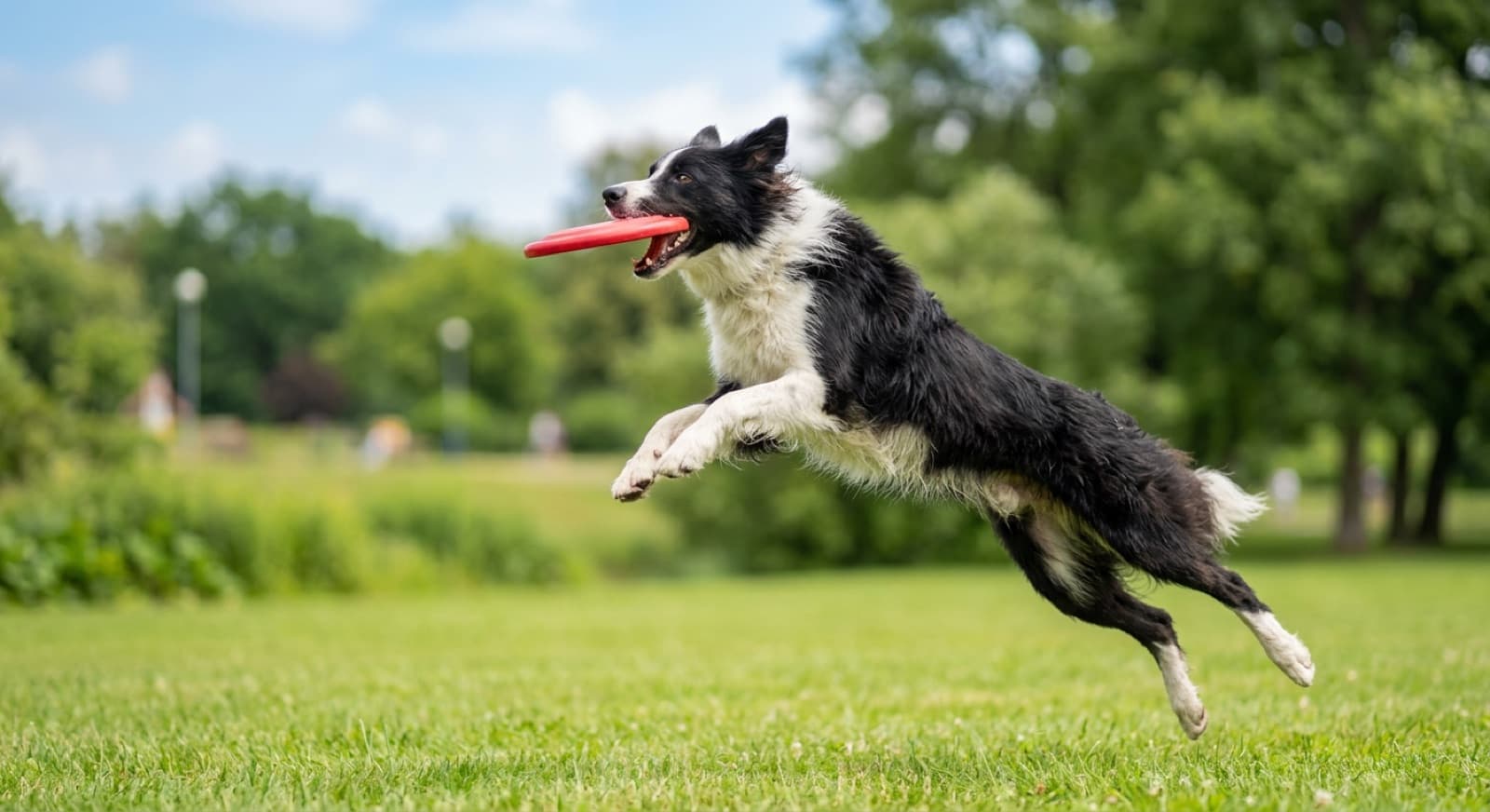
Physical exercise: how much is enough?
Plan for at least two hours of activity a day for an adult Border Collie: brisk walks, off-leash running, fetch, hiking, and dog sports. This is a genuine athlete bred to run and work all day, and it has the stamina to match. But there is a catch that surprises new owners.
You cannot simply run a Border Collie into calm. A dog you only exercise physically gets fitter and fitter and needs more and more, while its brain stays unworked and frustrated. The classic mistake is hours of repetitive ball-chasing, which can actually build an over-aroused, obsessive dog rather than a settled one. Physical exercise is essential, but it is the floor, not the whole house. Pair it with the mental work below, and mix in varied activity (trails, swimming, sniffy walks) rather than only high-intensity fetch. The AKC Border Collie breed profile rates the breed at the very top for energy and trainability, which is exactly why the mental side matters as much as the miles.
Mental stimulation: the real secret
Border Collies were bred for hours of intense, independent problem-solving, so they have one of the busiest brains of any breed. A Border Collie without a job will invent one, and the jobs they invent (chasing shadows or lights, herding the kids, patrolling, dismantling the house) are exactly what gets them surrendered. Mental work is core daily care, not an extra.
The good news: mental work tires a Border Collie far more efficiently than distance. Fifteen minutes of training or a challenging puzzle can settle a dog that an hour of fetch only revved up. Build a daily enrichment habit:
- Training sessions. Border Collies love to learn and can master an enormous number of cues and tricks. Short, frequent sessions are ideal.
- Puzzle feeders and snuffle mats instead of a plain bowl, so meals become a brain game.
- Scentwork and “find it” games that engage the nose and mind, brilliant for rainy Vancouver days indoors.
- Shaping games where the dog works out what earns a reward, and named-object or tidy-up tasks.
Rotate activities to keep them novel. The goal is to give that intense brain legitimate daily work, which is what turns a potentially frantic Border Collie into a fulfilled, settled one.
Channelling the herding instinct
The herding drive is hardwired, not misbehaviour, and it shows up as fixating on and chasing movement, sometimes with heel-nipping. Left unmanaged it can latch onto bikes, cars, joggers, other dogs, or children. The answer is to channel it, not fight it.
Give the drive a legitimate outlet (fetch with rules, flyball, treibball, or real herding lessons where available), teach a rock-solid recall and a reliable “leave it,” and manage the environment so the dog never rehearses chasing traffic or nipping people. When the instinct fires, redirect to a toy or a task. Done well, the herding brain becomes the breed's single greatest asset, the thing that makes a Border Collie so trainable and so good at sports, rather than a liability.
Dog sports and Vancouver outlets
Dog sports are almost tailor-made for the breed, and Border Collies excel at nearly all of them. Agility is the classic fit; the breed dominates it. Flyball, disc (frisbee), treibball, obedience and rally, scentwork, and canicross all deliver the mix of physical and mental work a Border Collie craves, and Metro Vancouver has an active dog-sport community with clubs and classes for most of these. You do not need to compete; even training for a sport at home or in a class gives your dog a job and deepens your bond.
For everyday exercise, Vancouver is excellent: Pacific Spirit Regional Park, the seawall, the North Shore trails, and the city's off-leash areas all give a Border Collie room to run, and many love swimming at the local lakes and beaches. On rainy days, lean on the indoor mental work, training, puzzles, scent games, and trick sessions, so a wet week never becomes a bored, destructive one.
Teaching an off switch
Just as important as exercising a Border Collie is teaching it to switch off and rest. Some Border Collies struggle to relax and can tip into obsessive, never-settle patterns if every interaction is high-arousal. A dog that can switch on for work and off for calm is a balanced, happy Border Collie.
Actively reward settling on a mat or bed, build up the duration of calm, and end play and training with a deliberate wind-down rather than stopping at peak excitement. Offer calm enrichment like a stuffed food toy to work on quietly. And resist the urge to make every day a relentless adrenaline session, which can wind a sensitive Border Collie up rather than tire it. The combination of a real daily job and genuine downtime is the formula that lets this brilliant breed thrive. If a newly adopted Border Collie is struggling to settle, our first-week guide helps with the decompression period.
Ready for a Border Collie?
If you can commit to the body-and-brain workout this breed needs, few dogs give back more. Browse adoptable Border Collies and BC mixes from Lower Mainland rescues, and ask about each dog's energy level. Refreshed regularly.
See Available Border Collies →Frequently Asked Questions
How much exercise does a Border Collie need?
A lot, and more than most people expect: plan for at least two hours of activity a day for an adult Border Collie, and understand that physical exercise alone is only half the job. The bigger secret of the breed is that a Border Collie you only run into the ground gets fitter and needs even more, while its busy brain stays under-worked. So the real answer is substantial daily physical exercise (walks, off-leash runs, fetch, dog sports) combined with real mental stimulation (training, problem-solving, scentwork, structured games). Meet both and you have a calm, brilliant companion. Meet only the physical side and you often get a fit, frustrated, destructive dog. Plan the time before you adopt, not after.
Why is mental stimulation so important for a Border Collie?
Border Collies were bred for hours of intense, independent problem-solving while herding livestock, so they have one of the busiest, most work-oriented brains of any breed. A Border Collie without a job will invent one, and the jobs they invent (obsessively chasing shadows or lights, herding children or bikes, dismantling the house, patrolling the fence, barking) are exactly the behaviours that get them surrendered. Mental work tires a Border Collie far more efficiently than distance does: fifteen minutes of training or a puzzle can settle a dog that an hour of fetch only revved up. Think of enrichment and training not as extras but as core daily care, as essential as food and walks.
What mental enrichment works best for a Border Collie?
Variety and problem-solving. Great options include: daily training sessions (Border Collies love learning and can master huge numbers of cues and tricks); puzzle feeders and snuffle mats instead of a plain bowl; scentwork and "find it" games that engage the nose and brain; teaching named objects and complex trick chains; shaping games where the dog figures out what earns a reward; and structured tasks like tidying toys into a box. Rotate activities so it stays novel. Short, frequent sessions beat one long one. The goal is to give that intense brain legitimate work every day, which is what turns a potentially frantic Border Collie into a settled, fulfilled one.
How do I manage a Border Collie's herding instinct?
Channel it, do not fight it, because it is hardwired, not misbehaviour. The instinct shows up as chasing and fixating on movement, and sometimes nipping at heels, which can be aimed at bikes, cars, joggers, other dogs, or children. Manage it by giving the drive a legitimate outlet (fetch with rules, flyball, treibball, or actual herding lessons where available), teaching a rock-solid recall and a "leave it," and managing the environment so the dog is not rehearsing the behaviour on cars or kids. Never let a Border Collie practise chasing traffic or nipping people; redirect to a toy or a task instead. With an outlet and training, the herding brain becomes the breed's greatest asset rather than a liability.
What dog sports suit a Border Collie?
Almost all of them, and the breed excels at most. Agility is the classic fit and Border Collies dominate it. Flyball, disc (frisbee), treibball (herding balls), obedience and rally, scentwork, canicross (running with your dog), and, where available, actual herding all give a Border Collie the combination of physical and mental work it craves. Metro Vancouver has an active dog-sport community with clubs and classes for most of these. You do not have to compete; even training for a sport at home or in a class gives your dog a job and deepens your bond. A Border Collie with a sport is very often a Border Collie that has found its purpose.
How do I teach a Border Collie an off switch?
Deliberately, because it does not always come naturally. Some Border Collies struggle to relax and can tip into obsessive, never-settle patterns if every interaction is high-arousal, so teaching calm is as important as exercising the body. Reward the dog for settling on a mat or bed, build up the duration of calm, and end play and training sessions with a wind-down rather than stopping at peak excitement. Provide calm enrichment too, like a stuffed food toy to work on quietly. Avoid making every single day a relentless adrenaline session, which can actually wind a sensitive Border Collie up rather than tire it. A dog that can switch on for work and off for rest is a happy, balanced Border Collie.
Why do so many Border Collies end up in rescue?
Almost always for the same reason: their needs were underestimated. People are drawn to the breed's intelligence and beauty, then discover that a bored, under-exercised, under-stimulated Border Collie becomes destructive, anxious, obsessive (shadow and light chasing is a classic sign of an unfulfilled Border Collie), or develops nuisance behaviours, and the dog is surrendered as "too much." The tragedy is that these are almost never bad dogs; they are brilliant dogs whose owners could not meet the commitment. If you go in understanding that a Border Collie needs a genuine daily job for its body and mind, most of these problems never appear, and you get one of the most rewarding dogs there is.
Can a Border Collie be happy in a Vancouver apartment?
It can, but only if you are fully committed to meeting the exercise and enrichment needs outside the home, because the space itself does nothing for this breed. Plenty of Border Collies live happily in apartments with dedicated owners who provide daily off-leash exercise, training, and mental work, and who have taught a solid off switch for downtime indoors. Vancouver helps, with Pacific Spirit Regional Park, the seawall, local off-leash areas, and an active dog-sport scene. On rainy days, indoor training, puzzle feeders, scent games, and trick sessions keep the brain busy. The apartment is fine; the under-commitment is what fails a Border Collie, in any size of home.
Is a Border Collie the right dog for me?
Be honest with yourself, because this is the breed where matching your real lifestyle matters most. A Border Collie is a superb dog for an active person or family who genuinely wants to spend one to two hours or more a day exercising and training a dog, who enjoys teaching and problem-solving with a whip-smart partner, and who ideally has an interest in dog sports or hiking. It is a poor fit for someone wanting a low-maintenance, chilled-out companion, or who is out long hours with no plan for the dog's day. If you want the commitment, few breeds give back more. If you are not sure, a calmer adult Border Collie from a rescue, whose energy is a known quantity, is a much safer bet than a puppy.
The full Border Collie cluster
Border Collie Adoption in Vancouver
Where to adopt, real costs vs breeders, the herding instinct, and the breed reality before you apply.
Border Collie Health Issues
The MDR1 drug-sensitivity gene every owner must know, plus eyes, epilepsy, hips, and insurance.
Adoptable Border Collies in Vancouver
All currently available Border Collies and BC mixes. Updates regularly.
Vancouver Off-Leash Parks
The best places to run a high-energy dog across Metro Vancouver.
New dog? Start with these care guides
Everything a new adopter needs to set up a safe, happy home.