The short answer
Huskies are one of the healthier purebreds overall, typically living 12 to 15 years, with fewer breed-specific genetic conditions than brachycephalic or short-legged breeds. The conditions Vancouver owners should know about: heatstroke (the real wet-coast risk for a heavy double coat in warm, humid summer), eye disease (the breed is widely linked to hereditary eye conditions, including cataracts, PRA, glaucoma, and corneal dystrophy), hip dysplasia (lower-incidence than Labs or Goldens but still worth screening), hypothyroidism (commonly reported, usually managed long-term with vet-prescribed thyroid medication), and zinc-responsive dermatosis (a Husky-linked genetic absorption issue often misdiagnosed as allergies). Every treatment, medication, or dietary plan in this guide is a conversation with your vet, not a self-prescription.
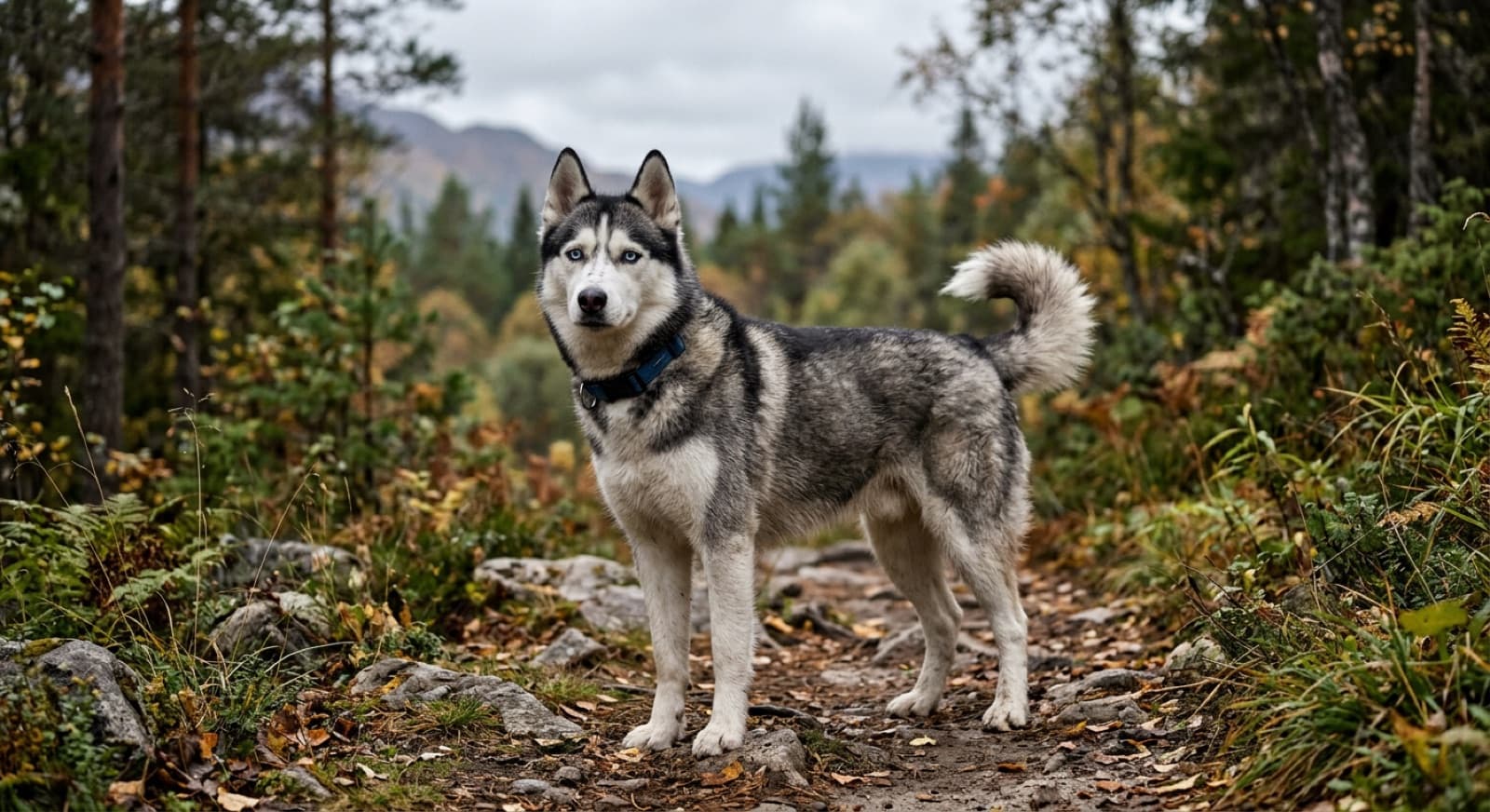
This guide is informational and is not veterinary advice. Diagnosis, medication, and treatment decisions belong with a licensed veterinarian who has examined your dog.
Why heat is the Husky risk Vancouver owners underestimate
Heatstroke is the most dangerous Husky-specific emergency in Vancouver. A Husky carries a dense double coat built for arctic cold, and the mild Pacific reputation hides genuinely warm, humid summer stretches. The AVMA owner reference on heat stress describes how fast a hot day can turn into a medical emergency.
The wet Pacific coast lulls people into thinking heat is a prairie problem. It is not. A double-coated dog struggles when humidity climbs, and a Husky does not shed its undercoat fast enough to keep up with a Lower Mainland heat wave. A short midday walk on a warm July day can push a Husky into trouble that a short-coated dog would shrug off.
Warning signs to discuss with your vet and act on fast:
- Heavy panting that does not settle when the dog rests
- Bright red gums and thick, ropey drooling
- Wobbliness, disorientation, or weakness
- Vomiting or diarrhoea, then collapse in severe cases
Sensible prevention for a Vancouver Husky:
- Walk in the early morning or after dark on warm days, and skip hard exercise midday
- Never leave a Husky in a parked car, even with windows cracked
- Provide constant shade and fresh water; a cooling mat or a shaded kiddie pool helps during heat waves
- Watch sand and pavement temperature on hot afternoons at spots like Spanish Banks or Jericho Beach
If you suspect heatstroke, begin cooling with room-temperature (not ice-cold) water on the belly and paws, and get to a 24-hour emergency vet immediately. Do not wait to see if it passes. This is one of the few Husky problems where minutes matter, so program a 24-hour emergency clinic into your phone before summer. For the broader seasonal picture, including the year-round damp that drives the skin side of Husky care, see our Pacific coast winter dog care guide.
What eye problems do Huskies have?
Huskies are widely associated with breed-related eye disease, which is why the American Kennel Club and the Siberian Husky Club of America both recommend annual eye exams by a board-certified veterinary ophthalmologist.
Husky-associated eye conditions to discuss with your vet:
- Juvenile cataracts, often appearing in the first 6 to 24 months and often hereditary. Surgery, where appropriate, is performed by a Vancouver veterinary ophthalmologist; cost depends on the case
- Progressive Retinal Atrophy (PRA), a gradual retinal degeneration that can lead to blindness in young adults. There is no cure, but DNA testing identifies carriers. Most Huskies adapt well if vision loss develops slowly
- Glaucoma, a sudden increase in eye pressure that is painful and can cause permanent blindness within hours. Emergency signs: red eye, squinting, cloudy cornea. Get to a vet the same day
- Corneal dystrophy, an opacity in the cornea that is often cosmetic but can affect vision
- Uveodermatologic syndrome (an immune condition affecting both the eyes and skin pigmentation)
Vancouver owners can access veterinary ophthalmology through a referral specialty practice; ask your regular vet for the nearest board-certified ophthalmologist. For adult adoptions, ask the rescue whether a recent eye exam has been done, ideally documented through the OFA Eye Certification Registry (formerly CERF). Many Lower Mainland rescues, including BC SPCA and Loved at Last Dog Rescue, can tell you what vet work a dog has already had.
Do Huskies get hip dysplasia?
Yes, but reported less often than in Labs, Goldens, or German Shepherds. The OFA hip dysplasia statistics by breed consistently list the Siberian Husky among lower-incidence large breeds, though responsible breeders still screen.
Symptoms to watch for: a bunny-hopping gait, reluctance to jump or use stairs, hindlimb stiffness after rest, and muscle wasting in the hindquarters. Diagnosis is by X-ray (PennHIP or OFA scoring) read by your vet.
Most Huskies with mild to moderate dysplasia are managed conservatively rather than surgically. A typical plan combines weight management (overweight Huskies do dramatically worse), joint supplements, physiotherapy, and pain control your vet selects. For severe cases, a Vancouver veterinary specialist centre offers surgical options including femoral head ostectomy and total hip replacement. The decision and the costs depend on the case, so have that conversation with the surgical team.
Working sled lines (Alaskan Huskies) tend to have lower hip dysplasia rates than show lines bred mainly for appearance. If you are adopting an adult Husky, ask whether the dog has had its hips assessed.
Are Huskies prone to hypothyroidism?
Hypothyroidism is commonly reported in middle-aged Huskies, and the AVMA owner reference on canine hypothyroidism describes a typical presentation: weight gain on a normal diet, lethargy, skin and coat changes, and cold intolerance.
Symptoms to discuss with your vet: weight gain despite normal feeding, lethargy, dry or flaky skin, hair loss (often symmetrical on the flanks, sometimes a “rat tail” thinning of the tail), cold intolerance (striking in a cold-adapted breed), a slow heart rate, recurrent skin and ear infections, and behavioural changes such as new anxiety or reactivity.
Diagnosis is a full thyroid panel ordered by your Vancouver vet. Treatment is typically a daily oral thyroid hormone replacement; the formulation, dose, and recheck schedule are chosen by your vet, and the medication is usually lifelong. Do not start any thyroid medication, supplement, or natural alternative without veterinary direction.
If your senior Husky is gaining weight and slowing down more than typical ageing would explain, ask your vet for a thyroid panel before assuming it is just old age.
What is zinc-responsive dermatosis in Huskies?
A Husky-specific genetic skin condition where the dog cannot absorb zinc from food efficiently. It causes chronic skin issues that often respond to vet-directed zinc supplementation but recur if treatment stops. It is often misdiagnosed as allergies for years.
Two forms are commonly described:
- Syndrome I, which appears in adult Huskies on a normal diet and is a genetic absorption issue. Typical signs are crusty skin lesions around the eyes, ears, mouth, foot pads, elbows, and knees, with hair loss and depigmentation
- Syndrome II, which appears in puppies on poor-quality, high-cereal diets and typically resolves once the diet improves
Diagnosis is a skin biopsy showing the characteristic pattern, paired with a documented response to supplementation. Both are ordered by your Vancouver vet. Treatment typically involves a vet-prescribed zinc supplement, sometimes alongside omega-3 fatty acids; the specific formulation and dose must be selected by your vet, because zinc dosing for this condition is breed- and case-specific and human pharmacy zinc is not a substitute. Management is usually lifelong.
Zinc-responsive dermatosis is under-recognized in some general practices, so if your Husky has chronic skin issues that have not responded to allergy treatment, ask your Vancouver vet about it by name. The year-round Lower Mainland damp and coastal salt air can worsen Husky skin regardless of the underlying cause, so coat and skin care matters in every season. For the grooming side of that conversation, see our Husky shedding and grooming Vancouver guide.
Are Huskies at risk for bloat (GDV)?
Lower risk than deep-chested giant breeds (Great Danes, Standard Poodles, Weimaraners), but still possible. Bloat (Gastric Dilatation-Volvulus, or GDV) is a true emergency where the stomach fills with gas and twists. It can be fatal within hours without surgery. Husky risk factors: fast eating, exercise within 1 to 2 hours of meals, a single large daily meal, and stress.
Prevention:
- Feed 2 to 3 smaller meals daily instead of one large meal
- Use a slow-feeder bowl to prevent rapid eating
- No hard exercise for 1 to 2 hours after eating
- Watch stress events (boarding, vet visits, a recent rehoming)
Warning signs that need an emergency Vancouver vet immediately: a distended abdomen, unproductive retching, restlessness, drooling, weakness, and collapse. Whether prophylactic gastropexy makes sense for an individual Husky is a vet-by-vet conversation rather than a breed-wide rule. Talk to your vet about your dog's specific risk profile and the right exercise window around meals.
What is the Husky anaesthesia profile?
Huskies are generally considered lower-risk for anaesthesia than brachycephalic breeds (Frenchies, Bulldogs) and the largest guardian breeds. Standard veterinary protocols typically work well, and your Vancouver vet will choose the protocol for your individual dog.
Husky-specific notes:
- Very high pain tolerance, so they may not show pain after surgery as obviously as some breeds. Post-op pain management should be proactive
- Cold-adapted body, so a slight tendency toward hypothermia during long surgeries. Warming protocols matter
- A pre-operative thyroid screen is sensible (asymptomatic hypothyroidism is common)
- An eye exam before surgery helps identify any pre-existing conditions
For major procedures, verify your vet has full Husky surgical experience, and ask for a referral to a Vancouver veterinary specialist centre for orthopedic, eye, or neurological surgery.
Do Huskies need a special diet?
Quality matters more than special-breed formulations. Huskies do best on a protein-forward, moderate-fat, AAFCO-compliant diet. Working sled-dog Huskies need much higher calories, but most Vancouver pet Huskies maintain weight on standard daily feedings.
Look for: AAFCO-compliant adult maintenance diets with a quality animal protein as the first ingredient. Specific brand and formulation choices belong with your vet, especially for puppies, seniors, or any Husky with diagnosed sensitivities. The AKC Siberian Husky breed profile notes the breed reputation for thriving on relatively modest portions; many Vancouver pet Huskies hold weight on standard daily feedings rather than working-line caloric loads.
Avoid: high-cereal or high-corn kibbles (because they can worsen zinc absorption issues), excessive grain fillers, and cheap fillers generally. Working sled-dog formulations are typically too rich in fat for non-working pets.
Discuss with your vet if any of these apply:
- Zinc absorption concerns (zinc-responsive dermatosis is a vet-directed supplementation case, not a self-prescription)
- A sensitive stomach, where a novel-protein or limited-ingredient formulation may help
- Weight management, especially for less-active adult Huskies
- Raw or homemade diets, which need a vet-built nutritional plan
Many adopters find their Husky appetite waxes and wanes. Huskies were bred to skip meals during long sled runs. Skipping the occasional meal is usually normal; skipping multiple consecutive meals, especially with lethargy, vomiting, or weight loss, is a vet visit.
Should I get pet insurance for my Husky?
Insurance is generally less critical for Huskies than for brachycephalic breeds, but it can still be worth it. Eye conditions are typically the biggest single-claim category for Huskies, with cataract and glaucoma care at a Vancouver veterinary specialist practice running into the thousands. Hip dysplasia surgery, lifelong thyroid medication, heat-related emergencies, and emergency visits can also add up.
Vancouver premiums vary by provider, breed risk, and the dog's age, so request real quotes from several Canadian insurers and compare deductible, reimbursement, and per-condition versus annual limits side by side. Enrol while your Husky is young and symptom-free, because pre-existing conditions are excluded by every Canadian provider. If you also want a policy that covers behavioural therapy (relevant for Husky separation anxiety or escape-driven injuries), check that explicitly in the fine print.
For the upfront cost picture and the temperament-fit decision, see our is a Husky right for you in Vancouver guide.
What should I keep on hand for a Husky emergency?
A Husky-specific emergency kit:
(1) A cooling mat, a spray bottle, and a rectal thermometer, because heatstroke is the most dangerous Husky emergency on warm Lower Mainland days
(2) Saline eye flush and clean gauze (Huskies have a high eye-injury risk)
(3) A pet first-aid kit
(4) Phone numbers programmed: your regular vet, a 24-hour Vancouver emergency clinic, the Pet Poison Helpline 1-855-764-7661, and your municipal animal services line for lost-dog reporting (Huskies escape frequently)
(5) A current photo with weight, plus the microchip number on a physical card
(6) A carrier or harness within easy reach
(7) A pet insurance card or vet financing info
(8) A long-line leash (15 to 30 feet) for safe outdoor activities
For low-cost clinic options and where to take a Husky for routine and after-hours care in the Lower Mainland, see our Vancouver low-cost vet guide.
Browse adoptable Huskies in Vancouver
A foster home that has lived with the dog can often tell you more about coat, skin, eyes, and heat tolerance than any vet record alone. Start with the dogs available right now.
See Available Huskies →Frequently Asked Questions
Are Huskies at risk of heatstroke in Vancouver?
Yes, and it is the Husky health risk most Vancouver owners underestimate. A heavy double coat built for arctic cold struggles on warm, humid Lower Mainland summer days. Walk in the early morning or after dark, never leave a Husky in a parked car, provide shade and water, and get to a 24-hour emergency vet at the first signs of heavy panting, bright red gums, wobbliness, or collapse.
Husky eye conditions?
Huskies are widely associated with breed-related eye disease, including juvenile cataracts, PRA, glaucoma (a same-day emergency), corneal dystrophy, and uveodermatologic syndrome. Annual eye exams by a veterinary ophthalmologist are recommended, and OFA Eye Certification is a useful adoption signal.
Hip dysplasia?
Reported less often than in Labs or Goldens. Most cases are managed conservatively with weight, supplements, physiotherapy, and pain control your vet selects. Severe cases may be referred to a Vancouver veterinary specialist centre for surgery. Discuss screening and care with your vet.
Hypothyroidism?
Commonly reported in middle-aged Huskies. Watch for weight gain, lethargy, “rat tail” thinning, and cold intolerance. Diagnosis is a thyroid panel; treatment is a vet-prescribed daily thyroid hormone replacement, typically lifelong with periodic rechecks.
Zinc-responsive dermatosis?
A Husky-associated genetic absorption issue. Crusty lesions around the face, paws, and elbows, often misdiagnosed as allergies. Diagnosis is a vet biopsy; treatment is vet-directed zinc supplementation, often lifelong. Do not use over-the-counter human zinc as a substitute.
Bloat/GDV risk?
Reported less often than in the deepest-chested giant breeds, but still a true emergency when it happens. Practical prevention: 2 to 3 small meals per day, a slow-feeder bowl, and no hard exercise within 1 to 2 hours of meals. Watch for a distended abdomen and unproductive retching, and get to a Vancouver emergency vet immediately.
Anaesthesia profile?
Generally lower-risk than brachycephalic breeds. Two breed-specific notes worth flagging to the surgical team: many Huskies have a high pain tolerance (so proactive post-op pain plans matter) and can tend toward hypothermia in long procedures (warming protocols matter).
Special diet?
Most pet Huskies do well on an AAFCO-compliant adult maintenance diet with quality animal protein as the first ingredient. Avoid high-cereal or high-corn kibbles (zinc absorption concerns) and working-line sled-dog formulations (too rich in fat). Specific brand choices belong with your vet.
Picky-eater Husky?
Common. Huskies were bred to skip meals during long sled runs, and an occasional skipped meal is usually normal. Skipping multiple consecutive meals, especially with lethargy, vomiting, or weight loss, is a vet visit.
Pet insurance for Huskies?
Generally less critical than for brachycephalic breeds, but still worth considering, with eye conditions typically the biggest claim category. Premiums vary; request quotes from several Canadian providers and enrol before symptoms appear, because pre-existing conditions are excluded.
Senior Husky care, what changes after age 8?
Huskies are among the longer-lived working breeds (typically 12 to 15 years), so senior care usually starts later than for the largest guardian breeds. Plan for biannual vet exams, annual bloodwork, joint support, an annual eye exam, periodic thyroid rechecks, dental care, and mobility support at home. Treatment specifics belong with your vet.
Husky weight management and obesity prevention?
Sled-bred genetics plus a typical Vancouver pet routine (and rainy days that cut walks short) can produce overweight Huskies, and weight makes hips, joints, eye pressure, and heat tolerance all worse. Use body condition score rather than the scale alone (4 to 5 is ideal on the 1 to 9 scale). If weight is climbing despite normal feeding, ask your vet to screen for hypothyroidism.
Husky Adoption Vancouver
Where to find them, costs, scam warnings, and Husky mixes.
Husky Shedding & Grooming
Coat blow, the wet-coast damp, and skin care year-round.
Is a Husky Right for You?
Exercise demands, escape risk, and the wet-coast heat reality.
Adoptable Huskies in Vancouver
All currently available Huskies and Husky mixes.
New dog? Start with these care guides
Everything a new adopter needs to set up a safe, happy home.