The short answer
A Husky is right for you if you are an active Vancouverite with secure containment, a flexible schedule or a daycare plan, and real tolerance for shedding and noise. It is wrong for you if you live in a downtown apartment with no yard, work full days away from home, keep a cat, or want a calm dog. Huskies are easy to adopt in Metro Vancouver because northern BC over-breeding floods Lower Mainland rescues with them. They are hard to keep, which is why those same rescues see them come back.
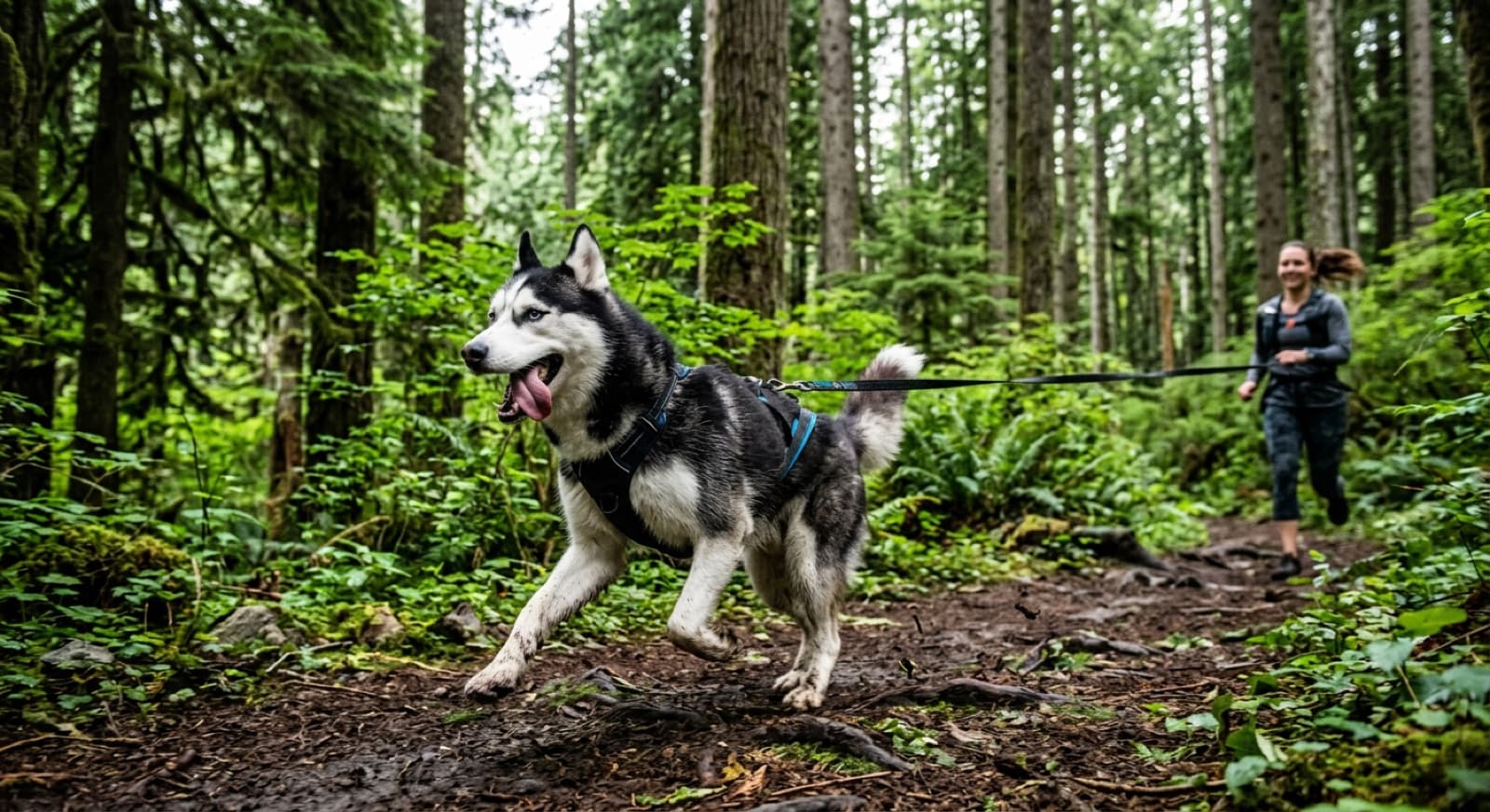
If you have been researching Huskies and keep running into people warning you off, those warnings are not gatekeeping. They are pattern-matching. Lower Mainland rescues see the same Husky surrender pipeline every year: a research-light adopter falls for a striking puppy, brings it home, hits the 8 to 18 month adolescence wall, and surrenders. The BC SPCA and foster-based rescues see this pattern enough that volunteers quietly flag at-risk applications before the dog goes home.
This guide is not built to talk you out of a Husky. It is built to help you decide honestly. Some Vancouverites are perfect for the breed. Many are not. The goal is to know which one you are before you commit 12 to 15 years to a dog whose needs are real, daily, and not negotiable. If you decide a Husky is right for you, see the Vancouver Husky adoption guide for where to find one.
5 Things Nobody Tells You Before Adopting a Husky
From conversations with Lower Mainland owners who surrendered, kept, or fostered Huskies. The patterns repeat across every conversation.
1. Coat blow is a 2 to 3 week event, twice a year
Not metaphorical fur. Real fur tumbleweeds rolling through your living room every spring and fall. You will need a slicker brush, an undercoat rake, a vacuum that does not clog, and the patience to brush daily through the blowing weeks. In a small Vancouver apartment the volume is brutal because there is nowhere for it to go. The shedding surprises more new owners than any other Husky trait.
2. They are escape artists, and the city is full of roads
Huskies jump, dig, climb, and pick at gate latches. A Husky that gets out in Calgary lands in a field. A Husky that gets out in East Vancouver lands in traffic. Secure containment is not a nice-to-have. It is a six-foot fence with dig-proofing, double-gated where possible, and a household trained to close doors behind them. If you cannot provide that, the breed is a safety risk in a dense city.
3. Recall is unreliable for most Huskies, for life
The Husky working history is independent endurance running, not handler-focused obedience. The Canadian Kennel Club breed profile flags the independent streak as defining, not a training failure. Your Husky may have solid recall in a fenced yard and still bolt after a squirrel at Spanish Banks. Most experienced owners never trust off-leash in unfenced spaces. Long-line training is the realistic compromise. Plan for it from day one.
4. Vocalizing is a daily communication style
Huskies do not bark much. They howl, whine, mutter, and hold full conversations about being mildly inconvenienced. The viral talking-Husky videos are real, and they happen at 6 a.m. on a Sunday. In a Metro Vancouver strata building that means noise complaints, and some councils will not approve a Husky for this reason even if the dog is under the weight cap.
5. Summer, not winter, is the dangerous season here
A thick-coated northern breed thrives in Vancouver's mild wet winter. The risk is the warm stretch from June to September, when a Husky overheats fast on an afternoon walk. Exercise shifts to early morning and evening, water and shade become non-negotiable, and the seawall in full sun becomes a place to avoid mid-day. Plan the calendar around heat, not cold.
The Honest Pros and Cons
What people love
- ✓Stunning visual presence, the wolf-look without the wolf risk
- ✓Athletic capability matches active Vancouver lifestyles
- ✓Generally friendly with people, even strangers
- ✓Most enjoy other dogs, do well in multi-dog homes
- ✓Built for the coast's mild wet winter
- ✓Strong bonds with their humans
- ✓High intelligence (the kind that picks locks)
- ✓Easy to find through Lower Mainland rescue transport
What people regret
- ⚠90-plus minutes vigorous daily exercise non-negotiable
- ⚠Escape artist habits, dangerous in a dense city
- ⚠Unreliable recall even after years of training
- ⚠Twice-yearly heavy shed plus year-round moderate shed
- ⚠Loud, frequent vocalizing draws strata complaints
- ⚠Destructive when bored or under-exercised
- ⚠Prey drive disqualifies most cat or small-animal homes
- ⚠Summer heat sensitivity on the coast
- ⚠12 to 15 year commitment to all of the above
Both columns are real. The question is whether you genuinely accept the right column, not just tolerate it. Owners who tolerate the cons surrender at adolescence. Owners who accept them keep the dog for life. For breed-specific medical planning, see the Husky health guide for Vancouver.
Browse adoptable Huskies in Vancouver
Adult rescue Huskies have already passed the adolescence test. Their personality, prey drive, and quirks are visible to the foster, so you know what you are getting before you commit.
See Available Huskies →Who Huskies Actually Fit (Vancouver)
Strong fit
- • Active outdoor Vancouverites (hiker, runner, biker, skier)
- • Home or ground-floor suite with a securely fenced yard
- • Work-from-home or hybrid schedule
- • Couple or family with kids 6 and older
- • Multi-dog home (Huskies do well with other dogs)
- • Comfortable with mess, hair, and noise
- • Has done research and accepts the trade-offs
Poor fit
- • Full-time-out-of-home solo owner with no walker plan
- • Downtown apartment or condo, no yard, no exercise plan
- • First-time owner without a strong support network
- • Family with toddlers under 5
- • Free-roaming cat or small animal in the home
- • Wants a calm, quiet, low-shed dog
- • Expects easy off-leash freedom on the seawall
- • Strata with a weight cap or noise rules that block a Husky
The 12-Question Self-Assessment
Answer honestly. Eight clear yeses is the threshold for a strong Husky fit. Fewer than eight, and another breed will likely make both you and the dog happier.
- I exercise vigorously most days (running, hiking, biking, skiing, gym).
- I have or will have secure containment: a fenced yard, six feet minimum, dig-proofed.
- I am home most of the day, OR have a clear daycare or walker plan.
- I am okay with twice-yearly heavy shedding plus year-round moderate shedding.
- I am okay with vocal dogs and have a tolerant living situation (not a noise-sensitive strata).
- I accept that my Husky may never come reliably off-leash on the seawall or in open parks.
- I have a real monthly budget for the dog (food, vet, grooming, daycare).
- I do not have toddlers under 5 in the home.
- I do not have free-roaming small animals (cats, rabbits) in the home.
- I am not in a strata or building with weight or noise rules that would block a Husky.
- I have a plan for summer heat (early and late walks, water, shade).
- I am committed to 12 to 15 years of the lifestyle above, not just the puppy phase.
Score 8 or more clear yeses? A Husky may be a strong fit. Move forward by reading the Vancouver Husky adoption guide, then browse available Huskies.
Score 5 to 7? Reassess in 1 to 2 years if your situation changes. In the meantime, browse the full Vancouver dog listings for a lower-maintenance match.
Score under 5? A Husky is not your breed. A calmer, lower-energy dog will make both of you happier, and there are plenty across the Lower Mainland rescue network.
Why Vancouver Is Both the Best and Worst Place for a Husky
Metro Vancouver has unusual local factors that work for and against Husky ownership. Worth knowing before you adopt. For general guidance on matching a working breed to your household, the AVMA selecting-a-pet-dog guide is a useful starting point.
What works in your favour. The terrain is ideal. The North Shore mountains, the Pacific Spirit Regional Park trail network, and the seawall give a Husky owner real daily exercise options. The mild, wet coastal winter suits a thick-coated northern breed far better than a prairie deep freeze. And because northern BC over-breeding floods Lower Mainland rescues with Huskies and Husky crosses, finding one to adopt is genuinely easy through the transport-based rescue network.
What works against you. Housing is the wall. Metro Vancouver leans heavily on apartments and strata-governed condos, and many cap dog weight or restrict noisy breeds, so a Husky in a downtown high-rise is a hard sell. Summer heat on the coast is a real hazard for the breed. Most popular off-leash spots, like Spanish Banks and the seawall, are unfenced, so a Husky owner can rarely use them the way other dog owners do. The same easy-to-adopt pipeline is also an easy-to-surrender pipeline.
Frequently Asked Questions
Is a Husky a good first-time dog in Vancouver?
For most first-time owners, no. Huskies need 90 minutes or more of daily exercise, escape easily, vocalize loudly, shed dramatically, and rarely become reliable off-leash. The exception is a researched first-timer with flexible work, an athletic lifestyle, secure containment, and a daycare or walker plan. If three or more of those are missing, choose a different breed.
Can you keep a Husky in a Vancouver condo or apartment?
It is a hard sell. Many strata bylaws cap dog weight below an adult Husky's 35 to 60 lbs, and Husky vocalizing generates noise complaints that councils take seriously. A balcony does not replace 90-plus minutes of daily exercise. Some owners make it work with daycare, a walker, and disciplined fenced-park time, but most city surrender stories start in a small apartment with no yard.
Are Huskies safe with cats and small dogs?
Often not. Many Huskies carry a strong prey drive toward cats, rabbits, and small dogs. Some live peacefully with a cat they were raised with, but a free-roaming cat or a small dog at a busy park can trigger a chase. Foster-based rescues can tell you whether a specific dog has tested safe, which is a strong reason to adopt an adult through a foster network.
How much exercise does a Husky need in Vancouver?
Plan for 90 minutes or more of vigorous activity daily. The North Shore trails, the seawall, and Pacific Spirit give you year-round options. The mild winter suits the breed. The risk is summer heat, when a thick-coated dog overheats, so exercise shifts to early morning and evening. A Husky that does not get this output becomes destructive and vocal indoors.
Why are there so many Huskies in Vancouver rescues?
Northern BC over-breeding and limited spay and neuter access push a steady flow of Huskies into Lower Mainland rescues through organised transport. That makes Huskies easy to adopt here. The traits that fill the rescues are the same traits that drive the next round of surrenders. Easy to adopt, hard to keep, is the honest summary.
How do I know if I should adopt a Husky?
Use the 12-question self-assessment above. Answer honestly. Eight clear yeses out of 12 is the threshold. Fewer than eight means another breed will make both you and the dog happier.
More Husky guides
Huskies in Vancouver →
Browse adoptable Huskies and Husky crosses from Lower Mainland rescues, with filters for size, energy, and compatibility.
Husky Adoption Vancouver →
Where to find rescue Huskies in Metro Vancouver, real costs, the northern BC transport pipeline, and free-Husky scam warnings.
Husky Health Issues Vancouver →
Breed-specific medical conditions, eye and coat care, and pet insurance ROI for a Husky in the Lower Mainland.
Husky Shedding & Grooming →
The coat-blow reality in a damp coastal climate, why never to shave, the brush kit, and managing fur in a small space.
New dog? Start with these care guides
Everything a new adopter needs to set up a safe, happy home.