The short answer
The German Shepherd conditions worth knowing are hip and elbow dysplasia, degenerative myelopathy, bloat (GDV), exocrine pancreatic insufficiency, and perianal fistula, plus above-average skin allergies and some cancers. Bloat is the one that can kill in hours, so learn the signs and know your nearest Winnipeg emergency vet now. Most of the rest are manageable when caught early. Budget for a large-breed vet bill and consider pet insurance while your dog is young. This is general information, not veterinary advice. Build every plan with your own vet.
Bloat is the most time-critical Shepherd emergency. A distended, hard belly, unproductive retching, drooling, restlessness, and pacing in a deep-chested dog is a same-minute emergency. Do not wait to see if it passes. Get to an emergency vet immediately. The American Kennel Club has a plain-language overview of the warning signs worth reading before you ever need it.
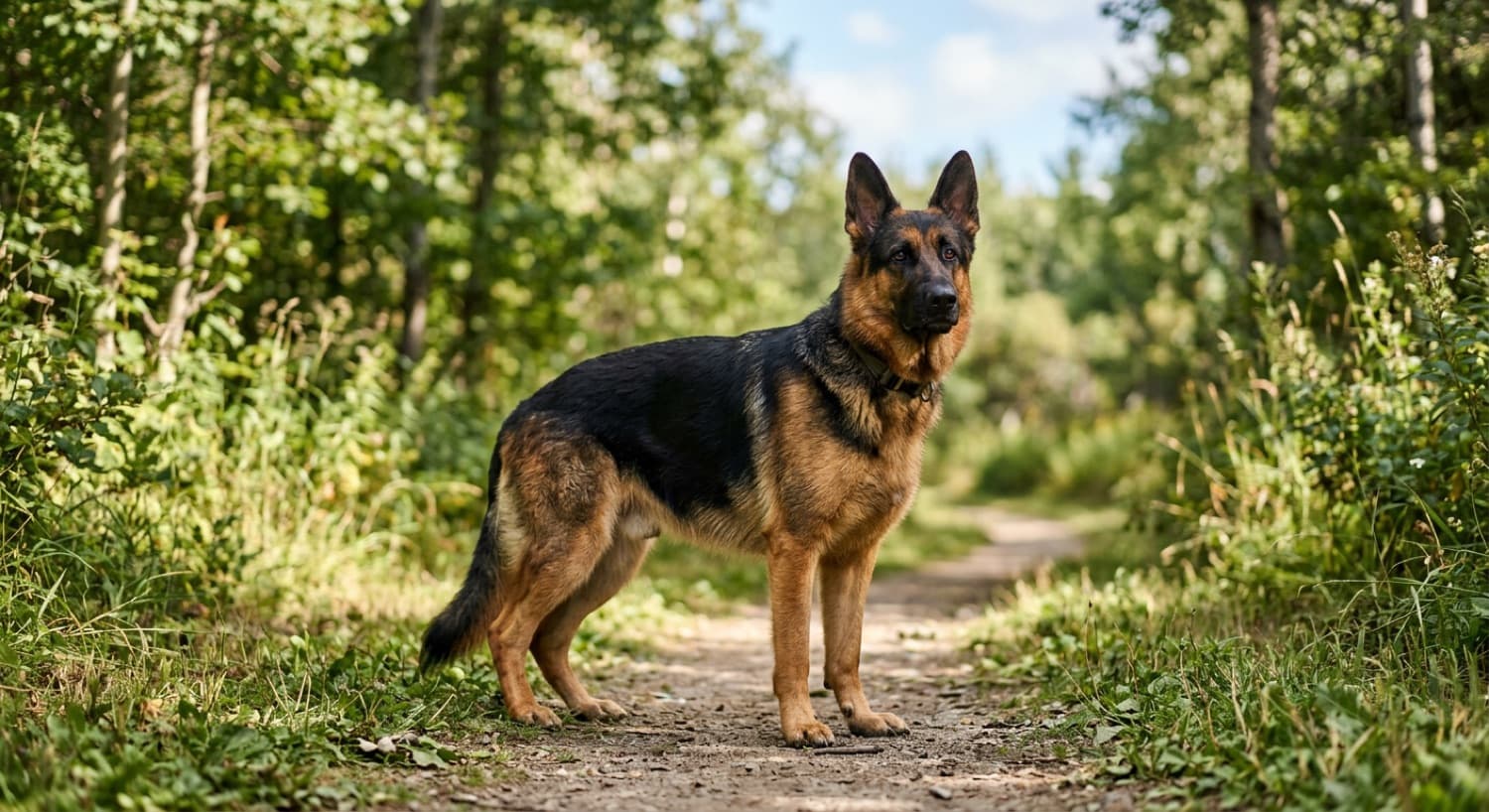
German Shepherds are wonderful dogs with a well-documented health profile. Knowing that profile is not about scaring you off the breed. It is the opposite. An owner who knows what to watch for catches a limp, a dragging paw, or a chronic loose stool early, when it is easiest and cheapest to manage. The American Kennel Club breed profile and the Orthopedic Foundation for Animals both document the breed’s orthopaedic and genetic predispositions in detail.
One note before the conditions: this article is general information, not a diagnosis or a treatment plan. Every dog is different, and the right person to build a screening and care plan for your Shepherd is your own veterinarian. Where this guide gives ranges or signs, treat them as a prompt to ask your vet, not as a substitute for the visit.
Hip and elbow dysplasia
These are the conditions the breed is most famous for. Hip dysplasia is a malformation of the hip joint, and elbow dysplasia is the front-leg equivalent. Both lead to arthritis over time and range from mild to severe. Watch for stiffness after rest, reluctance to jump or do stairs, a bunny-hop gait behind, a narrow rear stance, and slowing on walks. A vet confirms it with a physical exam and X-rays.
Management depends on severity. Mild cases often do well with weight control (the single biggest lever), joint supplements, physiotherapy, and pain management as needed. Severe cases may need surgery. If you adopted an adult Shepherd, ask the rescue whether hips or elbows were ever imaged. Keeping your Shepherd lean from the start is the most powerful thing you can do to slow joint disease, and it is entirely in your hands.
Degenerative myelopathy (DM)
DM is a progressive disease of the spinal cord that usually starts in older Shepherds, often after age 8. It is painless, which is part of what makes it so hard. It typically begins with a dog scuffing or knuckling a back paw and slowly progresses to hind-limb weakness and loss of coordination. There is a genetic mutation associated with DM, and a DNA test can flag dogs at risk, though “at risk” is not the same as “will develop it.”
There is no cure, but physiotherapy, mobility support, and good nursing care preserve quality of life for a long time. The key point: rear-end weakness has other causes, some of them treatable, so if your older Shepherd starts dragging a foot, do not assume DM. See your vet to rule out the treatable causes first.
Bloat (gastric dilatation-volvulus)
This is the emergency that every Shepherd owner needs to understand cold. Bloat, or GDV, is when the stomach fills with gas and twists on itself, cutting off blood flow. German Shepherds are a textbook deep-chested at-risk breed. The signs: a distended or hard belly, unproductive retching, heavy drooling, obvious restlessness and pacing, and collapse. It progresses fast, and survival depends on getting to surgery quickly.
Some owners of high-risk breeds talk to their vet about a preventive gastropexy (a stomach-tacking surgery, often done at the same time as spay or neuter) that greatly reduces the risk of the stomach twisting. Whether it makes sense for your dog is a conversation for your vet. Either way, the non-negotiable is knowing where your nearest Winnipeg emergency vet is and being ready to drive there without hesitation.
Exocrine pancreatic insufficiency (EPI)
EPI is a condition where the pancreas stops making enough digestive enzymes, and German Shepherds are the breed most associated with it. The tell-tale picture is a dog with a big appetite that still loses weight, along with large volumes of loose, pale, greasy stool, usually starting in young adulthood. The good news is that it is diagnosed with a blood test and it is manageable: most dogs do well with enzyme supplementation and dietary adjustments under veterinary guidance. If your Shepherd eats well but stays thin, do not just keep switching foods. Ask your vet to test for EPI.
Perianal fistula, skin, and allergies
Perianal fistula is a painful condition of tunneling sores around the anus that German Shepherds are strongly prone to, now understood to be immune-mediated. Signs include scooting, licking at the rear, straining or pain when defecating, and a bad smell. Modern management leans on immune-modulating medication from a vet rather than surgery alone, often long-term. Caught early it is far more manageable, so a Shepherd fixated on its rear deserves an exam.
Shepherds also run above average for skin allergies and recurrent ear infections. The double coat can trap moisture, so drying the coat after a wet or snowy Winnipeg walk helps prevent skin infections. Chronic itching, paw licking, and head shaking are worth investigating with your vet to find the trigger rather than chasing flare-ups forever.
Cancer risk and senior care
German Shepherds carry an elevated risk of hemangiosarcoma, an aggressive cancer of blood-vessel walls that often hits the spleen or heart and can cause sudden internal bleeding with little warning. Because it can be silent, twice-yearly senior wellness checks with bloodwork, and imaging when your vet recommends it, are the best defence. If an older Shepherd suddenly becomes weak, pale, or collapses, treat it as an emergency. On anaesthesia, Shepherds do not have the specific sensitivities some breeds carry, but any surgery on a large senior dog deserves a proper pre-anaesthetic workup, which is standard practice. The American Veterinary Medical Association explains what a safe anaesthesia workup looks like.
Browse adoptable German Shepherds in Winnipeg
Adopting an adult Shepherd from a foster home means you can ask about hips, joints, and any known conditions before you commit. See the Winnipeg Shepherds available now.
See Available German Shepherds →Winnipeg vet costs and where to go in an emergency
Routine annual care for a healthy adult Shepherd runs into the low four figures a year in Winnipeg, and a large breed doses and eats higher than a small one. The bills that catch owners off guard are the emergencies and chronic conditions: a bloat surgery, hip surgery, or long-term management of DM, EPI, or perianal fistula can climb well into the thousands. That gap is exactly why pet insurance, enrolled while the dog is young and before any condition is on record, tends to pay off for this breed. Get specific quotes from your own vet, since prices vary by clinic and dog.
For after-hours emergencies, Winnipeg has 24-hour options including the Winnipeg Animal Emergency Hospital on Pembina Highway and Bridgwater Veterinary Hospital. Program a number into your phone now and know the drive, because with bloat you are counting minutes. Complex orthopaedic or specialist cases sometimes get referred to the Western College of Veterinary Medicine in Saskatoon, a five-plus-hour drive, but the vast majority of care stays in the city. Our low-cost Winnipeg vet guide covers affordable options for routine care.
Frequently asked questions
What are the most common German Shepherd health problems?
The big ones are hip and elbow dysplasia (joint malformation that leads to arthritis), degenerative myelopathy (a progressive spinal-cord disease that causes rear-end weakness in older dogs), bloat or GDV (a deep-chested breed emergency where the stomach twists), exocrine pancreatic insufficiency (the pancreas stops making digestive enzymes, so the dog eats but cannot gain weight), and perianal fistula (a painful autoimmune skin condition around the rear the breed is uniquely prone to). Shepherds also carry higher rates of skin allergies and some cancers, notably hemangiosarcoma. None of this means every Shepherd gets sick, but knowing the breed profile lets you catch problems early and budget realistically. Talk to your vet about a screening plan for your individual dog.
How do I know if my German Shepherd has hip dysplasia?
Watch for signs and confirm with your vet, do not self-diagnose. Common signs are stiffness after rest, reluctance to jump or climb stairs, a "bunny-hop" gait with both hind legs together, a narrow stance behind, and slowing down on walks. Hip dysplasia is a malformation of the hip joint that leads to arthritis, and it ranges from mild to severe. A vet diagnoses it with a physical exam and hip X-rays, and the Orthopedic Foundation for Animals scores hips formally. Management runs from weight control, joint supplements, and physiotherapy at the mild end up to surgery in severe cases. If you adopted an adult Shepherd, ask the rescue whether hips were ever X-rayed. Your vet is the right person to build a plan.
What is degenerative myelopathy in German Shepherds?
Degenerative myelopathy (DM) is a progressive disease of the spinal cord that typically starts in older Shepherds, usually after age 8. It causes gradual rear-end weakness and loss of coordination, and it is painless, which is part of what makes it heartbreaking. It often starts with a dog scuffing or knuckling a back paw and slowly progresses to hind-limb weakness. There is a known genetic mutation associated with DM, and a DNA test can identify dogs at risk, though testing "at risk" does not guarantee the dog will develop it. There is no cure, but physiotherapy and supportive care help quality of life. If your older Shepherd is dragging a back foot or wobbling behind, see your vet, because some causes of rear-end weakness are treatable and it is important to rule those out first.
Are German Shepherds at risk for bloat?
Yes, and this is the one that can kill in hours. Bloat, formally gastric dilatation-volvulus (GDV), is a condition where the stomach fills with gas and twists on itself, cutting off blood flow. German Shepherds are a classic deep-chested breed at elevated risk. Signs are a distended or hard belly, unproductive retching (trying to vomit with nothing coming up), drooling, restlessness and pacing, and collapse. This is a same-minute emergency: get to an emergency vet immediately, because survival depends on speed. Some owners of high-risk breeds discuss a preventive stomach-tacking surgery (gastropexy) with their vet, often done at the same time as spay or neuter. Ask your vet whether it makes sense for your dog. Know where your nearest Winnipeg emergency vet is before you ever need it.
What is exocrine pancreatic insufficiency (EPI)?
EPI is a condition where the pancreas stops producing enough digestive enzymes, so the dog cannot properly digest and absorb food. German Shepherds are the breed most associated with it. The classic picture is a dog with a big appetite that still loses weight, along with large volumes of loose, pale, greasy stool. It usually shows up in young adult Shepherds. EPI is diagnosed with a blood test and, importantly, it is manageable: most dogs do well with enzyme supplementation added to their food and dietary adjustments, all under veterinary guidance. If your Shepherd is eating well but staying thin or has chronic loose stool, this is worth raising with your vet rather than just switching foods on your own.
What is perianal fistula and why do Shepherds get it?
Perianal fistula is a painful condition where tunneling sores and ulcers form in the skin around the anus. German Shepherds are strongly overrepresented, and it is now understood to have an immune-mediated component rather than being simply an infection. Signs include scooting, licking or biting at the rear, straining or pain when defecating, a bad smell, and visible sores around the anus. It used to be treated mainly with surgery, but modern management leans heavily on immune-modulating medication prescribed by a vet, often long-term, sometimes with dietary changes. It is manageable but usually needs ongoing veterinary care. If your Shepherd is fixated on its rear or straining, get it examined, because early treatment is easier than treating an advanced case.
Do German Shepherds have skin and allergy problems?
More often than average, yes. Shepherds are prone to atopic dermatitis (environmental allergies) and food sensitivities, which show up as itching, licking paws, recurrent ear infections, and hot spots. The double coat can also trap moisture and lead to skin infections if the dog gets damp and is not dried, which matters after a snowy Winnipeg walk. Management is about identifying triggers with your vet, keeping up flea control, regular grooming, drying the coat after wet outings, and sometimes prescription treatment for flare-ups. Chronic ear infections in particular are worth taking seriously, because a Shepherd that shakes its head and scratches its ears constantly is uncomfortable and can develop lasting ear damage. Your vet can help you find the underlying cause rather than just chasing symptoms.
What is the German Shepherd anaesthesia and cancer profile?
German Shepherds are a generally healthy-sized breed for anaesthesia, without the specific sensitivities some breeds have, but any surgery on a large dog with possible joint or heart considerations deserves a proper pre-anaesthetic workup, which is standard practice. On cancer, the breed carries a notably elevated risk of hemangiosarcoma, an aggressive cancer of blood-vessel walls that often affects the spleen or heart and can cause sudden internal bleeding with few early warning signs. Because it can be silent, senior wellness checks with bloodwork and, when your vet recommends, imaging are the best defence. Shepherds are also seen with osteosarcoma (bone cancer). None of this is a reason to avoid the breed, but it is a reason to keep up regular senior vet care and to act fast if an older Shepherd suddenly becomes weak, pale, or collapses.
How much do German Shepherd vet bills cost in Winnipeg?
Routine annual care for a healthy adult Shepherd in Winnipeg (wellness exam, vaccines, parasite prevention, food) runs into the low four figures a year, and a large breed eats and doses higher than a small one. The costs that blindside owners are the emergencies and chronic conditions: a bloat surgery, hip surgery, or long-term management of DM, EPI, or perianal fistula can run well into the thousands. A single overnight emergency visit alone is a meaningful bill. This is exactly why pet insurance, enrolled while the dog is young and healthy before any condition is on record, tends to pay off for this breed. Get specific quotes from your own vet, since prices vary by clinic and by the individual dog.
Should I get pet insurance for a German Shepherd?
For this breed, it is worth serious thought, and the timing is everything. German Shepherds carry above-average odds of expensive conditions (hip and elbow dysplasia, bloat surgery, DM, EPI, perianal fistula, certain cancers), and any one of them can be a four-figure bill. Insurance works best when you enrol a young, healthy dog before anything is diagnosed, because pre-existing conditions are excluded once they are on record. If you are adopting an adult with a known issue, insurance may not cover that specific problem, so weigh a dedicated savings buffer instead. Compare policies on annual limits, hereditary-condition coverage (crucial for this breed), and the deductible. Your vet can tell you which conditions they see most in local Shepherds, which helps you judge the value.
Where do I take a German Shepherd for an emergency in Winnipeg?
Know this before you need it. Winnipeg has 24-hour emergency options including the Winnipeg Animal Emergency Hospital on Pembina Highway and Bridgwater Veterinary Hospital, both of which handle after-hours and critical care. Program a number into your phone now and know the drive from your home, because with bloat you are counting minutes. For complex orthopaedic or specialist cases, your Winnipeg vet may refer to the Western College of Veterinary Medicine in Saskatoon, which is a five-plus-hour drive, so most routine and urgent care stays in the city. The single most useful thing you can do for a deep-chested breed is to have decided, in advance, exactly where you will drive at 2 a.m.
Related Winnipeg guides
German Shepherd Adoption
Rescues, real costs, working vs pet lines, and the free-GSD scam.
Shepherd Training & Temperament
Channeling a working brain, reactivity, and daily exercise.
Adoptable Winnipeg Shepherds
Every available German Shepherd and Shepherd cross across Manitoba rescues.
Low-Cost Vet Winnipeg
Affordable routine care, clinics, and payment options.
New dog? Start with these care guides
Everything a new adopter needs to set up a safe, happy home.