The short answer
German Shepherds are among the most trainable breeds, but that brain needs an outlet. Budget 60 to 90 minutes of real exercise a day plus mental work, use force-free, reward-based training, and start socialisation early and keep it going for life. Reactivity is common but very fixable with distance and counter-conditioning, not punishment. Build recall on a long-line before you rely on it. The Winnipeg twist is winter: when the walk gets cut by cold, indoor enrichment does the work. An under-exercised Shepherd is the number-one Manitoba surrender story, and it is entirely preventable.
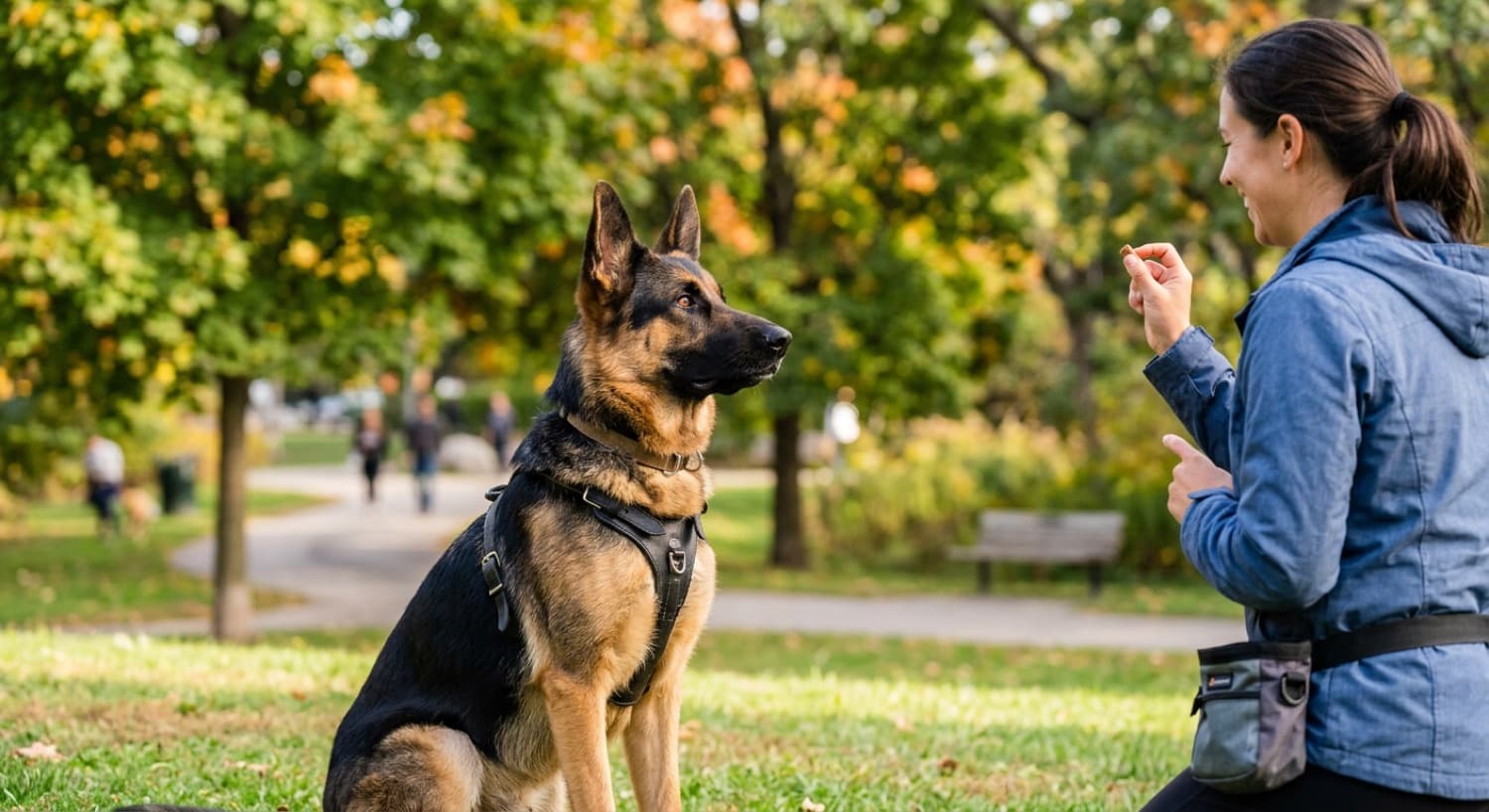
Here is the single most useful thing to understand about German Shepherds before you own one. Almost every problem people report with the breed, the barking, the destruction, the reactivity, the anxiety, is the same dog telling you it does not have enough to do. Shepherds were bred to work all day alongside a handler. Drop that dog into a home with a 20-minute leash walk and eight hours alone, and the brain that makes them brilliant turns against your house.
The flip side is the good news. Give a Shepherd real exercise, real training, and real company, and you get one of the most rewarding dogs there is. The Canadian Kennel Club classes the breed as a herding dog for a reason. This guide is about meeting that need, prairie winter and all.
Socialisation is non-negotiable
For a guardian breed, socialisation is the difference between a stable adult and a reactive one. Shepherds are naturally reserved and watchful with strangers, which is normal and part of the breed. Early, positive exposure to a wide range of people, dogs, sounds, and places teaches the dog that new things are safe, so the watchfulness stays proportionate instead of tipping into fear or reactivity.
The critical window is roughly up to 16 weeks, balanced against your vet's advice on vaccinations. If you have a Shepherd puppy, get it out meeting the world in a positive, controlled way, and consider a reputable puppy class. If you adopted an adult that clearly missed this window, you are not out of options, gradual, positive exposure with a good trainer still builds confidence, it just asks for more patience. Skipping socialisation is how a normal Shepherd becomes the reactive dog on the sidewalk.
Leash reactivity on Winnipeg streets
Leash reactivity, the barking and lunging at other dogs or people while on lead, is one of the most common Shepherd complaints, and one of the most fixable. It usually comes from frustration or fear, made worse by the leash itself, which stops the dog from creating distance. For a watchful breed on a busy sidewalk, that is a lot of triggers at close range with no escape.
The fix is distance and calm, not correction. Punishing a reactive dog tends to make it worse, because it adds a bad feeling to the trigger it already dislikes. The reliable approach is counter-conditioning: work at a distance where the dog can see a trigger without reacting, reward calm, and slowly close the gap over many sessions. A force-free trainer experienced with working breeds, ideally one certified through a body like the Certification Council for Professional Dog Trainers, can build you a specific plan. Progress is real and usually faster than owners expect.
Recall and off-leash reality
Good news first: Shepherds are handler-focused, so a reliable recall is more achievable than it is for an independent breed. But “achievable” is not “automatic,” and a protective dog with drive can still ignore a recall to fixate on a person, dog, or something to chase. Build the recall before you rely on it: practise on a long-line in low-distraction spots, reward heavily, and only graduate to full off-leash in designated areas once it is genuinely solid.
Winter changes the math. Ice underfoot means a dog that bolts cannot stop or turn, so on frozen ground a long-line on a maintained path often beats full off-leash. Our Winnipeg off-leash parks guide covers which areas suit a dog still building recall and which are better left for a solid one.
Browse adoptable German Shepherds in Winnipeg
A foster home can tell you whether a Shepherd already has training started and how it handles other dogs and people. See which Winnipeg Shepherds are available now.
See Available German Shepherds →Keeping a Shepherd fulfilled through a prairie winter
This is the part of Shepherd ownership that is genuinely harder in Winnipeg than almost anywhere else. For weeks at a time in January and February, the outdoor walk gets cut to a bathroom break because it is simply too cold to be out for long. A working breed still needs an outlet, and if it does not get one indoors, it finds one in your house.
Mental work is the answer, because it tires a Shepherd as thoroughly as a physical walk. Rotate through:
- Scent games. Hide treats around a room or in boxes and let the dog find them. Nose work settles a Shepherd fast.
- Training sessions. Five to ten focused minutes on obedience, tricks, or a new skill is real mental exercise. Polish something new each week.
- Puzzle feeders and frozen Kongs. Make the dog work for its food instead of eating from a bowl.
- Indoor daycare. On a long cold snap, a day at a Winnipeg dog daycare gives a working breed the run it cannot get outside.
A skipped walk during an extreme cold warning is not a welfare failure. An hour at minus 35 windchill is the actual risk. Our Winnipeg winter dog care guide has the full cold-weather playbook.
Who a Shepherd genuinely suits
A German Shepherd suits someone who wants an active, engaged partner and will actually put in the daily time, regardless of the weather. Active families, people who work from home, and owners who enjoy training and dog sports tend to thrive with the breed. It is a poor fit for someone who wants a low-maintenance, independent dog, or for a small-apartment, full-time-office life with no plan for company and exercise.
The under-stimulated Shepherd is the top surrender story in Manitoba, and it is worth ending on, because it is preventable. The same dog that shreds a couch when bored is calm and easy when its needs are met. If you can honestly commit to the exercise, the training, and the winter enrichment, a Shepherd will be one of the best dogs you ever have. If you cannot, the kindest thing is to choose a breed whose needs match your life. Our Shepherd adoption guide covers finding the right individual dog.
Frequently asked questions
How much exercise does a German Shepherd need in Winnipeg?
Plan on 60 to 90 minutes of real activity a day, not a leashed lap of the block. That means off-leash play, fetch, a long hike, structured training, or scent work, the kind of activity that actually tires a working brain. Off-leash options like Kilcona Park and Charleswood Dog Park, and hikes at Birds Hill Provincial Park, all count. The Winnipeg wrinkle is winter. On extreme-cold days the walk gets cut to a bathroom break, and that is where indoor enrichment carries the load: puzzle feeders, scent games, training sessions, and a frozen stuffed Kong. A Shepherd that only gets 20 minutes of leash walking will find its own entertainment in your furniture, and that is the exact dog that fills rescues.
Are German Shepherds aggressive?
No, aggression is not a breed trait, but reactivity from poor socialisation is common and gets mistaken for aggression. Shepherds are naturally reserved and watchful with strangers, which is the breed standard, not a fault. A well-socialised Shepherd is stable, confident, and safe around new people and dogs. A Shepherd that was under-socialised, especially in the first few months, or that had a bad experience, can become reactive: barking, lunging, and fixating on strangers or other dogs. That is a training and management problem, not a temperament you are stuck with. If your Shepherd is reactive, work with a qualified force-free trainer or, in serious cases, a veterinary behaviourist. It is very often improvable with the right plan.
Why is my German Shepherd reactive on the leash?
Leash reactivity usually comes from frustration, fear, or a lack of early socialisation, and the leash itself makes it worse because the dog cannot create distance or move naturally. For a breed that is already watchful, a Winnipeg sidewalk full of other dogs and people is a lot of triggers at close range. The fix is not punishment, which tends to make reactivity worse by adding a bad association to the trigger. It is distance, calm, and gradual counter-conditioning: keeping enough space that the dog can notice a trigger without reacting, and rewarding calm. A force-free trainer experienced with working breeds can build you a specific plan. This is one of the most common and most fixable Shepherd issues.
Can I let my German Shepherd off-leash in Winnipeg?
Only with a reliable recall and in appropriate places, and you build that recall before you rely on it. Shepherds are handler-focused, which actually makes recall more achievable than it is for an independent breed like a Husky, but a protective dog with a strong drive can still blow off a recall to chase or to fixate on a person or dog. Practise recall on a long-line first, in low-distraction spots, and only progress to full off-leash in designated off-leash areas once it is solid. In winter, ice underfoot changes the calculus: a dog that bolts cannot stop or turn on ice, so a long-line on a maintained path often beats full off-leash. Our Winnipeg off-leash parks guide covers which areas suit a dog still building recall.
What is the best way to train a German Shepherd?
Force-free, reward-based training that starts early and stays consistent. Shepherds are one of the most trainable breeds precisely because they are smart and want to work with you, but that same sensitivity means harsh correction backfires, damaging the trust the breed relies on. Keep sessions short and frequent, reward generously, and give the dog a real job: obedience, scent work, trick training, or a dog sport all satisfy a working brain. Look for a trainer certified through a recognised body, and avoid anyone selling dominance or "alpha" methods, which are outdated and can make a reserved Shepherd more anxious or reactive. Consistency across the whole household matters more than any single technique.
Do German Shepherds have separation anxiety?
They are prone to it, yes, because they bond intensely with their people and struggle with long stretches alone. A Shepherd that has been bounced between homes or came through rescue is at higher risk. Signs include destructive behaviour, vocalising, house-soiling, or pacing when left alone. The prevention is building alone-time tolerance gradually from day one rather than being with the dog constantly and then leaving for eight hours cold. Crate training, leaving for short periods that slowly lengthen, and enrichment that keeps the dog busy while you are out all help. Serious separation anxiety is a real behavioural condition worth addressing with a trainer or veterinary behaviourist, not just powering through, because it is genuinely distressing for the dog.
How do I socialise a German Shepherd puppy?
Early, broadly, and positively, within the window that matters most, roughly up to 16 weeks, balanced against your vet's vaccination advice. Expose the puppy to a wide range of people, sounds, surfaces, and (with healthy, vaccinated dogs) other dogs, always keeping the experiences positive and never overwhelming. For a guardian breed this is not optional. A Shepherd that misses early socialisation is the one most likely to grow into a reactive adult. Puppy socialisation classes with a reputable trainer are one of the best investments you can make. If you adopted an adult Shepherd that missed this window, you can still build confidence with gradual, positive exposure and a good trainer, it just takes more patience.
Who is a German Shepherd genuinely a good fit for?
Someone who wants an active, engaged partner and will actually put in the daily time. Shepherds suit people who like training, who exercise regardless of weather (which on the prairies means a real winter plan), and who want a dog that is deeply bonded and responsive. They do well in active families, with people who work from home or can avoid leaving the dog alone all day, and with owners willing to keep up socialisation and mental work for the dog's whole life. They are a poor fit for someone wanting a low-maintenance, independent dog, or for a small-apartment, full-time-office life with no plan for company and exercise. The breed rewards effort and punishes neglect, which is the whole story of why they are common in rescue.
Are German Shepherds good with kids and other pets?
Often yes, in the right home and with the right individual dog. Many Shepherds are excellent, gentle family dogs, especially those raised around children, and a foster home can tell you how a specific rescue dog does with kids. As a large, high-drive breed, they should always be supervised with young children, and kids should be taught to respect the dog. With other pets it depends on the individual and its history: some Shepherds live happily with cats and other dogs, while a dog with a strong prey drive or poor dog-social skills needs careful management. When adopting, lean on the foster's real-world notes about how the dog behaves with kids, cats, and other dogs rather than assuming from the breed.
What happens to an under-exercised German Shepherd?
It becomes the dog rescues see constantly. A Shepherd without enough physical and mental outlet redirects that energy into barking, digging, chewing, fence-running, pacing, and fixating on movement, and it can tip into reactivity and anxiety. Owners often read this as the dog being "bad" or "too much," when really the dog is bored and unfulfilled. The tragedy is that it is preventable: the same dog, given real exercise, training, and a job, is calm and easy in the house. This is the single most common Winnipeg Shepherd surrender story, and it is why the honest advice is to be sure you can meet the exercise commitment, winter included, before you adopt one.
Related Winnipeg guides
German Shepherd Adoption
Rescues, real costs, working vs pet lines, and the free-GSD scam.
Shepherd Health Issues
Hips, DM, bloat, and the Manitoba vet costs to budget for.
Adoptable Winnipeg Shepherds
Every available German Shepherd and Shepherd cross across Manitoba rescues.
Winnipeg Winter Dog Care
Windchill thresholds, paw care, and indoor exercise for the deep freeze.
New dog? Start with these care guides
Everything a new adopter needs to set up a safe, happy home.