The short answer
Huskies are one of the most common breeds in Manitoba rescue. Best Winnipeg rescues: Winnipeg Humane Society, Manitoba Mutts, and D'Arcy's ARC. Adoption fee: $300 to $500, far below a breeder. They arrive through northern transport and as young-adult surrenders once owners meet the reality: unreliable recall, a strong escape and roam drive, and real daily exercise needs. The double coat makes them thrive in a Winnipeg winter, but the escape drive is the actual danger. Secure fencing and a leash-or-long-line rule are not optional. An adult a foster knows is the easiest way in.
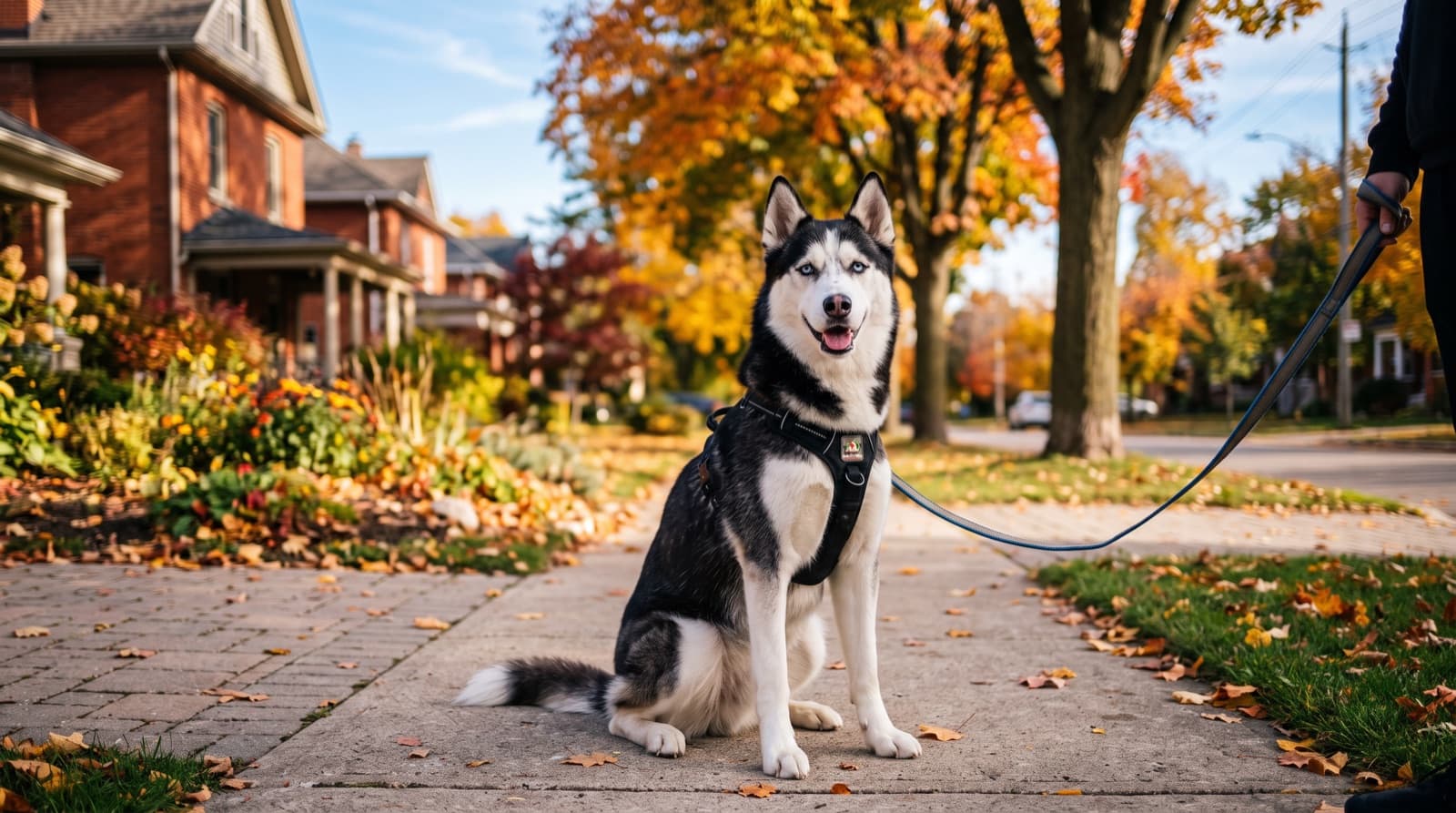
Where to adopt a Husky in Winnipeg
Huskies turn up in Manitoba rescue more consistently than almost any other breed. The three most reliable sources are the Winnipeg Humane Society, Manitoba Mutts Dog Rescue, and D'Arcy's ARC. You can browse every currently available Winnipeg Husky and Husky cross across the Manitoba rescues we cover on LocalPetFinder's Husky breed page, refreshed regularly.
A large share of Manitoba rescue Huskies come through Manitoba Mutts' northern transfer pipeline out of reserve and remote communities, where Husky and Husky-cross populations are common. Those dogs are vetted and assessed in a Winnipeg-area foster home before listing, so you can ask the foster the questions that actually matter for this breed: how is the dog with cats, how strong is the escape drive, and how reliable is recall. The American Kennel Club breed profile is a good primer on temperament before you meet a dog.
Why so many Huskies end up in Manitoba rescue
Two things stack, and understanding both helps you adopt the right dog. The first is the northern intake pipeline. Rescues run organised transport out of communities where free-roaming dog populations carry a strong Husky signature, so a steady flow of Huskies and crosses comes south. Many started life outdoors, and the foster will be upfront about it.
The second is buyer underestimation in Winnipeg itself. People buy a fluffy Husky puppy imagining a cold-weather cuddle companion, and 18 months later they have a powerful, vocal escape artist that ignores recall and needs an hour of hard exercise a day. Surrenders inside the first year and a half are common, which is exactly why so many rescue Huskies are young adults.
The reassuring part: most of these dogs are not broken. A Husky in a home that provides secure fencing, real exercise, and an owner who respects the escape drive is a wonderful dog. The breed just punishes the mismatch harder than most.
The escape drive is the real issue
If there is one thing to understand about owning a Husky in Winnipeg, it is this: a standard residential fence is not a Husky-proof fence. Huskies dig under, climb over, and slip past an opening gate, and they were bred to travel long distances, so a loose Husky does not stay near home. On a St. Vital, Transcona, or Charleswood yard that is a dog on the road within minutes. On a Headingley, Oak Bluff, or Selkirk acreage with field fencing it is worse, because a Husky on open land will be on the township road before you notice.
The Assiniboine and Red River corridors also carry a real coyote presence, especially in winter, and a Husky off-leash near either river is asking for trouble. We tell every Manitoba Husky adopter the same thing: secure six-foot fencing with the base buried or skirted so the dog cannot dig out, or accept that the dog stays leashed and supervised outdoors. There is no third option that reliably works for this breed. This is not caution for its own sake, it is the single most common reason Huskies get lost, hit, or surrendered.
What it costs: rescue vs breeder
| Source | Typical cost | What is included |
|---|---|---|
| Winnipeg rescue (adult) | $300 to $500 | Spay/neuter, vaccines, microchip, deworming, vet workup |
| Winnipeg rescue (senior) | Often reduced | Same vetting, known conditions disclosed |
| Breeder puppy | $1,000 to $2,500 | Puppy only; you pay the vet work yourself ($700 to $1,000) |
With Huskies already filling Manitoba rescues, buying a puppy is genuinely hard to justify for a pet home. On top of the fee, budget for secure fencing (the real cost of Husky ownership), a large dog's food, and a $41.50 city licence. See our Winnipeg pet licensing guide for the licence details.
Browse adoptable Huskies in Winnipeg
A foster home can tell you how a specific Husky handles fences, recall, cats, and being alone. See which Winnipeg Huskies and Husky crosses are available now.
See Available Huskies →What Huskies are actually like to live with
The friendly, goofy first meeting is real, and it is the part of Husky ownership most adopters do see. The harder parts show up at home:
- Recall is unreliable. A Husky off-leash on an unfenced trail (Birds Hill Provincial Park, Beaudry, the river paths) is a genuine risk. Most exercise happens on a long-line or in a fenced space.
- Escape is common. Huskies dig, climb, and jump over what looks secure. The fence has to be built for the breed.
- Prey drive is high. Cats, small dogs, rabbits, and the deer that wander Winnipeg at dusk are not safe assumptions. Ask the foster.
- Vocalisation carries. Howling penetrates condo and duplex walls, which matters in Osborne Village, Wolseley, and Exchange District lofts.
- Daily exercise is a year-round commitment. Plan on at least an hour of vigorous activity regardless of weather, with an indoor plan for the deep freeze.
None of this makes a Husky a bad dog. It makes them a specific dog, best suited to an owner who respects those traits instead of fighting them.
Frequently asked questions
Where can I adopt a Husky near me in Winnipeg?
Huskies and Husky crosses turn up in Manitoba rescue almost every month, more consistently than most breeds. The best places to check are Winnipeg Humane Society, Manitoba Mutts Dog Rescue, and D'Arcy's ARC. Manitoba Mutts in particular runs a northern transfer pipeline that brings in a steady flow of Huskies and Husky crosses. Browse every currently available Winnipeg Husky across the Manitoba rescues we cover on LocalPetFinder's Husky breed page, refreshed regularly. Most rescue Huskies are surrendered as young adults, often between 6 and 24 months, once the owner discovers what the breed actually takes. Apply same-day on a dog that fits, because Husky inventory moves and foster homes prefer adopters who have already thought the breed through.
How much does it cost to adopt a Husky in Winnipeg?
Most Winnipeg Husky adoption fees fall in a $300 to $500 range, which is low for the breed. Winnipeg Humane Society lists the fee on each dog's profile, and Manitoba Mutts and D'Arcy's ARC sit in the same band. The fee always includes spay or neuter, vaccinations, a microchip, deworming, and a vet workup. Doing that vet work yourself on a breeder puppy runs $700 to $1,000, and a purchased Husky puppy typically costs $1,000 to $2,500 to begin with. Given how many Huskies are already in rescue, buying a puppy is hard to justify for a pet home. Budget separately for a $41.50 city licence and secure fencing, which for this breed is not optional.
Why do so many Huskies end up in Winnipeg rescue?
Two reasons stack. The first is the northern intake pipeline. Manitoba Mutts and other rescues run organised transport out of reserve and remote communities where spay and neuter access is thin, and loose-dog populations there carry a heavy Husky and Husky-cross signature. Many of those dogs started life outdoors, which the foster home will tell you about up front. The second reason is owner underestimation right here in Winnipeg. Huskies are bought as fluffy puppies by people picturing a cold-weather companion, and they get a 50-pound escape artist with unreliable recall and a howl that carries through duplex walls. Surrenders within the first 18 months are common. The typical rescue Husky is not a damaged dog. It is a normal dog whose first home was the wrong fit.
Are there free Huskies for adoption in Winnipeg?
Be very careful with free and cheap Husky listings, because Huskies are exactly the breed that gets dumped and flipped. A genuinely free Husky on Kijiji or Facebook Marketplace is usually one of a few things: an owner offloading a dog with escape or behaviour issues and no disclosure, a backyard breeder using free framing as bait, or a rushed rehoming with no vet workup. Real Husky adoption through a rescue is never free, because even the lowest Winnipeg fee covers spay or neuter, vaccines, a microchip, and a vet exam at below cost. Owner rehoming with a small fee can be legitimate, but only with vet records, the original paperwork, an in-person meeting at the dog's current home, and complete honesty about the dog's escape history and recall.
Are Huskies good for first-time dog owners?
Generally not the easy choice, though committed first-timers do manage. Huskies are challenging because of three things that do not improve with wishing: unreliable recall, a strong drive to escape and roam, and high daily exercise needs. A Husky that gets loose in Winnipeg can be kilometres away before you have your boots on, and the same coat that makes them thrive in prairie cold makes them prone to overheating in a Manitoba summer. If a Husky is your first dog, go in with eyes open: secure six-foot fencing, a firm rule that the dog stays leashed or long-lined in any unfenced space, at least an hour of vigorous exercise a day year-round, and patience with a breed that is loving but genuinely independent. An adult rescue Husky whose temperament a foster already knows is easier than a puppy.
Do Huskies get along with cats and other dogs?
It depends heavily on the individual, and prey drive is the thing to ask about. Huskies were bred to run and many carry a strong prey drive, which means cats, small dogs, rabbits, and the deer that wander Winnipeg neighbourhoods at dusk are not safe assumptions. Some Huskies live happily with cats they were raised alongside, while others cannot be trusted with a small animal at all. Huskies are often quite dog-social and enjoy other dogs, which is one of their nicer traits, but that is not universal either. The only reliable way to know is to ask the foster home, which has watched the specific dog around cats and other dogs, rather than assuming from the breed. Never leave a new Husky unsupervised with a cat or small pet until you know the dog well.
How much exercise does a Husky need in Winnipeg?
At least an hour of vigorous activity every day, year-round, and mental work on top. Huskies were built to run long distances, and a Husky that only gets a leashed stroll will redirect that energy into escaping, digging, and howling. Winnipeg gives you a real advantage in winter, when the double coat lets a Husky happily run in cold that would be too much for most breeds. The catch is summer: a Husky overheats fast above 30 degrees with humidity, so exercise early morning or after dark in July and August. And because recall is unreliable, most of that exercise happens on a long-line or in a securely fenced space, not off-leash on an open trail. Skimping on exercise is the fastest route to a destructive, escape-prone dog.
Are Husky crosses easier than purebred Huskies?
Sometimes, but do not count on it, because it depends entirely on the mix and the individual. A lot of Manitoba rescue dogs are Husky crosses, often Husky-Shepherd, Husky-Malamute, or Husky-Lab, and the cross can soften some traits or amplify them. A Husky-Lab may be a bit more biddable and food-motivated; a Husky-Shepherd (sometimes called a Gerberian Shepsky) can stack Husky energy and escape drive on Shepherd intelligence and be more demanding, not less. Coat, energy, prey drive, and recall all vary. The foster home is your best guide: a cross that has lived in a home for weeks comes with real notes on how it handles fences, recall, cats, and being alone. Read those notes rather than assuming the cross is automatically the easy version.
How long do Huskies live?
Siberian Huskies typically live 12 to 15 years, which is long for a medium-to-large dog and one of the breed's genuine upsides. They are a relatively hardy breed with fewer of the severe orthopaedic and cancer predispositions that shorten some large breeds, though they do carry breed-specific eye conditions and some other issues worth knowing. A Husky adopted as a young adult could easily be with you for well over a decade, so the commitment is real and long. Good weight management, dental care, eye checks, and regular veterinary care all support a long, healthy life. See our Husky health issues guide for the breed-specific conditions to watch and the Manitoba vet context.
Should I adopt an adult or a puppy Husky?
For most people an adult is the smarter choice, especially with this breed. An adult rescue Husky arrives with a known temperament, a foster who can tell you about its recall, escape habits, prey drive, and behaviour with cats and dogs, and is often past the most destructive chewing. That known information is worth a lot with a breed whose adult behaviour surprises people. Husky puppies are adorable and a huge amount of work, and you cannot yet know how strong the escape drive or prey drive will be. Adult Huskies are also frequently surrendered as young adults, so the rescue pool skews toward exactly the age most owners actually want. If you are set on the breed, an adult a foster can vouch for is the lowest-risk way in.
Related Winnipeg guides
Adoptable Winnipeg Huskies
Every available Husky and Husky cross across Manitoba rescues.
Huskies in Winnipeg Winter
Why the coat thrives in the cold and the escape drive is the danger.
Husky Health Issues: Eyes, Skin, Thyroid
Siberian Husky health issues to plan for: juvenile cataracts, corneal dystrophy and PRA, zinc-responsive skin disease, hypothyroidism, epilepsy and degenerative myelopathy.
How to Adopt in Winnipeg
The full step-by-step, including the licence and the pit bull ban.
New dog? Start with these care guides
Everything a new adopter needs to set up a safe, happy home.