The short answer
German Shepherds reach Moncton rescue often, and the work is exercise, training, and managing a big protective dog. People for Animal Wellbeing (formerly the Greater Moncton SPCA) is the largest shelter in New Brunswick and takes in Shepherds regularly, and Fulfilling Hearts Rescue places them from foster homes with detailed temperament notes. PAW fees are $450 for an adult and $550 for a puppy six months and under, including spay or neuter, vaccines, microchip, and more. This is a working breed: at least an hour of exercise a day plus mental work, or the barking, destruction, and reactivity follow. Watch for hip and elbow dysplasia and degenerative myelopathy, and budget for larger-dog vet care. A well-matched adult Shepherd is one of the finest family dogs there is; the wrong home is where the surrenders come from.
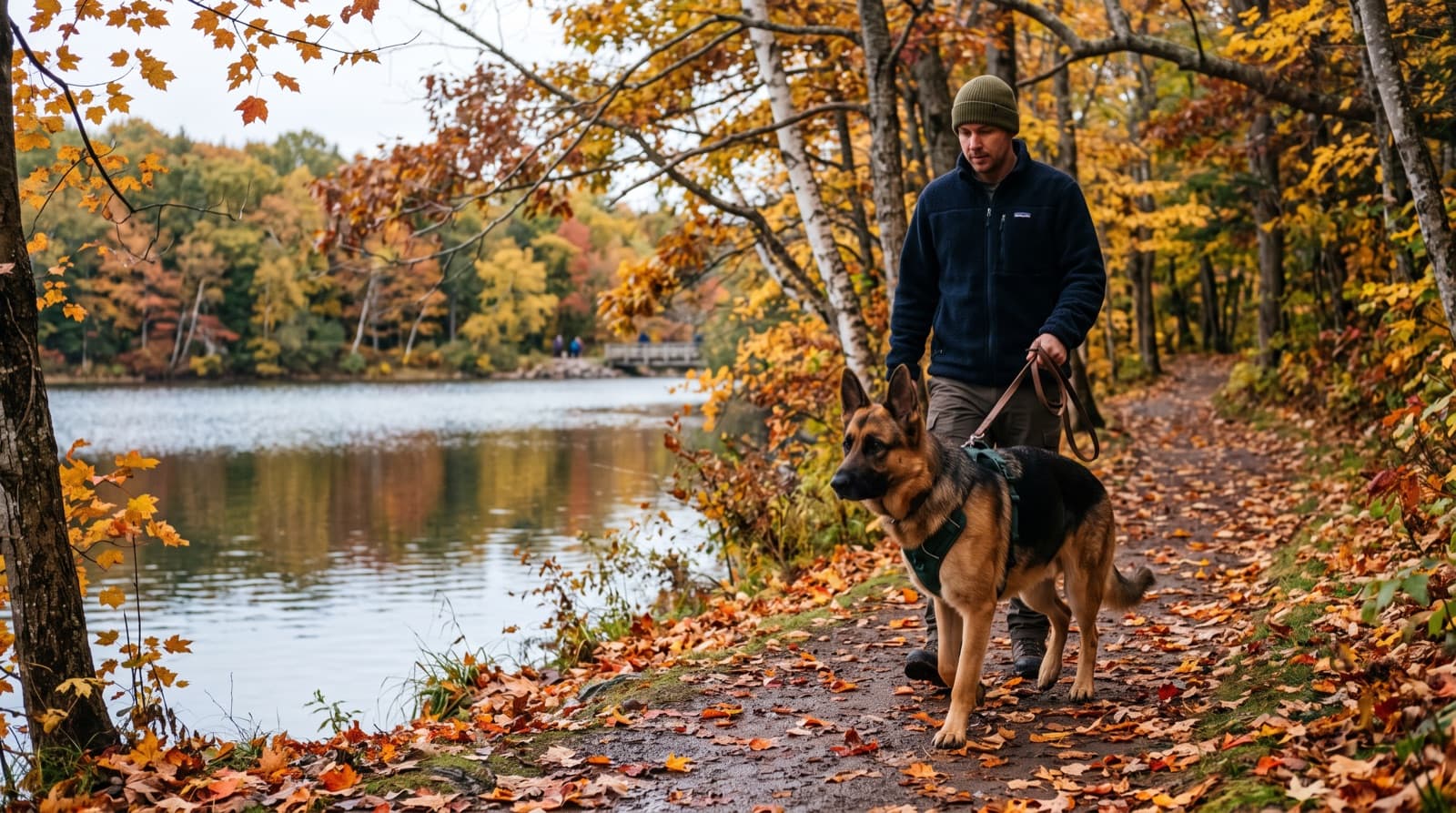
Why German Shepherds end up in Moncton rescue
German Shepherds are one of the most-surrendered large breeds across Greater Moncton, and the pattern is remarkably consistent. Almost none of these dogs are surrendered for being bad dogs. They are surrendered because a home underestimated what a smart, powerful, driven working breed actually needs. Reading the patterns ahead of time helps you budget honestly and read foster write-ups accurately.
- Underestimated exercise and mental needs. The most common story. Someone adopts the loyal, intelligent Shepherd of reputation and discovers a 75-pound athlete that needs an hour or more of real activity a day plus a job for its brain. When it does not get that, it barks, digs, chews through drywall, and paces. Owners run out of time and energy, and the dog gets surrendered as “too much.”
- Reactivity that was never managed. Shepherds are alert and protective by design. Without early socialisation and training, that turns into barking and lunging at other dogs, strangers, or the mail carrier. Once the habit is entrenched, walks become stressful, and unprepared owners give up rather than commit to the training work.
- Life changes. A move to a smaller place or a rental with breed or size restrictions, a new baby, a job with longer hours, or a relationship change tips an already-stretched household over the edge. A big, high-needs dog is the first casualty when time and space get tight.
- Vet costs and health surprises. Large breeds cost more to feed and treat, and Shepherds carry real orthopedic risk. A dysplasia diagnosis, a cruciate tear, or an emergency can exceed what a household budgeted, and some surrender rather than face the bills.
- Puppy-to-adolescent shock. A Shepherd puppy is charming; a Shepherd adolescent between six and eighteen months is a large, mouthy, testing teenager. Families who expected the dog to stay easy get overwhelmed during the hardest developmental window and surrender.
The takeaway is not that Shepherds are difficult. It is that they are honest: they give back exactly what you put in. Ask the rescue directly how much exercise the dog is getting, what its recall and reactivity look like, whether it has lived with kids or other animals, and what training it has had. A foster-based rescue will have real answers, and those answers matter more for this breed than almost any other.
Moncton and NB rescues that list German Shepherds
Greater Moncton is the largest metro in New Brunswick, the tri-community of Moncton, Dieppe, and Riverview with roughly 160,000 people, so there is real demand for Shepherds and a steady, if modest, supply through local rescue. Set listing alerts on every organisation you would consider, because a good Shepherd moves fast. For a fuller directory, see our guide to the best dog rescues in Moncton.
- People for Animal Wellbeing (PAW): formerly the Greater Moncton SPCA, at 116 Greenock Street, this is New Brunswick's largest shelter and the most consistent local source of Shepherds and Shepherd mixes through owner surrender and stray intake. The walk-in adoption route lets you meet a dog in person before applying, and the shelter provides a temperament and medical write-up. Adoption fees are published at $450 for an adult and $550 for a puppy six months and under, with a detailed list of what is included on the PAW adoption fees page.
- Fulfilling Hearts Rescue: a Moncton foster-based rescue with foster homes across the province that considers applicants beyond Greater Moncton. Because its dogs live in real homes, the temperament notes on energy, reactivity, and how a dog handles kids, cats, or other dogs tend to be more accurate than a shelter-only setting can offer, which is exactly the information a Shepherd adopter needs most. Fulfilling Hearts does not publish a flat adoption fee, but it spays or neuters and vaccinates every dog before adoption, so ask about the specific dog. It is the best choice for adopters who want detailed foster temperament notes before committing.
- Provincial and regional welfare: the New Brunswick SPCA is the provincial animal-welfare body and a useful reference point, and many Maritime foster-based rescues pull dogs from within New Brunswick and sometimes from out of region through transport. Widening your alerts across regional NB and Maritime rescues improves your odds, since Shepherd intake at any single organisation is intermittent.
One caution for this breed in particular: purebred German Shepherds are sought-after, which makes them a common hook for online scams. A “free” or heavily discounted Shepherd advertised online, especially one that needs a transport or shipping fee upfront, is almost always a scam. A legitimate New Brunswick rescue will always want an application and a conversation, and will show you a real adoptable-dog list and a verifiable address before any money changes hands. Verify before you send anything.
Working line, show line, and what actually matters
You will hear German Shepherds described as working line or show line, and the distinction is worth understanding even though it matters less for a rescue dog than most people think. Working line Shepherds are bred for drive, stamina, and trainability for police, protection, and sport work. They tend to be leaner, more intense, and hungrier for a job, and a serious working prospect can be a poor fit for a quiet pet home that cannot channel all that drive. Show line Shepherds, often the sloped-topline conformation type, are bred more for appearance and a somewhat steadier pet temperament, though they still need genuine exercise and structure.
Here is the reality for Moncton rescue: most dogs you will meet are neither a pedigreed working prospect nor a show champion. They are pet-bred or mixed-line Shepherds and Shepherd crosses whose behaviour has been shaped as much by their early life and training as by their genetics. A dog labelled “working line” in a rescue listing might simply mean a bigger-drive dog that needs an active home, and a “mix” might carry more or less Shepherd energy than the label suggests.
What matters far more than the line label is the individual dog's assessment: how much energy it has, how biddable and trainable it is, how it handles triggers, and how strong its prey drive is. This is where a foster-based rescue is worth its weight, because Fulfilling Hearts can tell you how a specific dog actually behaves living in a home rather than leaving you to guess from a pedigree you cannot verify. Match the individual dog to your household, not the line label to your idea of the breed. For a broader view of the breed's traits and current listings, see our Moncton German Shepherd breed and adoption page.
German Shepherd health, in brief
German Shepherds typically live 9 to 13 years, and the breed's health risks are led by orthopedic and neurological conditions. None of these should scare you off a Shepherd, but they do mean you go in budgeting for larger-dog vet care and taking joint and spinal health seriously from the start.
- Hip and elbow dysplasia. Among the best-known risks in the breed. Responsible breeders screen breeding dogs, and the abnormal joint formation can lead to pain and arthritis. Keeping a Shepherd lean, avoiding forced exercise on hard surfaces while young, and early vet assessment all help.
- Degenerative myelopathy (DM). A progressive spinal cord disease that gradually weakens the hind legs and is over-represented in Shepherds. A DNA test exists for the associated gene. It is not painful but it is progressive, and it is worth understanding as a breed risk.
- Bloat (gastric dilatation-volvulus). A life-threatening emergency in deep-chested breeds where the stomach twists. It cannot wait, so know where the nearest emergency vet is and learn the warning signs before you need them.
- Exocrine pancreatic insufficiency (EPI). More common in Shepherds than most breeds, where the pancreas fails to produce enough digestive enzymes. It is manageable with enzyme supplementation and diet once diagnosed.
- Allergies and skin issues. Shepherds are prone to skin allergies and related ear and coat problems, which are manageable but can mean ongoing care.
- Arthritis in the senior years. Common in an aging large breed, especially one with a history of joint issues. Weight management and joint support help preserve mobility.
For breed-level health-testing standards, the Orthopedic Foundation for Animals maintains public screening databases at ofa.org, and the Canadian Kennel Club publishes the breed standard. A rescue Shepherd will rarely arrive with OFA records, but they are useful context for the conditions the breed is screened for. Plan a baseline vet visit in your first month to check joints and body condition, and read our Moncton emergency vet guide so you know where to go for a bloat emergency before it happens.
Exercise, size, and a big dog in Moncton
Everything about living well with a German Shepherd comes back to meeting its need for physical and mental work. A healthy adult needs at least an hour of real exercise a day, and often more, and a Shepherd that gets it is a calm, biddable, wonderful dog. A Shepherd that does not is where the barking, digging, drywall damage, and reactivity come from. This is not a breed you can leave in a yard and expect to self-regulate.
Greater Moncton gives you the space to do it right. Long on-leash walks along the Riverfront Trail beside the Petitcodiac River, hikes through the extensive trail network at Irishtown Nature Park on the north side, and structured play and training in a large green space like Centennial Park all help burn the physical energy. Mapleton Park adds more trail options. For off-leash freedom, always check the rules first, since a big, potentially reactive dog needs a genuinely secure space; see our Moncton off-leash parks guide for where that is allowed. Treat Centennial Park, the Riverfront Trail, and Irishtown as on-leash walks unless the guide confirms otherwise.
The mental half is just as important as the physical. Obedience training, scent games, puzzle feeders, and teaching new skills tire a Shepherd more thoroughly than distance alone, and they double as reactivity and bond-building work. The Maritime climate shapes the routine in both directions. Moncton winters are cold and snowy with nor'easters and freezing rain, and the double coat handles the cold well, so the winter task is managing road salt on the paws. Summers are warm and humid, and a heavy double coat plus humidity is a genuine overheating risk, so on hot days you walk early or late, carry water, and use shade. A big dog with the right amount of the right kind of activity is a joy to live with in this city.
What a Moncton rescue German Shepherd actually costs
At People for Animal Wellbeing the adoption fee is $450 for an adult dog and $550 for a puppy six months and under. That fee is not a sale price; it is a partial recovery on the medical work already done. It includes spay or neuter, first vaccination, rabies vaccine, deworming, flea treatment, microchip, nail trim, and one month of 24-hour PetWatch. Stacked at retail New Brunswick vet pricing, those services would cost well past the adoption fee, so a fully vetted $450 adult adoption is the cheapest legitimate path to a Shepherd in Greater Moncton. Fulfilling Hearts Rescue does not publish a flat fee, but every dog it places is spayed or neutered and vaccinated before adoption, so confirm the number for the specific dog when you apply.
Compare that with a breeder German Shepherd puppy, which runs well into four figures with none of the medical work done yet, and rescue is far cheaper while often giving you a dog with a known temperament. Budget roughly $400 to $900 in one-time setup costs for the first month: a crate sized for a large dog, a good harness and leash, bowls, bedding, and your own baseline vet visit. Note that New Brunswick's 15% HST applies to supplies, though not to the adoption fee itself. For a fuller local breakdown, see our Moncton dog adoption cost guide.
Ongoing, plan for the higher end of dog budgets because this is a large breed. A medium dog runs roughly $1,500 to $2,500 a year, and a Shepherd sits at or above that for food, routine vet care, and the pet insurance that is genuinely worth it given the breed's documented hip, elbow, and spinal risks. You will also need a City of Moncton dog licence, which the municipality administers and renews; our Moncton pet licensing guide covers how. Most rescue Shepherds arrive already spayed or neutered, but if yours is not, our Moncton spay and neuter guide covers the local options.
Browse adoptable Moncton German Shepherds and Shepherd mixes
Current New Brunswick listings from People for Animal Wellbeing, Fulfilling Hearts Rescue, and other regional rescues in one place. Sound adult Shepherds place fast, so alerts and same-day applications win.
See Available Moncton Shepherds →Guarding and reactivity: management, not punishment
German Shepherds are alert and protective because the breed was built that way, and a well-raised Shepherd's watchfulness is one of its best qualities. The trouble comes when that instinct is left unmanaged and hardens into barking at the window, lunging at dogs on the sidewalk, or wariness of strangers that tips into reactivity. The good news is that this is manageable. The goal is training and environmental control, never punishment, which tends to make a defensive dog worse.
Start by controlling the triggers so the dog is not rehearsing the behaviour you do not want. Every time a Shepherd barks itself into a frenzy at the window or lunges at a passing dog, the habit gets stronger, so manage the environment: block window access to the street, add distance from triggers on walks to keep the dog under threshold, and reward calm. Work with a qualified force-free trainer or behaviour professional early rather than waiting for the pattern to entrench, because reactivity is far easier to change before it becomes the dog's default. Give the protective drive a legitimate outlet through obedience, structured activity, and a predictable routine.
If a rescue flags a dog as reactive, take the note seriously rather than assuming love will fix it. Ask what the foster or shelter has already tried, what the specific triggers are, and how the dog recovers after an incident. Then be honest about whether your household has the time, consistency, and space to do the ongoing work. A confident handler, a tired dog, and clear rules turn most Shepherd reactivity into something entirely liveable, but it takes commitment, and the dogs that get surrendered twice are usually the ones whose reactivity was ignored the first time.
The first 30 days with a Moncton German Shepherd
A German Shepherd follows the same 3-3-3 arc as any rescue dog: the first three days are raw decompression, the routine settles over about three weeks, and the real bond takes closer to three months. A big, watchful breed often takes the full window, so patience in the early days pays off. Our first week with a rescue dog guide lays out the general decompression framework step by step; what follows is tuned to a large, watchful Shepherd.
- Set up the space before the dog arrives. A large crate sized for the breed, a defined resting area, and a plan for where the dog eats and sleeps. Predictability lowers stress for a decompressing dog.
- Keep the world small at first. Same short routes, same quiet routine for the first two weeks. Hold off on the dog park, new friends, and busy trails until the dog has settled and you know its triggers.
- Manage introductions. If you have kids, other dogs, or a cat, go slow and supervise. A foster note about prior experience helps, but every new home is a fresh assessment for this breed.
- Start training and enrichment from day one. Short, positive obedience sessions, puzzle feeders, and scent games. Mental work settles a Shepherd faster than physical exercise alone in the early days.
- Book a baseline vet visit in the first two weeks. Establish records, check joints and body condition, confirm the microchip is registered to you, and discuss breed-specific monitoring.
- Enrol in pet insurance in week one. Before any pre-existing conditions appear in the record. For a breed with real orthopedic and spinal risk, early enrolment is worth it.
- Licence the dog with the City of Moncton. Required for dogs in the city and quick to arrange. See our Moncton dog bylaws guide for leash rules and requirements.
- Watch the exercise dose. Meet the dog's needs without forced, high-impact exercise on hard surfaces in the first weeks, especially for a young or unknown-history dog whose joints you have not yet had assessed.
- Winter and summer paw and coat care. Rinse or wipe the paws after salted walks in winter, and in the humid summer walk early or late with water and shade for a heavy-coated dog.
- Find your trainer before you need one. Line up a qualified force-free trainer or behaviour professional early, especially if the dog shows any reactivity, rather than scrambling once a habit sets in.
Give it three weeks or so and the guarding, the watchfulness, and the early reactivity usually begin to soften into a dog you can actually read. Reach three months and you have a settled, confident Shepherd whose exercise and training routine has become second nature. None of that lands on day one, so resist any verdict until the full 90 days are behind you. Structure, real work for the body and the brain, and patience are what carry a big protective dog through.
Frequently asked questions
Where can I adopt a German Shepherd near me in Moncton?
Start with People for Animal Wellbeing (PAW, the shelter formerly known as the Greater Moncton SPCA) at 116 Greenock Street, and with Fulfilling Hearts Rescue, a Moncton foster-based rescue with homes across New Brunswick. PAW is New Brunswick's largest shelter and takes in Shepherds and Shepherd mixes regularly through owner surrender and stray intake, with a walk-in adoption route so you can meet the dog before you apply. Fulfilling Hearts places dogs from foster homes, which means detailed temperament notes on reactivity, energy, and how the dog handles other animals, and it considers applicants beyond Greater Moncton. Widen your net across regional New Brunswick and Maritime rescues too, because purebred Shepherds place fast when a good one is listed. Set alerts on both PAW and Fulfilling Hearts, get your references and landlord approval ready in advance, and apply the same day a dog that fits your household appears.
Why are German Shepherds the most-surrendered large breed?
German Shepherds combine size, intelligence, energy, and protectiveness, and that combination overwhelms a lot of well-meaning owners. The dog is a working breed that needs a real job, real exercise, and consistent training, and when it does not get those things it invents its own work: guarding the house against the mail carrier, barking at every passerby, chewing through drywall, or fixating on other dogs on walks. People adopt the smart, loyal Shepherd from the movies and get a 75-pound athlete that needs an hour or more of activity a day plus mental work, and life changes (a move, a baby, a job with longer hours) tip an already-stretched household into surrendering. Reactivity that was never managed early is another common driver, along with the vet costs that come with a large breed prone to hip and joint problems. Very few of these dogs are aggressive or broken. Most are under-exercised, under-trained, and in the wrong home for the breed's real needs.
How much does it cost to adopt a German Shepherd in Moncton?
At People for Animal Wellbeing the adoption fee is $450 for an adult dog and $550 for a puppy six months and under. That fee includes spay or neuter, first vaccination, rabies vaccine, deworming, flea treatment, microchip, nail trim, and one month of 24-hour PetWatch. Stacked at retail New Brunswick vet pricing, that package of services would cost far more than the fee, so a fully vetted $450 adult adoption is the cheapest legitimate path to a Shepherd in Greater Moncton. Fulfilling Hearts Rescue does not publish a flat fee, but every dog it places is spayed or neutered and vaccinated before adoption, so ask about the specific dog when you apply. Compared with a breeder Shepherd puppy, which runs well into four figures with none of the medical work done yet, rescue is dramatically cheaper. Budget roughly $400 to $900 in one-time setup costs for the first month, then plan for the higher ongoing care a large breed needs.
What is the difference between working line and show line German Shepherds?
Working line Shepherds are bred for drive, stamina, and trainability for police, protection, and sport work. They tend to be leaner, more intense, and need serious daily exercise plus a job to stay balanced, and they can be a poor match for a quiet first-time home. Show line Shepherds, often the sloped-back conformation type, are bred for appearance and a somewhat softer temperament, though they still need real exercise and structure. Most rescue Shepherds in Moncton are neither a pure working prospect nor a pedigreed show dog. They are pet-bred or mixed-line dogs whose behaviour is shaped as much by their upbringing as their genetics. What matters more than the line label for a family pet is the individual dog's temperament assessment: energy level, biddability, reactivity, and prey drive. A foster-based rescue like Fulfilling Hearts can tell you how a specific dog actually behaves in a home, which is worth more than guessing from a line label.
What health problems do German Shepherds have?
The German Shepherd's best-known health risks are orthopedic and neurological. Hip and elbow dysplasia are common in the breed, which is why responsible breeders screen through the Orthopedic Foundation for Animals. Degenerative myelopathy (DM), a progressive spinal cord disease that gradually weakens the hind legs, is over-represented in Shepherds and there is a DNA test for the associated gene. The breed is also prone to bloat (gastric dilatation-volvulus), a life-threatening emergency in deep-chested dogs, along with exocrine pancreatic insufficiency, allergies and skin issues, and arthritis in the senior years. A rescue Shepherd will rarely come with OFA records, so plan a baseline vet visit in your first month to check joints and body condition, and know where the nearest emergency clinic is before you need it, because bloat cannot wait. None of this should scare you off the breed. It just means budgeting for larger-dog vet care and taking early joint health seriously.
How much exercise does a German Shepherd need?
A healthy adult German Shepherd needs at least an hour of real exercise a day, and often more, plus mental work to go with it. This is a working breed, and a walk around the block does not touch it. Long on-leash walks along the Riverfront Trail beside the Petitcodiac, hikes through the trail network at Irishtown Nature Park, and structured play in a large space like Centennial Park all help burn the physical energy. Just as important is the mental side: obedience training, scent games, puzzle feeders, and learning new skills tire a Shepherd more thoroughly than distance alone. An under-exercised Shepherd is where the destruction, barking, and reactivity come from, so the exercise is not optional. In Moncton's climate you also work around the seasons: on hot, humid summer days walk in the early morning or evening and carry water, and in deep winter keep sessions brisk and watch for salt on the paws.
Are German Shepherds good with kids and other dogs?
Many German Shepherds are excellent family dogs, loyal, gentle with their own children, and protective in a good way. The breed's size and herding instinct mean supervision matters with young kids, since a big dog can knock a toddler over in play and some Shepherds nip at heels to herd. With other dogs it varies a lot by the individual. Some Shepherds are social and fine at a fenced dog park; others are dog-reactive or same-sex intolerant and do best as the only dog or with careful introductions. This is exactly where a foster-based rescue earns its keep: Fulfilling Hearts can tell you whether a specific dog has lived with kids, cats, or other dogs and how it behaved. For a home with young children or existing pets, look for a foster note that confirms real experience, and plan on managed introductions and supervision through the first few months.
How do I manage a German Shepherd that guards or is reactive?
Guarding and reactivity are common in Shepherds because the breed was built to be alert and protective, and the goal is management and training, not punishment. Start by controlling the triggers: manage the environment so the dog is not rehearsing barking at the window or lunging at every dog on the sidewalk, because every rehearsal makes the behaviour stronger. Work with a qualified force-free trainer or behaviour professional early rather than waiting until the habit is entrenched. Reward calm behaviour, keep the dog under threshold on walks by adding distance from triggers, and give the dog outlets for its protective drive through training and structured activity. A tired, well-exercised Shepherd with clear rules and a confident handler is far easier to live with. If a rescue flags a dog as reactive, take that note seriously and ask what the foster or shelter has done so far, then be honest about whether your household can commit to the ongoing work.
Should I adopt a German Shepherd puppy or an adult?
For most Moncton households, an adult German Shepherd is the smarter choice. Shepherd puppies are a serious undertaking: eighteen months or more of intensive training, socialisation, exercise, and adolescence with a large, driven, mouthy breed, all while the joints are still developing. An adult Shepherd has a settled temperament you can actually assess, often some existing training, a documented (if short) medical history, and a lower adoption fee. Senior Shepherds, seven years and up, can be wonderfully calm companions and place beautifully into quieter homes, though you go in with eyes open on joint and mobility care. If you specifically want a puppy and have the time, budget, and experience for the work, a rescue Shepherd puppy can be rewarding, but for a first-time large-breed owner an adult with a known temperament is far more forgiving.
How do I care for a German Shepherd through a Moncton winter and summer?
German Shepherds have a thick double coat that handles Moncton's cold, snowy winters well, so the winter concern is less about cold tolerance and more about the road salt and slush on city sidewalks. Rinse or wipe the paws after salted walks, watch for salt burn and cracked pads, and booties help sensitive dogs. Our winter dog care guide covers the routine in detail. Summer is the flip side and arguably the bigger risk: Moncton summers are warm and humid, and a heavy double coat plus humidity is a real overheating hazard. On hot days walk early or late, carry water, use shade, and never leave the dog in a parked car. Do not shave the double coat, which actually helps regulate temperature; instead keep up with brushing, especially during the twice-yearly coat blow when a Shepherd sheds heavily. Year-round, that shedding means a good brush and a decent vacuum are part of Shepherd ownership.
How long is the wait to adopt a German Shepherd in Moncton?
Plan on a few weeks to a couple of months from application approval to dog-in-home, though it depends heavily on the specific dog and the source. German Shepherds and Shepherd mixes come through PAW and regional rescues regularly because they are one of the most-surrendered large breeds, so intake is steadier than for a rare breed. That said, a young, sound, well-tempered adult Shepherd can be spoken for within days of being listed, so speed matters. Foster-based rescues like Fulfilling Hearts work on the timeline of the individual foster placement and transport intake, which can vary. The way to shorten the wait is to set alerts across PAW, Fulfilling Hearts, and regional New Brunswick and Maritime rescues, stay open to a Shepherd mix rather than holding out for a purebred, and have your references, landlord approval, and vet contacts ready so you can apply the same day the right dog appears.
Related Moncton adoption guides
Moncton German Shepherds
Current New Brunswick Shepherd and Shepherd-mix listings from PAW, Fulfilling Hearts Rescue, and other regional rescues.
Best Dog Rescues in Moncton
A directory of the New Brunswick shelters and foster-based rescues worth setting listing alerts on, with what each is known for.
Moncton Dog Adoption Costs
What rescue fees actually cover, first-month setup and vet costs, and the true ongoing budget for a large dog in Moncton.
Winter Dog Care in Moncton
Road salt, paw care, and cold-weather routines for keeping a Maritime dog safe through nor'easters and deep freezes.
Find your Moncton rescue German Shepherd
Browse current New Brunswick Shepherd and Shepherd-mix listings. Sound adult Shepherds place fast, so alerts and same-day applications still win.
Browse All Moncton Dogs →New dog? Start with these care guides
Everything a new adopter needs to set up a safe, happy home.