The short answer
Purebred Golden Retrievers are rare in New Brunswick rescue and gone fast, so the whole game is alerts and same-day applications. Set listing alerts on People for Animal Wellbeing (PAW, the former Greater Moncton SPCA, at 116 Greenock Street) and Fulfilling Hearts Rescue, and stay open to Golden mixes, which appear more often than purebreds. PAW fees are $450 for an adult and $550 for a puppy, fully vetted. Golden crosses make excellent family dogs and shorten the wait. Skip the out-of-region transport and free-golden scams that prey on the scarcity. And go in with eyes open on two breed realities: an elevated lifetime cancer risk (documented by the Morris Animal Foundation Golden Retriever Lifetime Study) and a heavy double coat that needs real grooming plus winter road-salt and summer-heat care in Moncton's Maritime climate.
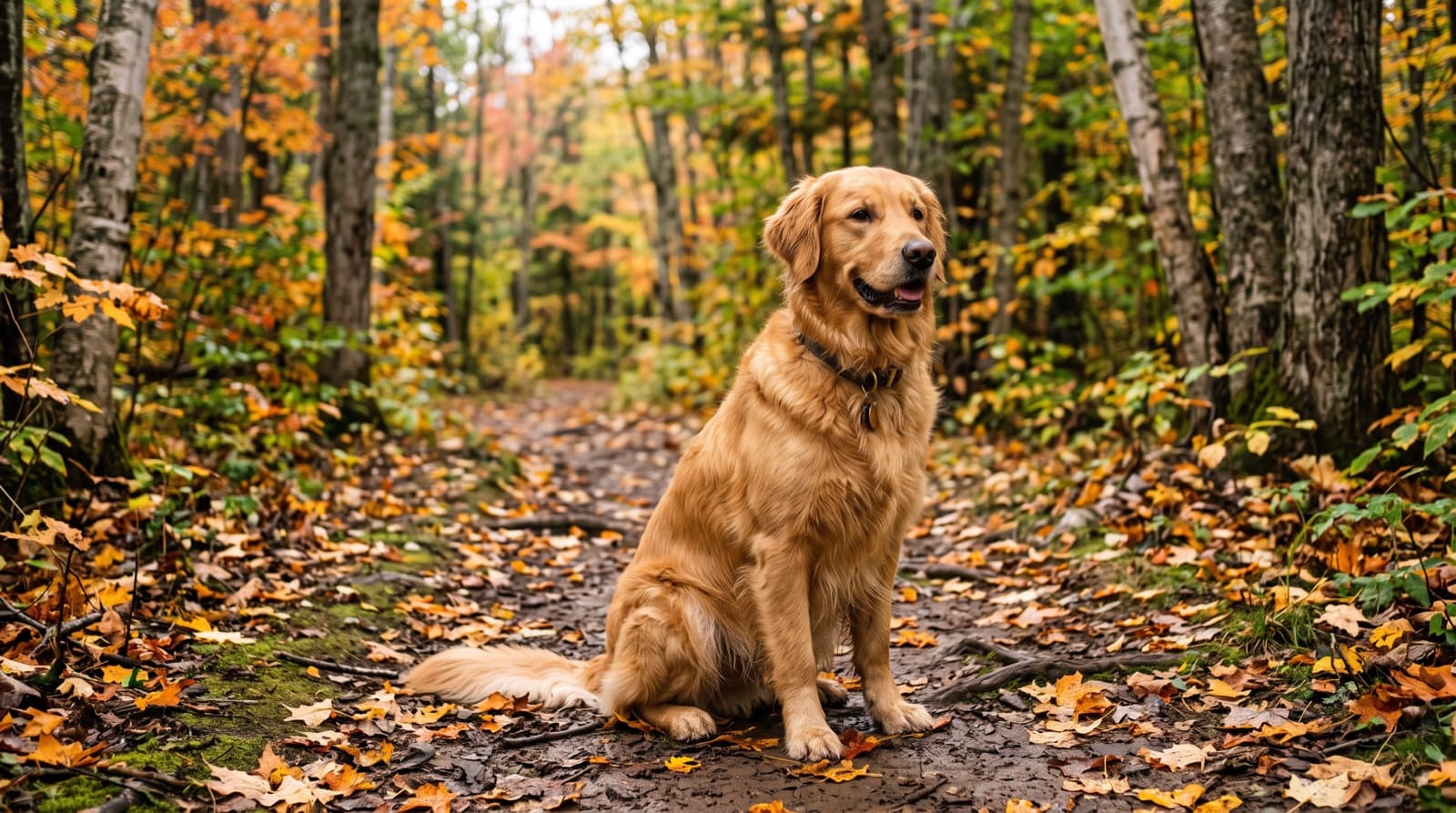
Why Goldens are so rare in Moncton rescue
If you have been checking rescue listings for a Golden Retriever in Greater Moncton and coming up empty, you are not doing anything wrong. Purebred Goldens are one of the hardest breeds to find in Maritime rescue, and understanding why changes how you should approach the search.
The core reason is supply and demand. Goldens are consistently one of Canada's most popular family breeds, so the small number that ever enter rescue get adopted almost immediately. New Brunswick does not produce the volume of surrendered or stray Goldens that a bigger metro does, and unlike some larger cities, Greater Moncton has no Golden-specific breed rescue. A purebred Golden might surface at PAW or through Fulfilling Hearts only a handful of times in a year, and each time, the applications stack up within days.
This scarcity has two practical consequences. First, casually browsing a rescue website every couple of weeks almost guarantees you will miss the dog. By the time a Golden shows up in your feed, the good applications are often already in. Alerts, not browsing, are how you catch one. Second, the scarcity feeds a scam ecosystem. Because so many people want a Golden and so few are available, online offers of free or cheap Goldens (and shady transport operations promising to ship one in quickly) target exactly the adopters who are tired of waiting. More on both of those below.
The single most useful mindset shift is to broaden what you are looking for. Golden crosses (Golden-Lab, Golden-Shepherd, and various doodle-type mixes) reach Maritime rescue far more often than purebreds, and they make wonderful, adaptable family dogs with much of the temperament people love about the breed. An adopter who is open to a Golden mix will find a dog in weeks; one holding out strictly for a purebred puppy may wait many months. Browse what is available right now on the Moncton dog adoption listings, and see the Golden Retrievers and Golden mixes currently in Moncton rescue.
Moncton and NB rescues to watch for a Golden
Two Greater Moncton organisations are your primary sources, and a wider net across New Brunswick and the Maritimes helps for a breed this scarce. Set alerts on all of them, because with Goldens you are essentially waiting for a rare listing and racing to apply. For the full local directory, see our guide to the best dog rescues in Moncton.
- People for Animal Wellbeing (PAW): New Brunswick's largest shelter, formerly the Greater Moncton SPCA, located at 116 Greenock Street in Moncton. It offers a walk-in adoption route and a steady flow of dogs, though a purebred Golden is a rare arrival. The published adoption fee is $450 for an adult and $550 for a puppy six months and under, and that fee includes spay or neuter, first vaccination, rabies vaccine, deworming, flea treatment, microchip, nail trim, and one month of 24-hour PetWatch. You can meet the dog in person before deciding. Check the PAW adoption fees page and their available-dogs list, and set an alert.
- Fulfilling Hearts Rescue: a foster-based Moncton rescue with foster homes across the province, and it considers applicants beyond Greater Moncton. Because dogs live in real homes, the temperament notes on how a dog behaves around kids, cats, and other dogs tend to be detailed and honest, which is a real advantage for a family choosing a large breed. Fulfilling Hearts spays or neuters and vaccinates every dog before adoption. It does not publish a flat adoption fee, so ask about the specific dog when you apply. This is the best source for adopters who want thorough foster temperament notes.
- Regional NB and Maritime rescues: for a breed as scarce as the Golden, widening your search to other New Brunswick and Maritime rescues meaningfully increases your odds. Many Maritime foster-based rescues pull dogs from within NB and sometimes from out of region, so timelines and available dogs vary. The provincial welfare context sits with the New Brunswick SPCA, a useful reference point when you are vetting any organisation.
Whatever route you take, verify any rescue before sending money: a real physical address, a genuine application and conversation, and a current list of adoptable dogs. A legitimate NB rescue will always want an application first and will never pressure you to e-transfer a deposit fast. That caution matters more for Goldens than almost any other breed, precisely because the demand is so high.
The cancer reality, handled honestly
Any honest guide to Golden Retrievers has to talk about cancer. The breed carries an elevated lifetime cancer risk compared with many other breeds, and this is documented rather than anecdotal. The Morris Animal Foundation launched the Golden Retriever Lifetime Study, a large, multi-year research effort following thousands of Goldens across their lives, specifically to understand why cancer is so common in the breed and what genetic and environmental factors influence it.
We are deliberately not quoting a single percentage here, because the honest answer is that risk figures vary by source and study, and the research is still ongoing. Overstating a number would do you a disservice. What matters for you as an adopter is what you do with the knowledge, and the answer is not to be scared off. Millions of families share full, joyful lives with Goldens. It is to plan like a responsible owner of a breed that rewards attentive care.
Three practical steps make the difference. First, learn the early warning signs and act on them: new or growing lumps, unexplained weight loss, ongoing lethargy, lameness that does not resolve, and pale gums all warrant a vet visit rather than a wait-and-see. Second, keep up with veterinary checks, moving from annual to semi-annual exams as your Golden becomes a senior (roughly seven years and up), because early detection genuinely changes outcomes. Third, take pet insurance seriously for this breed and enrol early, before any condition appears in the medical record, so it is not later excluded as pre-existing.
Adopting an adult Golden does not raise the cancer risk; the risk is the breed's, not the adoption path's. If anything, an adult adoption gives you a dog whose current health status you can assess up front. Know where the nearest after-hours help is before you need it: our Moncton emergency-vet guide covers where to turn when something goes wrong outside regular clinic hours.
Transport rescues and the free-golden scam
The scarcity of Goldens in the Maritimes creates a predictable trap. Impatient adopters start looking further afield, and two risks appear: out-of-region transport rescues and outright scams. Both deserve real caution.
Transport rescues bring dogs in from other regions or countries. Some are legitimate and do genuinely good work, but the model carries built-in risk. You often cannot meet the dog or its foster before committing, health and temperament records can be thin or missing, long-distance transport is stressful on dogs, and a small but real number of operations are simply fronts that collect a deposit and disappear. If you seriously consider a transport rescue, do the homework: confirm it is a registered charity, insist on a video call with the current foster, get the dog's complete medical records including a recent hands-on vet exam, and never wire money or e-transfer a deposit to an individual you cannot independently verify. A local adoption where you can meet the dog and the people is almost always safer, even when it means waiting longer.
The free-Golden scam is more clear-cut. It usually starts with an online post or message offering a free or suspiciously cheap Golden, often wrapped in a sympathetic story (a move, an illness, a family emergency). Once you bite, the costs materialise: a refundable crate deposit, transport insurance, vet fees, all payable immediately by e-transfer or gift card. Then the dog never arrives, because it never existed.
Real rescues do not operate that way. A legitimate Moncton or New Brunswick rescue requires an application, asks about your home and lifestyle, often wants a conversation or a home visit, and never pressures you to send money fast to a stranger. Treat these as hard red flags: no verifiable physical address, refusal to do a live video call showing the actual dog, prices that are too good to be true, urgency and payment pressure, and generic stock-looking photos. When in doubt, work only with organisations you can confirm in person, such as PAW at 116 Greenock Street and Fulfilling Hearts, and assume any free-purebred-Golden offer is a scam until proven otherwise.
Adopt or buy: the real cost comparison
Because Goldens are scarce in rescue, some Moncton families weigh going straight to a breeder. It is a fair question, and the numbers make the case clearly. A purebred Golden puppy from a reputable New Brunswick breeder runs well into the thousands of dollars, and that price does not include the spay or neuter, vaccinations, deworming, and microchip that a rescue adoption already covers. A $450 adult adoption at PAW arrives fully vetted with all of that done. A fully vetted $450 adult adoption is the cheapest legitimate path to a dog in Greater Moncton, full stop.
The trade-off is availability and predictability. A responsible breeder can offer a puppy on a schedule, with known parentage and health-tested parents, while rescue Goldens appear unpredictably and are more often adults or mixes than purebred puppies. If a specific pedigree and a young puppy genuinely matter to you, choose a breeder who health-tests both parents (hips, elbows, eyes, and heart) and registers litters through the Canadian Kennel Club, and expect a waitlist. Health screening databases at the Orthopedic Foundation for Animals, ofa.org, are the standard reference for verifying a breeder's claims about hip and elbow scores.
For most families, though, the honest goal is a loving companion, not a show pedigree, and adoption delivers that for a fraction of the cost while opening the door to the Golden crosses that make up the bulk of what actually reaches Maritime rescue. For a full local breakdown of what your first year really costs, see our Moncton dog adoption cost guide. Plan roughly $400 to $900 in one-time setup for your first month and roughly $1,500 to $2,500 a year in ongoing costs for a large dog, remembering that 15% HST applies to supplies though not to the adoption fee itself.
Double-coat grooming through the Moncton seasons
The Golden's dense double coat is part of what makes the breed so appealing and also the biggest ongoing maintenance job you are signing up for. Moncton's four distinct seasons, from snowy nor'easter winters to warm humid summers, make coat care a year-round routine rather than a seasonal chore.
Brush at least two to three times a week the whole year, and daily during the spring and fall coat blows when the undercoat sheds out in clumps. A critical rule: never shave a Golden down. The double coat insulates against both cold and heat and protects the skin, and shaving damages its structure and can leave the dog worse off in every season. Baths every six to eight weeks keep the coat healthy without stripping it. Pay special attention to the ears, because those floppy Golden ears trap moisture and infect easily, particularly after a swim, so clean and dry them regularly. Nail trims every few weeks round out the basic routine, and a professional groom every couple of months helps if you want a hand managing the shedding.
Winter in Moncton adds road-salt care to the list. Salted sidewalks and slushy streets leave salt on the paws and belly feathering, which causes salt burn and cracked pads if left on. Rinse or wipe the feet and lower coat after every walk, and consider booties for a dog with sensitive feet. Trim the hair between the foot pads so ice balls do not form and make walking painful. Freezing rain is a real hazard for a large, enthusiastic dog on slick footing, so pick your routes and timing on icy days. Our Moncton winter dog care guide goes deeper on cold-weather routines.
Summer flips the concern to heat. The same insulating coat plus warm, humid Maritime summers means heat stress is a genuine risk for Goldens. Walk in the cooler early morning or evening rather than midday, always carry water, seek shade, and never leave a Golden in a parked car. Learn the heat-stress warning signs: heavy panting, thick drooling, weakness, or collapse. The upside is that Goldens love water, so a supervised swim is both terrific exercise and a great way to cool off, whether at a safe spot on the Petitcodiac or elsewhere. Just dry and clean the ears afterward. For where to walk and run your dog around the city, our Moncton off-leash parks guide covers the local areas, and spots like Centennial Park, the Riverfront Trail, and Irishtown Nature Park are excellent for on-leash walks year-round.
Browse adoptable Moncton Goldens and Golden mixes
Purebred Goldens are rare and place within days, so alerts and same-day applications win. Golden crosses appear more often and make wonderful family dogs. See what is available now.
See Available Moncton Golden Retrievers →The first 30 days with a Moncton rescue Golden
A rescue Golden follows the same 3-3-3 arc as any adopted dog: the first three days are raw decompression, the routine clicks into place over about three weeks, and the deep bond takes closer to three months. Goldens usually settle on the faster end because the breed is so people-oriented, but do not skip the settling window just because the dog seems easygoing. Our first week with a rescue dog guide walks you through the general settling steps; the notes below adapt them to a people-oriented Golden.
- Book a baseline vet visit in the first two weeks. Establish records, confirm the microchip is registered to you, score body condition, and check the ears. For a breed with an elevated cancer risk, an early baseline exam is genuinely valuable.
- Enrol in pet insurance in week one. Before any condition shows up in the record. This matters more for Goldens than most breeds, given the cancer and joint risks that are cheaper to insure against when enrolled early.
- Start the grooming routine from day one. Get the dog used to brushing, ear cleaning, and paw handling early. Two to three brushings a week, more during a coat blow, plus ear checks after any swim.
- Set a measured feeding plan. Goldens are food-motivated and gain weight easily, and extra weight worsens joint and health problems. Measure meals, count treats into the daily total, and skip table scraps.
- Watch the exercise dosage. Goldens are energetic but a new rescue and a growing puppy both need controlled activity, not marathon days. Build up gradually with on-leash walks at places like Centennial Park and the Riverfront Trail.
- Mind the weather from the start. Winter means paw rinsing after salted walks; summer means early or evening walks, shade, and water. Get the seasonal habits going immediately.
- Licence the dog with the City of Moncton. A dog licence is required in the city. Our Moncton pet licensing guide and the Moncton dog bylaws guide cover what you need.
- Keep routines predictable for two weeks. Same walks, same schedule, same quiet home. Save new friends, busy parks, and big outings for after week three.
- Crate or safe-space routine from night one. Even a settled Golden benefits from a den for the first month of decompression.
Somewhere in the third week the dog relaxes into the household, and the affectionate, velcro side Goldens are loved for begins to attach itself to you. Come the three-month mark that bond runs deep, and the brushing, weight-watching, and seasonal-care habits have quietly folded into your week. Let the full 90 days play out before you conclude anything. A steady routine, consistent grooming, and time are what turn a cautious new arrival into the shadow that follows you room to room.
Frequently asked questions
Where can I adopt a Golden Retriever near me in Moncton?
Start with the two Greater Moncton organisations that reliably move quality dogs: People for Animal Wellbeing (PAW, the former Greater Moncton SPCA) at 116 Greenock Street, and Fulfilling Hearts Rescue, a foster-based Moncton rescue that places dogs across New Brunswick. Purebred Golden Retrievers are genuinely rare in Maritime rescue, so neither one will have a Golden waiting most weeks. The winning strategy is to set up listing alerts on both, watch the LocalPetFinder Moncton listings, and apply the same day a Golden or Golden mix appears, because these dogs are often spoken for within days. Stay open to Golden crosses (Golden-Lab, Golden-Shepherd, doodle-type mixes), which show up more often than purebreds and make wonderful family dogs. Widen your net to regional NB and Maritime rescues too, and be ready with references, a vet contact, and landlord approval before the dog you want is even listed.
Why are Golden Retrievers so hard to find in Moncton rescue?
Two things drive the scarcity. First, Goldens are one of the most popular family breeds in Canada, so the small number that do enter rescue get adopted almost immediately. Second, New Brunswick simply does not have the volume of surrendered or stray Goldens that a larger metro produces, and there is no Golden-specific breed rescue serving Greater Moncton the way some larger cities have. The result is that a purebred Golden might appear at PAW or through Fulfilling Hearts only a handful of times a year, and when one does, the application list fills fast. This scarcity is exactly why patience plus alerts plus a same-day application beats casually checking a website every few weeks. It also feeds a scam problem: because demand far outstrips supply, fake free-Golden and cheap-transport offers target people who are tired of waiting.
How much does it cost to adopt a Golden Retriever in Moncton?
At People for Animal Wellbeing, the adoption fee is $450 for an adult dog and $550 for a puppy six months and under. That fee covers a lot: spay or neuter, first vaccination, rabies vaccine, deworming, flea treatment, microchip, nail trim, and one month of 24-hour PetWatch. Stacked at retail New Brunswick vet pricing, those services would cost far more than the adoption fee, so a fully vetted $450 adult adoption is the cheapest legitimate path to a Golden in Greater Moncton. Fulfilling Hearts Rescue does not publish a flat fee, but every dog it places is spayed or neutered and vaccinated before adoption, so ask about the specific dog when you apply. Budget roughly $400 to $900 in one-time setup costs for your first month (crate, bed, grooming tools, leash, a baseline vet visit), and plan on roughly $1,500 to $2,500 a year in ongoing costs for a large dog. Note that 15% HST applies to supplies in New Brunswick, though not to the adoption fee itself.
Is it true Golden Retrievers get cancer more than other breeds?
Golden Retrievers do carry an elevated lifetime cancer risk compared with many breeds, and this is well documented rather than a rumour. The Morris Animal Foundation launched the Golden Retriever Lifetime Study, a large multi-year research project following thousands of Goldens over their lives specifically to understand why cancer is so common in the breed and what factors influence it. We are deliberately not quoting a percentage here because the honest answer is that risk varies and the science is ongoing, but the takeaway for an adopter is practical. Learn the early warning signs (new lumps, unexplained weight loss, lethargy, lameness that does not resolve, pale gums), keep up with annual and then semi-annual senior vet checks, and take pet insurance seriously for this breed. Adopting an adult Golden does not increase cancer risk; it simply means you should budget and plan for a breed that benefits from attentive veterinary care as it ages.
Should I use an out-of-region transport rescue to get a Golden faster?
Be very careful here. Because Goldens are scarce in the Maritimes, adopters get impatient and turn to rescues that transport dogs in from other regions or countries. Some of these are legitimate and do good work, but the model carries real risks: you often cannot meet the dog or its foster before committing, health and temperament information can be thin, transport stress is hard on dogs, and a small but real number of operations are fronts that take a deposit and vanish. If you consider a transport rescue, verify it is a registered charity, ask for a video call with the current foster, get the dog's full medical records including a recent vet exam, and never wire money or e-transfer a deposit to an individual you cannot verify. A local adoption through PAW or Fulfilling Hearts, where you can meet the dog and the people, is almost always the safer path, even if it means waiting longer.
How do I avoid free-Golden and cheap-puppy scams?
The classic scam plays on Golden scarcity: an online post or message offers a free or very cheap Golden Retriever, sometimes claiming a move, a death in the family, or a rehoming emergency. Once you are interested, the costs appear (shipping crate deposit, vet fees, insurance for transport), all payable by e-transfer or gift card, and the dog never arrives. Real rescues do not work this way. A legitimate Moncton or New Brunswick rescue will require an application, ask you questions about your home, want a conversation or a home check, and never pressure you to send money fast to a stranger. Red flags: no verifiable physical address, refusal to do a video call with the dog, prices that seem too good, pressure to pay immediately, and stock-looking photos. When in doubt, work only with organisations you can confirm, like PAW at 116 Greenock Street and Fulfilling Hearts, and treat any free-purebred-Golden offer as a scam until proven otherwise.
Adopt or buy from a breeder: what makes sense for a Golden in Moncton?
Financially, adoption wins by a wide margin. A purebred Golden puppy from a reputable New Brunswick breeder typically runs well into the thousands of dollars, and that is before any of the spay/neuter, vaccination, and microchip costs that a rescue adoption already includes. A $450 adult adoption at PAW arrives fully vetted. The trade-off is availability and predictability: a breeder can offer a puppy on a schedule with known parentage and health testing, while rescue Goldens appear unpredictably and are often adults or mixes rather than purebred puppies. If you are set on a purebred puppy, choose a breeder who health-tests parents (hips, elbows, eyes, heart) and registers through the Canadian Kennel Club, and expect a waitlist. If your real goal is a loving family dog rather than a specific pedigree, adoption gives you a vetted dog for a fraction of the cost and opens the door to the Golden crosses that make up most of what actually reaches Maritime rescue.
How much grooming does a Golden Retriever need in the Maritime climate?
A Golden has a dense double coat that needs real, ongoing work, and Moncton's four-season climate makes it more, not less, of a job. Brush at least two to three times a week year-round, and daily during the heavy spring and fall coat blows when the undercoat sheds in clumps. The double coat is not just cosmetic: it protects the dog, so you should never shave a Golden down, because that damages the coat's ability to insulate and can leave the skin exposed. Baths every six to eight weeks, regular ear cleaning (those floppy ears trap moisture and infect easily, especially after swimming), and nail trims round out the routine. Winter adds road-salt care: rinse or wipe the paws and belly feathering after walks on salted sidewalks to prevent salt burn and cracked pads, and consider booties for a dog with sensitive feet. Summer humidity means keeping the coat clean and dry to prevent hot spots. Plan for a professional groom every couple of months if you want help managing the shedding.
Do Golden Retrievers handle Moncton winters and summers well?
Goldens are well suited to Moncton winters. The double coat handles cold, snow, and nor'easters comfortably, and most Goldens love snow. The winter cautions are practical: road salt on paws and feathering, ice balls forming in the foot fur (trim the hair between the pads), and freezing rain that makes footing dangerous for a large exuberant dog. Summer is the bigger risk. That same insulating coat plus warm, humid Maritime summers means heat stress is a genuine concern. On hot, humid days, walk early morning or evening rather than midday, always bring water, seek shade, and never leave a Golden in a parked car. Watch for heavy panting, drooling, or lethargy as heat-stress warning signs. Goldens love water, so a supervised swim in a safe spot is both great exercise and great cooling, but always dry and clean the ears afterward to prevent infection.
Are Golden Retrievers good with kids and other pets?
Generally, yes, and it is a big reason the breed is so popular. Well-socialised Goldens are famously gentle, patient, and people-oriented, which makes them strong candidates for families with children and homes with other dogs or cats. That said, temperament is individual, not automatic, especially with rescue dogs whose history you may not fully know. A big, bouncy young Golden can knock over a toddler by accident out of sheer enthusiasm, so supervise early interactions and teach both the dog and the kids their manners. When you adopt through a foster-based rescue like Fulfilling Hearts, you get the advantage of detailed foster notes on exactly how the dog behaves around children, cats, and other dogs in a real home, which is worth a great deal. At PAW, ask the staff for the shelter assessment. For any Golden, look for the specific note that the dog has lived successfully with the kind of household you have.
How fast do I need to act when a Golden gets listed in Moncton?
Fast. This is the single most important thing to understand about adopting this breed in the Maritimes. Because purebred Goldens are rare and demand is high, a listed Golden at PAW or through Fulfilling Hearts can have multiple qualified applications within a day or two, and sometimes within hours. The adopters who win are the ones who prepared before the dog appeared: alerts set on both rescues and the LocalPetFinder Moncton listings, references lined up, a vet contact ready, landlord approval in hand if you rent, and the whole household agreed. When the notification comes, apply the same day, be honest and thorough on the form, and respond quickly to any follow-up. If you miss one, do not give up; set the alerts again and be ready for the next. Staying open to a Golden mix rather than holding out only for a purebred also dramatically shortens the wait.
Related Moncton adoption guides
Moncton Golden Retrievers
Current Golden Retriever and Golden-mix listings from PAW, Fulfilling Hearts, and other New Brunswick rescues.
Best Dog Rescues in Moncton
A directory of the Greater Moncton shelters and foster-based rescues worth setting listing alerts on, and what each is known for.
Moncton Dog Adoption Costs
What PAW and Fulfilling Hearts fees actually cover, first-month setup costs, and the true ongoing budget for a large dog in Moncton.
First Week With a Rescue Dog
The 3-3-3 decompression plan, settling routines, and what to expect in the first days with a newly adopted Moncton rescue dog.
Find your Moncton rescue Golden
Goldens are rare in New Brunswick rescue and gone in days. Set your alerts, stay open to a Golden mix, and be ready to apply the same day the right dog appears.
Browse All Moncton Dogs →New dog? Start with these care guides
Everything a new adopter needs to set up a safe, happy home.