The short answer
Huskies flood Maritime rescue because they are more dog than most homes expect. The work is exercise, containment, and coat. People for Animal Wellbeing (the former Greater Moncton SPCA) is the natural first call, and Fulfilling Hearts Rescue is the strong foster-based alternative with detailed temperament notes. PAW fees are $450 for an adult and $550 for a puppy, plus a secure dig-proof fence. A Husky is a working sled dog: it needs one to two active hours a day, it will escape if it can, and it sheds enormously. Off leash in an unfenced space is not safe for most Huskies. The heavy double coat handles a Moncton winter easily, but summer heat and humidity are the real danger. For most first-time owners this is not the right breed.
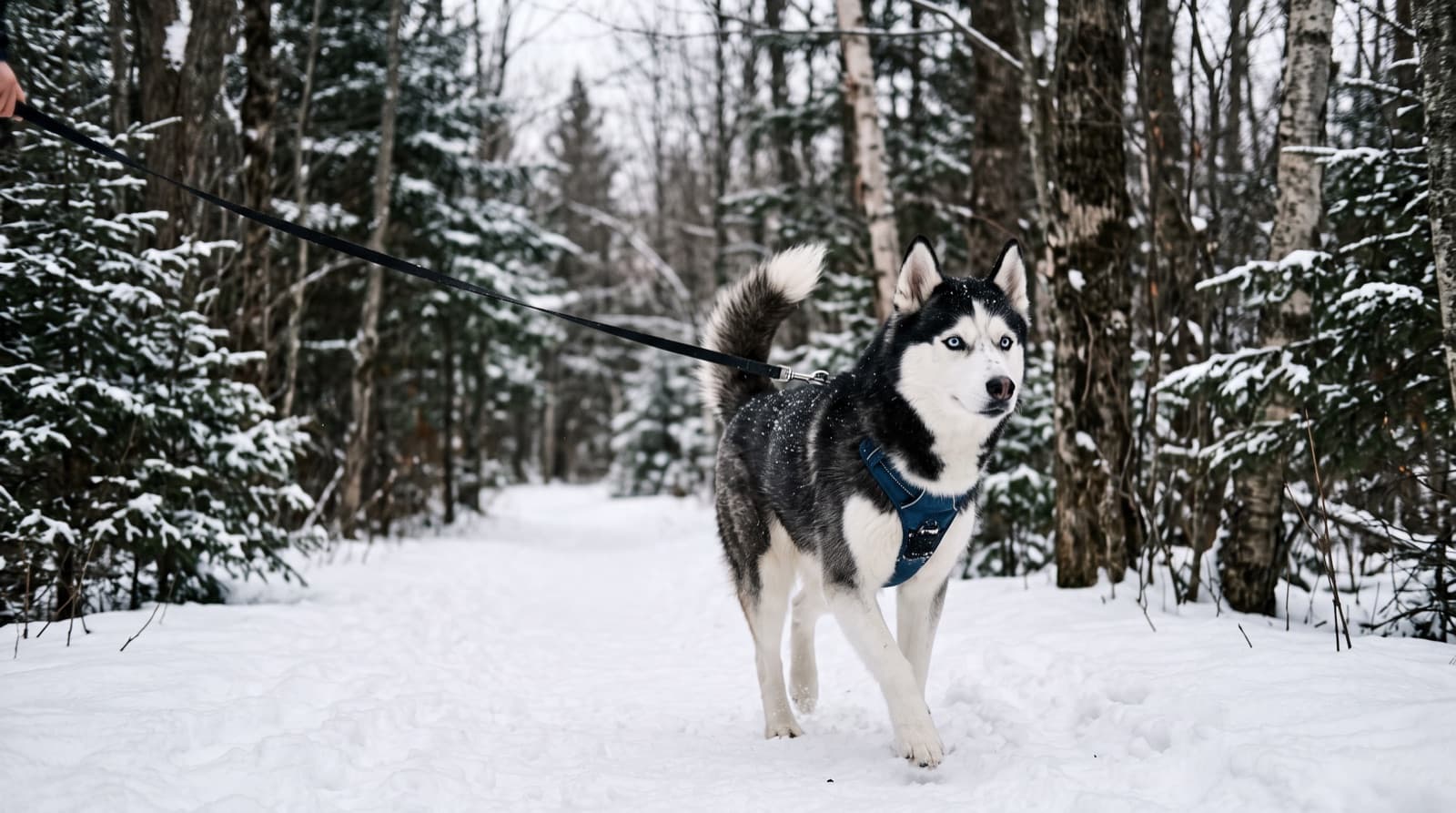
Why Huskies end up in rescue around Moncton
Huskies are one of the most-surrendered breeds in Canada, and the pattern in Greater Moncton mirrors the national one. The dogs are rarely surrendered for aggression. They are surrendered because the household took on far more dog than it understood, and the mismatch shows up in a handful of predictable ways.
- Underestimated energy. The single biggest driver. A Siberian Husky was bred to pull a sled across long distances, and it carries that engine into a suburban living room. Owners who pictured a couple of daily walks get a dog that needs one to two hours of real activity a day, and when that need goes unmet the dog does not settle. It digs, chews, howls, and escapes. Almost every Husky surrender story starts with “we could not keep up with the exercise.”
- Escaping. Huskies are legendary escape artists. They climb fences, dig under them, chew through weak spots, and bolt through open doors, and once loose they run. A household loses the dog once or twice, gets a scare or a fine, and surrenders in frustration. This is hardwired running drive, not disobedience, and it means containment is the first thing any Husky home has to solve.
- Destruction when bored. An intelligent, high-energy dog left under-stimulated will entertain itself, and a Husky's version of entertainment is expensive: shredded couches, holes dug across the yard, torn drywall, and destroyed crates. Owners read this as the dog being “bad” when it is really a symptom of an unmet need for exercise and mental work.
- Shedding and noise. Nobody warns new owners how much a Husky sheds until they are living in it, and the twice-a-year coat blow shocks people. Add the vocalising, the howling, talking, and the famous Husky scream, and a dog that seemed charming in videos becomes overwhelming in a shared duplex or a rental with close neighbours.
- The puppy that grew up. A blue-eyed Husky puppy is one of the most impulse-adopted dogs there is. Then it hits adolescence, tests every boundary, and reveals the full working temperament. Households that adopted the look rather than the breed give up somewhere in the first two years.
Reading these patterns ahead of time is what separates a successful Husky adoption from a returned one. When you read a surrender note, ask the rescue directly: how much daily exercise did this dog get, has it ever escaped, how does it do when left alone, and what is its prey drive like around cats and small dogs. A rescue that fosters its dogs, like Fulfilling Hearts, will have honest answers to all of those.
Moncton and NB rescues that list Huskies
Because Huskies come through Maritime rescue in real numbers, a wide alert net across Greater Moncton and the province catches the right dog quickly. For a fuller directory, see our guide to the best dog rescues in Moncton.
- People for Animal Wellbeing (PAW): the former Greater Moncton SPCA, at 116 Greenock Street, and New Brunswick's largest shelter. This is the most consistent local source for Huskies and Husky mixes, mostly through owner surrender and stray intake. You can meet the dog in person before applying, and the shelter produces a write-up on temperament and any flagged concerns. Adoption is a walk-in route, and fees are $450 for an adult and $550 for a puppy six months and under, with a detailed schedule of what that covers on the PAW adoption fees page.
- Fulfilling Hearts Rescue: a Moncton foster-based rescue with foster homes across the province. Because its dogs live in real homes rather than kennels, the temperament notes on energy, recall, prey drive, and how the dog handles being alone tend to be far more accurate, which matters enormously for a breed this demanding. Fulfilling Hearts considers applicants beyond Greater Moncton, spays or neuters and vaccinates every dog before adoption, and does not publish a flat fee, so confirm the amount when you apply. It is the best source for an adopter who wants detailed foster notes before committing to a Husky.
- Provincial and regional rescue: the New Brunswick SPCA is the provincial animal-welfare body and a useful reference point, and a number of foster-based Maritime rescues pull dogs from within New Brunswick and sometimes from farther afield. Foster-rescue timelines vary with transport and intake, so patience helps. Verify any rescue through a real address, charitable status, and a current adoptable-dog list before sending money; free-Husky offers online are a common scam, and a legitimate rescue always wants an application and a conversation first.
Whichever route you choose, apply to more than one. Huskies place quickly to prepared homes, and having your references, landlord approval, and fencing sorted in advance means you can move the same day a fitting dog appears.
The escape-artist reality
Everything hard about a Husky traces back to one fact: this breed was developed to run away from home for a living. Sled dogs cover enormous ground, and the instinct to move fast and far, independent of any handler, is baked in. That produces a wonderful athletic companion and it produces the two behaviours that catch owners off guard.
The first is recall failure. When a Husky decides to go, or catches a scent worth chasing, it simply leaves, and it will not stop when you call. This is not a training gap you can close with enough patience; it is the job the dog was built for. The practical rule for Greater Moncton is firm: most Huskies should never be off leash in an unfenced space. A securely fenced yard gives the dog freedom to run and dig safely. Everywhere else, including the Riverfront Trail along the Petitcodiac, the trails at Irishtown Nature Park and Mapleton Park, and any open area near the city, the Husky stays on a leash or a long-line. For off-leash running, use a fully fenced off-leash area, and check our off-leash parks guide for the fenced options rather than assuming a trail is safe.
The second is the containment challenge itself. A backyard fence for a Husky is not a formality. These dogs climb, jump, and dig, so a Husky fence needs real height, no footholds, and dig-proofing along the bottom (buried wire, a concrete footer, or an L-footer of fencing turned inward at ground level). Gates must latch and self-close, and the dog should never be left unsupervised in the yard long enough to plan an escape. If you rent or cannot modify a fence, you need a committed long-line and exercise plan instead, and you need to be realistic about whether that is sustainable. A Husky that escapes once will try again, and lost-Husky posts are a constant on Greater Moncton community pages for exactly this reason.
The upside is that a well-exercised Husky is a far less determined escape artist. A dog that gets its one to two active hours a day, plus mental work, has burned off the drive that otherwise goes into testing the fence. Containment and exercise are two halves of the same solution.
Maritime seasons: winter is easy, summer is the risk
Moncton sits in Atlantic Canada, with four distinct and demanding seasons, and a Husky experiences them very differently from a short-coated dog. The heavy double coat that fills your vacuum is the same coat that makes this breed one of the best-suited dogs in the country for a Maritime winter.
Winter is genuinely the easy part. Moncton winters bring nor'easters, freezing rain, and heavy snow, and a healthy Husky takes all of it in stride, often happier outside in a snowstorm than in a warm living room. The winter care that does matter is paw protection. Road salt and ice-melt on Greater Moncton sidewalks can burn and crack pads, so rinse or wipe the paws after every walk, watch for limping and paw-licking, and consider booties for a dog with sensitive feet. Beyond that, a Husky needs less winter fussing than almost any other breed. Our Moncton winter dog care guide covers the salt, cold, and paw routine in full.
Summer is where the danger lives. Maritime summers are warm and humid, and a double-coated dog built for the Arctic overheats fast when the heat and humidity climb. Never shave the coat to “help” the dog cool down; the double coat insulates against heat as well as cold, and shaving removes that protection and can damage regrowth. Instead, manage the schedule: walk early morning or in the evening, never in the midday heat, always carry water, and route walks toward shade. Know the signs of heatstroke, which include heavy panting, thick drooling, wobbliness or collapse, and bright red gums, and treat it as the emergency it is. If you suspect heatstroke, cool the dog with tepid (not ice-cold) water and get to a vet immediately; our Moncton emergency vet guide is worth reading before you need it. A Husky left in a parked car or run hard on a hot, humid afternoon is a heat emergency waiting to happen. Respect the summer, and the famous Maritime winter is the season this breed was made for.
Husky health, in brief
Siberian Huskies are a comparatively hardy, athletic breed with a typical lifespan of 12 to 15 years, but a few conditions are worth knowing so adopters apply with realistic expectations. This is general breed-level information, not veterinary advice for your individual dog.
- Eye conditions. The breed's signature health concern. Hereditary cataracts, progressive retinal atrophy, and corneal dystrophy all appear in Huskies, which is why responsible breeders screen eyes and why breed clubs track these conditions.
- Hip dysplasia. Occurs in the breed, though at lower rates than in many large dogs. The Orthopedic Foundation for Animals maintains public hip-screening databases.
- Hypothyroidism. Shows up in middle age, is diagnosed with bloodwork, and is managed with a daily pill.
- Skin and autoimmune conditions. Some Huskies develop zinc-responsive dermatosis and other skin issues that a vet can diagnose and manage.
- Heat sensitivity. Not a disease but a real risk, as covered above. The double coat makes heatstroke a genuine warm-weather danger.
For breed-level health-testing standards, the Orthopedic Foundation for Animals maintains public screening databases at ofa.org, and the Canadian Kennel Club publishes the breed standard and health-testing recommendations. A rescue Husky usually will not come with screening records, but a baseline vet visit in your first month to check the eyes, weight, and general condition is the sensible starting point. Ask a Moncton veterinarian about your specific dog's needs.
What a Moncton rescue Husky actually costs
People for Animal Wellbeing charges $450 for an adult dog and $550 for a puppy six months and under. That fee is not a sale price; it is a partial recovery on medical work already done. It includes spay or neuter, first vaccination, rabies vaccine, deworming, flea treatment, microchip, a nail trim, and one month of 24-hour PetWatch. Stacked at retail New Brunswick vet pricing, those services cost well past the fee, so a fully vetted $450 adult adoption is the cheapest legitimate way to bring a dog into a Greater Moncton home. Fulfilling Hearts Rescue does not publish a flat fee, but every dog it adopts out is spayed or neutered and vaccinated before going home, so confirm the current amount when you apply.
Compare that to a Husky puppy from a breeder, which is far more expensive and arrives with no medical work done, and the rescue path is dramatically cheaper, especially with an adult whose temperament is already known. Beyond the fee, plan roughly $400 to $900 as a one-time first-month setup, and for a Husky the single biggest line in that budget is containment: a taller fence, dig-proofing along the bottom, self-latching gates, or a good long-line if a fenced yard is not possible. Add a proper harness, a crate, and initial vet baseline. The 15 percent HST in New Brunswick applies to supplies but not to the adoption fee itself. For a fuller local breakdown, see our Moncton dog adoption cost guide.
Ongoing costs run about $1,500 to $2,500 a year for a medium dog: measured food for an active 35 to 60 lb dog, routine vet care, grooming supplies for that heavy coat, pet insurance (worth considering for a breed with documented eye and skin risks), and a City of Moncton dog licence, which the municipality administers. Most rescue Huskies arrive already spayed or neutered, but if yours is not, our Moncton spay and neuter guide covers the local options.
Browse adoptable Moncton Huskies and Husky mixes
Current New Brunswick listings from People for Animal Wellbeing, Fulfilling Hearts Rescue, and other local rescues in one place. Huskies place fast to prepared homes, so alerts and same-week applications win.
See Available Moncton Huskies →The first 30 days with a Moncton Husky
A Husky follows the same 3-3-3 arc as any rescue dog: the first three days are raw decompression, the routine clicks into place over about three weeks, and the real bond takes closer to three months. With this breed, the one thing you cannot ease off on, even in week one, is containment, because a nose-led or opportunistic escape can happen the first afternoon. Our first week with a rescue dog guide runs through the general decompression plan; what follows adds the containment and coat priorities a Husky demands from day one.
- Secure the yard before the dog arrives. Walk the fence line for climb points, low sections, and gaps at the bottom, dig-proof the base, and confirm every gate latches and self-closes. Assume the dog will test every weak point on day one. If you do not have a fence, have a long-line and a plan ready.
- Leash or long-line for every outing, no exceptions. Until you truly know this individual dog, treat off-leash freedom outside a fenced area as off the table. A well-fitted harness reduces the risk of a Husky backing out of a collar and bolting.
- Build the exercise routine immediately. Start meeting the one to two active hours a day from week one, weighted toward real physical work plus mental enrichment. An under-exercised, newly stressed Husky is a destructive, escape-prone Husky.
- Book a baseline vet visit in the first two weeks. Establish records, check the eyes and weight, confirm the microchip is registered to you, and discuss the breed's eye and skin monitoring.
- Start the coat routine. Regular brushing with an undercoat rake from the start, and never plan to shave the coat. Get a good vacuum ready.
- Watch the temperature. If you adopt in summer, walk early or late, carry water, and know the heatstroke signs. If in winter, wipe the salt off the paws after every walk.
- Licence the dog with the City of Moncton. Required in the city and quick to arrange. See our Moncton pet licensing guide for the how-to.
- Line up a positive-reinforcement trainer. Especially if this is your first high-drive dog. Early, consistent, reward-based training pays off with a stubborn independent breed.
- Crate train from night one. A crate gives the dog a safe den during decompression and protects your home while you build trust and a routine.
- Same routes, same routine for the first two weeks. Predictability speeds settling. Save new dog friends and busy areas for after week three.
- Manage cat and small-pet introductions carefully. If you have cats or small animals, go slow, use barriers, and never leave them together unsupervised until you know this dog's prey drive.
Around the third week the frantic fence-testing tends to ease as the dog learns the yard is home and the daily runs are reliable. Hit three months and the bond is solid, with the exercise, brushing, and paw-wiping now folded into your week without a second thought. Do not draw conclusions inside those first 90 days. A Husky that is properly contained, genuinely worn out each day, and given time nearly always settles into the dog you hoped for.
Frequently asked questions
Where can I adopt a Husky near me in Moncton?
Start with People for Animal Wellbeing (PAW, the former Greater Moncton SPCA) at 116 Greenock Street, New Brunswick's largest shelter, and set up alerts because Huskies and Husky mixes move through Maritime rescue at high volume. Fulfilling Hearts Rescue, a Moncton foster-based rescue with foster homes across the province, is the other strong local source and considers applicants beyond Greater Moncton, so it is worth applying to both. Because Huskies are one of the most-surrendered breeds in the region, widen your alerts across the broader New Brunswick and Maritime rescue network rather than watching a single organisation. Most rescue Huskies are purebred Siberians or Husky-shepherd and Husky-malamute mixes, and the mixes often make calmer household dogs than a full working Siberian. Moncton is the largest metro in New Brunswick, so real listings appear regularly. Get your references, fencing, and landlord approval ready before you apply, because a fitting Husky can place the same week it is listed.
Why do so many Huskies end up in rescue around Moncton?
Huskies are among the most-surrendered breeds in Canada, and the reasons repeat. Owners underestimate the energy: a Husky is a working sled dog bred to run for hours, and a bored, under-exercised Husky becomes destructive, vocal, and a relentless escape risk. The escaping itself drives surrenders when a dog clears a fence, digs under one, or bolts out an open door and cannot be recalled. Then there is the shedding, which surprises people who never imagined a dog could produce that much fur. Add the vocalising (the famous Husky talking, howling, and screaming), the stubborn independence that makes obedience feel optional, and the fact that a cute blue-eyed puppy grows into a demanding adult, and you get a breed that lands in rescue when the household reality does not match the picture. The dogs are rarely aggressive. They are simply too much dog for the home that took them on without knowing what a Husky needs.
How much does it cost to adopt a Husky in Moncton?
People for Animal Wellbeing charges $450 for an adult dog and $550 for a puppy six months and under. That fee includes spay or neuter, first vaccination, rabies vaccine, deworming, flea treatment, microchip, a nail trim, and one month of 24-hour PetWatch. Stacked at retail New Brunswick vet pricing, those services cost far more than the fee, so a fully vetted $450 adult adoption is the cheapest legitimate path to a dog in Greater Moncton. Fulfilling Hearts Rescue does not publish a flat fee, but every dog it adopts out is spayed or neutered and vaccinated before going home, so confirm the current amount when you apply. Beyond the fee, budget roughly $400 to $900 as a one-time first-month setup for a crate, a proper harness, a long-line, and, most importantly for this breed, fencing work. Ongoing costs run about $1,500 to $2,500 a year for a medium dog, before any breed-specific extras. The 15 percent HST in New Brunswick applies to supplies but not to the adoption fee itself.
Can a Husky ever be trusted off leash?
For most Huskies the honest answer is no, not in an unfenced space. The breed was developed to run away from home for a living, covering huge distances pulling a sled, and that instinct to move fast and far is hardwired. A Husky that catches an interesting scent or simply decides to go will run, often for kilometres, and will not stop when you call. This is not a training failure and it does not resolve with age. The realistic plan in Greater Moncton is a securely fenced yard for off-leash freedom and a leash or long-line everywhere else, including the Riverfront Trail along the Petitcodiac and the trail network at Irishtown Nature Park. If you want off-leash running, use a fully fenced off-leash area rather than an open trail, and check our Moncton off-leash parks guide for the fenced options. Treating a quiet street or an open park as safe is exactly how Huskies go missing, and lost-Husky posts are a regular feature of local social media for a reason.
Is a Husky a good first dog?
For most first-time owners, no. A Husky combines very high exercise needs, a strong independent streak that makes training slow, a powerful drive to escape, heavy year-round shedding, and enough intelligence to outwit an inconsistent household. None of that is impossible for a beginner, but all of it at once is a steep first-dog experience, and the mismatch is a big part of why Huskies flood rescue. If your heart is set on a Husky as a first dog, tilt the odds in your favour: adopt an adult with a known temperament rather than a puppy, work with Fulfilling Hearts so you get detailed foster notes on energy and recall, commit to a fenced yard before the dog arrives, and line up a positive-reinforcement trainer for the first few months. A calm adult Husky mix in a foster home, flagged as good with your household setup, is a far more realistic first dog than a high-drive Siberian puppy. Be honest with yourself about the exercise and containment commitment before you apply.
How much do Huskies shed, and how do I manage the coat?
A great deal, and then twice a year, catastrophically. Huskies carry a dense double coat: a coarse outer layer and a thick woolly undercoat. They shed steadily all year, and twice a year they blow the entire undercoat over a few weeks, producing enough fur to fill bags. Managing it means regular brushing year-round with an undercoat rake or a de-shedding tool, ramping up to near-daily brushing during a coat blow, plus a good vacuum and a tolerance for fur on everything. Never shave a Husky: the double coat insulates against both cold and heat, and shaving damages its ability to regrow properly and removes the dog's natural sun and heat protection. Bathe only occasionally, because over-bathing strips the coat. If a spotless, fur-free home is important to you, a Husky is the wrong breed, and that is worth knowing before you fall for the blue eyes.
How does a Husky handle the Moncton climate?
The winter is the easy part and the summer is the real risk. That heavy double coat is built for cold, so a healthy Husky handles Moncton's snowy, nor'easter winters comfortably and often prefers being outside in the snow. The winter care that does matter is paw protection: road salt and ice-melt on Greater Moncton sidewalks can cause salt burn and cracked pads, so rinse or wipe the paws after walks and watch for limping or licking. The genuine danger is summer heat and humidity. Maritime summers bring warm, muggy stretches, and a double-coated dog overheats fast in heat and humidity. Walk early morning or evening, never in the midday heat, always carry water, seek shade, and know the signs of heatstroke (heavy panting, drooling, wobbliness, bright red gums), which is a medical emergency. Leaving a Husky in a parked car or exercising it hard on a hot, humid afternoon is how a heat emergency happens. Respect the summer and the winter takes care of itself.
Are Huskies good with kids, cats, and other dogs?
It depends heavily on the individual, and this is where a foster-based rescue earns its value. Many Huskies are friendly, social, and playful with children and other dogs, because the breed was developed to live and work in packs and is generally not a guarding or one-person breed. The serious caution is prey drive. A lot of Huskies have a strong instinct to chase and can be genuinely unsafe with cats, small dogs, and other small pets, and no amount of good intention overrides that drive in a high-prey-drive individual. If you have cats or small animals, insist on a rescue that has cat-tested the specific dog and get that in writing. With kids, the energy and size mean supervision matters, especially with toddlers who can be knocked over by an exuberant dog. Fulfilling Hearts foster homes can tell you how a given dog behaves with children, cats, and other dogs in a real household, which is exactly the information you need before committing.
How much exercise does a Husky really need?
More than most people expect, and it is not optional. Plan on a solid one to two hours of real physical activity every day for a healthy adult, and mental work on top of that. A leashed neighbourhood stroll does not touch a Husky's needs. This breed wants to run, pull, and work: brisk long walks, jogging or biking with the dog on a proper harness, hiking the trails at Irishtown Nature Park or Mapleton Park, and in winter, skijoring or pulling a sled or a person on skis, which is what the breed was literally built to do. Puzzle feeders, scent games, and training sessions burn the mental energy that otherwise becomes destruction. An under-exercised Husky does not just get restless; it digs up the yard, shreds furniture, escapes, and howls. The single most common thread in Husky surrenders is an owner who could not or would not meet the exercise demand. If your lifestyle cannot reliably deliver one to two active hours a day, this is the wrong breed.
What health problems do Huskies have?
Siberian Huskies are a relatively hardy, athletic breed with a typical lifespan of 12 to 15 years, but a few conditions are worth planning around. Eye problems are the breed's signature concern: hereditary cataracts, progressive retinal atrophy, and corneal dystrophy all appear in the breed, which is why responsible breeders screen eyes and why the Canadian Kennel Club and eye-health databases track these conditions. Hip dysplasia occurs, though at lower rates than in many large breeds, and the Orthopedic Foundation for Animals maintains public screening databases for it. Hypothyroidism and some autoimmune skin conditions also show up. A rescue Husky usually will not come with screening records, so a baseline vet visit in the first month to check the eyes, weight, and general condition is the sensible starting point. This is general breed-level information, not veterinary advice for your specific dog. Talk to a Moncton veterinarian about your individual dog's needs, and know where the nearest emergency vet is before you need it.
How long is the wait to adopt a Husky in Moncton?
It varies, but Huskies are one of the more available breeds in Maritime rescue precisely because so many are surrendered, so the wait is often shorter than for a rare breed like a Golden. From application approval to dog-in-home, a few weeks to a couple of months is a fair expectation, depending on which specific dog matches your household and how quickly you complete the process. The bottleneck is usually the match, not the supply: a rescue will hold out for a home with a secure fence, realistic exercise capacity, and the right setup for a given dog's prey drive and energy. That screening is a feature, not an obstacle, because it is what prevents the dog cycling back into rescue. Set alerts at PAW and Fulfilling Hearts, stay open to a Husky mix rather than a purebred Siberian, and get your references, landlord approval, and fencing sorted before you apply. Prepared, honest applicants who can prove they can contain and exercise the dog move to the front of the line.
Related Moncton adoption guides
Moncton Adoptable Huskies
Current New Brunswick Husky and Husky-mix listings from People for Animal Wellbeing, Fulfilling Hearts Rescue, and other local rescues.
Best Dog Rescues in Moncton
A directory of the New Brunswick shelters and foster-based rescues worth setting listing alerts on, with what each is known for.
Moncton Dog Adoption Costs
What rescue fees actually cover, first-month vet and containment costs, and the true ongoing budget for a dog in Greater Moncton.
Moncton Winter Dog Care
Road salt, cold, and paw care through a Maritime winter, the season a double-coated Husky is built for.
Find your Moncton rescue Husky
Browse current New Brunswick Husky and Husky-mix listings. Huskies place fast to prepared homes; alerts, a secure fence, and same-week applications win.
Browse All Moncton Huskies →New dog? Start with these care guides
Everything a new adopter needs to set up a safe, happy home.