The short answer
Set up one small room with a closed door, a litter box, food and water at the far end, a bed and a hiding spot. Use the same food and the same litter the cat had in foster care. No visitors, no other pets, and let the cat come to you. Expect hiding for several days and a real personality around month three. Register with a Hamilton vet this week, and save the 24-hour clinic numbers before you need them.
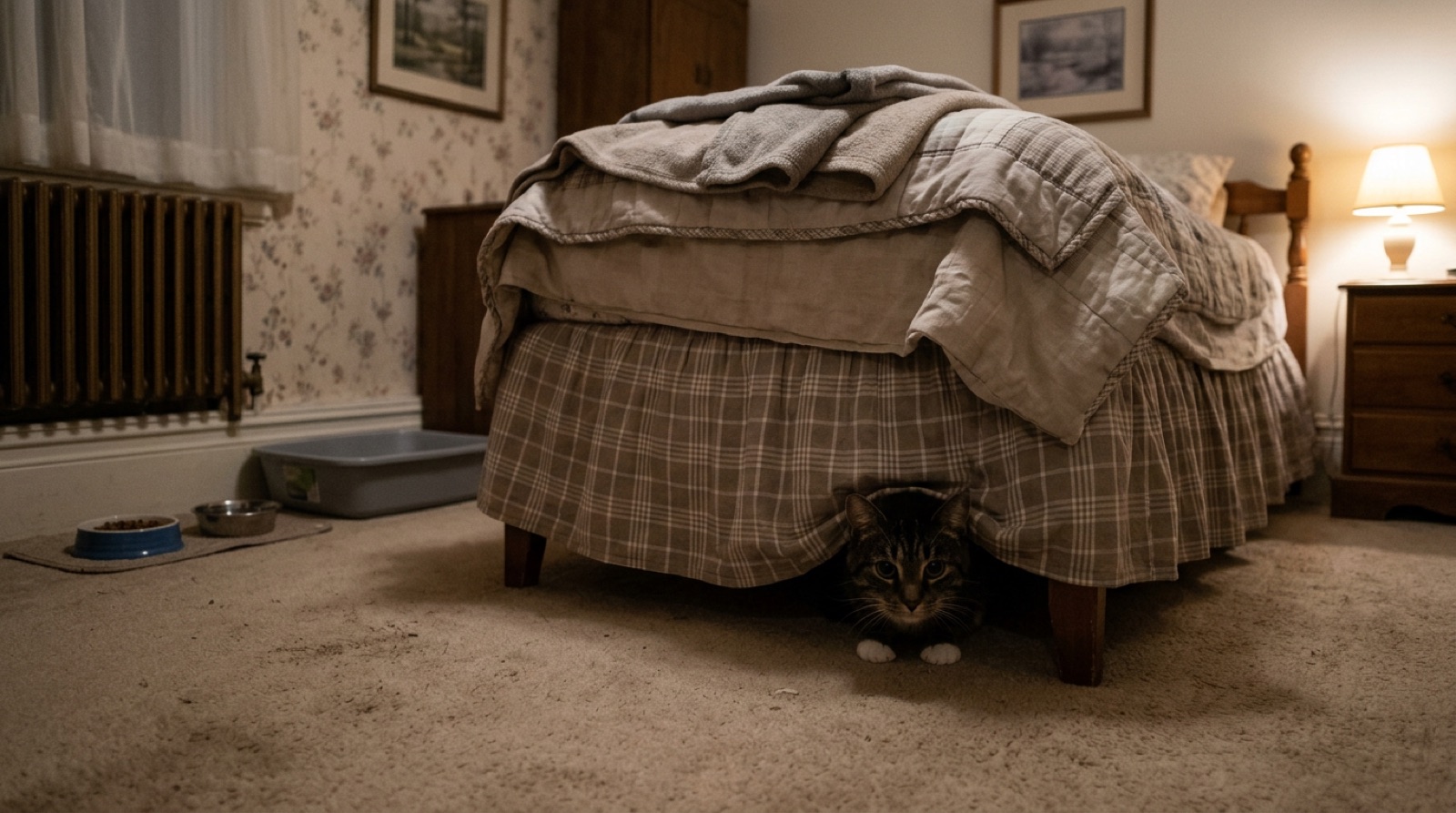
You have brought a cat home and it went straight under the bed. It has not eaten, it has not used the litter box, and it has not looked at you once. This is the point where most new adopters start wondering whether they picked the wrong cat.
You did not. That reaction is what a healthy cat does when its entire world changes in one car ride. The cat you met at the shelter on Dartnall Road or in a foster living room was a cat on familiar ground. This one is running on caution, and caution in cats looks like absence.
The good news is that week one has a short list of things that actually matter, and most of them are about restraint. Here is the setup that gets a cat out from under the bed sooner, and the handful of symptoms that override all of it. If you have not adopted yet, the Hamilton cat listings are refreshed regularly.
What the First Three Months Look Like
| When | What it looks like | What you do |
|---|---|---|
| Day 1 | Hides immediately, may not eat or use the box | Set up the safe room, close the door, leave the cat alone |
| Days 2 to 3 | Eats overnight, uses the box when nobody is watching | Sit in the room reading aloud. Do not reach for the cat |
| End of week 1 | Comes out while you are in the room, may accept a hand | Start short play sessions with a wand toy from a distance |
| Weeks 2 to 3 | Explores beyond the safe room, tests the furniture | Open the door gradually and supervise the first outings |
| Around month 3 | Full personality, routines, opinions about your schedule | This is the cat you actually adopted |
This is the widely used 3-3-3 framing: roughly three days to decompress, three weeks to settle, three months to fully relax. Treat it as a shape rather than a schedule. Shy cats and cats from colony backgrounds often take longer.
Building the safe room
Pick the smallest quiet room with a door that closes. A spare bedroom works, a bathroom works, a home office works. Large open-plan spaces do not, because a frightened cat cannot map them quickly and will find a spot behind an appliance you cannot reach.
Inside, put the litter box at one end and the food and water at the other, because cats will not eat next to their toilet. Add a bed and at least one enclosed hiding spot the cat can get fully inside. A cardboard box on its side is as good as anything you can buy. If the rescue gave you a blanket or toy from the foster home, put it in.
Then close the door and mostly leave it closed. Go in to feed and scoop, and spend time sitting in the room doing something quiet, ideally talking or reading aloud so the cat learns your voice attached to nothing threatening. Do not reach under furniture. Do not pull the cat out to reassure it. The cat comes to you or it does not come yet.
If you already have a cat, this room does double duty as the introduction barrier. Keep the door closed for the first week minimum, feed both cats on either side of it, and swap bedding so each gets used to the other's smell before either sees the other.
Keep food and litter the same
Ask the rescue what the cat has been eating and what litter was in the box, and buy both before pickup. This is the single easiest thing to get right and the one most people skip, usually because they already bought something nicer.
The reasoning is simple. A cat that has just moved house is already dealing with more change than it can process, and an abrupt food switch on top of that reliably causes digestive upset. A litter change on top of that risks the cat deciding your bathmat is a better option, and litter box avoidance is far harder to undo than to prevent.
Change either one later, once the cat is eating normally and moving around the house with confidence, and change it gradually by mixing increasing amounts of the new into the old across a week or two. The Ontario SPCA publishes general new-pet guidance worth reading alongside whatever your specific rescue sends home with you.
Get a Hamilton vet lined up in week one
Book a wellness appointment with a clinic near you in the first week, while nothing is wrong. Bring the adoption paperwork and the microchip number. The point is to exist in their system before the night you need them, because clinics prioritise established patients and you do not want your first contact to be a crisis call.
If you adopted from the Hamilton/Burlington SPCA, note that adoptions include five days of post-adoption care through the shelter's onsite Companion Animal Hospital plus 30 days of pet insurance. Read what the insurance covers before the month is out, because conditions identified in that window may affect later coverage.
Save the after-hours numbers now. The Hamilton Region Emergency Veterinary Clinic at 50 Dundurn Street South is open 24/7 at 905-529-1004. Burlington Veterinary Emergency & Referral Hospital at 905-637-8111 covers the same hours about twenty minutes east. Also confirm the microchip registry has your current details this week rather than after the cat gets out.
Go to a vet tonight if you see this
The hiding phase is normal. These are not. Get veterinary care immediately, whatever the hour, for a cat that is straining in the litter box without producing urine, breathing with effort or with an open mouth, has eaten nothing at all for more than 24 hours, is vomiting repeatedly, has collapsed or cannot stand, or may have swallowed something toxic.
The first one deserves emphasis because new owners misread it constantly. A male cat crying and straining in the box while producing nothing is a urinary blockage until a vet says otherwise, and it is life-threatening within hours. It looks like constipation and it looks like a litter box protest. It is neither. Go now rather than in the morning, and do not spend the evening reading about litter preferences.
Never give a cat human medication. Many common over-the-counter painkillers are toxic to cats even in small amounts, and dosing decisions belong to a veterinarian who has seen the animal.
The week-one mistakes worth avoiding
Inviting people over to meet the cat. Everybody wants to. Wait a fortnight. A cat that meets six strangers in week one learns that the house is unpredictable.
Giving the cat the run of the house on day one. It feels generous and it backfires. Too much space means a cat disappears somewhere inaccessible and stops eating where you can see it.
Pulling the cat out from under things. Every time you do it, you confirm that hiding does not work and that you are the reason. Let the cat emerge on its own.
Buying the expensive gear first. Watch the cat for a fortnight, then buy the tree it will actually use. Our cost guide covers what genuinely matters in year one.
Leaving doors unsecured. Week one is peak door-dashing risk, and a spooked cat loose in an unfamiliar Hamilton neighbourhood has no route home. Our indoor guide explains why that matters more here than in most cities.
Browse adoptable Hamilton cats
Foster-based rescues can tell you how a cat handled its last house move, which is the best available predictor of how week one will go. Listings refreshed regularly.
See Available Hamilton Cats →Frequently Asked Questions
My new cat is hiding and will not come out. Is something wrong?
No, that is the normal first move and it means the cat is coping rather than shutting down. A rescue cat has just been moved from a foster home or a shelter room into a house that smells entirely unfamiliar, and hiding is how cats manage that. Give it a small room with a closed door, food, water, a litter box and somewhere dark to tuck into, and let it stay hidden. Most cats eat overnight within the first two days even if you never see it happen. Check the food bowl and the litter box for evidence rather than pulling the cat out to look at it.
What is the 3-3-3 rule for rescue cats?
It is a rough timeline that helps people stop panicking in week one. Three days to decompress, when the cat hides and eats little and does almost nothing you would call personality. Three weeks to settle into a routine, learn where things are, and start showing preferences. Three months to fully relax and become the cat it actually is. The numbers are approximate rather than a schedule, and shy cats or ones from a colony background can take longer. The point of it is that the cat under your bed on day four is not the cat you adopted.
How do I set up a safe room?
Pick the smallest quiet room you have with a door that closes, usually a spare bedroom or a bathroom. Put in the litter box, food and water at the opposite end from the box, a bed, and at least one hiding spot the cat can get fully into, like a cardboard box on its side or a carrier with the door removed. Add something that smells of the foster home if you were given anything. Keep the room off-limits to visitors and other pets. The point is a space small enough that the cat can map it in an hour.
Should I change my cat's food right away?
No, and this is the most common week-one mistake. Ask the rescue or shelter exactly what the cat has been eating and buy that before pickup, even if you intend to switch later. A cat that has just moved house is already under stress, and an abrupt diet change on top of that reliably causes digestive upset. If you do want to change food, wait until the cat is eating normally and settled, then transition gradually over a week or more by mixing increasing proportions of the new food into the old.
What about litter? Can I use whatever I have?
Use whatever the cat was using, at least at first. Cats are particular about litter texture, and a cat that dislikes the substrate stops using the box, which is a much bigger problem to solve than buying an extra bag. Ask the rescue what was in the box in foster care. If you want to change later, do it slowly by mixing the new litter into the old over a couple of weeks. Keep the box in the safe room and do not move it around while the cat is still learning the house.
When should I register with a Hamilton vet?
In the first week, before you need one. Call a clinic near you, book a wellness appointment, and get the cat into their system with its adoption paperwork and microchip number. Doing this while nothing is wrong means you have a relationship when something is. Also programme the after-hours numbers into your phone now. The Hamilton Region Emergency Veterinary Clinic on Dundurn Street South runs 24/7 at 905-529-1004, and Burlington Veterinary Emergency and Referral Hospital covers the same hours at 905-637-8111.
How do I introduce a new cat to a resident cat?
Slowly, through a closed door, and much more slowly than feels necessary. Keep the new cat in the safe room for at least the first week with no visual contact. Feed both cats on either side of the closed door so each associates the other's smell with something good. Swap bedding between them. Then allow brief supervised visual contact through a cracked door or a baby gate before any face-to-face meeting. Rushing this is the main cause of long-term tension between cats who could have been fine.
My cat is not using the litter box. What do I do?
Rule out medical before you treat it as behaviour, because in cats those two things overlap constantly. Stress after a move can cause it, but so can a urinary tract problem, and you cannot tell the difference by watching. Call your vet. Meanwhile check the obvious environmental causes: box too far away, box in a busy spot, litter changed, box not clean enough, or only one box for multiple cats. The rule is one box per cat plus one spare, and they should not all be in the same room.
When is a symptom an emergency in the first week?
Go to a vet immediately, whatever the hour, for any of these: a male cat straining in the litter box and producing nothing, which is a urinary blockage and is life-threatening within hours rather than days; laboured or open-mouthed breathing; a cat that has not eaten at all for more than 24 hours; repeated vomiting; collapse or inability to stand; or suspected poisoning. Do not wait for morning on any of these, do not try to manage them at home, and never give a cat human medication, because many common painkillers are toxic to cats.
How long until my cat likes me?
Longer than a dog and worth the wait. Most rescue cats begin approaching their person somewhere in the second or third week, and the settled version turns up around month three. The fastest route is counterintuitive: stop trying. Sit in the room doing something boring, read aloud so the cat learns your voice, and let the cat make the first move every single time. Cats that are approached and picked up during the hiding phase take longer to trust, not less. Food helps. Patience helps more.
Should I let my new cat outside once it settles?
No, and Hamilton is a poor city to make an exception in. The Niagara Escarpment runs coyote habitat through the middle of the city, the Main and King one-ways move traffic a cat cannot judge, and Hamilton's Responsible Animal Ownership By-law already prohibits cats roaming off your property. Week one is also the highest-risk window for door dashing, because a frightened cat that gets out into an unfamiliar neighbourhood has no map home. Keep doors closed and consider a catio or harness training once the cat is settled.
What should I buy before I bring the cat home?
Less than the internet suggests. You need a carrier, a litter box with the same litter the cat has been using, the same food it has been eating, food and water bowls, a bed, and one hiding spot. That is genuinely it for week one. Everything else, the tree, the shelves, the toy collection, works better bought after you have watched the cat for a fortnight and learned what it actually likes. Buying a $200 cat tree the cat ignores is the most common new-adopter purchase in Hamilton and everywhere else.
Related Hamilton Guides
One search, every Hamilton rescue
Shelter cats and foster cats from across Hamilton, in a single list.
Browse Available Hamilton Cats →New cat? Start with these care guides
Everything a new adopter needs to set up a safe, happy home.