The short answer
Before your kitten comes home, have a litter box and litter, kitten food, bowls, a carrier, a scratching post, toys, a bed, and a hiding spot ready. Kitten-proof the space (secure balconies, hide cords, remove lilies and other toxic plants), and set up a quiet safe room for the first days. Book a vet check within the first week, and licence the kitten with the City of Toronto (Toronto requires it). Cats are indoor-only in Toronto. And seriously consider two kittens: pairs are usually easier than one. Browse adoptable Toronto kittens and cats.
What to buy before the kitten arrives
Litter box and litter
One low-sided box a kitten can climb into, plus one more than the number of cats as they grow (two boxes for one kitten is a good habit). Unscented clumping litter is the usual starting point.
Kitten food
A food labelled for kittens or all life stages, since kittens need more calories and protein than adults. Keep them on whatever the foster or shelter was feeding at first, then transition slowly.
Food and water bowls
Shallow bowls (ceramic or stainless steel); a small water fountain can encourage drinking. Keep water away from the food and the litter.
Carrier
A hard-sided carrier for the ride home and every vet trip. Leave it out at home so it becomes a normal, safe spot rather than only a vet cue.
Scratching post or pad
Something tall and sturdy enough for a growing kitten to stretch on. Redirecting scratching early saves your furniture and is far kinder than declawing, which is an amputation and best avoided entirely (Ontario is moving to ban non-therapeutic declawing).
Toys and play
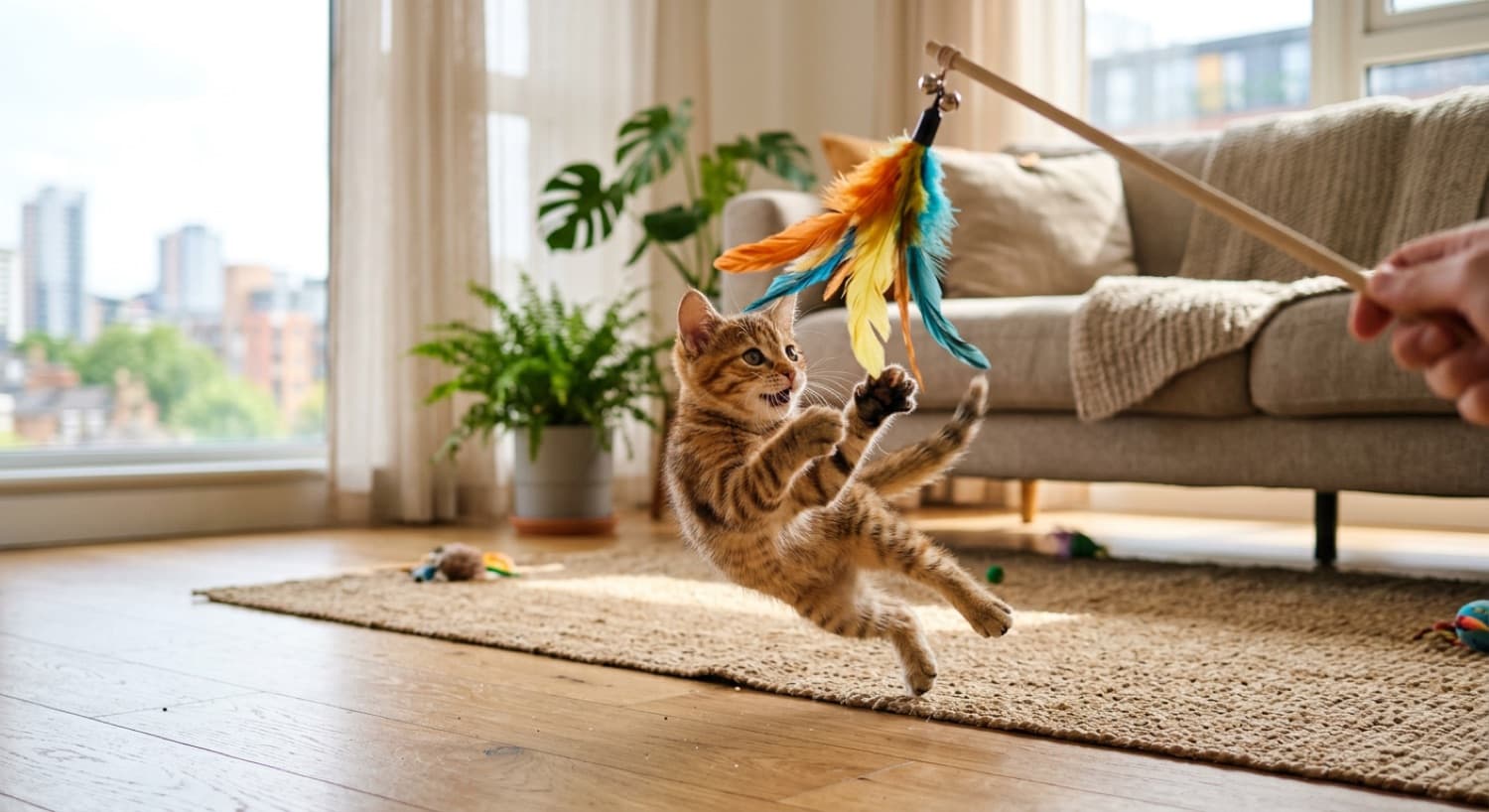
Wand toys, balls, and puzzle feeders. Play is how kittens burn energy and bond with you; daily interactive play is essential, especially for a single kitten in an apartment.
Bed and hiding spots
A soft bed plus a covered hideaway or two. New kittens feel safest when they can tuck away, and vertical perches or a cat tree give them height and confidence, valuable in a smaller Toronto condo.
Safe-room setup
A quiet room (spare room or bathroom) with litter, food, water, and a hiding spot where the kitten decompresses for the first days before exploring the whole home.
Kitten-proofing, the vet, and the city licence
Kittens are curious climbers, so walk the space at their level. Secure or screen balconies (a real hazard in Toronto high-rises), tuck away cords and blind pulls, latch away cleaning products and medications, and remove toxic plants. Lilies deserve special mention: they are extremely dangerous to cats, and even a small nibble or the pollen can cause serious harm. Keep swallowable objects, hair ties, and string toys put away when you are not supervising play.
Book a vet check within the first week or so, even if the rescue has done initial vetting. A vet will confirm the kitten is healthy, set the vaccine and deworming schedule, advise on parasite prevention, and confirm when spay or neuter is due if it has not already been done. Then licence your kitten with the City of Toronto, which is required and helps reunite a lost cat with you. For the money side of that first year, our cat cost guide lays out the budget.
Find your Toronto kitten
Kittens move fast in spring and summer kitten season. Browse live listings from the Toronto Humane Society and GTA cat rescues in one place.
Browse Toronto Cats →Frequently Asked Questions
How old should a kitten be before it comes home?
Reputable Toronto rescues place kittens at a minimum of about eight weeks, and often later, because early weeks with mom and littermates are important for health and social development. Many rescues will also have started or completed the first vaccines and spay or neuter before adoption. If someone is trying to rehome kittens younger than eight weeks, that is a red flag; a good rescue keeps them until they are ready.
Should I get one kitten or two?
Two is often easier than one. Kittens raised in pairs are better socialised, less destructive, and less lonely, and they wear each other out with play instead of waking you at 3am or shredding the couch. Many Toronto rescues bond and adopt kittens out in pairs for exactly this reason, sometimes only in pairs, which also suits the many Toronto households where people are at work all day. The extra cost is mostly just a bit more food and a second set of fixed supplies.
How do I kitten-proof my Toronto home?
Think like a curious climber. Secure or screen any balcony (high-rise balconies are a real risk in Toronto condos), tuck away electrical and blind cords, and remove or relocate toxic plants: lilies are especially dangerous to cats and even small amounts can be fatal. Put away small swallowable objects and hair ties, secure loose window screens, and check that the dryer and cupboards stay closed. Keep cleaning products and medications latched away. A safe room for the first days makes proofing the rest of the home easier.
When does the first vet visit happen?
Book a vet check within the first week or so, even if the rescue has done initial vetting, so a vet can confirm the kitten is healthy and set up the vaccine and deworming schedule. Kittens follow a series of vaccinations over their early months, and your vet will advise the timing and confirm when spay or neuter is due if it has not already been done. Ask about parasite prevention. Bring any paperwork the rescue gave you.
Do I need to licence my kitten in Toronto?
Yes. The City of Toronto requires cats to be licensed, so registering your kitten with the city is part of settling it in, and it helps reunite a lost cat with you if it ever gets out. Pair the city licence with the microchip your rescue includes in the adoption fee. It is inexpensive, and it is worth doing early so you do not forget. Check the City of Toronto website for the current process and fee, and note that licensing is separate from (and complements) microchipping.
Should my kitten be indoor-only?
Yes, indoor-only is the strong recommendation in Toronto and what most rescues require. Traffic is dangerous across the city, the cold winters are hard on cats, and coyotes are active in the ravines and parks, so raising a kitten as an indoor cat from the start is safest and it is easier than trying to bring an outdoor cat in later. Make indoor life rich with vertical space, window perches, scratching options, and daily play, and it is a wonderful life for a cat, even in a condo.
How to Adopt a Cat in Toronto
The full step-by-step adoption process.
First Week With a Rescue Cat
The safe room, the 3-3-3 rule, and a calm start.
Toronto Cat Adoption Costs
Fees, first-year budget, and ongoing costs.
Indoor vs Outdoor Cats
Why indoor-only is the safe choice in Toronto.
New dog? Start with these care guides
Everything a new adopter needs to set up a safe, happy home.